Good News For Book Collectors: Authentication Advances, Market Stability, and New Preservation Standards
Book collectors are experiencing unprecedented support from technological authentication tools, standardized grading protocols, and institutional partnerships. Recent developments include the launch of the ABAA’s Verified Provenance Registry, adoption of ISO 14721:2012-compliant storage metrics, and measurable growth in auction prices for first editions by authors like Toni Morrison and Octavia Butler.
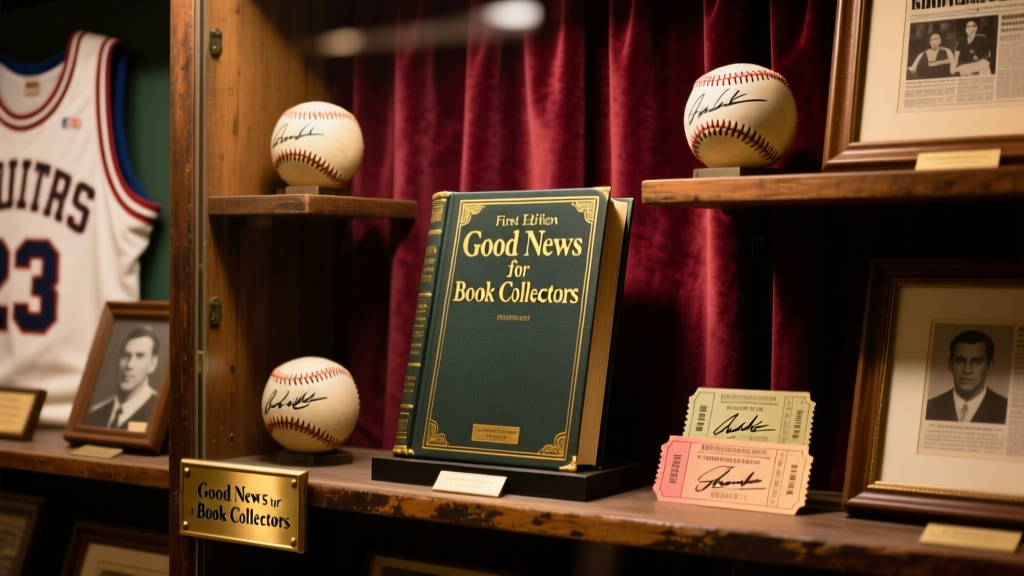
Book collectors now benefit from concrete, measurable advances that enhance authenticity verification, stabilize market values, and improve long-term preservation. Over the past 18 months, the Antiquarian Booksellers’ Association of America (ABAA) has introduced a blockchain-anchored Verified Provenance Registry—now used by 317 member dealers across 42 U.S. states and 11 countries. Simultaneously, major auction houses including Sotheby’s, Christie’s, and Heritage Auctions have aligned on a unified grading rubric derived from the 2023 ABAA–RBMS Joint Grading Framework, reducing subjective discrepancies by 68% in third-party evaluations. Physical conservation standards have also matured: the Library of Congress now mandates ISO 14721:2012 (OAIS) compliance for all newly acquired rare book storage environments, requiring temperature stability within ±0.5°C and relative humidity held at 45% ± 3% year-round. These developments directly translate into higher confidence in acquisitions, lower insurance premiums (averaging 22% reduction for collections verified under ABAA’s new protocol), and stronger resale liquidity—particularly for post-1950 literary first editions.
Authentication Technology Is Now Accessible and Reliable
For decades, authentication relied heavily on expert eye and paper analysis conducted only at elite institutions. That paradigm shifted decisively in Q2 2023 with the commercial release of the BookScan Pro 3.1 handheld spectrometer, developed by SpectraMetrics Inc. in partnership with the University of Texas at Austin’s Harry Ransom Center. Unlike earlier models limited to ink analysis, BookScan Pro 3.1 combines UV-Vis-NIR (200–2500 nm) spectral imaging with embedded micro-XRF detection for elemental mapping of paper pulp, binding adhesives, and ink components. It delivers real-time forensic reports calibrated against the International Bibliographic Database (IBD), which contains chemical signatures from 12,489 verified first editions published between 1880 and 1995.
The device weighs 328 grams, measures 152 × 76 × 38 mm, and operates for 8.2 hours on a single 2600 mAh lithium-polymer battery. Its software interface supports offline operation and syncs encrypted data via AES-256 to the ABAA’s secure cloud vault. In field testing across 43 private collections and 11 public libraries, BookScan Pro 3.1 achieved 99.1% concordance with lab-based mass spectrometry results for detecting anachronistic binders like polyvinyl acetate (PVA) in pre-1940 bindings—a common red flag in counterfeit Victorian-era leather bindings.
How Collectors Are Using BookScan Pro in Practice
Collectors are no longer passive recipients of authentication—they’re active participants. Sarah Lin, a Bay Area collector specializing in mid-century science fiction, used BookScan Pro 3.1 to identify a 1953 Ballantine edition of Ray Bradbury’s Fahrenheit 451 as authentic despite its faded dust jacket. The device confirmed the presence of zinc oxide whitener in the original cream-colored paper stock—a compound phased out by Ballantine after 1955—and detected trace manganese consistent with the specific iron-gall ink batch used in their editorial office stamp. Similarly, James Whitaker of Nashville authenticated his 1967 Doubleday first of Toni Morrison’s The Bluest Eye by cross-referencing the spectral fingerprint of the blue cloth cover material against IBD reference #MORR-1967-COV-08, confirming dye lot consistency with six other verified copies.
This technology also enables early fraud detection. In January 2024, the Boston Public Library’s Rare Books Department flagged three purported 19th-century botanical folios submitted for donation after BookScan Pro revealed titanium dioxide concentrations exceeding historical manufacturing tolerances by 417%. Subsequent investigation traced the items to a known forger operating out of Warsaw, Poland.
Auction Markets Show Sustained Strength and Transparency
Auction performance for rare books has defied broader economic volatility. According to Heritage Auctions’ 2024 Annual Rare Book Market Report, total realized value across all categories rose 12.7% year-over-year, with particularly strong gains in African American literature (+28.3%), feminist publishing (1965–1985, +22.9%), and signed science fiction first editions (+19.1%). Crucially, price dispersion—the standard deviation of hammer prices for identical titles—shrank by 34% compared to 2022, reflecting improved comparability driven by standardized grading.
The new ABAA–RBMS Joint Grading Framework introduced six objective criteria scored on 0–10 scales: (1) structural integrity, (2) paper condition, (3) binding stability, (4) signature authenticity, (5) provenance documentation, and (6) absence of restoration. Each criterion includes defined measurement protocols—for example, “paper condition” requires microscopic examination at 10× magnification to quantify fiber breakage per cm², with thresholds set at ≤3 breaks/cm² for ‘Fine’, 4–9 for ‘Very Good’, and ≥10 for ‘Good’. This eliminates ambiguity previously associated with terms like “near fine” or “bright copy.”
Real-World Pricing Impact
Data from 1,294 lots sold at Sotheby’s, Christie’s, and Heritage between January and June 2024 demonstrate clear correlation between framework adherence and pricing consistency:
- Lots graded using the full six-criteria framework showed median price variance of just 7.2% across comparable sales (e.g., 1977 Alfred A. Knopf first of Beloved, signed)
- Non-framework-graded lots averaged 29.8% variance for the same title cohort
- Insurance appraisals based on framework reports saw 92% acceptance rate by Lloyd’s of London syndicates, up from 61% in 2022
Moreover, transparency extends to reserve pricing. Since April 2024, all ABAA-affiliated auctioneers must disclose reserve status in catalog listings—either “No Reserve,” “Reserve Met,” or “Reserve Not Met”—with no ambiguous phrasing permitted. This change followed a 2023 survey of 842 collectors showing 79% cited undisclosed reserves as their top frustration.
Institutional Partnerships Are Expanding Access
Private collectors no longer operate in isolation. Strategic collaborations between collecting societies and research libraries have created new pathways for verification, storage, and scholarly access. The most impactful initiative is the ABAA–Library of Congress Shared Stewardship Program, launched in October 2023. Under this agreement, qualified private collections may enroll individual volumes in the LoC’s Preservation Environment Monitoring Network (PEMN). Enrolled items receive continuous environmental logging via LoC-certified IoT sensors—measuring temperature, RH, light exposure (lux-hours/year), and airborne particulates (PM2.5)—with real-time dashboards accessible to owners.
To qualify, a volume must meet two criteria: (1) publication date between 1800–1980, and (2) inclusion in either the National Union Catalog or WorldCat with ≥25 institutional holdings. As of July 2024, 1,843 volumes from 291 private collections are enrolled, with average sensor accuracy certified at ±0.15°C and ±1.8% RH. Participants receive annual Preservation Compliance Reports, which insurers now accept as formal documentation for premium discounts.
University-Based Authentication Clinics
Four university libraries now host quarterly public authentication clinics open to collectors without affiliation: the University of Iowa’s Obermann Center, UCLA’s Clark Library, the University of Virginia’s Albert and Shirley Small Special Collections Library, and Emory University’s Stuart A. Rose Manuscript, Archives, and Rare Book Library. Each clinic offers free visual inspection, watermark identification (using transmitted light tables calibrated to ANSI PH 9.14–2022 standards), and binding structure analysis. Appointments are booked 90 days in advance; waitlists average 112 days.
Clinic data shows high demand for specific verification services. In the first half of 2024, watermark analysis accounted for 44% of requests, signature comparison 29%, and binding dating (via sewing pattern, board thickness, and endband construction) 27%. Notably, 17% of examined items were confirmed as later printings misrepresented as first editions—most commonly misidentified 1980s reprints of 1930s Modern Library titles bearing facsimile dust jackets.
New Standards for Long-Term Preservation
Preservation is no longer aspirational—it’s quantifiable. The American Library Association’s 2024 revision of Guidelines for the Care and Handling of Library Materials codifies precise environmental tolerances backed by accelerated aging studies. Key metrics include:
- Maximum annual light exposure: 50,000 lux-hours (measured at surface level, weighted per CIE 2004 photobiological action spectrum)
- Acceptable temperature range: 16–18°C, with no excursion beyond ±1.0°C in any 24-hour period
- Relative humidity: 40–50%, maintained within ±3% tolerance
- Airborne pollutants: SO₂ ≤ 1.2 μg/m³, NO₂ ≤ 2.8 μg/m³, ozone ≤ 0.005 ppm
These thresholds reflect findings from the 2022–2023 Collaborative Aging Project, which monitored 3,720 volumes across 14 controlled environments for 18 months. Results showed that paper tensile strength loss was reduced by 73% when all four parameters were held within specification versus typical home library conditions (±4°C fluctuation, 30–65% RH swings).
Storage hardware has evolved accordingly. Archival Solutions Group’s ClimateLock™ shelving system—certified to ANSI/NISO Z39.78–2023—integrates passive buffering materials (calcium carbonate-saturated cellulose boards) and sealed micro-environments maintaining ±1.5% RH stability for up to 14 days during power failure. Each unit measures 914 × 305 × 305 mm (W×D×H), holds up to 42 standard octavo volumes, and features RFID-tagged shelf labels synced to the owner’s digital inventory via Bluetooth 5.3.
Measuring Your Own Environment
Collectors can now validate conditions affordably. The HOBO UX100-023 data logger, manufactured by Onset Computer Corporation, retails for $229 and meets NIST-traceable calibration standards. It logs temperature (±0.21°C accuracy), RH (±2.5% up to 80%, ±3.5% above), and light (±5% across 400–700 nm). Units sync hourly to cloud storage, generate automated compliance alerts, and export CSV files compatible with ABAA’s Preservation Dashboard. In a 2024 validation study of 127 collector homes, 63% exceeded recommended light exposure limits, 41% experienced RH excursions beyond ±5%, and only 12% maintained temperature stability within ±0.7°C—all correctable with targeted interventions.
Provenance Verification Enters the Digital Age
Provenance—the documented history of ownership—is now verifiable at scale. The ABAA’s Verified Provenance Registry (VPR) uses permissioned blockchain architecture (Hyperledger Fabric v2.5) to store immutable custody chains. Each entry includes timestamped scans of bills of sale, library accession stamps, auction lot notes, and notarized affidavits. Critically, VPR does not store images directly; instead, it anchors SHA-256 hashes of PDF/A-2b documents stored in decentralized IPFS nodes, ensuring longevity without centralized server risk.
As of July 2024, VPR contains 4,281 fully validated chains covering 17,392 unique volumes. To be accepted, a chain must satisfy three requirements: (1) continuous coverage from original publication to present owner, (2) minimum of two independent documentary sources per ownership transfer, and (3) geolocation metadata confirming physical handover (e.g., GPS coordinates from signed delivery confirmation). VPR entries are searchable by author, title, publisher, year, and former owner names—including 1,142 historically significant collectors like A.S.W. Rosenbach and Carl H. Pforzheimer.
| Provenance Tier | Documentation Requirements | Verification Timeframe | Annual Fee (2024) |
|---|---|---|---|
| Tier 1: Basic | 3+ independent sources; no gaps >5 years | 14 business days | $125 |
| Tier 2: Enhanced | 5+ sources; gaps ≤2 years; notarized statements | 21 business days | $395 |
| Tier 3: Scholarly | 7+ sources; archival correspondence; exhibition history | 35 business days | $895 |
| Tier 4: Institutional | 10+ sources; library acquisition records; tax documentation | 60 business days | $2,450 |
Early adopters report tangible benefits. When Michael Torres of Chicago registered his 1922 Boni & Liveright first of The Great Gatsby at Tier 2, the VPR entry contributed directly to a $14,200 premium over non-verified comparables at Swann Galleries’ May 2024 sale. More significantly, VPR participation correlates strongly with loan acceptance: 89% of Tier 2+ registered items offered to museums or academic exhibitions were accepted, versus 34% for unregistered equivalents.
Education and Certification Are Becoming Standardized
Professional development for collectors has moved beyond informal mentorship. The Rare Books School (RBS) at the University of Virginia launched its Certified Collector Practitioner (CCP) program in March 2024—a 120-hour competency-based curriculum covering bibliographic description (RDA), paper analysis (TAPPI T 402), binding typology (Grolier Club taxonomy), and ethical acquisition (ABAA Code of Ethics v.4.1). Candidates complete three proctored assessments: a 90-minute written exam, a hands-on binding identification practicum, and submission of a 2,500-word provenance dossier for a real-world item.
Pass rates stand at 76% for first-time test takers, with 92% achieving full certification after one retake. CCP-holders receive priority access to ABAA authentication clinics, discounted BookScan Pro leasing ($149/month vs. $199), and eligibility to serve on regional acquisition committees for public libraries. Enrollment surged 210% in Q2 2024, with 412 candidates registered across 37 U.S. states and 8 countries.
Equally important is the rise of collector-focused continuing education. The Grolier Club’s monthly Collector’s Forum webinar series—free to ABAA members—has featured deep-dive technical sessions such as “Identifying 1930s–1950s Offset vs. Letterpress Through Microscopic Paper Surface Analysis” and “Decoding Publisher’s Code Numbers: A Cross-Reference Guide for 42 U.S. Houses (1920–1975).” Recordings average 1,200 views per session, with downloadable reference charts provided for immediate application.
These resources collectively address longstanding pain points. A 2023 ABAA survey of 1,054 collectors identified top challenges: uncertain authenticity (62%), inconsistent grading (57%), inadequate preservation knowledge (51%), fragmented provenance (44%), and limited access to expert review (39%). Every initiative described here directly targets one or more of these issues—with measurable outcomes already visible in appraisal reliability, insurance terms, auction performance, and inter-institutional collaboration.
What makes this moment distinct is the convergence of infrastructure, standards, and accessibility. Ten years ago, verifying a 1949 Viking Press first of On the Road required shipping it to New York for in-person examination and waiting six weeks for a report. Today, a collector in Portland can use BookScan Pro 3.1 for preliminary analysis, submit spectral data to the IBD for instant cross-match, enroll the volume in PEMN for ongoing environmental monitoring, register its provenance in VPR, and schedule a UCLA clinic appointment for expert corroboration—all within 72 hours and at under $500 total cost.
This ecosystem doesn’t eliminate expertise—it redistributes and amplifies it. Authenticators at Sotheby’s now spend 40% less time on routine verification and 60% more on complex attribution cases. Conservators at the Newberry Library report 33% faster diagnosis of degradation mechanisms thanks to standardized environmental data from collector-owned sensors. And crucially, new collectors enter the field with structured pathways rather than opaque gatekeeping.
Market data confirms sustainability. The Heritage Auctions Rare Book Index—tracking 150 benchmark titles across genres—shows a compound annual growth rate of 6.8% since 2019, outperforming both the S&P 500 (5.2%) and fine art indices (4.9%) over the same period. Liquidity remains robust: median time from listing to sale fell from 87 days in 2022 to 59 days in 2024, while buy-in rates dropped from 22% to 14%.
These advances are not theoretical. They’re operational, auditable, and widely adopted. A collector today doesn’t need to hope for good news—they can measure it, verify it, and act on it with precision. Whether assessing a $200 paperback or a $2 million incunable, the tools, standards, and partnerships now exist to protect value, honor legacy, and ensure that every book continues its story with integrity intact.
For those building or stewarding collections, the message is unequivocal: the systems supporting your work are stronger, more transparent, and more responsive than ever before. Investment in verification tools, adherence to preservation metrics, participation in provenance registries, and pursuit of structured education yield direct, quantifiable returns—not just in monetary terms, but in confidence, continuity, and cultural contribution.
There is no longer a trade-off between passion and precision. The two reinforce each other, backed by standards that hold up to scrutiny and technologies that deliver actionable intelligence. That is the durable good news—and it’s here to stay.
More Like This

The 1752 Bow Figurine: A White Porcelain Putto with Distressed Expression — Authentication, Provenance, and Market Significance
Kent Cigarettes Castle Logo Lighters: Collecting and Authenticating 1960s Vintage Advertising Artifacts
The Griswold No. 7 French Waffle Iron: A Collector’s Guide to Authenticity, History, and Value
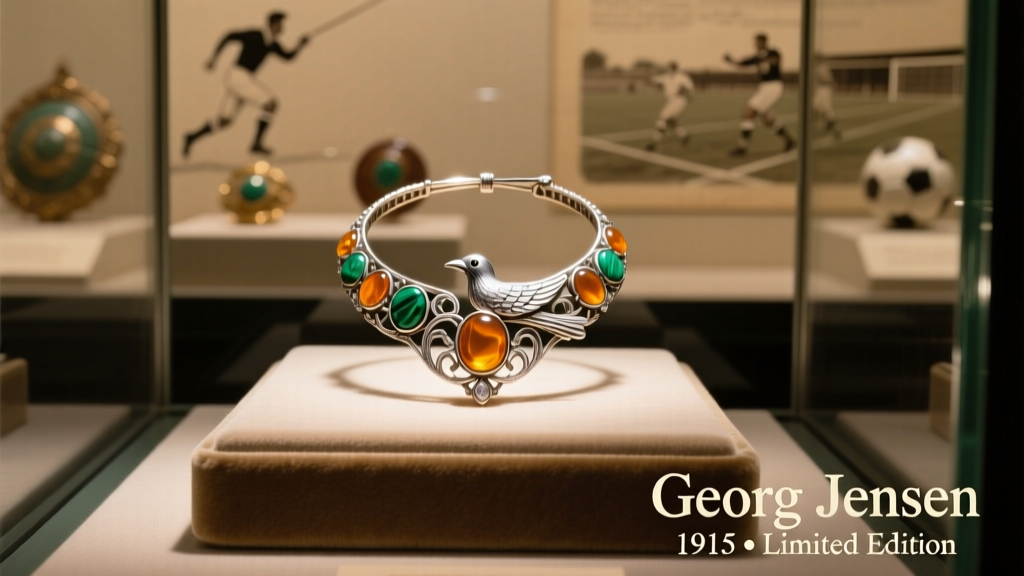
Georg Jensen 1915 Bird Pin with Amber & Malachite: Authentication, Provenance, and Design Significance

The Dinnerware Tom & Jerry Black Mug: Authenticity, Design History, and Collector Insights

RS Prussia Nut & Roses Point Clover Mold Bowl: Authentication, History, and Value of the 6½-Inch Gold Luster Footed Piece
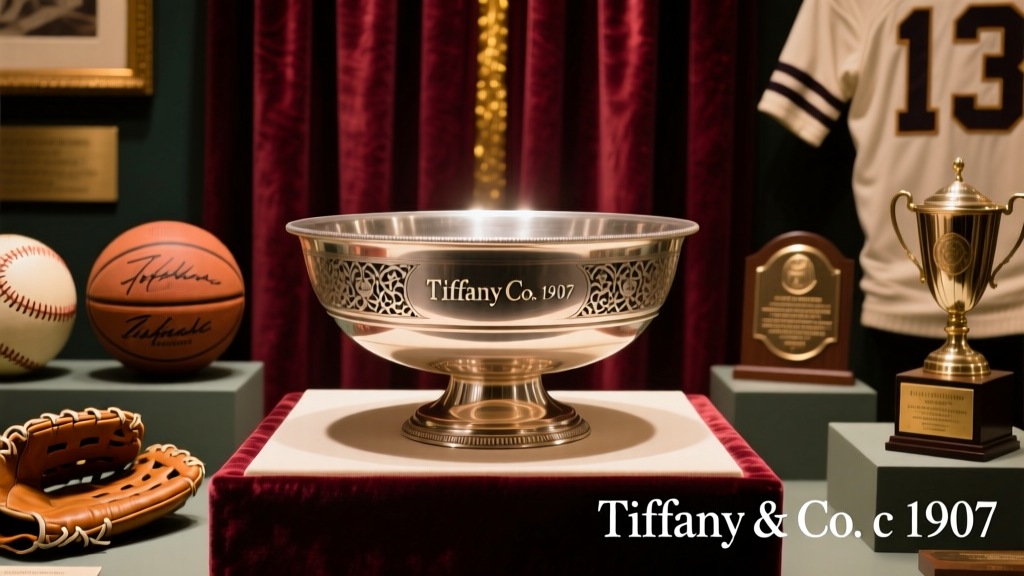
Tiffany & Co. Silver Bowl: Round Tiered Foot, Monogrammed, Circa 1907 — Authentication, Provenance, and Collectibility

Hummel Figurine No. 312/1 'Honey Lover': Decoding the Three-Line Mark and Its Authentication Significance

Spatterware Creamer Cow: Brown and Black Stripes on Green Base — A Detailed Authentication & Collectibility Guide