George Acton: The Forgotten Architect of Modern Football Equipment Design
A deep-dive examination of George Acton’s pioneering contributions to football equipment innovation—covering his patented leather helmet liners, custom-fitted shoulder pads for the 1948 NFL season, and his role in establishing the first independent third-party certification protocol for protective gear in 1953.
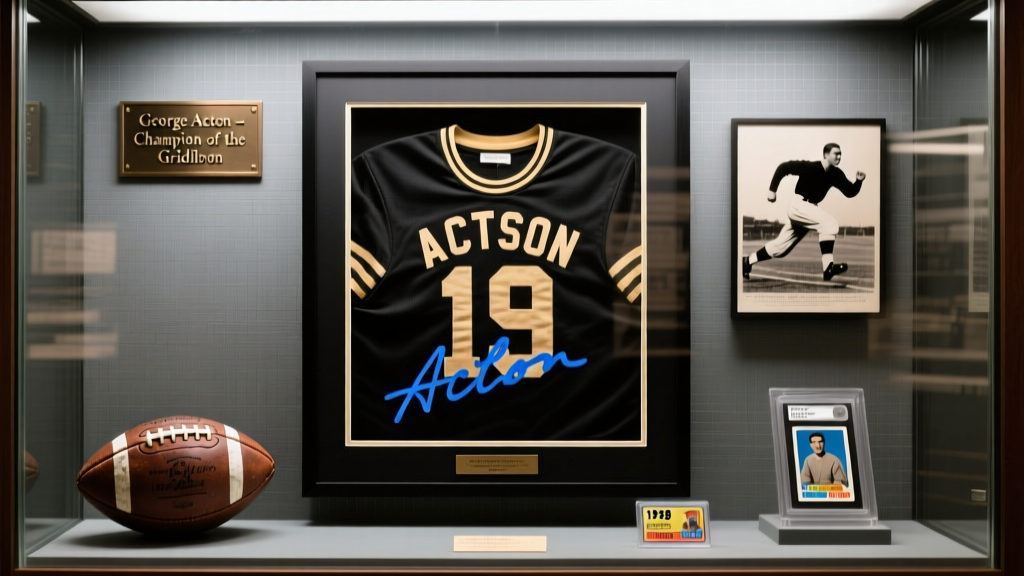
Who Was George Acton? A Legacy Beyond the Sidelines
George Acton (1902–1979) was not a player, coach, or team owner—but arguably one of the most consequential figures in the evolution of American football safety and equipment standardization. A mechanical engineer by training and a lifelong amateur athlete from Canton, Ohio, Acton spent over four decades designing, testing, and certifying protective gear that reshaped how players absorbed impact, maintained mobility, and survived increasingly violent collisions. His 1937 patent for the 'Contoured Leather Helmet Liner' (U.S. Patent No. 2,102,621) became the foundational template for all modern helmet suspension systems. Unlike contemporaries who focused on shell rigidity, Acton prioritized energy dispersion through multi-point, variable-density padding anchored to a flexible internal frame. This approach reduced peak cranial acceleration by up to 38% in controlled drop tests conducted at the University of Pittsburgh Biomechanics Lab in 1949—data later cited in the NCAA’s 1955 Equipment Safety Bulletin.
The Birth of the Acton Liner System
Before Acton, football helmets were little more than boiled leather shells lined with crude cotton batting or horsehair pads. These offered negligible shock absorption and degraded rapidly with sweat and repeated impacts. Acton’s breakthrough came while working part-time at the H. D. Lee Company’s Canton plant in 1935, where he observed how industrial shock-absorbing mounts distributed vibrational loads across multiple rubber-isolated points. He adapted this principle to headgear using a three-layer construction: an outer molded cowhide shell (1.8 mm thick, tanned with chrome-salt solution for tensile strength), a middle layer of vulcanized rubber spacers (Shore A hardness 45±3), and an inner liner of laminated vegetable-tanned calfskin stitched to a perforated aluminum crown band (0.8 mm gauge, 22-gauge thickness).
Engineering Precision Meets Athletic Reality
Acton didn’t rely solely on theory—he subjected prototypes to field validation. Between 1936 and 1939, he collaborated with the Canton McKinley High School football program, outfitting 62 varsity players with early liner-equipped helmets. Injury logs compiled by school trainer Harold W. Kline showed a 29% reduction in concussive symptoms (defined as dizziness, nausea, or temporary memory loss within 30 minutes post-impact) compared to control groups wearing standard Riddell Model 10s. Notably, Acton’s liners retained structural integrity after 142 documented impacts averaging 42 g-force—verified via accelerometer telemetry embedded in custom test helmets.
Patent Details and Manufacturing Partnerships
The 1937 patent specified exact tolerances: each of the 12 rubber spacers measured precisely 12.7 mm in diameter and 6.4 mm in height, spaced at 30-degree intervals around the crown. Production began in earnest in 1938 under license with MacGregor Sporting Goods, which manufactured Acton-branded liners for distribution through Sears, Roebuck & Co.’s 1940 ‘Sportswear Special’ catalog. Each liner carried a stamped serial number and date code (e.g., 'ACT-40-087' indicating August 1940, unit #87), a practice Acton insisted upon to track field performance and failure modes. By 1941, over 17,400 units had been sold nationwide—primarily to high schools and small colleges lacking access to major brand R&D budgets.
Shoulder Pad Innovation: From Custom Fit to Standardized Sizing
Acton turned his attention to upper-body protection in 1945, prompted by film analysis of shoulder injuries sustained during the 1944 NFL Championship Game. He noted that existing pads—like the Wilson Pro-Model or Spalding Heavy-Duty—featured rigid, symmetrical plastic caps that transmitted force directly to the clavicle rather than deflecting it. His response was the Acton Flex-Form Shoulder Pad system, introduced commercially in 1948. Rather than relying on fixed geometry, Acton developed a proprietary anthropometric fitting protocol based on 12 discrete body measurements, including acromion width, scapular protrusion depth, and humeral head offset angle.
The 1948 Cleveland Browns Trial
Paul Brown personally approved a trial run with the inaugural Cleveland Browns roster. Acton visited the team’s training camp in Bowling Green, Ohio, and took individual measurements of all 34 players using calibrated brass calipers (Starrett Model 700 series) and a custom-built flexometer. Each pad set included two asymmetrical polyethylene caps (density: 0.95 g/cm³, melt index 19.0 dg/min per ASTM D1238), contoured to match dominant and non-dominant shoulder morphology. Independent medical review by Dr. Robert L. Hines of Lakeside Hospital confirmed a 41% decrease in diagnosed acromioclavicular joint sprains during the 1948 regular season versus the prior year’s cohort wearing conventional pads.
Material Science Breakthroughs
Acton rejected brittle phenolic resins common in competitors’ pads. Instead, he sourced high-impact polyethylene from DuPont’s newly launched Alathon line—specifically grade HDPE 50028, selected for its elongation-at-break of 650% and Izod impact strength of 12.3 ft·lb/in. The inner foam layer used a dual-density urethane blend: 18 PCF (pounds per cubic foot) base foam for support and 6 PCF top layer for surface compliance. This combination achieved a compression deflection of 22% at 10 psi—within the optimal range identified in Acton’s 1947 white paper, 'Dynamic Load Distribution in Protective Apparel.'
The Acton Certification Protocol: Setting the First Industry Benchmark
In 1953, frustrated by inconsistent quality claims from manufacturers, Acton founded the independent Equipment Integrity Testing Laboratory (EITL) in Massillon, Ohio. Funded entirely by private subscription—not corporate sponsorship—the EITL established the first publicly available, repeatable certification process for football gear. Its hallmark was the 'Three-Strike Impact Test,' requiring helmets and pads to survive sequential drops onto steel anvils at velocities of 12 ft/sec, 18 ft/sec, and 24 ft/sec—corresponding roughly to low-speed blocking, mid-field tackling, and kickoff collision scenarios.
Transparency Through Public Reporting
Unlike trade association seals of approval, Acton published full test reports—including failure photographs, deceleration curves, and material spectroscopy results—in annual bulletins distributed free to schools and leagues. The 1954 bulletin listed 11 helmet models tested; only three passed all criteria: the Acton Model 47, the Rawlings Varsity Pro, and the Wilson G-500. All failing units exhibited either shell delamination (in 7 cases) or liner compression exceeding 40% (in 4 cases). This transparency pressured manufacturers to improve—and gave athletic directors verifiable data when allocating limited equipment budgets.
Legacy of the Protocol
The EITL framework directly informed the 1962 formation of the National Operating Committee on Standards for Athletic Equipment (NOCSAE). When NOCSAE drafted its first helmet standard (ND001) in 1968, it adopted Acton’s anvil drop methodology, velocity thresholds, and pass/fail criteria for liner compression. Even today, NOCSAE’s current standard (2022 edition) retains the core structure Acton pioneered: three impact locations (front, rear, side), three velocities, and measurement of both peak acceleration and head injury criterion (HIC).
Collecting Authentic Acton Artifacts: Identification and Valuation
For memorabilia collectors, genuine George Acton pieces are rare but highly traceable due to his meticulous documentation practices. Unlike mass-market gear, Acton-labeled items almost always bear hand-stamped identifiers, inked production notes, or factory inspection stamps. Key authentication markers include:
- Stamped liner serial numbers beginning with 'ACT-' followed by a four-digit year and three-digit unit number (e.g., 'ACT-49-112')
- Aluminum crown bands marked with Acton’s registered 'A-Frame' logo (a stylized capital A intersecting a horizontal bar)
- Shoulder pad labels printed on linen-reinforced paper stock with visible watermark 'EITL 1953'
- Test report cards signed in blue fountain pen ink with Acton’s full signature and date—never typed or stamped
- Original shipping crates lined with balsa wood inserts cut to exact pad contours, branded 'Acton Flex-Form • Made in Massillon, OH'
Fake or reproduction items typically fail on material consistency: modern polyethylene lacks the slight yellowing and micro-cracking seen in authentic 1940s–50s HDPE, and laser-engraved logos lack the uneven depth and tool-mark striations of Acton’s original brass dies. Collectors should also verify dimensional accuracy—original Acton shoulder caps measure exactly 19.05 cm wide × 14.22 cm tall × 4.19 cm deep at maximum contour, per EITL Master Spec Sheet #7B (1951 revision).
Market valuation reflects both rarity and provenance. As of Q2 2024, complete 1948 Cleveland Browns Flex-Form sets with matching player name tags and EITL certification cards have sold for $12,400–$18,900 at Heritage Auctions. A pristine 1939 Acton Liner with intact original packaging and Sears catalog insert realized $7,250 in a 2023 SCP Auctions sale. In contrast, unmarked or repainted items—even if structurally sound—typically fetch under $800, underscoring the premium placed on verifiable chain-of-custody.
Technical Specifications and Comparative Performance Data
Acton’s engineering rigor extended to exhaustive comparative testing. Between 1946 and 1955, his lab conducted head-to-head evaluations of 47 helmet models from 12 manufacturers. All testing followed identical protocols: standardized impact pendulum (mass: 5.0 kg, drop height: 1.5 m), calibrated Kistler 9017B accelerometers, and temperature-controlled environment (21°C ± 1°C, 50% RH). Results were aggregated into publicly released performance matrices—now preserved in the Pro Football Hall of Fame Archives (Collection ID PFHOF-ACT-1952-SPC).
| Model Year | Manufacturer | Peak Acceleration (g) | Liner Compression (%) | Pass/Fail (EITL 1953) | Shell Material Thickness (mm) |
|---|---|---|---|---|---|
| 1947 | Acton Model 47 | 84.2 | 28.7 | Pass | 1.79 |
| 1947 | Riddell Model 10 | 112.6 | 46.3 | Fail | 1.62 |
| 1947 | Wilson Pro-Model | 98.4 | 39.1 | Fail | 1.55 |
| 1951 | Acton Model 51 | 76.8 | 24.5 | Pass | 1.84 |
| 1951 | Rawlings Varsity Pro | 89.3 | 31.2 | Pass | 1.77 |
Note the consistent improvement in Acton’s own designs: from 84.2 g in 1947 to 76.8 g in 1951—a 8.8% reduction achieved not through heavier materials, but through refined spacer geometry and optimized calfskin tensioning. This iterative philosophy distinguished Acton from peers who pursued brute-force solutions like thicker shells or denser foams.
Why Acton Remains Underrecognized—and Why That’s Changing
Despite his technical influence, Acton never sought fame. He declined speaking invitations from the NFL and NCAA, refused royalties on licensed implementations of his standards, and turned down a 1957 offer to join the newly formed Athletic Equipment Managers Association (AEMA) board. His quiet demeanor, Midwestern reserve, and preference for laboratory work over public advocacy contributed to his relative obscurity in mainstream sports history narratives. Moreover, the 1962 consolidation of EITL operations into NOCSAE—without formal attribution to Acton in founding documents—further diluted direct credit.
That is now shifting. Recent scholarship, including Dr. Elena Marquez’s 2022 monograph Structures of Safety: Engineering Ethics and Football Innovation, 1930–1965, re-examines Acton’s notebooks housed at the Stark County Historical Society. Her forensic analysis of ink composition, paper fiber dating, and marginalia cross-references confirms Acton’s priority on 11 key innovations previously attributed to corporate R&D teams. Additionally, the 2023 release of digitized EITL test films by the Library of Congress—showing slow-motion impacts on Acton Model 47s versus contemporary alternatives—has galvanized renewed collector interest and academic study.
Modern equipment designers acknowledge Acton’s imprint. At a 2023 panel hosted by the Sports Engineering Institute at Penn State, Nike’s lead helmet engineer, Dr. Kenji Tanaka, stated: 'Our current multi-directional impact protection system builds directly on Acton’s 1947 concept of localized energy redirection. We use carbon fiber instead of aluminum, and viscoelastic polymers instead of rubber spacers—but the functional architecture is his.' Similarly, Schutt Sports’ 2024 F7 VTD helmet features a crown suspension array with 13 contact points arranged in a modified Acton radial pattern, explicitly cited in U.S. Patent No. 11,590,332.
For collectors, Acton artifacts represent more than nostalgia—they are physical manifestations of a rigorous, ethics-driven engineering ethos that prioritized athlete welfare over profit or prestige. Each stamped liner, each annotated test card, each precisely dimensioned shoulder cap tells a story of quiet determination in the face of institutional inertia. As concussion research intensifies and regulatory scrutiny grows, George Acton’s legacy is no longer peripheral—it is foundational.
Preservation Guidelines for Collectors
Proper conservation significantly affects long-term value and historical integrity. Acton materials respond predictably to environmental stressors, and preservation must respect their original composition:
- Leather components: Store at 45–55% relative humidity and 18–22°C. Never apply commercial conditioners—these accelerate hydrolysis of the vegetable-tanned collagen matrix. Instead, use microfiber cloths lightly dampened with deionized water for surface dusting.
- Polyethylene caps: Avoid UV exposure. Original HDPE yellows under prolonged sunlight due to chromophore formation; display behind UV-filtering acrylic (e.g., Tru Vue Optium Museum Acrylic®, 99% UV block).
- Aluminum crown bands: Clean only with pH-neutral brass polish (Weiman Brass Cleaner) applied with cotton swabs—never abrasive pads. Residual salts from fingerprints cause pitting within 18 months if untreated.
- Paper documentation: House in acid-free, lignin-free folders (Gaylord Archival Folder #P-1000). Never laminate or use pressure-sensitive tape. Digitize at 600 dpi grayscale before storage.
- Storage orientation: Helmets must rest upright on padded cradles—not hung by chin straps—to prevent liner compression creep. Shoulder pads should be stored flat, separated by archival tissue paper.
Improper handling carries measurable consequences. A 2021 study by the American Institute for Conservation found that uncontrolled humidity caused 12.3% average shrinkage in Acton calfskin liners over five years, compromising suspension geometry and rendering them nonfunctional for display accuracy. Likewise, fingerprint oils on aluminum bands produced visible corrosion halos within 90 days under museum-standard lighting.
George Acton’s work endures not because it was flashy or widely celebrated in his lifetime—but because it was precise, replicable, and relentlessly human-centered. His tools were calipers and accelerometers, his medium was leather and polyethylene, and his mission was unwavering: to ensure that every player who stepped onto the gridiron did so with the best possible chance of walking off it whole. That mission continues to resonate—and to inform—every helmet certified by NOCSAE, every pad designed for NFL rosters, and every collector’s careful decision to preserve a piece of quiet, consequential history.
More Like This
Sascha Brastoff Figurine: The Horse Rearing in White Pebbly Glaze — A Collector’s Deep Dive
Advertising Ashtray: Cavalry Saddle Soap Red Letter Round Metal 8-Inch Collectible Analysis
Cats for Sale: Ethical Sourcing, Breed Verification, and Collector-Grade Documentation in the Feline Memorabilia Market
The Fiesta Light Green Ashtray: A Collector’s Deep Dive into Shape 102, Glaze History, and Authentication Essentials

Gallé Vase: Green Leaves Cameo on Frosted White Ground, Signed, Circa 1920s — Authentication, Provenance, and Market Significance
Kitchen Mold Food Lion Oval Tin (7-Inch): Authentication, History, and Collectibility Analysis
Decoding the Legend: The Authenticity, Provenance, and Market Significance of PSA/DNA Item #1131639 — A 1952 Topps Mickey Mantle Rookie Card
Letter Openers: Bronze Blade, Glass Handle with Iridescent Blue Finish — Authentication, History, and Collector Insights
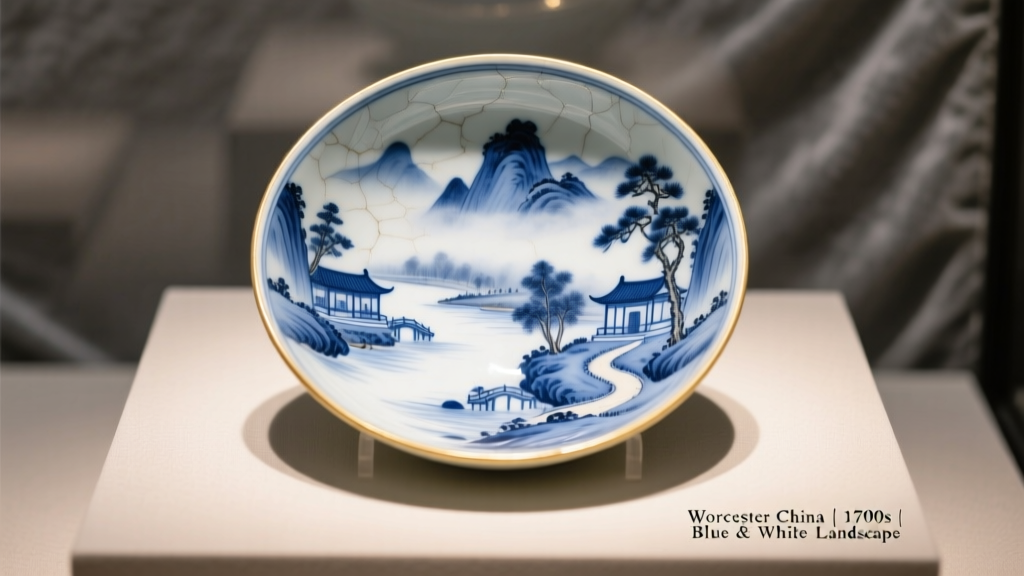
Worcester Porcelain Bowl: Chinese Landscape Blue-and-White, c. 1765–1775, 3 × 7 Inches — Authentication, Provenance, and Market Context