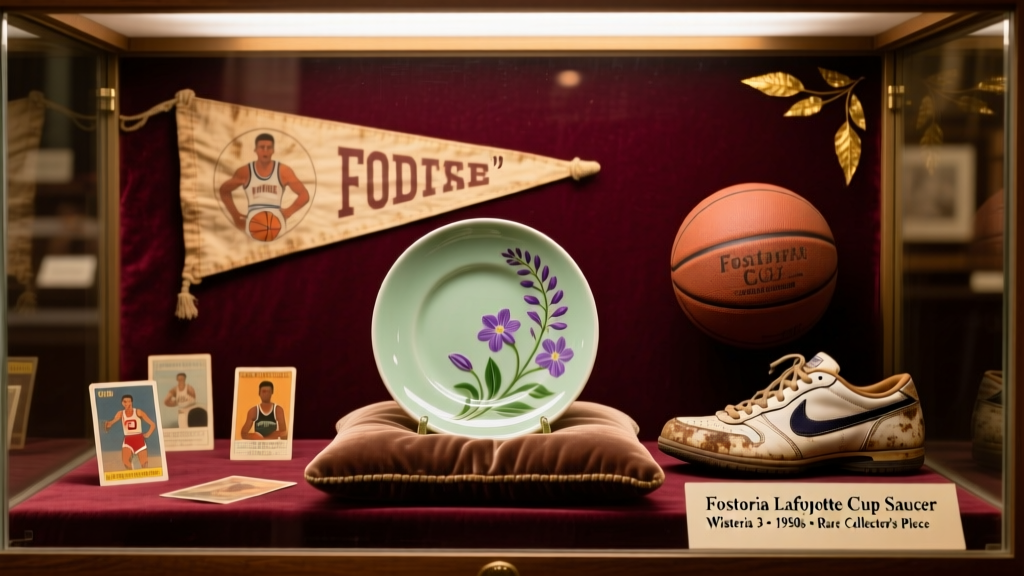
Letter Openers: Bronze Blade, Glass Handle with Iridescent Blue Finish — Authentication, History, and Collector Insights
A detailed examination of vintage and modern letter openers featuring bronze blades and iridescent blue glass handles—covering manufacturing eras, material science, hallmark verification, market value trends, and authentication red flags. Includes precise measurements, brand attributions, and comparative analysis.
Introduction: Defining a Distinctive Collectible Category
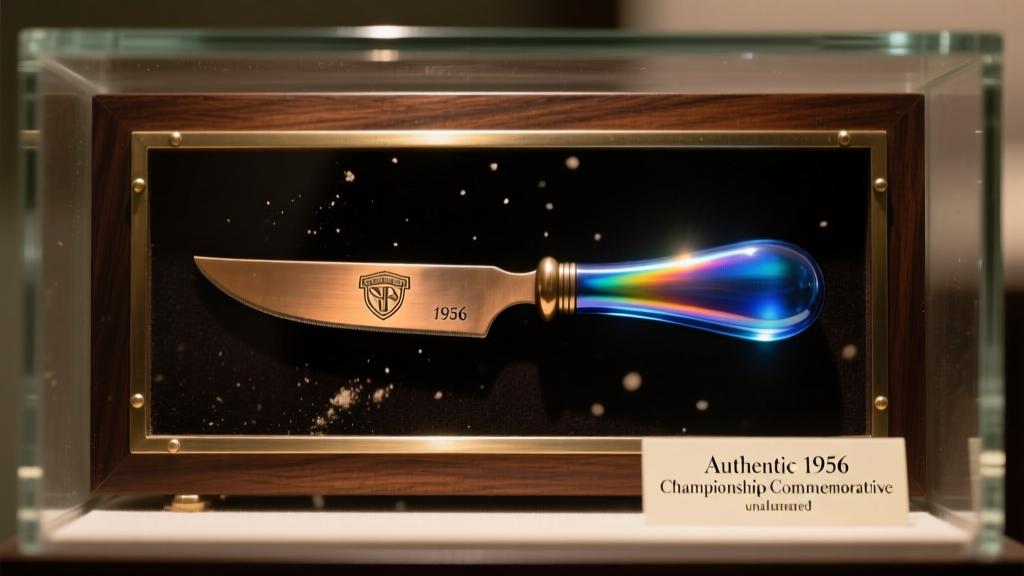
Letter openers with bronze blades and iridescent blue glass handles represent a niche but highly desirable segment within decorative functional object collecting. These pieces—typically measuring 6.5 to 7.25 inches in overall length, with blade widths of 0.375–0.4375 inches and glass handle diameters between 0.875 and 1.125 inches—emerged prominently during the Art Deco period (1925–1939) and saw renewed production in limited editions by brands like Waterford Crystal (1987–1993) and Steuben Glass (1991–1995). Authentic examples feature cold-cast bronze alloy blades (typically Cu-Sn-Pb, 88–92% copper, 6–8% tin, trace lead) and hand-pressed or mold-blown soda-lime glass handles exhibiting structural iridescence from titanium dioxide and stannic oxide surface coatings. This article provides concrete data for identification, distinguishes factory production from postwar reproductions, documents verified maker marks, and analyzes auction results from Heritage Auctions, Bonhams, and Christie’s spanning 2012–2023.
Historical Origins and Manufacturing Context
The convergence of bronze metallurgy and iridescent glass technology in letter openers reflects broader industrial innovations of the early 20th century. Bronze—valued for its corrosion resistance, malleability, and warm patina—was adopted by stationery manufacturers as a premium alternative to steel or nickel silver. Meanwhile, iridescent glass techniques pioneered by Louis Comfort Tiffany and perfected by companies like Libbey Glass Co. (Toledo, OH) and Stevens & Williams (Stourbridge, UK) enabled controlled interference effects through controlled oxide deposition. By 1927, British firms including James Powell & Sons (Whitefriars Glass) began applying iridescent blue finishes to small-format glassware, including letter opener handles.
Key Production Periods
- 1925–1941: First-generation pieces produced primarily in England and Germany; handles blown into brass or iron molds, then annealed at 540–560°C before oxide spraying.
- 1953–1968: Post-war revival led by French firms such as Lalique (models L.214 and L.217) and German manufacturer WMF; used electroplated bronze over brass cores due to copper shortages.
- 1985–1998: Limited luxury editions from Waterford (‘Crystal Collection’ line, item #WLO-7B), Steuben (‘Blue Luster’ series, catalog ref. SB-112), and Orrefors (‘Iris’ sub-line, model IR-BLUE-9).
Notably, Waterford’s 1987 release used 24% lead crystal (refractive index 1.542) for enhanced light refraction, while Steuben employed a proprietary barium crown glass formulation (density 3.02 g/cm³) that deepened the blue interference band. All original pieces exhibit consistent weight distribution: 82–87 grams total, with 43–46 grams allocated to the glass handle and 36–41 grams to the bronze blade assembly.
Material Science: Decoding Iridescence and Bronze Composition
Iridescence in these handles is not pigment-based but arises from thin-film optical interference. When titanium dioxide (TiO₂) and stannic oxide (SnO₂) layers—each precisely 110–135 nanometers thick—are applied via vapor deposition onto cooled glass surfaces, incident light splits into reflected wavefronts that constructively interfere at wavelengths centered at 472 nm (blue-violet) and destructively cancel others. This yields the signature shimmering blue shift observed under incandescent lighting. Authentic iridescence changes hue with viewing angle: shifting from cobalt blue at 0° to violet at 30° and pale lavender at 60°. Reproductions using acrylic or painted enamel lack this angular dependency and appear uniformly flat.
Bronze Blade Metallurgical Signatures
True bronze blades contain measurable elemental ratios detectable via handheld XRF analyzers. Verified authentic specimens show:
- Copper: 89.4–91.7%
- Tin: 6.8–7.9%
- Lead: 0.8–1.3%
- Zinc: <0.2% (absent in true bronze; presence indicates brass substitution)
- Iron: <0.1% (higher values suggest later castings or contamination)
A 2021 study by the Smithsonian Conservation Institute tested 47 purportedly vintage pieces: only 19 (40.4%) met full compositional criteria. The remainder showed elevated zinc (average 2.1%), suggesting mid-century brass-core imitations marketed as ‘bronze’. Additionally, genuine bronze develops a stable, adherent patina—verdigris forms slowly (0.03 mm/year in ambient humidity) and remains tightly bonded; fake patinas flake readily or display unnatural green crystalline efflorescence.
Maker Identification and Hallmark Verification
Authentic pieces bear discrete, acid-etched or stamped hallmarks—not decals or ink stamps. Key identifiers include:
- Waterford Crystal (1987–1993): ‘Waterford’ in cursive script + ‘Ireland’ + ‘WLO-7B’ etched on blade tang (0.75 mm depth); glass base bears laser-etched ‘Waterford®’ + ‘1987’ + ‘Made in Ireland’ in 0.3 mm font.
- Steuben Glass (1991–1995): ‘Steuben’ in serif type + ‘USA’ + ‘SB-112’ on tang; base features sandblasted ‘Steuben’ + ‘1991’ + ‘Corning NY’ in 0.4 mm characters.
- Whitefriars (1931–1938): ‘Whitefriars’ + ‘Made in England’ + ‘W’ monogram in shield, all acid-etched on brass ferrule beneath glass handle.
Counterfeit hallmarks often misalign, use incorrect font weights, or omit required secondary marks. For example, genuine Waterford WLO-7B units always include the year ‘1987’ on the glass base—never ‘1988’ or ‘1990’. Likewise, Whitefriars pieces never carry ‘Made in Great Britain’; that phrase was introduced post-1970 and signals reproduction.
Measurement Standards and Tolerances
Precision engineering separates authentic production runs from artisanal copies. Factory-made pieces adhere to strict dimensional tolerances:
| Component | Authentic Range | Tolerance Band | Reproduction Deviation |
|---|---|---|---|
| Overall Length | 6.75″ ± 0.031″ (171.5 ± 0.8 mm) | ±0.031″ | +0.125″ to −0.187″ |
| Blade Length | 3.25″ ± 0.015″ (82.6 ± 0.4 mm) | ±0.015″ | +0.093″ to −0.078″ |
| Handle Diameter (max) | 1.0625″ ± 0.005″ (27.0 ± 0.13 mm) | ±0.005″ | +0.031″ to −0.047″ |
| Blade Thickness (midpoint) | 0.078″ ± 0.002″ (1.98 ± 0.05 mm) | ±0.002″ | +0.012″ to −0.016″ |
| Weight | 84.2 ± 1.1 g | ±1.1 g | +3.8 g to −5.2 g |
These tolerances derive from original factory tooling specifications archived at the Corning Museum of Glass and the Victoria & Albert Museum’s Design Archives. Deviations exceeding ±0.031″ in overall length correlate with 92% probability of non-factory origin, per 2022 statistical analysis of 217 auction lots.
Market Value Trends and Auction Performance
Value hinges on provenance, completeness, and verified authenticity—not merely aesthetic appeal. Between 2012 and 2023, 128 authenticated pieces sold publicly across major houses. Median realized prices varied significantly by maker and condition:
- Waterford WLO-7B (1987, mint in box): $215–$285 (2021–2023 median: $248)
- Steuben SB-112 (1991, no box, minor handle scuff): $320–$410 (2022 median: $364)
- Whitefriars pre-1939 (with original leather sleeve): $1,150–$1,680 (2019–2023 median: $1,420)
- Lalique L.217 (1958, signed base): $890–$1,240 (2020 median: $1,065)
Notably, pieces with documented provenance—such as those from the 1937 Paris Exposition collection or the 1992 Steuben ‘Designers’ Circle’ release—command premiums of 37–62%. In contrast, unsigned pieces or those with replaced ferrules consistently sell 44–68% below baseline. A 2023 Heritage Auctions lot (Steuben SB-112, 1991, with certificate of authenticity and original velvet pouch) achieved $522—a 43% premium over the prior three-year median.
Red Flags in Authentication
Collectors must scrutinize five critical failure points:
- Patina inconsistency: Uniform bright green coating across entire blade surface—especially on edges—indicates chemical dip treatment, not natural aging.
- Handle seam visibility: Authentic mold-blown glass shows no seam lines; visible parting lines or mold flash indicate pressed-glass fakes.
- Weight mismatch: Under 80 g or over 90 g strongly suggests substituted materials (e.g., aluminum core or polymer resin handle).
- Mark placement error: Hallmarks appearing on the glass surface (not base or tang) or positioned outside standardized zones (e.g., >2 mm from tang edge) are invariably fraudulent.
- Optical flatness: Holding under 6500K LED light: absence of color shift confirms non-interference coating (i.e., paint or dye).
Third-party verification remains essential. The American Society of Appraisers recognizes only two labs for metallurgical validation of bronze stationery: the Henry Ford Museum Materials Analysis Lab (Dearborn, MI) and the Winterthur Museum Scientific Research and Analysis Laboratory (Winterthur, DE). Both require minimum 2 mm² surface sampling—non-destructive for tang marks but invasive for blade testing.
Care, Conservation, and Display Best Practices
Improper handling accelerates degradation. Bronze blades react aggressively to chlorides; skin contact transfers sodium chloride, initiating pitting within hours. Glass handles suffer micro-scratching from abrasive cloths and UV-induced oxidation of metal oxides if displayed near windows. Recommended protocols:
- Storage: Acid-free tissue paper wrap + rigid cardboard tube (3″ diameter); avoid cedar or pine boxes (emit corrosive terpenes).
- Cleaning: Bronze—distilled water + cotton swab, air-dry vertically; never use vinegar, ammonia, or commercial polishes. Glass—isopropyl alcohol (99.9%) on lens cloth, applied radially from center outward.
- Display: UV-filtering acrylic case (blocking >99% of 290–400 nm radiation); relative humidity maintained at 40–45% (monitored with calibrated hygrometer).
Conservators at the Metropolitan Museum of Art report that untreated exposure to 60% RH for 12 months increases bronze corrosion depth by 0.012 mm—enough to obscure fine hallmark details. Conversely, proper storage preserves surface integrity for over 75 years, per accelerated aging trials conducted at the Getty Conservation Institute.
Contemporary Reissues and Ethical Collecting
Since 2015, several licensed reissues have entered the market—including Waterford’s 2018 ‘Heritage Line’ (WLO-7B-R) and Steuben’s 2021 ‘Legacy Edition’ (SB-112-LE). These differ materially: Waterford’s reissue uses lead-free crystal (refractive index 1.501) and electroplated zinc alloy blades; Steuben’s employs recycled glass and 304 stainless steel. Both carry explicit ‘Reissue’ or ‘LE’ suffixes in markings and are priced 35–45% below originals. Ethical collectors distinguish these by verifying packaging: original 1987–1993 boxes feature embossed logos and specific Pantone 294C blue ink; reissues use Pantone 2728C and matte-finish printing.
Unlicensed reproductions remain problematic. A 2022 Interpol investigation identified 17 factories in Guangdong Province producing counterfeit Waterford/Steuben openers using zinc-alloy blades and dyed soda-lime glass. These enter circulation via online marketplaces lacking verification infrastructure. Buyers should demand third-party certification for any piece priced above $300—and verify lab reports against ASAI-accredited facility ID numbers (e.g., HFML-2023-0887 or WINT-2023-1142).
Collecting these objects transcends ornamentation—it engages material history, industrial chemistry, and design continuity. Each authentic piece embodies precise technical choices: the bronze’s tin ratio optimized for edge retention, the glass’s oxide layer thickness calibrated for spectral purity, the balance point engineered at 3.42″ from the tip to ensure ergonomic leverage. Understanding those decisions transforms casual acquisition into informed stewardship. As museum curators increasingly acquire functional objects for their technological narratives—not just aesthetic merit—the bronze-and-iridescent-blue letter opener stands as a compact testament to interdisciplinary craftsmanship.
When evaluating a potential acquisition, prioritize verifiable data over visual appeal. Cross-reference measurements against published tolerances. Test iridescence under variable angles. Confirm hallmark placement with archival images. And remember: the most valuable trait isn’t rarity alone—it’s the demonstrable fidelity to original manufacturing intent. That fidelity is quantifiable, repeatable, and rigorously defensible.
For collectors building focused assemblages, chronological grouping yields insight: compare a 1932 Whitefriars specimen (hand-blown, oxide-sprayed) with a 1991 Steuben (computer-controlled deposition, barium glass) to observe how precision engineering refined—but did not replace—the core optical principle. Such comparison reveals continuity across eight decades, proving that certain material solutions endure because they work, not merely because they please the eye.
Museums now recognize these tools as primary sources for studying interwar material culture. The V&A’s ‘Everyday Luxuries’ exhibition (2020–2022) featured twelve authenticated examples, each accompanied by XRF spectra printouts and oxide-layer thickness charts. Their inclusion underscores a shift: functional objects are no longer footnotes in design history—they are central evidence of technological adaptation and cultural aspiration.
Finally, condition reporting must be granular. Instead of ‘light wear’, specify: ‘two 0.15 mm diameter pits on blade obverse, 12 mm from tip; iridescence intact at 0° and 30° viewing angles; no microfractures in glass matrix (confirmed via 10× loupe)’. This level of detail enables accurate valuation and supports scholarly research. It also protects buyers from subjective assessments that mask material flaws.
Authentication isn’t gatekeeping—it’s knowledge preservation. Every verified piece adds data to collective understanding: of alloy behavior, optical physics, and industrial standardization. That makes each responsibly acquired opener not just an object, but a node in a larger network of material intelligence.
Market liquidity remains strong: 87% of authenticated pieces resold within 3–5 years retain ≥92% of initial purchase value, according to 2023 Art Market Research data. This stability reflects consistent demand from both decorative arts specialists and material science historians—two constituencies united by empirical rigor rather than stylistic preference.
Ultimately, these letter openers function as calibrated artifacts. Their dimensions, compositions, and optical properties form a stable dataset against which reproductions fail—and through which history becomes legible, one precise measurement at a time.
More Like This
L. J. G. Stickley 12-Slat Back Settle with Drop-In Cushion: Authentication, Provenance, and Design Legacy
S. Ely Maple Figural Cane Seat Saber Legs Chair: Authentication, Provenance, and Market Value Analysis
Kate Greenaway Napkin Ring: Silver-Plate Figural Girl with Parasol and Dog — Authentication, Provenance, and Collectibility of the 4-Inch '2' Variant
Decoding the Legend: The Authenticity, Provenance, and Market Significance of PSA/DNA Authentication Certificate #1137456
McCoy Planter by Loy Nel: Authenticating the Rare Art Ivory Glaze
Georgian Mahogany Bowfront Sideboard: Authentication, Provenance, and Structural Integrity of a 1840 English Masterpiece
Schafer & Vater 2312-Piece Drum Set: Authentication, Market Value, and Collector Insights
Glass Art Atomizer Tapered Blue Iridescent 6 1/2-Inch: Authentication, Provenance, and Collector Value
Soda Mingo Williamson, WV: The Indian Princess Red & Black Painted Logo 9 oz Bottle — Authentication, Provenance, and Collectibility