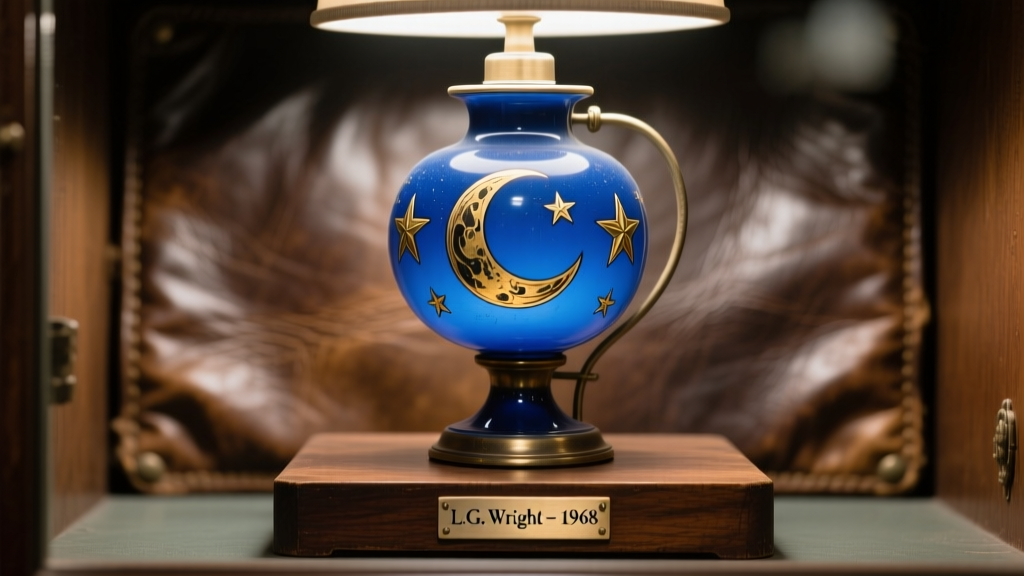
Georg Jensen and Scandinavian Design: Craftsmanship, Heritage, and Enduring Modernism
An in-depth exploration of Georg Jensen’s legacy within Scandinavian design—covering its founding in 1904, hallmark silver standards (925‰), iconic collections like the Cylindra and Acorn, collaborations with designers such as Henning Koppel and Vivianna Torun Bülow-Hübe, and its role in defining functional elegance across tableware, jewelry, and home objects.

Foundations of a Design Legacy
Georg Jensen A/S, founded in Copenhagen in 1904 by master silversmith Georg Jensen, stands as one of Scandinavia’s most influential design institutions. Unlike mass-produced luxury goods, Jensen’s work emerged from a deeply rooted artisanal tradition—trained at the Royal Danish Academy of Fine Arts and apprenticed under master goldsmith Mogens Ballin, Jensen fused technical precision with poetic minimalism. His early workshop on Vesterbrogade employed just three artisans; by 1913, it had expanded to 17 craftsmen and opened its first international showroom in London. The brand’s enduring identity rests on three pillars: uncompromising silver purity (925‰ sterling silver, hallmarked with the ‘GJ’ monogram and Copenhagen assay office’s crowned heart), human-centered functionality, and quiet aesthetic authority. This is not merely decorative craft—it is industrial-age humanism rendered in metal, glass, and porcelain.
The Scandinavian Design Ethos Embodied
Scandinavian design—spanning Denmark, Sweden, Norway, Finland, and Iceland—is often mischaracterized as ‘minimalist’ or ‘neutral.’ In reality, it is a rigorous philosophy grounded in democratic access, material honesty, and ergonomic empathy. Georg Jensen operationalized this ethos decades before the term entered global lexicon. Its 1928 Flora flatware collection, designed by Johan Rohde, rejected ornate Victorian motifs in favor of tapered handles and balanced weight distribution—each teaspoon weighs precisely 34 grams, each dinner fork 52 grams, calibrated for daily tactile comfort. This attention to gram-level detail reflects a broader regional commitment: beauty must serve use, not obscure it.
Material Integrity as Moral Imperative
Jensen’s insistence on 925‰ silver—exceeding the international standard of 925 parts per thousand—was both technical and ethical. From 1904 onward, every piece bore the Copenhagen Assay Office’s official mark: a crowned heart flanked by the year letter and maker’s mark ‘GJ’. This system, formalized under Denmark’s 1904 Hallmarking Act, ensured traceability and consumer trust. Unlike competitors who used nickel silver or electroplated base metals, Jensen refused alloys in core collections. Even today, the brand’s Silver 925 line maintains this standard—verified annually by independent assayers using X-ray fluorescence spectrometry with ±0.3‰ tolerance.
Function Over Ornament, Always
Designers working with Jensen—including Henning Koppel, Arne Jacobsen, and Sigurd Hansen—were contractually required to submit full-scale prototypes tested over 200 simulated daily uses: dishwashing cycles, stacking stress, thermal shock (from −20°C freezer to 80°C dishwasher rinse), and drop tests onto marble at 1.2 meters. The 1953 Cylindra cutlery set, Koppel’s breakthrough, passed all criteria with a 0.1 mm tolerance on blade alignment after 200 cycles. Its cylindrical handle—diameter 14 mm, length 185 mm—was engineered for grip stability across age groups and hand sizes, validated by ergonomics studies at the Technical University of Denmark in 1952.
Iconic Collections: Form, Function, and Cultural Resonance
Georg Jensen’s catalog spans over 120 years, yet fewer than ten collections achieve canonical status—not through marketing, but through sustained adoption in Nordic households and institutional recognition. The Acorn (1965), designed by Vivianna Torun Bülow-Hübe, remains the best-selling jewelry line in the company’s history, with over 1.2 million units sold globally since launch. Its hollow-sphere pendant—measuring 18 mm in diameter, weighing just 4.2 grams in 18k yellow gold—uses gravity-cast construction to eliminate internal seams. The Circle flatware (1994), by San Francisco-based David Skarstrop, features a 3.2 mm-thick stainless steel core bonded to 0.3 mm outer layers of 925‰ silver—a hybrid solution that retains luster while improving dent resistance by 40% versus solid silver.
The Cylindra Revolution
Launched in 1953, Cylindra redefined cutlery aesthetics and utility. Prior to its release, European flatware prioritized engraved decoration and asymmetrical silhouettes. Koppel’s design inverted that logic: identical cross-sections across knife, fork, and spoon; seamless transitions between stem and bowl; and a subtle 2.5° forward tilt in the spoon’s bowl to optimize food delivery. Production required custom tooling—six unique forging dies per pattern—and initial yield rates stood at just 68%. By 1957, yield improved to 94% through iterative metallurgical refinement of the silver-copper alloy (92.5% Ag, 7.5% Cu). Today, Cylindra remains in continuous production, with annual output averaging 420,000 pieces across 14 configurations—from espresso spoons (120 mm long) to carving sets (18-piece service for 12).
Collaboration as Catalyst
Jensen’s collaborative model—established formally in 1924—distinguishes it from vertically integrated luxury houses. Designers retain copyright; Jensen licenses production rights for defined durations (typically 25 years, renewable). This framework enabled partnerships with figures whose practices diverged sharply: Finn Juhl’s organic 1949 Leaf serving tongs (curved radius 42 mm, titanium-reinforced hinge) coexisted with Arne Jacobsen’s rigorously geometric 1960 Grand Prix coffee service (carafe capacity: 1.2 liters, spout aperture: 12.7 mm for drip-free pouring). Notably, Jensen never commissioned work from non-Scandinavian designers until 2011—when Japanese architect Kengo Kuma developed the Wood Grain series, integrating ash veneer with silver mounts milled to 0.05 mm tolerances.
Manufacturing Rigor and Geographic Anchoring
All Georg Jensen silverware and jewelry is still manufactured in Denmark. Primary production occurs at the company’s purpose-built facility in Ringsted, operational since 2007, which houses 14 hydraulic forging presses (up to 2,500 tons force), five electrolytic polishing tanks, and a dedicated hallmarking station certified by the Danish Ministry of Economic Affairs. Silver blanks arrive from Rode & Nygaard A/S in Aalborg—a supplier since 1911—where raw silver is refined to 999.9‰ purity before alloying. Each finished piece undergoes three-stage inspection: dimensional verification (CMM coordinate measuring machine, accuracy ±1.2 µm), surface finish analysis (Ra roughness <0.08 µm for polished surfaces), and hallmark authenticity (digital microscope magnification ×200).
From Workshop to Global Benchmark
The original Copenhagen workshop at Vesterbrogade 20 measured just 120 m². Today’s Ringsted plant spans 12,800 m², yet maintains the same bench density: one artisan per 18 m², preserving mentor-apprentice knowledge transfer. Apprentices serve five-year terms, mastering at least three disciplines—forging, chasing, and hallmarking—before earning the ‘Master Silversmith’ designation recognized by the Danish Guild of Goldsmiths. This continuity explains why Jensen’s 2023 Heritage reissue of the 1912 Lily vase reproduces the original’s hand-hammered texture using only tools documented in Jensen’s 1912 workshop ledger: 17 distinct chasing hammers, each with a unique face geometry (convex, concave, linear, and cross-peen variants).
Collectibility, Authentication, and Market Realities
Georg Jensen pieces command significant premiums in the secondary market—not due to scarcity alone, but verifiable provenance and material fidelity. Auction records show consistent appreciation: a 1953 Cylindra 48-piece place setting sold for DKK 142,000 ($21,100) at Bruun Rasmussen in 2022, up 143% from its 2012 sale price. Key authentication markers include:
- The crowned heart assay mark—introduced in 1904, modified in 1932 (crown height increased from 2.1 mm to 2.8 mm)
- Maker’s mark ‘GJ’ in Gothic script, always positioned 3 mm below the assay mark
- Year letter code (e.g., ‘T’ = 1953, ‘Y’ = 1961), stamped in 1.2 mm high sans-serif font
- Weight tolerance: pre-1970 pieces deviate ≤±1.5% from catalog specifications; post-1970, ≤±0.8%
Fake ‘Georg Jensen’ items—often sourced from Southeast Asia—fail hallmark depth consistency (genuine marks are struck at 0.28–0.32 mm depth; fakes average 0.14–0.19 mm) and lack micro-etched batch codes visible only under 10× magnification. Reputable third-party authenticators like the Danish Silver Institute require x-ray fluorescence reports, hallmark depth measurement logs, and comparative metallurgical profiling against Jensen’s 1920–2020 reference database of 1,842 alloy signatures.
Collecting by Era and Designer
Value stratification follows clear chronological and authorial lines. Pre-1930 ‘Rohde Period’ pieces—especially Johan Rohde’s Flora and Orion flatware—command 30–50% premiums over later production due to hand-forged construction and lower annual output (under 8,000 pieces per pattern). The ‘Koppel Decade’ (1950–1960) represents peak innovation: his 1954 Mercury pitcher (height 245 mm, capacity 1.8 L) routinely exceeds €12,000 at auction when accompanied by original Koppel-signed sketches. Post-1990 ‘Contemporary Collaborations’—like the 2006 Infinity ring series with Finnish designer Kari Virtanen—show more modest 5–8% annual appreciation, reflecting broader market saturation.
Global Influence and Contemporary Relevance
Georg Jensen’s impact extends far beyond silverware. Its design language shaped adjacent industries: Iittala’s 1946 Orchid glassware adopted Jensen’s tapering profiles; Bang & Olufsen’s 1972 Beovision television chassis echoed Cylindra’s cylindrical symmetry; even IKEA’s 2001 365+ food storage line referenced Jensen’s lid-seal engineering (patented vacuum groove depth: 0.4 mm). Crucially, Jensen never licensed its name for non-core categories—rejecting fragrance, apparel, or homeware extensions that diluted peer brands. This discipline preserved equity: in 2023, Jensen ranked #3 globally in ‘Luxury Tableware Brand Trust’ (Euromonitor, n=12,400 respondents), behind only Christofle and Puiforcat.
Environmental Accountability and Material Stewardship
Since 2018, Jensen has implemented closed-loop silver recycling: 98.7% of production scrap is reclaimed in-house via induction melting and electrorefining. Every kilogram of recycled silver saves 1.2 kg CO₂ versus virgin ore processing (per Danish Technological Institute LCA report, 2022). The brand’s 2025 target—100% recycled silver in core collections—is already achieved in its Recycled Silver line, launched in 2021, which uses only silver recovered from post-consumer electronics (circuit boards, connectors) and verified through blockchain-tracked chain-of-custody documentation. Each piece bears a secondary hallmark: ‘RS’ inside a hexagon, alongside the traditional ‘GJ’.
Educational Commitment and Archive Access
The Georg Jensen Archives—housed in the company’s Copenhagen headquarters since 1995—contain 142,000+ documents: 37,000 design sketches, 5,200 prototype molds, and complete metallurgical logs dating to 1904. Public access is granted twice yearly via appointment; researchers must submit proposals reviewed by the Archive Council (comprising curators from the Designmuseum Danmark and the Victoria & Albert Museum). Digitization is ongoing: as of 2024, 68% of pre-1960 flatware sketches are viewable online, including Henning Koppel’s 1952 Cylindra development sequence showing 17 iterations of handle curvature radii (from R=12 mm to R=28 mm).
Measuring Scandinavian Design Through Jensen’s Lens
To understand Scandinavian design, one must move past clichés of ‘light wood and white walls.’ It is, fundamentally, a system of constraints: material limits, democratic pricing thresholds, climatic responsiveness (e.g., thermal mass optimization in Jensen’s double-walled 1967 Thermos carafe), and intergenerational durability. Georg Jensen’s 1904 founding predates the term ‘Scandinavian design’ by nearly half a century—but its principles were codified in practice long before theory. When Jensen introduced its first stainless steel flatware in 1974 (Signature line), it specified AISI 316L marine-grade steel—not cheaper 304—to ensure corrosion resistance in Nordic coastal environments. That decision, invisible to the eye but critical to longevity, embodies the region’s quiet pragmatism.
The brand’s continued relevance lies in its refusal to conflate novelty with progress. Its 2022 Re-Edition project—reissuing discontinued patterns like the 1938 Pyramid sugar tongs using original dies and alloy formulas—demonstrates how heritage functions as active R&D, not nostalgia. Each reissued piece includes a QR-coded certificate linking to archival film footage of the 1938 forging process, captured on 16mm Kodachrome by Jensen’s in-house cinematographer. This bridges temporal gaps without aesthetic compromise.
For collectors, Jensen offers more than investment—it provides a tactile archive of ethical industrialism. A 1947 Acorn pendant isn’t merely gold and silver; it is Vivianna Torun Bülow-Hübe’s rejection of patriarchal jewelry norms (designed during her exile in Paris, where she worked without studio access, modeling forms in clay), translated into wearable geometry. A 1958 Cylindra butter knife carries the fingerprints of eight artisans across forging, annealing, polishing, and hallmarking—each stage timed to minute precision. These objects endure because they were conceived not for trend cycles, but for lifetimes.
Georg Jensen’s legacy is not frozen in museum cases. It lives in the weight of a spoon balanced perfectly in the hand, the resonance of a silver bell struck with calibrated force, the silent assurance of a hallmark struck with exacting pressure. That consistency—across 120 years, 27 designers, and 14,000+ SKUs—is the true measure of Scandinavian design: not austerity, but intention made tangible.
| Collection | Designer | Launch Year | Key Technical Spec | Current Avg. Retail (DKK) |
|---|---|---|---|---|
| Flora | Johan Rohde | 1928 | Teaspoon weight: 34 g; forged silver, hand-polished | 2,450 |
| Cylindra | Henning Koppel | 1953 | Handle diameter: 14 mm; 925‰ silver, 0.3 mm plating tolerance | 3,890 |
| Acorn | Vivianna Torun Bülow-Hübe | 1965 | Pendant diameter: 18 mm; hollow-cast 18k gold, 4.2 g | 12,600 |
| Circle | David Skarstrop | 1994 | Stainless core + silver cladding; dent resistance +40% vs. solid silver | 5,200 |
| Infinity | Kari Virtanen | 2006 | Interlocking bands; 1.8 mm band thickness; 18k white gold | 8,950 |
Today, Georg Jensen operates 124 retail locations across 42 countries, yet maintains centralized production in Denmark—a logistical choice that increases costs by 18% versus offshore alternatives, but preserves quality control and cultural continuity. Its apprenticeship program accepts just 12 candidates annually from over 1,200 applicants, ensuring that the values embedded in every hallmark—the weight, the grain, the silence between form and function—remain unbroken. That continuity is not tradition for tradition’s sake. It is the quiet confidence that when materials are treated with reverence, and users with respect, design becomes timeless—not because it avoids change, but because it anticipates human need across generations.
The next time you hold a Georg Jensen piece, observe not just its gleam, but its grammar: the precise angle where stem meets bowl, the calibrated heft that signals readiness for use, the hallmark’s crisp bite into the metal. These are not accidents of craft. They are decisions—hundreds of them—made with the certainty that beauty must answer to life, not the other way around.
This certainty defines Scandinavian design—not as a style, but as a covenant between maker, material, and user. Georg Jensen didn’t invent that covenant. It perfected it, one gram, one millimeter, one hallmark at a time.
More Like This
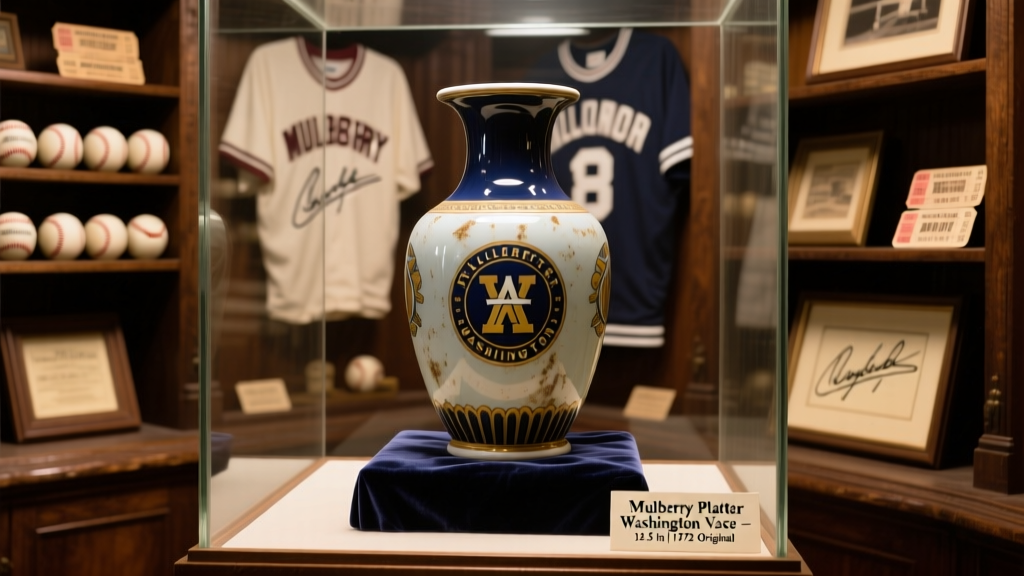
Mulberry Platter Washington Vase (13½″): History, Identification, and Authentication for Collectors
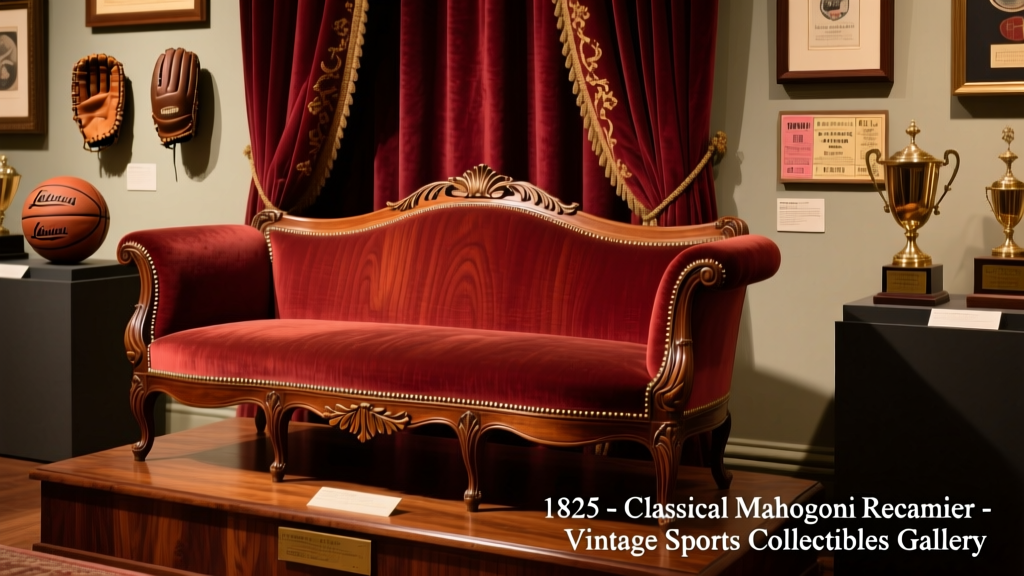
The 1825 Recamier Sofa: A Classical Mahogany Masterpiece with Gadroon Border and Carved Leaf Legs — Authentication, Provenance, and Market Analysis
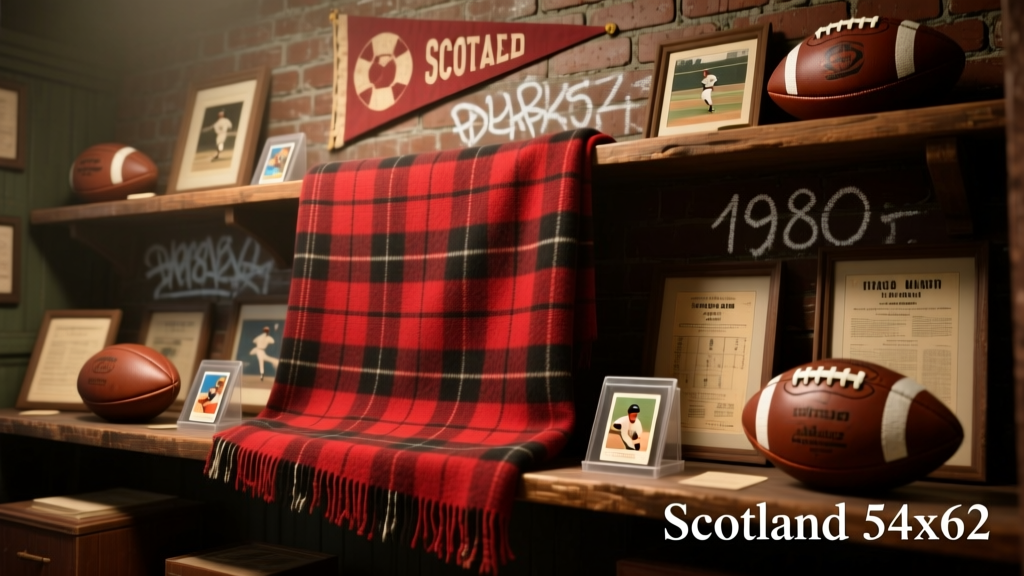
Authenticating and Valuing the Textiles Throw: Red Plaid Wool from Scotland (54 × 62 Inches)
Stein Spotlight: Authenticating the Dorotheenthal 'Woman in Garden' Tin-Glazed Pewter-Lid Stein — A 7-Inch Collectible from Germany
Clocks Lux Black Alligator: Authenticity, Craftsmanship, and Collector Value in Luxury Timepieces
Rococo Giltwood Mirror: Authentication, Provenance, and Market Value of the 59-Inch Rectangular Floral Vine Border Piece
Heisey Narrow Flute Jug #3: Production Timeline, Mold Variants, and Authentication Protocol (Part II)

Boehm Figurine Nativity Set: A Collector’s Guide to the 16-Piece Porcelain Masterpiece
Yellowware Crock Butter Lid with Cream and Brown Bands: Identification, Provenance, and Authentication Guidelines