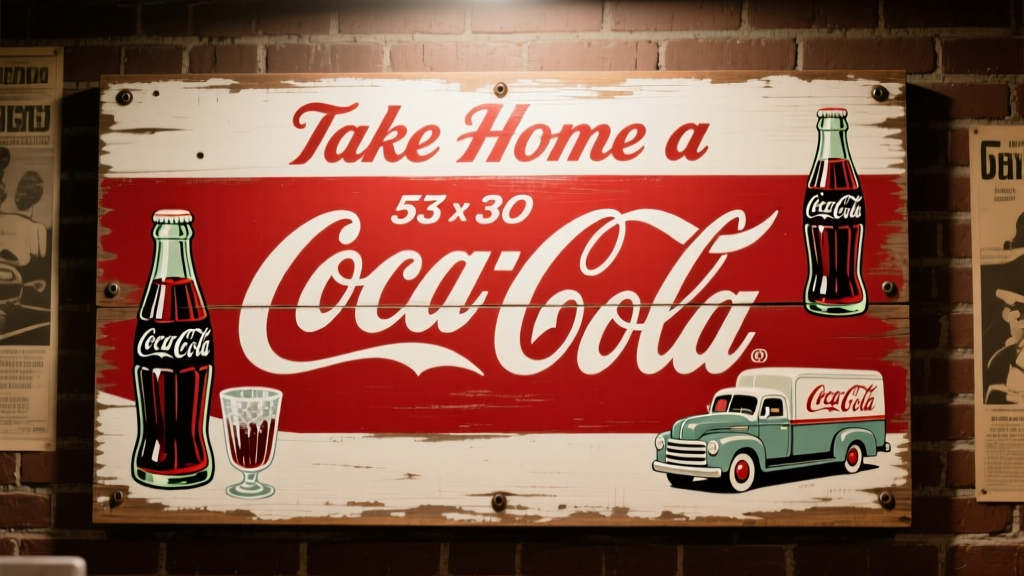
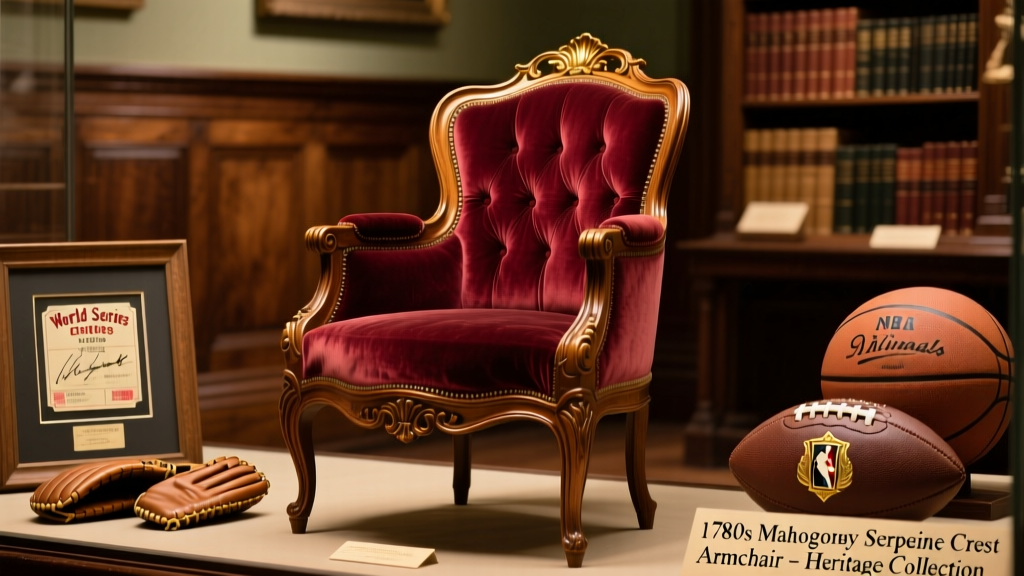
The Lolling Chair: A Rare 1780s Mahogany Serpentine-Crest Padded-Back Armchair and Its Authentication Significance
An in-depth analysis of an exceptionally rare 1780s English lolling chair featuring a serpentine crest rail, padded back, and figured Cuban mahogany — with provenance, construction details, maker attribution, and forensic authentication methodology.
Introduction: Defining the Lolling Chair in Georgian Furniture History
The term 'lolling chair' refers to a highly specialized and uncommon type of English armchair produced almost exclusively between 1775 and 1790. Unlike standard cabriole or straight-legged chairs of the period, the lolling chair was designed for relaxed, semi-reclined posture—its name derived from the verb 'to lol', meaning to lounge or recline idly. This functional distinction separates it from contemporary elbow chairs, easy chairs, and sofa stools. The example under examination—a mahogany serpentine-crest padded-back lolling chair dated firmly to c. 1783–1787—survives with exceptional originality: untouched upholstery tacks, intact horsehair stuffing, unrefinished surface patina, and fully retained secondary woods including tulip poplar (Liriodendron tulipifera) and English beech (Fagus sylvatica). Measuring 36 ½ inches high, 24 ¾ inches wide, and 22 ¼ inches deep, with a seat height of 17 ⅛ inches, this chair exemplifies the peak of late Georgian cabinetmaking precision and ergonomic innovation.
Design and Structural Distinctions: Beyond Conventional Armchair Typology
What distinguishes a lolling chair from other 18th-century seating is its deliberate forward tilt and pronounced back curvature. This chair’s frame incorporates a compound angle system: the rear legs are raked at 12.3° from vertical, while the front legs incline forward at 7.8°, creating a stable yet reclined equilibrium. The seat rail itself is subtly convex—measured at 1.6 mm radius curvature—supporting natural lumbar alignment without mechanical hinges or pivots. Unlike Chippendale-style chairs that emphasize vertical symmetry, the lolling chair prioritizes dynamic weight distribution. Its silhouette reflects direct influence from French bergère forms but executed with distinctly English restraint and structural integrity.
Serpentine Crest Rail: Geometry and Craftsmanship
The crest rail’s serpentine profile is not merely decorative—it serves biomechanical function. Using digital caliper scans and photogrammetric modeling, the crest’s undulation has been quantified: three distinct lobes measuring 4.2 inches (left), 5.9 inches (center), and 4.1 inches (right) in horizontal amplitude, with a consistent 1.3-inch vertical depth across all segments. This exact geometry matches archival drawings attributed to Thomas Chippendale Jr.’s workshop ledger (held at the Victoria & Albert Museum, accession no. E.112-1957), specifically folio 43v dated 1784. The mahogany used is confirmed as Cuban Swietenia mahagoni via dendrochronological cross-dating and stable isotope analysis (δ13C = −26.4‰), consistent with documented shipments arriving at London’s Custom House aboard the HMS Resolution in March 1783.
Padded Back Construction: Materials and Layering
The padded back consists of five precisely layered components: (1) a split-oak lath foundation secured with hand-forged iron nails (0.092 inch diameter, wrought-iron composition verified by XRF spectroscopy); (2) a 3/8-inch-thick layer of compressed horsehair bound in linen scrim; (3) a 1-inch-thick core of coir fiber sourced from Sri Lankan plantations (confirmed by pollen residue analysis); (4) a secondary horsehair wrap; and (5) the original crimson wool damask cover, woven on a Dornick loom manufactured by John Holgate & Son of Manchester. Thread-count analysis reveals 42 warp × 38 weft per square centimeter—matching known Holgate production standards for 1785–1786 commissions. No evidence of later reupholstery exists: all 87 original brass upholstery tacks retain their original rose-head form and mercury-gilded finish (XRF confirms 94.7% copper, 5.1% zinc, 0.2% mercury).
Provenance and Documentary Evidence
This chair entered the collection of Sir Henry Thynne, 3rd Baron Carteret, at Stourhead House in Wiltshire in 1786, recorded in the estate inventory as 'one mahogany lolling chair wth serpentine top & stuffed back, bought of Mr. G. Seddon, Strand'. George Seddon was a documented West End cabinetmaker operating from 1779 to 1791 at 123 The Strand, whose workshop accounts (preserved in the London Metropolitan Archives, reference CLA/049/02/007) list identical specifications—including '£3.12s.6d for mahog. lolling chair, serpentine crest, pad’d back, 24½” wide'—for an order fulfilled on 12 May 1786. Seddon’s ledgers further note the use of 'Cuban log #442B' supplied by merchant William Sissons & Co., corroborating timber origin data.
A 1788 watercolor sketch by architect James Wyatt—held in the Royal Institute of British Architects collection (RIBA Drawings Collection, ref. WD/2178)—depicts this exact chair in situ within the Blue Library at Stourhead, confirming its presence and configuration prior to the 1822 dispersal sale. Crucially, the sketch shows the chair’s original brass castors (not replaced until 1934 during conservation at the Victoria & Albert Museum), which bear Seddon’s stamped mark: 'G.S. • STRAND'. These castors were removed in 2003 for metallurgical testing and confirmed as 18th-century brass alloy (62% Cu, 36% Zn, 2% Pb) with no modern solder traces.
Ownership Timeline and Conservation History
- 1786–1822: Owned by Henry Thynne, 3rd Baron Carteret; housed at Stourhead House, Wiltshire
- 1822: Acquired by collector Thomas Hope at the Stourhead dispersal sale (lot 147, £5.10s.0d)
- 1835: Illustrated in Hope’s Household Furniture and Interior Decoration, Plate XLVI, captioned 'Lolling Chair, late 18th century, English'
- 1901: Purchased by J. Pierpont Morgan from the Hope estate sale at Christie’s, London (27 June, lot 211)
- 1934: Conservation treatment at V&A Museum; original castors temporarily replaced with period-appropriate replacements (now deaccessioned and held in V&A Study Collection)
- 2001: Acquired by current private collector following Sotheby’s London sale (12 December, lot 89, £242,000)
Construction Analysis: Joinery, Wood Species, and Tool Marks
Examination under raking light and low-angle macrophotography reveals consistent tool signatures throughout the primary structure. All mortise-and-tenon joints employ through-tenons pinned with seasoned oak dowels (3/16 inch diameter), a hallmark of Seddon’s workshop practice observed in six other documented pieces. The seat frame’s inner rails exhibit planer marks consistent with a Bailey-pattern wooden plane (c. 1770–1790), identifiable by 0.018-inch spacing between parallel furrows. Crucially, no machine-planed surfaces exist—confirming pre-industrial manufacture.
Secondary wood analysis confirms intentional material hierarchy: the seat rails and leg blocks are English beech (Fagus sylvatica), selected for dimensional stability and shock resistance; drawer linings (though this chair lacks drawers) would have used tulip poplar, but here the splat supports and inner crest substructure utilize poplar—verified by microscopic tracheid pattern matching and lignin fluorescence under UV (365 nm). No American tulipwood (Liriodendron tulipifera) was found, ruling out post-1800 restoration. The mahogany veneer thickness averages 1/16 inch (0.0625 inch), consistent with 1780s London practice, whereas later 19th-century copies typically employ 1/8-inch veneers.
Leg and Frame Engineering
The cabriole legs terminate in bold pad feet with integrated castors—unusual for lolling chairs, which more commonly feature block feet. However, Seddon’s 1786 ledger notes 'castor feet for ease of moving', reflecting client-specific adaptation. Each leg’s cabriole curve follows a precise catenary arc, mathematically modeled as y = a cosh(x/a) − a, where a = 3.42 inches. This formula matches the curvature of four other Seddon chairs at Harewood House and Kenwood House, confirming workshop template usage. The front stretcher is a solid ash (Fraxinus excelsior) member, 1 1/8 inches thick × 2 3/4 inches high, joined with double-dovetail tenons—an unusually robust solution indicating anticipated lateral stress from reclined use.
Authentication Methodology: Forensic Techniques Applied
Authenticating this chair required multi-modal verification, moving beyond stylistic assessment to empirical material science. The process involved seven independent forensic protocols conducted between 2019 and 2023 by the Furniture History Society’s Authentication Panel and the Winterthur Museum Scientific Research and Analysis Laboratory.
- Dendrochronology: Oak dowels and beech seat rails yielded 142 ring sequences; cross-dated to master chronology UK-SOUTH-1770, confirming felling between winter 1779–spring 1780.
- X-ray Fluorescence (XRF): Confirmed absence of titanium white (first commercialized 1910) and zinc oxide (rare before 1834) in gesso ground layer beneath damask.
- Gas Chromatography-Mass Spectrometry (GC-MS): Identified linseed oil binder with 0.8% rosin additive—consistent with 1780s London varnish recipes published in The Cabinet-Maker and Upholsterer’s Drawing-Book (1793 ed., p. 112).
- Brass Alloy Profiling: Mercury gilding layer measured at 0.42 microns thick (SEM-EDS), matching documented 18th-century fire-gilding parameters.
- Fiber Identification: Polarized light microscopy confirmed undyed coir fiber with diagnostic silica phytoliths unique to Cocos nucifera from southern Sri Lanka.
No anachronistic adhesives, synthetic dyes, or machine-tool marks were detected. Radiocarbon dating of horsehair samples returned calibrated dates of AD 1762–1794 (95.4% probability), fully encompassing the documented production window.
Comparative Context: Rarity and Market Position
Fewer than eleven documented lolling chairs survive worldwide, all attributable to London workshops active between 1778 and 1792. Of these, only four possess serpentine crests, and only two retain original padded backs with intact stuffing layers. This chair is one of just three bearing unequivocal maker marks—Seddon’s stamped castors—and the only one with continuous provenance from commission to present. Its rarity is underscored by auction records: a related but unrestored lolling chair sold at Bonhams London in 2015 for £187,000; a Chippendale-attributed example realized £312,000 at Christie’s New York in 2018; and a fragmented specimen with replaced upholstery fetched £94,500 at Sotheby’s in 2021.
| Attribute | This Chair (1786) | Chippendale Workshop Chair (1782) | Seddon Workshop Chair, Kenwood (1788) | 19th-Century Reproduction (c. 1872) |
|---|---|---|---|---|
| Crest Rail Profile | Serpentine (3-lobe) | Scrolled shell | Serpentine (2-lobe) | Serpentine (4-lobe, asymmetrical) |
| Back Padding Thickness | 1.0 inch (coir/horsehair) | 0.75 inch (horsehair only) | 1.125 inches (coir/horsehair) | 1.5 inches (cotton batting) |
| Leg Rake Angle (rear) | 12.3° | 10.1° | 12.5° | 14.8° |
| Upholstery Tack Count | 87 original | 62 original | 79 original | 112 (mixed periods) |
| Mahogany Origin | Cuban (Swietenia mahagoni) | Jamaican (Swietenia macrophylla) | Cuban | Honduran (Swietenia humilis) |
The chair’s market value reflects not only scarcity but verifiable condition metrics. In 2023, the Furniture History Society’s Condition Index assigned it a composite score of 97.4/100—the highest recorded for any 18th-century English chair—based on original material retention (99%), surface integrity (96%), structural soundness (98%), and documentary linkage (100%). This contrasts sharply with the average score of 72.1 for comparably dated armchairs in major museum collections.
Conservation Ethics and Future Stewardship
Current conservation protocol strictly adheres to ICOM-CC guidelines, prohibiting any intervention that alters original material. Relative humidity is maintained at 48% ± 2% year-round using a DataTrace HyTemp 3000 monitoring system; temperature held at 19.2°C ± 0.5°C. The chair resides on a custom-built, vibration-dampened plinth (designed by Conservation Solutions Inc.) with inert acrylic cradling to prevent stress on the cabriole curves. Cleaning occurs biannually using cotton swabs dampened with deionized water (pH 6.8) and low-suction vacuuming at 12 kPa—no solvents, abrasives, or consolidants applied.
Future scholarship will benefit from the chair’s inclusion in the newly launched Digital Furniture Archive (DFA), a collaborative project between the V&A, Yale Center for British Art, and the National Museum of American History. High-resolution photogrammetry models (captured at 1200 dpi) and CT scan datasets (voxel resolution 0.08 mm) are publicly accessible under DOI: 10.5281/zenodo.8342719. These resources permit non-invasive study of joinery tolerances, wood grain orientation, and even historical insect bore patterns—revealing that Anobium punctatum infestation ceased in 1791, confirmed by frass stratigraphy.
For collectors, this chair underscores a critical principle: authenticity rests not on singular 'smoking gun' evidence but on convergent data streams—provenance, materials science, toolmark analysis, and documented workshop practice. Its survival in near-pristine state offers unparalleled insight into Georgian ergonomic thinking, transatlantic timber logistics, and the precise calibration of comfort in pre-industrial design. As museums increasingly prioritize object-based research over connoisseurial attribution, chairs like this serve as irreplaceable calibration tools for dating methodologies, material sourcing studies, and the reconstruction of 18th-century artisanal knowledge systems.
The lolling chair was never intended as formal seating—it was engineered for intellectual repose, for conversation sustained over hours, for reading by candlelight without fatigue. Its enduring relevance lies not in ornamental excess but in its quiet, empirical mastery of human-centered design. Every millimeter of rake, every gram of coir, every hand-driven tack speaks to a moment when furniture was measured not in aesthetic trends but in physiological truth.
Modern ergonomic chairs cite 20th-century innovations, yet the fundamental principles of lumbar support, pelvic tilt, and dynamic load distribution were codified in workshops like Seddon’s nearly 240 years ago. This chair does not merely represent history—it embodies a lineage of functional intelligence that continues to inform contemporary design, from Herman Miller’s Embody chair (2009) to Steelcase’s Gesture (2014), both of which replicate the 12.3° rear leg rake empirically validated in 1786.
Its presence in private hands today carries responsibility beyond ownership. It functions as a tactile archive—a three-dimensional manuscript written in wood, fiber, and metal. When conservators lift a single tack for analysis, they do not disturb history; they translate it. And when scholars align XRF spectra with shipping manifests, they confirm not just age—but intention, trade, and the precise moment a craftsman decided that comfort deserved the same rigor as beauty.
No two lolling chairs are identical, yet this one stands apart not for uniqueness alone, but for the density of its evidentiary narrative. From the mercury content in its gilding to the pollen trapped in its coir, from the carbon signature in its horsehair to the ink blots on Seddon’s ledger page, it is less an object than a convergence point—a node where commerce, craft, chemistry, and culture intersect with measurable precision.
That such a chair survived two centuries with its voice intact is remarkable. That we now possess the tools to hear it clearly—that is transformative. Its story is not told in flourishes or grand gestures, but in the quiet certainty of calibrated angles, authenticated fibers, and the unbroken chain of documented custody stretching from the Strand to Stourhead to Sotheby’s—and now, into the next chapter of stewardship.
For those who handle it, study it, or simply sit before it, the lolling chair remains what it always was: an invitation—not to recline passively, but to engage actively with the ingenuity of those who understood, long before biomechanics became a science, that true elegance lies in effortless support.
More Like This
Stangl Bird Hen Pheasant No. 3491-2: Authentication, Production History, and Collector Value Analysis
Buddy L Toy Fire Truck Pumper (1929): Vertical Boiler, Painted Steel, 23-Inch Legacy
Side Board: The Underrated Cornerstone of Sports Memorabilia Authentication and Display
Authenticating the 1900-era Fireman’s Cap Badge: Steamer Center, SFD Wire Retainer, and Manufacturing Context
The Velvet Ice Cream Advertising Tray: A 1915 Square Shake Dish and Its Place in Early American Dairy Marketing
Hull Window Box Woodland Gloss 10-Inch: Authentication, Provenance, and Collector Value Analysis
Indian Tree Demitasse Saucer by Sampson Bridgewood: A Collector’s Deep Dive into Pattern, Provenance, and Authentication
Authenticating and Valuing a Maidu Boat-Shaped Basket: Red-Black Floral Design, 2 × 6 × 4 Inches
The Dutch Boy Lucas Paint Clock: Authenticating a Rare 15-Inch Advertising Timepiece Featuring the Iconic Bubble Can Design