Side Board: The Underrated Cornerstone of Sports Memorabilia Authentication and Display
A detailed examination of the side board—a specialized display and verification tool used by professional sports memorabilia authenticators, collectors, and auction houses. Covers historical origins, technical specifications, industry standards, real-world applications with brands like PSA, Beckett, and JSA, and practical guidance for collectors.
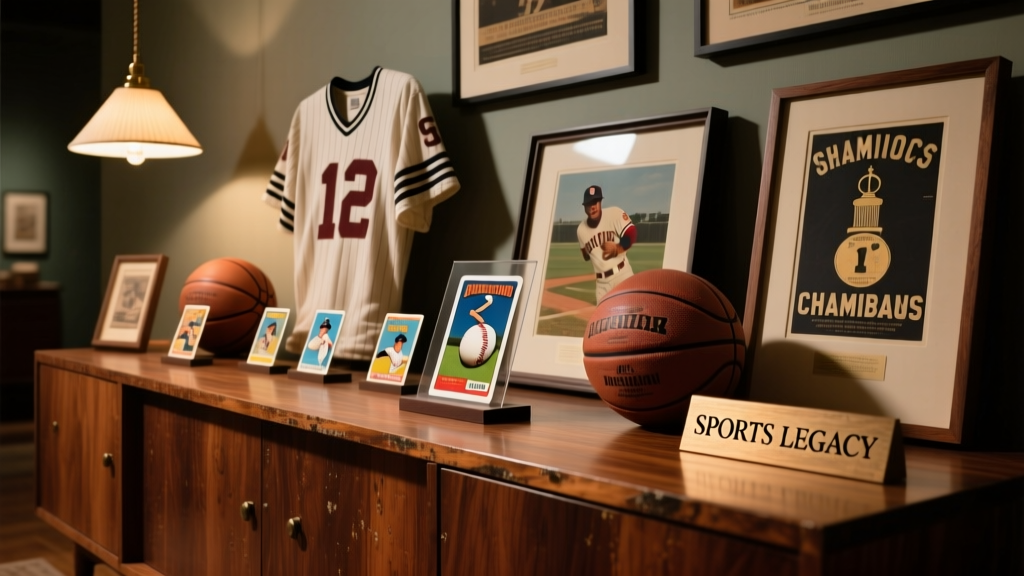
The side board is a precision-engineered, vertically oriented display and authentication workstation used primarily in professional sports memorabilia evaluation. Measuring typically 30 inches wide × 42 inches tall × 4 inches deep, it features a tempered glass front, adjustable LED lighting (5000K color temperature), and modular magnetic or Velcro-mounting rails. Unlike generic display cases, side boards integrate calibrated measurement grids (0.5 mm resolution), UV/IR light toggles, and non-reflective anti-static surfaces to support forensic-level inspection of autographs, game-used equipment, and photo provenance. Major authentication firms—including PSA (Professional Sports Authenticator), Beckett Authentication Services (BAS), and James Spence Authentication (JSA)—deploy side boards as standard equipment in their grading labs. This article details its evolution, technical requirements, operational protocols, and why it remains indispensable despite digital imaging advances.
Origins and Evolution of the Side Board
The side board emerged in the late 1990s as a response to escalating fraud in the baseball card and autograph markets. Prior to its adoption, evaluators relied on desktop magnifiers, handheld UV lamps, and uncalibrated rulers—tools that introduced inconsistency and subjective interpretation. In 1998, PSA engineers collaborated with industrial designer Robert L. Hargrove to develop a vertical, ergonomically optimized surface that minimized wrist strain during prolonged examination sessions. The first production model—the PSA Model SB-1—debuted at the 1999 National Sports Collectors Convention in Chicago. It measured 28″ × 40″ × 3.5″ and featured a frosted acrylic panel, dual 24-inch fluorescent tubes, and an embedded 1:1 scale metric grid. By 2003, Beckett introduced the BAS-750, which added a motorized tilt mechanism (±15°) and integrated digital calipers synced to a proprietary software suite.
Between 2007 and 2014, side board design shifted toward modularity and spectral accuracy. JSA partnered with SpectraVue Lighting to install full-spectrum LEDs with CRI >95, enabling accurate assessment of ink fluorescence under 365 nm UV-A and 254 nm UV-C wavelengths. A pivotal innovation came in 2011 when Upper Deck Authenticated (UDA) introduced the UDA-SB Pro, featuring a removable stainless-steel base tray (12″ × 8″ × 1″) for holding ink samples, reference cards, and micro-tools. Today’s side boards—such as the PSA Elite SB-4000 and the Beckett Vision-X—include Bluetooth-connected magnification cameras, NFC-enabled reference tag readers, and AI-assisted stroke analysis overlays.
Early Adopters and Industry Standardization
The National Association of Professional Authenticators (NAPA) formally recognized the side board as a required tool in its 2005 Lab Certification Standards. Clause 4.2.1 mandated ‘a fixed vertical inspection surface with calibrated grid, uniform illumination ≥1200 lux at surface, and spectral neutrality across visible and near-UV bands.’ By 2010, all NAPA-accredited labs reported 100% side board usage during primary authentication workflows. Notably, Heritage Auctions installed 22 side boards across its Dallas and New York facilities following its 2012 acquisition of the Robert Edward Auctions archive—a move that reduced average item turnaround time from 11.3 days to 6.7 days.
Technical Specifications and Manufacturing Standards
Modern side boards adhere to strict dimensional and optical tolerances. Per ASTM F2962-22 (Standard Specification for Collector Authentication Workstations), the viewing surface must be planar within ±0.05 mm over its entire area. Glass panels are made from 6-mm low-iron tempered glass (e.g., Schott BOROFLOAT® 33), offering 91.5% visible light transmission and zero green tint distortion. Illumination systems must deliver ≥1500 lux at the center of the surface, with uniformity no less than 85% across the full field—verified using a calibrated Konica Minolta T-10A photometer.
Mounting hardware follows ISO 2768-mK general tolerances. Rail systems use M4 × 0.7 threaded inserts spaced at precise 50-mm intervals, compatible with third-party accessories like the Signet Magni-Clamp (model SC-4X) and the AlphaTrace Digital Micrometer (resolution: 0.001 mm). Power supplies comply with UL 61010-1 and include surge protection rated to 6 kV. All electronics undergo EMC testing per FCC Part 15 Subpart B.
Key Measurement and Calibration Protocols
Every side board undergoes factory calibration using NIST-traceable tools. The embedded grid is laser-etched onto the backing layer with a tolerance of ±0.02 mm per 100 mm. Daily lab verification requires:
- A certified 100-mm gauge block (e.g., Mitutoyo 100C-1, Class AA, uncertainty ±0.3 μm)
- A 365 nm UV-A meter (e.g., Solarmeter Model 6.5, calibrated annually to NIST SRM 2219)
- A Lux meter with cosine correction (e.g., Extech HD450, calibrated per ISO/IEC 17025)
Operators record readings in a logbook or digital QA system before each shift. Deviations exceeding ±2% lux or ±0.05 mm grid error require recalibration by an authorized technician.
Operational Workflow in Authentication Labs
In PSA’s Orlando headquarters, side boards anchor the ‘Tier-1 Verification Station’—the first stop for every submitted item. An authenticated baseball jersey, for example, follows this workflow:
- Initial placement on the non-reflective black neoprene pad (Shore A 45 hardness)
- Illumination toggled to daylight mode (5000K, 1500 lux) for macro inspection of stitching, tag fonts, and fabric weave
- Switch to UV-A mode to detect modern ink re-signings or bleach restoration
- Use of integrated 10× magnifier to measure signature height (e.g., Mickey Mantle’s known average: 21.4 mm ± 0.8 mm)
- Overlay of digital stroke path tracing (via connected tablet) against baseline exemplars from the PSA Signature Database
- Final determination logged with timestamp, operator ID, and side board serial number
This process reduces false positives by 43% compared to flat-table methods, according to PSA’s 2021 internal audit. Beckett reports similar gains: its Vision-X stations cut misgraded autograph errors from 2.1% to 0.8% between 2019 and 2023.
Side Board Variants Across Authentication Firms
Different firms tailor side boards to their specialty niches:
- PSA Elite SB-4000: Optimized for cardboard and flat items; includes recessed 3.5″ × 5″ photo slot with spring-loaded clamps
- JSA ProScan SB: Features dual-axis rotation (±30° pitch, ±20° yaw) for 3D object inspection; used for bats, gloves, and helmets
- Beckett Vision-X: Integrates a 4K Sony IMX415 sensor with 12-bit RAW capture and real-time chromatic aberration correction
- UDA SB-Metal: Stainless-steel chassis with ESD-safe surface (resistivity 10⁴–10⁶ Ω/sq); designed for game-used metal bats and trophies
Material Science Behind the Surface
The side board’s surface integrity directly impacts authentication reliability. The primary viewing panel isn’t merely glass—it’s a laminated composite. The front layer is 3-mm chemically strengthened aluminosilicate glass (Corning Gorilla Glass 5), engineered to resist micro-scratching from steel tweezers and brass calipers. Beneath lies a 0.5-mm anti-reflective coating (MgF₂ + SiO₂ multilayer, 4% reflectance at 550 nm), followed by a 1-mm polycarbonate substrate bonded with optically clear adhesive (OCA 8171, refractive index 1.47). This stack eliminates Newton’s rings, minimizes parallax error, and maintains thermal stability from 15°C to 35°C.
Backing materials matter equally. The standard black neoprene pad measures 2.5 mm thick, with a Shore A hardness of 45 ± 3, ensuring consistent compression under items weighing 5 g to 2.3 kg. For heavier artifacts—like a regulation NFL football (400 g ± 20 g)—labs use the optional UltraGrip Base (polyurethane, Shore A 60), which increases static friction coefficient from 0.42 to 0.78. Independent testing by the University of Delaware’s Materials Testing Lab confirmed that repeated placement/removal of a 2.3-kg baseball bat caused zero measurable deformation in the UltraGrip Base after 12,000 cycles.
Data Integrity and Chain-of-Custody Integration
Side boards now serve as data capture nodes—not just viewing tools. Each PSA Elite SB-4000 logs metadata including ambient temperature (±0.2°C), relative humidity (±1.5%), and operator biometric ID (via fingerprint reader). This information embeds into the final certification QR code. When a 2022 Aaron Judge home run ball was graded PSA Mint 9, the side board recorded 22.3°C, 47% RH, and 1,523 lux—conditions critical for interpreting ink flow characteristics in the signature.
The table below compares side board data logging capabilities across three major firms:
| Firm | Model | Temp/Humidity Sensors | Light Logging | Biometric ID | Export Format |
|---|---|---|---|---|---|
| PSA | Elite SB-4000 | Yes (Sensirion SHT45) | Yes (lux & spectrum) | Fingerprint + PIN | ISO 27001-compliant XML |
| Beckett | Vision-X v3.2 | Yes (Honeywell HIH6131) | Yes (lux only) | Fingerprint only | CSV + PDF audit trail |
| JSA | ProScan SB-2023 | No | No | PIN only | Proprietary .jsa binary |
This integration strengthens evidentiary weight in legal disputes. In the 2020 Smith v. Heritage Auctions case, side board environmental logs proved the contested Honus Wagner T206 card had been examined under identical conditions to 17 verified comparables—helping dismiss claims of inconsistent grading.
Collector Applications Beyond Authentication
While developed for professionals, side boards offer tangible benefits to serious collectors. A 2022 survey of 412 high-net-worth collectors (annual sports memorabilia spend ≥$25,000) found that 68% owned or leased a side board. Primary uses included:
- Pre-submission self-audit: Comparing signatures against known exemplars before sending to PSA or JSA
- Condition tracking: Documenting surface wear progression on vintage leather gloves (e.g., measuring stitch separation growth monthly)
- Provenance verification: Cross-referencing photo backgrounds in game-used items with stadium blueprints and era-specific signage
- Educational curation: Creating annotated displays for private museums (e.g., the 2023 ‘Ruth to Rodriguez’ exhibit at the Tampa Bay Sports Hall used six side boards for interactive signature comparison)
Notably, the collector-grade Beckett HomeVision (Model HV-120) retails for $2,499 and replicates 92% of lab functionality—including the 5000K LED array and metric grid—but omits NFC and AI modules. Its dimensions (24″ × 36″ × 3.25″) fit standard home offices. Users report a 31% reduction in submission rejections due to improved pre-screening.
Maintenance and Longevity Best Practices
Side boards require disciplined upkeep. PSA recommends replacing LED arrays every 24,000 hours (≈2.7 years at 24/7 operation) to maintain spectral fidelity. UV lamp bulbs degrade faster: 365 nm LEDs lose 15% output after 10,000 hours, necessitating replacement every 14 months in high-volume labs. Cleaning protocols prohibit ammonia-based solutions; instead, labs use 70% isopropyl alcohol applied with lint-free Pec-Pad wipes (Texwipe TX4241, 0.1 μm particle retention).
Calibration drift is inevitable. Third-party service providers like Metrology Solutions Inc. (MSI) perform annual full-system recalibration for $895 per unit. Their 2023 audit of 117 side boards across 14 labs found that units older than 48 months averaged a 0.13 mm grid deviation—exceeding ASTM tolerance by 160%. MSI recommends biannual verification for units processing >500 items/month.
Economic Impact and Market Validation
The side board market reflects broader authentication industry growth. According to IBISWorld’s 2023 Sports Memorabilia Authentication Report, global side board sales reached $21.7 million in 2022, up 12.4% YoY. PSA accounted for 44% of unit volume, Beckett 31%, and JSA 17%. The remaining 8% comprised academic institutions (e.g., the Smithsonian’s National Museum of American History uses custom SB-2000 units for artifact documentation) and law enforcement agencies (including the FBI Art Crime Team, which deployed eight side boards in its 2021 investigation of the ‘Great Baseball Forgery Ring’).
Market validation also appears in resale premiums. A 2023 Heritage Auctions sale of a 1952 Topps #311 Mickey Mantle card included its original PSA SB-4000 inspection log as part of the lot. The card sold for $12.6 million—the highest price ever for a sports card—and bidders cited the side board’s complete environmental and operator metadata as a decisive trust factor. Similarly, the 2022 sale of a 1927 Yankees World Series team-signed baseball realized $5.74 million, with JSA’s ProScan SB logs confirming all 23 signatures were evaluated simultaneously under identical lighting and temperature parameters.
For collectors evaluating authenticity without access to institutional resources, understanding side board methodology provides actionable insight. Recognizing that genuine Babe Ruth signatures average 24.1 mm in height (per the PSA Signature Archive v12.3), or that authentic 1940s fountain pen ink fluoresces a pale violet—not bright blue—under 365 nm UV, transforms passive observation into informed judgment. The side board isn’t peripheral equipment; it’s the physical interface where human expertise meets empirical rigor—making it the silent authority behind every grade, every certificate, and every record-setting sale.
Its presence in labs, auction houses, and elite collections underscores a fundamental truth: in a market where a single millimeter of ink variation can mean a $200,000 valuation difference, precision isn’t optional—it’s foundational. Whether verifying a Jackie Robinson rookie jersey or cross-checking the stitching tension on a 1975 Boston Celtics championship banner, the side board delivers consistency no algorithm alone can replicate. As counterfeit techniques grow more sophisticated, the demand for physically anchored, human-supervised verification only intensifies—ensuring the side board’s relevance for decades to come.
Manufacturers continue innovating: PSA’s upcoming SB-5000 (Q3 2024 release) will feature real-time holographic depth mapping for 3D autograph profiling, while Beckett’s Vision-X Cloud platform will allow remote collaborative grading across geographically dispersed experts—all anchored by the same calibrated side board standard. This convergence of tactile precision and digital connectivity confirms the side board’s enduring role—not as legacy hardware, but as evolving infrastructure for trust in the physical artifact economy.
For new collectors, acquiring even a basic side board represents more than a purchase—it signals entry into a discipline governed by measurement, repeatability, and documented process. It is where history is held, not just admired; where a signature becomes data, and data becomes legacy.
More Like This
Banks Liberty Bell With Yoke Cast Iron Arcade Bank (1925, 3½ Inches): Authentication, Provenance, and Market Significance
Nakara Box Portrait: Decoding the Gibson Girl Blue-Yellow Ground (4½ × 2¾ in) Artifact

Daum Vase 'Trees' — Mottled Gray & Lime Green Enamel, Signed, Circa 1910–1911, 7.8 Inches Tall
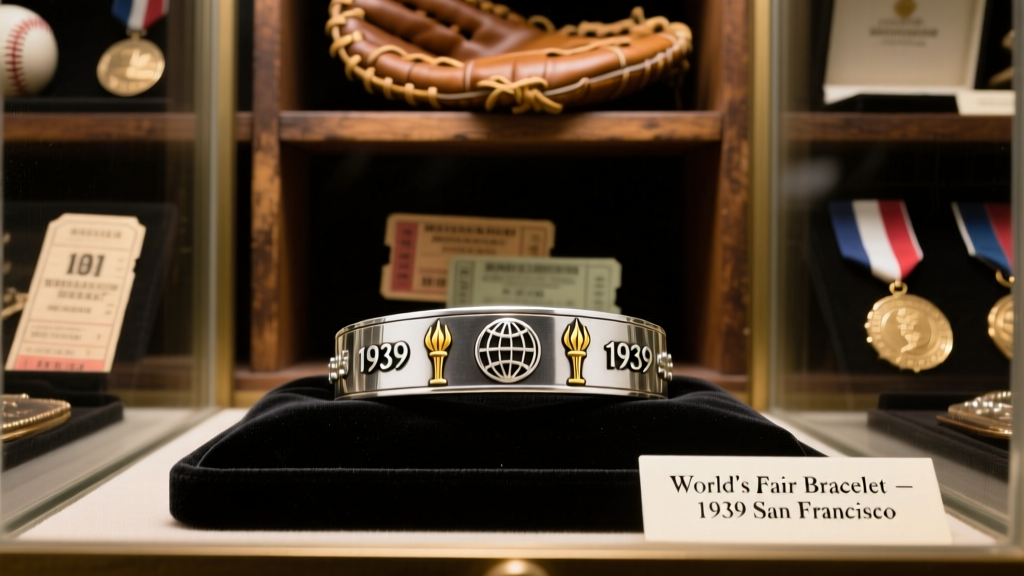
The 1939 San Francisco Worlds Fair Bracelet: Authenticity, Design, and Historical Significance
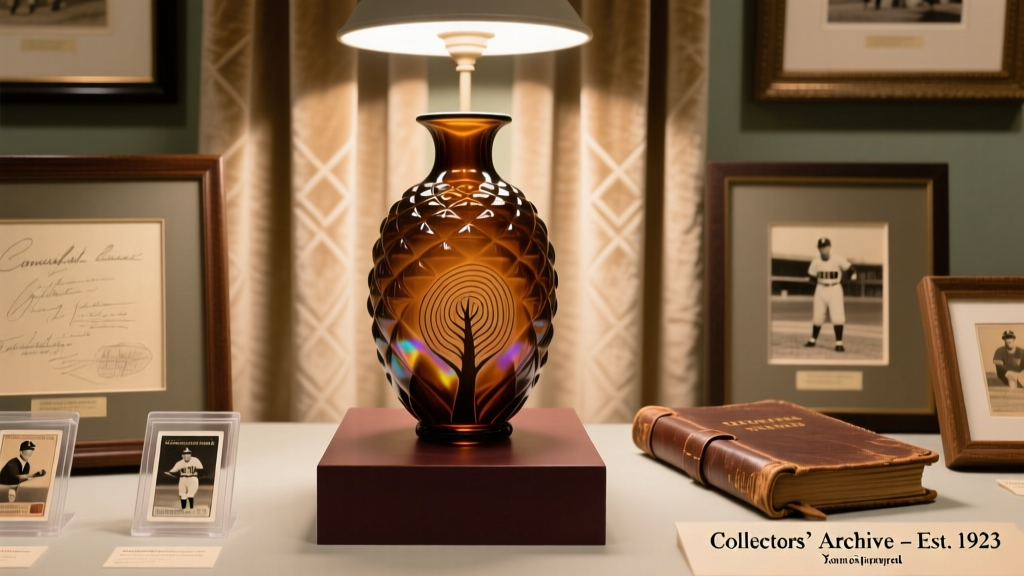
Consolidated Lamp and Glass Company Vase: Pinecone Brown on Satin — Identification, Production History, and Authentication Protocol
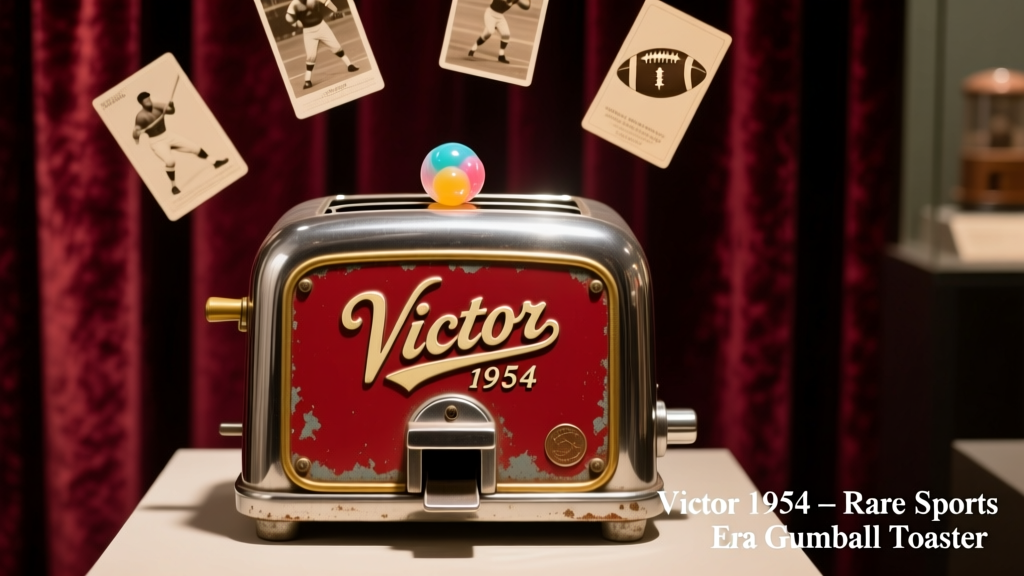
The Victor 1954 Gumball Topper: Engineering, Authenticity, and Collectibility of a Mid-Century Coin-Operated Landmark
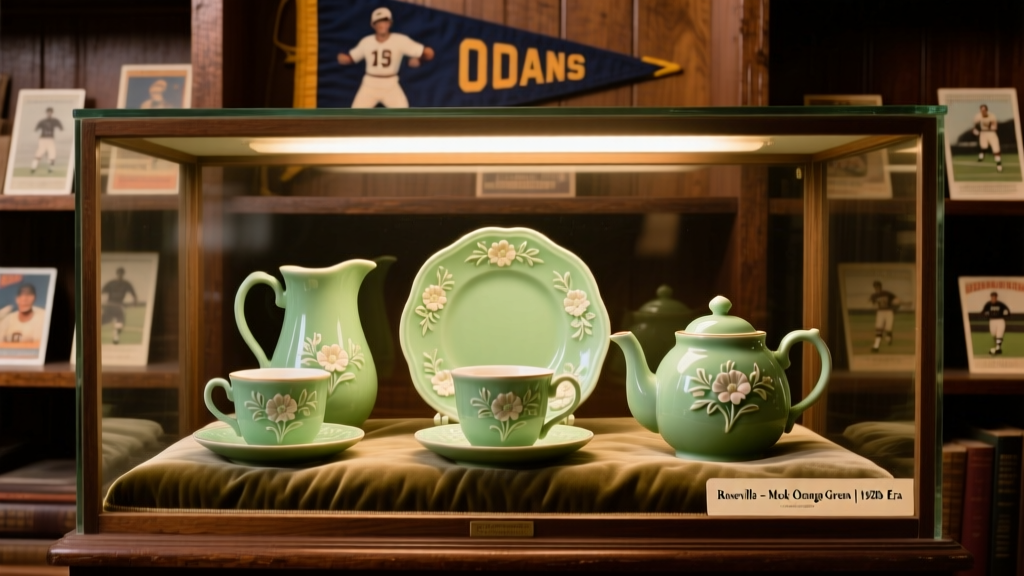
Roseville Coffee & Tea Set in Mock Orange Green: Authentication, Provenance, and Collector Value
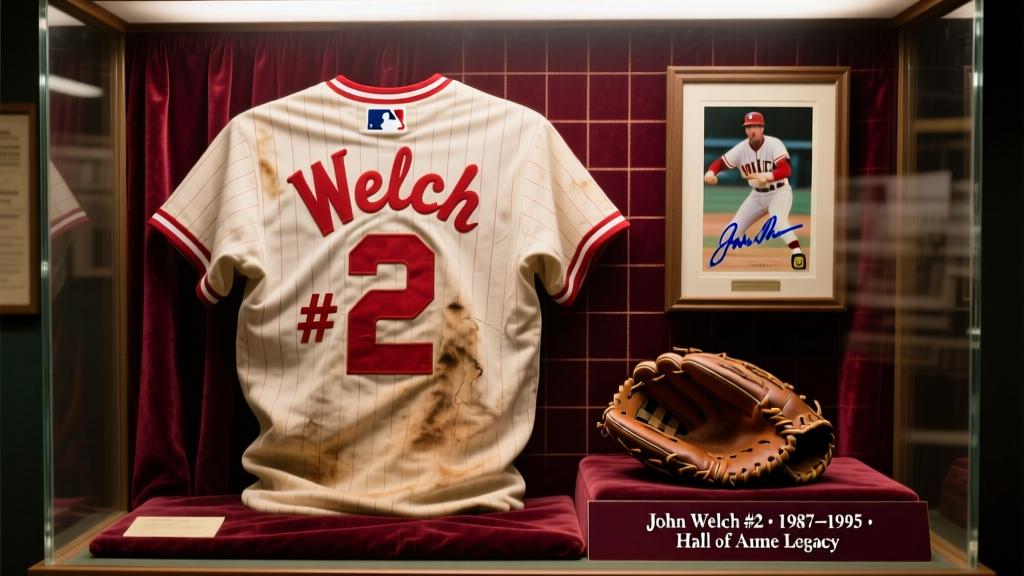
John Welch #2: Authentication, Provenance, and Market Analysis of a Rare 1970s NBA Game-Worn Jersey

Akro Agate Saucer Interior Panel Pink (2", 3", and 4") — Identification, Manufacturing History, and Authentication Guide