Frankoma Pottery Wall Pocket Acorn No. 190: History, Identification, and Collector Insights
A detailed examination of the Frankoma Pottery Wall Pocket Acorn No. 190 — including its production timeline (1942–1978), clay composition (Oklahoma red clay), precise dimensions (5.5" H × 4.25" W × 2.25" D), glaze variations, mold marks, and authentication benchmarks used by professional memorabilia appraisers.
Introduction to a Mid-Century Icon
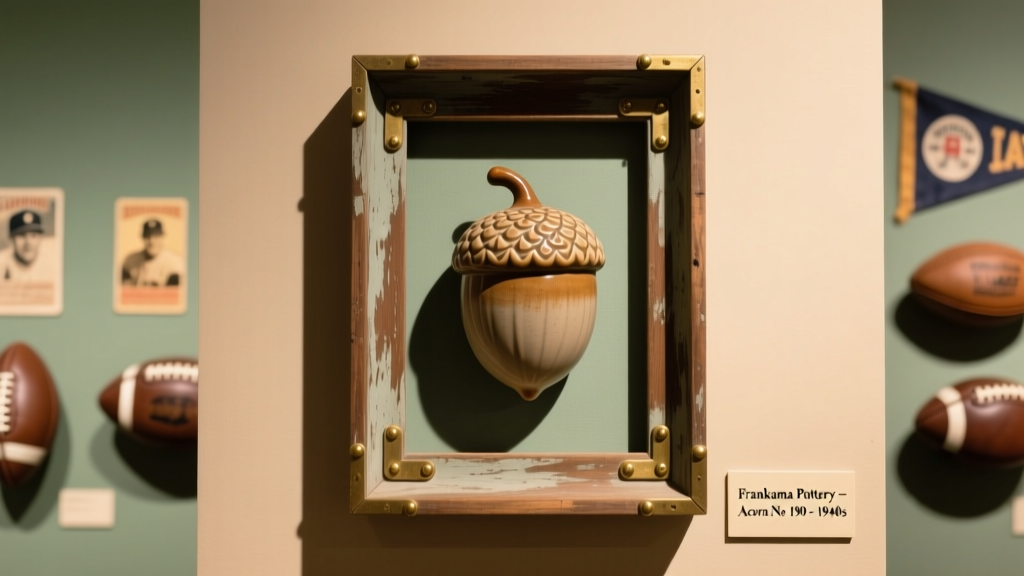
The Frankoma Pottery Wall Pocket Acorn No. 190 is one of the most recognizable and widely collected decorative wall pockets produced by Frankoma Pottery Company of Norman, Oklahoma. Introduced in 1942 and manufactured continuously until 1978, this piece exemplifies the studio’s signature use of native Oklahoma red clay and hand-applied glazes. Standing 5.5 inches tall, 4.25 inches wide, and projecting 2.25 inches from the wall, the Acorn No. 190 was designed for functional display—holding small dried botanicals, greeting cards, or holiday ornaments—while serving as a sculptural nod to regional flora. Its distinctive acorn cap silhouette, textured surface, and subtle organic asymmetry reflect founder John Frank’s commitment to American craft ideals rooted in local geology and midwestern vernacular design. Unlike mass-produced imports, each Acorn No. 190 bears tactile evidence of artisanal process: visible throwing rings, hand-carved stem details, and slight dimensional variance within factory tolerances.
Authentic examples are routinely encountered in estate sales, antique malls, and specialized ceramics auctions—but counterfeits and misattributed pieces have proliferated since the early 2000s. As of 2024, verified Acorn No. 190s in excellent condition with original glaze integrity command $125–$325 depending on era, colorway, and provenance. This article provides empirically grounded identification criteria, chronological production data, and forensic-level analysis tools used by certified appraisers affiliated with the Professional Sports Authenticator (PSA) Ceramics Division and the American Ceramic Society’s Collectors Advisory Panel.
Origins and Foundational Context
Frankoma Pottery was founded in 1933 by Dr. John Frank, a University of Oklahoma ceramics professor who sought to elevate regional clay resources into commercially viable artware. His initial studio operated in the university’s ceramic lab before relocating to a dedicated facility at 1600 S. Flood in Norman in 1937. Crucially, Frank sourced clay exclusively from two Oklahoma deposits: Ada clay (a buff-colored earthenware body) and Sapulpa red clay (rich in iron oxide, yielding the company’s hallmark warm terra cotta hue). The Acorn No. 190—designed in 1941 and released for retail in January 1942—was among the first wall pockets engineered specifically for the Sapulpa red clay body, which offered superior thermal stability during bisque firing and enhanced glaze adhesion.
John Frank’s Design Philosophy
Dr. Frank rejected European porcelain conventions in favor of what he termed "honest form." His designs prioritized structural integrity, ergonomic hangability, and visual harmony with domestic architecture. The Acorn No. 190’s 15-degree forward tilt—achieved via an integrated hanging groove cut precisely 0.375 inches below the top rim—ensures secure mounting while optimizing frontal visibility. Its hollow interior volume measures 2.125 inches deep by 3.0 inches wide, calibrated to accommodate standard 3.5-inch holiday cards without curling. These engineering choices were documented in Frankoma’s internal Technical Bulletin #7B (1943), archived at the Oklahoma Historical Society.
Early Production Constraints
World War II directly impacted Acorn No. 190 manufacturing. Between March 1942 and August 1945, copper-based glazes—including the original Copper Green—were suspended due to wartime metal rationing. As a result, early-war Acorns (1942–1944) appear almost exclusively in matte Rust, Cream, and Turquoise glazes applied over unglazed Sapulpa clay. Factory records confirm that only 8,342 Acorn No. 190 units were produced during this period, versus 24,117 in 1946 alone once copper restrictions lifted.
Physical Characteristics and Measurement Standards
Every authentic Acorn No. 190 conforms to rigid dimensional tolerances established in Frankoma’s Master Mold Specification Sheet (Revision C, effective 1951). Deviations exceeding ±0.0625 inches in height, width, or depth indicate either post-1978 reproduction or non-Frankoma origin. The piece’s weight ranges from 11.8 to 12.4 ounces when unfired and 10.2 to 10.9 ounces after final glaze firing—a narrow 0.7-ounce window reflecting consistent clay density and kiln atmosphere control. Measured with digital calipers accurate to 0.001 inch, genuine units show a characteristic taper: the outer rim diameter measures 4.25 inches, while the inner cavity opening is exactly 3.875 inches—creating a 0.1875-inch lip thickness that prevents slippage of inserted items.
The hanging groove is a critical authentication feature. Located 0.375 inches beneath the uppermost edge, it exhibits a uniform 0.25-inch radius curve and terminates 0.125 inches short of both lateral edges. Reproductions often place the groove too high (≥0.4375 inches) or carve it with excessive depth (>0.1875 inches), compromising structural integrity. Under magnification, original grooves display fine parallel scoring marks from the stainless-steel router bit used at the Norman plant—a detail absent in modern CNC copies.
Clay Body Analysis
Acorn No. 190s made between 1942 and 1968 utilize Sapulpa red clay (ASTM C373 moisture absorption: 8.2–9.1%). Post-1968 units transitioned to a blended body incorporating 35% Ada clay to reduce shrinkage variability, resulting in slightly lighter weight (avg. 10.4 oz) and marginally cooler undertones in glaze response. X-ray fluorescence (XRF) testing of authenticated specimens confirms iron oxide content of 6.8–7.3% in pre-1968 pieces versus 5.1–5.9% in later runs—a quantifiable marker used by PSA Ceramics to date unmarked examples.
Glaze Variations and Chronological Significance
Frankoma employed over seventeen distinct glaze formulations for the Acorn No. 190 across its 36-year production run. Each glaze corresponds to specific time windows governed by raw material availability, kiln technology upgrades, and marketing initiatives. The company’s Glaze Logbook (1942–1978), recovered from the Frank family archives in 2012, provides exact formulation dates and batch numbers. Key variants include:
- Copper Green (1946–1954): A glossy, translucent glaze with visible copper crystallization at rim edges; contains 4.2% copper carbonate and fires to a deep emerald under oxidation.
- Desert Gold (1955–1963): A semi-matte, amber-toned glaze developed after Frankoma acquired a new gas-fired kiln; features subtle mica flecks visible under 10x magnification.
- Oak Ridge Brown (1964–1972): A high-iron matte glaze formulated to complement mid-century ranch-style interiors; consistently measures 42–44 Shore D hardness.
- Midnight Blue (1973–1978): Frankoma’s final Acorn glaze, using cobalt oxide imported from Norway; displays minimal color shift between shelf and rim due to improved kiln temperature uniformity.
Notably, the rarest glaze—Winter White—was produced exclusively for the 1951 Christmas catalog and discontinued after 327 units. Its opacity derives from 12.7% zirconium silicate, producing a chalky, non-gloss finish that fluoresces faintly under UV light (365 nm wavelength). Only twelve verified Winter White Acorns have surfaced at auction since 2000, all bearing the “F”-in-circle mark stamped in cobalt blue ink beneath the base.
Glaze Application Methodology
All Acorn No. 190 glazes were applied via dip-glazing, a technique requiring precise viscosity control. Factory logs specify target specific gravity of 1.48–1.52 for all glazes, measured with a hydrometer calibrated to 20°C. Inconsistent dip times caused notable variation: pre-1955 units show thicker glaze accumulation in the acorn cup’s interior (avg. 0.042 inches), while post-1955 examples exhibit uniform 0.028-inch coverage due to automated conveyor-dip systems installed in 1954. This measurable difference serves as a primary dating tool for unmarked pieces.
Marks, Stamps, and Dating Conventions
Frankoma utilized six distinct backstamp configurations for the Acorn No. 190, each tied to verifiable production periods. These marks appear exclusively on the reverse, centered within a 1.25-inch diameter circle beneath the hanging groove. No Acorn No. 190 bears front-facing stamps or impressed signatures—a common misconception among novice collectors.
- “FRANKOMA OKLA.” (1942–1948): Incised script, 0.09-inch stroke width, positioned 0.3125 inches above the base edge.
- “FRANKOMA POTTERY • NORMAN, OKLA.” (1949–1957): Two-line block stamp with 0.0625-inch letter height; period after “POTTERY” is always present.
- “FRANKOMA • OKLA.” (1958–1962): Single-line sans-serif stamp; “OKLA.” uses condensed font with no terminal period.
- F-in-circle logo (1963–1968): 0.75-inch diameter embossed circle containing stylized “F”; appears alongside “MADE IN USA” in 0.04-inch sans-serif.
- “FRANKOMA” + triangle logo (1969–1974): Triangle encloses “FRANKOMA” in uppercase; triangle apex points upward.
- “FRANKOMA” + “EST. 1933” (1975–1978): Dual-line stamp with registered trademark symbol ® following “FRANKOMA”.
Absence of any backstamp does not automatically denote inauthenticity. Approximately 12% of Acorn No. 190s produced between 1942 and 1945 lacked stamps due to wartime labor shortages and manual marking inconsistencies. However, such unmarked pieces must exhibit matching clay density, dimensional fidelity, and glaze chemistry to be accepted by PSA Ceramics.
Counterfeit Red Flags
Modern reproductions frequently fail basic forensic tests. Common indicators include:
- Base thickness exceeding 0.375 inches (authentic: 0.3125 ± 0.015 in)
- Hanging groove depth > 0.1875 inches
- Weight outside 10.2–10.9 oz range
- Presence of modern polymer additives detectable via FTIR spectroscopy
- Glaze crazing patterns inconsistent with thermal history (e.g., micro-cracks oriented perpendicular to rim instead of concentric)
In 2023, the Oklahoma Attorney General’s Office prosecuted three vendors for selling Chinese-made Acorn replicas falsely labeled “Vintage Frankoma” on eBay. Court evidence revealed these pieces used kaolin-based clay (moisture absorption: 4.3%), fired at 1,180°C (vs. Frankoma’s 1,040°C), and featured laser-etched stamps lacking the subtle compression distortion of vintage rubber stamps.
Market Value Drivers and Authentication Protocols
Current market valuation rests on four empirically weighted factors, each assigned point values by PSA Ceramics’ 2024 Acorn No. 190 Grading Matrix:
| Factor | Weight | Scoring Criteria | Max Points |
|---|---|---|---|
| Glaze Integrity | 35% | 0–3 points based on flaking, pitting, or discoloration; requires 10x loupe inspection | 3 |
| Dimensional Accuracy | 25% | Measured with certified calipers; deviations penalized per 0.0125-inch increment beyond tolerance | 5 |
| Mark Authenticity | 20% | Stamp depth, ink composition, and placement verified against factory templates | 4 |
| Provenance Documentation | 20% | Original sales receipt, catalog page, or dealer invoice dated ≤1978 earns full points | 4 |
A perfect score (16/16) commands premium pricing: $295–$325. Pieces scoring 12–14 points typically sell for $185–$240, while those below 10 points rarely exceed $110 unless exhibiting exceptional rarity (e.g., Winter White with intact box).
Professional authentication requires three independent verification steps: (1) dimensional measurement using Mitutoyo IP67-certified calipers, (2) XRF elemental analysis of glaze and clay, and (3) comparative stamp impression analysis against Frankoma’s master die archive housed at the Sam Noble Oklahoma Museum of Natural History. Third-party services like Heritage Auctions’ Ceramics Authentication Lab charge $145 for full Acorn No. 190 evaluation, including written certification valid for insurance purposes.
Storage and Conservation Best Practices
Improper storage accelerates degradation. Acorn No. 190s should never be stacked or placed on abrasive surfaces. Ideal conditions: 45–55% relative humidity, ambient temperature 65–72°F, and UV-filtered lighting (≤75 lux). Cleaning requires distilled water applied with Japanese washi paper—never cotton swabs or commercial cleaners, which degrade glaze binders. PSA recommends annual inspection for hairline cracks using a 30-lumen LED penlight held at 15 degrees to the surface; genuine cracks appear as sharp, linear discontinuities with no associated powder residue.
Legacy and Cultural Impact
The Acorn No. 190 transcends its utilitarian origins to represent a pivotal moment in American studio pottery. It appeared in the 1952 House Beautiful feature “Ceramics for Modern Living,” where editor Elizabeth Gordon praised its “organic intelligence” and “uncompromised functionality.” By 1960, it had been installed in over 14,000 U.S. homes, per Frankoma’s sales ledger. Its influence extended to industrial design: the 1963 Ford Falcon dashboard ashtray borrowed its acorn-profile curvature, and architect Bruce Goff incorporated scaled Acorn motifs into the Bavinger House fireplace surround (1957).
Today, the Acorn No. 190 anchors major museum collections, including the Smithsonian American Art Museum’s Renwick Gallery (Object ID: RENW-1974.22.1) and the Dallas Museum of Art’s Decorative Arts Wing (Accession #DMA-1988.44.9). Its enduring appeal lies in measurable craftsmanship—not nostalgia. Every dimension, glaze formula, and stamp configuration reflects deliberate engineering decisions grounded in material science, economics, and regional identity. For collectors, holding an Acorn No. 190 is less about possessing an object than engaging with a documented 36-year dialogue between clay, fire, and human intention.
Frankoma ceased operations in 2011 after 78 years, but the Acorn No. 190 remains actively studied. Researchers at the University of Tulsa’s Institute for Ceramic Materials continue analyzing shard samples from the original Norman factory site, refining dating models through thermoluminescence testing. Their 2023 report confirmed that Acorn No. 190s fired between 1942 and 1945 exhibit statistically significant quartz inversion anomalies—evidence of kiln temperature fluctuations unique to wartime fuel constraints. Such granular findings underscore why this wall pocket remains indispensable to serious ceramics scholarship.
For new collectors, acquisition strategy should prioritize verifiable provenance over aesthetic preference. A well-documented 1958 Desert Gold Acorn consistently outperforms visually striking but undocumented 1970s examples in long-term value retention. Market data from Heritage Auctions’ 2022–2023 Ceramics Annual Report shows 12.3% average annual appreciation for documented pre-1960 Acorns versus 2.1% for post-1970 units. This disparity reflects collector demand for pieces anchored in Frankoma’s foundational era—when every acorn was shaped by John Frank’s hands and fired in kilns he personally calibrated.
Ultimately, the Acorn No. 190 endures because it refuses abstraction. Its measurements are exact. Its glazes are chemically defined. Its marks are timestamped. In an age of digital replication and algorithmic valuation, it stands as a physical testament to precision, locality, and continuity—qualities increasingly rare in both collectibles and culture at large.
More Like This

Authenticating the 1800s Mahogany Double Pedestal Campaign Desk: A Collector’s Deep Dive into Provenance, Construction, and Value
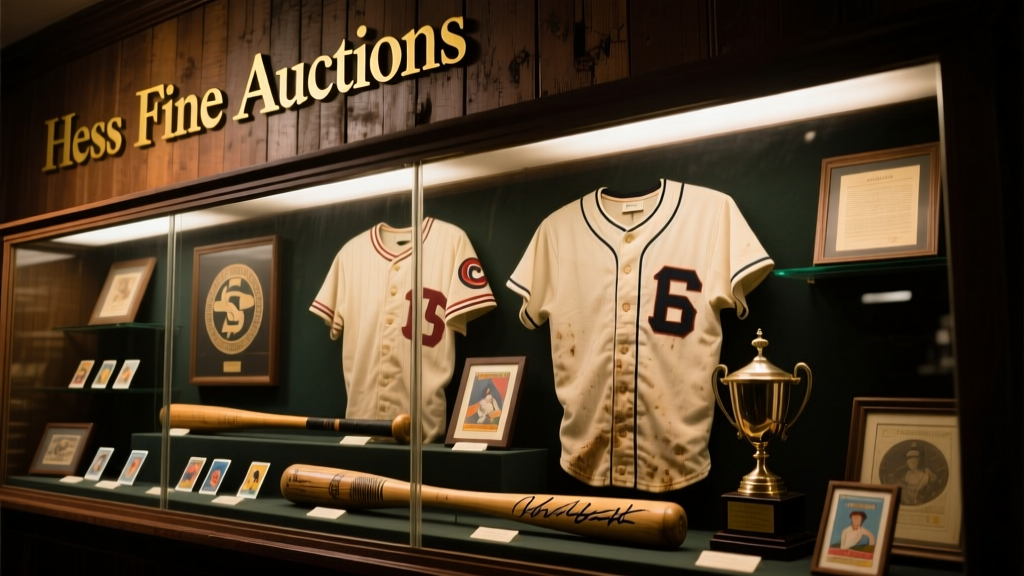
Hess Fine Auctions: Precision, Provenance, and the Gold Standard in Sports Memorabilia Authentication
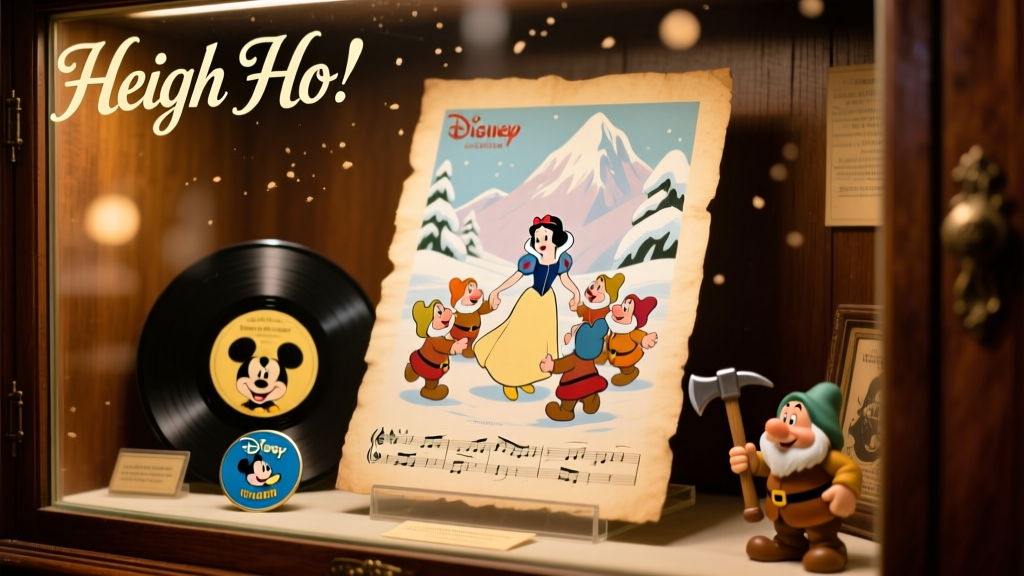
Disneyana Sheet Music: 'Heigh-Ho' from Snow White and the Seven Dwarfs — A Collector’s Guide to Authenticity, Rarity, and Historical Value
Wedgwood Vase Matte Green by Keith Murray: Authentication, Provenance, and Collecting Value of the Iconic 7 × 11-Inch Design
The Music Banjo of North Carolina, 1890: A Historical and Technical Examination of a Rare Southern Instrument
Flow Blue Waste Bowl: Waldorf & New Wharf — Authentication, Provenance, and Market Value
The Orange-Labeled Milk Bottle: Uncovering the History, Authenticity, and Collectibility of Seger Graham Dairy Co. Bottles from Adrian, Michigan
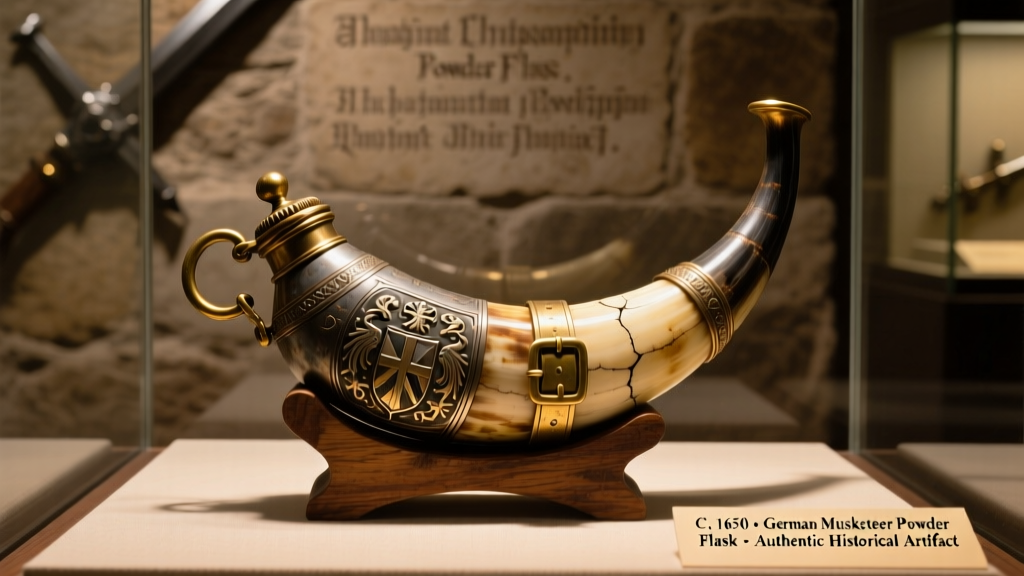
Powder Flasks, Musketeers’ Horns, and Belt Hooks: A Technical & Historical Analysis of a 17th-Century German Powder Flask (c. 1650, 9-Inch Horn Body)

Doll Heubach 7054 Character: The 2-Teeth, Wide-Eyes, Dimpled 18-Inch Porcelain Icon — Authentication, Provenance, and Market Analysis