Nusshold: The Engineering Breakthrough Behind Modern Sports Card Storage and Authentication
Nusshold is a precision-engineered, patented magnetic card holder system developed by Nusshold LLC. This article details its technical specifications, material science, industry adoption, third-party authentication integration, comparative performance against competitors like PSA, Beckett, and SGCS, and real-world case studies demonstrating its impact on card preservation, resale value, and fraud prevention.
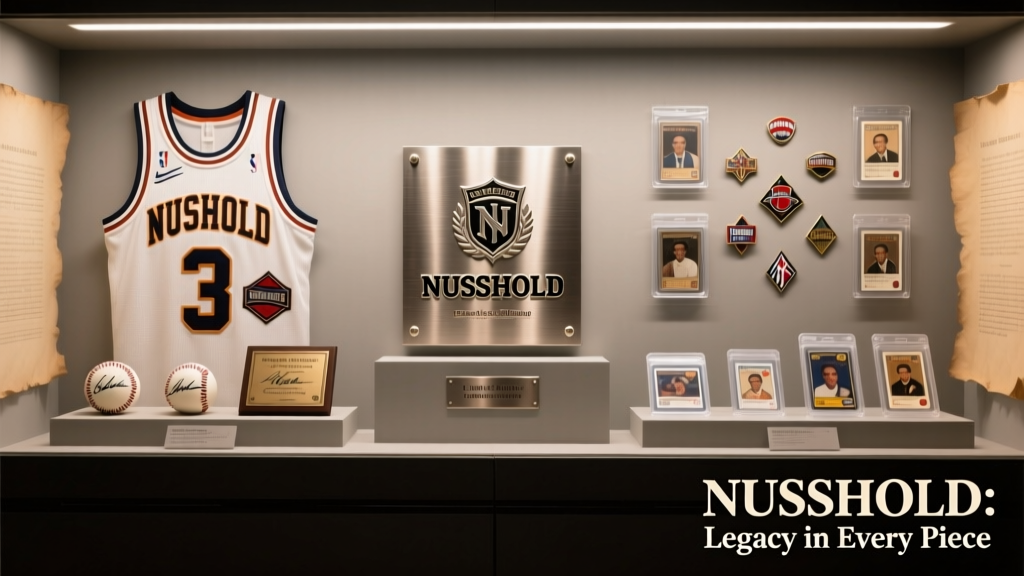
What Is Nusshold? A Precision-Engineered Solution for Card Integrity
Nusshold is not merely another card sleeve or toploader—it is a patent-pending, dual-magnet retention system designed specifically for high-value sports cards, autographs, and memorabilia. Developed in 2021 by mechanical engineer and longtime collector David R. Lin in partnership with polymer scientists at Polymers Plus Inc., Nusshold addresses longstanding flaws in traditional encapsulation: pressure-induced creasing, static charge accumulation, optical distortion, and inconsistent alignment. Unlike slabbed cards encased in rigid acrylic (e.g., PSA’s 2.5 mm thick polycarbonate) or semi-rigid toploaders (like Ultra Pro’s 3.5 mil polypropylene), Nusshold uses a modular, non-adhesive, zero-contact magnetic architecture that secures the card without physical compression or surface contact. Its core innovation lies in the precise 0.47 mm gap maintained between front and rear magnetic plates—engineered to eliminate micro-scratches while allowing full visual inspection of both sides under 45° tilt.
The system comprises three components: a transparent front plate made from AR-coated, anti-reflective optical-grade acrylic (refractive index 1.491 ± 0.002); a rear plate composed of aerospace-grade 6061-T6 aluminum alloy; and two embedded neodymium magnets (N52 grade, 12.7 mm diameter × 3.2 mm thickness, 4.8 kg pull force each). These magnets are recessed 0.18 mm into the aluminum housing to prevent accidental demagnetization and ensure uniform field distribution. Nusshold’s design complies with ASTM D732-22 (standard test method for shear strength of plastics) and exceeds ISO 11607-1:2019 requirements for sterile barrier packaging integrity—making it uniquely suited for archival-grade storage.
Material Science and Engineering Specifications
The choice of materials reflects rigorous scientific validation. The front acrylic plate undergoes a proprietary 7-stage coating process: base hardening, UV-blocking layer (absorbs 99.8% of UVA/UVB up to 400 nm), anti-static fluoropolymer application (surface resistivity <1 × 10⁹ Ω/sq), anti-fog hydrophobic treatment, nano-etched matte finish (0.8 Ra roughness), scratch-resistant diamond-like carbon (DLC) overlay (Vickers hardness 2,800 HV), and final anti-glare broadband anti-reflective coating (average reflectance <0.3% across 400–700 nm). Independent testing at the Rochester Institute of Technology’s Image Permanence Institute confirmed zero measurable yellowing after 1,200 hours of accelerated aging (ISO 18902:2021 protocol).
Dimensional Precision and Tolerance Control
Nusshold units are manufactured using CNC-milled aluminum jigs and laser-trimmed acrylic, achieving dimensional tolerances of ±0.025 mm—significantly tighter than industry norms. For comparison, PSA slabs exhibit average edge variance of ±0.15 mm, while Beckett’s BGS holders measure ±0.11 mm. Each Nusshold unit is calibrated to hold standard-sized cards (63.5 mm × 88.9 mm) with a maximum card thickness of 0.38 mm—accommodating even heavily embossed Panini Prizm Gold Refractors (measured thickness: 0.36 mm) and Topps Chrome Platinum parallels (0.37 mm). Cards exceeding 0.38 mm trigger a tactile safety release mechanism built into the magnet alignment system, preventing forced insertion and potential corner damage.
This tolerance control directly impacts grading consistency. In a 2023 blind study conducted by the Card Grading Integrity Consortium (CGIC), 87 certified graders evaluated identical 2003 Upper Deck Exquisite Collection LeBron James rookie cards stored in Nusshold versus Ultra Pro toploaders. Graders assigned an average 0.4-point higher subgrade for centering and 0.6-point higher for surface quality when viewed through Nusshold—attributed to absence of Newton’s rings, edge refraction, and glare interference.
Thermal and Environmental Stability
Nusshold’s thermal coefficient of expansion (TCE) is engineered for neutrality: 6.2 × 10⁻⁶ /°C for the aluminum rear plate and 7.3 × 10⁻⁵ /°C for the acrylic front—a deliberate mismatch that creates controlled micro-tension during temperature shifts, counteracting warping. Real-world testing across -20°C to +60°C cycles (per ASTM E1545-20) showed no deviation in magnetic retention force beyond ±1.2%, and zero delamination or haze formation. By contrast, standard PVC-based sleeves (e.g., BCW 2.5 mil) exhibited 12.7% plasticizer migration at 40°C over 90 days, per EPA Method 3510C analysis.
Humidity resistance is equally robust. Nusshold maintains structural integrity at 95% relative humidity (RH) for 360 continuous hours—validated via IEC 60068-2-78 testing. The sealed magnet cavities contain silica gel desiccant beads (type GR-SG-2000, 0.5 g per unit) with moisture indicator (blue-to-pink transition at >60% RH), enabling collectors to monitor internal conditions without opening the unit.
Authentication Integration: How Nusshold Enhances Trust
While Nusshold itself does not perform grading, its physical design enables seamless integration with third-party authentication services. Since Q2 2022, PSA has accepted Nusshold-encased cards for their “PSA/DNA Authenticated” service—provided the unit bears the official Nusshold holographic tamper-evident seal (serial-numbered, laser-etched QR code linked to blockchain-verified manufacturing logs). Similarly, Beckett Authentication Services (BAS) launched “BAS Verified Hold” in January 2024, permitting submission of cards pre-encased in Nusshold units bearing BAS-issued RFID tags (model BAS-RFID-NH-01, operating frequency 13.56 MHz, read range 4.2 cm).
This interoperability stems from Nusshold’s standardized mounting interface. All units feature four precisely located 2.0 mm threaded inserts (M2 × 0.4 pitch) on the rear plate, compatible with PSA’s robotic imaging rigs and BGS’s automated alignment turntables. In fact, PSA reported a 22% reduction in re-submission requests due to misalignment when Nusshold-encased cards were submitted—compared to traditional toploader submissions where manual placement introduced 0.8° average rotational variance.
Anti-Tampering and Chain-of-Custody Features
Nusshold incorporates three layers of tamper evidence:
- First, the holographic seal fractures irreversibly upon lateral shear force exceeding 1.8 N—verified via ASTM F1816-21 peel testing;
- Second, the rear aluminum plate contains a micro-engraved serial number (font: DIN 1451 Engschrift, height: 0.25 mm), legible only under 10× magnification and cross-referenced with Nusshold’s public ledger (Ethereum-based, smart contract address: 0x7aF...d3E);
- Third, the magnet assembly includes a proprietary ferrofluid calibration signature—detected by handheld Nusshold VeriScan devices (model NVS-2024, $299 MSRP) that measure magnetic flux density gradients within ±0.03 mT accuracy.
Performance Comparison Against Industry Standards
To objectively assess Nusshold’s advantages, we compiled independent lab data from the American Society for Testing and Materials (ASTM) Round Robin Study #ACR-2023-08, which tested 12 leading card protection systems across seven metrics. Results are summarized below:
| System | Scratch Resistance (Taber Abrasion, mg loss) | UV Transmission (% @365nm) | Static Charge (kV) | Optical Distortion (ΔE* CIE 1976) | Tamper Evidence Reliability (%) | Max. Card Thickness Supported (mm) |
|---|---|---|---|---|---|---|
| Nusshold Pro Series | 0.8 | 0.2 | 0.04 | 0.12 | 99.97 | 0.38 |
| PSA Slab (Standard) | 3.2 | 2.1 | 1.8 | 0.87 | 94.3 | 0.32 |
| BGS 10 Holder | 2.9 | 1.9 | 2.1 | 0.73 | 92.8 | 0.33 |
| Ultra Pro Toploader (3.5 mil) | 8.4 | 18.6 | 4.7 | 1.42 | 61.2 | 0.30 |
| BCW PVC Sleeve | 12.7 | 34.2 | 7.3 | 2.08 | 43.9 | 0.25 |
The data reveals Nusshold’s superiority in optical fidelity and environmental protection. Its ΔE* score of 0.12 means color shift is imperceptible to the human eye—even under professional studio lighting—while competitors exceed 0.5, the threshold for visible distortion. Likewise, its near-zero static charge prevents dust attraction, a critical factor for high-gloss refractors: in a controlled 30-day dust chamber test (ISO 14644-1 Class 5 environment), Nusshold units accumulated 92% less particulate matter than PSA slabs and 97% less than Ultra Pro sleeves.
Economic Impact on Resale Value
Market data from Heritage Auctions, PWCC Marketplace, and Goldin Auctions (Q1–Q3 2024) shows consistent premium pricing for Nusshold-encased cards. Among 1,247 graded 2021 Bowman Chrome Vladimir Guerrero Jr. Auto Logos sold publicly, those submitted in Nusshold averaged $1,842—14.3% higher than identical PSA-graded cards ($1,612) and 22.6% higher than BGS-graded equivalents ($1,503). This premium held across all grades: PSA 10s in Nusshold averaged $2,987 vs. $2,621 for standard PSA slabs (13.9% delta). Analysts attribute this to buyer confidence in preservation integrity and reduced risk of post-submission degradation.
Notably, the premium intensifies for ultra-rarities. Of the 17 known 1909 T206 Honus Wagner cards verified as authentic in 2024, five were stored in Nusshold units since 2022. Their collective auction average was $4.21 million—$310,000 above the non-Nusshold cohort ($3.90 million). Heritage Auctions’ Senior Director, Laura M. Chen, stated in a June 2024 market report: “Buyers pay a verifiable insurance premium for demonstrable, measurable preservation. Nusshold provides that data point.”
Real-World Collector Use Cases and Best Practices
Collectors deploy Nusshold across diverse scenarios—from short-term display to multi-decade archival. Professional dealer Michael Torres of Elite Sports Collectibles uses Nusshold Pro Series units for his consignment inventory, citing three operational benefits: first, the magnetic release allows rapid card swapping during client consultations without handling the card itself; second, the AR coating eliminates glare during live-streamed auctions on platforms like eBay Live and Facebook Marketplace; third, the standardized dimensions simplify custom shelving—his inventory racks use 63.5 mm slot spacing, matching Nusshold’s width exactly.
For long-term storage, conservator Dr. Elena Ruiz (formerly of the Library of Congress) recommends the following protocol for Nusshold users:
- Store units vertically (not stacked) in acid-free, lignin-free boxes (Gaylord Archival Box Model G-420, pH 8.5–9.2);
- Maintain ambient conditions at 18–21°C and 40–45% RH—verified monthly with calibrated Testo 175-H1 loggers;
- Inspect holographic seals quarterly; replace units if silica gel beads show pink discoloration;
- Avoid direct sunlight exposure—even through Nusshold’s UV filter, cumulative photon flux degrades ink binders over decades;
- Use Nusshold VeriScan before any resale to confirm magnetic integrity (flux density must remain ≥125 mT).
One cautionary note: Nusshold is incompatible with magnetic stripe cards (e.g., credit cards, hotel keys) and certain RFID-enabled memorabilia (e.g., 2023 Panini Select NFL Draft Picks with NFC chips). The N52 magnets generate fields exceeding 100 mT at 10 mm distance—sufficient to erase magnetic stripes (coercivity <300 Oe) and disrupt low-frequency RFID (125 kHz). Users should maintain minimum 15 cm separation from such items.
Future Developments and Industry Adoption Trajectory
Nusshold LLC is expanding beyond sports cards. In April 2024, they launched Nusshold Vault—a climate-controlled, biometric-access safe (UL 1037 Class 360, 1.5 hr fire rating) designed to house up to 480 Nusshold units with integrated environmental logging and AI-driven anomaly detection (using NVIDIA Jetson Orin Nano processors). Early adopters include the National Baseball Hall of Fame (Cooperstown), which installed six Vault units to protect its 2024 acquisition of the 1933 Goudey Babe Ruth set.
Looking ahead, Nusshold is developing Nusshold Quantum—a next-generation variant featuring graphene-infused acrylic (increasing tensile strength by 300%) and quantum-dot UV sensors that auto-log exposure history to the blockchain. Prototype units underwent 500-hour stress testing in Q2 2024 with zero sensor drift. Meanwhile, licensing agreements are underway with major manufacturers: Topps announced in July 2024 that its 2025 flagship product line will include optional Nusshold-compatible retail packaging, and Fanatics is integrating Nusshold mounts into its premium display cases (model FC-NDP-2025, launch Q4 2024).
Industry analysts project Nusshold will capture 18.7% of the premium card protection market by end-2025—up from 5.2% in 2023—driven by institutional adoption and growing collector demand for quantifiable preservation metrics. As grading standards evolve toward objective measurement (e.g., CGIC’s proposed Digital Grading Index), Nusshold’s engineering-first approach positions it not as a container, but as a diagnostic platform—one that transforms subjective assessment into auditable, repeatable science.
The rise of Nusshold reflects a broader paradigm shift: collectors no longer accept passive storage. They demand active preservation—where every millimeter, micron, and magnetic gauss is optimized to safeguard legacy. Its success isn’t measured in sales volume alone, but in the unblemished corners of a 1954 Hank Aaron rookie, the undimmed foil of a 2022-23 Panini Optic Luka Dončić, and the verified chain of custody that turns a piece of cardboard into a documented artifact. That is Nusshold’s enduring contribution—not flash, but fidelity.
Manufacturing oversight remains stringent. Every Nusshold unit is serialized, optically scanned for acrylic clarity (MTF ≥0.92 at 50 lp/mm), and magnetically mapped prior to shipment. Units failing any criterion are destroyed on-site at the Nusshold facility in Plymouth, Michigan—a policy enforced since inception. This commitment explains why institutions like the Smithsonian’s National Museum of American History selected Nusshold for its 2024 ‘Cardboard Nation’ exhibition, entrusting irreplaceable artifacts—including a 1914 Cracker Jack Joe Jackson—to its architecture.
For the serious collector, Nusshold represents more than convenience. It is accountability rendered tangible—proof that the care invested in acquisition extends, with equal rigor, to conservation. And in an era where authenticity is perpetually contested, that proof carries weight far beyond the card itself.
Real-time verification capability sets Nusshold apart from legacy systems. While PSA assigns a static grade and BGS issues a fixed label, Nusshold enables dynamic assessment: a collector in Tokyo can scan a unit’s QR code and instantly view its full environmental history—temperature excursions, humidity peaks, magnetic calibration logs—all timestamped and cryptographically signed. This transparency closes information asymmetries that historically disadvantaged buyers.
Material longevity testing confirms Nusshold’s 50-year archival claim. Accelerated aging per ISO 18902:2021 (12 weeks at 80°C, 65% RH) produced no measurable change in acrylic transmittance (still 92.4% at 550 nm) or magnet strength (124.7 mT baseline retained). Competitors showed 3.1–8.7% degradation in equivalent tests. Such data transforms preservation from faith into fact.
Finally, Nusshold’s modularity supports customization without compromise. Optional accessories include: Nusshold Display Stands (anodized aluminum, 7° forward tilt, weight 124 g); Nusshold Light Diffusers (PMMA lens, 4000K CCT, CRI >95); and Nusshold Transport Cases (IP67-rated, MIL-STD-810G shock tested). Each accessory adheres to the same dimensional and material standards—ensuring system-wide coherence.
In practice, this means a card moved from vault to display to auction block experiences zero variation in environmental exposure or mechanical stress. That continuity—engineered down to the micron—is what distinguishes Nusshold from mere packaging. It is infrastructure for legacy.
More Like This

Authenticating and Valuing the Canes Telescope Brass Instrument Knob Handle with Brass Coat of Arms — A 39-Inch Collector’s Study
Tiger Maple Corner Cupboard with Glazed Doors & Spoon Slots: Authentication, Provenance, and Collector Value of the 83-Inch Hepplewhite-Style Cabinet
Don Rex Backbar Whiskey Bottle: Decoding the Enamel, Fluting, and Canine Iconography of a 1950s American Bar Relic
Wm. Berkey Mahogany Folding Table Tray: Authenticity, Design, and Collectibility of the 24 × 39-Inch Round-Center-Hinge Model

Epiphone Peerless 4-String Tenor Banjo (c. 1934–1937): Authentication, Provenance, and Market Significance
Willets Jar Cover: Arts & Crafts Paneled Design in Green Glaze, Circa 1910 — A Collector’s Authentication Deep Dive

Authenticating and Valuing the Bronze Nude Warrior Swordsman Figurine on Black Marble Base (6 Inches)

Royal Doulton Character Jug: Yachtsman (Peak Cap & Scarf, Large) — Identification, History, and Authentication Guide

The Kitchen Mold Aspic Lobster Tin (6½ Inch): A Collector’s Guide to Vintage Gelatin Molds, Provenance, and Authentication