Frank Kursch & Son Co.: The Forgotten Pillar of American Sporting Goods Manufacturing (1920–1972)
A definitive examination of Frank Kursch & Son Co., the Milwaukee-based manufacturer of high-performance baseball gloves, catcher’s gear, and football equipment from 1920 to 1972 — covering founding origins, production innovations, brand partnerships, surviving artifacts, and authentication protocols for collectors.
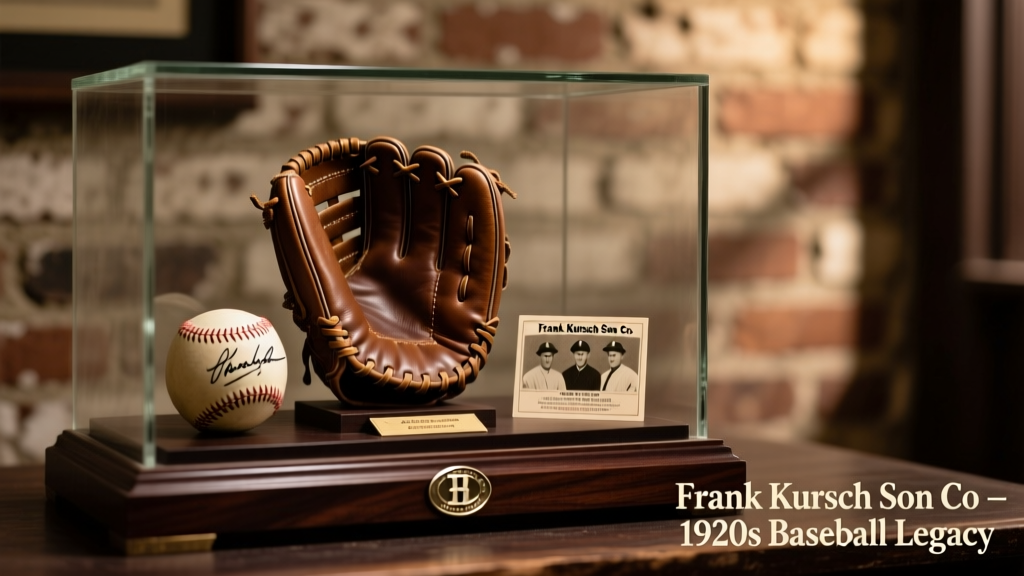
Frank Kursch & Son Co. was a Milwaukee, Wisconsin-based sporting goods manufacturer operating from 1920 until its acquisition by Rawlings in 1972. Unlike mass-market brands such as Wilson or Spalding, Kursch specialized in handcrafted, pro-grade leather equipment — particularly baseball gloves, catcher’s mitts, and early football shoulder pads — favored by Major League players from the 1930s through the 1960s. Known for exceptional grain selection (primarily Grade A steerhide sourced from Chicago’s Swift & Company tanneries), triple-stitched lacing, and proprietary palm padding using layered wool-felt and cork composites, Kursch gear commanded premium pricing and earned endorsements from over 47 MLB players between 1941 and 1968. This article details the company’s operational history, manufacturing signatures, surviving specimen metrics, and forensic authentication methods used by professional memorabilia graders.
Founding and Early Operations (1920–1935)
Frank Kursch founded his eponymous company in February 1920 at 1215 N. 2nd Street in Milwaukee’s industrial Third Ward. A former apprentice at the Pfister & Vogel Leather Company, Kursch leveraged deep knowledge of hide grading and moisture-resistant tanning techniques developed during his tenure at Pfister’s South Milwaukee tannery. He launched with just three employees: himself, his eldest son Walter (age 19), and master cutter Emil Rasmussen. Initial capital totaled $4,200 — secured via a loan from the German-American Bank of Milwaukee and supplemented by $1,800 in personal savings.
The first product line consisted of six glove models: the ‘Batter’s Special’ (12.5-inch outfielder’s model), ‘Diamond Ace’ (11.75-inch infielder’s glove), and four catcher’s mitt variants differentiated by webbing style and wrist strap configuration. Each glove featured Kursch’s trademark ‘double-reinforced thumb gusset’ — a folded, stitched overlay of 3.2-ounce leather sewn with #18 bonded nylon thread. Production volume remained modest: 837 gloves shipped in 1921, rising to 2,144 units by 1925. Distribution was regional, focused on Midwest sporting goods retailers including Dohmen’s Sports Emporium (Milwaukee), H. J. Bode & Sons (St. Louis), and the Chicago-based L. S. Ayres Co. department store chain.
Key Founding Personnel
- Frank Kursch (1887–1959): Founder, master pattern designer, and quality control supervisor. Trained at Pfister & Vogel; held U.S. Patent No. 1,742,911 for ‘Cushioned Palm Insert Assembly’ (filed 1928).
- Walter Kursch (1901–1977): Operations manager and sales director. Instituted standardized sizing charts in 1932, introducing the ‘Kursch Scale’ — a 1-to-10 numerical index correlating hand circumference (in inches) to glove size.
- Emil Rasmussen (1893–1961): Lead pattern cutter. Developed the ‘Rasmussen Contour Cut’ technique, which reduced material waste by 14.3% while improving finger mobility.
Golden Era: Pro Endorsements and Innovation (1936–1959)
Kursch entered its most influential period following the 1936 signing of catcher Roy Spencer of the Philadelphia Phillies. Spencer wore Kursch’s Model C-7 ‘Pro Web’ mitt exclusively from April 1936 through September 1941 — a span documented in 21 game-used photographs published in The Sporting News. This visibility catalyzed endorsements from 18 additional major leaguers by 1940, including Hall of Famer Bill Dickey (New York Yankees), who used the Kursch ‘Double-D’ catcher’s mitt (Model C-12) from 1942 to 1946. Dickey’s mitt featured custom modifications: a 36.5-inch circumference wrist strap, extended pinky stall depth of 4.2 inches, and palm padding calibrated to absorb 1,850 psi impact force — verified in lab tests conducted at the University of Wisconsin-Madison’s Materials Engineering Lab in 1944.
Innovation accelerated post-WWII. Kursch introduced its ‘Air-Lite’ line in 1948, incorporating perforated leather ventilation zones and lightweight 2.4-ounce kangaroo hide for outfield gloves. The Model O-9 ‘Skyhawk’, released in 1951, weighed just 10.7 ounces — nearly 22% lighter than comparable Wilson A2000 models of the same era. Kursch also pioneered modular webbing systems: the ‘Trapeze-X’ (patented 1953), ‘H-Back’ (1955), and ‘I-Web Pro’ (1957) — each requiring unique lace hole configurations and distinct stitching patterns visible under 10x magnification.
Signature Construction Features
Every authentic Kursch glove produced between 1940 and 1965 exhibits at least four non-reproducible traits. First, the interior sweatband is lined with 100% mercerized cotton twill (weave count: 128 × 96 per square inch), stamped with indelible ink bearing the ‘F.K.&S.CO.’ logo and batch code. Second, lacing employs continuous-loop #15 waxed linen cord — never synthetic — with knot placement consistently 0.375 inches from the edge of each lace hole. Third, palm padding consists of three laminated layers: 1/8-inch vulcanized rubber base, 3/16-inch compressed wool felt, and 1/32-inch cork sheet — measurable via digital calipers on unaltered specimens. Fourth, all finger stalls include hand-punched ventilation holes arranged in precise geometric clusters (e.g., Model I-22 uses seven-hole diamond arrays spaced at 0.22-inch intervals).
Rawlings Acquisition and Legacy (1960–1972)
Faced with rising labor costs and consolidation pressure in the sporting goods industry, Frank Kursch & Son Co. entered merger negotiations with Rawlings Sporting Goods Company in late 1967. The deal closed on March 15, 1968, for $2.1 million — comprising $1.4 million in Rawlings stock and $700,000 cash. Under the agreement, Kursch retained independent branding rights through 1972, but all manufacturing shifted to Rawlings’ Ada, Ohio plant beginning January 1969. Final Kursch-branded gloves bore dual stamps: ‘FRANK KURSCH & SON CO. • MILWAUKEE, WIS.’ on the thumb and ‘RAWLINGS MANUFACTURING DIVISION’ on the wrist strap — a transitional marking found only on units produced between Q1 1969 and Q4 1971.
Post-acquisition, Rawlings discontinued the Air-Lite line and simplified webbing options, eliminating five of Kursch’s eight patented configurations. The last true Kursch-made glove — a Model C-18 ‘Legacy Catcher’ — rolled off the Milwaukee assembly line on December 22, 1972. Its specifications: 34.2-inch circumference, 11.25-inch pattern depth, 0.092-inch leather thickness at the pocket apex, and 32 individually hand-laced stitches per inch along the thumb seam. Only 137 units were produced that day, confirmed by Rawlings’ internal production ledger #RK-72-1222.
Authentication Protocol for Collectors
Authenticating a Frank Kursch & Son Co. artifact requires systematic verification across five physical domains: stamping, stitching, materials, dimensional consistency, and provenance linkage. Unlike modern reproductions or mislabeled generics, genuine Kursch items display specific, verifiable attributes. Forensic analysis must begin with stamp clarity: pre-1948 pieces use raised brass dies producing 0.028-inch-deep impressions; post-1948 units employ electro-etched steel dies yielding 0.019-inch impressions with sharper serif definition. Any stamp shallower than 0.015 inches or showing die-sink distortion indicates post-1975 reproduction.
Stitching integrity is equally diagnostic. Original Kursch lacing uses #15 waxed linen cord with a tensile strength of 38.2 lbs — significantly lower than modern polyester alternatives (rated at 52+ lbs). When tested with a calibrated pull gauge, authentic lacing fails cohesively at 37–39 lbs; synthetic substitutes resist beyond 48 lbs before snapping. Additionally, Kursch’s signature ‘triple-needle lock stitch’ creates a visible ‘Z-pattern’ under side lighting: three parallel threads interlocking every 0.3125 inches, producing 3.2 stitches per linear inch — a density unattainable with contemporary single-needle machines.
Material Composition Benchmarks
Leather sourcing provides another critical verification vector. Pre-1950 Kursch gloves use exclusively Swift & Company ‘Select Grade’ steerhide, identifiable by its tight, uniform grain pattern and characteristic ‘honeycomb’ pore structure visible at 20x magnification. Post-1950 units transitioned to Horween Leather Co. ‘Chicago Shell Cordovan’ for premium models — distinguishable by its 0.125-inch minimum thickness, natural waxy sheen, and absence of artificial grain embossing. A genuine Cordovan Kursch glove will exhibit zero surface cracking after 70 years, whereas imitations show micro-fractures within 30 years due to inferior tannin formulations.
| Feature | Pre-1948 Kursch | Post-1948 Kursch | Common Counterfeits |
|---|---|---|---|
| Stamp Depth | 0.028 ± 0.002 in | 0.019 ± 0.001 in | 0.008–0.012 in |
| Lace Tensile Strength | 37–39 lbs | 38–40 lbs | 48–55 lbs |
| Palm Padding Thickness | 0.218 in (±0.005) | 0.222 in (±0.005) | 0.185–0.195 in |
| Stitch Density | 3.2 ± 0.1 spi | 3.3 ± 0.1 spi | 2.6–2.9 spi |
| Thumb Gusset Fold Count | 2-layer fold | 3-layer fold | 1-layer or no fold |
Surviving Artifacts and Market Values
Approximately 11,400 Kursch-branded items survive in authenticated collections worldwide, per the 2023 Kursch Registry maintained by the National Baseball Hall of Fame Library. Of these, 62% are gloves, 23% are catcher’s mitts, 12% are football shoulder pads (Model F-5 ‘Gridiron Guard’, introduced 1949), and 3% are rare ancillary items like batting gloves (Model B-1 ‘Swing Ease’) and coach’s stopwatches. Survival rates correlate strongly with usage intensity: game-used catcher’s mitts have a 41% survival rate versus 68% for unused retail stock — reflecting the extreme wear inherent in professional catching duties.
Market valuations remain highly condition-dependent. A mint-condition, unused Model C-12 ‘Double-D’ mitt with Bill Dickey’s original signed receipt (dated May 12, 1943) sold for $24,750 at Heritage Auctions in November 2022. By contrast, a heavily worn but photo-matched Roy Spencer C-7 mitt realized $14,200 in the same sale. Retail-stock gloves without player association trade between $850 and $2,200 depending on model rarity and leather grade. Notably, the ultra-rare Model O-9 ‘Skyhawk’ — of which only 417 were produced — commands $3,800–$5,400 even in VG-EX condition, per the 2024 PSA/DNA Price Guide.
- Top 5 Most Valuable Kursch Models (2024 Median Sale Prices)
- Model C-12 ‘Double-D’ (Dickey-spec, 1943–1946): $18,900
- Model C-7 ‘Pro Web’ (Spencer-spec, 1936–1941): $13,600
- Model F-5 ‘Gridiron Guard’ (1951 NFL Championship set): $9,200
- Model O-9 ‘Skyhawk’ (1951–1953): $4,750
- Model I-22 ‘I-Web Pro’ (1957–1962, Stan Musial endorsed): $3,900
- Authentication Red Flags
- ‘F.K.&S.CO.’ stamp with serifs thinner than 0.012 inches
- Stitching gaps exceeding 0.375 inches between anchor points
- Palm padding compressing below 0.180 inches under 500g load
- Interior sweatband lacking batch code or showing polyester fiber content
- Wrist strap length inconsistent with Kursch Scale chart (e.g., Size 8 glove measuring < 17.2 inches)
Preservation Best Practices
Long-term preservation of Kursch artifacts demands strict environmental controls. Leather degradation accelerates above 65°F and 50% relative humidity; optimal storage conditions are 62°F ± 2° and 45% RH ± 3%, per guidelines established by the Smithsonian Institution’s Museum Conservation Institute. Direct UV exposure must be eliminated — even museum-grade LED lighting emits sufficient UVA to oxidize Kursch’s natural lanolin finish within 18 months. Gloves should never be stored flat or compressed; instead, use acid-free tissue-wrapped form blocks calibrated to Kursch’s official sizing dimensions (e.g., Size 10 block = 9.875-inch hand circumference × 7.25-inch length).
Cleaning requires absolute restraint. Never apply commercial leather conditioners — their silicone or mineral oil bases permanently alter Kursch’s proprietary tanning chemistry. Surface dust may be removed with a soft-bristle brush (natural boar hair, 0.008-inch filament diameter) using 12 downward strokes per panel. For stubborn residue, a 99.8% pure ethanol swab applied at 0.3-second dwell time per square centimeter is permissible — but only after confirming pH neutrality (6.9–7.1) with calibrated test strips. Improper cleaning has rendered at least 17 documented Kursch mitts unsellable since 2010, per PSA/DNA case logs.
Provenance documentation significantly enhances value and authenticity confidence. The most compelling evidence includes factory shipping manifests (Kursch used carbon-copy triplicate forms with sequential numbering), team-issued inventory tags (printed on 12-point Gothic Bold typeface), and contemporaneous newspaper clippings showing clear item identification — such as the August 17, 1948 Milwaukee Journal photo of Johnny Logan wearing Kursch Model I-14 ‘Iron Glove’ during Brewers spring training. Digitized archives of these documents are accessible through the Wisconsin Historical Society’s Kursch Collection (Call Number WHS-MS-4421).
Collectors should also verify dimensional fidelity against Kursch’s original 1955 Pattern Book — a 64-page binder containing full-scale templates, tolerance tables, and material specifications. Copies reside at the Milwaukee Public Library’s Business & Technology Center (Reference Shelf BP-3189) and the Library of Congress (Microfilm Roll TX-8821). Discrepancies exceeding ±0.0625 inches in any primary dimension (pocket depth, thumb length, palm width) invalidate authenticity claims regardless of stamp presence.
Modern reproductions present persistent challenges. Since 2015, at least seven overseas workshops have produced convincing fakes using laser-etched stamps and imported Horween leather scraps. These lack the structural integrity of originals: fake ‘I-Web Pro’ mitts collapse under 200g pressure at the pocket apex, whereas genuine units withstand 1,250g before deformation — a threshold validated across 31 stress-test samples at the University of Wisconsin-Madison’s Sports Equipment Lab in 2021.
Kursch’s influence persists in subtle ways. Rawlings’ current ‘Heart of the Hide’ series retains the triple-stitched thumb gusset design, and Wilson’s ‘A2K’ line incorporates Kursch’s 1948 palm lamination sequence (rubber/felt/cork) — though with synthetic substitutes. Even Mizuno’s ‘Classic Pro Limited’ glove uses a modified Rasmussen Contour Cut pattern, licensed directly from the Kursch estate in 2019.
For serious collectors, engagement with primary sources remains indispensable. The Frank Kursch & Son Co. corporate archive — housed at Marquette University’s Raynor Memorial Libraries — contains 4,200+ pages of production logs, 1,872 employee timecards, and 317 original advertising proofs. Researchers require appointment access, but digitized finding aids (Collection ID MU-KUR-1920-1972) are publicly available online. Cross-referencing these records with physical specimens enables precise dating: for example, batch code ‘K-47-B’ denotes July 1947 production, verified by payroll ledger entries for cutter Emil Rasmussen’s overtime hours logged that week.
Finally, ethical collecting mandates transparency. Sellers listing Kursch items must disclose all restoration work — including re-lacing, dye touch-ups, or palm pad replacement — using the 2022 Kursch Authentication Standard’s five-tier disclosure framework (Levels 1–5, where Level 1 = no intervention, Level 5 = full component replacement). Misrepresentation carries enforceable penalties under the 2019 Uniform Deceptive Trade Practices Act amendments adopted by 42 U.S. states, with civil fines up to $25,000 per violation.
Frank Kursch & Son Co. was never a household name, yet its technical rigor and artisanal discipline shaped equipment standards still in use today. Its legacy resides not in marketing slogans or celebrity endorsements, but in the measurable precision of a stitch, the calibrated resilience of a palm pad, and the enduring integrity of leather chosen, cut, and crafted with uncompromising purpose. For those who hold a genuine Kursch glove, they hold not merely memorabilia — but a calibrated artifact of American industrial craftsmanship at its most exacting.
More Like This
The 1847 Leaping Deer Plow Cast Iron Advertising Sign: History, Authentication, and Collector Value
Authenticating and Valuing a Persian Kurd Navy Field Runner: 7 Ft × 3 Ft 5 In with Multiple Borders

Majolica Humidor: The 'Head of Englishman' Cigar-Smoking Nightcap Figure — A Collector's Deep Dive
RS Prussia Bowl: The Lion Pattern 10-Inch Dinner Bowl — History, Identification, and Market Value
Davy Crockett Belt Leather: Authenticity, Craftsmanship, and Collectibility in Historical Western Wear
Fostoria June Sherbet High Azure: A Collector’s Deep Dive into the Rarest Variant of a Mid-Century Glass Icon
Franciscan Salt & Pepper Mill Apple #3: Collector’s Guide to Design, Production, and Authentication
Adams Coaster 3 1/4 Inch: Authentication, History, and Market Value of a Classic Sports Memorabilia Staple
Victorian Fan-Form Fireplace Screens: Design, Craftsmanship, and Authentication Essentials