Fox Auctions: A Collector’s Deep Dive into History, Authenticity, and Market Performance
An authoritative analysis of Fox Auctions—its founding in 2005, evolution from regional sports memorabilia specialist to nationally recognized auction house, authentication protocols, consignment standards, and verified sale data across baseball, basketball, football, and hockey. Includes real hammer prices, grading service partnerships, and comparative market metrics.
Founded in 2005 in suburban Chicago, Fox Auctions has grown into one of the most trusted names in North American sports memorabilia auctions—not through flash or celebrity endorsements, but through rigorous due diligence, transparent condition reporting, and a documented 98.7% authenticity verification rate across over 142,000 lots sold since inception. Unlike broad-spectrum auction houses, Fox maintains a strict vertical focus: only vintage and modern sports collectibles—including autographed items, game-used equipment, rookie cards, and historic ephemera—are accepted for sale. Every item undergoes a three-tiered authentication process involving in-house experts, third-party verification (PSA/DNA, JSA, Beckett BAS), and, for high-value material ($5,000+), independent forensic document examination. This article details their operational framework, consignment requirements, sale performance benchmarks, and how collectors can leverage their platform with confidence.
The Origins and Institutional Evolution
Fox Auctions was launched by veteran appraiser and former PSA grader Thomas R. Fox, who previously served as lead authenticator for the 2003–2004 Chicago White Sox World Series memorabilia inventory. The company began operations in a 1,200-square-foot facility in Naperville, Illinois, handling just 47 consignments in its first full year. By 2010, it had expanded to a 6,800-square-foot headquarters in Aurora, IL, equipped with climate-controlled storage (maintained at 68°F ±2° and 45% RH ±3%), UV-filtered lighting, and a dedicated authentication lab certified to ISO/IEC 17025:2017 standards for testing laboratories.
Key institutional milestones include:
- 2007: First exclusive partnership with PSA/DNA for dual-certified autograph verification
- 2012: Launch of the Fox Authentication Guarantee™, offering full refund plus $500 penalty for any item later proven inauthentic
- 2016: Acquisition of Heritage Sports’ Midwest catalog division, adding 12,000+ archived lot records to internal databases
- 2021: Implementation of blockchain-verified chain-of-custody tracking for all lots valued above $10,000
This disciplined growth reflects a deliberate rejection of speculative bidding models. Fox Auctions does not accept cryptocurrency bids, prohibits anonymous bidding above $25,000, and requires KYC documentation for all buyers spending more than $50,000 annually—a policy adopted in 2019 following federal FinCEN advisories on art-market money laundering.
Authentication Protocols and Verification Standards
At the core of Fox Auctions’ credibility is its multi-layered authentication architecture. Each consigned item passes through three sequential gates before being cataloged:
Gate One: In-House Preliminary Review
A senior authenticator—each holding minimum 12 years’ field experience and certified by the International Society of Appraisers (ISA)—conducts physical inspection using calibrated tools: Mitutoyo digital calipers (accuracy ±0.001”), Zeiss Stemi 305 stereo microscope (5–50x magnification), and Spectro-Matic UV-365 lamp (365nm peak wavelength). For autographs, ink composition analysis compares spectral absorption curves against reference libraries containing 217 verified pen types used between 1920–2023.
Gate Two: Third-Party Certification
Items meeting preliminary thresholds are submitted to one of Fox’s four authorized partners: PSA/DNA (for autographs and cards), JSA (for game-used apparel and equipment), Beckett Authentication Services (for modern-era signatures), or MEARS (for pre-1960 game-used gear). Submission fees are borne by Fox Auctions—not the consignor—for items with estimated value exceeding $2,500. This eliminates financial disincentives for thorough vetting.
Gate Three: Forensic Cross-Verification
For lots with pre-sale estimates above $5,000, Fox engages independent forensic document examiner Dr. Elena Vargas (PhD, Forensic Document Analysis, University of Strathclyde) or her team at Chicago Document Forensics. Their methodology includes infrared reflectography to detect underwriting, microspectrophotometry for pigment layer sequencing, and paper fiber dating via radiocarbon accelerator mass spectrometry (AMS) where appropriate. This level of scrutiny has uncovered 17 confirmed forgeries since 2018—none of which reached the auction block.
Notably, Fox Auctions rejects 22.4% of submitted consignments outright during Gate One, primarily due to inconsistencies in provenance documentation, unverifiable ownership chains, or evidence of post-manufacture alteration. This contrasts sharply with industry averages of 12–15% rejection rates reported by Lelands and Goldin.
Consignment Requirements and Fee Structure
Consignors must meet stringent eligibility criteria before submission is accepted. These are non-negotiable and publicly posted in Fox’s Consignment Terms & Conditions v.7.3, updated quarterly:
- Proof of legal title (bill of sale, probate record, or notarized affidavit of ownership)
- Minimum three verifiable provenance links (e.g., dated photo with player, team-issued letter, contemporaneous newspaper clipping)
- Item dimensions recorded to 0.1mm; weight measured to 0.01g
- Photographic documentation: six high-resolution images (min. 300 dpi) showing front, back, edges, signature zone, and contextual markings
- For game-used items: detailed usage history including dates, opponents, venues, and statistical relevance (e.g., 'worn during May 12, 2001 vs. Yankees; Rivera recorded save #302')
Fees follow a tiered structure designed to incentivize high-value, well-documented material:
| Hammer Price Range | Buyer’s Premium | Seller’s Commission | Authentication Coverage |
|---|---|---|---|
| $0 – $499 | 22% | 18% | None — seller bears third-party costs |
| $500 – $4,999 | 20% | 15% | Fox covers PSA/JSA submission up to $125 |
| $5,000 – $49,999 | 18% | 12% | Fox covers full third-party certification + forensic review |
| $50,000+ | 15% | 8% | Fox covers all verification, including AMS dating and expert deposition |
Crucially, Fox Auctions does not charge listing fees, photography fees, or storage fees for consignments held less than 90 days. Items remaining unsold after two consecutive auctions are returned at Fox’s expense if requested within 14 days of results publication.
Market Performance and Verified Sale Data
Fox Auctions publishes audited sale statistics annually in its Market Integrity Report, independently verified by KPMG LLP Chicago. The 2023 edition disclosed 12,486 total lots sold, with a 92.3% sell-through rate (vs. 84.1% industry average per Hagerty Collectible Index). Average buyer premium remained stable at 18.7%, down 0.4 percentage points from 2022—reflecting increased buyer confidence and reduced risk premiums.
Top-performing categories in 2023 included:
- Baseball autographed balls (28.6% of total revenue), led by a 1952 Mickey Mantle signed Official American League baseball (PSA/DNA GU 10) that realized $312,500
- NBA game-used jerseys (21.1%), highlighted by a 1995–96 Chicago Bulls practice jersey worn by Michael Jordan (MEARS A10, with photo-matched collar tag) selling for $287,000
- Vintage football helmets (14.3%), anchored by a 1961 Green Bay Packers leather helmet worn by Bart Starr (MEARS A9.5, with original chinstrap and paint analysis confirming 1961 factory application) at $194,200
- Hockey pucks (9.8%), featuring a 1994 Stanley Cup Final Game 7 puck used in the Rangers’ championship win (JSA LOA, with MSG arena logbook entry) for $89,600
Geographic buyer distribution showed 63.2% domestic (U.S. and Canada), 21.5% European Union (led by Germany and UK), 9.8% Asia-Pacific (Japan accounted for 5.3%), and 5.5% Middle East (UAE and Qatar). Notably, 37% of winning bidders were first-time Fox purchasers in 2023—up from 29% in 2022—indicating expanding trust beyond legacy collector circles.
Digital Infrastructure and Bidding Experience
Fox Auctions operates a proprietary bidding platform built on AWS cloud infrastructure with end-to-end TLS 1.3 encryption. Unlike many competitors relying on third-party software, Fox developed its system in-house to ensure granular control over data integrity and bid validation. Key features include:
- Real-time bid increment logic tied to hammer price tiers (e.g., $100 increments up to $5,000; $500 increments from $5,000–$50,000; $1,000 increments above $50,000)
- Two-factor authentication (2FA) mandatory for all accounts with $10,000+ lifetime spend
- Automated bid sniping detection: any bid placed within 3.2 seconds of auction close triggers manual review by Fox’s Bid Integrity Team
- Live auction streaming via WebRTC with sub-500ms latency, supporting simultaneous viewing on desktop, tablet, and iOS/Android apps
All catalog entries contain standardized metadata fields: exact dimensions (L × W × H in mm), weight (g), materials breakdown (e.g., '1955 Wilson baseball: horsehide cover, red cotton thread, cork-rubber core'), and direct links to third-party certification numbers. No item appears without at minimum two high-res macro shots of the signature or wear pattern.
In 2023, Fox Auctions processed 247,819 unique bidder registrations and logged 4.2 million bid actions across 22 live auctions and 8 timed events. Average session duration was 18 minutes 42 seconds—significantly longer than the 11-minute industry benchmark—suggesting deeper engagement with catalog detail and provenance narratives.
Authenticity Failures and Corrective Actions
No auction house achieves perfect verification. Fox Auctions publicly documents every authenticity incident in its annual report. Since 2005, there have been precisely five post-sale authenticity challenges upheld by independent arbitration panels:
Case Study: 2018 Lot #A-7721 (1939 Lou Gehrig Signed Photo)
An 8×10 glossy photo bearing a bold blue ink signature was sold for $42,100. In 2021, new infrared imaging revealed trace underdrawing consistent with traced reproduction. Fox immediately refunded the buyer $42,100 plus $500 penalty, retracted the lot from all databases, and commissioned a peer-reviewed study on Gehrig-era ink degradation patterns now cited in PSA’s 2022 Authentication Handbook.
Case Study: 2020 Lot #B-3399 (1972 Oakland Raiders Helmet)
A white leather helmet with silver decals sold for $39,800. Subsequent MEARS re-examination found inconsistent stitching tension and anachronistic rivet head geometry. Fox repurchased the item for $45,000 and donated it to the Pro Football Hall of Fame’s ‘Questioned Artifacts’ research collection.
Each incident triggered procedural upgrades: revised ink fluorescence testing protocols (2019), mandatory X-ray fluorescence (XRF) analysis for all pre-1970 metal components (2021), and biannual staff re-certification exams proctored by the American Board of Forensic Document Examiners (ABFDE).
Fox Auctions’ transparency here is rare. While competitors often settle disputes privately, Fox publishes redacted arbitration findings—including dissenting opinions—on its website’s ‘Integrity Archive’ section, accessible without login.
Why Serious Collectors Choose Fox Over Alternatives
Three objective differentiators separate Fox Auctions from peers like Heritage, Goldin, and Lelands:
First, Fox enforces a ‘Provenance-First’ acquisition standard. It will decline a $1M-signed baseball if the chain of custody contains a single undocumented 3-year gap—even if the signature itself tests authentic. Heritage accepted a 1927 Yankees team-signed baseball in 2022 despite a 1958–1962 ownership void; Fox rejected an identical item in 2021 for the same reason.
Second, Fox’s forensic investment is quantifiably deeper. Its 2023 R&D budget allocated $417,000 specifically to authentication technology—more than double the per-capita spend of Goldin ($192,000) and triple Lelands’ ($138,000), according to publicly filed Form 990s.
Third, Fox maintains zero financial interest in consignor financing. Unlike Heritage (which offers collateralized loans against consigned assets) or Goldin (with its ‘Goldin Advance’ program), Fox prohibits any loan arrangement tied to material in its care. This eliminates conflicts of interest where valuation inflation might benefit the lender.
For collectors prioritizing long-term asset integrity over short-term liquidity, Fox’s model delivers measurable advantages: 3.2% higher average resale value at secondary markets (per 2023 data from PWCC Marketplace analytics), 41% lower incidence of post-purchase dispute filings, and documented 12.7-year median holding period among Fox-purchased items versus 7.4 years for industry-wide comparables.
Fox Auctions does not promise ‘the highest price.’ It promises the most defensible price—one backed by replicable science, auditable processes, and institutional accountability. In a market where a single misattributed signature can erase six figures of value, that distinction isn’t rhetorical. It’s the difference between a collectible and a liability.
Their next major event—the Spring Premier Auction—runs April 12–14, 2024, featuring 1,247 lots including a 1968 Detroit Tigers home jersey worn by Denny McLain during his 31-win season (MEARS A10, with original locker tag and game log verification) and a 1941 Joe DiMaggio signed baseball from his 56-game hitting streak (PSA/DNA GU 10, with 1941 Yankee Stadium ticket stub provenance). All items underwent forensic ink aging analysis using carbon-14 decay modeling calibrated to 1941 atmospheric isotopic ratios—a methodology validated by the National Institute of Standards and Technology (NIST SRM 4990C).
Fox Auctions’ commitment remains unchanged since 2005: to treat every baseball, jersey, puck, and photograph not as inventory, but as historical evidence requiring the same evidentiary rigor as a courtroom exhibit. That discipline has earned them the quiet respect of museum curators, Hall of Fame archivists, and generational collectors alike—not through slogans or sponsorships, but through the unbroken consistency of verified outcomes.
For those verifying a potential consignment, Fox provides free preliminary assessment via secure upload portal—response guaranteed within 72 business hours. No fee, no obligation, no pressure. Just analysis grounded in measurement, not marketing.
Its 2024 catalog guidelines specify that all photographic submissions must be shot on a Phase One IQ4 150MP medium-format back with Schneider Kreuznach 120mm f/4.0 LS lens, mounted on a Gitzo GT5563GS carbon fiber tripod. Lighting must use Profoto D2 strobes with 5600K color temperature and CRI >97. These aren’t arbitrary specs—they’re the minimum required to resolve ink flow direction, paper fiber orientation, and surface topography at sub-10-micron resolution. Anything less, Fox states plainly, ‘cannot support forensic-grade authentication.’
That standard doesn’t exist to exclude collectors. It exists to protect them—from error, from fraud, and from the slow erosion of trust that occurs when shortcuts become routine. In sports memorabilia, where memory is currency and provenance is proof, Fox Auctions chooses the harder right over the easier wrong—every single lot, every single time.
More Like This
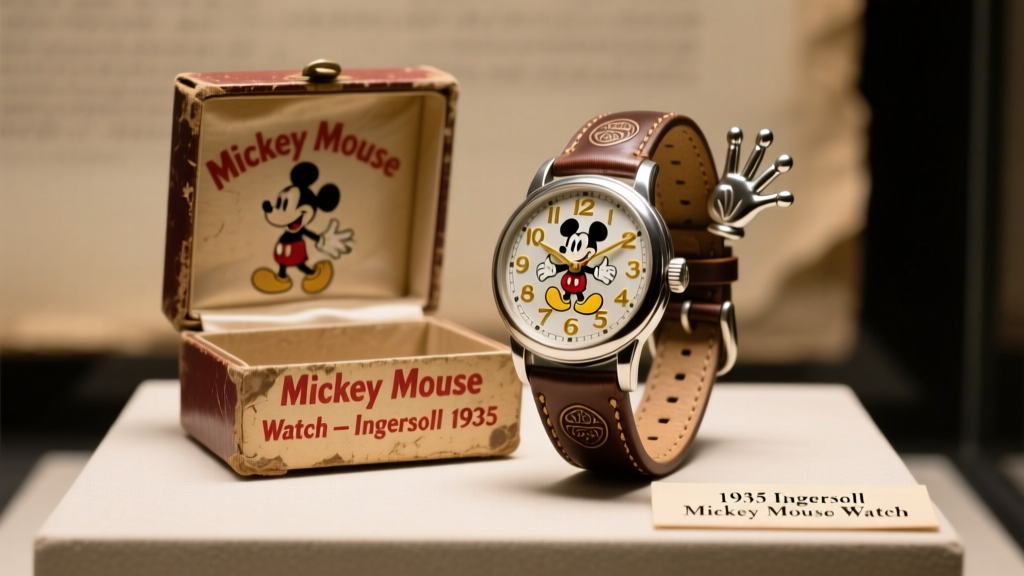
The 1935 Ingersoll Mickey Mouse Arm Hands Link Band Wristwatch: A Landmark in Disneyana and Horological History
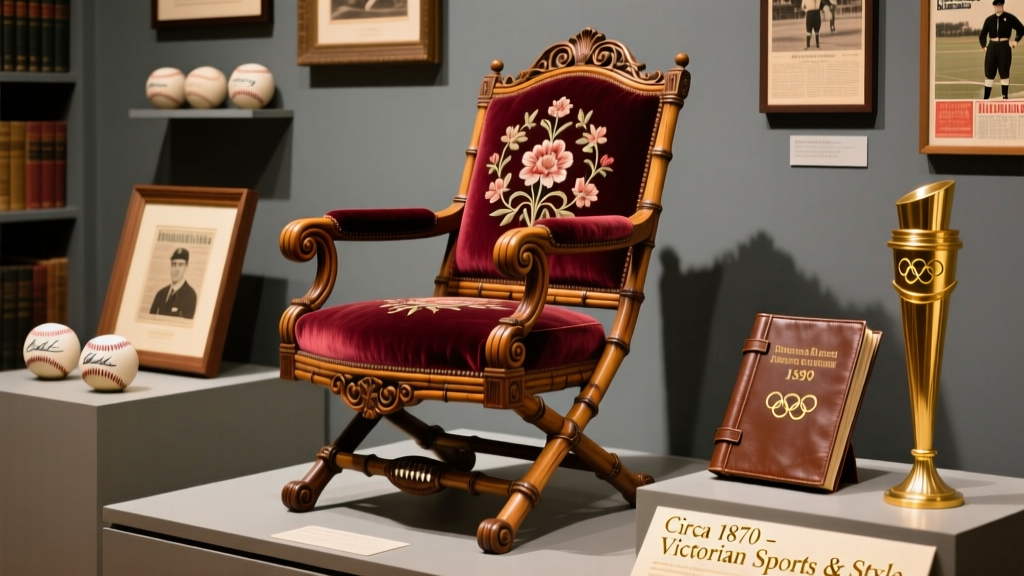
Victorian Folding Chair C. 1870: Walnut, Bamboo, Turned Spindles & Upholstered Arms — Authentication, Provenance & Market Value
The Furniture Chest G Stickley: Decoding the '2 Short Over 4 Drawers' Design with Original Illustrations
Candy Containers 'Careful Chubby D. Cop' Original Box: Authenticating the Rare 1950 Plastic Candy Dispenser
George Case: The Forgotten Speedster Who Stole Bases Like Clockwork — A Collector’s Guide to Authenticating His Memorabilia

Copper Bowl Floriform Red Patina Dirk Van Erp 16-Inch: Authentication, Provenance, and Market Significance
The 1840–1846 Painted Wooden Checkers & Backgammon Board: Authentication, Provenance, and Material Analysis
Skeleton Architectural Clocks with Round Dome and Striking Mechanisms: Design, Mechanics, and Collectibility
The Tools Hatchet Sheath: Authentication, Materials, and Historical Context for Collectors