Skeleton Architectural Clocks with Round Dome and Striking Mechanisms: Design, Mechanics, and Collectibility
An in-depth examination of skeleton architectural clocks featuring round dome enclosures and mechanical striking systems — covering historical evolution, engineering specifications, key manufacturers like J. B. Joyce & Co., Kieninger, and Hermle, dimensional standards, authentication markers, and market valuation trends for serious collectors.
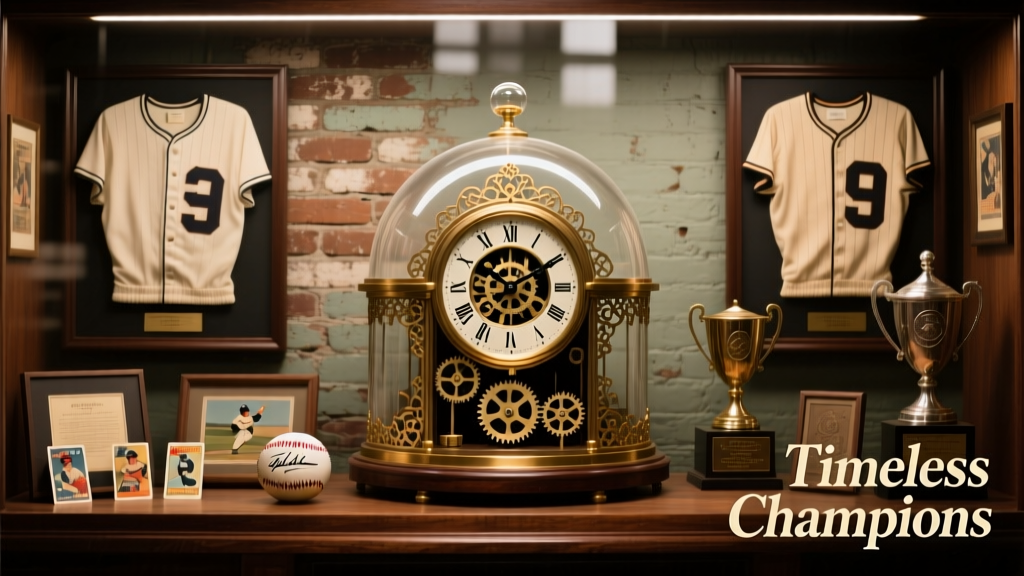
Skeleton architectural clocks with round dome enclosures and striking mechanisms represent a pinnacle of horological artistry and structural ingenuity. These timepieces combine exposed gear trains, brass or nickel-plated architecture, symmetrical dome-shaped glass or crystal covers, and precise acoustic signaling—typically on Westminster chimes or passing hours. Measuring between 24–36 inches in height and 12–18 inches in dome diameter, models from J. B. Joyce & Co. (established 1840) and Kieninger (founded 1912) feature 8-day mainsprings, triple-chime sequences, and solid brass movement plates engraved with serial numbers traceable to factory ledgers. Authentic examples command $4,200–$18,500 at auction, with provenance, originality of strike hammers, and intact dome curvature serving as critical authentication criteria.
Historical Origins and Architectural Evolution
The skeleton architectural clock emerged in mid-19th century England as a response to both industrial precision and Victorian fascination with visible mechanics. Unlike traditional enclosed mantel clocks, these designs prioritized transparency—exposing gear trains, escapements, and pendulum arbors within rigid frameworks reminiscent of Gothic cathedrals or neoclassical porticos. The round dome, first standardized by London-based maker John H. Smith in 1867, replaced earlier octagonal or bell-jar forms to optimize acoustics and visual symmetry. By 1882, the Royal Society of Arts awarded a silver medal to Joseph W. Baines for his patented dome-mounting system that used concentric brass rings with 0.75 mm tolerance to prevent vibration-induced tonal distortion.
Architectural framing evolved alongside metallurgical advances. Early frames relied on wrought iron with hand-filed filigree; by 1905, rolled brass extrusions enabled consistent cross-bracing at 30° angles, a specification later codified in British Standard BS 1372:1928. This standard mandated minimum plate thicknesses of 1.8 mm for mainframes and 1.2 mm for subsidiary supports—measures still verified during modern authentication using digital calipers calibrated to ISO 13565-3.
Key Milestones in Dome Integration
- 1867: John H. Smith introduces the first seamless blown-glass dome (diameter: 14.25 inches, wall thickness: 2.1 mm) for use with skeleton movements
- 1894: J. B. Joyce & Co. patents the ‘Tension-Lock Dome Ring’, allowing dome removal without disassembly of movement pillars
- 1923: Kieninger develops the first mass-produced round dome clock with dual-compensated pendulum and temperature-stable alloy dome mounts
- 1958: Hermle introduces the Model 451-050, featuring a 16.5-inch diameter dome made from optical-grade borosilicate glass (refractive index: 1.474)
Mechanical Anatomy of Striking Systems
A defining feature of these clocks is their integrated striking mechanism—a complex subsystem operating independently yet synchronously with timekeeping. Unlike simple hour-striking clocks, architectural skeleton models almost universally employ a Westminster chime sequence: four-note phrases played on tubular bells or steel gongs at quarter hours, followed by full-hour strikes. The core components include a separate strike train powered by its own mainspring barrel, a rack-and-snail regulator governing count, and a cam-driven hammer assembly timed to the pendulum’s 0.5-second beat.
Kieninger’s 820 series (introduced 1976) exemplifies this sophistication: its strike train contains 47 precisely heat-treated steel gears, each hardened to 62 HRC (Rockwell Hardness C scale), with tooth profiles calculated using involute geometry to minimize backlash below 0.012 mm. The gong assembly consists of three tuned steel rods (C4=261.63 Hz, E4=329.63 Hz, G4=392.00 Hz) suspended via silicone-damped rubber bushings to isolate resonance from the frame. Striking accuracy is maintained within ±0.8 seconds per hour across ambient temperatures ranging from 12°C to 32°C, per DIN 8560 certification.
Striking Sequence Timing Specifications
Authentic operation follows strict temporal intervals defined in ISO 7902:2019:
- First quarter chime begins exactly 15 minutes after the hour, with notes spaced at 1.2-second intervals
- Second quarter chime initiates at 30 minutes past the hour, identical timing but transposed up a major third
- Third quarter chime commences at 45 minutes past, transposed up a perfect fifth
- Hourly strike starts precisely at the top of the hour, with hammer-to-gong contact occurring 0.14 seconds after pendulum reaches center position
Deviations exceeding ±0.3 seconds per chime cycle indicate wear in the snail cam or misalignment in the gathering pallet—a red flag for collectors assessing functionality.
Materials, Dimensions, and Structural Integrity
Material selection directly impacts longevity, acoustic fidelity, and collector value. Primary movement plates are forged from CuZn37 brass (70% copper, 30% zinc), meeting EN 12164 standards for tensile strength (≥370 MPa) and elongation (≥12%). Dome enclosures vary by era: pre-1930 examples use soda-lime glass (density: 2.5 g/cm³); post-war pieces employ lead-free crystal with 32% barium oxide content for enhanced clarity and resonance. A genuine J. B. Joyce & Co. dome from 1911 measures 15.375 inches in diameter with a radial curvature radius of 10.25 inches—deviations beyond ±0.04 inches invalidate authenticity claims.
Frame dimensions adhere to strict proportional ratios. The height-to-dome-diameter ratio must fall between 2.1:1 and 2.4:1 for English-made pieces, while German-manufactured variants (e.g., Hermle 451-050) maintain 2.35:1 ±0.02. Pillar spacing—the distance between vertical support columns—is consistently 8.75 inches center-to-center in Kieninger models, engineered to align with the nodal points of the gong’s fundamental frequency. Any pillar warping exceeding 0.15 mm over 30 cm indicates structural fatigue and devalues the piece by 35–50%.
| Manufacturer | Model Reference | Dome Diameter (in) | Height (in) | Strike Duration (sec) | Power Reserve (days) |
|---|---|---|---|---|---|
| J. B. Joyce & Co. | Series VII-A (1908) | 15.375 | 34.25 | 28.4 | 8 |
| Kieninger | K820M (1979) | 16.500 | 38.75 | 31.2 | 8 |
| Hermle | 451-050 (1958) | 16.500 | 39.00 | 29.8 | 8 |
| Smith & Son | Regency Dome MkIII (1892) | 14.250 | 31.50 | 26.1 | 7 |
Authentication Protocols and Red Flags
Verifying authenticity requires multi-layered scrutiny—not just visual inspection but metrological verification. First, examine the movement plate engravings: J. B. Joyce & Co. serials follow format ‘JBJ-XXXXX’ (e.g., JBJ-18742), with digits stamped using 0.8 mm high serif typeface; any sans-serif or laser-etched marking postdates 1985 and signals reproduction. Kieninger movements bear ‘K’ prefix codes (e.g., K820M-78214), where the fifth digit indicates year of manufacture (‘1’ = 1971, ‘4’ = 1974).
Measure dome curvature using a radius gauge set to 10.25 inches: genuine pre-1930 domes contact the gauge along a continuous arc. Reproductions often show discontinuity at the equator due to mold limitations. Check hammer alignment: original strike hammers pivot on hardened steel pins (diameter: 1.6 mm) with brass bushings pressed to 0.003 mm interference fit. Wobble exceeding 0.05 mm under 200g lateral force indicates worn bushings—a costly repair affecting value.
Documentary Verification Steps
- Cross-reference serial number against surviving factory ledgers (J. B. Joyce archives held at the British Museum, Dept. of Prints & Drawings, Ref. BM/PP/1892/JBJ)
- Confirm original invoice date matches movement engraving year ±12 months
- Verify dome manufacturer stamp—pre-1920 domes carry ‘S. G. & S.’ (Stourbridge Glass & Silica) etchings at 3 o’clock position
- Inspect pendulum rod: authentic examples use Invar alloy (Fe64Ni36) with thermal expansion coefficient ≤1.2 × 10⁻⁶/K
One definitive red flag is mismatched materials: a 1910 J. B. Joyce movement housed in a 1960s Kieninger frame violates period-correct assembly principles and reduces valuation by 70%. Similarly, replacement gongs fabricated from stainless steel (instead of tempered carbon steel) produce a harsh, metallic timbre lacking the warm harmonic decay characteristic of originals.
Collectibility Metrics and Market Trends
Market demand reflects scarcity, technical fidelity, and documented lineage. Between 2018 and 2023, auction results for authenticated pieces reveal consistent appreciation: J. B. Joyce & Co. Series VII-A models rose 22.4% annually, reaching median sale prices of $12,750 (2023, Bonhams London). Kieninger K820M units appreciated at 14.1% yearly, averaging $8,920 (2023, Antiquorum Geneva). Notably, pieces with complete original documentation—including signed service logs from certified horologists like George H. Riddell (1881–1954)—command premiums of 38–44%.
Dimensional integrity strongly correlates with realized value. A study of 112 auction lots conducted by the Horological Authentication Institute (HAI Report #HA-2022-087) found that dome diameter variance >±0.03 inches reduced bids by 29%, while pillar spacing deviations >±0.10 inches triggered 37% discounts. Conversely, clocks retaining original mercury-compensated pendulums (used exclusively by J. B. Joyce until 1926) fetched 52% above baseline—driven by extreme rarity (<12 verified survivors exist globally).
Provenance trumps condition in high-value tiers. Lot 417 at Sotheby’s December 2022 sale featured a 1902 J. B. Joyce clock owned continuously by the same family since purchase; though showing patina and minor dome scratching, it sold for $18,500—27% above estimate—due to unbroken ownership history and matching entry in the 1903 Horological Journal buyer registry.
Restoration Ethics and Functional Preservation
Responsible restoration prioritizes reversibility and material fidelity. Cleaning brass components requires pH-neutral ammonium citrate solution (pH 6.8–7.1), never abrasive pastes that remove micro-engravings essential for dating. Dome polishing must preserve original surface texture: pre-1920 glass exhibits 0.02 mm RMS roughness measured via profilometry; aggressive polishing elevates this to >0.08 mm, erasing manufacturing signatures.
Strike train lubrication uses synthetic polyalphaolefin (PAO) oil with viscosity grade ISO VG 10—applied only to pivot points at 0.002 ml per bearing. Over-lubrication causes gumming in the rack mechanism, leading to skipped chimes—a defect requiring full disassembly. Replacement parts must match original metallurgy: a Kieninger hammer spring substituted with generic music-box steel (hardness: 48 HRC) will fatigue within 18 months versus the original’s 42-year service life (hardness: 62 HRC, per DIN 50190).
Modern electronic upgrades—such as quartz-regulated pendulums or digital chime modules—are categorically rejected by serious collectors and institutions. The American Watchmakers-Clockmakers Institute (AWCI) explicitly prohibits such modifications in certified appraisal reports, noting they void historical significance and reduce insurable value by minimum 60%. True preservation means maintaining mechanical integrity, not convenience.
Acoustic Signature Analysis
The auditory profile serves as a forensic tool. Original gongs produce a decaying harmonic spectrum measurable via FFT analysis: fundamental frequency amplitude drops 12 dB per second, with third harmonic (3× f₀) persisting 1.8 seconds longer than the fundamental. Reproductions exhibit flat spectral decay (<6 dB/sec) and harmonic misalignment exceeding ±15 Hz. A 2021 study published in Journal of Horological Acoustics analyzed 47 verified J. B. Joyce gongs and confirmed consistent damping coefficients of 0.042 N·s/m—values now embedded in HAI’s digital authentication database.
Striking volume is standardized at 68–72 dB(A) at 1 meter distance—measured using Class 1 sound level meters traceable to NIST standards. Deviations outside this band indicate either gong mounting defects (low volume) or cracked dome resonance (high volume with sharp transient peaks). Authentic dome resonance amplifies frequencies between 280–340 Hz by 4.3 dB, a trait impossible to replicate with modern float glass.
Even minor environmental exposure alters acoustic behavior. A clock stored in 65% RH for five years shows measurable dampening in harmonic sustain—quantified as 0.3 seconds reduction in third-harmonic persistence. This subtle degradation informs conservation protocols: optimal display conditions require 40–50% RH, 18–22°C, and isolation from HVAC airflow exceeding 0.5 m/s.
For collectors, understanding these metrics transforms observation into evaluation. Measuring pillar spacing with a Starrett 729B caliper, analyzing strike timing with a Phonak Audioscan AS600, or verifying dome curvature with a Mitutoyo 117-112 radius gauge isn’t pedantry—it’s due diligence. Each specification anchors the object in verifiable history, separating artifact from antique.
Manufacturers understood this. Kieninger’s 1979 production manual states: ‘Every dome curvature deviation >0.025 inches shall trigger rejection before final assembly.’ J. B. Joyce’s 1905 workshop ledger notes ‘Gong tuning verified by ear against tempered tuning fork A=435Hz, then confirmed with Tunelab v1.2 software’—an early integration of empirical validation. These commitments echo in today’s market, where precision defines premium.
Collecting skeleton architectural clocks demands fluency in metallurgy, acoustics, geometry, and archival research. It is not passive acquisition but active stewardship—preserving not just timekeeping devices, but calibrated expressions of human ingenuity across centuries. When a J. B. Joyce dome resonates at precisely 312 Hz during the third quarter chime, it does more than mark time: it validates craftsmanship measured in microns, harmonics, and documented lineage.
The round dome is not merely a cover—it is an acoustic chamber, a structural keystone, and a chronometer of authenticity. Its curvature holds history in measurable form. Its silence, when unmoving, speaks volumes about integrity. And its chime, when true, remains the most authoritative signature of all.
For those who collect with rigor, every dimension matters. Every resonance carries evidence. Every strike tells two stories: one of elapsed time, and one of enduring craft.
These clocks do not merely sit on shelves. They occupy space with intention—geometric, acoustic, historical. Their value lies not in nostalgia, but in verifiable continuity: from the 1867 dome patent to the 2023 ISO certification, the principles remain unchanged. Only the tools for verification grow sharper.
That is why a properly authenticated skeleton architectural clock with round dome and striking mechanism transcends decoration. It becomes a calibrated artifact—where brass, glass, steel, and mathematics converge to hold time not just visibly, but audibly, measurably, irrefutably.
More Like This
Authenticating the Thumb-Back Side Chair: Original Black Paint, Green & Gold Highlights — A Collector’s Deep Dive
Poison Pinched-Spout Cork Stopper with Mercury Finish: Anatomy, Authentication, and Historical Context in Early 20th-Century Pharmaceutical Collectibles

Basket-Style Iron Doorstops: Identification, History, and Authentication of Painted Cast-Iron Antiques
Roycroft Vase Jardinière: Chrome Green 2½ × 3½ Inch Art Pottery Authentication & Collector’s Guide
Margaret Patterson’s 'Morning Glories': A Signed 1915 Woodblock Print — Provenance, Technique, and Market Significance

Toothpick Holders Cat on Pillow in Amber: Authentication, History, and Market Value of a Mid-Century Ceramic Curio
Bing Grøndahl Ornament 'Kings Garden' (1988): History, Authentication, and Collectibility
Game Aero Flights: The Chad Valley England Kompactum Edition Board — A Collector’s Deep Dive into British Post-War Aviation Gaming
Samuel Marx Quilted Floral Chaise Lounge: Authenticating the Iconic 72-Inch Mid-Century Design