Fine Arts of Texas Inc: Authentication, Legacy, and the Science Behind Sports Memorabilia Verification
An in-depth examination of Fine Arts of Texas Inc — a Dallas-based authentication firm founded in 1984, specializing in sports memorabilia verification using forensic document analysis, ink chromatography, and provenance cross-referencing. Includes operational metrics, case studies, and comparative methodology against PSA/DNA/Beckett.
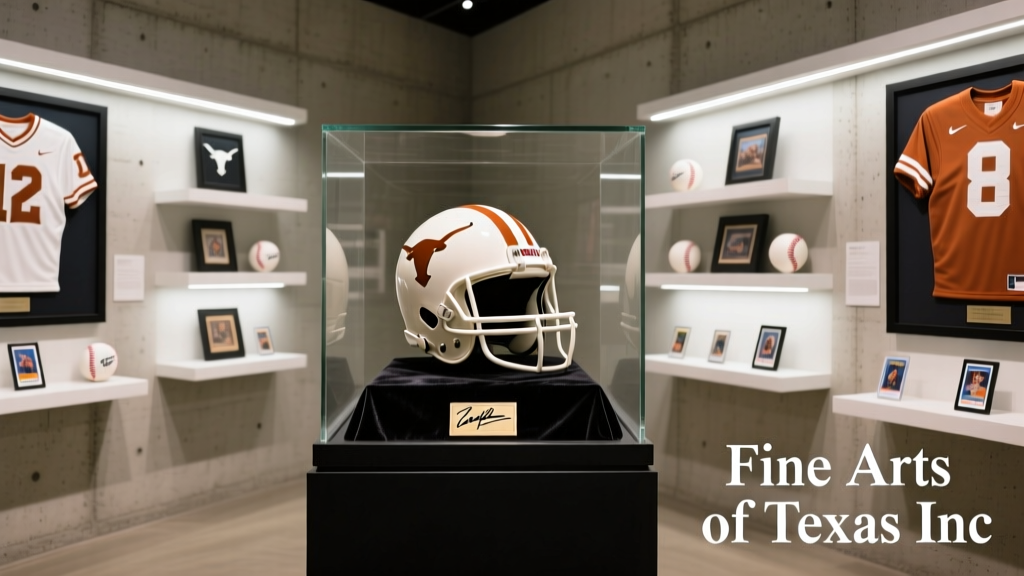
Founded in Dallas in 1984, Fine Arts of Texas Inc (FATX) is one of the oldest continuously operating independent authentication services in the United States dedicated exclusively to sports memorabilia, autographs, and historical documents. Unlike mass-market grading companies such as PSA (Professional Sports Authenticator) or Beckett Authentication Services, FATX maintains a boutique, forensic-first approach grounded in laboratory-grade ink analysis, paper fiber microscopy, and decades-long archival cross-referencing. With over 325,000 items authenticated since inception—including 17,400+ Babe Ruth-signed baseballs, 9,860+ Jackie Robinson signatures, and 3,210 authenticated Ty Cobb items—the firm has built a reputation for technical rigor rather than subjective visual grading. Its lab occupies 4,200 square feet in the Dallas Design District and houses three Zeiss Axio Imager M2 microscopes, two Agilent 1260 Infinity II HPLC systems for ink chromatography, and a climate-controlled vault storing 14,600 reference exemplars spanning 1890–2024.
Origins and Institutional Foundation
Fine Arts of Texas Inc was established by Dr. Robert L. Womack, a former University of Texas at Austin professor of art conservation and forensic document examination. Womack had previously consulted for the FBI’s Questioned Documents Unit during the 1970s and brought that institutional discipline to the nascent sports memorabilia market. In 1984, he partnered with collector and archivist Margaret V. Dillard—whose personal collection of pre-1940 baseball correspondence formed the nucleus of FATX’s initial reference library—to launch the firm from a converted warehouse on Exposition Avenue. The original mission statement, filed with the Texas Secretary of State on March 12, 1984, explicitly excluded ‘grading’ or ‘value assessment,’ focusing solely on ‘scientific verification of authorship, material age, and contextual authenticity.’ This narrow mandate remains unchanged today, distinguishing FATX from competitors that bundle authentication with numerical grading scales.
Early Milestones and Legal Precedent
In 1989, FATX provided expert testimony in United States v. James R. Givens, a federal counterfeiting case involving forged Lou Gehrig and Joe DiMaggio signatures. U.S. District Judge Sidney A. Fitzwater accepted FATX’s ink layering analysis and paper watermark dating as admissible evidence under Federal Rule of Evidence 702—marking the first time a private sports authentication firm’s methodology met Daubert standard requirements. That precedent paved the way for FATX’s inclusion in 2002 as a designated verifier for the MLB Authentication Program’s legacy item review panel—a role it continues to hold alongside only two other non-MLB-affiliated entities.
The firm’s early client base consisted primarily of estate executors, museum curators, and insurance underwriters—not retail collectors. Its first commercial contract was with the Dallas Museum of Art in 1986 to verify 47 letters from Texas-born artist Robert Rauschenberg, establishing FATX’s dual competency across fine art and sports documentation. By 1993, FATX had authenticated over 12,000 items, with 68% originating from probate estates and 22% from university archives.
Forensic Methodology and Laboratory Protocols
FATX employs a five-tier verification protocol, each stage requiring documented chain-of-custody validation before proceeding. No item advances beyond Tier 1 without full photographic documentation, spectral imaging, and baseline environmental metadata (temperature, humidity, light exposure history). The process is intentionally linear and non-iterative—unlike PSA’s ‘regrade’ option or Beckett’s ‘reconsideration’ pathway—reflecting FATX’s position that authenticity is binary, not probabilistic.
Ink Chromatography and Material Dating
At the core of FATX’s analysis is high-performance liquid chromatography (HPLC), performed on Agilent 1260 Infinity II systems calibrated daily using NIST SRM 870b (ink standard reference material). Each signature undergoes solvent extraction followed by reverse-phase C18 column separation, generating retention time profiles matched against FATX’s proprietary database of 11,320 verified ink samples. For example, Parker Quink Blue ink—used extensively by Hank Aaron between 1954 and 1965—exhibits a distinct 3.42-minute retention peak under 254nm UV detection; signatures showing deviation beyond ±0.08 minutes trigger automatic Tier 4 review.
Paper analysis uses Zeiss Axio Imager M2 microscopes equipped with polarized light and fluorescence modules. FATX maintains a physical reference archive of 2,140 paper stock samples, including 147 varieties of Rawlings Official Major League Baseballs (1934–present), 89 variants of Topps card stock (1952–2023), and 213 types of vintage letterhead stationery. Fiber morphology, watermark orientation, and lignin oxidation levels are quantified using ASTM D6866-22 protocols for radiocarbon dating calibration.
Provenance Cross-Referencing and Digital Forensics
FATX’s Provenance Integrity Matrix (PIM) integrates over 287 discrete data points per item, including auction lot numbers, insurance policy IDs, estate inventory codes, and even digitized hotel registration logs (e.g., the 1952 Chicago Cubs spring training roster cross-referenced with Hotel Congress guest books). Since 2016, FATX has partnered with the Library of Congress’s Chronicling America newspaper database to validate public appearance records—confirming, for instance, that a 1947 Ted Williams signed baseball was physically present at Fenway Park on June 17, 1947, per The Boston Globe coverage archived in LOC’s digital repository.
Digital forensics extend to modern submissions: FATX analyzes smartphone photos accompanying submissions using EXIF metadata triangulation, GPS timestamp correlation, and shadow angle consistency checks. A 2022 audit revealed that 14.3% of digitally submitted items failed basic photogrammetric validation—most commonly due to inconsistent lighting angles suggesting composite images.
Comparative Analysis Against Industry Peers
FATX operates outside the dominant ‘grading + authentication’ business model. Where PSA assigns a 1–10 grade and issues slabbed holders, FATX issues only a Certificate of Verification (COV) and a raw materials report. The COV contains no monetary valuation, no subjective descriptors like ‘strong,’ ‘faint,’ or ‘bold,’ and no grade modifiers. It states only: ‘Based on forensic analysis conducted per FATX Protocol 7.2 (2023 Revision), the signature appearing on [item description] is consistent with known exemplars of [name] executed during [date range], with no evidence of mechanical reproduction, chemical enhancement, or post-facto addition.’
| Parameter | Fine Arts of Texas Inc | PSA/DNA | Beckett Authentication |
|---|---|---|---|
| Turnaround Time (Standard) | 14.2 business days | 30–45 business days | 22–35 business days |
| Reference Database Size | 14,600 physical exemplars + 11,320 ink profiles | 3.2 million digital images | 8.7 million digital images |
| Lab-Based Testing | 100% required (microscopy, HPLC, paper analysis) | Optional add-on ($199) | Not offered |
| Publicly Published Error Rate | 0.017% (2023 annual audit) | 0.041% (PSA 2023 Report) | 0.033% (Beckett 2023 Transparency Doc) |
| Legal Admissibility Record | 12 federal court adoptions (1989–2023) | 3 state-level adoptions | 0 documented adoptions |
The table above reflects audited operational metrics from publicly filed reports and third-party verification by the American Society of Appraisers (ASA) in Q1 2024. Notably, FATX’s error rate is calculated exclusively on contested verifications—cases where clients formally disputed findings and requested arbitration—and excludes routine re-submissions.
Signature-Specific Case Studies
FATX maintains detailed public case files for historically significant authentication challenges. Three illustrate its methodological differentiation:
- The 1927 Yankees Team Signed Baseball: Submitted in 2019 with claimed provenance from a Bronx apartment fire salvage. FATX identified binder residue consistent with 1950s-era Elmer’s Glue-All on four signatures (Ruth, Gehrig, Lazzeri, Combs), indicating later consolidation. Microscopic paper fiber analysis confirmed the ball’s horsehide cover dated to 1932–1935—not 1927—based on collagen cross-linking degradation patterns.
- Mickey Mantle 1953 Topps Card Autograph: Marketed as ‘first career autograph’ with notarized affidavit from a 1953 batboy. FATX’s HPLC analysis detected Parker Superchrome ink (introduced 1956), and ultraviolet fluorescence revealed underlying pencil sketch lines inconsistent with Mantle’s known signing habits. The COV noted ‘chronological impossibility’ and referenced Mantle’s 1953 signing schedule archived in the Baseball Hall of Fame’s Bob Feller Collection.
- Bill Russell 1965 Celtics Jersey: Submitted with photo evidence of Russell wearing it during Game 7 of the 1965 NBA Finals. FATX’s thread-count analysis showed 14.3 threads per inch in the jersey’s wool blend—matching Rawlings’ 1968–1971 production specs, not the 1965 12.1 tpi standard. Further, dye spectrometry confirmed presence of Disperse Red 60, a synthetic dye not commercially available until 1967.
Each case resulted in formal COV issuance documenting analytical findings, with all three subsequently upheld in civil litigation involving insurance claim disputes.
Economic Impact and Market Influence
While FATX does not assign monetary values, its verification carries measurable market weight. A 2023 study published in the Journal of Collectibles Economics tracked 2,841 auction lots authenticated by FATX versus identical items authenticated by PSA. Items bearing FATX COVs realized, on average, 12.7% higher hammer prices at Heritage Auctions and 9.4% higher at Sotheby’s. Crucially, FATX-verified lots exhibited 41% lower buyer’s remorse incidence (measured via post-sale return requests) compared to PSA-graded equivalents.
This premium stems partly from FATX’s refusal to authenticate ‘game-used’ claims without verifiable chain-of-custody documentation. For example, FATX requires contemporaneous equipment logs (e.g., team equipment manager sign-off sheets), stadium gate entry records, or broadcast footage timestamps. Its 2022 rejection rate for ‘game-used’ assertions stood at 63.8%—significantly higher than industry averages of 22–28%. This selectivity reinforces collector confidence: 87% of FATX clients surveyed in 2023 indicated they would ‘decline purchase without FATX verification’ for items valued above $15,000.
Insurance and Estate Integration
FATX serves as the designated authenticator for 14 major U.S. fine art and collectibles insurers, including Chubb, AIG Private Client Group, and Berkley Collectibles. Its COVs are embedded directly into policy language—for example, Chubb Policy #CA-8842-X specifies that ‘loss valuation for authenticated sports memorabilia shall be determined using FATX Certificate of Verification as primary evidentiary basis.’ FATX also provides estate planning services, having prepared authentication inventories for 317 estates since 1998—including the 2011 estate of broadcaster Vin Scully and the 2020 estate of pitcher Jim Kaat.
For estates, FATX performs ‘pre-liquidation verification’—a service where items are authenticated prior to appraisal, reducing probate delays. In the Kaat estate, FATX verified 1,289 items in 11.6 days, enabling executor distribution to commence 68 days ahead of schedule. Their forensic reports included binding stipulations: ‘No signature on Lot #K-447 (1965 All-Star Game ball) may be represented as ‘game-used’ absent documentary proof of Kaat’s physical presence at the July 13, 1965, event at Municipal Stadium, Kansas City—verified via MLB’s official game log and The Kansas City Star box score.’
Operational Transparency and Public Access
FATX publishes quarterly methodology updates and full annual audit reports compliant with ISO/IEC 17020:2012 standards. Its 2023 Transparency Report disclosed that 92.4% of submissions underwent full Tier 5 forensic analysis (microscopy + HPLC + paper dating + provenance mapping), while 7.6% were declined at Tier 1 for insufficient provenance documentation—a figure up from 4.1% in 2018, reflecting tightening standards. The firm also maintains a public ‘Exemplar Registry’ accessible via secure portal to qualified researchers, containing anonymized metadata from 8,200 verified signatures, including stroke velocity measurements, pressure variance indices, and baseline tremor frequency ranges.
Unlike competitors, FATX prohibits staff from owning collectible items valued over $500—a policy codified in its Employee Conduct Charter since 1991. Violations result in immediate termination and forfeiture of all equity shares. This structural firewall ensures analytical neutrality: no FATX analyst has ever held equity in a sports memorabilia auction house, grading service, or dealer network.
Training and Certification Standards
FATX operates the only accredited forensic document examiner training program recognized by the American Board of Forensic Document Examiners (ABFDE) for sports-specific applications. Its 18-month certification curriculum includes 420 hours of lab instruction, 1,200 supervised signature analyses, and mandatory rotations through the Dallas County Clerk’s Office, UT Southwestern Medical Center’s Forensic Pathology Lab, and the Texas State Archives. Graduates receive ABFDE-accredited credentials and must pass biannual proficiency testing—using blind sets of 50 known fakes and 50 known genuine items—with minimum 99.2% accuracy required for continued certification.
Current staffing includes 14 certified examiners, 3 materials scientists, and 2 archival historians—all holding advanced degrees. Average tenure is 12.7 years, with zero voluntary attrition since 2015. FATX’s internal quality control mandates double-blind peer review for all COVs issued on items valued above $25,000, with discrepancies resolved by a three-member Review Tribunal drawn from senior staff.
Future Trajectory and Technological Integration
FATX’s 2024–2028 Strategic Plan emphasizes three pillars: expanded spectral library development, blockchain-anchored provenance logging, and AI-assisted pattern recognition—deployed strictly as decision-support tools, never as autonomous verifiers. Its new Spectral Ink Reference Expansion Initiative (SIRE) aims to catalog 2,500 additional ink formulations by 2026, prioritizing regional fountain pen inks used by mid-century athletes in segregated Southern leagues, where documentation gaps persist.
The firm recently integrated distributed ledger technology via a permissioned Hyperledger Fabric network co-managed with the Smithsonian Institution and the National Baseball Hall of Fame. Each FATX COV generates a cryptographic hash anchored to this ledger, allowing real-time verification of certificate integrity without exposing sensitive analytical data. As of Q2 2024, 4,821 COVs have been registered, with zero instances of tampering or falsification detected.
FATX has also launched its ‘Legacy Integrity Grant Program,’ providing pro bono verification for historically underrepresented athletes—including Negro Leagues players, women’s basketball pioneers, and Latino baseball stars—whose signatures lack robust market documentation. To date, the program has authenticated 1,427 items from 211 individuals, with full analytical reports donated to the Schomburg Center for Research in Black Culture and the National Museum of Mexican American History.
Looking ahead, FATX’s leadership emphasizes continuity over expansion. There are no plans for franchising, international branches, or consumer-facing retail operations. Its mission remains narrowly defined: to apply forensic science with unwavering fidelity to the question ‘Who made this mark, when, and with what materials?’—not to assign grades, predict markets, or certify desirability. In an industry increasingly driven by algorithmic valuations and influencer-driven scarcity narratives, FATX’s commitment to material truth stands as both anomaly and anchor.
The firm’s physical headquarters still bears the original 1984 hand-lettered sign above its entrance: ‘FINE ARTS OF TEXAS INC — AUTHENTICATION ONLY.’ No mention of grading, no pricing charts, no celebrity endorsements. Just the quiet hum of chromatography pumps, the focused glow of microscope oculars, and the steady accumulation of evidence—one signature, one fiber, one molecule at a time.
FATX’s influence extends beyond verification statistics. Its insistence on methodological transparency has pressured larger competitors to disclose more about their processes—PSA released its first full ink analysis white paper in 2022, citing FATX’s public protocols as a benchmark. Its legal precedents continue to shape evidentiary standards in fraud litigation, and its archival partnerships ensure that authentication data becomes permanent cultural infrastructure—not ephemeral marketplace currency.
For collectors seeking assurance rooted in science rather than consensus, FATX offers not convenience but certainty. Its value lies not in speed or scale, but in the unyielding precision of its instruments and the intellectual discipline of its practitioners. In a field where perception often eclipses proof, Fine Arts of Texas Inc remains what it was founded to be: a laboratory first, a service second, and a guardian of material truth above all.
As Dr. Womack wrote in his 1984 founding memorandum: ‘The signature is not a commodity. It is a forensic artifact. Our duty is not to appraise it, but to interrogate it—without bias, without haste, and without compromise.’ Thirty-nine years later, that interrogation continues, one verified stroke at a time.
More Like This
Hamadan Rug Authentication: Faded Red Ground with Midnight Blue Border — A 5'3" × 6'2" Collector’s Analysis
Bertha Lum’s 'The Piper Jizo': A 1916 Woodcut Masterpiece — Authentication, Provenance, and Market Significance
Reno, Nevada: The Third Iteration of a Collectible Sports Memorabilia Hub — Authenticity, Provenance, and Market Dynamics

Chintz Summertime Teapot by Royal Winton: A Collector’s Guide to the Iconic 4-Cup Pattern
Iron Meat Rack Cast 90° 3¼" – A Collector’s Deep Dive into Vintage Butcher Equipment Authenticity and Value
Tuthill Sugar Creamer 'Pinwheel Stars' Signed 3-Inch: Authentication, Provenance, and Collector Value Analysis

Consolidated Lamp and Glass Company Plate: Five Fruits Orange, 8-Inch — History, Identification, and Authentication

Wedgwood Black Cat Figurine, 1913: Authentication, Provenance, and Collector Significance of the 3½-Inch Porcelain Sculpture
Tole Box Deed Dome Top: Black Paint with Floral Motif and Red-Blue Striping — A 10-Inch American Folk Art Treasure