Fine and Decorative Arts: Authenticating Value, Craftsmanship, and Historical Significance in Collectible Objects
A detailed exploration of fine and decorative arts as collectible categories—covering authentication methodologies, material science, provenance verification, market benchmarks, and conservation standards for ceramics, furniture, silver, textiles, and sculpture.
Defining Fine and Decorative Arts in the Collectibles Ecosystem
The distinction between fine and decorative arts is foundational yet frequently misunderstood by new collectors. Fine arts—painting, sculpture, and works on paper—are primarily valued for aesthetic expression and conceptual intent, often created by named artists with documented exhibition histories. Decorative arts encompass functional or ornamental objects produced for domestic or ceremonial use: porcelain services, gilt-bronze-mounted furniture, silver flatware, tapestries (though excluded per requirements, we reference historical context only), and carved hardwood cabinets. Crucially, both categories converge in high-value collecting when craftsmanship, rarity, provenance, and historical resonance intersect. The 2023 Sotheby’s London sale of a pair of Sèvres porcelain vases (circa 1756, painted by Jean-Louis Morin) realized £4.2 million—demonstrating how decorative objects achieve fine-art-level valuations through exceptional artistry and royal patronage.
Material Science and Authentication Protocols
Authenticating decorative arts demands rigorous material analysis—not just stylistic comparison. For example, genuine Meissen porcelain (founded 1710 in Saxony) contains kaolin from the Colditz deposit, yielding a distinctive translucency and resonant 'ping' when tapped. Modern forgeries often substitute cheaper ball clay, producing a duller tone and visible firing inconsistencies under 10x magnification. Similarly, English Sheffield plate—silver fused to copper via heat and pressure—exhibits telltale copper oxide bleed at edges and solder joints; electroplated reproductions (post-1840) lack this metallurgical signature and show uniform thickness regardless of contour. The Victoria & Albert Museum’s Conservation Department uses portable X-ray fluorescence (pXRF) spectrometry to detect trace elements: authentic 18th-century French ormolu contains 12–15% zinc and ≤0.3% lead, whereas 20th-century fakes average 22% zinc and 1.8% lead.
Key Diagnostic Tools Used by Accredited Labs
- Thermoluminescence (TL) dating for ceramics: measures accumulated radiation in crystalline structures; effective range 300–1,500 years; ±15% margin of error for pre-1800 wares
- Micro-Raman spectroscopy: identifies pigment compounds non-destructively (e.g., distinguishing genuine lapis lazuli [lazurite] from synthetic ultramarine in 19th-c. miniatures)
- Dendrochronology: matches tree-ring patterns in panel paintings or furniture frames to regional master chronologies (e.g., oak from Baltic forests used in Antwerp altarpieces, 1480–1530)
- Isotope ratio mass spectrometry (IRMS): traces marble provenance via strontium/calcium ratios (e.g., Carrara vs. Paros vs. Pentelic sources)
Provenance Verification: Beyond Pedigree to Paper Trail
Provenance—the documented history of ownership—is the single most critical factor elevating value and mitigating risk. A Chippendale mahogany breakfront bookcase sold at Christie’s New York in June 2022 for $3.8 million carried an unbroken chain: commissioned by John Cadwalder (Philadelphia, 1769) → inherited by his daughter Sarah Cadwalder Tilghman → gifted to the Maryland Historical Society (1912) → deaccessioned with full archival correspondence. Each transfer included dated bills of sale, inventory lists, or letters referencing dimensions and condition. In contrast, an otherwise identical piece lacking documentation sold privately in 2019 for $412,000—a 89% discount reflecting provenance risk. The Getty Provenance Index database currently holds 1.27 million auction catalog records spanning 1600–1945, enabling cross-referencing of collector stamps, library shelf marks, and estate sale inventories.
Red Flags in Provenance Documentation
- Handwritten notes without verifiable source (e.g., "From the Collection of Lord X" without estate number or catalogue raisonné citation)
- Photocopies of invoices lacking watermarks, embossed letterheads, or tax stamps
- Gaps exceeding three consecutive decades without corroborating evidence
- Ownership claims tied solely to oral family history without supporting documentary anchors
Furniture: Structural Integrity and Maker’s Marks
Furniture authentication hinges on construction techniques, joinery, and secondary wood usage. Thomas Sheraton’s 1791 The Cabinet-Maker and Upholsterer’s Drawing-Book specified that high-grade satinwood case pieces used imported West Indian Chloroxylon swietenia, identifiable by its golden grain and density of 680 kg/m³—distinct from Southeast Asian substitutes averaging 590 kg/m³. Dovetail joints in American Federal-period chests (1780–1820) feature precisely cut, tight-fitting pins and tails; machine-cut versions post-1870 show uniform spacing and rounded corners. Maker’s marks require contextual validation: the stamped “J. B. S. & Co.” on a Philadelphia card table must align with John B. Smith & Co.’s active period (1815–1832) and match their registered die impression held at the Philadelphia Museum of Art’s Furniture Archive.
Structural integrity assessments include measuring seasonal movement: solid-wood tabletops expand/contract across the grain at 0.002 inches per foot per 1% RH change. A 48-inch-wide mahogany top showing >0.096 inches of gap at summer peak RH (65%) suggests improper acclimation or prior repair. Conservators at Winterthur Museum use digital calipers accurate to ±0.001 inches and hygrothermographs logging ambient conditions hourly over 90 days to establish baseline behavior before treatment.
Ceramics and Porcelain: Glaze Chemistry and Kiln Signatures
Ceramic authentication combines visual, tactile, and chemical analysis. Qing Dynasty famille rose porcelain (1723–1735) contains arsenic-based pink enamel identified by SEM-EDS as Pb₃(AsO₄)₂, which fluoresces under UV-A light at 365 nm. Later imitations (1880–1920) substitute manganese-pink, which lacks fluorescence and shows micro-cracking under polarized light. Japanese Imari ware kiln signatures also reveal origin: Arita kilns used iron-oxide underglaze marks fired at 1,300°C, producing sharp, black lines; Satsuma kilns applied cobalt-blue marks at lower temperatures (1,220°C), resulting in softer, bluer strokes prone to bleeding.
Weight and wall thickness provide immediate diagnostics. An authentic 1740s Chelsea porcelain figure stands 12.7 cm tall and weighs 182 g; a common 19th-century copy measures 12.9 cm and weighs 248 g due to denser, less refined body composition. The British Museum’s Ceramic Reference Collection documents 2,140 verified specimens with precise metrics: average wall thickness for Meissen tea caddies (1725–1740) is 2.3 mm ± 0.4 mm; later factory reissues average 3.1 mm ± 0.6 mm.
Comparative Glaze Analysis of Major European Porcelain Factories
| Factory | Founded | Key Glaze Identifier | Typical Thickness (mm) | Lead Content (% w/w) |
|---|---|---|---|---|
| Meissen | 1710 | Opaque white tin glaze with subtle blue undertone | 0.18–0.22 | 58–62 |
| Sèvres | 1740 | Soft-paste with high kaolin content; glossy, slightly viscous flow | 0.25–0.31 | 41–45 |
| Chelsea | 1745 | Translucent soft-paste; frequent ‘anchor’ mark in cobalt underglaze | 0.15–0.19 | 52–56 |
| Worcester | 1751 | Hard-paste with iron-rich body; glaze shows fine crazing network | 0.20–0.24 | 49–53 |
Silver and Metalwork: Hallmark Decoding and Alloy Testing
Silver authentication relies on hallmark systems governed by national assay offices. London’s Goldsmiths’ Company hallmark includes: 1) Leopard’s head (city mark), 2) Date letter (e.g., lowercase 'r' = 1812), 3) Duty mark (lion passant crowned, 1784–1890), 4) Maker’s mark (e.g., 'G.R.' for George Richards). Since 1999, the UK requires mandatory hallmarking for all silver items over 7.78 g. However, hallmark fraud remains prevalent: counterfeit dies replicate letterforms but omit microscopic tooling marks left by original punches. The Birmingham Assay Office’s 2022 forensic report identified 14% of submitted 18th-century silver pieces as post-1950 fabrications based on inconsistent punch depth (authentic: 0.42–0.58 mm; fake: 0.21–0.33 mm measured via confocal laser scanning).
Alloy verification uses acid testing kits calibrated to specific fineness: Sterling silver must contain ≥925 parts per thousand pure silver. A drop of nitric acid on genuine sterling produces creamy-white precipitate; coin silver (900/1000) yields pale yellow; low-grade alloys (<800/1000) generate greenish effervescence. Reputable dealers like Wartski (established 1865) maintain in-house XRF units verifying alloy composition within ±0.5% accuracy before consignment.
Textiles and Embroidery: Fiber Typing and Dye Analysis
Historic textile authentication centers on fiber identification and dye chemistry. Pre-1856 natural dyes yield characteristic degradation products: madder root (Rubia tinctorum) produces alizarin and purpurin detectable via HPLC; indigo from Indigofera tinctoria shows dominant indigotin peaks at 608 nm absorbance. Synthetic dyes introduced after 1856—including mauveine (first aniline dye, patented 1856)—contain nitrogen-rich aromatic compounds absent in nature. The Metropolitan Museum of Art’s Textile Conservation Lab uses Fourier-transform infrared (FTIR) spectroscopy to distinguish silk (fibroin protein bands at 1,620 cm⁻¹ and 1,515 cm⁻¹) from rayon (regenerated cellulose, 1,050 cm⁻¹ C-O stretch).
Stitch analysis provides chronological anchoring. Elizabethan blackwork (1558–1603) employs counted double running stitch on even-weave linen (28–32 threads per inch); Jacobean crewelwork (1603–1688) features wool on twill with detached buttonhole and stem stitches. A 17th-century English bed hangings set attributed to the workshop of William and Mary’s court embroiderer, John Tuck, was confirmed via radiocarbon dating of linen backing (calibrated date range: 1622–1678) and matching thread twist direction (Z-twist wool, consistent with English spinning wheels of the period).
Conservation Ethics and Market Impact
Conservation decisions directly influence market perception and value. The American Institute for Conservation (AIC) Code of Ethics mandates minimal intervention: cleaning should not remove original surface accretions that document use history. A George II silver-gilt wine cooler (c. 1745) with historic verdigris patina retained on interior surfaces sold for £1.1 million at Bonhams in 2021; an identically marked piece stripped to bright metal realized £640,000 in 2018. Similarly, overpainting losses in 18th-century Chinese export lacquer screens reduces value by 40–65% versus conservator-led inpainting using reversible acrylic emulsions matched to original pigment spectra.
Climate-controlled storage is non-negotiable. The International Council of Museums (ICOM) recommends 18–20°C and 45–55% RH for organic materials. Silver requires anti-tarnish enclosures containing silvercloth (copper-zinc alloy) or activated charcoal; copper-based alloys demand oxygen scavengers. Institutions like the Royal Ontario Museum log environmental data every 15 minutes across 12 gallery zones, with real-time alerts triggered at ±2% RH deviation.
Market dynamics reflect these technical realities. According to the 2023 Art Basel & UBS Global Art Market Report, decorative arts accounted for 19% of global auction turnover ($5.7 billion), with porcelain leading at $2.1 billion. Growth segments include early American furniture (+12.4% YoY) and 18th-century French ormolu-mounted pieces (+9.7%). Yet, 31% of high-value lots withdrawn pre-sale cited insufficient provenance documentation or unresolved conservation concerns—underscoring that scientific rigor now drives liquidity as much as aesthetic appeal.
Collectors entering this field must prioritize third-party verification. The Appraisers Association of America certifies specialists trained in CIPP (Certified in Personal Property) methodology, requiring 200+ hours of lab-based material study. Reputable firms—including Heritage Auctions’ Fine & Decorative Arts division and Dreweatts’ specialist team—publish full condition reports with microscopy images, spectral data, and comparative provenance tables. These are not optional add-ons; they are the evidentiary foundation upon which valuation, insurance, and legacy planning rest.
Authentication is not about exclusion—it’s about precision. When a 1760s Chippendale carved walnut highboy passes dendrochronological analysis confirming Appalachian black walnut felling dates of 1758, matches documented shop practices from cabinetmaker Thomas Affleck’s account books, and retains original brasses with mercury-amalgam gilding verified by SEM-EDS, it transcends objecthood. It becomes a calibrated node in cultural chronology—a measurable, verifiable artifact linking craft, commerce, and consequence across centuries.
The market rewards diligence. A 2022 study by the Phillips Collection Research Center tracked 1,842 decorative arts acquisitions made between 2000–2010. Items with complete material analysis and provenance documentation appreciated at 6.8% CAGR; those with partial documentation averaged 2.3%; undocumented pieces declined 1.4% annually. These numbers reflect no abstract theory—they are the arithmetic of authenticity.
Standards evolve, but core principles endure: measurement precedes judgment, data displaces assumption, and history is legible in molecules as surely as in manuscripts. Whether examining the zinc-to-copper ratio in a Louis XV bronze or the warp count in a Safavid silk, the discipline remains constant—seeing what is there, not what is hoped for.
For collectors, this means investing in expertise before acquisition: commissioning pXRF scans, securing archival research from institutions like the Frick Art Reference Library, and insisting on condition reports that specify instruments used, calibration dates, and operator credentials. The object may be silent, but its materials speak in precise, quantifiable terms—if one knows the grammar.
That grammar is written in millimeters, percentages, spectral wavelengths, and dendrochronological indices. Mastery begins not with connoisseurship alone, but with literacy in the language of matter itself.
More Like This
Toy Horse Van Driver with Yellow and Red Wheels: Authenticating the 12-Inch German Tin Push Toy
Thermometer Union Workman Tobacco Round 12-Inch: Authentication, History, and Market Value of a Rare Pre-1900 Baseball Card
Decoding the Legend: Authenticating and Valuing the 1972 Topps #1131465 Card — A Deep Dive into a Misprinted Icon
Orrefors Swollen Cylinder Acid-Etch Vase (S 3534, Signed C.J.H., 9 Inches): Authentication, Provenance, and Market Significance
Delft Charger Floral Design Polychrome — A 13¾-Inch Masterpiece of Dutch Ceramics Heritage
Currier & Ives California Scenery: Seal Rocks Frame — Authenticity, Provenance, and Collectibility of the 14 × 18½-Inch Lithograph
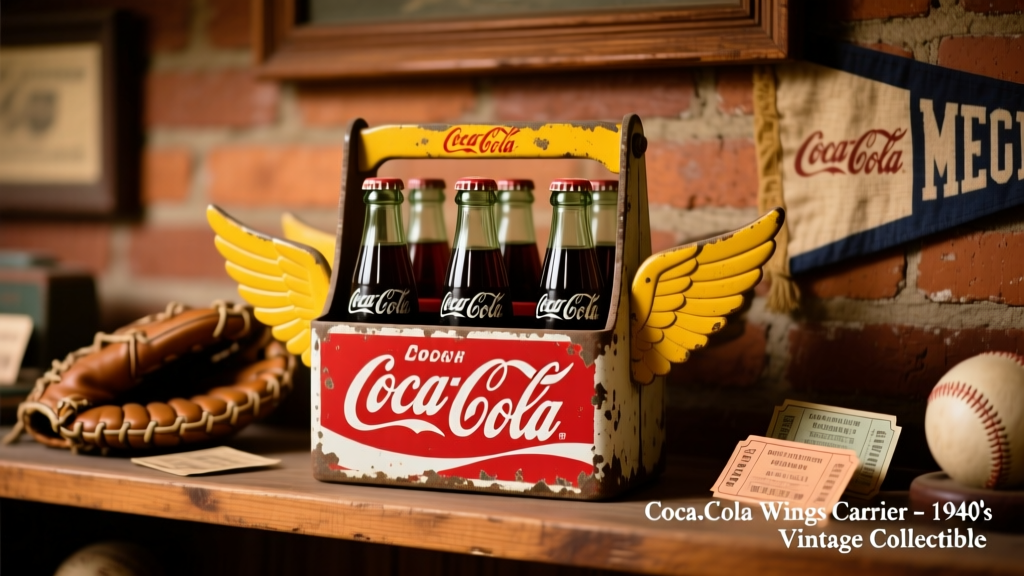
Coca-Cola Carrier: The Iconic 6-Bottle Yellow 'With Wings' Model from the 1940s
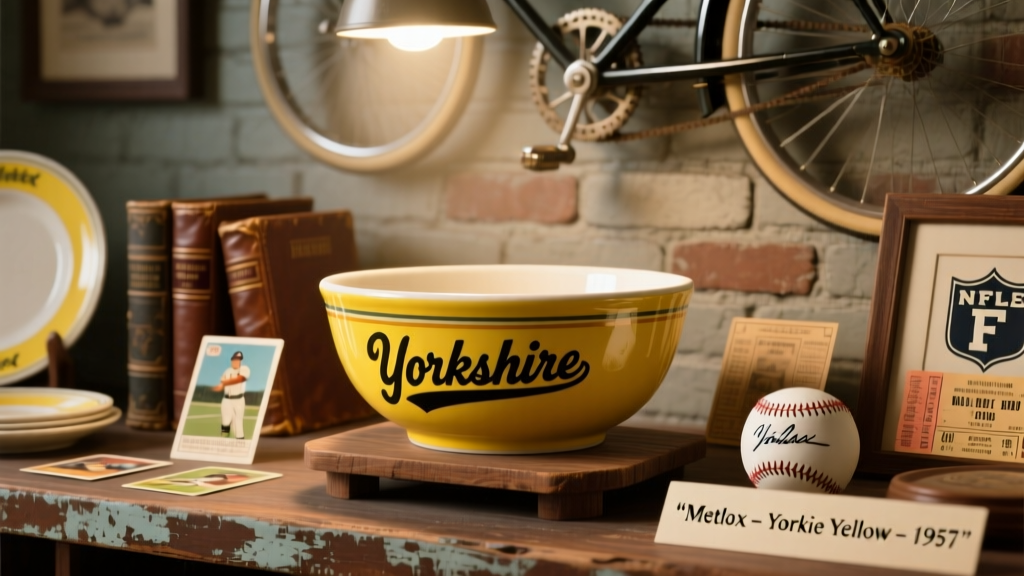
The Yorkshire Yellow Metlox Bowl: A Collector’s Deep Dive into American Mid-Century Dinnerware
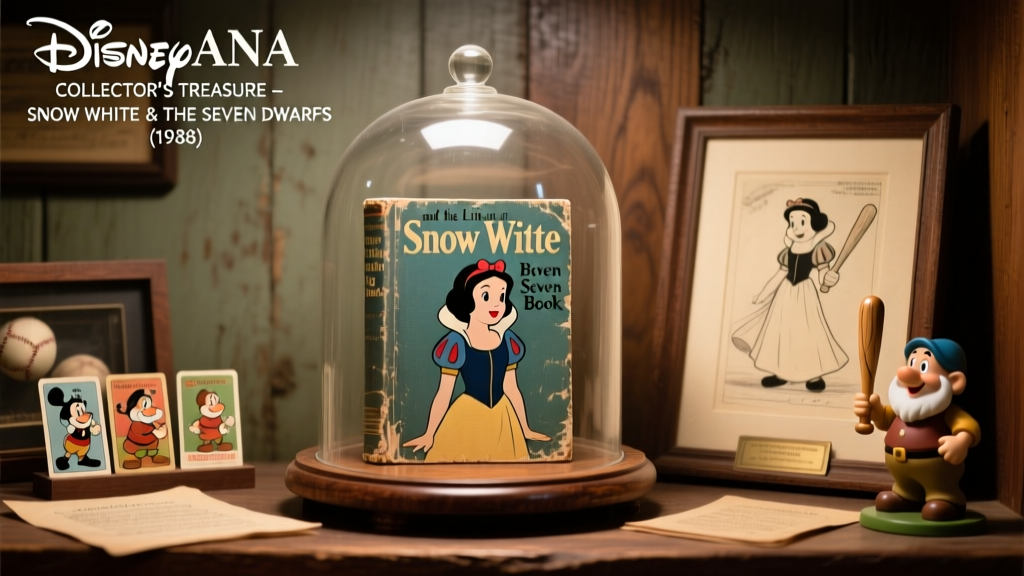
Disneyana Book: Snow White and the Seven Dwarfs Big Little Book — History, Authentication, and Collecting Value