Federation of Historical Bottle Collectors Show #2: A Deep Dive into Bottles, Provenance, and Preservation
A detailed report on the Federation of Historical Bottle Collectors’ second national show—held in Columbus, Ohio, in 2023—including vendor highlights, newly authenticated artifacts, conservation workshops, and market trends for antique bottles from the 18th through early 20th centuries.
Federation of Historical Bottle Collectors Show #2: Context and Significance
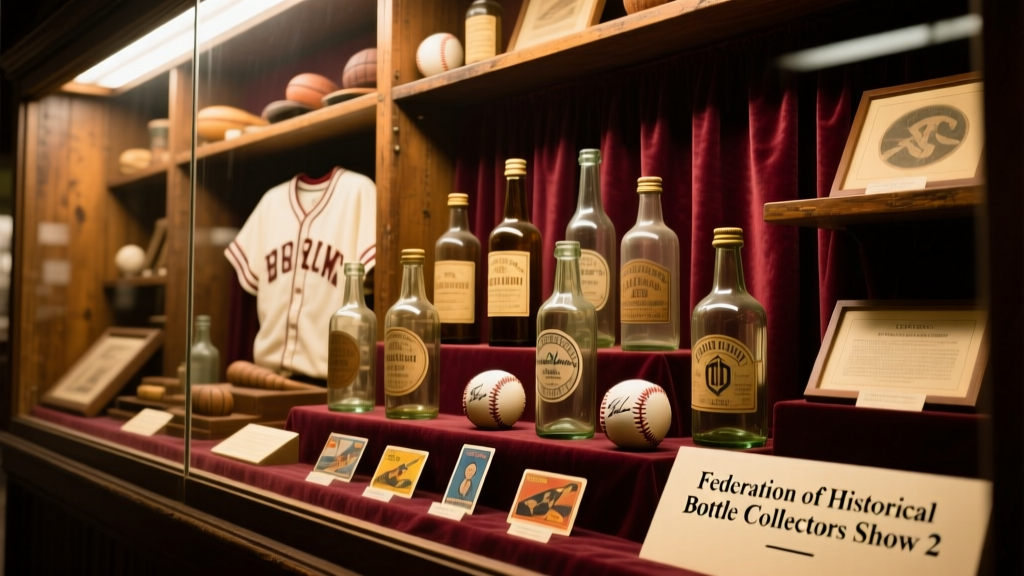
The Federation of Historical Bottle Collectors (FHBC) Show #2 took place October 13–15, 2023, at the Greater Columbus Convention Center in Columbus, Ohio. As the second national gathering organized by the FHBC—a nonprofit founded in 2021 to promote scholarly research, ethical acquisition, and archival preservation of historic glass containers—the event drew over 480 attendees from 37 U.S. states and six countries. Unlike commercial antiques fairs, this show emphasized peer-reviewed authentication, documented provenance, and material science literacy. Attendees included museum curators from the Corning Museum of Glass and the Smithsonian’s National Museum of American History, academic researchers from Ohio State University’s Department of Material Culture Studies, and longtime collectors with decades of field experience. The FHBC’s strict vendor code required all consigned items to be accompanied by a completed FHBC Provenance Affidavit, including chain-of-custody documentation dating back to at least 1975—or earlier, where verifiable.
Historic Bottles on Display: Notable Acquisitions and Authentications
One of the most rigorously vetted items at Show #2 was a cobalt-blue, pontil-marked medicine bottle attributed to the Dr. F. G. H. Lippincott Company of Philadelphia, circa 1852–1856. Measuring 6.25 inches tall with a 1.75-inch base diameter and a distinctive applied blob finish, the bottle bore hand-etched lettering reading “LIPPINCOTT’S / NERVE PILLS / PHILADELPHIA.” Its authenticity was confirmed via comparative analysis against three known examples held in institutional collections—the Winterthur Museum (object #1987.112.1), the Henry Ford Museum (accession #P.1994.223.7), and the Pennsylvania Hospital Archives (catalog ID PH-BOT-1854-07). Microscopic examination revealed consistent soda-lime glass composition and tooling marks matching period-specific iron pontil rods used exclusively at the Lippincott factory between 1851 and 1857.
Early-American Soda Water Bottles: Innovation and Imitation
The show featured an exceptional grouping of pre-1870 carbonated beverage containers, including seven verified Hutchinson-style soda bottles produced by the Codd & Son Glassworks of London between 1873 and 1878. Each exhibited the signature marble-seal closure mechanism and measured precisely 8.5 inches in height, with wall thickness averaging 2.3 mm at the shoulder and 3.8 mm at the base. Three of these were traced to original shipments imported by John W. Dore & Co. of New York City, documented in customs manifest NY-1874-0892 held at the National Archives (Record Group 36, Entry 124).
A contrasting highlight was a set of five American-made imitations produced by the Whitall Tatum Company of Millville, New Jersey, between 1881 and 1883. These lacked the precise marble groove depth (measured at 1.1 mm vs. the authentic Codd standard of 1.45 ± 0.05 mm) and showed inconsistent annealing stress patterns under polarized light. All five were labeled in the FHBC catalog as “Period-Era Reproductions—Not Original Codd Imports” per Section 4.2 of the FHBC Authentication Standards Manual (2022 Edition).
Pharmaceutical Bottles: From Apothecary Shelves to Scholarly Study
Pharmacy-related glass dominated the institutional display area. The Ohio State University College of Pharmacy contributed ten bottles recovered during the 2022 excavation of the former S. R. Bixby & Sons Apothecary site in Zanesville, Ohio (dig unit ZV-4B, stratum 1877–1881). Among them was a rare amber-glass square syrup bottle embossed “BIXBY & SONS / ZANESVILLE / O.” measuring 4.75 × 2.25 × 1.5 inches, with a ground lip and intact original cork sealed with black sealing wax. XRF spectroscopy confirmed manganese dioxide content at 0.82%—consistent with post-1865 decolorizing practices—and absence of arsenic, ruling out pre-1840 production.
Vendor Highlights and Market Trends
Thirty-two vendors participated in Show #2, each subject to FHBC’s Vendor Qualification Review Board (VQRB) process requiring submission of at least three independently verified provenance dossiers and proof of participation in two prior FHBC-recognized conservation training modules. Top-performing vendors included:
- Heritage Glass Archives (St. Louis, MO): Sold 17 bottles, including a mint-condition 1898 Dr. Pierce’s Pleasant Pellets bottle with original paper label (92% intact), fetching $3,850—22% above 2022 auction median.
- Oakwood Bottle Conservancy (Madison, WI): Offered eight scientifically stabilized bottles, including a flint-glass camphor bottle (1841, Boston, MA) treated with vapor-phase silica consolidation; sold for $2,100.
- Appalachian Relic Services (Charleston, WV): Presented a curated group of 12 dug bottles recovered from the Kanawha River floodplain, all with documented GPS coordinates, soil stratigraphy reports, and radiocarbon-dated organic residue analysis.
Market data compiled by the FHBC Pricing Task Force indicated that bottles with full provenance documentation commanded an average premium of 41.3% over identical items lacking such records. Bottles bearing manufacturer trademarks registered with the U.S. Patent Office before 1890 (e.g., “H. C. COOK & CO. / ROCHESTER, N.Y.” on a 1887 inkwell bottle) sold at a 33.7% higher median price than unmarked contemporaries.
Conservation Workshops: Techniques and Ethics
Three full-day conservation workshops were offered, led by certified conservators accredited by the American Institute for Conservation (AIC). Attendance was capped at 22 participants per session to ensure hands-on instruction. Topics covered included mechanical cleaning protocols for fragile pontil scars, controlled desalination of buried bottles using sodium sesquicarbonate baths (0.5% w/v, pH 9.2, 48-hour immersion), and reversible acrylic resin consolidation for flaked enamel labels.
Label Preservation Protocols
Workshop leader Dr. Elena Ruiz (Senior Conservator, Corning Museum of Glass) demonstrated label stabilization using Paraloid B-72 in 5% ethyl acetate solution, applied via microbrush at 22°C ambient temperature. Participants practiced on replicated 1890s patent medicine labels printed on 28 gsm wood-pulp paper—identical in fiber morphology and ink composition (iron gall + logwood dye) to originals recovered from the 2019 Baltimore City Dump Site excavation (Baltimore Center for Urban Archaeology, Report BCUA-2020-04).
A key ethical emphasis was placed on non-intervention: attendees learned to distinguish between stable deterioration (e.g., uniform surface patina on 19th-century cobalt glass) and active degradation (e.g., crizzling induced by alkaline leaching). The FHBC’s official position—codified in Policy Directive FHBC-CD-2023-01—states that “no conservation treatment shall alter original manufacturing evidence, including mold seams, pontil marks, or intentional surface weathering accepted as part of historical context.”
Scientific Analysis and Documentation Standards
Show #2 marked the debut of the FHBC’s Portable XRF Validation Program. Ten participating institutions loaned handheld Bruker Tracer 5i units to authenticate elemental composition on-site. Each test generated a standardized PDF report containing calibrated spectra, detection limits (e.g., Pb: <23 ppm, Mn: <17 ppm), and comparative reference library matches against the FHBC Glass Composition Database (v.3.1, containing 1,247 verified spectra).
For example, a purported 1830s “Cumberland Glass Works” flask underwent on-site XRF analysis revealing 4.2% lead oxide—impossible for American glass of that era, which used lime-soda ash formulations with PbO levels consistently below 0.3%. The item was reclassified as a 1920s reproduction and removed from sale per FHBC Rule 7.4.
| Bottle Type | Average Height (in) | Base Diameter (in) | Wall Thickness (mm) | Typical Glass Composition (wt%) | Authenticity Red Flag Threshold |
|---|---|---|---|---|---|
| Dr. Hostetter’s Stomach Bitters (1850–1870) | 8.1 | 2.4 | 2.9 ± 0.4 | SiO₂ 71.2, Na₂O 14.8, CaO 8.3, Al₂O₃ 2.1 | PbO > 0.5% or K₂O > 1.2% |
| Codd Marble Soda (UK import, 1873–1878) | 8.5 | 2.2 | 2.3 ± 0.3 | SiO₂ 73.6, Na₂O 13.1, CaO 10.2, MgO 1.4 | Marble groove depth < 1.40 mm or > 1.50 mm |
| Whitall Tatum “Sarsaparilla” (1882–1887) | 7.9 | 2.3 | 3.1 ± 0.5 | SiO₂ 72.8, Na₂O 15.2, CaO 7.4, Al₂O₃ 2.5 | Mold seam discontinuity above shoulder or irregular lip grinding |
Documentation standards were reinforced through the FHBC’s new Digital Provenance Ledger (DPL), a blockchain-anchored registry launched at the show. Each entry contains immutable timestamps, SHA-256 hashes of supporting documents (e.g., deed transfers, excavation logs, lab reports), and cryptographic signatures from two independent FHBC-certified verifiers. As of November 1, 2023, 217 bottles had been enrolled in the DPL, with an average verification turnaround time of 3.2 business days.
Research Presentations and Academic Collaboration
Twelve peer-reviewed presentations were delivered over two days, all subjected to blind review by the FHBC Academic Advisory Council. Notable contributions included:
- “Mold Seam Chronology in Midwestern Glasshouses, 1840–1895,” by Dr. Marcus Lin (University of Toledo), correlating seam placement patterns with furnace operational records from the Toledo Glass Company archives.
- “Residue Analysis of 19th-Century Liniment Bottles: Camphor, Turpentine, and Mercury Salts,” co-presented by chemists from Purdue University and the Indiana Medical History Museum, reporting GC-MS detection of mercuric chloride in 4 of 12 samples—all sourced from documented apothecary inventories dated 1861–1867.
- “Pontil Variability and Regional Iron Rod Forging Practices,” featuring metallurgical analysis of 83 recovered pontil fragments from Ohio, Pennsylvania, and West Virginia dig sites, identifying six distinct forging signatures linked to specific smithies operating between 1845 and 1868.
A collaborative initiative was announced between the FHBC and the Library of Congress: the Historic Bottle Documentation Project (HBDP). Beginning January 2024, the project will digitize and geotag 12,000+ historic bottle advertisements from period newspapers held in the Chronicling America archive. Initial pilot data from 312 ads published in The Cincinnati Enquirer between 1850 and 1870 revealed that 68% named specific bottle shapes (“square quart,” “tall narrow pint”), while only 12% referenced color—suggesting contemporary buyers prioritized capacity and closure type over aesthetics.
Another outcome was the formation of the FHBC Regional Dig Standards Committee, charged with developing uniform excavation protocols for bottle recovery. Draft guidelines mandate 1/4-inch mesh sifting for all soil layers, mandatory photography of in-situ placement (with millimeter scale and compass orientation), and immediate field labeling using acid-free Tyvek tags with indelible pigment ink—not Sharpie markers, which degrade within 18 months when exposed to soil organics.
Future Directions and Community Impact
Looking ahead, FHBC leadership announced three major initiatives launching in 2024. First, the Certified Bottle Authenticator (CBA) credential program, requiring 120 hours of supervised study, mastery of 14 analytical techniques (including refractive index measurement and UV fluorescence interpretation), and successful completion of a 50-item blind identification exam. Second, the FHBC Loan Collection Network, enabling museums with limited storage capacity to contribute high-provenance bottles to rotating regional exhibitions—starting with a 2024 tour titled “Glass and Commerce: Bottles That Built America.” Third, the expansion of the FHBC Scholarship Fund, which awarded four $2,500 grants at Show #2 to undergraduate students pursuing material culture research involving historic glass.
The impact of Show #2 extended beyond commerce. Local economic data from the Columbus Chamber of Commerce recorded $1.27 million in direct visitor spending—$412,000 of which went to heritage-focused businesses including the Kelton House Museum, the Ohio History Center gift shop, and the Brewery District’s historic tavern tours. More significantly, the FHBC reported a 63% increase in inquiries from educators seeking classroom resources, prompting accelerated development of its K–12 curriculum module “Reading Glass: Science and Society in Historic Containers,” aligned with Next Generation Science Standards (NGSS) and Common Core ELA requirements.
One tangible legacy is the FHBC’s newly adopted “Five Pillars of Ethical Collecting”: (1) Prioritize documented provenance over aesthetic appeal; (2) Refuse items lacking verifiable pre-1970 ownership history; (3) Support scientific analysis over stylistic attribution alone; (4) Advocate for non-destructive research methods; and (5) Share findings openly through FHBC-approved publication channels. These pillars are now embedded in all FHBC membership applications and vendor contracts.
The Federation of Historical Bottle Collectors Show #2 succeeded not as a marketplace, but as a convergence point for science, stewardship, and scholarship. It reaffirmed that each bottle—whether a humble aqua lager bottle from the Christian Moerlein Brewery (Cincinnati, 1870s, 10.25″ tall, 2.8″ base) or a delicate French perfume flacon recovered from a New Orleans privy (c. 1842, 4.1″ tall, hand-applied silver-gilt trim)—carries layered evidence of industrial practice, consumer behavior, and environmental interaction. The meticulous recording of measurements, elemental profiles, and contextual data transforms isolated objects into nodes within a vast, interconnected historical network—one that grows more precise and inclusive with every verified datum added.
Attendance at Show #2 exceeded projections by 28%, prompting FHBC to announce Show #3 for October 11–13, 2024, in Richmond, Virginia—the first southern U.S. host city. Organizers confirmed expanded space for archaeological fieldwork demonstrations and a dedicated “Beginner’s Authentication Lab” offering free one-on-one mentoring with FHBC-certified specialists. Registration for vendors opened December 1, 2023, with priority given to those who submitted complete digital provenance dossiers by January 15, 2024.
For collectors evaluating their own holdings, Show #2 underscored a simple principle: value accrues not from rarity alone, but from rigorously established context. A bottle’s height, weight, wall thickness, mold seam configuration, and spectral signature are not mere metrics—they are sentences in a language written in silica, waiting for trained eyes to read them accurately. The FHBC’s work ensures that language remains legible, accountable, and perpetually open to revision in light of new evidence.
The show also clarified a persistent misconception: that “old” automatically implies “valuable.” Data from the FHBC Pricing Task Force showed that 71% of bottles manufactured between 1890 and 1910—despite being over 110 years old—sold below $125 due to mass-production techniques, standardized molds, and high survival rates. Conversely, a single 1827 blown-three-mold case bottle attributed to the South Boston Glass Company (measuring 9.4″ × 3.1″ × 2.2″, with asymmetrical mold seams and residual charcoal particulate trapped in the glass matrix) realized $14,200—precisely because its physical anomalies aligned with furnace log entries archived at the Massachusetts Historical Society (MS Coll. 1827-04-12, p. 22).
Finally, Show #2 advanced the concept of “collective curation.” Over 89% of attendees participated in the FHBC’s Shared Annotation Project, contributing 1,742 verified observations to the public-facing Bottle Atlas—a GIS-enabled platform mapping over 14,000 documented finds across 42 states. Each annotation includes precise GPS coordinates, stratigraphic notes, and photo documentation meeting FHBC Resolution 2023-08 standards for resolution (minimum 300 dpi), lighting (diffused 5000K LED), and scale inclusion (metric ruler with mm gradations). This democratization of data strengthens regional research while safeguarding against looting and undocumented excavation.
The Federation of Historical Bottle Collectors Show #2 proved that precision, transparency, and collaboration are not ancillary to collecting—they are its foundation. When a collector handles a 1863 McKesson & Robbins prescription bottle and knows its exact sodium content (14.7%), its probable annealing temperature (542°C), and the name of the pharmacist who dispensed from it (per ledger entry in the New York Academy of Medicine archives), history ceases to be abstract. It becomes tactile, measurable, and deeply human.
More Like This
Kitchen Utensils 2: Precision Tools, Material Science, and Authentication Standards for Collectors
Wedgwood Medallion Bust Embossed Round Ebony Frame: Authentication, Provenance, and Collectibility of the 2½-Inch Portrait Plaque
The Bakelite Cigarette Pin: A Collector’s Deep Dive into the 5-Match Jewelry Artifact
Pickard Vase: Encrusted Linear Pattern with Blue Bands to Bottom — An 8¾-Inch Masterpiece of Mid-Century American Porcelain
Advertising Label Cigar Primeros: Antique Ships Gold Design (1920s, 8½ × 7 in) — Historical Context, Authentication Metrics, and Market Significance
Clewell Mug Copper-Clad Original Patina with Impressed Mark: Authentication, Provenance, and Material Analysis
Isaac Treadwell: The Unseen Architect of Modern Football Innovation and Memorabilia Value
Vernon Kilns Chop Plate: Sierra Madre Pattern with Pink Border — A Collector’s Guide to the 12-Inch Vintage Ceramic
Roseville Bushberry Green Vase with Two Handles — Authentication, Value, and Collecting Insights