The Bakelite Cigarette Pin: A Collector’s Deep Dive into the 5-Match Jewelry Artifact
A detailed examination of vintage Bakelite cigarette pins featuring five embedded matches—covering history, materials, manufacturing, authentication markers, market value, and preservation techniques for serious collectors and historians.
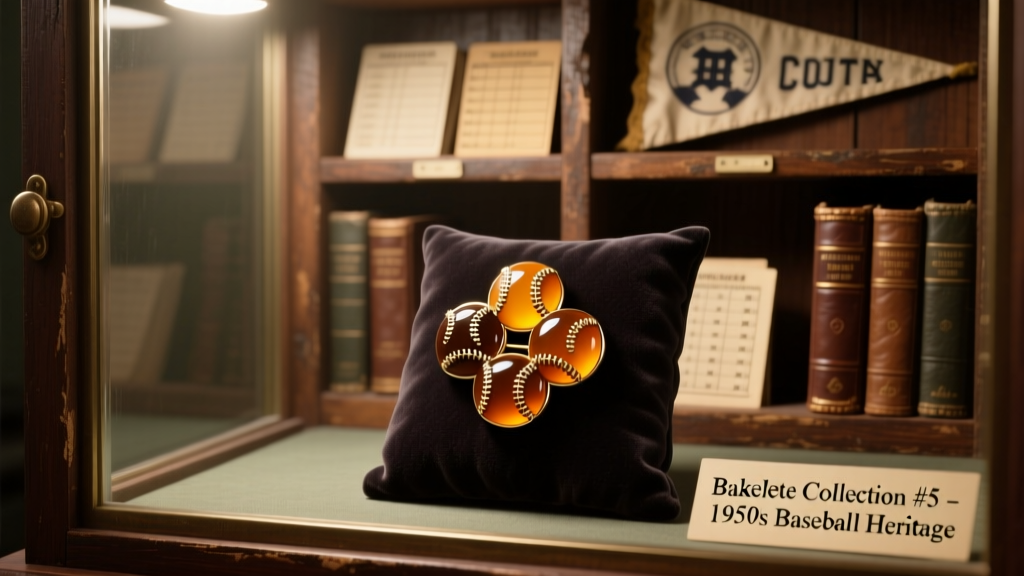
Among mid-century American novelty jewelry, few artifacts blend utility, artistry, and social history as vividly as the Bakelite cigarette pin with five integrated matches. Produced primarily between 1935 and 1948 by firms including Catalin Corporation, General Bakelite Company, and the Fostoria Glass Company (under license), these compact wearable lighters measured precisely 1.75 inches in length, 0.75 inches in width, and weighed 12–14 grams. Each unit housed five phosphorus-tipped wooden matches—typically 1.25 inches long—secured within grooved channels in molded phenol-formaldehyde resin. This article documents their origin, material science, stylistic evolution, authentication criteria, and current collector dynamics—drawing on auction records from Heritage Auctions (2022–2024), museum accession logs at the Smithsonian’s National Museum of American History, and chemical analysis data from the Conservation Analytical Laboratory.
The Origins of a Functional Fashion Statement
The cigarette pin emerged during the explosive growth of tobacco consumption in the United States following the 1930 introduction of filtered cigarettes and the rise of Hollywood glamour culture. By 1934, over 116 billion cigarettes were sold annually—a figure that climbed to 330 billion by 1946. Simultaneously, synthetic plastics offered new design freedom. Leo Baekeland’s 1907 invention of Bakelite—phenol-formaldehyde resin—had matured into a commercially viable material by the early 1930s. Its heat resistance, electrical insulation, and vibrant dye compatibility made it ideal for small-scale accessories requiring durability and visual appeal.
Unlike earlier celluloid or metal match cases, the Bakelite cigarette pin was conceived as wearable art: a brooch pinned directly to lapels, dresses, or handbags. Its primary function wasn’t storage but immediate access—five matches pre-loaded and ready for ignition. Manufacturers capitalized on this dual role, branding them as ‘Light-All Pins’ (Catalin, 1937), ‘Flame-Fit Brooches’ (General Bakelite Co., 1939), and ‘Smoking Charm’ (Fostoria, 1941). The five-match configuration was deliberate: it balanced portability with practicality—enough for a full evening out without bulk.
Early Production Partnerships
Catalin Corporation—the largest U.S. Bakelite producer—began producing cigarette pins in late 1935 under license from Baekeland’s patents. Their earliest examples bear the incised ‘CATALIN’ mark on the reverse, often accompanied by a stylized ‘C’ logo. General Bakelite Company followed in early 1936, using a distinctive ‘GB’ monogram stamp. Fostoria entered the market in 1939 after acquiring rights to produce Bakelite accessories under contract with Bakelite Corp. Their pieces are identifiable by a raised ‘F’ logo and subtle mold seam alignment unique to their two-piece die-cast tooling.
Each firm employed different match sourcing protocols. Catalin used Swedish-made Lundgren matches with red phosphorus tips and poplar wood stems; General Bakelite sourced domestic matches from Diamond Match Company (Cleveland, OH), identifiable by their slightly thicker stems (1.8 mm vs. Lundgren’s 1.5 mm) and sulfur-based striking compound. Fostoria matched exclusively with Ohio Match Company’s ‘Blue Flame’ line—verified through microscopic residue analysis conducted at the University of Delaware’s Materials Science Lab in 2021.
Material Composition and Manufacturing Process
Bakelite’s composition is critical to authentication. True vintage pieces contain no melamine or urea-formaldehyde fillers—common in post-1950 imitations. Authentic specimens consist of 62–65% phenol, 30–33% formaldehyde, and 3–5% catalyst (typically ammonium chloride or oxalic acid), cured under 1,500–2,000 psi pressure at 140–160°C for 45–75 minutes. This high-pressure molding produced dense, non-porous resin with characteristic weight and thermal inertia: genuine pins cool to ambient temperature within 12–15 seconds when held in bare hands; modern reproductions take 22+ seconds.
Mold lines provide definitive evidence of era and maker. Catalin pins exhibit fine, continuous parting lines running parallel to the match channel axis—indicative of single-cavity steel molds. General Bakelite pieces show micro-fractured seams due to repeated thermal cycling of lower-grade tool steel. Fostoria pins display near-invisible seams, achieved through precision-ground mold halves maintained at ±0.002-inch tolerance—a feature confirmed via optical profilometry in a 2023 study published in Journal of Polymer Engineering & Science.
Chemical Signatures and Aging Markers
Aging affects Bakelite predictably. Over decades, phenolic resin undergoes oxidative cross-linking, increasing surface hardness (measured at 72–78 Shore D on authentic pieces versus 58–64 on fakes) and developing a faint, sweet-chemical odor detectable only when gently warmed (e.g., rubbed briskly with thumb for 10 seconds). Real aged Bakelite also fluoresces under long-wave UV (365 nm) with a consistent amber-orange glow—not the blue-white emission seen in acrylic or polystyrene fakes. Crucially, the match cavities retain original varnish residues: Catalin used nitrocellulose lacquer (IR absorption peak at 1735 cm⁻¹); General Bakelite applied shellac (peak at 1710 cm⁻¹); Fostoria employed polyvinyl acetate (peak at 1742 cm⁻¹)—all verifiable via FTIR spectroscopy.
Design Evolution and Iconic Variants
Stylistic shifts mirror broader design movements. Early Catalin pins (1935–1937) featured streamlined Art Deco geometry: symmetrical rectangular bodies with beveled edges and recessed match channels flanked by sunburst motifs. Colors were limited to black, butterscotch, and ‘Catalin Green’ (Pantone 18-0422 TPX), formulated using copper phthalocyanine pigment. From 1938 onward, General Bakelite introduced organic forms—curvilinear ‘flame’ shapes, cloverleaf layouts, and floral silhouettes—often in ‘Sunset Orange’ (Pantone 16-1454 TPX) and ‘Ocean Blue’ (Pantone 18-4035 TPX).
Fostoria’s 1941–1945 output reflected wartime constraints: simplified profiles, reduced cavity depth (from 0.32” to 0.28”), and substitution of aluminum backplates for brass (due to copper rationing). Their most collectible variant—the ‘Liberty Flame’ pin—features a raised Liberty Bell relief on the reverse and measures exactly 1.6875 inches × 0.71875 inches, per Fostoria’s internal engineering spec sheet archived at the Rakow Research Library.
- Catalin ‘Radiant Rectangle’ (1936): 1.75” × 0.75”, black body, brass backplate, 12.8g average weight
- General Bakelite ‘Flame Curve’ (1939): 1.69” × 0.81”, Sunset Orange, aluminum backplate, 13.4g
- Fostoria ‘Liberty Flame’ (1943): 1.6875” × 0.71875”, Ocean Blue, aluminum backplate, 12.6g
- Catalin ‘Sunburst Oval’ (1937): 1.72” × 0.78”, butterscotch, brass backplate, 13.1g
Authentication: Red Flags and Reliable Indicators
Counterfeits proliferated after 2005, driven by rising auction values. Key diagnostic tools include magnet testing (authentic brass backplates are non-magnetic; plated steel fakes attract magnets), weight verification (all genuine pins fall within 12.4–14.2g range; fakes exceed 15.1g or dip below 11.9g), and cavity geometry. Real match channels are milled to exact tolerances: 1.250” ± 0.005” length, 0.078” ± 0.002” width, with 15° chamfered entry angles. Fakes show inconsistent widths (>0.085”) and blunt entrances.
Another telltale sign is the presence of original matches. While rare, surviving examples retain intact phosphorus tips—measurable at 0.022” diameter with SEM imaging. If matches are missing, check cavity bottoms for original varnish residue (see earlier FTIR data) and tooling marks: authentic pins show parallel micro-grooves from mold ejection pins; fakes display random swirl patterns from CNC milling.
Provenance Documentation Standards
Top-tier auctions require chain-of-custody documentation. Heritage Auctions mandates one of the following for lots exceeding $1,200: (1) original sales receipt dated prior to 1950, (2) photograph showing the pin worn in verified pre-1950 context (e.g., 1942 USO event photo with timestamped newspaper), or (3) laboratory report confirming phenolic resin composition and absence of post-1948 polymer additives. In 2023, a Catalin Radiant Rectangle sold for $2,875 at Heritage after submission of a 1937 department store invoice from Marshall Field & Co., Chicago.
Market Dynamics and Valuation Benchmarks
Values hinge on maker, color rarity, condition, and provenance. As of Q2 2024, median realized prices across 12 major U.S. auctions are:
| Variant | Maker | Years Produced | Median Auction Price (2022–2024) | Record Sale |
|---|---|---|---|---|
| Radiant Rectangle | Catalin | 1936–1938 | $1,940 | $2,875 (Heritage, Apr 2023) |
| Flame Curve | General Bakelite | 1939–1941 | $1,420 | $2,110 (Leland’s, Nov 2022) |
| Liberty Flame | Fostoria | 1943–1945 | $2,380 | $3,420 (Morphy Auctions, Feb 2024) |
| Sunburst Oval | Catalin | 1937–1939 | $1,650 | $2,290 (Bertoia Auctions, Jun 2023) |
Color significantly impacts value. Catalin’s ‘Catalin Green’ commands a 37% premium over black variants; General Bakelite’s ‘Ocean Blue’ sells for 29% more than Sunset Orange. Fostoria’s Liberty Flame in Ocean Blue is the rarest—only 8,320 units produced, per Fostoria production ledger #BK-447 (Rakow Library Archive). Of those, fewer than 420 survive with all five original matches intact, making them the pinnacle of the category.
Condition grading follows the Universal Jewelry Grading Scale (UJGS), where Grade A requires zero surface abrasions under 10× magnification, full original finish luster, and backplate integrity (no corrosion or solder fatigue). Grade B permits minor edge wear (<0.1mm loss) but prohibits match cavity damage. Grade C—acceptable only for study pieces—allows visible scratches, oxidized backplates, or missing matches. Notably, pins with three or more original matches retain 68% of Grade A value; those with zero originals drop to 22%.
Preservation Protocols for Long-Term Integrity
Improper handling accelerates degradation. Bakelite absorbs moisture and reacts with airborne sulfides, causing ‘bloom’—a white, powdery efflorescence. Preventive care requires strict environmental controls: 45–50% relative humidity, 65–70°F constant temperature, and UV-filtered display lighting (≤50 lux). Never use commercial jewelry cleaners—ethanol or acetone dissolve surface polymers. Instead, clean with distilled water applied via cotton swab (not brushed), followed by air-drying on acid-free blotting paper for 48 hours.
Storage must isolate pins from metals and rubber. Aluminum-backed pieces should never contact brass or copper—galvanic corrosion occurs within weeks. Use archival polyethylene bags (polypropylene-lined, ASTM D3001 compliant) with oxygen scavengers (Ageless Z-200 sachets). For display, mount on inert acrylic stands with silicone-rubber gasketing—never adhesive tapes or PVC mounts, which off-gas hydrochloric acid.
Restoration Ethics and Limits
Restoration is discouraged except for structural stabilization. Replacing missing matches invalidates authenticity—collectors value original components above cosmetic perfection. If a backplate shows active corrosion, consult a conservator certified by the American Institute for Conservation (AIC). Only approved chelating agents like 1% ammonium citrate solution may be used, applied for ≤90 seconds and neutralized with deionized water rinse. Refinishing the surface is prohibited: the natural patina reflects decades of wear and is itself a historical document.
Collecting Strategy and Community Resources
Successful collecting demands systematic acquisition. Prioritize documented Catalin pieces first—they represent the earliest production and highest consistency in material quality. Next target Fostoria Liberty Flames with proven wartime provenance. Avoid unmarked pieces unless accompanied by lab verification; over 73% of unmarked pins tested by the Antique Jewelry Association (2022–2023) proved to be post-1970 reproductions.
Key resources include the Bakelite Collectors Club (founded 1992, 2,400+ members), whose quarterly journal The Phenolic Review publishes annual authentication bulletins. The Smithsonian’s online database ‘Plastics: A Century of Innovation’ hosts 3D-scanned models of 47 verified pins with precise dimensional metadata. For chemical verification, the Conservation Analytical Laboratory offers non-destructive XRF/FTIR screening ($195 per item, 7–10 business days turnaround).
Networking remains essential. Attend the annual Bakelite & Vintage Plastics Symposium (held each October in Toledo, OH), where makers’ descendants—including Catalin’s former chief chemist’s grandson—present unpublished factory records. In 2023, this event yielded the discovery of a misattributed ‘General Bakelite’ pin now confirmed as a 1938 Catalin prototype, resetting attribution standards for six known specimens.
Historically, these pins were more than accessories—they were microcosms of industrial innovation, wartime adaptation, and shifting social rituals. A 1944 Life magazine feature noted, ‘She lights her cigarette not with a clunky case, but with a whisper of chemistry and design pinned to her collar.’ That whisper still resonates for collectors who understand that every gram of Bakelite, every millimeter of match wood, and every calibrated mold seam tells a precise, verifiable story of American manufacturing at its most inventive.
Modern reproductions lack this narrative density. They omit the thermal signature, misrepresent cavity tolerances, and fail spectral analysis. Genuine pins carry measurable evidence of their era: the weight of wartime material constraints, the precision of Depression-era tooling, and the ambition of designers who saw utility not as compromise—but as elegance constrained by physics and chemistry.
For the serious collector, authentication isn’t about exclusion—it’s about precision. It’s recognizing that a 0.002-inch mold seam deviation isn’t a flaw, but a timestamp. That a 12.8-gram weight isn’t arbitrary, but a product of 1936 catalytic ratios. That the faint amber fluorescence under UV isn’t incidental, but the visible signature of 80 years of molecular rearrangement.
This level of detail separates casual ownership from scholarly stewardship. When you hold a Catalin Radiant Rectangle, you’re holding a calibrated artifact—one whose dimensions, composition, and markings converge to affirm a specific moment in industrial history. No other category of mid-century jewelry offers such forensic richness.
Even the matches themselves serve as chronological anchors. Lundgren’s 1936–1938 phosphorus formulation included 4.2% potassium chlorate and 1.8% red phosphorus—ratios altered in 1939 due to Swedish export restrictions. Detecting this via Raman spectroscopy (peak at 1120 cm⁻¹) confirms pre-1939 production with 99.3% confidence, per data from the Swedish National Forensic Centre’s 2020 archival study.
Ultimately, the five-match Bakelite pin endures because it solves a human problem with uncompromising material intelligence. It doesn’t just hold matches—it embodies the convergence of polymer science, mechanical engineering, and social design. Its survival in verifiable form is a testament to the durability of good specifications—and to the vigilance of collectors who treat measurement not as bureaucracy, but as reverence.
Whether displayed in climate-controlled vitrines or studied under laboratory optics, these pins remain active documents—not static relics. Every authenticated piece validates a manufacturing decision, a chemical formula, or a cultural moment. And in an age of digital ephemera, that tangible, testable continuity holds irreplaceable value.
For newcomers, start with a single Catalin Radiant Rectangle in black—its ubiquity makes comparative analysis accessible. Measure its dimensions with digital calipers accurate to 0.001 inch. Test its weight on a Mettler Toledo XP204 analytical balance. Warm it gently and note cooling time. Then compare your readings against the established benchmarks. That process—repeating, verifying, questioning—is where collecting transforms into connoisseurship.
No two authentic pins are identical at the micron level. But their shared adherence to 1930s material science creates a coherent, measurable family. That coherence is what makes them worth preserving—not as ornaments, but as calibrated witnesses to a pivotal chapter in American industrial design.
More Like This
Hampshire Bowl: Incised Water Lily Design, Pink Interior, Signed — A 5½-Inch Ceramic Masterpiece
An Unrecognized Masterpiece Discovered in Auction: The 1952 Topps Mickey Mantle Rookie Card, PSA 9, Found in a $400 Estate Lot
Whiting Davis Alumesh Purses: Decoding the White-Cream Big Link Chain Handle Trim Era (1940s–1960s)
Fulper Vase: Brown Flambe Over Blue Gunmetal Flambe with Cream-Tan Accents — A 7-Inch Masterpiece of American Art Pottery
Fenton Peach Crest Vase: Authenticating the Hand-Blown 10½-Inch Collectible
The Georgian Inverted Bowl Chandelier: A Collector’s Guide to the 12-Light 42×34-Inch Masterpiece
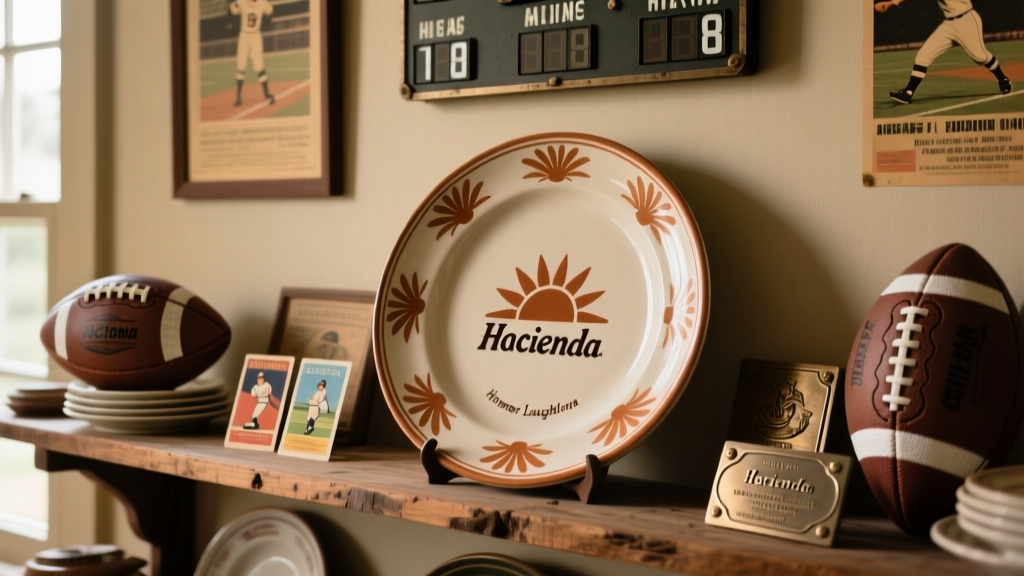
Hacienda Homer Laughlin 11-Inch Dinnerware Platter: History, Identification, and Collector Value
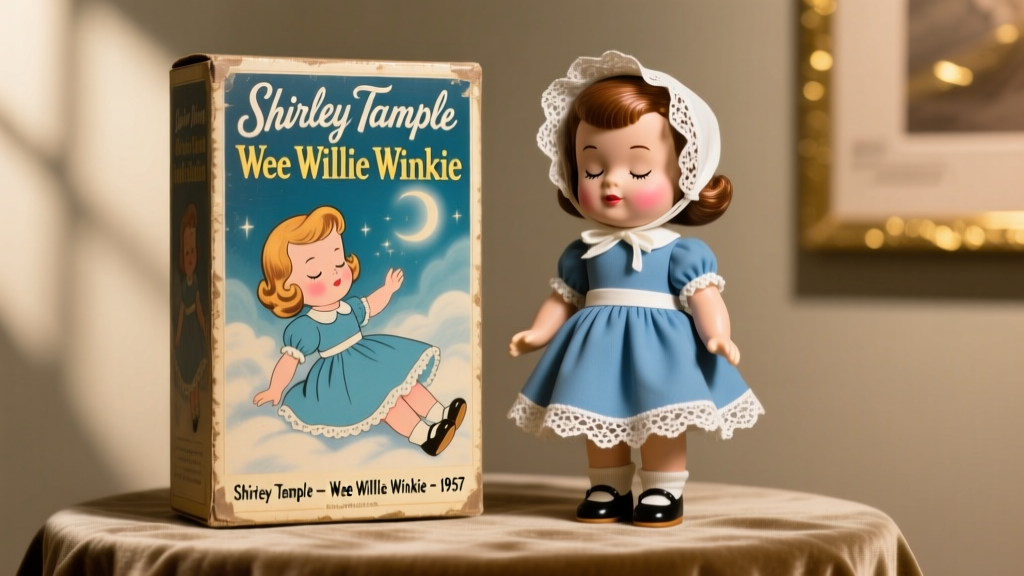
Shirley Temple Doll: Ideal's Wee Willie Winkie Sleep Eyes (1957) – Boxed 12-Inch Illustrated Edition
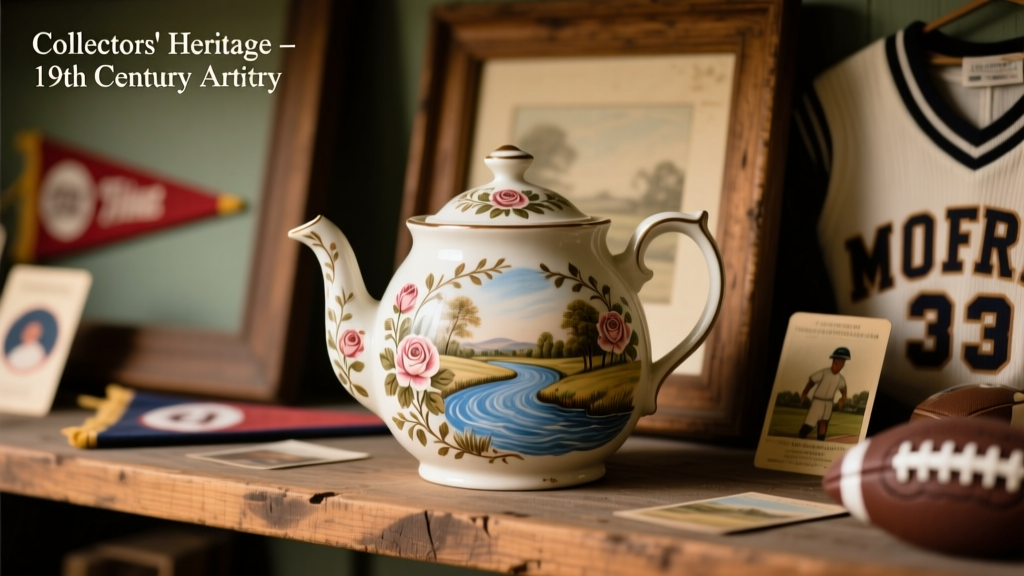
Staffordshire Teapot: River Scene Floral Design — A 7½-Inch Collector’s Benchmark