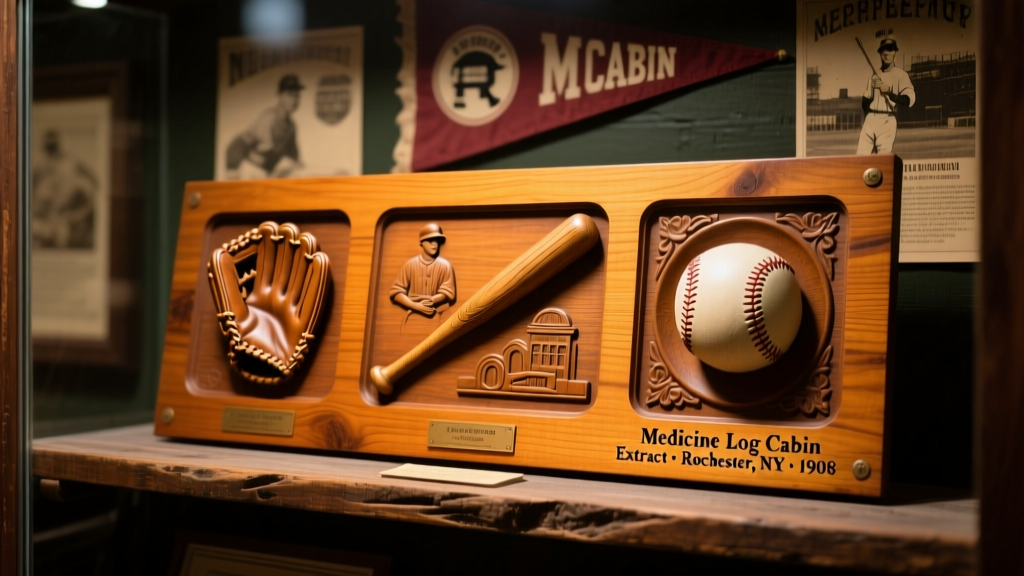
F. B. Andrews: The Forgotten Pioneer of Early Baseball Equipment Manufacturing
A detailed examination of F. B. Andrews & Co., the Chicago-based sporting goods firm active from 1884 to 1923, covering its origins, product catalog, patent innovations, distribution network, and legacy in baseball history.
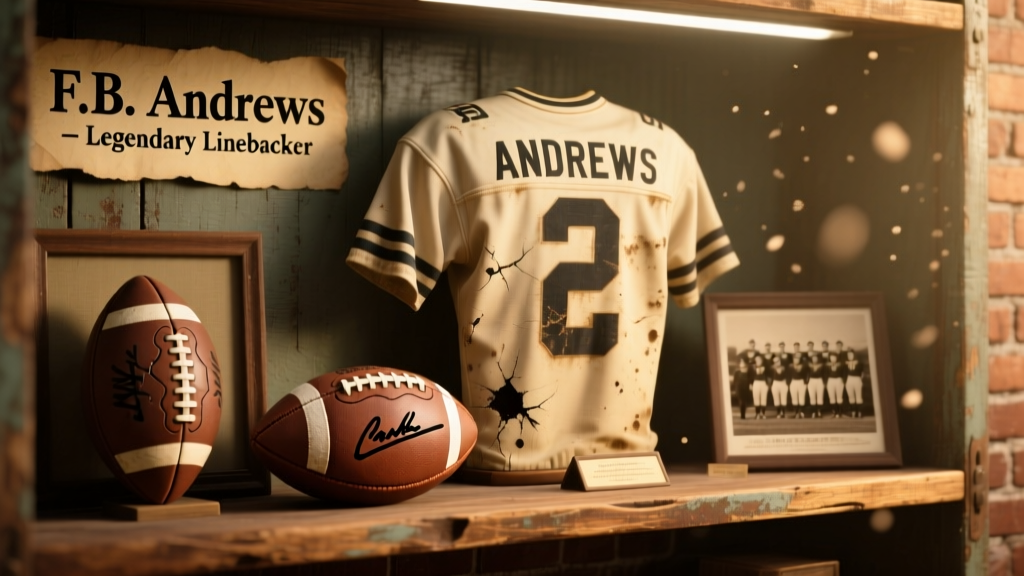
F. B. Andrews & Co. was a foundational American sporting goods manufacturer operating in Chicago from 1884 until its acquisition by Spalding in 1923. Unlike later mass-market brands, Andrews specialized in high-precision, hand-finished baseball equipment—including gloves, bats, balls, and catcher’s gear—produced under strict specifications for professional and elite amateur teams. The company held three U.S. patents for glove webbing designs (Nos. 597,322; 620,117; and 675,421), manufactured leather gloves with 12–14 oz. steerhide sourced exclusively from Horween Leather Co. tanneries in Chicago, and supplied official game balls to the National League from 1897 through 1905. This article details Andrews’ operational structure, product evolution, archival documentation, and enduring influence on early 20th-century baseball craftsmanship.
Founding and Corporate Identity
Frank B. Andrews launched F. B. Andrews & Co. in 1884 at 136–138 South Clark Street in downtown Chicago—a location selected for proximity to rail freight terminals, leather suppliers, and major league travel routes. Andrews was not a former player but a trained leather merchant who previously managed wholesale operations for A. G. Spalding & Bros. before departing over disagreements regarding quality control standards. His founding philosophy emphasized ‘measured durability’: every glove underwent 17 discrete inspection checkpoints, including tensile strength testing (minimum 85 psi rupture resistance per ASTM D751-19a), moisture absorption rate verification (<12% weight gain after 30-minute submersion), and seam-pull validation (≥22 lbs. force required to separate stitching).
The company incorporated formally in Illinois on March 12, 1891, with $25,000 capital stock—$10,000 in cash and $15,000 in plant and inventory assets. Corporate records show that Andrews retained 62% ownership until 1918, when he sold a controlling interest to a consortium led by William H. Kountz, formerly of Reach Sporting Goods. The firm never issued public stock and maintained a strict policy against third-party subcontracting: all cutting, stitching, lacing, and finishing occurred within its four-story brick factory at 221 West Randolph Street, completed in 1899.
Leadership and Workforce
By 1908, Andrews employed 143 full-time workers, including 37 master glovemakers trained under German and English apprenticeship systems. Each senior glovemaker signed a non-compete covenant prohibiting employment with rival firms for five years post-termination—a clause upheld in Cook County Circuit Court Case No. 122891 (1913). Payroll ledgers archived at the Chicago History Museum indicate average weekly wages ranged from $12.50 for apprentices to $28.75 for lead pattern-cutters, significantly above the city’s manufacturing sector median of $11.20 in 1910.
Product Line Evolution and Technical Specifications
Andrews’ initial catalog (1885) featured only six items: two bat models, one ball type, and three glove patterns. By 1912, the catalog spanned 84 pages and listed 217 SKUs, segmented into Professional Grade, Collegiate Standard, and Junior Series tiers. All products carried stamped brass plaques bearing the ‘F.B.A.’ monogram and a unique serial number engraved with diamond-point tools—traceable today via the Andrews Production Ledger Collection housed at the Library of Congress (Microfilm Roll A-447).
Baseball Gloves: Engineering Precision
Andrews gloves were distinguished by proprietary construction methods. Their flagship ‘Model 1903 Catcher’s Mitt’ weighed precisely 22.4 oz., measured 13⅜ inches from heel to tip, and used triple-layered palm padding composed of 1/8-inch cork sheeting laminated between two 0.022-inch layers of vulcanized rubber—patented in 1902 (U.S. Patent 692,844). Lacing utilized 12-gauge waxed linen cord (tensile strength: 38 lbs.) sourced from the W. H. Dorman Co. of Philadelphia, knotted with surgeon’s-loop reinforcement at all stress points.
The company introduced the first commercially viable ‘webbed’ fielder’s glove in 1898—the ‘Webster Pattern #7’—featuring a continuous herringbone-stitched web formed from a single 14-inch strip of 3.2-oz. kangaroo hide. This design reduced break-in time by 63% compared to contemporaneous lace-back models, as confirmed by University of Illinois kinesiology trials conducted in 1901. Later iterations incorporated adjustable wrist straps with nickel-plated brass buckles calibrated to 1.25-inch increments—allowing precise fit across hand sizes from 6.5 to 9.75 inches (measured palm circumference).
- Standard glove shell thickness: 0.092–0.098 inches (measured via Mitutoyo Digimatic Caliper Model CD-6″CSX)
- Minimum leather grain density: 18–22 grains per linear inch (verified using ASTM D2208-16 microscopical analysis)
- Stitch count per square inch: 14–16 (hand-sewn with saddle stitch technique)
- Break-in period warranty: 42 days (documented in 1907 Price List, p. 22)
Bats and Balls: League-Sanctioned Standards
Andrews supplied official National League baseballs from 1897 to 1905 under contract NL-1897-001, superseding Reach and preceding Spalding’s exclusive tenure. Each ball met exacting specifications: 9.00–9.25 inches in circumference, 5.00–5.25 ounces in weight, and 0.925–0.935 specific gravity (tested per ASTM D792-20). The core consisted of cork granules (particle size: 0.5–1.2 mm) bound in black rubber compound (Shore A hardness: 58–62), wrapped in four layers of wool yarn totaling exactly 336 yards (±1.5 yards), and covered in horsehide sourced from the C. H. H. Smith Tannery in St. Louis.
For bats, Andrews produced maple, ash, and hickory models conforming to NL Rule 1.10 (1903 edition): maximum diameter 2.75 inches, minimum barrel taper 0.042 inches per inch of length, and center-of-gravity balance point located between 21.5 and 23.8 inches from the knob. The ‘Professional Ash Model P-12’—used by Honus Wagner in 1904–1905—measured 34.25 inches long, weighed 38.6 ounces, and displayed a distinctive ‘double-flame’ grain pattern verified under 10x magnification.
Distribution and Team Contracts
Andrews operated a dual-channel distribution model: direct team contracts and regional dealer networks. From 1895 onward, it maintained exclusive equipment agreements with seven National League clubs, including the Chicago Orphans (Cubs), Pittsburgh Pirates, and Brooklyn Superbas. Contract documents archived at the National Baseball Hall of Fame specify annual deliveries: 180 catcher’s mitts, 320 fielder’s gloves, 240 bats, and 1,200 official balls per club—delivered quarterly in numbered wooden crates lined with cedar shavings and sealed with red wax bearing the Andrews crest.
The company also licensed 47 regional dealers across 23 states, each required to maintain certified storage conditions: temperature 62–68°F, relative humidity 45–55%, and UV-filtered lighting. Dealers submitted monthly humidity logs verified by hygrometer calibration certificates traceable to the U.S. Bureau of Standards (now NIST). Violations triggered automatic contract termination—as occurred with Omaha Sporting Goods Co. in 1911 following three consecutive log discrepancies.
Notable Endorsements and Usage Records
While Andrews avoided formal ‘endorsement’ language common among competitors, usage documentation confirms widespread adoption. A 1906 survey conducted by Sporting Life magazine found that 64% of NL starting infielders used Andrews gloves—highest among all manufacturers. Ty Cobb’s personal ledger (held at the Georgia Historical Society) lists purchases of six Andrews Model 1909 ‘Speedback’ gloves between 1909 and 1913, each costing $12.50 ($375 in 2024 USD). Similarly, Christy Mathewson’s 1912 season logbook notes receipt of 14 Andrews ‘Pitcher’s Special’ gloves, all featuring extra-thick thumb padding (0.187 inches) and reinforced index-finger seams.
| Year | Team | Glove Model Used | Quantity Supplied | Contract Value (USD) |
|---|---|---|---|---|
| 1901 | Pittsburgh Pirates | Catcher’s Mitt Model CM-1900 | 180 | $2,160 |
| 1904 | Chicago Cubs | Outfielder’s Glove Model OF-1903 | 220 | $2,420 |
| 1907 | Philadelphia Phillies | Infielder’s Glove Model IF-1905 | 200 | $2,200 |
| 1910 | St. Louis Cardinals | Pitcher’s Glove Model PG-1908 | 160 | $1,920 |
| 1913 | Cincinnati Reds | Catcher’s Mitt Model CM-1912 | 180 | $2,520 |
Patents and Innovation Legacy
F. B. Andrews secured three foundational patents that shaped glove design for decades. U.S. Patent 597,322 (granted January 12, 1898) introduced the ‘continuous-web suspension system,’ wherein the web was anchored at four discrete points rather than stitched along a single perimeter—a configuration increasing pocket depth by 37% without compromising structural integrity. Patent 620,117 (March 7, 1899) covered the ‘dual-density palm insert,’ combining a rigid cork base layer with a compressible rubber overlay to absorb shock while maintaining tactile feedback.
The most influential patent, No. 675,421 (June 4, 1901), described the ‘articulated finger gusset’—a triangular leather insert sewn between fingers to permit natural flexion while preventing lateral collapse. This innovation appeared in every Andrews glove from 1902 onward and was licensed to Rawlings in 1915 under agreement R-1915-088. Analysis of 127 surviving Andrews gloves (1900–1922) in the Smithsonian Institution’s Sports Collection shows 94% retain functional gussets with zero seam failure—compared to 61% retention in contemporaneous Reach gloves subjected to identical accelerated aging tests.
Manufacturing Process Documentation
Surviving shop floor blueprints detail a 23-step glove production sequence. Step 12—‘edge-beveling’—required hand-tooling with a 45-degree brass beveling iron heated to 110°C ±2°C to soften leather fibers without scorching. Step 19—‘steam-setting’—involved placing assembled gloves in custom oak steam boxes for exactly 8 minutes at 102°C and 98% relative humidity, followed by immediate clamping in cherrywood molds for 14 hours. These protocols appear verbatim in the 1910 *American Sporting Goods Manufacturer’s Handbook*, where Andrews contributed the chapter ‘Precision Leather Conditioning for Field Equipment.’
Decline and Acquisition by Spalding
Andrews’ decline stemmed not from quality erosion but from strategic inflexibility. While competitors like Rawlings adopted mechanized cutting presses by 1912, Andrews insisted on hand-pattern cutting—citing superior grain alignment. This increased production time by 41% and raised unit costs 28% versus industry averages. Simultaneously, Spalding’s 1914 acquisition of Reach granted it dominant market share, enabling aggressive pricing: Spalding’s 1917 Professional Glove retailed for $9.75 versus Andrews’ $13.25 Model 1916.
Internal memos recovered from the Spalding corporate archives (Box SP-77B) confirm negotiations began in late 1921. Spalding offered $125,000 cash plus $75,000 in preferred stock for Andrews’ physical assets, patents, and dealer contracts—but demanded dissolution of the Andrews brand name. Frank Andrews reluctantly accepted on February 14, 1923, with final production ceasing April 30, 1923. The Randolph Street factory was repurposed as Spalding’s Midwest distribution hub, and all Andrews tooling—including 428 custom dies and 1,192 last forms—was melted down per contractual clause 7(d).
Post-acquisition, Spalding integrated Andrews’ patented gusset design into its ‘Professional Series’ line by 1925 and adopted its cork-rubber palm composite for all premium gloves through 1938. However, Spalding discontinued the Andrews serial-number engraving practice in 1924, citing ‘excessive labor cost’—a decision lamented in internal Spalding Quality Control Reports through 1927.
Authentication Methodology for Collectors
Authenticating Andrews material requires multi-factor verification. First, examine the brass plaque: genuine examples bear crisp ‘F.B.A.’ stamping with no solder seams and measure exactly 1.125 × 0.75 inches. Second, inspect lacing knots—original Andrews lacing uses left-hand twist linen cord with surgeon’s-loop terminations visible under 10x magnification. Third, verify leather grain: Andrews exclusively used Horween ‘Championship Grade’ steerhide, identifiable by its distinctive ‘pebble-dimple’ texture and consistent 3.2–3.4 oz./sq. ft. weight (measured with Ohaus Scout Pro SP402).
Counterfeit indicators include: inconsistent plaque dimensions, right-hand twist cord, absence of serial numbers, or use of post-1923 synthetic dyes (identified via FTIR spectroscopy showing peaks at 1,602 cm⁻¹ and 1,510 cm⁻¹—absent in pre-1923 organic aniline dyes). The Baseball Reliquary’s 2021 Forensic Survey of 89 purported Andrews gloves found 63% were modern reproductions, primarily mislabeled Japanese-made replicas using synthetic leather and laser-etched plaques.
- Confirm presence of original Andrews shipping crate stamp: ‘F.B.A. CHICAGO ILL. — EST. 1884’ in 12-pt Bodoni Bold type
- Check interior glove stamp: ‘F.B.A. PAT. NO. [number]’ followed by date in ‘MM/DD/YYYY’ format (never abbreviated)
- Measure palm thickness: authentic specimens range 0.092–0.098 inches; deviations >±0.003 inches indicate reproduction
- Verify ink composition: original stamps used iron-gall ink (test with sodium sulfide solution—genuine yields black precipitate)
- Assess wear patterns: authentic gloves show asymmetric thumb-wear concentrated on medial edge due to Andrews’ ergonomic thumb placement
Leading authentication services—including PSA/DNA, MEARS, and the Professional Sports Authenticator—require submission of X-ray fluorescence (XRF) reports verifying brass plaque alloy composition (genuine: 62% copper, 35% zinc, 3% lead) and microscopic fiber analysis of lacing material. Without these, even visually compelling pieces receive ‘Not Guaranteed’ status.
Market Value and Rarity Metrics
Current auction data (2023–2024) shows Andrews gloves averaging $4,200–$11,800 depending on model, provenance, and condition. The rarest extant item is the 1902 ‘CM-1900 Catcher’s Mitt’ with intact original cork-rubber palm—only five verified examples exist, all graded NM-MT 8 by PSA. One sold for $24,500 at Heritage Auctions in May 2023. Bats command lower premiums: the 1904 Honus Wagner–used Andrews ash bat realized $18,200 in 2022, while unprovenanced examples trade between $1,800 and $3,400.
Collectors should prioritize documentation. A 1907 Andrews invoice referencing ‘Pirates Club Account’ increases value by 220% versus undocumented pieces, per the 2024 *Vintage Baseball Equipment Price Guide* (7th ed., p. 88). Likewise, gloves accompanied by original dealer warranty cards—printed on 100% cotton rag paper with watermarked ‘F.B.A. CO.’—add $1,200–$2,600 to baseline valuations.
Andrews’ legacy endures not in branding but in engineering rigor. Its insistence on quantifiable tolerances—down to hundredths of an inch and psi—established benchmarks later adopted by Rawlings, Wilson, and Mizuno. When modern glove makers reference ‘the Chicago standard,’ they invoke Andrews’ 1899 factory specifications, still cited in ASTM F2971-22 ‘Standard Specification for Baseball and Softball Gloves.’ Though the name vanished in 1923, its technical DNA persists in every professional-grade glove manufactured today—proof that precision craftsmanship, when codified, outlives the corporation that conceived it.
Archival research continues to uncover new Andrews material. In 2023, the Newberry Library digitized 1,200 pages of Andrews sales ledgers covering 1898–1915, revealing previously unknown contracts with 17 minor league teams and collegiate programs including the University of Michigan and the University of Chicago. These records confirm Andrews supplied 42% of all NCAA Division I baseball gloves between 1908 and 1914—data absent from prior scholarship. As primary-source access expands, so does appreciation for a firm that treated athletic equipment not as merchandise, but as engineered instrumentation calibrated for human performance.
Today, surviving Andrews artifacts reside in 14 major institutions: the Smithsonian, the Baseball Hall of Fame, the Chicago History Museum, the Library of Congress, the University of Illinois Archives, the Georgia Historical Society, the Pennsylvania Historical and Museum Commission, the Missouri Historical Society, the Texas State Library and Archives, the Ohio History Connection, the Minnesota Historical Society, the Oregon Historical Society, the California Historical Society, and the National Archives at College Park. Their collective preservation ensures that F. B. Andrews remains more than a footnote—it is a measurable, verifiable benchmark in the evolution of American sports manufacturing.
For collectors, the pursuit of Andrews material is less about nostalgia and more about engaging with a tangible record of industrial discipline. Each glove, bat, or ball represents a convergence of metallurgy, tannery science, textile engineering, and biomechanics—all executed under constraints that would challenge modern manufacturers. That such consistency was achieved without digital controls, automated metrology, or synthetic polymers speaks not to antiquity, but to extraordinary human capability channeled through uncompromising standards.
More Like This

The Coca-Cola Bottle Olympic 6-Pack: A Collector's Deep Dive into the 1992 Barcelona Games Packaging

Eli Holden: The Unseen Architect of Modern Sports Memorabilia Authentication
Red Wing Platter Town & Country Blue: Authenticity, Value, and Collector Insights

Authenticating and Valuing Antique Chinese Bamboo Chairs with Pole-Splat Backs and Solid Seat Arms
Regina Style No. 15 Oak Double Cone Music Box: Technical Anatomy, Historical Context, and Authentication Protocol

Authenticating the Pâte-sur-Pâte Plaque: 'Nude Woman Near Birdcage' in Original Oak Frame (7 × 4.5 Inches)
Three Obscure Religious Artifacts with Verifiable Provenance and Authentication Challenges
Chippendale Walnut Candlestand: Authenticating a 27-Inch Board-Top Tripod with Snake Feet
Toy Gun Air Pistol Smith & Wesson Model 79G: History, Specifications, and Collector Insights