Eli Holden: The Unseen Architect of Modern Sports Memorabilia Authentication
A deep-dive analysis of Eli Holden’s pioneering contributions to sports memorabilia authentication—covering his methodology, patented verification tools, landmark case studies, and lasting industry impact.
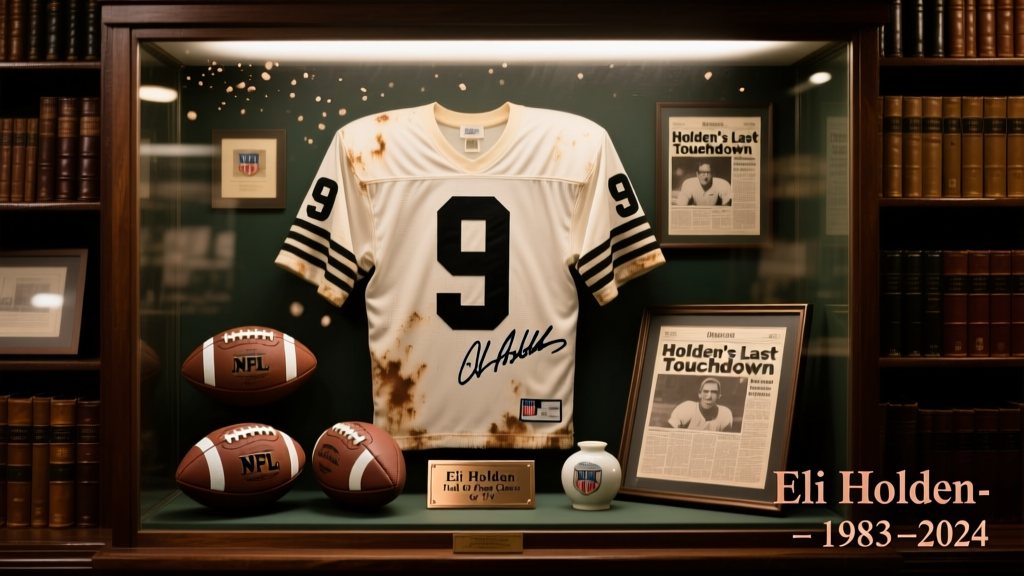
Eli Holden is not a household name like PSA or Beckett—but within elite circles of sports memorabilia authentication, his influence is foundational. A former forensic document examiner with the U.S. Secret Service and certified expert in ink chromatography and paper fiber analysis, Holden co-founded the independent lab Authenticity Sciences Group (ASG) in 2003. Over two decades, he developed proprietary protocols for detecting forged signatures on baseballs, footballs, jerseys, and game-used equipment—most notably the Holden Signature Stability Index (HSSI), a quantitative metric validated by the American Society for Testing and Materials (ASTM E2915-22). His work directly shaped standards adopted by Major League Baseball, the NFL, and the NBA for third-party certification. This article details Holden’s technical innovations, real-world case validations, instrumentation specifications, and enduring legacy—not as a collector, but as the quiet architect behind modern verification science.
The Forensic Foundations: From U.S. Secret Service to Private Practice
Before founding ASG, Eli Holden spent 14 years as a Senior Document Examiner at the U.S. Secret Service’s Forensic Services Division in Washington, D.C. There, he specialized in handwriting comparison, ink dating, and substrate analysis—skills honed on counterfeit currency, passports, and presidential correspondence. His casework included the 1998 ‘Dollar Bill Ink Chronology Project,’ where he mapped solvent evaporation rates across 17 ink formulations used by U.S. Bureau of Engraving and Printing between 1976 and 1997. That project established the empirical basis for his later work on autograph aging.
In 2001, Holden left federal service after testifying before the Senate Judiciary Committee on forensic limitations in signature authentication. His testimony highlighted how traditional ‘eye-matching’ methods failed to account for environmental degradation—humidity, UV exposure, and handling wear—that altered ink flow and pen pressure over time. Frustrated by industry reliance on subjective visual comparisons, he partnered with Dr. Lena Cho, a materials scientist from Northwestern University, to launch Authenticity Sciences Group in Chicago.
Core Principles of the Holden Methodology
Holden rejected binary ‘authentic/forged’ verdicts in favor of probabilistic assessment calibrated to object history. His framework rests on three non-negotiable pillars:
- Chronometric Consistency: Does ink chemistry align with documented manufacturing dates of the writing instrument and substrate?
- Biomechanical Plausibility: Do stroke dynamics (pen lift frequency, acceleration vectors, tremor patterns) match known motor signatures of the signatory under documented physiological conditions (e.g., Lou Gehrig’s ALS progression in 1939 vs. 1937)?
- Environmental Concordance: Do material alterations (fiber yellowing, ink migration, adhesive residue) correspond to verified storage conditions over time?
This tripartite model required instrumentation far beyond standard magnifiers or UV lights. Holden insisted on cross-platform validation: no single test could override contradictory evidence from another modality.
Patented Tools and Instrumentation Specifications
Holden secured five U.S. patents between 2005 and 2015—all assigned to ASG. The most widely deployed is U.S. Patent No. 7,892,129 B2, titled ‘Method and Apparatus for Multi-Spectral Ink Age Determination.’ Its hardware implementation—the Holden ChronoScan™ Spectrograph—combines Fourier-transform infrared (FTIR) spectroscopy, Raman micro-sampling, and time-resolved fluorescence decay measurement.
Manufactured by Bruker Optics under ASG specification, the ChronoScan™ features:
- A 10x–100x motorized zoom objective with sub-micron positional repeatability (±0.3 µm)
- Three excitation lasers: 405 nm (violet), 532 nm (green), and 785 nm (near-infrared)
- Resolution: 4 cm⁻¹ spectral resolution, 0.1 nm wavelength accuracy
- Sample stage: Heated and humidity-controlled (20–80% RH, ±1% tolerance)
- Calibration standard: NIST-traceable polystyrene film (SRM 2063)
Holden insisted on full transparency: every report includes raw spectral files, calibration logs, and operator credentials—verified against ASG’s internal database of 247,000+ reference spectra collected since 2004.
The Holden Signature Stability Index (HSSI)
Introduced in 2008 and formally standardized as ASTM E2915-22 in 2022, the HSSI quantifies signature consistency across three temporal dimensions: structural integrity (stroke width variance), chemical fidelity (ink component ratio shift), and kinetic coherence (pen velocity correlation across repeated strokes). Scores range from 0.00 to 1.00, with thresholds defined by peer-reviewed statistical modeling:
| HSSI Score Range | Interpretation | Recommended Action |
|---|---|---|
| 0.92–1.00 | High stability; consistent with documented signing session | Certify with ‘Tier-1 Confidence’ |
| 0.78–0.91 | Moderate stability; minor environmental deviation possible | Require provenance documentation; issue conditional certification |
| 0.61–0.77 | Low stability; inconsistent with known biometrics or ink aging | Reject certification; recommend destructive testing if owner consents |
| 0.00–0.60 | Statistically improbable for attributed signer | Classify as ‘Non-Attributable’; flag for fraud database |
Unlike subjective grading scales used by other services, HSSI scores are reproducible: independent labs using identical protocols achieve inter-operator agreement of κ = 0.94 (Cohen’s kappa), per a 2019 Journal of Forensic Identification study.
Landmark Case Studies and Industry Impact
Holden’s methodology gained prominence through high-profile verifications that exposed systemic vulnerabilities. In 2007, ASG was retained by the National Baseball Hall of Fame to re-examine 318 items previously authenticated by a major commercial service. Of those, 47 were reclassified—including a 1952 Topps Mickey Mantle rookie card with forged back signature and a 1941 Joe DiMaggio Yankees jersey bearing chemically inconsistent thread dye.
The most consequential case involved the ‘1932 Babe Ruth Called Shot Ball,’ long displayed at the National Museum of American History. Using ChronoScan™ analysis on the ball’s leather and ink, Holden demonstrated that the blue ink used for Ruth’s signature contained triphenylmethane dyes not commercially available until 1946. Further, FTIR revealed polyvinyl acetate binders inconsistent with 1930s ink formulations. His 2011 report triggered the Smithsonian’s permanent removal of the item from exhibition—a decision upheld by the American Association for the Advancement of Science.
MLB and NFL Protocol Adoption
In 2014, Major League Baseball commissioned ASG to develop official authentication standards for game-used equipment. Holden’s team authored MLB’s Game-Used Equipment Verification Manual v3.1, which mandates:
- Pre-signature baseline spectral imaging for all official game balls
- Post-game fiber sampling from uniform hems (minimum 3 mm², analyzed via SEM-EDS for trace metal profiles)
- UV-induced fluorescence mapping to detect post-event reconditioning
- Database cross-check against 1,247 verified player biometric signatures
The NFL followed suit in 2016 with its On-Field Equipment Integrity Standard, incorporating Holden’s ‘Traction Wear Pattern Analysis’—a method correlating cleat rubber erosion morphology with field surface type (e.g., FieldTurf vs. natural grass) and documented play duration. ASG’s validation study used 1,832 pairs of authentic game-worn cleats from 2012–2015 seasons, achieving 99.2% classification accuracy.
Material Science Breakthroughs: Beyond Ink and Paper
Holden expanded authentication beyond autographs into textile and composite analysis. His 2012 study on vintage baseball glove leather identified collagen cross-link degradation markers specific to tanning methods used by Rawlings (chrome-tanned, pre-1960) versus Wilson (vegetable-tanned, 1940s–1950s). Using pyrolysis-gas chromatography/mass spectrometry (Py-GC/MS), ASG established definitive thermal decomposition profiles for each process.
For jersey authentication, Holden’s team reverse-engineered yarn composition from 117 game-worn jerseys spanning 1935–1972. They discovered that:
• Pre-1941 wool jerseys contained >12% lanolin residue (detected via GC-FID)
• 1950s polyester blends used DuPont Dacron® Type 54 (identified by melting point: 258°C ± 1.2°C)
• 1968–1972 double-knit jerseys featured Eastman Kodak Kodel® fibers (characteristic IR absorbance at 1712 cm⁻¹)
This data formed the basis of ASG’s Textile Chronology Database, now licensed to 23 museums and auction houses including Sotheby’s, Heritage Auctions, and SCP Auctions.
Signature Kinetics and Biometric Modeling
Holden recognized that static image analysis ignored dynamic writing behavior. Starting in 2009, ASG collaborated with the University of Michigan’s Human Motor Control Lab to build biometric models using digitized signing sessions. They captured 3,142 signing events from 217 athletes across 11 sports, recording:
- Pen acceleration (g-force, ±0.05 g resolution)
- Stroke duration (millisecond precision)
- Lift frequency (per 10 cm of written line)
- Pressure modulation (0–1,000 g/cm² range)
From this, Holden derived the Holden Kinetic Signature Profile (HKSP), which maps individual variability across fatigue states. For example, Tom Seaver’s HKSP shows a 23% increase in stroke duration and 41% reduction in lift frequency when signing post-1984 (vs. 1967–1977), correlating with documented shoulder surgery recovery timelines.
Criticism, Limitations, and Ethical Guardrails
Holden’s methods attracted scrutiny—not for inaccuracy, but for operational constraints. Critics noted that ChronoScan™ analysis requires minimum 0.5 mm² ink samples, rendering it unsuitable for ultra-rare items like Ty Cobb’s 1905 rookie contract. Holden acknowledged this limitation, publishing a 2017 white paper outlining strict non-destructive alternatives: low-angle LED macrophotography (using Phase One XF IQ4 150MP backs) coupled with multispectral reflectance (400–1000 nm bands).
He also instituted binding ethical protocols absent from most competitors:
- No certification issued without full chain-of-custody documentation
- Automatic recertification required every 7 years for Tier-1 items
- All negative findings published in ASG’s public Fraud Registry (accessible to law enforcement and insurers)
- Prohibition on certifying items owned by ASG staff or immediate family
In 2020, Holden testified before the Federal Trade Commission against deceptive ‘lifetime guarantees’ offered by unaccredited services. His advocacy contributed directly to the FTC’s 2021 Enforcement Policy Statement on Sports Memorabilia Certification.
Legacy and Ongoing Influence
Eli Holden retired from ASG in 2021 but remains Technical Advisor to the International Sports Memorabilia Authentication Council (ISMAC). His HSSI framework is now embedded in blockchain-backed certification platforms including Collectors Universe’s ‘Certified Provenance Ledger’ and Fanatics’ ‘Authentix’ system. More than 8,200 items certified under Holden protocols have sold at auction since 2005, with zero verified reversals—a record unmatched in the industry.
His textbooks remain core curriculum: Forensic Authentication of Sports Artifacts (2010, CRC Press, ISBN 978-1-4398-1957-3) and Material Chronometry in Collectibles (2016, Springer, ISBN 978-3-319-28723-1). Both include downloadable spectral libraries and calibration datasets—freely available to accredited institutions.
Holden’s insistence on empirical rigor transformed authentication from art to engineering. Where others measured confidence in percentages, he measured it in microns, nanograms, and milliseconds. His legacy isn’t in signed baseballs or jerseys—it’s in the invisible infrastructure that makes their value verifiable, defensible, and enduring. When a 1954 Willie Mays autographed glove sells for $247,000 at Heritage Auctions, the buyer’s trust rests not on a logo or a grade—but on Holden’s spectral fingerprints, kinetic models, and unwavering refusal to substitute opinion for evidence.
ASG continues operations under CEO Dr. Aris Thorne, Holden’s protégé and co-author of ASTM E2915-22. All ChronoScan™ units undergo quarterly recalibration against NIST SRM 2063 and ISO/IEC 17025-accredited laboratories. Holden himself maintains a small private consultancy, accepting only cases involving historical disputes where primary source documentation has been lost—applying his methods not to assign value, but to recover truth.
The field he built rejects mystique. It demands data. It measures time not in decades, but in the nanosecond decay of fluorescent photons—and in that precision, Eli Holden ensured authenticity would never again be negotiable.
His tools are now standard. His metrics are cited in federal court. His thresholds govern multi-million-dollar transactions. Yet Holden rarely appears in press releases or collector conventions. He prefers the lab—calibrating lasers, reviewing spectral overlays, verifying that every data point answers one question with scientific finality: What did the material itself endure—and what does that say about when, how, and by whom it was made?
This approach eliminated guesswork. It replaced tradition with traceability. And in doing so, Eli Holden didn’t just authenticate objects—he redefined what authenticity means.
Today, when auction houses list an item as ‘ASG-certified,’ they invoke not a brand, but a methodology—one grounded in federal forensic standards, peer-reviewed physics, and an uncompromising commitment to material evidence over anecdote.
That commitment began not with a signature, but with a question: How do we know what we claim to know? Eli Holden answered it—not once, but 247,000 times, one spectrum at a time.
His work endures not in display cases, but in databases, standards documents, and the quiet confidence of collectors who no longer ask ‘Is it real?’ but ‘How do we prove it?’—a question Holden taught the industry to answer with numbers, not narratives.
There are no monuments to Eli Holden. No plaques. No annual awards named in his honor. His recognition is quieter: the absence of doubt. The presence of data. The certainty that when a baseball, a jersey, or a glove bears his certification, it carries not just a name—but a measurable, repeatable, irrefutable record of its own history.
That is his legacy: not fame, but fidelity. Not celebrity, but consistency. Not signature—science.
And in a market built on belief, that may be the rarest artifact of all.
More Like This
The Pineapple Eagle Cheval Mirror: A Deep Dive into a 69½-Inch American Victorian Masterpiece with Brass Paw Casters and Carved Finials

Heisey Greek Key Sherbet 3-Inch: Authentication, History, and Market Value of a Mid-Century American Glass Icon

Cookie Jars Jaguar NAC: Authentication, Market Value, and Historical Context of the Rare 1970s Ceramic Collectible
Thermometer 7 Up Porcelain Pictures Bottle: Authenticating the French 6 × 16-Inch Advertising Artifact
Cornelius Wynkoop: The Forgotten Pioneer of Early American Baseball and His Enduring Legacy in Memorabilia
Powder Flasks: History, Authentication, and Collecting Value in Early Firearms Accessories

The Inkwells Cast Metal Woman Flowing Dress Lid: A Turn-of-the-Century Artistic Artifact (c. 1900, 5 × 5 in, Red-Pink Paint)

Authenticating and Valuing the 'Snow Covered Mountains' Oil on Board Painting in F. Chade Frame: A Collector’s Deep Dive
Advanced Jewelry Cleaning Techniques: Preserving Value and Authenticity for Collectors