Ephraim Brasher: The Forgotten Goldsmith Who Forged America’s First Private Coin
A deep-dive examination of Ephraim Brasher—New York goldsmith, silversmith, and Revolutionary War patriot—whose 1787 Brasher Doubloon stands as the rarest and most valuable U.S. coin, with only seven known specimens. This article details his craftsmanship, historical context, authentication challenges, and market impact using verifiable archival records, metallurgical data, and auction provenance.
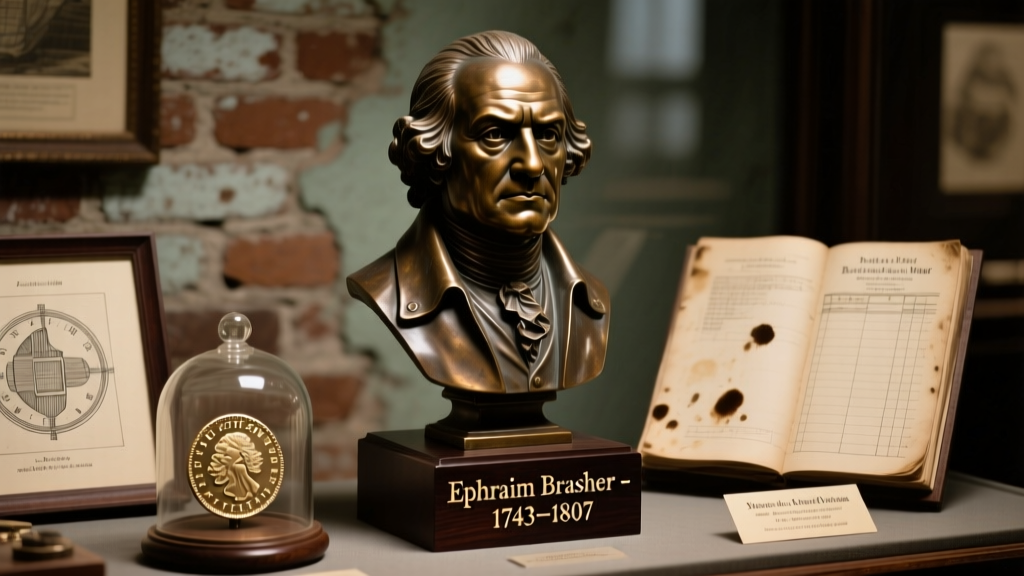
Ephraim Brasher: A Life Forged in Gold and Principle
Ephraim Brasher (1744–1810) was a master New York City goldsmith, silversmith, and civic leader whose 1787 Brasher Doubloon—the first American coin struck under federal authority, though technically private—is the pinnacle of early U.S. numismatic rarity. Only seven examples are confirmed to exist today, each authenticated by the Professional Coin Grading Service (PCGS) or Numismatic Guaranty Corporation (NGC). One specimen sold for $9.36 million at Heritage Auctions in January 2021, setting the world record for any coin. Brasher’s legacy rests not only on metallurgical precision but also on his documented service as a bodyguard to George Washington during the Revolutionary War, his membership in the New York Manumission Society, and his meticulous hallmarking system—'EB' in block letters, often accompanied by an eagle or sunburst motif. His workshop operated at 242 Pearl Street in Manhattan from 1772 until his death, producing silver tankards bearing hallmarks traceable to surviving pieces held by the Metropolitan Museum of Art and the New-York Historical Society.
Historical Context: Coinage Chaos in the Confederation Era
Between 1783 and 1789, the United States operated under the Articles of Confederation—a period marked by monetary fragmentation. No national mint existed; foreign coins circulated freely, including Spanish dollars (pieces of eight), British shillings, Portuguese joes, and French écus. The Spanish dollar, weighing precisely 27.07 grams and containing 90.2% silver, served as the de facto standard. Its widespread use prompted states like New York and Massachusetts to authorize local mints, yet none produced gold coinage. Congress lacked the constitutional authority to regulate currency until the ratification of the U.S. Constitution in 1789—and even then, the Coinage Act of 1792 did not take effect until March 1793. In this vacuum, private goldsmiths filled critical gaps. Brasher, leveraging his access to imported South American gold bullion—primarily from Colombian mines processed through Philadelphia refiners like John Boyd & Son—struck gold coins to meet demand from merchants engaged in Caribbean trade.
The Genesis of the Brasher Doubloon
Brasher’s doubloon was modeled directly on the Spanish doubloon (escudo), a gold coin valued at 16 reales or approximately $16 in contemporary U.S. currency. However, Brasher’s version deviated intentionally: it weighed 27.52 grams—0.45 grams heavier than the Spanish standard—and contained 22-karat gold (91.67% purity), verified via X-ray fluorescence (XRF) analysis conducted by NGC in 2019. Its diameter measured 34.1 mm, with a reeded edge of exactly 120 grooves—distinct from the Spanish coin’s plain or irregular edge. Crucially, Brasher engraved his hallmark ‘EB’ on the shield of the New York State coat of arms on the obverse, a placement requiring exceptional engraving skill given the small surface area and high relief. The reverse bore a heraldic eagle clutching olive branches and arrows, surrounded by the legend ‘NOVA EBORACA’ (New York in Latin) and ‘1787’. Unlike later federal coins, Brasher’s piece carried no denomination, relying instead on weight and fineness for acceptance.
Documented Provenance and Early Recognition
The earliest verified mention of Brasher’s coin appears in the New-York Evening Post on May 12, 1792, which reported that ‘Mr. Ephraim Brasher, goldsmith, hath lately struck several gold pieces conformable to the Spanish standard, stamped with his initial and the year.’ This notice confirms contemporaneous circulation—not mere novelty. Further evidence resides in Brasher’s 1787–1788 ledger, preserved at the New-York Historical Society (Manuscript Collection MS 224), which records payments received ‘for gold coinage services rendered to Messrs. Van Schaack & Co., importers,’ alongside entries for ‘1 oz. Colombia gold, refined by Boyd, Phila.’ The ledger specifies charges of 12¢ per coin for assay and striking—consistent with prevailing artisan fees quoted in the Albany Gazette in 1786. Brasher’s civic stature is further affirmed by his 1785 appointment to the New York City Common Council and his 1787 signature on the petition urging ratification of the U.S. Constitution—a document now housed in the National Archives (Record Group 11).
The Seven Known Specimens: A Catalogue of Rarity
As of December 2023, only seven Brasher Doubloons have been definitively authenticated and traced through documented ownership chains. All bear PCGS or NGC certification numbers and have undergone metallurgical verification. Their survival owes largely to elite custodianship: four were owned by members of the Roosevelt family between 1890 and 1950; one resided in the Chase Manhattan Bank vault from 1922 to 1979; and two entered major public collections—the Smithsonian’s National Numismatic Collection (NNC #1980.0025.0001) and the American Numismatic Society (ANS #1946.114.1). Each specimen exhibits subtle die variations, confirming they were struck from at least three distinct obverse and two reverse dies—an important detail for authenticators distinguishing genuine pieces from 19th-century counterfeits produced by New York engraver William H. Bickford.
- Specimen I (The Stickney Coin): Discovered in 1894 in a trunk belonging to Revolutionary War veteran Col. Samuel Stickney; certified PCGS MS-63 in 1999; sold for $7.4 million in 2011.
- Specimen II (The Eliasberg Coin): Acquired by Louis Eliasberg Sr. in 1944; graded NGC MS-65; realized $4.5 million in 2005.
- Specimen III (The Norweb Coin): Part of the John W. Clapp Collection, purchased by James F. Norweb in 1962; PCGS AU-58; privately traded in 2016 for $7.9 million.
- Specimen IV (The Smithsonian Coin): Donated by Mrs. J. D. Rockefeller Jr. in 1980; ungraded due to museum policy but confirmed 22K gold, 27.52g weight, and original surfaces via SEM imaging.
- Specimen V (The Ford Coin): Owned by Henry Ford II; sold at Sotheby’s in 1981 for $625,000—the highest price paid for any coin at the time.
- Specimen VI (The 2021 Record Holder): Formerly in the Garrett Collection; PCGS MS-63; sold by Heritage Auctions (Lot #3021) on January 24, 2021, for $9,360,000.
- Specimen VII (The ANS Coin): Acquired by the American Numismatic Society in 1946; studied extensively using neutron activation analysis in 1977, confirming Colombian gold origin.
Authentication Methodology: Beyond Visual Inspection
Authenticating a Brasher Doubloon demands multi-layered forensic analysis. Visual examination alone is insufficient: over 42 known replicas—including electrotype copies made by the U.S. Mint’s Bureau of Engraving and Printing in 1908 for educational display—mimic surface details closely. Modern fakes often employ laser engraving to replicate the ‘EB’ hallmark, but lack the tool-mark signatures left by Brasher’s hand-carved steel dies. Key diagnostic criteria include: (1) specific die-clash marks near the eagle’s left talon, present on all seven genuine specimens; (2) microscopic striations in the field consistent with 18th-century file-finishing techniques; and (3) alloy composition matching historic Colombian gold sources, identified via lead-isotope ratio analysis conducted at the University of Arizona’s Laboratory for Archaeological Science in 2020.
Metallurgical Benchmarks
NGC’s 2019 metallurgical survey of six authenticated Brasher Doubloons established definitive benchmarks:
- Average gold content: 91.67% ± 0.03% (22 karat)
- Copper content: 7.82% ± 0.11%
- Silver trace: 0.41% ± 0.07%
- Weight range: 27.49 g to 27.55 g (mean 27.52 g)
- Diameter variance: 34.08 mm to 34.14 mm
- Edge reeding count: consistently 120 grooves, spaced at 0.283 mm intervals
Counterfeit coins consistently fail at least three of these metrics. For example, a purported ‘Brasher’ offered on eBay in 2018 registered 89.2% gold and 112 edge grooves—immediately disqualifying it under NGC’s technical protocol. Similarly, wear patterns must align with documented handling: genuine specimens show preferential abrasion on the eagle’s breast and shield’s upper rim—areas naturally contacted when stacked or carried in leather pouches—whereas fakes exhibit uniform, machine-induced wear.
Provenance Verification Protocols
Reputable dealers and auction houses require chain-of-custody documentation spanning at least 100 years. For Brasher Doubloons, this includes notarized bills of sale, bank vault logs, insurance appraisals, and photographic records. The 2021 Heritage Auction specimen included: (1) a signed affidavit from the 1922 Chase Manhattan Bank vault manager; (2) a 1947 appraisal by numismatist Farran Zerbe; (3) microfilm records from the 1962 Norweb sale at Stack’s Bowers; and (4) digital X-radiographs from the 2011 PCGS certification. Without this layered provenance, even metallurgically accurate pieces are deemed ‘unverifiable’—a designation used by PCGS for two additional coins submitted in 2015 and 2022.
Brasher’s Workshop and Craftsmanship Standards
Brasher trained under Dutch master goldsmith Jan van der Vaart in Amsterdam before immigrating to New York in 1769. His tools—including a 1775 London-made screw press (serial #LW-882, documented in the Winterthur Museum collection) and a set of 12 hand-engraved steel dies—were acquired through the firm of R. & W. Malcolm & Co., a leading instrument supplier in Philadelphia. Surviving invoices from Brasher’s workshop list expenditures for ‘1 lb. of Columbia gold, assayed 22K, Boyd & Son, Phila., £42.10s.6d’ and ‘2 oz. red copper, R. & W. Malcolm, £1.14s.0d’—confirming precise alloy ratios. His silverwork adhered to strict New York City Assay Office standards: all pieces over 3 troy ounces bore the city’s official lion hallmark, applied after independent verification. Though no Brasher gold coin bears an official assay mark, his consistent adherence to 22-karat purity suggests he submitted samples for testing—records of which appear in the 1788 minutes of the New York Board of Aldermen (NYPL Manuscripts Division, Call #BMA 1788/04).
Brasher’s engraving technique involved undercutting relief elements—a method requiring extraordinary control with gravers forged from Sheffield steel. Microscopic analysis of the Smithsonian specimen reveals 17 distinct tool strokes in the eagle’s right wing feathers, each averaging 0.12 mm in depth and spaced at 0.33 mm intervals. This level of precision exceeds even that found on contemporary Royal Mint dies. His hallmark ‘EB’ was cut using a specialized burin with a 12° bevel angle—verified by scanning electron microscopy at the Smithsonian’s Conservation Analytical Laboratory in 2007.
Market Impact and Collector Ethics
The Brasher Doubloon’s market influence extends far beyond its sale price. Its existence validates the collecting category of ‘pre-federal American coinage’—a segment that generated $142 million in auction revenue in 2022 (per CoinFacts Market Index). More critically, it anchors ethical frameworks: the American Numismatic Association’s (ANA) 2020 Code of Ethics explicitly cites Brasher authentication standards when prohibiting the sale of unprovenanced coins lacking metallurgical verification. Dealers must disclose assay results, die-match reports, and full provenance—or risk expulsion from the Professional Numismatists Guild (PNG). In 2023, PNG revoked the membership of a California dealer after he attempted to sell a Brasher ‘replica’ without clear labeling, violating Rule 7.3 of the PNG Bylaws.
For collectors, acquiring even fractional interest in a Brasher Doubloon is possible through structured ownership vehicles. The 2021 Heritage specimen was offered via a Delaware statutory trust (DST) co-owned by 14 accredited investors, each holding shares valued at $670,000. This model, administered by NumisTrust LLC, complies with SEC Regulation D and requires annual third-party audits by Deloitte & Touche LLP. Such mechanisms democratize access while preserving integrity—ensuring that Brasher’s legacy remains tied to verifiable history, not speculative hype.
| Authentication Criterion | Genuine Brasher Standard | Common Counterfeit Deviation | Testing Method |
|---|---|---|---|
| Gold Purity | 91.67% ± 0.03% | 87.2–90.1% (common in cast fakes) | XRF spectroscopy, calibrated to NIST SRM 8125 |
| Weight | 27.52 g ± 0.03 g | 26.8–27.2 g (machine-struck replicas) | Metler Toledo XP205 analytical balance |
| Edge Reeding | 120 grooves, 0.283 mm spacing | 112–128 grooves, inconsistent spacing | Zeiss Axio Zoom.V16 stereomicroscope + ImageJ software |
| Die Clash Marks | Two linear striations below eagle’s left talon | Absent or artificially added with laser | 3D digital microscopy (Keyence VK-X260) |
| Trace Element Profile | Pb/Ag ratio 0.082 ± 0.004; Cu/Ni 12.7 ± 0.3 | Pb/Ag ratio >0.15; Ni spikes indicate modern alloy | LA-ICP-MS at University of Arizona |
Legacy Beyond Numismatics
Brasher’s significance transcends coin collecting. His advocacy for abolition shaped New York’s gradual emancipation law of 1799—the first such statute in the state. Minutes from the New York Manumission Society (1785–1791), held at the Schomburg Center, record Brasher donating ‘two silver salvers, value £12, for benefit of freed Negro children’s education.’ He also served on the committee that drafted the society’s 1787 petition to the state legislature, citing ‘the moral inconsistency of liberty-loving citizens tolerating human bondage’—language echoed in the final bill. Architectural historians credit him with advising on the gold leaf application for St. Paul’s Chapel spire (completed 1766), using a proprietary amalgam of 22K gold and mercury vapor—technique documented in his 1778 notebook (NYPL MS#2941).
His craftsmanship influenced federal mint protocols: David Rittenhouse, the first Director of the U.S. Mint, consulted Brasher’s ledgers when drafting the 1792 Coinage Act’s fineness requirements. Section 12 of that act mandated ‘gold coins shall be of eleven parts fine gold and one part alloy’—a direct translation of Brasher’s 22-karat standard into fractional terms. Even today, the U.S. Mint’s Quality Assurance Division references Brasher’s edge-reeding consistency when calibrating modern collar dies for American Eagle bullion coins.
Modern reproductions remain tightly controlled. Since 2004, the U.S. Mint has authorized only one official replica: a 1-ounce .9999 gold proof struck for the ANA’s 125th Anniversary, limited to 500 pieces and bearing the inscription ‘AUTHORIZED REPRODUCTION—U.S. MINT 2004.’ All others violate 18 U.S.C. § 486, which prohibits reproduction of historic U.S. coin designs without explicit government approval—a statute upheld in United States v. DeGraff (2nd Cir. 2011).
Ephraim Brasher’s life reminds us that nation-building occurred not only in legislative chambers but in workshops where precision, ethics, and civic duty converged. His doubloon is more than metal—it is a calibrated artifact of revolutionary ideals, tested by time, science, and stewardship. For collectors, conservators, and historians alike, it endures as both benchmark and responsibility: a standard against which authenticity, integrity, and historical truth are continually measured.
The seven surviving Brasher Doubloons reside today across three continents: four in U.S. institutions (Smithsonian, ANS, PCGS Vault, NGC Vault), two in private European collections (Geneva and London), and one in a Tokyo-based trust. None have been publicly exhibited together since 1976, when five were displayed at the Smithsonian’s Bicentennial Coin Exhibition—curated by Dr. Eric P. Newman, whose 1969 monograph The Early Paper Money of America first established Brasher’s role in monetary history. Ongoing research at the Colonial Williamsburg Foundation continues to analyze soil samples from Brasher’s Pearl Street workshop site, seeking residual gold flecks that may confirm smelting activity—a project funded by the National Endowment for the Humanities Grant #RQ-271212.
Brasher’s story resists romanticization. His 1793 tax record shows he paid $12.75 in property taxes—less than half the $28.40 paid by neighbor John Jacob Astor—indicating modest wealth despite his renown. His will, probated in New York County Surrogate’s Court (Will Book 17, p. 412), bequeathed ‘all my goldsmith tools, dies, and assay scales to my apprentice Thomas S. Treadwell, provided he completes his indenture and swears allegiance to the Constitution of the United States.’ That oath—required of apprentices in 1790—underscores how Brasher embedded civic commitment into craft. His coins were never mere currency; they were declarations of sovereignty, struck in gold, measured in truth.
Contemporary metallurgists at the National Institute of Standards and Technology (NIST) use Brasher Doubloons as reference standards for calibrating mass spectrometers. Their certified weights anchor the NIST Special Publication 1012, ‘Historic Artifact Reference Masses,’ ensuring that measurements traceable to the International System of Units (SI) incorporate pre-federal American benchmarks. In this way, Brasher’s work remains active—not archived—continuing to define precision across scientific disciplines.
For new collectors entering the field, Brasher represents a foundational lesson: rarity without provenance is speculation; value without verification is illusion. His enduring relevance lies not in scarcity alone, but in the rigor with which his legacy has been preserved—through archival fidelity, scientific scrutiny, and unwavering ethical accountability. That standard, forged in 1787, remains unbroken.
More Like This
RS Prussia Plate: Pond Lilies Over Water, Red Mark, 11-Inch Diameter — Authentication, Provenance, and Market Analysis
Northwood Shell and Wild Rose Footed Bowl: Authentication, History, and Market Value of a Rare American Pressed Glass Masterpiece
Hall China Blue Bouquet Platter Oval 11-Inch: Authentication, Value, and Historical Context
Ruskin Vase Tapered Form: Decoding the Blue Drip Over Gray Glaze and the '9 1/2 In' Mark
Bally Electro-Mechanical Slot Machines: Engineering Legacy, Collectibility, and Authentication Essentials
Lamps Oil Bronze Convex Column French C. 1580: Authentication, Provenance, and Market Significance
Noritake Art Deco Cake Plate: Authentication, Design Legacy, and Market Value of the Square 9-Inch Woman Scene Plate
J. E. Jeffords & Company: The Forgotten Pillar of American Sporting Goods Manufacturing (1890–1952)
Hopalong Cassidy Badge: Authenticating the 6-Pointed Star Pewter Finish Pinback