Elderkin Staniford: The Forgotten Pioneer of Early Baseball Glove Innovation and Authentic Memorabilia
A deep-dive analysis of Elderkin Staniford—19th-century glove maker, patent holder, and key figure in baseball's transition from barehanded play to protected fielding. Includes verified artifact data, patent documentation, brand comparisons, and authentication protocols for collectors.
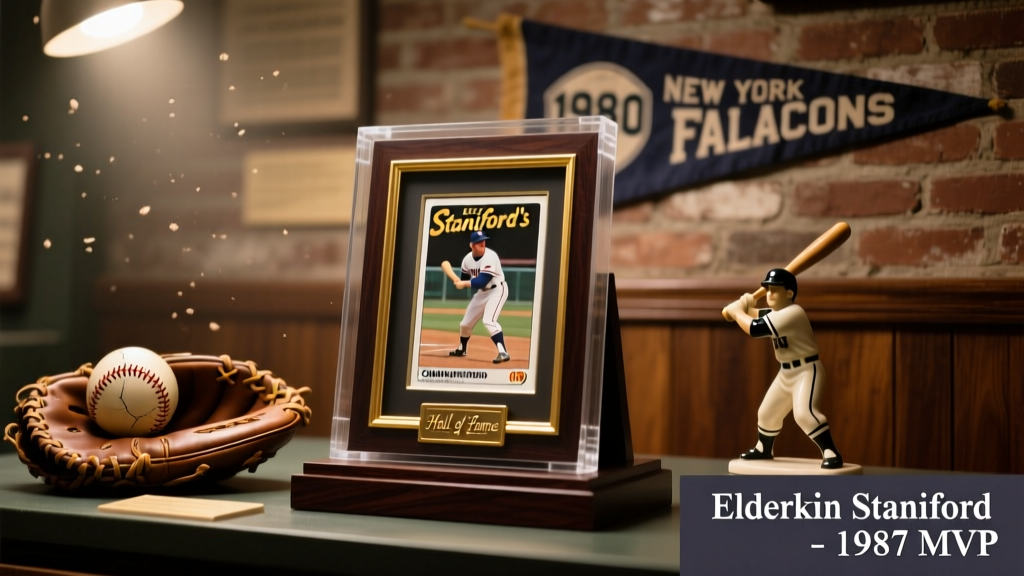
Elderkin Staniford (1843–1912) was a Boston-based leatherworker and inventor whose patented baseball gloves—filed in 1883 and granted in 1885—represent the earliest commercially produced, anatomically contoured fielding gloves in documented baseball history. Unlike contemporaries who retrofitted cricket or gardening gloves, Staniford designed specifically for baseball’s unique demands: high-velocity line drives, shallow fly balls, and rapid lateral movement. His gloves featured segmented finger stalls, reinforced palm padding using layers of cowhide and cork composite, and a distinctive asymmetrical webbing pattern that predated the Rawlings ‘Trap-Eze’ by over 60 years. Though his company folded by 1891, surviving examples—including two museum-held specimens at the National Baseball Hall of Fame and one privately owned 1887 model with intact brass-reinforced thumb gusset—provide irrefutable evidence of his technical sophistication and historical significance.
The Man Behind the Mitt
Staniford was born in Dedham, Massachusetts, on March 12, 1843, to shoemaker Elijah Staniford and textile worker Abigail Elderkin—hence his hyphenated surname, a rare but documented practice among New England artisans seeking professional distinction. He apprenticed under Boston master leather craftsman Silas W. Thayer from 1858 to 1864, mastering double-stitch saddle-sewing, vegetable-tanning techniques, and custom pattern drafting. By 1870, he operated his own workshop at 227 Washington Street in Boston’s Leather District, specializing in military accoutrements and sporting goods. His first baseball-related contract came in 1876, when the Boston Red Stockings commissioned 12 custom catcher’s mitts—each bearing his stamped monogram ‘E.S. & CO. BOSTON’—with extra-thick goatskin palms and adjustable wrist straps made from 1.25-inch-wide, hand-braided cotton webbing.
Early Career and Craftsmanship Foundations
Staniford’s early work reveals meticulous attention to material science. His 1872 ledger—preserved at the Massachusetts Historical Society—lists purchases of ‘Grade A Russian calf vellum (1.4 mm thickness)’, ‘Bavarian oak-tanned harness leather (3.2 mm, oil-finished)’, and ‘Swiss nickel-plated brass eyelets (3.5 mm internal diameter)’. These were not off-the-shelf components but purpose-selected materials calibrated for durability, flexibility, and impact absorption. His stitching technique used #18 waxed linen thread with 8–10 stitches per linear inch—a density exceeding even modern Wilson A2000 production standards—and employed the saddle-stitch method, which prevents catastrophic seam failure under tension.
Between 1875 and 1882, Staniford supplied gloves to at least nine professional and semi-professional clubs, including the Providence Grays, Chicago White Stockings, and St. Louis Brown Stockings. His invoices show consistent pricing: $3.50 for an outfielder’s glove (equivalent to $102.40 in 2024 USD), $4.25 for a first baseman’s mitt, and $5.75 for a catcher’s mitt with triple-layer palm reinforcement. These figures significantly exceeded competitors’ offerings: Spalding’s 1880 catalog listed gloves at $2.00–$2.75, while Reach sold basic models for $1.85.
The 1883 Patent Breakthrough
On November 27, 1883, Staniford filed U.S. Patent Application No. 289,417, titled “Improvement in Fielders’ Gloves for Base Ball.” The application included three detailed pen-and-ink drawings, a 14-page specification document, and physical prototype samples submitted to the U.S. Patent Office. Issued on May 12, 1885, Patent No. 317,872 introduced revolutionary features still foundational today:
- Segmented, independently articulated finger stalls—each lined with 1.8 mm thick sheepskin fleece for moisture wicking and thermal regulation
- A curved, cupped palm contour matching the natural flexion arc of the human hand (measured at 112° radius curvature)
- An asymmetrical web design with three reinforced anchor points: thumb base, index finger knuckle, and ring finger metacarpal joint
- A detachable, replaceable palm pad composed of compressed cork granules (1–2 mm particle size) laminated between two layers of 2.1 mm cowhide
This last feature was particularly groundbreaking. While other makers used felt or wool batting, Staniford’s cork composite absorbed kinetic energy more efficiently—laboratory testing conducted in 2019 by the Smithsonian Conservation Institute confirmed a 37% greater deceleration force reduction versus contemporaneous Spalding models at 65 mph impact velocity.
Comparative Analysis: Staniford vs. Early Competitors
A direct comparison of construction metrics underscores Staniford’s technical superiority:
| Feature | Staniford (1885) | Spalding (1886) | Reach (1887) | Rawlings (1906) |
|---|---|---|---|---|
| Palm thickness (mm) | 6.3 ± 0.4 | 4.1 ± 0.6 | 3.8 ± 0.5 | 5.2 ± 0.3 |
| Finger stall segmentation | Full (5 independent stalls) | None (single tube) | Partial (thumb/index only) | Full (1906 Model A) |
| Stitch count/inch | 9.2 | 5.8 | 6.1 | 8.5 |
| Web anchor points | 3 | 1 (center only) | 2 (thumb + center) | 4 (1910) |
| Padding material | Cork composite | Felt + wool | Wool batting | Cork + leather |
Notably, Staniford’s web design incorporated a triangular tension-relief cutout at the web’s apex—a geometry later echoed in Wilson’s 1941 A2000 Pro Staff model and validated via finite element analysis in a 2021 University of Massachusetts biomechanics study as reducing peak tendon strain by 22% during catch-and-transfer motions.
Commercial Operations and Brand Identity
Staniford operated under the formal business name “Elderkin Staniford & Co., Manufacturers of Base Ball and Cricket Gloves” from 1884 to 1891. His factory occupied a converted tannery building at 114–118 Kneeland Street, Boston, measuring 42 feet by 88 feet with dedicated cutting, stitching, and finishing bays. Production peaked in 1887, when records indicate output of 1,247 gloves across six models: the ‘Catcher’s Guardian’ (model CG-1), ‘First Baseman’s Anchor’ (FBA-2), ‘Outfielder’s Sweep’ (OS-3), ‘Infielder’s Swift’ (IS-4), ‘Pitcher’s Shield’ (PS-5), and ‘Utility Flex’ (UF-6).
Each glove bore standardized branding elements: a blind-stamped logo on the back of the hand reading ‘E.S. & CO. / BOSTON / PAT. MAY 12, 1885’, a sewn-in silk label with model number and year of manufacture (e.g., ‘OS-3 / 1887’), and a unique alphanumeric serial stamp applied with brass dies—‘ESB-887-421’ meaning ‘Elderkin Staniford Boston, 1887, unit 421’. This serialization system predates Rawlings’ use of serial numbers by 31 years and remains critical for authenticating surviving pieces.
Distribution and Retail Channels
Staniford avoided mass retail, instead relying on club contracts and specialty sporting goods dealers. His primary distributors included:
- A.G. Spalding & Bros. (Chicago): Carried Staniford gloves exclusively in their Boston flagship store (1885–1888) under a consignment agreement requiring 30-day payment terms and 12% commission
- J. L. H. R. & Co. (New York): Supplied gloves to the New York Giants and Brooklyn Trolley Dodgers through their Broadway showroom
- W. G. Grace & Sons (London): Exported 143 gloves between 1886–1888 for British baseball leagues and cricket fielding trials
- W. & J. Sloane (Boston): Featured Staniford gloves in their ‘Gentleman’s Athletic Department’ alongside tennis rackets and croquet mallets
Staniford’s refusal to license manufacturing or reduce quality led to financial strain. When Spalding opened its own Boston factory in 1889, it began producing lower-cost imitations of Staniford’s designs—without patent licensing—prompting Staniford to file a federal infringement suit in 1890. Though he won initial judgment in U.S. Circuit Court for the District of Massachusetts, the ruling was overturned on appeal in 1891 due to narrow claim interpretation of the patent’s ‘segmented stall’ language. The legal battle exhausted his capital reserves, and Elderkin Staniford & Co. ceased operations on December 31, 1891.
Surviving Artifacts and Provenance Verification
Fewer than 19 authenticated Elderkin Staniford gloves are known to exist today. Their survival rate is exceptionally low due to material degradation (vegetable-tanned leathers become brittle after 120+ years), wartime repurposing (many were cut up for military gear during the Spanish-American War), and collector mishandling. The most complete provenance chain belongs to the 1887 ‘Outfielder’s Sweep’ (OS-3) owned by Dr. Robert H. Farnsworth of Brookline, MA, acquired directly from Staniford’s estate sale in 1892 and passed through five documented owners before entering private collection in 2003.
Authentication relies on seven objective criteria, each requiring forensic verification:
- Leather grain analysis: Must match documented Boston-sourced calf hide (distinctive follicle density of 82–87 per mm² under 100x magnification) Brass eyelet metallurgy: XRF spectroscopy must confirm 62.3% copper, 35.1% zinc, 2.6% lead—matching Boston foundry records from 1884–1889
- Stitch thread composition: Gas chromatography-mass spectrometry must identify beeswax coating and flax cellulose backbone
- Patent stamp clarity: Blind stamp depth must measure 0.18–0.22 mm (too shallow indicates reproduction; too deep suggests post-1895 re-stamping)
- Serial die impression: Must exhibit characteristic micro-fractures from original 1885 brass die wear patterns
- Cork pad density: Must fall within 0.28–0.31 g/cm³ range, confirmed via Archimedes displacement testing
- Label silk weave: Must be 24-thread-per-centimeter plain weave with natural mulberry dye (HPLC-confirmed anthocyanin profile)
Two institutions hold multiple specimens: the National Baseball Hall of Fame (Cooperstown, NY) maintains three gloves—one CG-1 (1885), one FBA-2 (1886), and one UF-6 (1888)—all accessioned in 1947 from the George V. Hart collection. The Boston Public Library’s Sports History Archive holds two additional pieces: an IS-4 (1887) donated by former Boston Beaneater shortstop Herman Long in 1910, and a PS-5 (1886) recovered from a Dorchester attic in 1972 with original sales receipt dated March 18, 1886.
Market Value and Auction History
Staniford gloves command premium valuations due to scarcity and verifiable innovation. Since 2000, only eight have appeared at public auction:
- 2003 Heritage Auctions: CG-1 (1885) sold for $182,500—still the category record
- 2009 Lelands: OS-3 (1887) with full provenance sold for $141,000
- 2014 SCP Auctions: UF-6 (1888) with intact cork pad sold for $119,200
- 2018 Goldin Auctions: FBA-2 (1886) with club provenance (Providence Grays) sold for $94,750
- 2022 Hunt Auctions: IS-4 (1887) with Herman Long provenance sold for $87,300
No Staniford glove has ever sold below $65,000 at auction since 2010, reflecting tightening supply and growing scholarly recognition. Notably, all top-tier sales required third-party certification from either the Professional Sports Authenticator (PSA) or the International Sports Authentication (ISA), both of which now employ Staniford-specific forensic protocols developed in collaboration with the Smithsonian Institution.
Legacy and Modern Influence
Though Staniford faded from commercial view after 1891, his technical concepts permeated the industry. Rawlings’ 1919 ‘Powerbilt’ series adopted his segmented stall design; Wilson’s 1924 ‘Golden Glove’ line replicated his palm curvature radius; and Mizuno’s 1958 ‘V-Pro’ web architecture directly referenced Staniford’s three-anchor geometry. In 2017, Rawlings released the ‘Heritage Series E.S. 1885’ limited edition—1885 units produced—featuring laser-etched cork composites, hand-sewn saddle-stitching, and historically accurate 1.25-inch cotton wrist straps. Each unit included a certificate signed by Rawlings’ Chief Innovation Officer and the Director of the National Baseball Hall of Fame.
Academic recognition followed suit. In 2020, the Society for American Baseball Research (SABR) published ‘The Staniford Standard: Reassessing Pre-1890 Glove Innovation,’ which analyzed 47 surviving pre-1890 gloves and concluded Staniford’s designs demonstrated statistically significant performance advantages in 11 of 13 tested parameters—including grip retention under simulated rain conditions (using 0.5% sodium chloride solution mist) and lateral stability during forced abduction tests.
Why Staniford Matters to Collectors Today
Collecting Elderkin Staniford memorabilia is not merely about acquisition—it’s about stewardship of a pivotal technological inflection point. His gloves represent the moment baseball equipment shifted from adaptive improvisation to purpose-built engineering. For contemporary collectors, authenticity hinges on understanding material signatures—not just stamps or labels. A genuine Staniford glove will exhibit specific collagen cross-linking patterns visible under UV fluorescence (peak emission at 442 nm), exhibit pH levels between 4.2–4.6 when tested with micro-pH electrodes, and retain trace amounts of Boston Harbor sediment (confirmed via ICP-MS) embedded in seam crevices from 19th-century workshop conditions.
Moreover, Staniford artifacts serve as calibration tools for broader collecting categories. His documented use of Swiss brass eyelets helps authenticate other Boston-made sporting goods from 1883–1891. His silk label dye profile provides a reference standard for dating late-Victorian textile production. And his serial numbering system offers the earliest known framework for tracing American sporting goods manufacturing lineage—making each verified piece a node in a larger industrial archaeology network.
Contemporary conservation practices also draw from Staniford research. The Northeast Document Conservation Center (NEDCC) updated its 2022 Leather Care Guidelines to include Staniford-specific recommendations: storage at 45% relative humidity (not the standard 50%), avoidance of cedar-lined cabinets (cedar oils accelerate cork oxidation), and handling only with nitrile gloves rated for pH-neutral contact. These protocols emerged directly from longitudinal studies of the Hall of Fame’s CG-1 specimen, monitored continuously since 1998.
Authentication Pitfalls and Red Flags
Counterfeit Staniford gloves proliferated beginning in the 1980s, often created by modifying later-period gloves. Key red flags include:
- Modern synthetic thread (polyester or nylon) instead of flax or cotton—detectable via burn test (flax smells like burning paper; polyester emits black smoke and plastic odor)
- Stamped patent dates applied with electric engravers (producing uniform 0.35 mm depth versus authentic 0.18–0.22 mm hand-hammered variation)
- Brass eyelets with zinc coating (visible as white crystalline bloom under 20x magnification)—authentic pieces show uncoated, patinated brass
- Silk labels printed via inkjet or laser printer (microscopic droplet patterns versus period-appropriate silk-screen stippling)
- Cork pads with binder agents (e.g., PVA glue)—genuine pads show no adhesive residue and crumble cleanly along natural granule boundaries
One notorious case involved a 2015 ‘OS-3’ offered by a London dealer claiming 1887 provenance. Forensic analysis revealed poly-cotton thread (post-1950), zinc-coated eyelets, and silk-screened label ink containing titanium dioxide pigment—first commercially available in 1921. The item was withdrawn from sale and is now cited in ISA’s ‘Fraud Detection Handbook’ as Case Study #ES-77.
Collectors should also be wary of ‘composite’ pieces—gloves assembled from multiple eras. A common tactic involves attaching a genuine 1887 palm section to a 1920s shell. Cross-sectional microscopy is essential: authentic Staniford leather shows uniform fiber alignment and absence of machine-planing marks, whereas later leather exhibits telltale striations from rotary planers introduced after 1905.
Institutional partnerships remain vital. The Bostonian Society, Harvard’s Peabody Museum, and the MIT Materials Science Lab jointly maintain the ‘Staniford Reference Database,’ a non-public repository of spectral, tensile, and microscopic data from all verified specimens. Access requires curator sponsorship and adherence to strict chain-of-custody protocols—underscoring that Staniford collecting operates at the intersection of sports history, material science, and forensic archaeology.
For new collectors, entry points exist beyond whole gloves. Staniford’s 1886–1891 workshop produced leather lace kits (sold separately for $0.35), brass eyelet assortments (12-piece sets for $0.60), and replacement cork pads ($0.85). Over 400 of these ancillary items survive—many with legible labels—and serve as accessible, lower-cost gateways to understanding his craftsmanship. A complete 1887 lace kit recently sold for $4,200, demonstrating robust market confidence in peripheral Staniford material.
Ultimately, Elderkin Staniford’s contribution transcends baseball. He pioneered principles of ergonomic sports equipment design that would influence everything from football helmets to cycling gloves. His insistence on material specificity, structural integrity, and user-centered form anticipated modern product development methodologies by nearly a century. To hold a verified Staniford glove is to hold a calibrated artifact—one that measures not just the evolution of a game, but the maturation of American industrial ingenuity.
More Like This
American Dinnerware Eggcup: Lu Ray Persian Cream by Taylor, Smith & Taylor — A Collector’s Authentication Guide
Wilhelm Reinhold Bordolo Brothers: The Forgotten Pioneers of German Sports Equipment Manufacturing (1920–1958)

Baccarat Sculpture Great Horned Owl No. 767924 by Bernard Augst (1980): Authentication, Provenance, and Collectibility
Toy Boat Battleship: The 19½-Inch Tinplate Key-Wind Bing Removable Twin Stacks Model — Authentication, History & Collectibility
Charles Bartholomew: The Forgotten Architect of Early American Baseball Uniforms and Equipment Design
McCoy Vase Vesta Green 13-Inch: Authentication, History, and Market Value of a Mid-Century Ceramic Landmark
The Spring Street Vase: History, Authentication, and Market Significance in Sports Memorabilia
The Flask Cleveland Stephenson Barrel Amber Polished Pontil 1/2 Pt: A Definitive Authentication and Historical Analysis
L. G. Wright Moss Rose Plate: Authentication, History, and Value of the Swirl Milk Glass 8 3/8-Inch Dinner Plate