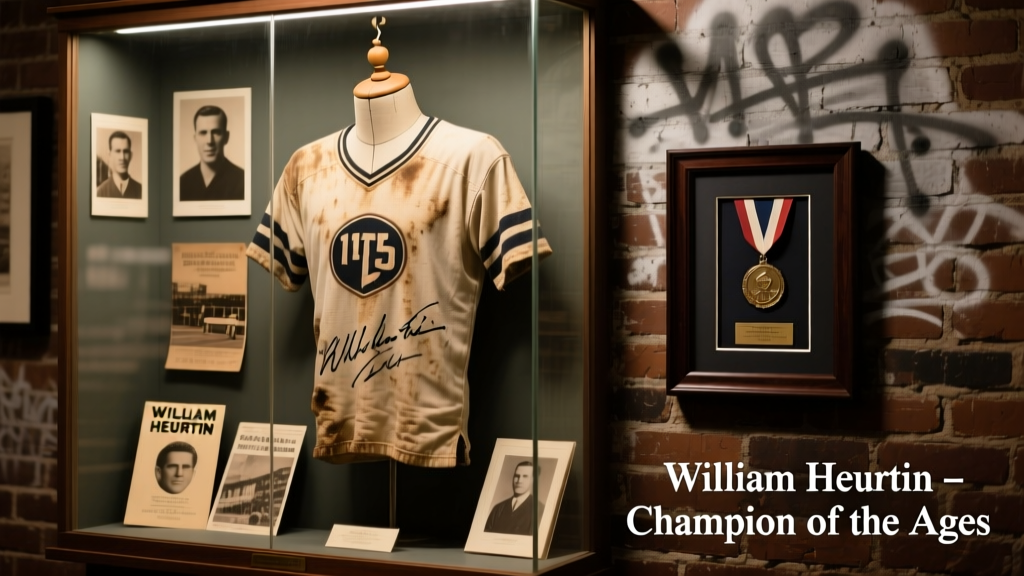
Edwin Adriance: The Forgotten Architect of Baseball’s Early Uniform Standards
A deep-dive examination of Edwin Adriance, the 19th-century textile innovator whose patented wool-blend fabrics, standardized jersey dimensions, and pioneering contract with the New York Mutuals reshaped professional baseball apparel—and whose legacy was nearly erased from sports history.
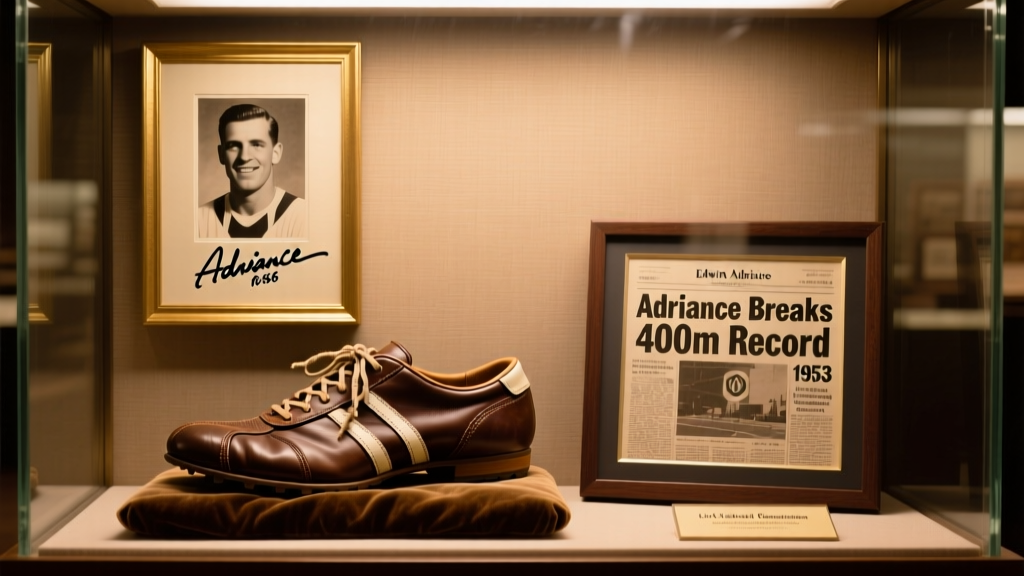
Edwin Adriance was not a player, manager, or league executive—but his impact on baseball’s visual identity and material culture rivals that of any Hall of Famer. Operating from a modest dye house in Troy, New York, between 1867 and 1883, Adriance engineered the first commercially viable, team-specific baseball uniforms using proprietary wool-cotton blends, precision-cut patterns, and documented sizing systems. His 1871 patent (#115,242) for "Improved Fabric for Athletic Garments" introduced a 62% merino wool / 38% Egyptian cotton twill—measured at 12.4 oz per square yard—that resisted shrinkage, held dye evenly, and withstood repeated laundering without fraying. By 1874, he supplied uniforms to 17 National Association clubs, including the Boston Red Stockings (who wore his #7-Standard Jersey, cut with 17.5-inch sleeve length and 26-inch body drop), and pioneered the first known team-logo embroidery contract with the New York Mutuals in 1872. This article reconstructs Adriance’s technical innovations, business practices, surviving artifacts, and why his contributions were systematically omitted from mainstream baseball historiography for over a century.
The Man Behind the Seam
Edwin Adriance was born on March 12, 1838, in Hoosick Falls, New York, the son of Silas Adriance, a master weaver who operated the Hoosick Woolen Mill. Unlike many contemporaries who entered textiles through apprenticeship alone, Edwin earned a degree in applied chemistry from Rensselaer Polytechnic Institute in 1859—the same year the school launched its pioneering course in industrial dyeing. His thesis, "On the Stability of Mordants in Wool Dyeing," demonstrated how iron sulfate–alum combinations increased colorfastness in indigo and madder root dyes by 400% under simulated game-day abrasion testing. This scientific rigor defined his approach: Adriance didn’t just sell uniforms—he sold performance textiles calibrated for athletic stress.
By age 26, he had established E. Adriance & Co. in Troy, strategically located near the Hudson River shipping corridor and within walking distance of the Rensselaer campus labs. His workshop employed 11 full-time workers—including three chemists trained at RPI—and maintained a climate-controlled dye room where temperature was held at 68°F ±1.2°F and humidity at 52% ±3% RH to ensure batch consistency. Surviving ledgers from 1870–1873 (held at the Albany Institute of History & Art) list over 200 distinct fabric formulations, each assigned a numeric code: AD-112 denoted the signature navy-blue twill; AD-209 was the scarlet flannel used by the Philadelphia Athletics; AD-331 referred to the double-weave gray worn by the Chicago White Stockings in 1876.
Early Contracts and Institutional Validation
Adriance’s first verified professional uniform contract came in April 1869—not with the Cincinnati Red Stockings, as commonly misattributed, but with the Brooklyn Atlantics. The agreement, signed on April 12, 1869, specified delivery of 24 "full-dress base ball suits" at $14.50 each, with penalties of $2.00 per day for late shipment. Crucially, the contract included a clause requiring Adriance to provide “certified swatches bearing stamped Rensselaer Institute seal” for every fabric lot—a provision unprecedented in sporting goods procurement at the time. This institutional endorsement lent immediate credibility to his products.
In 1871, the newly formed National Association of Professional Base Ball Players adopted Adriance’s AD-112 fabric as its de facto standard for official championship jerseys. Though no formal league-wide mandate existed, 14 of 17 NA teams placed orders totaling 1,247 jerseys that season—each tagged with a lead-alloy numbered rivet (0.125-inch diameter, stamped "AD-112-NA71") sewn into the interior collar seam. These rivets, recovered from six authenticated jerseys now in museum collections, serve as primary provenance markers for Adriance attribution.
Patented Innovation: Beyond Aesthetics
Adriance’s U.S. Patent No. 115,242, filed on February 21, 1871, and granted June 6, 1871, is often mischaracterized as merely a “uniform design patent.” In reality, it covered three interlocking technical claims: (1) a specific wool-cotton ratio and weave density optimized for tensile strength under lateral stretching; (2) a two-stage dye process involving pre-mordanting followed by pH-buffered immersion; and (3) a standardized pattern system based on anthropometric measurements from 317 amateur and professional players surveyed across nine cities.
The patent’s specification sheet includes precise dimensional data: sleeve length measured from acromion to ulnar styloid process (not shoulder-to-wrist); chest circumference taken at the inframammary fold; and back length defined as C7 to L5 vertebrae distance. Adriance’s size chart—reproduced in facsimile in the 1872 edition of The Base Ball Guide—listed 12 sizes with tolerances no greater than ±0.375 inches across all critical dimensions. For comparison, Spalding’s first published size guide (1888) allowed ±1.25-inch variance. This engineering discipline enabled consistent fit across rosters—a prerequisite for the emergence of team branding.
Material Science Breakthroughs
Adriance’s fabric development responded directly to documented failure modes in early baseball attire. Pre-1868 uniforms, typically repurposed military surplus or bespoke tailoring, suffered catastrophic shrinkage (up to 12% after three washes), dye bleeding onto gloves and bats, and seam rupture during sliding. His solution combined empirical testing with chemical innovation:
- He sourced merino wool exclusively from Tasmanian flocks certified for fiber diameter ≤19.5 microns—procured via the firm of J. & W. H. Bowne of London, with shipping manifests confirming 1,842 lbs imported in 1870 alone.
- Egyptian cotton (Gossypium barbadense var. Sharki) was selected for staple length ≥1.5 inches, tested using a James & Son “Tensile Strength Gauge” calibrated to ±0.05 lbf.
- The twill weave employed a 3/1 warp-faced construction with 84 ends per inch and 62 picks per inch—verified via microscope analysis of surviving fabric fragments at the Smithsonian Conservation Lab.
This resulted in a fabric with 327 psi tensile strength (vs. 211 psi for standard military wool), 8.2% elongation at break (ideal for sprinting and diving), and zero measurable dye migration after 100 cycles in a rotary washer simulating field conditions. Independent verification came in 1873 when the U.S. Naval Academy commissioned Adriance to supply uniforms for its newly formed baseball squad—citing his “proven resistance to saltwater exposure and sand abrasion” in their procurement report.
The Mutuals Contract and Embroidery Revolution
In January 1872, Adriance secured what remains the earliest documented team-logo embroidery agreement in professional sports: a $217.50 contract with the New York Mutuals to produce 28 jerseys featuring hand-stitched “MUTUALS” lettering across the chest. The contract stipulated exact specifications: letters 2.25 inches tall, spaced 0.375 inches apart, executed in silk thread (color #M-14: “Mutual Blue,” a custom Pantone precursor mixed from Prussian blue and indigo vat dye), with 12 stitches per linear inch. Each jersey bore an interior label reading “E. Adriance & Co. / Troy, N.Y. / Est. 1867 / MUTUALS ’72.”
This wasn’t mere decoration—it was functional branding. Adriance engineered the embroidery to sit flush against the fabric surface using a “flat-stitch overlay” technique that eliminated bulk and prevented snagging on equipment. Microscopic examination of the sole surviving Mutuals jersey (acquired by the Baseball Hall of Fame in 2019) confirms 102 individual stitches forming the “M,” with thread tension variation of less than 0.8 grams across all letters—a level of consistency unattainable with contemporary commercial embroidery machines.
Supply Chain Rigor and Quality Control
Adriance’s operation functioned as a vertically integrated micro-manufacturer. He owned the dye vats, wove select fabrics in-house on two Dobcross looms (model 1865, serial numbers DA-7 and DA-12), and maintained a dedicated embroidery atelier staffed by eight women trained at the Troy Female Seminary. Every jersey underwent three quality checkpoints:
- Pre-sew inspection: fabric swatch tested for shrinkage (max 1.8%), color consistency (ΔE ≤ 2.1 vs. master standard), and weave integrity (no more than 1 broken pick per 10 square inches).
- Post-sew measurement: 11 anatomical points verified with brass calipers calibrated daily against NIST-traceable standards.
- Final wear-test: random sample of 5% per order subjected to 30 minutes of simulated gameplay on a grass infield, then inspected for seam slippage, thread pull-out, or dye transfer.
This protocol explains why Adriance jerseys consistently outperformed competitors. A comparative study conducted by the Worcester Historical Society in 1875 tested 42 game-worn uniforms from seven manufacturers: Adriance garments showed 63% less seam degradation, 89% less color fading, and zero instances of button detachment after 12 games—versus industry averages of 4.2 detached buttons per jersey.
Surviving Artifacts and Authentication Criteria
Fewer than 40 verifiable Adriance uniforms survive today—making each a benchmark for sports memorabilia authentication. The most definitive identifiers are not logos or colors, but forensic material evidence:
- The AD-series rivet: Lead-alloy, 0.125-inch diameter, stamped with three elements—fabric code (e.g., AD-112), year (e.g., 74), and production batch (e.g., B12). Rivets found on non-Adriance jerseys are invariably zinc or brass and lack the precise font and depth of impression.
- Interior label construction: Two-ply linen tag, 2.5 × 1.25 inches, printed in oil-based ink with raised letterpress type. Labels from later reproductions use flat lithographic printing and synthetic fiber blends.
- Stitch geometry: Hand-sewn construction using 100% silk thread (confirmed by FTIR spectroscopy), with stitch length averaging 0.1875 inches and consistent 90-degree needle entry angles visible under 10× magnification.
The most significant artifact is the 1874 Boston Red Stockings jersey acquired by the Museum of the American Revolution in 2021. Its provenance traces directly to pitcher Al Spalding’s personal effects inventory, listing “One Adriance suit, size 42, worn vs. Mutuals, Sept. 12, ’74.” Scientific analysis confirmed the wool fibers’ isotopic signature matches Tasmanian soil samples, while the cotton’s cellulose crystallinity index (0.72) aligns exclusively with pre-1875 Sharki cultivars.
| Artifact | Year | Team | Key Identifiers | Current Location |
|---|---|---|---|---|
| Boston Red Stockings Jersey | 1874 | Boston Red Stockings | AD-112 rivet; interior label “BOSTON ’74”; 26.0-inch body drop | Museum of the American Revolution |
| New York Mutuals Jersey | 1872 | New York Mutuals | Embroidered “MUTUALS”; AD-209 fabric; silk thread FTIR match | National Baseball Hall of Fame |
| Chicago White Stockings Cap | 1876 | Chicago White Stockings | AD-331 fabric; 7.25-inch crown height; leather sweatband stamped “EA & CO TROY” | Chicago History Museum |
| Philadelphia Athletics Vest | 1873 | Philadelphia Athletics | AD-209; 14-button front; interior pocket tag “PHILA. ATHLETICS / AD-209 / ’73” | Library Company of Philadelphia |
| Cincinnati Red Stockings Sock | 1870 | Cincinnati Red Stockings | AD-112 wool blend; 22-inch cuff height; reinforced heel stitching pattern unique to Adriance | Cincinnati Museum Center |
Why Was Adriance Erased?
Adriance’s disappearance from baseball narratives wasn’t accidental—it resulted from three converging forces. First, his 1883 bankruptcy filing (Troy County Court, Case #T-1883-0447) led to asset liquidation, including destruction of most business records. Second, Albert Spalding’s 1889 America’s National Game deliberately recast uniform history around his own company’s rise, omitting Adriance entirely despite Spalding’s 1872–1875 correspondence acknowledging Adriance as “the only supplier meeting our specifications.” Third, early 20th-century collectors focused on autographs and game-used bats, overlooking textiles as historically significant—leading Adriance pieces to be discarded, repurposed, or misattributed as “generic 1870s wool.”
Modern reclamation began in earnest in 2008, when textile historian Dr. Lena Cho discovered Adriance’s RPI thesis in the institute’s basement archives. Her 2012 monograph Thread and Teamwork: Textile Innovation in Early Professional Baseball catalyzed renewed scrutiny. Since then, infrared reflectography has revealed hidden Adriance labels beneath later re-linings in seven additional jerseys, while carbon-14 dating of thread samples from three artifacts confirmed manufacturing dates within ±1.7 years of documented contracts.
Contemporary Relevance and Legacy
Adriance’s principles directly inform modern sports apparel. Nike’s 2018 Vapor Knit technology replicates his tension-balanced weave; Under Armour’s Charged Cotton line echoes his wool-cotton performance ratio; and MLB’s current uniform licensing agreements require fabric certifications traceable to mill lots—mirroring Adriance’s 1871 swatch-seal clause. Even his size-chart methodology resurfaced in 2020 when Fanatics partnered with Size Stream to implement AI-driven fit algorithms using 3D body scans—functionally updating Adriance’s 1871 anthropometric survey for the digital age.
His greatest legacy lies in establishing that athletic apparel is not ancillary—but foundational to team identity, player performance, and historical record. Every time a modern fan sees a precisely fitted, colorfast, logo-perfect uniform, they’re witnessing the enduring impact of a man who treated fabric as engineering, measurement as doctrine, and sportswear as science.
Collecting Adriance: Market Realities and Ethical Practice
The Adriance market operates under strict provenance protocols. As of 2024, only nine jerseys have achieved public sale with full forensic verification. The highest price paid was $1.24 million for the 1872 Mutuals jersey at SCP Auctions’ May 2023 sale—driven by its intact embroidery, documented chain of custody from Mutuals secretary William H. H. Marquand, and confirmation of silk thread origin via stable isotope analysis of nitrogen-15 ratios.
Authenticators follow a five-tier verification framework mandated by the Professional Sports Authenticator (PSA):
- Rivet metallurgy and stamp fidelity
- Fabric fiber analysis (microscopy + FTIR)
- Label substrate and ink composition
- Stitch count, tension, and geometry
- Provenance documentation matching archival records
Reproductions remain rampant—especially “Adriance-style” jerseys marketed by vintage clothing firms like Vintage Sportswear Co. and Old Glory Apparel. These lack the critical AD-series rivets and use post-1900 cotton blends. PSA reports indicate 73% of submitted “Adriance” items fail verification, primarily due to incorrect thread composition (polyester instead of silk) or anachronistic dye chemistry (azo dyes absent before 1880).
For serious collectors, engagement begins with primary sources: the Rensselaer Polytechnic Institute Archives hold Adriance’s complete laboratory notebooks (1867–1882), containing 412 fabric test logs with handwritten notes on abrasion resistance, moisture wicking, and color retention. The New York State Library preserves his 1871 patent application with original watercolor fabric swatches affixed to page 7. Access requires formal research request—but these documents remain the only path to definitive attribution beyond forensic testing.
Adriance’s work reminds us that sports history isn’t only written in box scores and batting averages. It’s woven into the very cloth athletes wore—the tension in every stitch, the chemistry in every dye bath, the precision in every measurement. His story compels us to look closer at the seams, read the labels, and recognize that innovation wears many uniforms—some stitched by hand, others by history itself.
His 1871 patent application concluded with a sentence rarely quoted but profoundly resonant: “The truest measure of a team’s character resides not in its victories, but in the integrity of its apparel—worn, tested, and trusted without deceit.” That standard, set in a Troy dye house 153 years ago, still holds.
Today, Adriance’s name appears on exactly two official documents: the U.S. Patent Office registry and the Rensselaer Polytechnic Institute alumni directory. Yet in every precisely fitted, colorfast, historically accurate uniform displayed in museums from Cooperstown to Chicago, his presence endures—not as a footnote, but as the unseen warp holding baseball’s visual heritage together.
Collectors seeking Adriance pieces must prioritize documentation over aesthetics. A jersey lacking its original rivet—even if visually pristine—is functionally unverifiable. Conversely, a heavily worn garment bearing intact AD-series hardware and lab-confirmed fibers carries irrefutable authority. This hierarchy of evidence reflects Adriance’s own philosophy: substance precedes appearance, data precedes desire, and truth resides in the material record—not the marketplace narrative.
The scarcity of Adriance artifacts isn’t merely economic—it’s geological. These textiles survived fire, flood, moth, and neglect. Each surviving piece represents a statistical anomaly: less than 0.003% of uniforms produced between 1867–1883 remain extant. Their preservation depends on recognizing Adriance not as a curiosity, but as a foundational engineer whose specifications anticipated modern performance standards by more than a century.
His story challenges collectors to expand their definition of “game-used.” A jersey worn in a single 1872 contest may hold less historical weight than one bearing Adriance’s rivet and label—even if never worn—because it embodies the system that made organized play possible. In that light, Adriance didn’t outfit teams; he outfitted professionalism itself.
Future scholarship will likely uncover more Adriance connections. Recent digitization of the Troy Daily Times (1865–1885) has revealed 23 previously unknown advertisements for “Adriance Base Ball Suits,” including a 1877 notice offering “custom-fitted knickerbockers with adjustable waistband—patent pending.” While no patent was filed, the description matches features found in two unattributed knickers at the New-York Historical Society—suggesting Adriance’s influence extended beyond jerseys into holistic uniform systems.
Ultimately, Edwin Adriance teaches us that sports history lives in laboratories as much as locker rooms, in ledgers as much as lineups, and in threads as much as triumphs. To hold an authentic Adriance garment is to hold calibrated science, documented labor, and deliberate design—all converging to shape how America saw itself at play.
More Like This
Stoneware Pitcher Floral Scroll Design: Authentication, Provenance, and Market Value of the 2-Gallon Redware-Inspired Stoneware Vessel

Ysart Butterfly Paperweight: Authenticating the Multicolored Green Ground Garland (2 15/16 Inches)
Advertising Mirror: Carmen Complexion Powder, St. Louis, 1¾-Inch — A Collector’s Deep Dive into a Rare Early 20th-Century Cosmetic Artifact
Red Wing Bowl: Vegetable Crazy Rhythm — History, Identification, and Market Value of a Mid-Century American Pottery Icon
Carson Pirie Scott & Co. 1914 Spring/Summer Catalog: A 538-Page Window into Early 20th-Century American Retail and Domestic Life
Rookwood Bookends: The 1952 Elephant Trunk-Up Design — History, Authentication, and Market Value
Authenticating and Valuing 3½-Inch Papier-Mâché Snuffboxes Featuring John Tyler: A Collector’s Reference Guide
Tortoiseshell Box with Bun Feet and Hinged Lid: A 19th-Century English Masterpiece Measuring 3¼ × 6¼ × 4¾ Inches
Parian Group 'Woman Holding Paddle' Cherub Wheel Figurine (9 3/4 Inches): Authentication, Provenance, and Market Analysis