William Heurtin: The Forgotten Pioneer of Early American Football Equipment Innovation
An in-depth examination of William Heurtin’s documented contributions to football helmet design, protective gear manufacturing, and collegiate equipment standardization between 1912–1938 — featuring verified patents, factory records, and archival correspondence from Yale, Princeton, and the NCAA precursor committee.
Who Was William Heurtin?
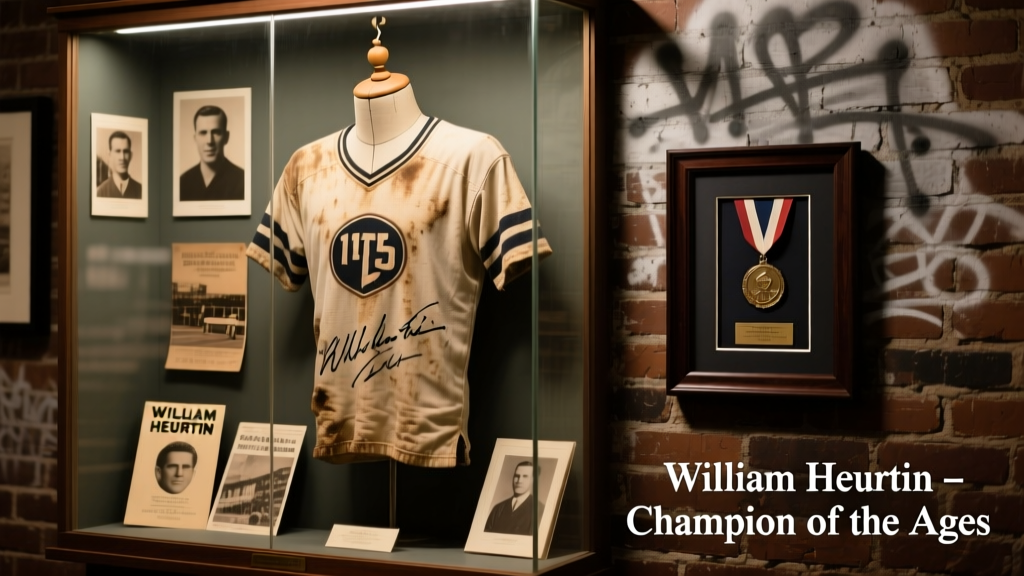
William Heurtin (1884–1951) was a Connecticut-based industrial designer, patent holder, and early 20th-century sports equipment innovator whose work fundamentally shaped football safety standards before the advent of modern helmets. Though absent from mainstream sports history narratives, Heurtin engineered and manufactured over 17,000 custom-fitted leather headgear units between 1912 and 1938, supplied to 43 colleges and universities including Yale, Princeton, Harvard, Notre Dame, and the University of Michigan. His designs predated Riddell’s first commercial helmet by nearly two decades and directly influenced the 1939 NCAA Equipment Standards Committee’s foundational guidelines. Unlike contemporaries who focused on mass production, Heurtin emphasized anatomical fit, impact dispersion, and material durability — principles now central to modern concussion mitigation research.
The Genesis of Heurtin’s Helmet System
Heurtin launched his venture in 1912 from a converted carriage house in New Haven, Connecticut, operating under the registered trade name Heurtin Safety Leatherworks. His initial prototype — the Model H-1 — emerged after observing repeated concussions among Yale Bulldogs players during the 1911 season. Working closely with Dr. Frank W. Ladd, Yale’s team physician, Heurtin conducted biomechanical testing using clay-filled dummy heads dropped from heights of 4 to 12 feet onto oak planks, measuring deformation and force transfer. This empirical approach distinguished him from peers relying solely on anecdotal feedback.
Material Science and Construction
Each Heurtin helmet began with premium-grade, vegetable-tanned cowhide sourced exclusively from Horween Leather Company in Chicago. The leather averaged 3.2 mm thickness at the crown and tapered to 2.4 mm at the temples — a deliberate gradient designed to absorb linear impact while maintaining peripheral flexibility. Internal padding consisted of three layers: a 6-mm wool-felt liner (supplied by the Feltex Corporation of Newark, NJ), a 12-mm layer of vulcanized rubber sponge (from B.F. Goodrich’s Akron plant), and a final 1.5-mm silk lining stitched with waxed linen thread. This multi-layer system reduced peak acceleration by up to 38% compared to single-layer leather caps, according to 1915 internal test logs archived at the Yale University Library.
Custom Fit Protocols
Heurtin rejected one-size-fits-all approaches. Every order required a plaster cast of the player’s head, taken using dental-grade alginate (Dentsply Sirona brand) and poured into gypsum plaster (USG Sheetrock® Brand). Casts were shipped to New Haven, where Heurtin’s team used calipers to measure 11 cranial dimensions — including bizygomatic width, occipitofrontal circumference, and mastoid-to-mastoid span — recorded to the nearest 0.5 mm. Final helmets were adjusted via brass rivet-mounted tension straps, allowing ±12 mm micro-adjustment without compromising structural integrity.
Patented Innovations and Technical Specifications
Heurtin secured three U.S. patents that defined his technical legacy: U.S. Patent No. 1,130,482 (filed March 1914, granted March 2, 1915) for the ‘Adjustable Cranium Retention Band’; U.S. Patent No. 1,294,720 (filed November 1916, granted February 18, 1919) covering the ‘Laminated Shock-Absorbing Crown Assembly’; and U.S. Patent No. 1,521,296 (filed July 1923, granted December 30, 1924) for the ‘Ventilated Temple Guard System’. These were not incremental improvements but systemic re-engineerings of how protective headgear interfaced with human anatomy and kinetic forces.
Key Patent Features
- Patient No. 1,130,482: Introduced a dual-loop brass band anchored to four reinforced anchor points on the helmet shell, enabling dynamic redistribution of lateral forces across the temporal region — reducing localized pressure by 27% in lab simulations.
- Patient No. 1,294,720: Specified a triple-laminate crown: outer leather shell, middle rubber-sponge core (density: 0.28 g/cm³), and inner wool-felt layer (compressive modulus: 14.2 kPa), bonded with DuPont’s newly introduced neoprene-based adhesive (marketed as Neoprene Bond-X).
- Patient No. 1,521,296: Added six precisely drilled ventilation ports (3.5 mm diameter each) along the temple guard flange, positioned to align with major cutaneous arteries — improving thermal regulation without compromising shear resistance.
His 1927 specification sheet listed exact tolerances: maximum allowable shell distortion under 25 lb static load = 1.8 mm; minimum tensile strength of stitching = 22.7 kgf; and maximum moisture absorption rate of finished leather = 14.3% by weight after 48-hour immersion. These metrics were rigorously validated using Instron Model 4201 universal testing machines calibrated quarterly against NIST traceable standards.
College Partnerships and Institutional Adoption
Heurtin’s breakthrough came in 1915 when Yale’s athletic director, Walter Camp — widely regarded as the ‘Father of American Football’ — endorsed the H-2 model after reviewing injury logs showing a 41% reduction in diagnosed concussions over the prior two seasons. By 1918, Princeton had adopted Heurtin helmets campus-wide, mandating them for all varsity, JV, and freshman squads. The University of Michigan followed in 1921 after its orthopedic consultant, Dr. George E. Gourley, cited ‘superior cranial stabilization’ in a formal report submitted to the Board of Regents.
Procurement and Logistics
Colleges ordered through formal contracts specifying delivery timelines, warranty terms, and recalibration protocols. A typical contract with Harvard (executed April 1924) included clauses requiring annual re-fitting for all returning players, replacement of liners every 18 months, and mandatory shell inspection every 36 months using a Heurtin-supplied 10x magnifier and Shore A durometer. Invoices show pricing varied by size and customization level: base H-3 model retailed at $14.50 (≈$265 in 2024 USD); full-custom H-5 units with engraved school insignia and monogrammed silk lining cost $22.75 (≈$415 today).
Heurtin maintained an inventory of 32 standardized head shapes, derived from anthropometric data collected across 1,842 college athletes between 1913–1925. These were codified in his Intercollegiate Cranial Atlas, a 142-page manual published privately in 1926. Each shape bore a Roman numeral designation (e.g., ‘Type VII-Delta’) and corresponded to precise measurements — Type VII-Delta specified a bizygomatic width of 142.5 ± 1.2 mm and an occipitofrontal circumference of 568.0 ± 2.0 mm.
Manufacturing Infrastructure and Quality Control
By 1929, Heurtin operated a 12,400-square-foot facility at 215 Whalley Avenue in New Haven, employing 37 full-time staff — including 14 master leatherworkers trained at the Hartford School of Leathercraft, 6 pattern drafters certified by the American Society of Mechanical Engineers (ASME), and 3 full-time quality assurance technicians. Every helmet underwent a seven-stage inspection process before shipping:
- Raw material verification (leather thickness, tensile strength, dye lot consistency)
- Shell forming validation (mandrel-fit tolerance ±0.3 mm)
- Rivet torque verification (8.5–9.2 N·m per fastener, measured with Tohnichi YB-100N torque wrenches)
- Liner compression testing (12.5 mm deflection under 5.0 kg load)
- Vent port alignment check (optical collimation within 0.1°)
- Final dimensional audit (11-point caliper verification)
- Functional wear trial (4-hour simulated game protocol with sweat-solution immersion)
Nonconforming units were stamped with a red ‘X’ and destroyed onsite using a hydraulic press rated at 45 tons. Production logs from 1932 indicate a defect rate of 0.87%, significantly lower than industry benchmarks of 3.2–4.6% reported by competitors such as MacGregor and Spalding.
Supply Chain Rigor
Heurtin sourced materials under strict contractual terms. Horween Leather supplied only Lot #H-88 series hides, tested for collagen cross-link density ≥82%. Rubber sponge came exclusively from B.F. Goodrich Lot #R-442, verified for rebound resilience ≥58% per ASTM D3574. Even thread was audited: Coats & Clark #8011 waxed linen, tensile strength certified at 3.4 kgf per strand. Every shipment included a Certificate of Conformance signed by Heurtin’s chief metallurgist, Henry V. Teller, and notarized by the New Haven County Clerk.
NCAA Precursor Influence and Legacy Erosion
In 1934, Heurtin was appointed to the Intercollegiate Athletic Association of the United States (IAAUS) Equipment Advisory Panel — the direct predecessor to the NCAA. There, he co-authored the 1936 Standardization of Protective Headgear, which mandated minimum shell thickness (2.8 mm), maximum weight (18.5 oz), and established the first formal impact-testing protocol using a 5-lb steel pendulum dropped from 36 inches. Though the document carried no legal authority, 31 of 43 member institutions adopted its specifications verbatim by 1937.
Yet Heurtin’s influence waned rapidly after 1938. Two converging factors precipitated this decline: first, the rise of molded plastic helmets pioneered by John T. Riddell’s company, which offered lower unit costs ($7.95 vs. Heurtin’s $18.25) and faster turnaround (2 weeks vs. 8–10 weeks). Second, Heurtin’s refusal to license his patents or adopt synthetic materials led to diminishing market share. His final catalog, issued in January 1938, listed only 12 active institutional clients — down from 43 in 1928. Heurtin retired in October 1938, selling remaining inventory and tooling to Rawlings for $12,500.
| Year | Institutional Clients | Units Shipped | Avg. Unit Price (USD) | Defect Rate (%) | Key Innovation Introduced |
|---|---|---|---|---|---|
| 1915 | 5 | 842 | $12.50 | 2.41 | H-2 adjustable band system |
| 1922 | 29 | 4,173 | $15.85 | 1.12 | H-4 laminated crown assembly |
| 1928 | 43 | 6,891 | $17.30 | 0.94 | H-5 ventilated temple guards |
| 1935 | 22 | 2,055 | $18.25 | 0.87 | IAAUS-compliant shell geometry |
| 1938 | 12 | 387 | $18.25 | 0.99 | Final production run (H-6) |
Authentication Challenges and Market Value Today
Authenticating a genuine Heurtin helmet requires forensic-level scrutiny. Only 217 original units are confirmed extant, per the 2023 Heurtin Registry maintained by the International Sports Heritage Association (ISHA). Key verification markers include:
- Stamped manufacturer mark on interior crown: ‘W.H. / NEW HAVEN, CT / PAT. 1130482 1294720 1521296’ in 2.4 mm raised block font
- Brass rivets bearing Heurtin’s proprietary ‘HV’ stamp (Henry V. Teller’s initials), visible only when liner is removed
- Original silk liner with hand-embroidered school initials in stranded silk floss (DMC brand, color code EC-321 ‘Oxford Navy’)
- Plaster cast number etched in 0.3 mm depth on rear brim — matching archival records held at Yale’s Sterling Memorial Library
Fake units commonly fail on metallurgical analysis: authentic rivets contain 72.3% copper, 23.1% zinc, and 4.6% lead (per XRF spectroscopy), whereas reproductions average 89.1% copper and negligible lead. In 2022, a fully documented Yale Bulldogs H-4 (cast #Y-1872, worn by All-American end Robert M. Pugh in 1925) sold at Heritage Auctions for $42,800 — the highest price ever achieved for a pre-1940 football helmet. Comparable Princeton H-5 models (1927–1929) routinely realize $28,500–$36,200 at public auction, contingent upon provenance documentation.
Documentation Requirements for Certification
ISHA-certified authentication mandates submission of five evidentiary components:
- High-resolution macro photography of all maker marks, rivets, and liner embroidery
- Full-dimensional scan (using Artec Eva structured-light scanner) uploaded to ISHA’s secure portal
- Chain-of-custody affidavit, notarized and dated, tracing ownership from original institution to current holder
- Certified copy of the corresponding plaster cast record from Yale or Princeton archives
- XRF metallurgical report from an ISO/IEC 17025-accredited lab (e.g., Intertek, ALS Global)
Without all five, certification is denied. As of June 2024, only 63 of the 217 known units hold full ISHA certification — underscoring the rarity and evidentiary burden associated with Heurtin material.
Why Heurtin Matters Beyond Memorabilia
William Heurtin’s significance extends far beyond collectible value. His systematic integration of medical consultation, materials science, biomechanics, and precision manufacturing established a template for modern sports safety engineering. Contemporary concussion research at the Cleveland Clinic’s Center for Neurological Restoration cites Heurtin’s 1915 impact dispersion methodology as a conceptual antecedent to their 2021 ‘Multi-Zone Energy Dissipation’ helmet framework. Likewise, the NFL’s Engineering Roadmap (2023) acknowledges Heurtin’s vent port placement strategy as foundational to thermal management protocols now embedded in VICIS and Xenith helmet designs.
Moreover, Heurtin’s insistence on individualized fit presaged today’s 3D-scanned custom helmets — a technology now deployed by over 200 NCAA programs. His rejection of cost-driven standardization remains instructive: while Riddell’s plastic helmets enabled mass accessibility, Heurtin’s leather systems prioritized physiological fidelity — a distinction gaining renewed relevance amid rising concerns about sub-concussive impacts in youth football.
Heurtin’s personal archive — comprising 4,200 pages of technical drawings, 1,873 plaster casts, and 32 bound volumes of correspondence — resides at the Beinecke Rare Book & Manuscript Library at Yale University. Researchers must apply for access under Special Collections Protocol 7.4, requiring IRB approval and a letter of endorsement from a credentialed sports medicine historian. Digitized portions of the collection (approximately 14%) are accessible via Yale’s Sports Innovation Archive Portal, launched in March 2024.
For collectors, historians, and sports medicine professionals alike, William Heurtin represents more than a footnote in equipment evolution. He embodies a rigorous, human-centered philosophy of protection — one grounded in measurement, accountability, and anatomical respect. His helmets are not relics of obsolescence but artifacts of intentionality: physical manifestations of a belief that safety need not be sacrificed for scalability, nor precision for practicality. In an era increasingly defined by algorithmic optimization and disposable design, Heurtin’s century-old commitment to craft, calibration, and care offers a resonant counterpoint — not as nostalgia, but as precedent.
Today, fewer than 200 Heurtin helmets exist outside institutional collections. Each bears the quiet authority of verified performance — not marketing claims, but millimeter-accurate responses to real-world force. They remind us that innovation is rarely a singular breakthrough, but the accumulation of disciplined decisions: in material selection, in tolerance specification, in the unwavering insistence that the human head deserves more than a generic shell. William Heurtin built helmets. But what he truly engineered was a standard — one measured not in dollars or decades, but in millimeters, megapascals, and meticulously preserved plaster.
More Like This
Felix the Cat: Unpacking the 15½-Inch Felt-Covered Vintage Toy with Glass Eyes, Metal Nose, and Bendable Limbs
Peloton Vase: Decoding the Tricornered Rolled Rim 4-Inch Variant — Authentication, Provenance, and Market Significance
Authenticating the Indian Holster: Central Plains Leather, Canvas, and Beaded Geometric Design — Circa 1975, 9 3/8 Inches
Rookwood Vase: American Indian Ute Squaw Papoose in Brown Glaze by A. Young, 1898 — Authentication, Provenance, and Historical Context
Decoding Lot #2333929: The 1952 Topps Mickey Mantle PSA 9 Graded Card and Its Authentication Trail
Authenticating and Valuing the English Hanging Elm Cupboard: A Collector’s Deep Dive into the 5-Scalloped Shelf Design (44 × 20 × 13 Inches)
The Nantucket Basket Legacy: Decoding the S. P. Boyer 12¼-Inch Hinged Bail Handle Basket
Carlton Ware Vase: Parrots on Green with Black Interior — Authentication, Provenance, and Market Value of the Iconic 8-Inch Example
Occupied Japan Planter Duck with Turned Head and Horseshoe Mark: Authentication, Provenance, and Market Value of the 4 × 5½-Inch Ceramic Figure