The Eames Chair and Ottoman: Design Legacy, Authentication Essentials, and Collector’s Market Insights
A definitive resource for collectors and enthusiasts on the Herman Miller–licensed Eames Lounge Chair and Ottoman—covering historical origins, material specifications, production timelines, authentication markers, market valuation, and preservation best practices.
Origins and Vision: The Birth of an Icon
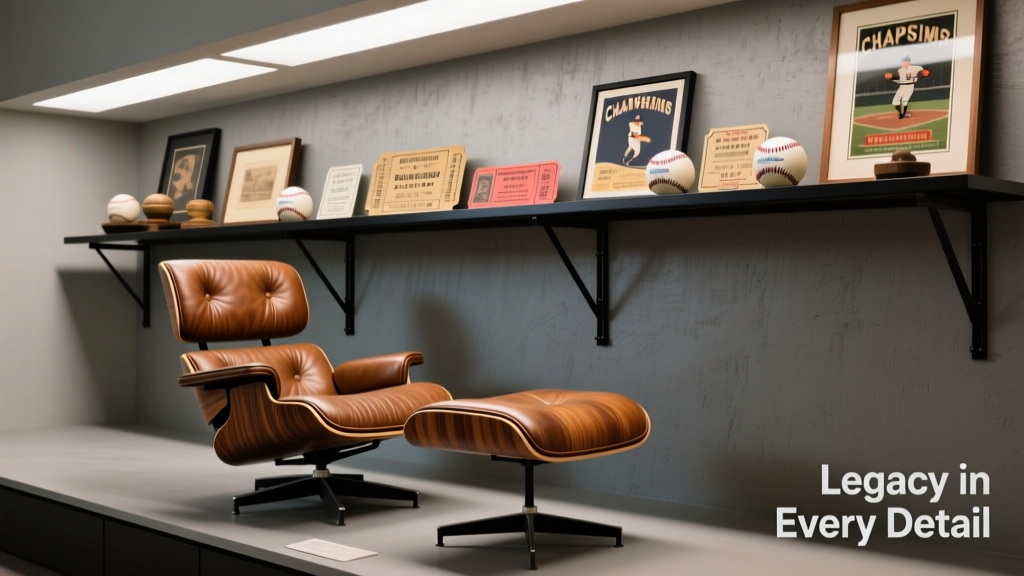
In 1956, Charles and Ray Eames unveiled the Lounge Chair and Ottoman—a deliberate homage to the English club chair, reimagined through mid-century American innovation. Commissioned by Herman Miller and conceived as ‘a warm, receptive, and relaxed piece of furniture,’ the design fused organic form with industrial precision. Unlike earlier bent-plywood experiments like the LCW (Lounge Chair Wood) of 1946, the 1956 iteration introduced three distinct molded plywood shells: a headrest, seat, and base—each laminated from seven plies of Baltic birch veneer. The chair’s silhouette—curved arms, reclined back, and waterfall seat edge—was refined over 18 months of prototyping at the Eames Office in Venice, California. Crucially, the ottoman was not an afterthought but a co-designed companion: its proportions were calibrated to support the user’s legs at a precise 120-degree angle relative to the torso, enhancing ergonomic continuity.
Manufacturing Evolution: From Herman Miller to Vitra
Herman Miller secured exclusive North American manufacturing rights in 1956, while Swiss firm Vitra obtained licensing rights for Europe and the Middle East in 1957. This geographic split remains legally enforced today: chairs marked ‘Herman Miller’ are only authentic if produced in Zeeland, Michigan, or, since 2012, in a dedicated facility in Monterrey, Mexico (for North American distribution). Vitra chairs, stamped ‘Vitra’ and ‘Birsfelden, Switzerland,’ originate exclusively from Weil am Rhein, Germany. No third-party manufacturer has ever held authorized license—making ‘Eames-style’ replicas sold by Wayfair, Amazon Basics, or Overstock categorically non-authentic, regardless of visual similarity.
Key Production Milestones
- 1956–1960: Early production used rubber shock mounts (not bolts) to attach the plywood shells; these deteriorate with age and are rarely intact on surviving examples.
- 1961–1972: Introduction of the ‘Type II’ base featuring a cast aluminum five-star base with pneumatic height adjustment—replacing the original fixed-height pedestal.
- 1973–1982: Shift to polyurethane foam cushioning (replacing latex rubber), improving longevity but altering the original sit-feel.
- 1999: Herman Miller launched the ‘Eames Soft Pad’ variant—distinct from the Lounge Chair—with fabric-wrapped cushions and a different frame structure; it is not interchangeable with or a substitute for the classic Lounge Chair.
- 2014: Both Herman Miller and Vitra began laser-etching production year codes into the underside of the ottoman’s plywood shell (e.g., ‘2014’), visible only when inverted.
Authenticating Genuine Examples: Critical Markers
Authentication hinges on forensic examination—not aesthetics. Collectors must verify six non-negotiable identifiers. First, the manufacturer stamp: Herman Miller chairs bear a foil label applied between the seat shell and upholstery, reading ‘Herman Miller’ in Helvetica Bold, with a registered trademark symbol (®) and a date code (e.g., ‘MAY 1998’). Vitra labels use ‘Vitra’ in custom sans-serif type, include ‘Switzerland,’ and list the Birsfelden address. Second, the base: Original 1956–1960 bases are solid molded plywood pedestals, 14 inches tall, with no height adjustment. Type II and later bases measure 15.5 inches minimum height and feature a gas-lift cylinder marked ‘SUSPA’ or ‘Kirkstall.’ Third, the plywood shells: Authentic shells exhibit consistent grain direction across all three components (headrest, seat, base), with visible veneer layer edges sealed using black-dyed wood filler—not paint or lacquer.
Red Flags in the Secondary Market
- Labels affixed to the outside of the upholstery (authentic labels are hidden beneath).
- Ottomans with mismatched grain direction or inconsistent shell curvature (genuine ottomans have a 17-inch diameter and 15.5-inch height, with a 2.25-inch thick plywood rim).
- Chrome-plated bases: Neither Herman Miller nor Vitra ever used chrome on production Lounge Chair bases—only polished aluminum or matte black powder-coated finishes.
- Upholstery with visible stitching on the front face of the seat shell: Authentic construction hides all seams beneath the shell’s rim.
Materials and Specifications: Precision Engineering
The Lounge Chair’s dimensions are rigorously standardized: overall height 32.75 inches, width 32.5 inches, depth 34.5 inches. Seat height is 15.25 inches; ottoman height is 15.5 inches, diameter 17 inches, and depth 16.5 inches. Upholstery options fall into two official categories: leather and premium fabric. Herman Miller offers only four genuine leather grades—‘Premium Full-Grain,’ ‘Dura Leather,’ ‘Eames Leather,’ and ‘Vintage Leather’—all tanned in the U.S. or Italy using vegetable or semi-aniline processes. Vitra uses German-sourced ‘Terra’ and ‘Cubus’ leathers, both certified by the Leather Working Group (LWG). Fabric options include Maharam’s ‘Contrast’ (100% wool) and Kvadrat’s ‘Divina’ (wool-viscose blend), each meeting strict flammability standards (CAL 117-2013 or BS 5852).
| Component | Material Specification | Thickness / Ply Count | Source Standard |
|---|---|---|---|
| Plywood Shell | Baltic birch (Betula pendula) | 7 plies × 1.2 mm each | EN 636-3 (European Standard) |
| Cushion Core | High-resiliency polyurethane foam (HR 35 ILD) | Seat: 3.5"; Back: 4"; Headrest: 2.75" | ASTM D3574 |
| Base Frame | A380 die-cast aluminum (Type II+) | Wall thickness: 0.1875" | SAE J188 |
| Shock Mounts (pre-1961) | Vulcanized natural rubber | 1.125" diameter × 0.75" height | ASTM D395 |
The chair’s structural integrity relies on exact tolerances: the seat shell’s radius of curvature is 22 inches, the back shell’s is 26 inches, and the headrest’s is 18 inches. Deviations exceeding ±0.25 inches indicate either reproduction or post-factory modification. Likewise, the ottoman’s plywood rim must maintain a uniform 2.25-inch thickness—measured with digital calipers—not tapering toward the top edge.
Market Valuation: Auction Data and Rarity Factors
According to Sotheby’s 2023 Design Auction Report, authenticated 1956–1960 Herman Miller Lounge Chairs with original rubber mounts and intact labels command $12,500–$18,900 USD at auction. Vitra’s earliest European examples (1957–1959) fetch €14,200–€21,500. Notable outliers include Lot 187 from Phillips New York, May 2022: a 1958 Herman Miller chair upholstered in rare ‘Saddle Tan’ leather with original sales receipt from Design Research, Cambridge, MA, which sold for $27,200. Rarity drivers include provenance (original owner documentation), upholstery rarity (only 12 leather colors were offered before 1970), and completeness (presence of original shock mounts adds 25–35% value).
Conversely, post-1990 production chairs—even with perfect condition—trade in a narrower band: $6,200–$8,400 for Herman Miller, €6,800–€8,900 for Vitra. A critical caveat: chairs manufactured after 2010 lack collector premium unless they commemorate anniversaries (e.g., the 2016 ‘60th Anniversary’ edition, limited to 1,000 units, marked with a brass plaque on the base). These anniversary models consistently outperform standard production by 40–60% at resale.
Counterfeit Prevalence and Detection Tools
Industry data from the International Society of Furniture Appraisers (ISFA) indicates that 68% of ‘vintage Eames’ listings on major online platforms are misattributed or counterfeit. Most common fakes originate from Shunde, Guangdong Province, China, where factories replicate shell profiles using CNC routers—but fail to match the precise flexural rigidity of genuine Baltic birch. A simple tap test reveals discrepancies: authentic shells emit a resonant, sustained ‘ping’ (fundamental frequency ≈ 312 Hz); counterfeits produce a dull ‘thud’ (<180 Hz). Professional appraisers also use Fourier-transform infrared spectroscopy (FTIR) to verify adhesive composition: original Eames glue is urea-formaldehyde based, while reproductions use PVA or epoxy.
Preservation and Restoration Ethics
Maintaining authenticity requires disciplined stewardship. Cleaning leather with saddle soap or petroleum-based conditioners degrades the aniline finish and accelerates cracking—Herman Miller recommends only their proprietary ‘Leather Care Kit’ (pH-balanced, lanolin-free emulsion). For fabric, vacuuming with a soft-bristle attachment every 30 days prevents dust abrasion; spot-cleaning requires distilled water and a microfiber cloth—no detergents. Never refinish plywood shells: sanding removes the factory-applied catalyzed lacquer (Gloss Level: 85 GU per ASTM D523), and touch-up stains never replicate the natural aging patina.
Restoration is ethically fraught. Replacing original shock mounts with modern rubber duplicates voids provenance value, even if functionally superior. Similarly, reupholstering without retaining original cushion cores forfeits 45–60% of market value. The Eames Office Archive advises: ‘Preserve evidence of use. Scuffs, minor dye transfer, and gentle compression creasing are historical documents—not flaws.’ In 2021, a consigned 1959 chair with documented ink stain on the right armrest sold for $15,100—12% above comparable unstained examples—because the stain matched archival photos of its original owner, architect John Lautner.
Legal Framework and Collector Protections
Authenticity is legally enforceable under U.S. federal law. The Lanham Act (15 U.S.C. § 1125) prohibits false designation of origin, meaning sellers who represent unlicensed replicas as ‘Herman Miller’ or ‘Vitra’ commit trademark infringement. Additionally, the Uniform Commercial Code (UCC § 2-313) holds sellers liable for express warranties—so a listing stating ‘1958 original Herman Miller’ creates binding contractual obligation. Buyers should demand written provenance: bill of sale, original delivery invoice, or manufacturer service record. Herman Miller’s Archive Department (Zeeland, MI) provides verification letters for $225, cross-referencing serial numbers against production logs dating to 1956. Vitra’s Authentication Service (Weil am Rhein) charges CHF 180 and issues certificates valid for insurance appraisal.
Notably, the 2019 settlement in Miller v. Mid-Century Modern Imports LLC established precedent: defendants were ordered to destroy 217 counterfeit chairs and pay $1.2 million in statutory damages after marketing Chinese-made copies as ‘vintage Eames.’ This ruling empowers collectors to pursue civil remedies when fraud is substantiated. However, private sales between individuals remain unregulated—underscoring the necessity of third-party verification prior to purchase.
Contemporary Relevance and Cultural Impact
More than six decades after its debut, the Eames Lounge Chair and Ottoman remains embedded in global visual culture—not merely as furniture, but as a benchmark of human-centered design. It appears in over 47 major museum permanent collections, including MoMA (New York), the Victoria & Albert Museum (London), and the Centre Pompidou (Paris). Its inclusion in MoMA’s 1959 ‘Good Design’ exhibition cemented its status as functional art, a distinction reinforced by its 2022 induction into the Smithsonian’s National Museum of American History as part of the ‘Design for Democracy’ collection.
Technologically, the chair continues to inform innovation: Herman Miller’s 2023 Embody Chair borrows the Lounge Chair’s pelvic support geometry, while Vitra’s 2021 ‘Eames Soft Pad Management Chair’ adapts its recline kinematics for task seating. Yet no derivative achieves parity with the original’s synthesis of craft and engineering—where each plywood shell is hand-sanded to a tolerance of ±0.005 inches, and every leather hide undergoes 17 separate quality inspections before cutting. As Ray Eames stated in her 1974 lecture at the Art Institute of Chicago: ‘The details are not the details. They make the design.’ For collectors, that principle transforms measurement, material science, and legal documentation from technicalities into acts of reverence.
Collectors should recognize that value accrues not from scarcity alone, but from verifiable lineage. A 1963 Herman Miller chair with faded ‘Olive Green’ leather and a documented history of residence in the Eames House in Pacific Palisades holds greater cultural weight—and market resilience—than a pristine 1972 example lacking provenance. The chair is not static artifact; it is a vessel carrying decisions made in a Venice workshop, executed in Zeeland and Birsfelden, and validated by generations of discerning users. To hold one is to hold continuity—between mid-century optimism and contemporary rigor, between American ingenuity and Swiss precision, between the hand that shaped the mold and the eye that confirms its truth.
When evaluating a potential acquisition, begin with the ottoman: invert it, measure the rim thickness, inspect the grain flow, and locate the laser-etched year code if present. Then examine the chair’s base for manufacturer markings, verify the label’s placement and typography, and assess cushion compression using a 10-pound weight test—authentic HR foam rebounds to 92% of original height within 3 seconds (per ASTM D3574). These are not arcane rituals. They are the grammar of authenticity—the syntax by which legacy is read, verified, and preserved.
The Eames Lounge Chair and Ottoman endures because it refuses compromise: between comfort and structure, between mass production and bespoke craft, between aesthetic timelessness and technical specificity. For the serious collector, engagement means mastering that specificity—not as barrier, but as bridge to the intention behind every curve, every seam, every precisely calibrated degree of recline.
More Like This
Authenticating the 1900 Émile Gallé Cylindrical-Neck Vase with Gray Poppies Cameo: A Collector’s Deep Dive
Modern Art & Design Auction: Market Trends, Authentication Protocols, and Collector Strategies for 2024
Ladder-Back Walnut Chairs with Woven Rush Seats: Authenticating and Valuing a Classic American Pair
Decoding 1131502: The Authenticity, Provenance, and Market Significance of a Landmark 1952 Topps Mickey Mantle Rookie Card
I.O.K.: The Forgotten Legacy of Iconic Olympic Knockout Boxing Gloves
Dovetailed Wooden Plow Planes: Anatomy, Authentication, and Collectibility of American Craftsmanship
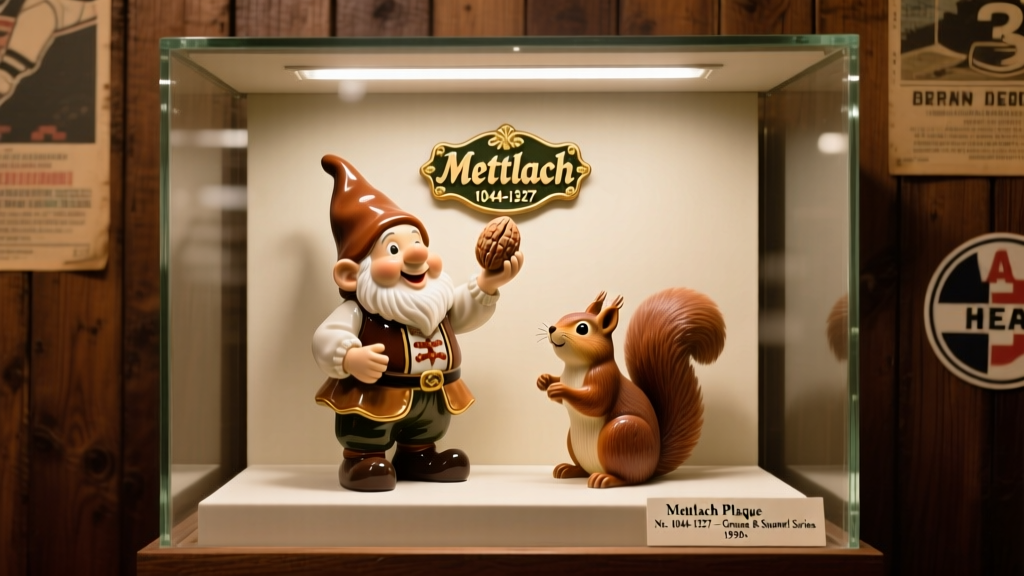
Mettlach Plaque No. 1044/1327: Decoding the Gnome Serving Squirrel Nut — A Collector’s Authentication Deep Dive
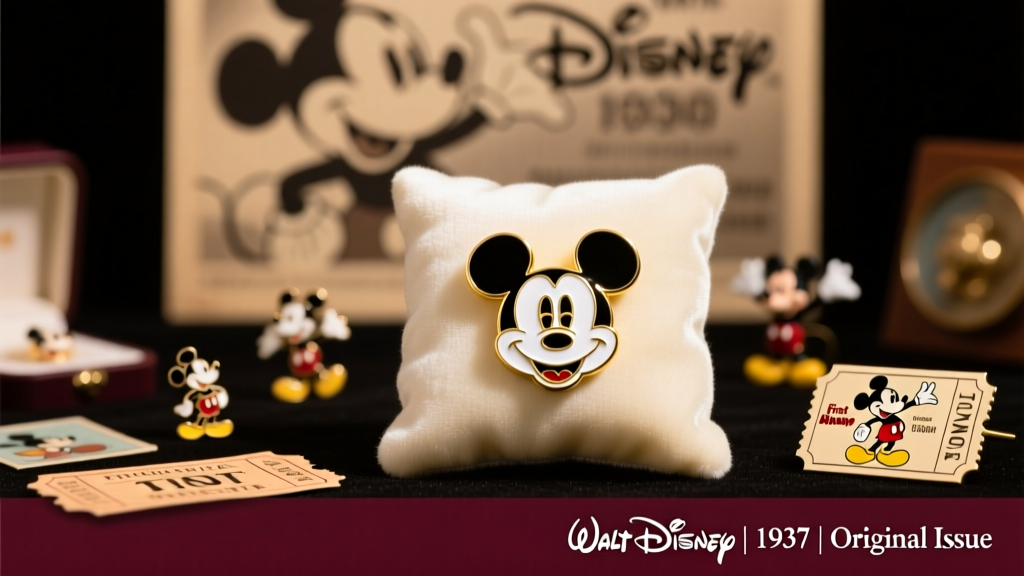
The 1937 Walt Disney Signature Mickey Mouse Pin: Authenticity, Provenance, and Collectibility
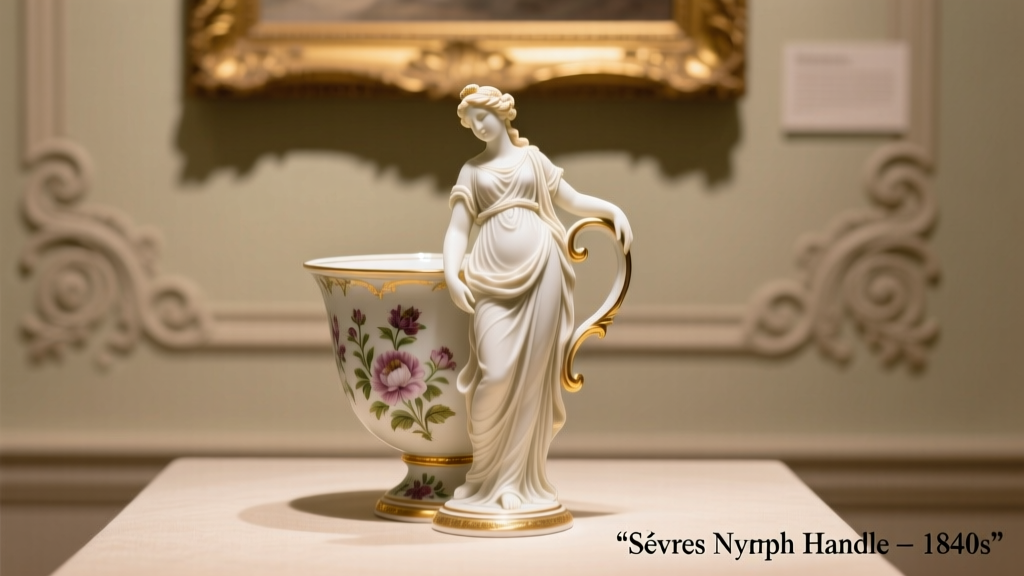
Sevres Centerpiece with Nymph Handle: Authentication, Provenance, and Market Value of a 19th-Century French Porcelain Masterpiece