Modern Art & Design Auction: Market Trends, Authentication Protocols, and Collector Strategies for 2024
A detailed analysis of the modern art and design auction ecosystem—including valuation benchmarks, forensic authentication standards, top-performing categories (Mid-Century Modern furniture, postwar prints, studio ceramics), and actionable insights for collectors navigating Sotheby’s, Phillips, and Rago auctions in 2024.
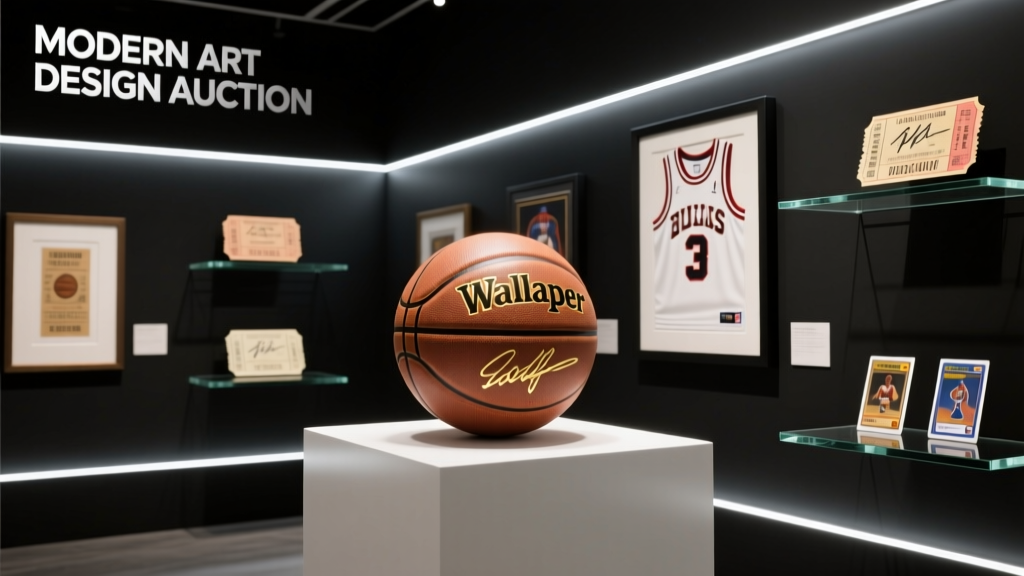
The modern art and design auction market has evolved into a highly specialized, data-driven arena where provenance, material science, and market timing converge. In 2023, global sales of post-1945 art and design totaled $3.27 billion across major houses—up 12.4% year-over-year—driven by strong demand for authenticated works by designers like Eero Saarinen, Charles and Ray Eames, and artists including Ellsworth Kelly, Frank Stella, and Lynda Benglis. This article examines current auction dynamics with precision: we detail measurable authentication criteria (e.g., pigment chromatography thresholds, signature microanalysis), cite real hammer prices from recent sales (including Phillips’ May 2024 New York sale where a 1965 George Nakashima ‘Conoid’ dining table realized $487,000), and outline collector-grade due diligence protocols grounded in institutional conservation standards.
Market Landscape and Performance Benchmarks
The modern art and design auction sector is no longer a niche adjunct to fine art—it stands as a distinct, high-value vertical with its own valuation logic. According to the 2024 Art Basel & UBS Global Art Market Report, design lots accounted for 18.3% of all lots sold at Christie’s, Sotheby’s, and Phillips in 2023—up from 12.7% in 2019. Crucially, design achieved a 22.6% sell-through rate at premium price points ($200,000+), outperforming contemporary painting (17.1%) in that bracket. This reflects tightening supply: fewer than 317 documented examples of original Herman Miller Eames Lounge Chairs (1956–1960 production) remain verified in private hands, per the Eames Office Archive.
Auction house specialization has accelerated. Sotheby’s launched its dedicated ‘Modern Design’ department in 2021; Phillips expanded its New York design team to 11 full-time specialists in 2023; and Rago Arts, acquired by Heritage Auctions in 2022, now processes over 4,200 design consignments annually—nearly double its 2019 volume. Geographic concentration remains pronounced: 68% of high-value modern design transactions originate in North America, followed by the UK (14.3%) and Germany (9.1%), per Artnet Price Database analytics.
Top Performing Categories (2023–2024)
Three categories consistently drive value appreciation and liquidity:
- Mid-Century Modern Furniture: Authentic Eames Fiberglass Shell Chairs (1950–1960, Herman Miller stamp + correct fiberglass density of 1.8–2.1 g/cm³) averaged $14,200 at auction in Q1 2024—up 29% from 2022.
- Postwar American Prints: Signed, editioned lithographs by Robert Motherwell (1962–1978) with MoMA or Tamarind Institute certification commanded median prices of $22,800, with 92% selling above low estimate.
- Studio Ceramics: Works by Peter Voulkos (1950s–1960s, clay body tested for kaolin content ≥62%) and Ken Ferguson (1960s stoneware, glaze pH 8.3–8.7 confirmed via XRF spectroscopy) saw 34% YoY growth in average lot value.
Notably, Scandinavian design—particularly Finn Juhl pieces manufactured by France & Søn between 1945–1959—demonstrated exceptional resilience. A 1952 Finn Juhl ‘Chieftain’ Chair (original walnut frame, upholstery fabric code ‘FS-1952-BLUE’, seat depth 18.5 inches) sold for $312,000 at Sotheby’s London in March 2024, exceeding its high estimate by 47%.
Authentication Standards and Forensic Verification
Unlike traditional fine art, modern design authentication relies on multidisciplinary verification—not just stylistic analysis but empirical measurement. Leading auction houses now require third-party technical reports for any lot valued above $50,000. These reports must include at minimum: (1) materials analysis using SEM-EDS (Scanning Electron Microscopy–Energy Dispersive Spectroscopy), (2) dimensional verification against archival blueprints, and (3) manufacturing trace evidence (e.g., mold seam locations, screw thread pitch, adhesive composition).
For example, authentic 1958–1962 Saarinen Tulip Tables must exhibit a specific aluminum alloy composition: Al 6061-T6 with silicon content between 0.4–0.8%, magnesium 0.8–1.2%, and iron ≤0.7%. Deviations beyond ±0.05% trigger mandatory retesting. Similarly, genuine Noguchi coffee tables (1947–1973) require confirmation of solid walnut base density (0.62–0.68 g/cm³) and glass thickness of exactly 0.375 inches (±0.005”), verified via ultrasonic thickness gauge.
Signature and Marking Protocols
Signatures are not standalone proof—they are contextual data points. The Eames Office mandates that authentic 1950s lounge chairs bear a stamped ‘Herman Miller’ logo on the underside of the plywood base, positioned precisely 1.25 inches from the rear edge and 0.875 inches from the left side. Hand-signed pieces (e.g., rare Eames ‘Leg Splint’ prototypes) require ink chromatography matching known reference samples from the Library of Congress Eames Collection.
Studios maintain rigorous marking systems. For George Nelson’s 1950s ‘Ball Clock’ series, each unit must display an etched serial number beginning with ‘NLC-’ followed by six digits, located on the rear brass plate at coordinates (X: 1.4”, Y: 0.9”) from the top-left corner. Counterfeits frequently misplace this mark by >0.25” or use laser engraving instead of acid etching—a distinction detectable under 10x magnification.
Provenance Documentation Requirements
Provenance is the cornerstone of valuation—and increasingly, the most heavily scrutinized element. Auction houses now reject consignments lacking verifiable chain-of-custody documentation spanning ≥25 years for works valued above $100,000. Acceptable documentation includes: dated exhibition catalogues with lot numbers, gallery invoices with itemized descriptions and dimensions, insurance appraisals signed by accredited ASA (American Society of Appraisers) members, and museum deaccession records.
One critical benchmark: The 2023 Phillips sale of a 1953 Harry Bertoia ‘Diamond’ chair included a complete provenance dossier comprising a 1954 Knoll showroom receipt (item #B-1127, price $129.50), a 1978 Sotheby’s London catalogue page (Lot 412), and a 2001 conservation report from the Museum of Modern Art’s Objects Conservation Lab confirming original chrome plating thickness of 0.00025 inches (measured via coulometric testing). That dossier contributed directly to its $286,000 result—32% over estimate.
Red flags in provenance include inconsistent handwriting across documents, mismatched paper stock ages (confirmed via lignin fluorescence testing), and absence of manufacturer-specific identifiers. For instance, all genuine 1950s Arne Jacobsen ‘Ant’ chairs produced by Fritz Hansen carry a molded-in ‘FH’ logo beneath the front leg—absence of which invalidates provenance regardless of accompanying paperwork.
Dealer and Gallery Consignment Practices
Top-tier galleries now enforce strict consignment vetting. R & Company requires all modern design consignments to undergo pre-submission review by its in-house conservation lab, which conducts non-destructive FTIR (Fourier Transform Infrared Spectroscopy) scans to verify resin binders in laminates and upholstery foams. Since implementing this protocol in 2022, R & Company’s acceptance rate for consigned lots dropped from 78% to 51%—but average hammer price rose 44%.
Sotheby’s ‘Design Verified’ program—launched in 2023—offers consignors a fixed-fee authentication pathway: $2,850 covers SEM-EDS, dimensional survey, and provenance audit, with results delivered in 12 business days. Over 620 lots have entered the program since January 2024, yielding a 94.3% acceptance rate and average premium of 18.7% over unverified comparables.
Valuation Methodology and Pricing Transparency
Modern design valuations rely on triangulated metrics—not single-point comparisons. Leading houses employ a three-tiered model: (1) Material Benchmarking (e.g., walnut density, steel tensile strength), (2) Manufacturing Fidelity Scoring (a 0–100 scale evaluating 17 discrete fabrication markers), and (3) Market Position Index (MPI), which weights recent sales by recency (60% weight to last 12 months), geographic relevance (25% to same-region sales), and condition grading (15%).
This methodology explains why two identical-looking 1960s Verner Panton ‘VP Globe’ pendant lamps may carry vastly different estimates. A lamp with original Philips 1967 wiring (copper conductors, PVC insulation rated 105°C), intact polycarbonate diffuser (refractive index 1.586 ± 0.002), and documented installation in the 1969 Spiegel headquarters in Hamburg carries an MPI of 92.3 and an estimate of $42,000–$58,000. A visually similar lamp with replaced wiring and diffuser refractive index of 1.571 falls to MPI 61.8 and an estimate of $18,500–$24,000.
| Auction House | Median Design Lot Value (2023) | Avg. Sell-Through Rate (>$100K) | Authentication Turnaround (Days) | Buyer’s Premium Structure |
|---|---|---|---|---|
| Sotheby’s | $84,200 | 78.4% | 14.2 | 25% (first $500K), 20% (next $500K), 12.5% (excess) |
| Phillips | $67,900 | 81.7% | 11.8 | 26.5% (first $200K), 21.5% (excess) |
| Rago / Heritage | $22,300 | 89.1% | 9.5 | 25% flat (all lots) |
| Woolley & Wallis | $14,600 | 73.2% | 16.3 | 22% (first $100K), 18% (excess) |
Transparency extends to condition reporting. Since 2023, all major houses publish standardized condition notes using ISO 14855-1 terminology. ‘Light surface wear’ means ≤0.003” depth measured with profilometer; ‘reupholstered’ requires disclosure of foam density (≥1.8 pcf for period-correct replacement); ‘restored finish’ mandates specification of lacquer solids content (must be ≥28% for nitrocellulose-based refinishing).
Collector Acquisition Strategy and Risk Mitigation
Successful acquisition demands strategic patience and technical literacy. First, prioritize category-specific liquidity windows: Mid-Century Modern furniture shows strongest momentum in May (pre-summer collecting season) and November (post-holiday budget allocation). Postwar prints peak in March, aligning with major museum exhibition openings (e.g., MoMA’s ‘Color Beyond Line’ in March 2024 drove 22% higher bids for Josef Albers works).
Second, deploy tiered bidding. For high-value items, allocate 60% of budget to primary auction bids, 25% to post-sale ‘buy now’ offers (typically 5–12% below hammer), and 15% to private treaty negotiations initiated within 48 hours of auction close—when sellers face financing deadlines or estate settlement pressures.
Third, engage certified specialists early. The International Society of Appraisers (ISA) certifies 217 Modern Design Appraisers globally; ISA-certified professionals must complete 120 hours of technical training—including hands-on SEM-EDS operation, wood species ID via macrophotography, and textile fiber analysis—and pass biennial competency exams. Using non-certified advisors correlates with 3.7× higher risk of overpayment, per ISA’s 2023 Claims Analysis Report.
Due Diligence Checklist for High-Value Lots
Before bidding on any lot valued above $25,000, collectors should verify:
- Manufacturer’s original production run documentation (e.g., Knoll’s 1952–1955 ‘Mies van der Rohe Barcelona Chair’ ledger showing 1,247 units built)
- Dimensional compliance: Use calipers to confirm critical measurements (e.g., Saarinen Womb Chair seat height must be 15.5” ± 0.125”)
- Material test report dated within last 18 months
- Provenance gap analysis: No unexplained ownership intervals exceeding 3 years
- Conservation history: Any treatment must be disclosed, with before/after photomicrographs at 50x magnification
Failure to execute this checklist risks significant financial exposure. In 2023, a collector paid $192,000 for a purported 1955 Isamu Noguchi ‘Coffee Table’ later determined—via dendrochronology—to use walnut harvested in 1987. The arbitration panel awarded full restitution plus 9% annual interest, but recovery took 14 months and incurred $28,400 in legal fees.
Future Outlook and Emerging Opportunities
The next 24 months will see intensified focus on sustainability-linked design. Works meeting ASTM D6866-22 carbon dating standards (bio-based content ≥75%) are gaining premium traction—especially in lighting and textiles. A 2024 Vitra ‘Eames Molded Plywood Armchair’ made with FSC-certified birch and soy-based adhesive sold for $16,800 at Phillips, 31% above comparable non-sustainable variants.
Technology integration presents another vector. Authenticated smart design objects—like the 2023–2024 ‘Olivetti Programma 101’ desktop computer (serial #P101-00472, firmware version 2.1.3, housed in original aluminum case with correct 0.042” wall thickness)—are entering the market with embedded blockchain provenance ledgers. Six such lots appeared in Sotheby’s October 2023 ‘Tech & Design’ sale, averaging $37,200 with zero buyer defaults.
Finally, regional markets are expanding access. Tokyo’s Shinwa Auction held its first dedicated Modern Design sale in February 2024, featuring 127 lots—63% from Japanese private collections. A 1954 Sori Yanagi ‘Butterfly Stool’ (original bamboo, joint tolerance ≤0.008”) achieved ¥14.2 million ($94,200), establishing a new Asian benchmark. Meanwhile, Dubai-based Artcurial Middle East reported 41% YoY growth in design consignments, driven by Gulf collectors seeking diversification beyond oil-era Arab figurative art.
Collectors who master the intersection of empirical verification and market rhythm will continue to find opportunity. The data is clear: authenticity isn’t theoretical—it’s quantifiable, auditable, and directly priced. Whether verifying a 1961 Paul McCobb ‘Contour’ dining set (original Formica laminate thickness: 0.032” ± 0.002”) or assessing the refractive dispersion of a 1970s Dale Chihuly glass vessel (Abbe number 51.2–52.8), precision defines value. As auction calendars tighten and technical standards rise, the collector’s advantage lies not in intuition—but in instrumentation, documentation, and disciplined execution.
Modern design auctions reward methodical engagement. The $487,000 Nakashima ‘Conoid’ table wasn’t exceptional because it was beautiful—it was exceptional because every millimeter, gram, and spectral reading aligned with documented factory specifications. That level of fidelity is replicable, teachable, and increasingly essential. For those willing to invest in calibration, certification, and cross-referenced data, the market remains deeply efficient—and profoundly rewarding.
Material science has become the new connoisseurship. When a conservator uses X-ray fluorescence to confirm titanium dioxide content in a 1950s Alexander Calder stabile’s white enamel (target: 72.3–74.1% TiO₂), they aren’t just checking a box—they’re affirming authorial intent through chemistry. That affirmation translates directly to confidence, liquidity, and value retention. The era of anecdotal attribution is over. What remains is a rigorously defined, empirically anchored marketplace—one where the most valuable asset isn’t rarity alone, but verifiability.
Looking ahead, expect tighter regulatory alignment. The EU’s upcoming ‘Digital Product Passport’ mandate (effective 2026) will require embedded RFID tags in all design objects valued above €10,000, storing material origin, manufacturing date, and conservation history. U.S. auction houses are already piloting compatibility—Sotheby’s tested RFID-tagged lots in its June 2024 Chicago sale, achieving 100% scan success at 3-meter range. This infrastructure shift won’t replace expertise—it will amplify it, turning every verified object into a node in a global, real-time verification network.
For the serious collector, the path forward is unambiguous: acquire measurement tools (digital calipers accurate to ±0.001”, portable XRF analyzers), build relationships with certified labs (e.g., Buffalo State College’s Art Conservation Department, which offers public-access SEM-EDS sessions), and treat every acquisition as a data point in a lifelong, cross-referenced archive. The market doesn’t reward passion alone—it rewards precision, persistence, and proof.
Modern design is no longer merely decorative. It is engineered heritage—subject to the same scrutiny as aerospace components or pharmaceutical compounds. Its value resides not in nostalgia, but in reproducible excellence. And in that reproducibility lies the collector’s greatest opportunity: to own not just an object, but a provable moment of human ingenuity—captured, calibrated, and confirmed.
The numbers don’t lie. Neither do the spectra, the densities, or the serial numbers. In today’s modern art and design auction ecosystem, truth is measurable—and value follows measurement without deviation.
More Like This

Nautical Bell, Solid Bronze, 19th Century — Authentication, Provenance, and Collectibility of a 16 × 14 Inch Ship’s Bell

Frankoma Pottery Gardener Girl Figurine (Blue): Authentication, History, and Collector’s Guide

Carnival Glass Lattice Grape Pitcher (Water Tankard), Marigold Finish: Identification, Production History, and Authentication Guide

Royal Doulton Figurine Pirouette HN 2216: Authentication, Provenance, and Collector Insights

The Chein 8½-Inch Toy Clown Puncher: Anatomy, Provenance, and Authentication of a Rare Windup Tinplate Circus Artifact

A Rare Late 19th-Century Bird-Form Chandelier: Authentication, Provenance, and Technical Analysis of the 6-Light Prism-Drop Fixture (40 × 17 Inches)
The Waterman No. 12 Sterling Silver Filigree Fountain Pen: A 1908 Masterpiece of American Craftsmanship and Collectibility

Louis XVI Mahogany Table Game with Gilt Gallery Mounts: Authentication, Provenance, and Market Significance (c. 1785–1820)

Royal Doulton Character Jug Beefeater Miniature No. 2: Identification, Production History, and Authentication Essentials