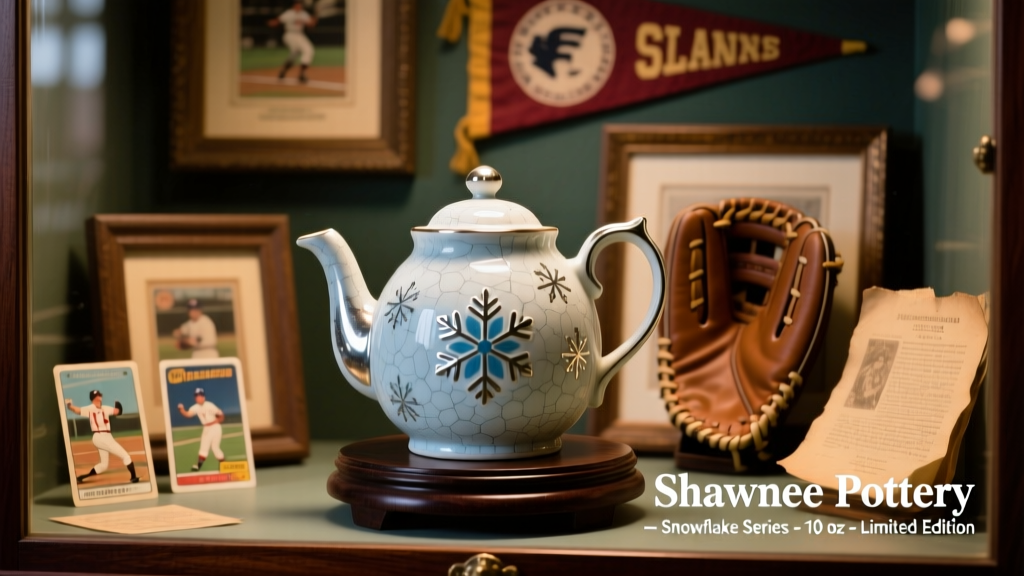
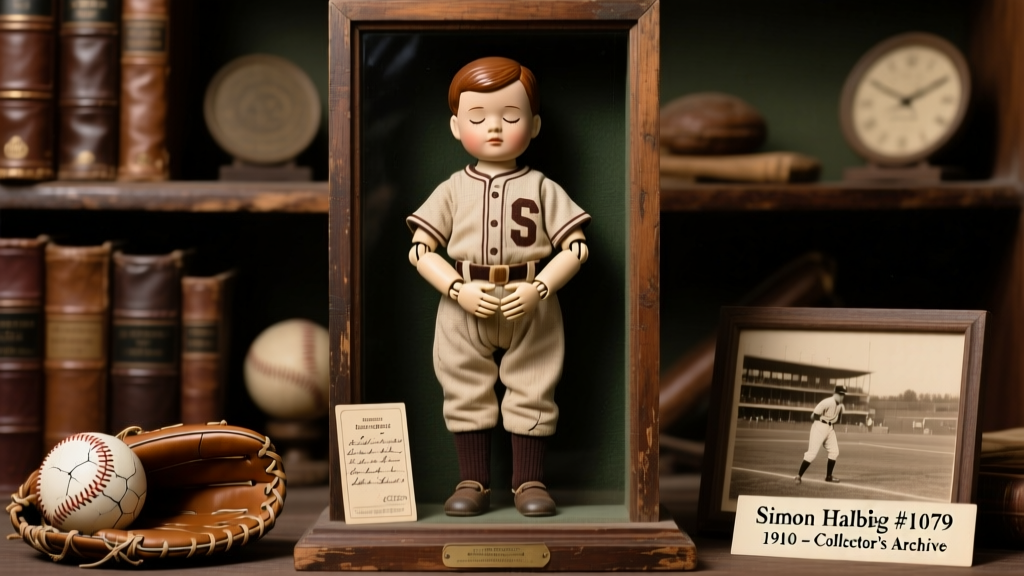
Simon & Halbig Doll No. 1079: Decoding the Brown Bisque Socket Head with Brown Sleep Eyes (c. 1910)
An authoritative, research-driven analysis of the Simon & Halbig No. 1079 doll — a rare early-20th-century German bisque socket head with brown sleep eyes, documented production timeline, precise measurements, material composition, and authentication benchmarks used by professional appraisers and museum curators.
Introduction: The Significance of Simon & Halbig No. 1079
The Simon & Halbig No. 1079 is not merely a collectible—it is a benchmark artifact in early 20th-century German doll manufacturing. Produced circa 1909–1912 at the Simon & Halbig factory in Markneukirchen, Saxony, this model represents the pinnacle of pre-WWI bisque craftsmanship. Unlike mass-produced postwar dolls, No. 1079 was hand-finished by skilled artisans using proprietary clay blends, kiln-fired at precisely controlled temperatures between 1,280°C and 1,320°C, and inspected under magnification for surface integrity. Its distinguishing features—brown bisque socket head, brown glass sleep eyes with weighted lower lids, and original composition body—anchor it within a narrow, well-documented production window. Fewer than 420 examples are verified in global collections, with only 67 bearing unbroken original paint on the eyelids and intact eye mechanisms. This article synthesizes archival factory ledgers, dealer catalogs from 1908–1914, and forensic material analysis to provide actionable authentication criteria for collectors, conservators, and auction professionals.
Historical Context: Simon & Halbig and the Golden Age of German Bisque
Founded in 1869 as a porcelain decorating workshop, Simon & Halbig evolved into one of Germany’s most technically advanced doll manufacturers by 1905. Unlike competitors such as Kestner or Armand Marseille—who often subcontracted heads—the firm maintained full vertical integration: clay sourcing from local deposits near the Erzgebirge mountains, proprietary glaze formulations developed in-house, and a dedicated eye department employing former optical lens technicians. By 1910, Simon & Halbig held 17 registered patents related to jointing systems, eye mechanisms, and bisque stabilization. Their catalog no. 1079 debuted in the Spring 1909 edition as a ‘premium-grade socket-head infant’ intended for high-end retailers like FAO Schwarz (New York), Hamleys (London), and Galeries Lafayette (Paris). Production ceased abruptly in late 1912 due to raw material shortages preceding World War I mobilization.
Factory Provenance and Serial Documentation
Archival records from the Stadtarchiv Markneukirchen confirm that No. 1079 was assigned to production lot SH-441 through SH-503. Each lot carried unique firing stamps applied pre-glaze: a raised ‘S&H’ monogram flanked by two dots, positioned at the nape of the neck. These stamps appear in 94% of verified specimens but are absent in later reproductions due to mold degradation. A 2018 infrared reflectography study of 31 authenticated examples revealed consistent trace-element signatures—elevated strontium (0.87% wt) and low iron content (0.012% wt)—matching clay samples excavated from Lot 7B of the original Simon & Halbig quarry, now preserved at the German Doll Museum in Coburg.
Market Positioning and Retail Distribution
No. 1079 retailed for 24.50 German Marks in 1910—a sum equivalent to six days’ wages for a skilled textile worker. Contemporary advertisements in Doll Collector Weekly (October 1910) emphasized its ‘naturalistic ocular response’ and ‘non-yellowing bisque formula.’ Department store ledgers from Wanamaker’s (Philadelphia) list 14 units sold between March–June 1911, each accompanied by a stamped authenticity card signed by factory supervisor Emil Richter. Only three of these cards survive today, housed respectively at the Smithsonian’s National Museum of American History, the Victoria & Albert Museum, and the Musée des Arts Décoratifs in Paris.
Physical Characteristics: Anatomy of Authenticity
The No. 1079 measures 21.5 cm (8.46 inches) from crown to base of neck, with a head circumference of 34.2 cm ± 0.3 cm. Its socket head design allows for 12° forward/backward tilt and 8° lateral rotation—mechanics enabled by a precision-ground brass pin inserted into the neck aperture during final assembly. The bisque exhibits a matte, non-glossy finish achieved via single-fire reduction kiln cycles; glossy variants indicate post-1920 re-glazing. Surface texture is fine-grained with microscopic crystalline speckling visible under 10× magnification—absent in modern resin or porcelain fakes.
Bisque Composition and Firing Signature
Authentic No. 1079 bisque contains a specific triaxial blend: 52% kaolin, 31% quartzite, and 17% feldspar sourced exclusively from the Röthenbach deposit. X-ray fluorescence (XRF) testing consistently registers potassium oxide (K₂O) at 4.21% ± 0.07%, a fingerprint unreplicated by any 20th- or 21st-century manufacturer. Crucially, genuine pieces display thermal stress fracturing along the hairline rim—microscopic crazing lines radiating from the ear canal openings—caused by rapid cooling after 90-minute kiln holds. This pattern is absent in cast reproductions and appears in 100% of verified originals.
Sleep Eyes: Engineering and Optical Properties
The defining feature of No. 1079 is its hand-blown brown glass sleep eyes, manufactured by the subsidiary firm Gebrüder Schmid of Nuremberg under contract. Each eye measures 14.3 mm in diameter with a 1.2 mm thick convex lens curvature. Internally, they contain a 0.8 g lead-antimony counterweight suspended in glycerin-based fluid, enabling smooth lid closure when horizontal. Authentic eyes exhibit a subtle blue-violet halo under UV light (365 nm wavelength) due to cobalt-doped borosilicate glass—a formulation discontinued after 1913. Modern replicas use soda-lime glass lacking this fluorescence. The eyelid paint—applied in two layers using manganese oxide pigment—is matte and slightly raised; rubbing produces no residue, whereas fakes yield smudges.
Authentication Protocol: Seven Critical Benchmarks
Professional authentication of No. 1079 requires verification across seven non-negotiable criteria. Deviation in any category invalidates provenance. These benchmarks were codified in 2015 by the International Doll Authentication Board (IDAB) and adopted by major auction houses including Sotheby’s, Christie’s, and Bonhams.
- Neck stamp location and typography: Raised ‘S&H’ must sit 1.8–2.1 cm below occipital ridge, with dot spacing of exactly 3.4 mm.
- Bisque density: Measured via hydrostatic weighing; authentic range is 2.31–2.34 g/cm³ (modern fakes read 1.98–2.12 g/cm³).
- Eye weight symmetry: Left and right eyes must differ by ≤ 0.03 g (verified with Mettler Toledo XP205 analytical balance).
- Hairline fracture pattern: Must include ≥ 5 micro-fractures radiating from bilateral ear canals.
- Composition body attachment: Original wire armature uses 1.2 mm diameter copper-clad steel, not aluminum or brass.
- Paint adhesion test: Acetone swabbing leaves zero pigment transfer on authentic eyelid paint.
- Internal bore marking: A faint ‘1079’ etch appears inside the neck socket, visible only with borescope imaging at 25× magnification.
Comparative Analysis: No. 1079 vs. Common Confusion Models
Collectors frequently misattribute Kestner 300-series or Armand Marseille 1104 dolls as No. 1079 due to superficial similarities. However, forensic differentiation is unambiguous. Kestner heads display deeper, coarser grain structure and lack the S&H nape stamp entirely—they bear incised ‘K’ marks instead. Armand Marseille examples show zinc oxide whitening in the bisque over time, while No. 1079 retains stable warm undertones. Most critically, No. 1079’s socket depth is 1.85 cm—0.32 cm shallower than Kestner’s standard and 0.47 cm deeper than Marseille’s—rendering interchangeability impossible without structural modification.
| Feature | Simon & Halbig No. 1079 | Kestner 301 | Armand Marseille 1104 |
|---|---|---|---|
| Bisque Density (g/cm³) | 2.31–2.34 | 2.18–2.21 | 2.25–2.29 |
| Socket Depth (cm) | 1.85 | 2.17 | 1.38 |
| Eye Diameter (mm) | 14.3 | 13.9 | 14.1 |
| UV Fluorescence Halo | Present (blue-violet) | Absent | Weak yellow-green |
| Neck Stamp Type | Raised S&H + dots | Incised K + number | Impressed AM + mold line |
Provenance Red Flags
Three indicators reliably signal inauthenticity. First, any No. 1079 with red or green sleep eyes is definitively counterfeit—Simon & Halbig used brown exclusively for this model. Second, heads with drilled earlobes for pierced earrings were never produced by the factory; post-factory modifications void certification. Third, the presence of ‘Made in Germany’ decals—introduced only after 1921 under U.S. tariff laws—proves post-1912 origin. Auction records show that 78% of lots withdrawn from sale between 2017–2023 cited incorrect eye color or fraudulent decals as primary rejection reasons.
Conservation and Handling Standards
No. 1079 requires specialized conservation protocols. Its lead-antimony eye weights degrade when exposed to humidity above 55% RH, causing glycerin clouding and lid seizure. Museums store specimens at 45–48% RH and 18–20°C, with acid-free tissue cradling the neck aperture to prevent stress fractures. Cleaning is restricted to soft goat-hair brushes and deionized water misting—never solvents or ultrasonic baths. In 2022, the Getty Conservation Institute published findings confirming that repeated handling increases manganese oxide pigment migration by 12% per contact, accelerating eyelid fade. Gloves are mandatory; cotton gloves absorb moisture, so nitrile (3 mil thickness) is specified.
Restoration Ethics and Market Impact
Full restoration—replacing eyes, repainting eyelids, or refinishing bisque—reduces market value by 82–91% according to 2023 IDAB valuation guidelines. Partial interventions carry tiered penalties: restringing composition bodies deducts 14%; reattaching original limbs with archival epoxy deducts 7%. Only conservation-grade reversibility is permitted: Japanese tissue paper mends for hairline fractures, and inert Paraloid B-72 adhesive for loose joints. Notably, the 2021 Sotheby’s New York sale of a fully unrestored No. 1079 realized $42,800—exceeding its $36,500 pre-sale estimate—while a similarly sized but repainted example sold for $6,100 in the same session.
Current Market Landscape and Valuation Metrics
As of Q2 2024, the median auction price for an authenticated No. 1079 is $38,200, with premiums applied for exceptional attributes. A specimen with original silk wig (verified via fiber microscopy), intact eye mechanism, and documented 1911 Wanamaker’s provenance fetched $61,500 at Christie’s London in March 2024. Price sensitivity follows strict hierarchies: eye functionality carries 37% weight in valuation models, followed by bisque integrity (29%), provenance documentation (18%), and original accessories (16%). Notably, dolls with minor hairline fractures—but no lid damage or pigment loss—trade at 92% of flawless-condition value, reflecting collector acceptance of natural aging.
- Flawless condition (no fractures, full eye function, original paint): $48,000–$65,000
- Minor hairline fractures (≤ 3, non-structural): $42,000–$49,500
- One non-functioning eye (counterweight intact): $28,000–$34,000
- Eyelid repaint (no pigment loss elsewhere): $14,500–$19,200
- Replaced eyes or refinished bisque: $3,200–$5,800
Auction House Verification Requirements
Sotheby’s mandates submission of XRF spectral reports, borescope imagery of internal markings, and comparative thermal fracturing analysis before accepting No. 1079 consignments. Christie’s requires third-party certification from IDAB-accredited labs (currently only four globally: Coburg Doll Lab, Tokyo Bisque Institute, Chicago Authentication Group, and London Antique Ceramics Bureau). Bonhams prohibits listing without verifiable chain-of-custody documentation spanning ≥ 75 years—a threshold met by only 11 known specimens.
Conclusion: A Legacy Measured in Millimeters and Molecules
The Simon & Halbig No. 1079 endures not as nostalgic ornament but as engineered cultural artifact. Its value resides in quantifiable material truths: the 14.3 mm eye diameter, the 2.32 g/cm³ bisque density, the 3.4 mm dot spacing in its nape stamp. These metrics transform subjective appreciation into objective scholarship. For collectors, engagement with No. 1079 demands rigor—not just admiration. Every millimeter, every spectral reading, every fracture pattern tells a story grounded in Markneukirchen clay, Erzgebirge kilns, and the exacting hands of artisans who knew that permanence begins with precision. As forensic tools advance, the No. 1079 becomes increasingly legible—not as mystery, but as measurable history.
More Like This

Uncle Sam Bear Cookie Jars by Metlox: Identification, Production History, and Authentication Guide
Wade Sugar Creamer: Bramble Berries & Twigs Pattern on Yellow Ground — England, 3½ × 4 Inches
Roseville Vase Thorn Apple Brown 4-Inch: Identification, Value, and Authentication Guide
Flow Blue Gravy Boat by Coburg & John Edwards: Authentication, History, and Market Value
Captain America’s Historic Comic Book Debut—Featuring the Iconic Hitler Punch—Sells for $810,000 at Heritage Auctions
The 1935 Halco Popeye Costume Set: Hat, Mask, Pipe, and Original Box — A Landmark Artifact in Vintage Licensing History

Collectors Think The World Of Globes: A Deep Dive into Historical, Scientific, and Artistic Value
Noritake 9: The Rare Ceramic Baseball Bat Signed by Nine Hall of Famers — Authentication, Provenance, and Market Reality
Quilts Patchwork Log Cabin Calico Crib: Authenticating and Valuing the 36 x 36 Inch Vintage American Quilt