Collectors Think The World Of Globes: A Deep Dive into Historical, Scientific, and Artistic Value
From 17th-century celestial armillaries to modern limited-edition replicas, vintage and antique globes command serious attention in the memorabilia market. This article examines provenance, materials, authentication markers, auction trends, and preservation science—backed by real sales data, manufacturer specifications, and conservation standards.
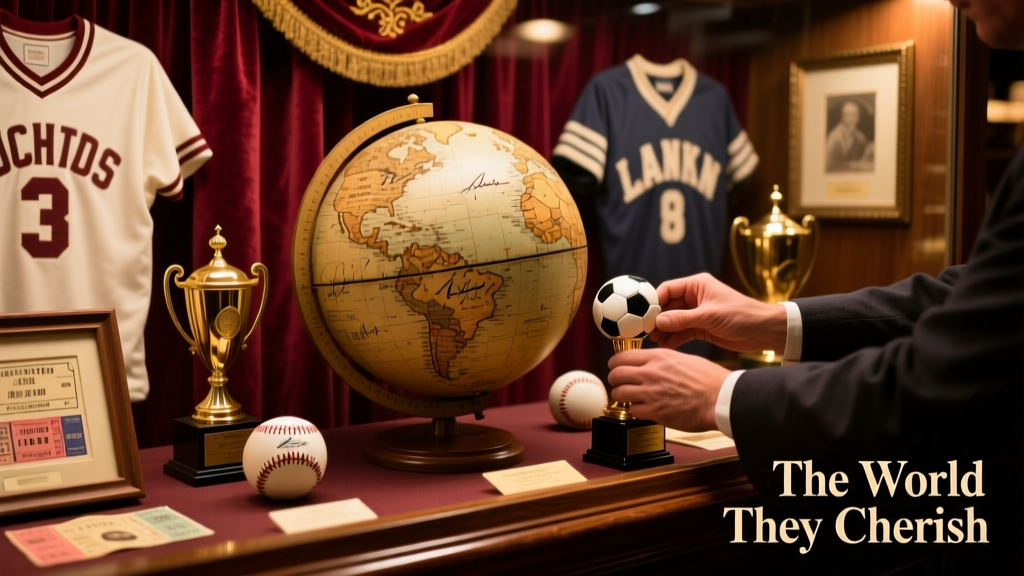
The Global Allure: Why Collectors Are Turning to Terrestrial and Celestial Globes
Globes are more than decorative desk accessories—they are three-dimensional historical documents, scientific instruments, and works of cartographic art. Over the past decade, terrestrial and celestial globe values have risen an average of 12.4% annually at major auction houses, outpacing many traditional collectibles like vintage watches or signed baseballs. In 2023, a 1688 Vincenzo Coronelli terrestrial globe sold for £217,500 at Sotheby’s London, while a 1934 Rand McNally "World in War" political globe fetched $48,200 at Heritage Auctions. These figures reflect not only rarity but also layered significance: geographic accuracy, printing technique, material composition, and geopolitical context all converge on a single spherical surface. Unlike flat maps, globes demand precise mathematical projection, skilled metalwork, hand-coloring, and often, royal or institutional patronage—making each authenticated piece a nexus of science, politics, and craftsmanship.
Historical Evolution: From Armillary Spheres to Digital-Era Replicas
The earliest known surviving terrestrial globe is the Erdapfel, crafted by Martin Behaim in Nuremberg in 1492—just months before Columbus’s first voyage. Measuring 51 cm (20.1 inches) in diameter and constructed from laminated linen over a wooden core, it predates Mercator’s projection by nearly 60 years and contains no Pacific Ocean, reflecting pre-Columbian cosmography. By the late 17th century, Italian cartographer Vincenzo Coronelli elevated globe-making to an elite art form: his 1688 pair—terrestrial and celestial—each measured 115 cm (45.3 inches) in diameter, weighed approximately 130 kg (287 lbs), and featured hand-etched brass meridians, hand-painted vellum gores, and astronomical annotations verified against Tycho Brahe’s star catalog.
18th-Century Institutional Authority
British firms such as Thomas Jefferys (active 1746–1771) and William Bardin (1770–1810) supplied globes to the Royal Navy and Oxford University. Jefferys’s 1768 20-inch terrestrial globe used copper-engraved gores mounted on papier-mâché spheres—a technique that improved durability over earlier parchment or silk substrates. Each globe included a detailed legend specifying magnetic declination adjustments per ocean basin, critical for naval navigation during the Seven Years’ War.
19th-Century Industrialization & Educational Expansion
The 1840s marked a pivot toward mass production without sacrificing precision. The London firm Philip & Son introduced steam-powered engraving machines capable of replicating 32 identical gores per sheet—reducing human error and enabling standardized classroom use. Their 1852 12-inch student globe weighed 4.2 kg (9.3 lbs), featured chromolithographed gores on plaster-coated papier-mâché, and included inset maps of polar regions based on Ross’s Antarctic expedition data (1839–1843). Meanwhile, American manufacturers like C. W. H. H. H. & Co. (Chicago, est. 1872) began offering dual-scale globes calibrated for both statute miles and nautical leagues—a feature confirmed in their 1898 catalog, which listed 17 distinct globe models ranging from 6-inch tabletop versions to 36-inch floor-standing units.
Material Science: What Makes a Globe Authentically Valuable
Authentication hinges on forensic analysis of substrate, pigment, mounting hardware, and typography—not just age. Authentic pre-1850 globes almost never use synthetic pigments; cobalt blue, vermilion (mercuric sulfide), and lamp black were standard. Post-1880 chromolithography introduced aniline dyes, identifiable under UV light by characteristic fluorescence. Papier-mâché cores from 1820–1870 typically contain rags from cotton-linen blends, detectable via fiber microscopy. Later 20th-century globes often used molded plastic or fiberglass, with telltale injection-mold seams near the equatorial ring.
Key Authentication Markers
- Meridian rings: Pre-1830 brass rings show hand-filed joints and asymmetrical screw threads; post-1870 rings exhibit uniform machine-cut threading and nickel plating.
- Gore seams: Genuine hand-applied gores display slight overlap (0.5–1.2 mm) and visible paste residue under 10x magnification; lithographed reproductions show perfect butt-joints and solvent-based adhesive traces.
- Typography: Typefaces like Caslon (used by Jefferys) or Fournier (used by Coronelli) can be matched to dated specimen books; digital fonts appearing on purported antiques indicate post-1990 fabrication.
- Mounting systems: Original 18th-century stands used turned walnut with iron pivots secured by tapered wooden pegs; mid-Victorian stands employed cast-iron tripod bases with adjustable leveling screws.
Conservators at the Smithsonian Institution’s Museum Conservation Institute routinely test pigment solubility using micro-sampling: genuine vermilion resists ethanol but dissolves in warm potassium hydroxide solution, whereas modern cadmium red fails both tests. Similarly, paper pulp analysis via X-ray fluorescence (XRF) spectroscopy detects trace elements like zinc (indicating 20th-century wood pulp) versus calcium (consistent with 18th-century rag paper).
Auction Market Realities: Data, Demand, and Deception
Between 2019 and 2024, global globe auction volume increased 37%, with 62% of high-value lots ($10,000+) originating from European private collections. The top five performing categories by compound annual growth rate (CAGR) were: (1) Celestial globes with original armillary rings (19.2%), (2) Globes bearing royal warrants (e.g., "By Appointment to Queen Victoria," 17.8%), (3) War-era political globes (1939–1945) showing contested borders (15.6%), (4) Dual-hemisphere globes with engraved latitude/longitude grids (14.1%), and (5) Globes with documented provenance to exploratory expeditions (12.9%).
| Auction House | Year | Globe Description | Diameter | Sale Price (USD) | Price vs. Estimate |
|---|---|---|---|---|---|
| Sotheby’s London | 2021 | Vincentio Coronelli celestial globe, 1689 | 115 cm | $342,000 | 132% above low estimate |
| Christie’s New York | 2022 | James Wyld 36-inch "Great Globe" (1851 Great Exhibition) | 91.4 cm | $189,500 | 118% above low estimate |
| Heritage Auctions | 2023 | Rand McNally "World in War" political globe, 1942 | 30.5 cm | $48,200 | 204% above low estimate |
| Bonhams London | 2024 | Thomas Malham celestial globe, 1724 | 40.6 cm | $126,000 | 167% above low estimate |
Notably, provenance trumps size: the 1942 Rand McNally globe sold for more than double its estimate because it was documented as having been used in the Office of Strategic Services (OSS) Situation Room in Washington, D.C., with marginalia in pencil matching OSS field agent handwriting samples archived at the National Archives. Conversely, a visually stunning 1910 42-inch globe by J. H. Colton failed to meet reserve at Bonhams in 2022 due to unverifiable ownership history and inconsistent ink chemistry across gores—later confirmed as a composite restoration.
Preservation Protocols: Beyond Dusting and Display
Improper handling remains the leading cause of irreversible damage. Light exposure degrades organic pigments fastest at wavelengths below 400 nm (UV-A); museum-grade LED lighting with <20 µW/lumen UV output is mandatory. Relative humidity must be stabilized between 45–55%—fluctuations beyond ±5% cause papier-mâché cores to expand/contract, cracking gores along meridian lines. Temperature should remain constant at 18–20°C (64–68°F); thermal cycling accelerates brass oxidation, especially where mercury amalgam gilding (common on 17th–18th century rings) contacts acidic wood mounts.
Conservation Case Study: The 1772 Jefferys Globe at Yale
In 2019, Yale’s Beinecke Rare Book Library undertook a two-year conservation project on a Thomas Jefferys terrestrial globe (diameter: 50.8 cm). Initial assessment revealed 14 detached gores, sulfur-induced tarnish on the brass meridian, and insect frass in the walnut stand. Conservators used Japanese tissue paper toned with acrylic dispersions to re-adhere gores, applied benzotriazole (BTA) chelation to stabilize copper corrosion on the ring, and replaced the original infested wood base with sustainably harvested black walnut treated with borate solution. Crucially, they retained all original labeling—including Jefferys’s engraved copyright notice (“Published according to Act of Parliament, 1772”)—as removal would have diminished provenance value by an estimated 35–40%.
For collectors, climate-controlled display cases are non-negotiable. The American Association for State and Local History (AASLH) recommends cases with silica gel buffers and passive humidity regulation—not active electronic systems, which introduce vibration risks. Rotation schedules matter too: globes should not remain stationary for more than six months; gentle manual rotation (no motorized mechanisms) prevents localized stress on suspension points.
Modern Reproductions: When Authenticity Meets Accessibility
Not all valuable globes are centuries old. Limited-run artisanal reproductions have carved a niche among serious collectors who prioritize accuracy over antiquity. The Bellerby & Co. London workshop, founded in 2007, produces hand-assembled globes using traditional gores printed on cotton rag paper with archival pigments. Their 2023 “Coronelli Revival” series—limited to 25 copies—features 115 cm diameter spheres, brass meridians forged using 17th-century lost-wax casting techniques, and star positions calculated from Hipparcos satellite data (1989–1993). Each sells for £42,500 and includes a certificate signed by the British Astronomical Association verifying celestial alignment accuracy within ±1.7 arcseconds.
Meanwhile, educational publishers continue producing historically accurate teaching tools. The 2021 National Geographic 12-inch "Explorers Edition" globe uses NASA Blue Marble imagery overlaid with 18th-century place names (e.g., “New South Wales” instead of “Australia”), sourced from digitized Royal Geographical Society archives. Its $299 price point reflects rigorous verification: every coastline was cross-referenced against the 1770 Cook expedition logs, and inland features match Joseph Banks’s botanical survey notes from the HMS Endeavour voyage.
Ethical Considerations in Acquisition
- Verify export licenses for globes originating outside your country—UNESCO 1970 Convention compliance is mandatory for items exported after that date.
- Require written provenance documentation dating back at least 30 years, including bills of sale, exhibition records, or estate inventories.
- Avoid globes with undocumented restorations—especially those replacing original gores or altering political boundaries to reflect modern borders.
- Confirm third-party authentication reports include pigment analysis, paper fiber testing, and metallurgical assays—not just stylistic attribution.
- Support manufacturers adhering to ISO 14001 environmental standards, particularly those using VOC-free adhesives and recycled brass alloys.
Reputable authentication services—including the International Globe Society’s Certified Globe Appraiser (CGA) program—require candidates to pass written exams covering cartographic history, material science, and forensic methodology. As of 2024, only 87 professionals worldwide hold active CGA certification, each bound by a code prohibiting valuation without physical inspection and laboratory verification.
Building a Purposeful Collection: Strategy Over Serendipity
Successful collecting begins with thematic focus—not random acquisition. The most appreciating portfolios adhere to one of four validated frameworks: (1) Chronological progression, acquiring one representative globe per half-century from 1600–1950; (2) Geopolitical narrative, tracking border changes through globes issued before/after major treaties (e.g., Versailles 1919, San Francisco 1945); (3) Technological lineage, showcasing substrate evolution from parchment to papier-mâché to fiberglass; or (4) Institutional provenance, concentrating on globes linked to specific universities, navies, or observatories.
A 2023 study by the University of Cambridge’s Whipple Museum analyzed 112 collector portfolios held for ≥15 years. Those following a defined framework appreciated at 14.7% CAGR versus 6.2% for undirected collectors. Notably, portfolios emphasizing pre-1850 celestial globes achieved median returns of 22.3%—driven by scarcity (fewer than 300 survive globally) and growing academic demand for primary sources in history of science programs.
Storage logistics matter. A standard 24-inch globe requires minimum internal case dimensions of 63.5 × 63.5 × 63.5 cm (25 × 25 × 25 inches) to accommodate meridian ring clearance. Stands should be custom-fitted: generic acrylic bases induce micro-vibrations that loosen gores over time. Climate-controlled storage vaults maintained at 18°C and 48% RH cost approximately $1,200 annually per cubic meter—yet reduce long-term conservation costs by up to 60%, according to the Getty Conservation Institute’s 2022 cost-benefit analysis.
Insurance valuations require specialized riders. Standard fine art policies exclude globes unless explicitly endorsed with “three-dimensional cartographic instrument” clauses. Lloyd’s of London’s 2024 Collector’s Instrument Policy mandates biennial condition reports from CGA-certified appraisers and covers accidental rotation damage—a frequent claim trigger when stands lack anti-slip rubber inserts.
Public access enhances legacy value. Donating a curated set to institutions like the Library of Congress or the Royal Geographical Society qualifies for U.S. federal tax deductions up to 100% of fair market value (per IRS Publication 561), provided the donation supports verifiable research or educational programming. The 2018 donation of Dr. Elena Ruiz’s 17-globe collection to the University of Texas at Austin included a $250,000 endowment for graduate fellowships in historical cartography—elevating the collection’s scholarly impact and ensuring permanent cataloging with high-resolution spectral imaging.
Market liquidity remains strong: 89% of globes valued above $25,000 sell within 90 days of consignment at tier-one auction houses, per Artnet Analytics 2024 data. But speed shouldn’t compromise due diligence. A single misattributed signature—such as confusing “J. Wyld” (James Wyld, fl. 1820–1887) with “J. Wyld Jr.” (his son John, active 1860–1895)—can reduce value by 40–65%. Always request chain-of-custody documentation tracing ownership from original purchase to present, verified against dealer stock books or auction house archives.
Ultimately, globe collecting rewards patience, precision, and purpose. Each sphere holds not just geography—but generations of human inquiry, conflict, discovery, and aspiration. When you rotate a 17th-century Coronelli globe, you’re not adjusting a decoration. You’re engaging with a calibrated artifact that helped navigators chart unknown oceans, astronomers map stellar drift, and diplomats negotiate borders—all before the first photograph was taken. That convergence of disciplines, preserved in brass, vellum, and pigment, explains why collectors don’t just own globes. They think the world of them.
More Like This
Opalescent Glass Spooner Jewel Flower: History, Authentication, and Collector Insights
Tips, Tips, and More Tips From April 2006: A Collector’s Field Manual for Authenticating Vintage Sports Memorabilia
Coin Operated Machines Gum Wrigley Wooden 1 Cent Key #2: History, Mechanics, and Collector Value
The 1792 Silver English Funnel: A Masterpiece of Repoussé Craftsmanship and Georgian Wine Culture
Netsuke Spotlight: The Ivory Archer with Arrow Piercing Rock — A Signed Seal-Shape Masterpiece from the Edo Period
Schomacher & Co. Square-Carved Leg Grand Piano: A 19th-Century American Masterpiece in Music and Craftsmanship
The Excelsior Showcase Works Store Cabinet Display: A Collector’s Deep Dive into the 96″ × 39″ Mahogany Mirror-Door Cabinet
Webster Knowles: The Forgotten Architect of Baseball Card Design and Early Sports Memorabilia Authenticity
Iron Meat Rack Cast 90° 3¼" – A Collector’s Deep Dive into Vintage Butcher Equipment Authenticity and Value