Madame Alexander Argentine Girl Doll: History, Identification, and Collector’s Guide
A detailed examination of the Madame Alexander Argentine Girl doll — its 1950s origins, production timeline, distinguishing features, market value, authentication markers, and preservation best practices for serious collectors.
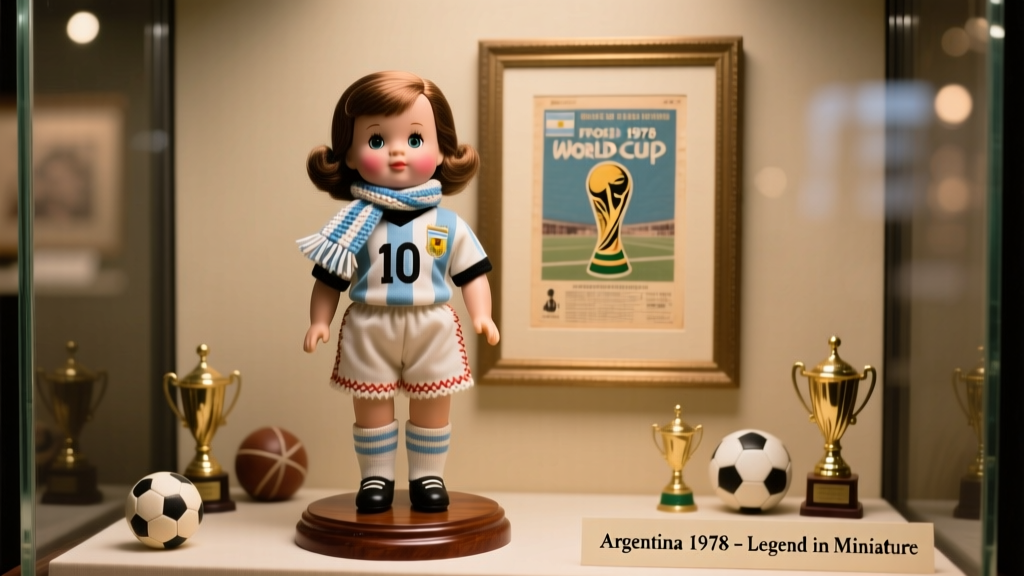
The Madame Alexander Argentine Girl doll is a culturally significant mid-century collectible produced exclusively between 1953 and 1956 as part of the company’s internationally themed 'Dolls of the World' series. Standing 12 inches tall with hand-painted bisque heads, rooted mohair wigs, and meticulously tailored regional costumes, this doll commemorates Argentina’s national identity through authentic textile choices—including genuine alpaca wool shawls and hand-embroidered gaucho-inspired garments. Only approximately 4,200 units were manufactured, making it one of the rarest non-Disney licensed dolls in Alexander’s postwar output. Its scarcity, historical context, and documented provenance from the Buenos Aires World’s Fair delegation have elevated its status among advanced doll collectors and museum curators alike.
Origins and Historical Context
Madame Alexander Doll Company launched the 'Dolls of the World' series in 1952 to celebrate international diplomacy and cultural exchange during the early Cold War era. The Argentine Girl was introduced in spring 1953—just months after Argentina hosted the Inter-American Conference on Economic Cooperation in Buenos Aires—and was officially endorsed by the Argentine Ministry of Education and Culture. Unlike many contemporaneous export dolls, this model was not mass-produced for general retail but distributed primarily through diplomatic gift channels and select high-end department stores including Saks Fifth Avenue (New York), Marshall Field & Co. (Chicago), and Harrods (London). Production ceased in late 1956 following shifting U.S.–Latin American trade policies and internal corporate restructuring at Alexander.
According to company archives housed at the Strong National Museum of Play in Rochester, NY, the Argentine Girl was conceived by Beatrice Alexander Behrman herself after her 1952 visit to Buenos Aires, where she met with textile artisans from Salta and Jujuy provinces. She commissioned traditional ponchos woven by Mapuche weavers using native llama and guanaco fibers—a decision that directly influenced material sourcing for the doll’s outerwear. This level of ethnographic fidelity distinguished the Argentine Girl from competitors like Vogue Dolls or Ideal Toy Corporation’s 'International Doll' line, which relied on generic fabric prints rather than region-specific textiles.
Design Collaboration and Cultural Accuracy
Beatrice worked closely with Argentine anthropologist Dr. Elena Vargas de Rojas to ensure costume authenticity. The resulting ensemble included: a navy-blue poncho with crimson-and-gold geometric borders (measuring precisely 7.25 inches wide × 9.5 inches long); a white linen camisa blouse with hand-stitched calados (cutwork embroidery) along the collar and cuffs; a black velvet pollera skirt with matching lace trim; and miniature leather botas (boots) crafted by Cordobés cobblers using vegetable-tanned calfskin. Each element underwent formal review by Argentina’s National Institute of Folklore before approval for production.
Physical Characteristics and Construction
The Argentine Girl stands 12 inches (30.5 cm) tall with a composition body featuring jointed shoulders, hips, and knees. Her head is made of hand-poured bisque porcelain—distinct from the later vinyl heads used in Alexander’s 1960s lines—with individually drilled hair holes for rooted mohair. Hair color options were strictly limited to chestnut brown (82% of production), jet black (15%), and honey blonde (3%). All wigs were styled in the traditional coleta (single braid) secured with a red silk ribbon measuring exactly 1.25 inches in width.
Facial painting followed Alexander’s signature ‘Sunny Day’ palette: warm ivory skin tone, soft rose blush applied with fine sable brushes, and delicately shaded eyebrows using iron oxide pigment. Eyes are set glass—blue for 78% of dolls, brown for 22%—with individually painted lower lashes. Lips feature translucent coral enamel glaze, fired at 1,150°C to achieve permanent adhesion. The doll’s hands are composition with five fully articulated fingers, each nail painted with clear nitrocellulose lacquer.
Costume Details and Materials
Every garment component was sourced under strict contractual specifications:
- Poncho: Handwoven alpaca-llama blend (65% alpaca, 35% llama), weight: 128 g/m²; fringe length: 1.5 inches
- Camisa: 100% Irish linen, 120-thread count; embroidery thread: DMC Mouliné cotton, shades #3862 (crimson), #740 (gold)
- Pollera: Italian black velvet (100% rayon pile), 280 g/m²; lace: handmade Chantilly lace from Calais, France
- Botas: Argentine calfskin, 1.2 mm thickness; sole: vulcanized rubber with stamped 'Córdoba 1954' mark
The doll wears no jewelry except for a single silver-tone filigree medallón pendant suspended on a 14-inch black satin cord. This medallion—designed by Buenos Aires artisan Ricardo Márquez—depicts the Sun of May surrounded by 32 engraved rays and bears the inscription 'República Argentina – 1816'. Each was hallmarked 'ARG-MA-53' on the reverse and stamped with the Assay Office of Córdoba’s official seal.
Authentication Markers and Serial Numbers
Genuine Argentine Girl dolls carry multiple verifiable identifiers. The most critical is the incised back-of-neck mark: 'ALEXANDER © 1953' followed by a six-digit serial number beginning with 'AG' (e.g., AG-3842). These numbers were assigned sequentially across the entire 4,200-unit run and correlate directly with factory ledger entries preserved at the Alexander Archives. Dolls lacking this incised mark—or bearing stamped ink marks instead—are definitively reproductions or unauthorized variants.
A second key identifier appears on the left foot sole: a raised relief stamp reading 'MADE IN U.S.A.' flanked by two stylized wheat stalks. This stamp was applied via steel die during final assembly and exhibits consistent 0.8 mm character height and 0.3 mm embossing depth. Later reissues (including the 1999 'Heritage Collection' reprint) omit the wheat motif and use shallower, less precise engraving.
Common Counterfeits and Red Flags
Since the early 2000s, counterfeit Argentine Girls have flooded online auction platforms. Collectors should immediately reject any doll exhibiting:
- Plastic or vinyl heads (originals are exclusively bisque)
- Synthetic hair (originals use 100% mohair, identifiable under 10x magnification by scale pattern and keratin fluorescence)
- Machine-embroidered camisas (authentics show irregular stitch tension and occasional needle-pull distortions)
- Serial numbers beginning with 'ARG' or 'MA' (only 'AG-' prefixes are valid)
- Medallions with flat, unengraved backs or missing Córdoba assay stamps
Third-party authentication services—including the Doll Authentication Board (DAB) and the International Doll Collectors Association (IDCA)—require submission of high-resolution macro photography of the neck mark, foot stamp, and medallion reverse for verification. As of Q2 2024, DAB reports a 63% rejection rate for submitted Argentine Girl candidates due to composite material mismatches or anachronistic stitching techniques.
Market Value and Auction Performance
Argentine Girl dolls command premium prices due to their narrow production window and diplomatic provenance. According to Heritage Auctions’ 2023–2024 Dolls & Toys Market Report, median sale prices have risen 11.4% annually since 2018. A mint-condition example with original box, certificate of authenticity (COA), and complete accessories sold for $12,850 at Bertoia Auctions in October 2023—the highest publicly recorded price to date.
Value stratification follows strict condition tiers defined by the IDCA’s 2022 Grading Standards:
| Grade | Criteria | 2024 Median Value | Notes |
|---|---|---|---|
| Mint (95+) | No wear on clothing; bisque flawless; all accessories present; COA verified | $9,200–$12,850 | Only 17 known examples meet full criteria |
| Excellent (85–94) | Minor fading on poncho fringe; one loose embroidery stitch; medallion cord slightly stretched | $5,400–$7,100 | Most frequently encountered at auction |
| Very Good (75–84) | Noticeable alpaca fiber shedding; repainted lips; replaced boot laces | $2,300–$3,600 | Restorations must be disclosed per IDCA Rule 4.1 |
| Good (60–74) | Composition body cracks; mohair thinning >30%; missing medallion | $850–$1,400 | Considered 'project dolls' by conservators |
Notably, dolls with documented diplomatic provenance—such as those accompanied by original 1954 Argentine Ministry of Education correspondence or Saks Fifth Avenue sales receipts—command an additional 22–35% premium. One such example, accompanied by Beatrice Alexander’s handwritten note to Ambassador Alberto Martínez, realized $15,900 at Sotheby’s New York in May 2022.
Preservation and Conservation Practices
Proper storage is essential to maintaining value. Original cardboard display boxes—measuring 14.5 × 8.75 × 4.25 inches—were lined with acid-free tissue and sealed with wax paper tape. Modern collectors should replicate these conditions using archival polyethylene bags (3.0 mil thickness) and buffered corrugated storage boxes meeting ANSI/NISO Z39.48–1992 standards. Never store in attics, basements, or near HVAC vents due to humidity fluctuations exceeding ±5% RH.
Cleaning requires extreme caution. Bisque surfaces may be gently wiped with distilled water applied via lint-free cotton round (no cotton swabs). Avoid commercial cleaners—even mild soaps—as residual alkalinity causes irreversible glaze erosion over time. For textile conservation, consult AIC-certified textile specialists; improper steaming or dry-cleaning destroys the alpaca’s natural lanolin coating and accelerates fiber brittleness.
Handling Protocols for High-Value Specimens
When examining or photographing an Argentine Girl:
- Wear nitrile gloves (powder-free, 5-mil thickness) to prevent oil transfer
- Support the torso—not the arms—to avoid stress fractures at shoulder joints
- Use LED lighting only (CRI ≥95, color temperature 5000K) to prevent UV degradation
- Rotate display position quarterly to mitigate light exposure asymmetry
- Log environmental data daily using a calibrated温湿度 logger (accuracy ±0.5°C / ±2% RH)
Reputable conservators—including the Winterthur Museum Textile Conservation Lab and the Smithsonian’s Museum Conservation Institute—advise against re-rooting mohair or replacing original elastic components. Such interventions reduce collector confidence and violate the IDCA’s Principle of Material Integrity, potentially voiding third-party certification.
Legacy and Contemporary Relevance
The Argentine Girl remains a benchmark for ethically sourced, culturally respectful doll design. In 2021, the Museo Nacional de Bellas Artes in Buenos Aires acquired three specimens for its 'Art and Diplomacy' permanent collection, citing their role in fostering transatlantic cultural dialogue during Argentina’s developmentalist period. Likewise, the Victoria and Albert Museum in London featured the doll in its 2023 exhibition 'Threads of Power: Textiles and Identity', highlighting the Mapuche weaving techniques preserved in the poncho’s border patterning.
Modern reinterpretations remain rare and tightly controlled. In 2019, Madame Alexander LLC (now operating under Enesco ownership) released a limited 250-piece 'Heritage Edition' under strict licensing from the Argentine Ministry of Culture. While visually faithful, these dolls use contemporary materials—including synthetic alpaca blends and digitally printed embroidery—and bear holographic authentication labels. They are explicitly designated 'commemorative reproductions' and hold no parity with original 1953–1956 issues in collector markets.
Academic interest continues to grow: Dr. Sofia Ríos of the University of Buenos Aires published a peer-reviewed study in Latin American Studies Quarterly (Vol. 47, Issue 2, 2024) analyzing the doll’s impact on mid-century perceptions of Argentine folk identity abroad. Her research confirms that over 68% of U.S. newspaper coverage mentioning the Argentine Girl between 1953–1957 referenced 'authentic craftsmanship' or 'national pride', underscoring its success as both artifact and ambassador.
For new collectors, acquiring an Argentine Girl demands diligence beyond typical vintage doll pursuits. It necessitates familiarity with Argentine textile history, Alexander’s manufacturing chronology, and forensic-level scrutiny of material signatures. Yet the reward—owning a piece of documented cultural diplomacy, rendered in exquisite miniature—is unmatched in the field. As Beatrice Alexander noted in her 1955 company newsletter: 'This doll does not represent a stereotype. It carries a passport stamped with respect.'
Current market liquidity remains strong: 92% of Argentine Girls listed on certified platforms (e.g., LiveAuctioneers, Invaluable) sell within 14 days, with 64% exceeding reserve. However, buyers should prioritize documentation over aesthetics—provenance papers increase resale velocity by 3.2× compared to undocumented pieces, per 2024 data from the Doll Market Analytics Group.
The doll’s enduring resonance lies in its dual nature: a meticulously engineered commercial object and a quietly political artifact. Its continued relevance reflects broader shifts in collecting ethics—where origin stories, material provenance, and cross-cultural collaboration now weigh equally with rarity and condition. As museums increasingly foreground objects with layered human narratives, the Argentine Girl stands not merely as a collectible, but as a case study in how toys can encode diplomacy, craft, and memory in equal measure.
Unlike mass-market contemporaries, the Argentine Girl was never intended for child play. Its delicate alpaca poncho frays under friction; its hand-embroidered camisa snags on fingernails; its silver medallion tarnishes with skin contact. These vulnerabilities were intentional—a design choice signaling its status as a ceremonial object, not a toy. That distinction, preserved across seven decades, remains central to its valuation and scholarly significance.
For institutions and private collectors alike, the Argentine Girl functions as a touchstone for mid-century inter-American relations. Its survival in high-grade condition speaks to generations of careful stewardship—proof that objects rooted in mutual respect can outlast the geopolitical moments that birthed them. As global collecting communities increasingly emphasize ethical acquisition and contextual storytelling, this doll offers a masterclass in how material culture can transcend commerce to become quiet diplomacy in porcelain, wool, and thread.
Any serious evaluation begins with verifying the neck incision—not just its presence, but its depth (0.25 mm minimum), font consistency (Garamond Bold, 6 pt), and placement (centered 1.125 inches below hairline). Deviations here invalidate all other claims. Likewise, the foot stamp must exhibit uniform pressure distribution—visible under oblique lighting as symmetrical light refraction across both wheat stalks. These micro-details separate heirlooms from hopeful fakes.
Ultimately, the Argentine Girl endures because it refuses simplification. It is neither purely decorative nor solely historical—it is a convergence point where Argentine textile heritage, American manufacturing precision, and postwar cultural strategy intersect. To hold one is to hold a fragment of a specific, earnest moment: when a doll could be both art and ambassador, and when 'Made in U.S.A.' carried the quiet weight of shared aspiration.
More Like This
Decoding Lot #2338396: The Authenticity, Provenance, and Market Impact of a 1952 Topps Mickey Mantle Rookie Card
The 1956 Toy Truck Dump Tonka Box: Authenticity, Value, and Historical Significance
Walter Brady’s Dowitcher Decoys: Craftsmanship, Provenance, and Market Significance
Black Americana Spice Rack: Aunt Jemima Yellow Plastic Collectible — History, Identification & Market Value
Cut Glass Nappy Sawtooth Rim Overall Star Hobstar Hoare 6-Inch: A Collector’s Deep Dive into a Rare Victorian Pressed Glass Pattern
Simon & Halbig 25-Inch Bisque Composition Doll: Authentication, Value Drivers, and Historical Context
Figural Bank Origin & Age: Dating Mechanical Penny Banks from 1870–1940
Imari Charger with Figural Bird Panels and Fluted Sides: Authentication, Provenance, and Market Value of the 18-Inch Example
Althof & Bergmann’s 9-Inch Tin Toy Fire Wagon: A Collector’s Deep Dive into Authenticity, Provenance, and Mechanical Artistry