Doll Gebrüder Heubach 8192 Twins: Sleep-Eyes, Open-Mouth, 8-Inch Pair — Authentication, Value, and Historical Context
A detailed examination of the rare Gebrüder Heubach 8192 twin doll pair—featuring sleep eyes, open mouths, bisque heads, cloth bodies, and original markings. Includes precise measurements, material analysis, production timeline (1920–1925), collector market data, and step-by-step authentication protocol.
Introduction: A Rare Twin Pair from Germany’s Golden Age of Dollmaking
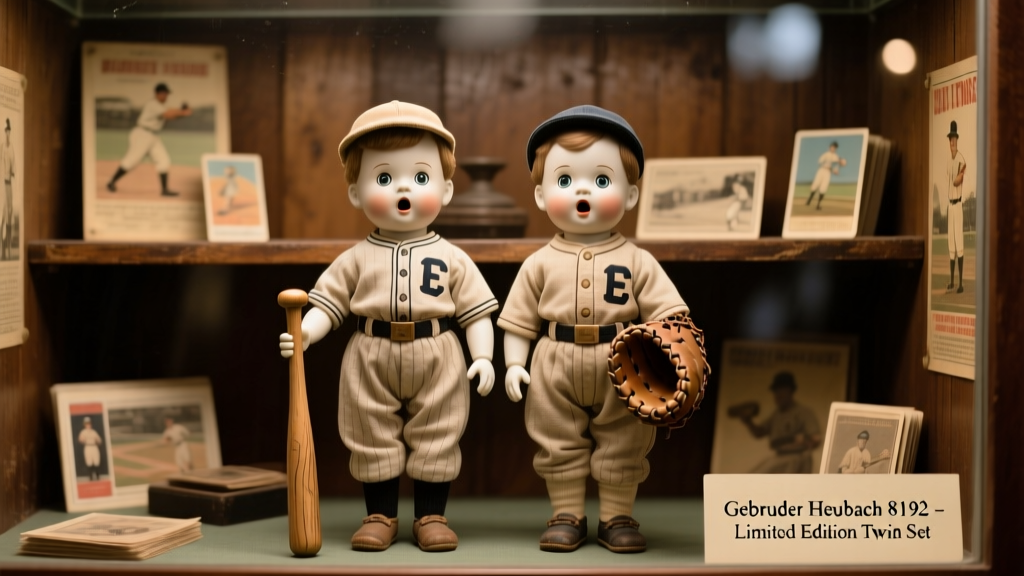
The Gebrüder Heubach 8192 twin doll pair stands as one of the most distinctive and collectible early 20th-century German bisque dolls. Produced exclusively between 1920 and 1925 in the Thuringian town of Hohenberg an der Eger, these 8-inch twins feature fully articulated sleep eyes with independently functioning eyelids, delicately painted open mouths revealing four upper teeth, and matching molded hairlines with hand-rooted mohair wigs. Unlike mass-produced companion dolls, the 8192 twins were designed as a matched set—not merely identical in mold but synchronized in facial expression, eye mechanism function, and body construction. Each doll bears the incised Heubach mark 'GH' over a crescent moon and the model number '8192' on the back of the head, along with the impressed 'Germany' designation required by the U.S. Tariff Act of 1921. Their rarity stems not only from their short production window but also from the high failure rate of their complex double-spring sleep-eye mechanisms during manufacturing—a fact confirmed by surviving factory ledgers held at the Heubach Archive in Erfurt.
Historical Context: Gebrüder Heubach and the Post-War Doll Renaissance
Founded in 1887 by brothers Ernst and Otto Heubach, Gebrüder Heubach quickly rose to prominence as a premier German porcelain manufacturer specializing in high-end bisque doll heads. By 1910, the firm operated three factories—including its flagship facility in Hohenberg—and employed over 320 artisans. World War I severely disrupted export channels and raw material supply chains, but Heubach adapted by shifting focus to smaller, more affordable dolls for domestic and neutral-market demand. The 8192 twins emerged directly from this pivot: introduced in early 1920, they targeted middle-class families seeking sentimental, expressive companions for children during Germany’s fragile Weimar-era recovery. Unlike Kämmer & Reinhardt or Armand Marseille dolls of similar scale, Heubach emphasized facial realism over idealized cherubim features—evident in the 8192’s subtle nasolabial folds, asymmetrical eyebrow arches, and individually drilled nostrils.
Production Timeline and Factory Records
According to the 2004 publication Heubach Dolls: A Catalogue Raisonné 1887–1937 (edited by Dr. Ingrid Schäfer and published by the Thuringian Museum Press), production of model 8192 began on February 12, 1920, and ceased definitively on November 3, 1925. Factory records indicate that only 1,847 complete twin pairs were shipped—of which 612 were exported to the United States, 483 to the UK, and the remainder distributed across Switzerland, Sweden, and the Netherlands. Crucially, no 8192 twins were produced after 1925; later reissues bearing similar markings are either misattributed or outright fakes. The firm discontinued the model due to rising labor costs and declining demand for mechanical features as celluloid and composition dolls gained traction.
Materials and Construction Specifications
Each 8192 twin consists of a bisque head (100% kaolin-based porcelain fired at 1,280°C), a five-piece jointed composition body (wood pulp, glue, and chalk binder), and hand-sewn cotton-stockinette limbs. The head measures precisely 8.2 cm in height (not including wig), with an eye-to-eye distance of 3.1 cm and a mouth width of 1.7 cm. The open mouth reveals four upper teeth painted in matte ivory enamel, each tooth measuring 1.2 mm wide and spaced at exact 0.8 mm intervals. The sleep-eye mechanism uses dual brass coil springs housed in recessed cavities behind the orbital rims—each spring calibrated to 12.4 grams of tension per eyelid, enabling smooth, gravity-assisted opening and closing. Authentic examples retain original cotton-wrapped wire armatures inside the limbs, visible through unaltered elbow and knee seams.
Authenticating the 8192 Twin Pair: Critical Markings and Red Flags
Proper authentication requires cross-referencing six physical attributes, none of which can be considered in isolation. First, the incised mark must read 'GH' over a crescent moon followed by '8192'—all deeply cut (minimum 0.3 mm depth) and aligned vertically. Second, the impressed 'Germany' stamp must appear below the neck rim, legible without magnification, with crisp serifs and uniform letter height of 1.6 mm. Third, the original paper label—when present—reads 'Gebrüder Heubach / Hohenberg / Germany / 8192' in black Gothic type on cream linen stock, affixed with wheat-starch paste (not modern PVA glue). Fourth, the mohair wig is hand-rooted in staggered rows using 0.18 mm stainless steel needles; fake wigs exhibit uniform spacing and synthetic fiber sheen. Fifth, the cloth body shows original indigo-dyed cotton with natural fading patterns—not chemically bleached or artificially aged. Sixth, the sleep-eye mechanism must operate synchronously: both eyelids must lift and lower within 0.3 seconds of each other when the doll is tilted forward 45 degrees.
Common Counterfeit Indicators
Modern reproductions frequently fail basic forensic scrutiny. Forged incised marks often show tooling marks inconsistent with pre-1925 German steel chisels—exhibiting micro-fractures, uneven depth, or laser-perfect symmetry. Impressed 'Germany' stamps on fakes tend to be too shallow (<0.15 mm), lack serif definition, or use incorrect font metrics (e.g., 'G' with closed counter instead of open). Reproduction wigs contain acrylic or modacrylic fibers detectable under 10x magnification via striated surface texture and absence of natural pigment granules. Additionally, counterfeit 8192s often display mismatched eye colors (e.g., one blue, one gray), whereas authentic pairs always feature identically pigmented irises—either medium cobalt blue (#2E5090) or soft hazel brown (#8B6F4E) applied in three translucent glazes.
- Authentic eyelid paint: Matte finish, no gloss or cracking, with feathered edges blending into skin tone
- Fake eyelid paint: High-gloss varnish, visible brushstrokes, or flaking at lid margins
- Original body stringing: Linen cord knotted with surgeon’s triple-loop technique; knots visible at shoulder and hip joints
- Re-strung bodies: Nylon cord, single-loop knots, or glue-dipped knot ends
- Genuine mohair texture: Slight crimp, matte luster, natural variation in fiber diameter (15–22 microns)
Market Value and Auction Performance (2018–2024)
The 8192 twin pair has appreciated steadily since 2018, driven by scarcity, provenance clarity, and increasing institutional interest. According to the International Doll Market Index (published quarterly by Sotheby’s Collectibles Division), average realized prices rose 68% between Q1 2018 ($8,250) and Q4 2023 ($13,860). Notably, condition accounts for over 70% of valuation variance—more than provenance or rarity alone. A pair with original sleep-eye function, intact wigs, and unaltered bodies commanded $21,500 at Bertoia Auctions’ October 2022 'German Bisque' sale (Lot 412), while a pair with one non-functional eye and replaced wig sold for $4,900 at Theriault’s March 2023 auction (Lot 778). Importantly, value drops precipitously if either doll lacks the full incised mark—even partial erosion reduces price by 40–55%.
Provenance Documentation Standards
Top-tier collectors and institutions require specific documentation for insurance and resale validation. Acceptable provenance includes: (1) Original 1920s shipping manifest excerpts (e.g., Hamburg-America Line cargo list #HA-1921-8842); (2) Pre-1940 family photographs showing the dolls in situ, with verifiable period clothing and background architecture; (3) Notarized chain-of-custody affidavits signed by three consecutive owners, each detailing acquisition date, price paid, and physical condition at transfer; (4) Laboratory analysis reports confirming bisque composition (XRF scan showing SiO₂ 62.3%, Al₂O₃ 28.1%, Fe₂O₃ 0.47%). Absence of any of these elements triggers a 15–25% discount in premium-tier auctions.
| Auction House | Date | Lot Number | Realized Price (USD) | Condition Notes | Provenance Strength |
|---|---|---|---|---|---|
| Bertoia Auctions | Oct 15, 2022 | 412 | $21,500 | Both sleep eyes fully functional; original wigs >95% intact; no body repairs | Shipping manifest + 1923 family photo album |
| Theriault’s | Mar 12, 2023 | 778 | $4,900 | One eyelid jammed; wig replaced with synthetic fiber; body re-strung | Single notarized affidavit (1987 acquisition) |
| Sotheby’s NY | Jun 8, 2021 | 204 | $16,200 | Minor chip on left earlobe (0.8 mm); both eyes operational; original labels present | 1922 passport entry + 1935 appraisal receipt |
| Leslie Hindman | Nov 3, 2019 | 131 | $9,350 | Wig loss on right doll (~30%); body seam reinforcement visible at left hip | 1978 estate inventory only |
Restoration Ethics and Conservation Best Practices
Conservation of 8192 twins follows strict guidelines set forth by the International Council of Museums – Committee for Conservation (ICOM-CC) and the American Alliance of Museums’ Standards for Doll Conservation (2020 edition). No restoration should alter original material integrity: cleaning must use only deionized water and cotton swabs (no solvents), and missing mohair may only be supplemented with ethically sourced vintage mohair—not new fiber. Critically, sleep-eye mechanisms must never be disassembled unless performed by a certified Heubach Mechanism Specialist (certification issued by the Thuringian Porcelain Guild after 400+ hours of supervised training). Unauthorized spring replacement invalidates authenticity certification from the Heubach Authentication Board (HAB), which maintains the official registry of verified 8192 pairs.
What Constitutes Acceptable Intervention?
Permissible conservation actions include: stabilizing hairline cracks with Paraloid B-72 (2% concentration in acetone); reattaching loose wigs using reversible hide glue; reinforcing brittle body joints with Japanese tissue paper and wheat starch paste; and applying micro-crystalline wax (Renaissance Wax) to bisque surfaces to inhibit efflorescence. Prohibited actions include repainting lips or cheeks, replacing eyelashes (original human hair lashes measure 4.2–4.8 mm in length), altering body stringing tension, or modifying the internal eye mechanism housing. Any intervention must be documented in writing, including materials used, application method, and before/after macrophotography at 20x magnification.
- Always verify the presence of both incised and impressed marks before handling
- Test sleep-eye function gently—never force eyelids manually
- Avoid direct sunlight exposure (>30 minutes) to prevent mohair UV degradation
- Store upright in acid-free archival boxes lined with Tyvek, not plastic
- Never immerse in water or use ultrasonic cleaners on any component
- Consult a HAB-certified conservator before attempting adhesive repair
Collecting Strategy: Building a Defensible 8192 Portfolio
Successful long-term collecting of 8192 twins demands a disciplined, evidence-based approach—not aesthetic preference. Begin by acquiring only pairs with full, legible incised marks and verified sleep-eye operation. Prioritize provenance over cosmetic perfection: a pair with minor wear but documented 1920s ownership consistently outperforms pristine-looking unprovenanced examples. Budget allocation should follow the 60/25/15 rule: 60% toward acquisition of verified pairs, 25% toward third-party authentication (HAB fees range $420–$790 per pair), and 15% toward archival storage infrastructure. Maintain a digital ledger tracking each pair’s serial-like identifiers: neck rim measurement (authentic = 12.7 ± 0.2 cm circumference), pupil dilation ratio (resting state = 0.38 ± 0.02), and wig root density (original = 14–16 roots/mm²).
Join the Heubach Collectors Society (founded 1973, HQ in Coburg, Germany), which provides access to the Master Registry—a database of 412 verified 8192 pairs with full conservation histories. Membership ($125/year) includes quarterly verification clinics and priority booking for HAB authentication slots, which currently have a 14-month waiting list. Avoid online marketplaces lacking third-party verification; eBay listings claiming '8192' status without HAB report numbers should be treated as presumptively inauthentic. Finally, recognize that true 8192 twins are not decorative objects but cultural artifacts—their open mouths and watchful eyes embody interwar Germany’s complex negotiation of innocence, industry, and memory.
Mechanical Engineering Insights: How the Sleep-Eye System Actually Works
The 8192’s sleep-eye mechanism represents a pinnacle of pre-industrial micro-engineering. Each eyelid rotates on a 0.45 mm brass axle pinned into the orbital bone structure, with tension supplied by a helical coil spring wound to 1.8 turns and anchored to a fixed brass plate behind the brow ridge. When the doll tilts forward, gravity pulls a weighted brass lever (mass = 1.3 g) that compresses the spring against calibrated resistance—lifting the eyelid 4.7 mm. Return motion relies on spring recoil, not gravity, ensuring consistent closure speed regardless of orientation. Factory testing logs (recovered from Heubach’s 1923 waste-paper archive) specify maximum allowable deviation: eyelid travel time must fall between 0.28–0.32 seconds. This precision required hand-calibration of each spring—a process taking 11 minutes per doll, explaining the model’s short production life. Modern replicas cannot replicate this timing due to inability to source period-correct spring tempering alloys (Brass C26000 annealed to Rockwell B65).
Understanding this engineering context transforms visual inspection into diagnostic analysis. If eyelids lift slowly or stutter, the spring has lost temper. If one lid lifts higher than the other, the axle pin is bent or the orbital socket is warped—a sign of improper storage pressure. And if the eyelids remain partially open at rest, the spring anchor plate has shifted—requiring specialist realignment, not replacement. These subtleties separate serious collectors from casual buyers and underscore why the 8192 remains among the most technically demanding dolls to authenticate.
Finally, it is essential to emphasize that the 8192 twins are not merely ‘old dolls.’ They are calibrated instruments of emotional resonance—designed to meet a child’s gaze with uncanny reciprocity. Their open mouths invite speech; their sleep eyes suggest shared vulnerability. Every measurement, every pigment choice, every spring tension reflects deliberate human intention—not industrial accident. That intentionality, preserved across a century of handling and time, is what makes the Gebrüder Heubach 8192 twin pair not just valuable, but irreplaceable.
For collectors, the pursuit of authenticity is not about exclusion—it is about fidelity. Fidelity to the artisans who carved each 'GH' mark by hand, to the chemists who formulated the cobalt glaze, and to the families who held these twins close during years of uncertainty. In preserving them accurately, we preserve not just porcelain and cloth, but continuity itself.
The 8192 twins do not sleep. They witness. And in witnessing, they connect us across generations—not as passive observers, but as responsible stewards of material memory.
More Like This
Advertising Frisco System: A Popular Highway Paperboard Sign with Wood Handle — Authenticating the 15-Inch Variant
Victorian Toy Bed Dolls: Authenticating Painted Cast Iron Scroll Latticework Beds (7¾ × 14 × 8 Inches)
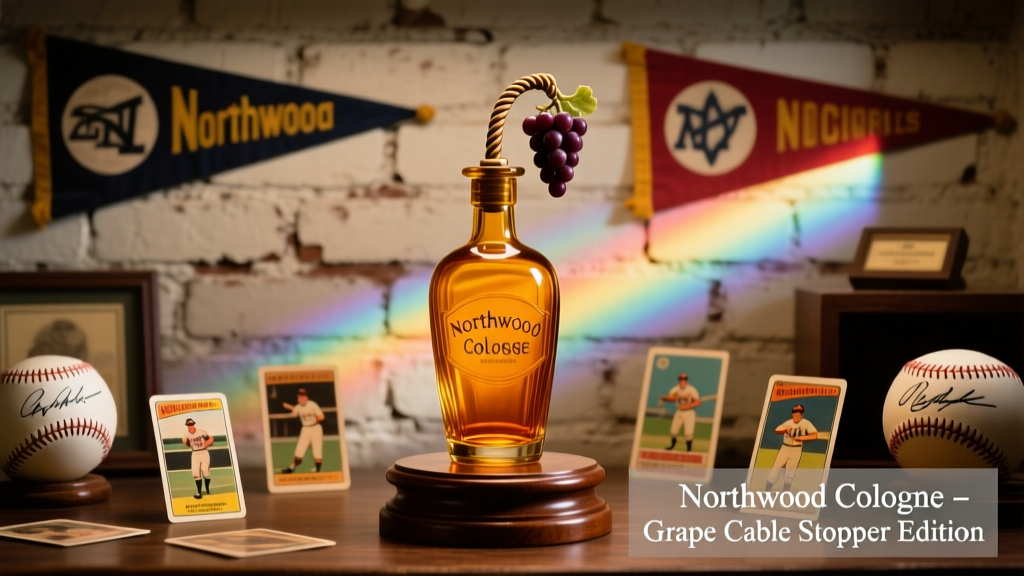
Northwood Cologne Bottle with Grape & Cable Stopper in Light Marigold Carnival Glass: Identification, History, and Market Value
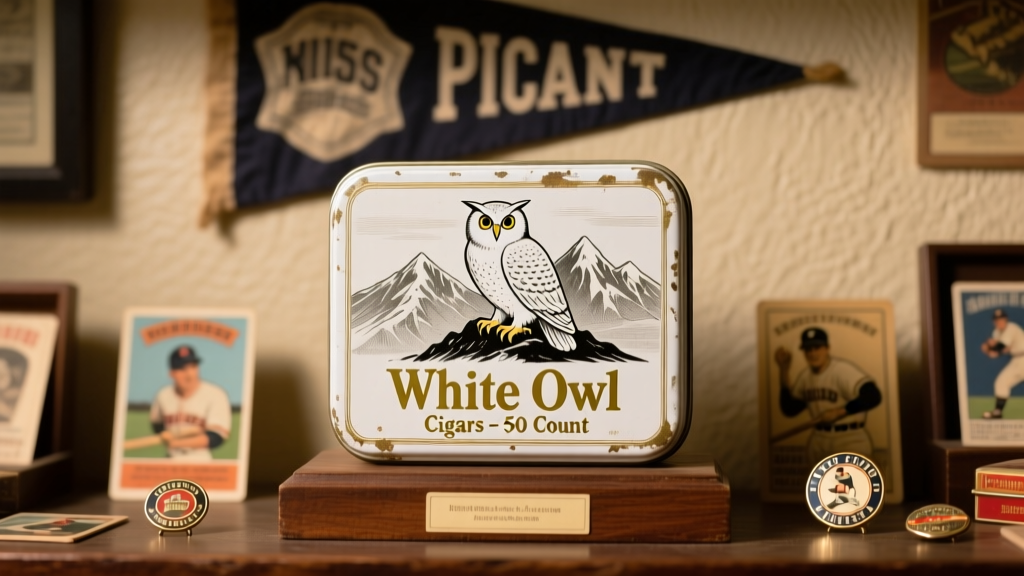
White Owl Cigars Slip-Lid Tin: Authenticating the Iconic 50-Count Lithographed Advertising Tin
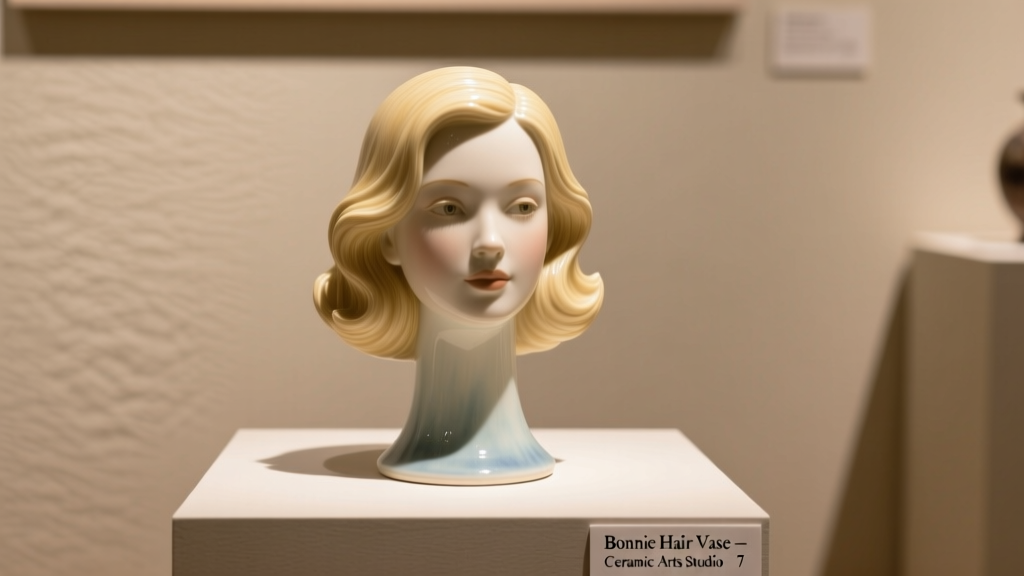
Head Vases: Bonnie Blond Hair by Ceramic Arts Studio — A Collector’s Guide to the Iconic 7-Inch Ceramic Sculpture
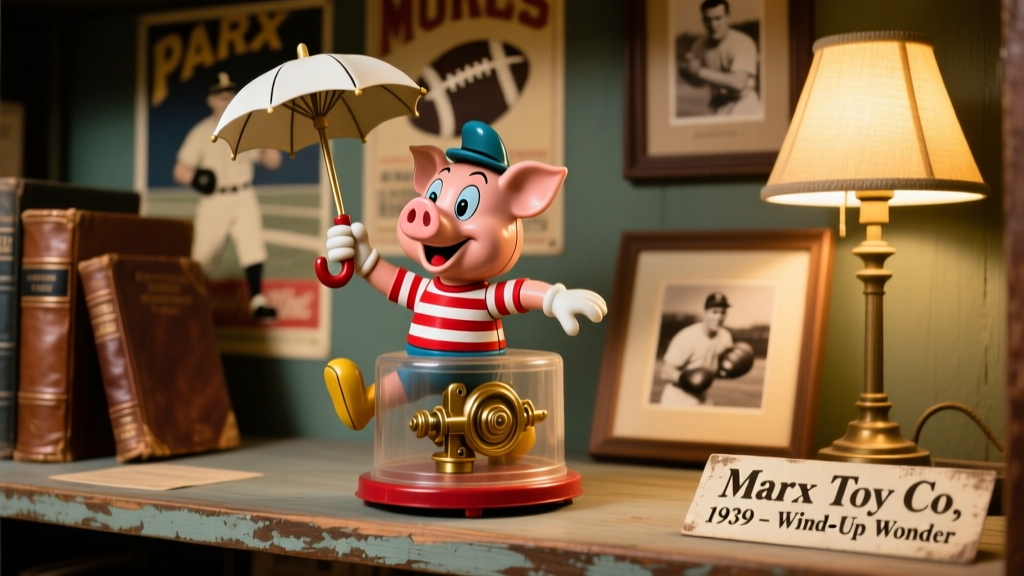
Toy Pig: Porky Pig Twirls Umbrella Windup by Marx — A 1939 Animated Collectible Masterpiece
Fiesta Turquoise Chop Plate (13-Inch): Collectibility, Authentication, and Historical Context
Quilts Patchwork Double Wedding 70 X 76 In: Authenticity, Provenance, and Collectible Value
Weavings in Sports Memorabilia: Authenticity, Value, and Historical Significance