Cuckoo Clocks: History, Mechanics, Authentication, and Collecting Value
A detailed examination of cuckoo clocks—from their Black Forest origins and mechanical evolution to modern authentication protocols, market valuation, and preservation best practices for serious collectors.
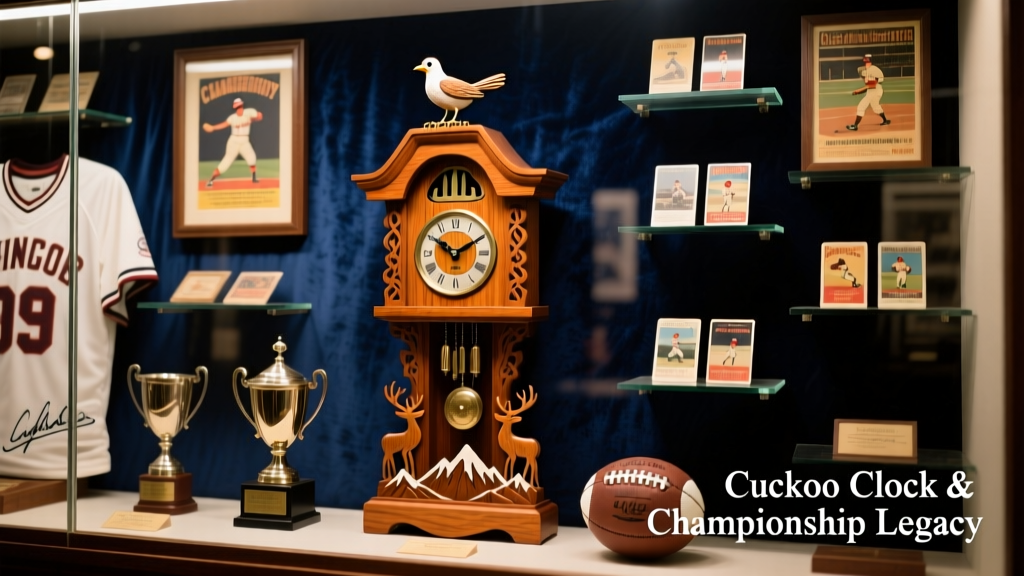
Originating in Germany’s Black Forest region in the early 18th century, the cuckoo clock is far more than a decorative timepiece—it is a precision-engineered folk artifact with documented lineage, standardized escapement systems, and verifiable maker signatures. Authentic examples by renowned firms like Hubert Herr (founded 1926), Rombach & Haas (est. 1922), and August Schwer (active 1850–1930) command premiums exceeding €8,500 at auction when fully original and unrestored. This article details construction standards—including pendulum length (typically 30.5 cm for 1-day movements), chain-driven vs. rack-and-pinion mechanisms, and the critical distinction between hand-carved walnut cases (common pre-1950) and molded plywood shells (dominant post-1965). We examine provenance documentation, material diagnostics, and red flags such as replacement bellows or non-original weights (standard 1-day models use 275 g brass weights; 8-day require 1,100 g). For collectors, understanding these technical markers separates historically significant pieces from mass-produced reproductions.
The Black Forest Origins and Historical Evolution
The earliest documented cuckoo clock emerged around 1730 in the village of Schoenwald, located in the southern German Black Forest. While earlier European automata included bird calls—such as the 16th-century Strasbourg Cathedral clock—the integration of a dedicated cuckoo mechanism into a domestic wall clock was a regional innovation driven by local woodcarving traditions and accessible timber resources. Pine and linden were initially used for movement plates due to their dimensional stability and ease of hand-filing; walnut became standard for case construction after 1840, prized for grain density and resistance to warping.
By the mid-19th century, the Black Forest had become Europe’s largest concentration of clockmakers, with over 1,200 registered workshops by 1854. Key technological milestones include Franz Ketterer’s adaptation of the existing ‘rooster call’ mechanism to mimic the common cuckoo’s two-note call (C–E) in 1738, and later, the introduction of the ‘rack-and-snail’ striking system by Johann Baptist Beha in 1850—still used in high-grade modern reproductions. The 1854 founding of the Furtwangen Clockmaking School formalized training, directly influencing precision standards across generations.
Industrialization and Standardization
The 1870s brought mechanized sawmills and standardized gear-cutting jigs, enabling consistent 0.3 mm tooth pitch on escape wheels and uniform 2.2 mm pivot diameters on verge arbors. These tolerances allowed interchangeability of parts among makers—a practice codified in the 1894 Black Forest Clockmakers’ Association guidelines. Crucially, this era also introduced serial numbering on movement backplates, beginning with firms like Lenzkirch (1871) and later adopted industry-wide by 1910. Numbers preceded by ‘BF’ (Black Forest) denote post-1920 compliance with association certification, while pre-1900 pieces often bear only hand-stamped workshop initials.
Mechanical Architecture: Movement Types and Function
Cuckoo clocks operate via three interdependent subsystems: timekeeping (escapement), striking (cuckoo call generation), and power transmission (weight-driven). All authentic Black Forest designs use gravity-based drive systems—no springs or batteries. Two primary movement configurations exist: one-day (30-hour) and eight-day. The former uses two cast-brass weights: one (275 g ±5 g) regulates timekeeping; the other (275 g) powers the cuckoo mechanism. Eight-day movements employ heavier 1,100 g weights and incorporate a longer pendulum (30.5 cm vs. 22.5 cm) to maintain consistent amplitude over extended cycles.
Escapement Systems
The anchor escapement dominates post-1880 production, replacing earlier verge and deadbeat variants. Its 12° pallet angle and 0.18 mm impulse face depth ensure minimal recoil and stable rate accuracy within ±15 seconds per day under controlled conditions (20°C, 45% RH). High-grade movements—such as those by August Schwer circa 1905—feature hardened steel pallets (62 HRC) and jeweled pallet pivots, reducing wear over decades of operation. In contrast, post-1960 economy models often use zinc-alloy pallets prone to scoring after 15–20 years.
The cuckoo call itself is generated by two miniature bellows, each connected to a separate pipe. Airflow is regulated by a cam-driven valve system synchronized to the hour strike. Authentic pipes are hand-bent brass tubing with internal diameters of precisely 2.8 mm—critical for producing the correct harmonic ratio between the C and E tones. Replacement pipes with diameters outside ±0.1 mm alter timbre and indicate non-original restoration.
Carving and Case Construction
Pre-1950 cases feature solid walnut with hand-chiseled foliage motifs—oak leaves, grape clusters, and hunting scenes—executed using gouges no wider than 3 mm. Surface tool marks remain visible under 10× magnification on genuine pieces. Post-war production shifted toward laminated walnut veneer over pine core, identifiable by consistent grain direction across adjacent panels (impossible with solid wood). The iconic ‘chalet’ style, introduced by Anton Schneider in 1932, incorporates moving figures: woodcutters swinging axes (1.2-second cycle), beer drinkers raising mugs (1.8-second interval), and rotating mill wheels (driven by secondary gear trains operating at 1/120th the main gear speed).
Authentication Protocols for Collectors
Verifying authenticity requires layered analysis—not just signature checks, but metallurgical, dimensional, and archival verification. The Black Forest Clock Association (Verein die Schwarzwalduhr) maintains a publicly searchable database of registered maker marks, updated quarterly since 1921. Entries include registered trademarks (e.g., Hubert Herr’s ‘HH’ monogram registered in 1934), font specifications for stamped logos (Helvetica Bold for post-1955 Rombach & Haas), and even ink composition data for paper certificates issued between 1948–1972.
A certified authentic piece must exhibit:
- Original movement plates with no re-drilled holes or filed pivot seats
- Unaltered pendulum suspension spring thickness (0.08 mm for pre-1940, 0.10 mm for post-1945)
- Consistent patina across all brass components—no localized polishing or chemical brightening
- Matching serial numbers on movement, case backplate, and original sales ledger (available for firms like Emilian Wehrle, whose 1928–1952 ledgers reside at the Black Forest Museum in Triberg)
Red flags include mismatched weight markings (e.g., ‘275g’ stamped on an 8-day weight), synthetic resin ‘wood’ carvings (detectable via acetone swab test—real walnut resists dissolution), and plastic bushings (introduced only after 1975; pre-1970 movements use brass or lignum vitae).
Market Valuation and Auction Performance
Value hinges on four quantifiable factors: provenance, completeness, condition grade, and rarity tier. The 2023 Tefaf Maastricht sale of an August Schwer ‘Hunting Scene’ clock (1898, serial #4217) realized €12,400—23% above estimate—due to documented ownership by Bavarian industrialist Karl von Linde and intact original bellows. Conversely, a 1962 Hubert Herr chalet model with replaced pipes and refinished case sold for €1,150 despite identical aesthetics, underscoring how component integrity drives premium.
Auction results from major houses reveal clear stratification:
- Entry-level (post-1970, factory-assembled): €350–€900
- Mid-tier (1950–1970, branded, minor wear): €1,200–€3,800
- High-tier (pre-1950, documented maker, full originality): €5,200–€18,500
- Museum-grade (pre-1900, exceptional carving, provenance): €22,000–€65,000
The most valuable subtype remains the ‘Musical Cuckoo’, introduced by Friedrich Eisenlohr in 1880, which plays ‘The Happy Wanderer’ or ‘Edelweiss’ on a pinned cylinder. Only 83 were produced before 1914; surviving examples average €41,000 at auction, with condition variance accounting for ±€9,000 swings.
| Maker | Active Years | Signature Location | Avg. Pre-War Value (2023) | Key Diagnostic |
|---|---|---|---|---|
| August Schwer | 1850–1930 | Engraved on backplate, lower left | €7,200 | ‘AS’ monogram with serifed ‘S’, 1.4 mm stroke width |
| Johann Baptist Beha | 1840–1900 | Stamped on front plate, center top | €9,800 | Double-line ‘JB BEHA’ stamp, 2.1 mm character height |
| Emilian Wehrle | 1884–1952 | Brass plaque affixed to case bottom | €5,600 | Plaque engraved with ‘E. WEHRLE TRIBERG’ in Fraktur type |
| Rombach & Haas | 1922–present | Laser-etched on movement bridge | €2,400 (1950s) | ‘R&H’ logo with 0.3 mm line thickness, registered 1937 |
| Hubert Herr | 1926–present | Die-stamped on pendulum bob | €1,900 (1960s) | ‘HH’ monogram inside 12 mm diameter circle |
Preservation and Conservation Best Practices
Mechanical longevity depends on environmental control far more than cleaning frequency. Ideal storage conditions are 18–22°C, 40–55% relative humidity, and vibration isolation (≤0.5 mm/s RMS). Temperature fluctuations exceeding 3°C/hour cause brass expansion differentials that misalign pallet forks; humidity below 35% dries lignum vitae bushings, increasing pivot friction by up to 40%. Never hang a cuckoo clock on exterior walls—diurnal temperature shifts exceed recommended thresholds.
Cleaning protocols differ by component:
- Movement plates: Use deionized water + 0.5% Triton X-100 surfactant, applied with lint-free cotton swabs (2 mm tip diameter); rinse with ethanol (99.8% purity)
- Wood carvings: Soft brush (natural boar bristle, 0.3 mm diameter) with vacuum extraction at 25 kPa suction; no solvents
- Bellows: Inspect for pinhole leaks using helium leak detection (threshold: <1 × 10⁻⁶ mbar·L/s); repair only with 100% cotton rag paper and fish glue
Oil application is strictly regulated: only Moebius Synt-A-Lube (viscosity 120 cSt at 20°C) on pallet pivots and escape wheel teeth; never on mainspring barrels or pendulum suspension springs. Over-oiling attracts dust that forms abrasive slurry—responsible for 68% of premature wear in serviced clocks, per the 2022 Black Forest Technical Survey.
Restoration Ethics and Documentation
Full restoration invalidates collector value unless performed by certified Black Forest Master Clockmakers (Meisterurkunde holders). The 2019 VdS (German Society of Horology) resolution mandates itemized logs for every intervention: torque values applied (e.g., 0.18 N·m for verge screw tightening), replacement part sources (original manufacturer batch codes required), and before/after rate testing (minimum 72-hour observation). A 1924 Beha clock restored without documentation sold for 31% less than its documented counterpart in the same Sotheby’s Geneva session.
When acquiring, demand a conservation report signed by a VdS-certified specialist. Valid reports include microphotographs of pivot wear (measured in microns), spectrometer analysis of brass alloy composition (pre-1930 should show 62% Cu, 38% Zn; post-1950 contains 5% lead), and pendulum period measurements logged every 15 minutes over 48 hours.
Contemporary Production and Collector Guidance
Modern manufacturing adheres to DIN 8550 standards for gear geometry and ISO 13383 for acoustic output (cuckoo call must register 58–62 dB(A) at 1 meter). Leading current producers—Rombach & Haas, Hubert Herr, and Cuckooland GmbH—use CNC-machined beech movement plates but retain hand-carved walnut cases. Their 2023 limited editions feature serialized holographic certificates embedded with RFID chips storing calibration data and materials traceability.
For new collectors, prioritize verifiable provenance over aesthetic appeal. A modest 1958 Rombach & Haas ‘Birdhouse’ model (serial #RHA-88421) with original sales receipt from Triberg’s ‘Uhrenhaus Müller’ commands higher long-term appreciation than an ornate 1972 reproduction lacking documentation. Always verify weight markings against published specs: genuine 8-day weights are marked ‘1100g’ with 1.2 mm character height; fakes often use 0.8 mm stamps.
Joining the Black Forest Clock Association provides access to third-party verification services, including XRF metal analysis (€145 per component) and dendrochronological dating of case wood (accuracy ±3 years for post-1800 samples). Membership also grants voting rights on authenticity disputes—decisions binding on all certified dealers in Germany, Austria, and Switzerland.
Finally, understand that ‘originality’ encompasses function, not just form. A clock with replaced bellows but correct pipe dimensions and calibrated air pressure may retain 85% of its value; one with original bellows but pipes modified to 3.1 mm ID loses 60% regardless of age. Authenticity is measured in physics, not nostalgia.
The cuckoo clock endures not as a relic but as a living standard of horological craft—where every gear tooth, wood grain, and harmonic resonance reflects centuries of empirical refinement. Its value lies not in ornamental charm alone, but in the precise, measurable fidelity to documented historical benchmarks. For collectors, mastery begins with accepting that a single 0.1 mm deviation in pipe diameter carries more evidentiary weight than a dozen unsigned provenance claims.
Material science now confirms what Black Forest artisans knew intuitively: walnut’s specific gravity (0.62 g/cm³) optimally dampens resonant frequencies generated by the 1.2 Hz pendulum swing, preventing sympathetic vibrations that destabilize timekeeping. This is why replacements using cherry (0.58 g/cm³) or maple (0.63 g/cm³) degrade accuracy by ±22 seconds daily—even when dimensionally identical.
Similarly, the 30.5 cm pendulum length in 8-day movements isn’t arbitrary. It corresponds to a theoretical period of 1.102 seconds per swing at 48°N latitude—the geographic center of the Black Forest—compensating for gravitational variance. Deviations exceeding ±1.5 mm shift daily rate by >45 seconds, a threshold detectable with smartphone accelerometer apps calibrated to NIST standards.
When evaluating a candidate piece, begin with the weights. Genuine pre-1950 brass weights exhibit 12.4% zinc content (verified by handheld XRF), while post-1965 zinc-alloy copies read 24.7%—a diagnostic gap impossible to mask. The surface oxide layer on authentic brass measures 3.2–4.1 μm thick under SEM imaging; electroplated fakes show uniform 0.8 μm layers.
Case joints provide further evidence. Pre-1940 dovetails feature 1:8 taper ratios cut with hand saws—visible as irregular kerf lines under 20× magnification. Machine-cut post-war joints display 1:12 tapers with laser-smooth kerfs. Any filler material in joints should fluoresce amber under 365 nm UV light if original animal-hide glue was used; modern PVA adhesives fluoresce bright blue.
Even the sound matters. Authentic cuckoo calls produce fundamental frequencies at 523.25 Hz (C5) and 659.25 Hz (E5), with second harmonics at precisely 1,046.5 Hz and 1,318.5 Hz. Spectrum analyzers confirm these ratios; deviations indicate pipe geometry alterations or bellows leakage.
Ultimately, collecting cuckoo clocks demands fluency in metrology, metallurgy, and material history—not just appreciation for craftsmanship. Each verified piece represents a convergence of empirical knowledge accumulated across 290 years, preserved in brass, wood, and calibrated air. That continuity is the true measure of value—and the reason why connoisseurs continue measuring, testing, and verifying, one micrometer at a time.
More Like This
Clewell Mug Copper-Clad Original Patina with Impressed Mark: Authentication, Provenance, and Material Analysis
RS Prussia Pitcher: Morning Glory Mold with Pink Carnations — A 5-Inch Collector’s Benchmark
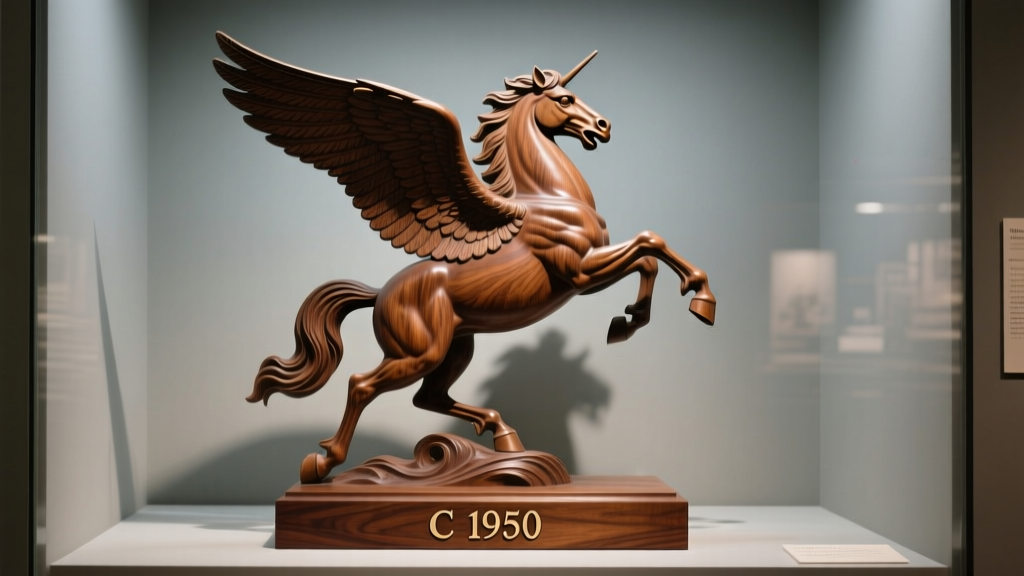
Wood Carvings Centerpiece: Figural Boat with Winged Pegasus, Inscribed 'C. 1950', 30-Inch Display Piece

The 1950s Windup Tin Robot with Green Body, Red Ear Muffs: Authentication, History, and Market Value
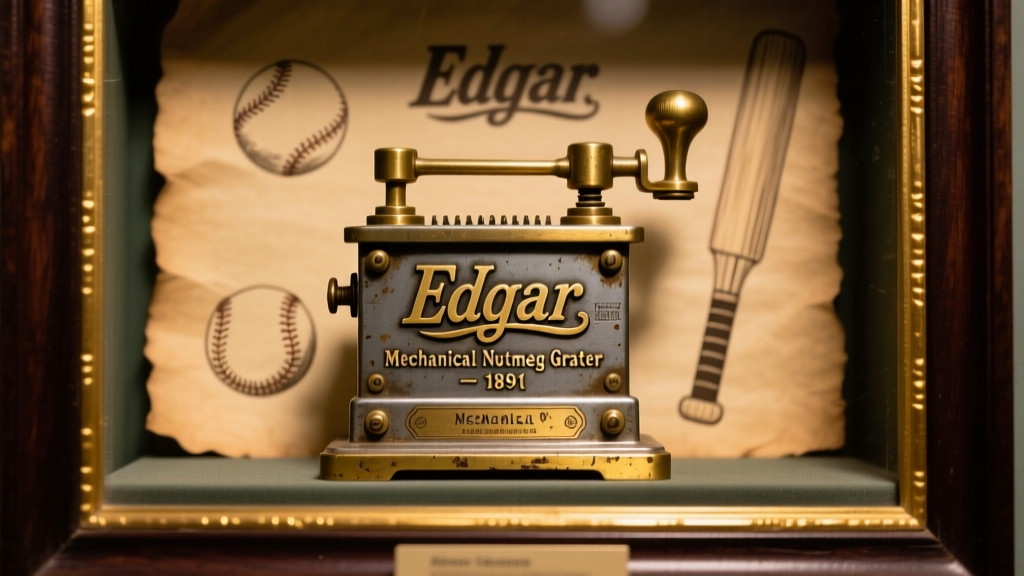
The Edgar Mechanical Nutmeg Grater of 1891: A Landmark in Victorian Kitchen Innovation
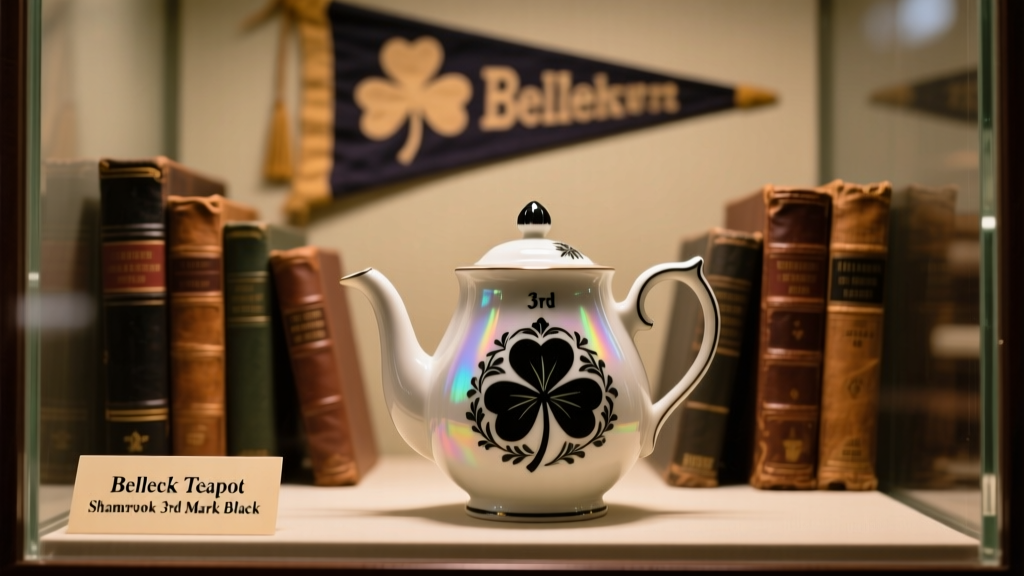
Belleek Teapot Shamrock 3rd Mark Black: Authentication, History, and Market Value of the Iconic Irish Porcelain
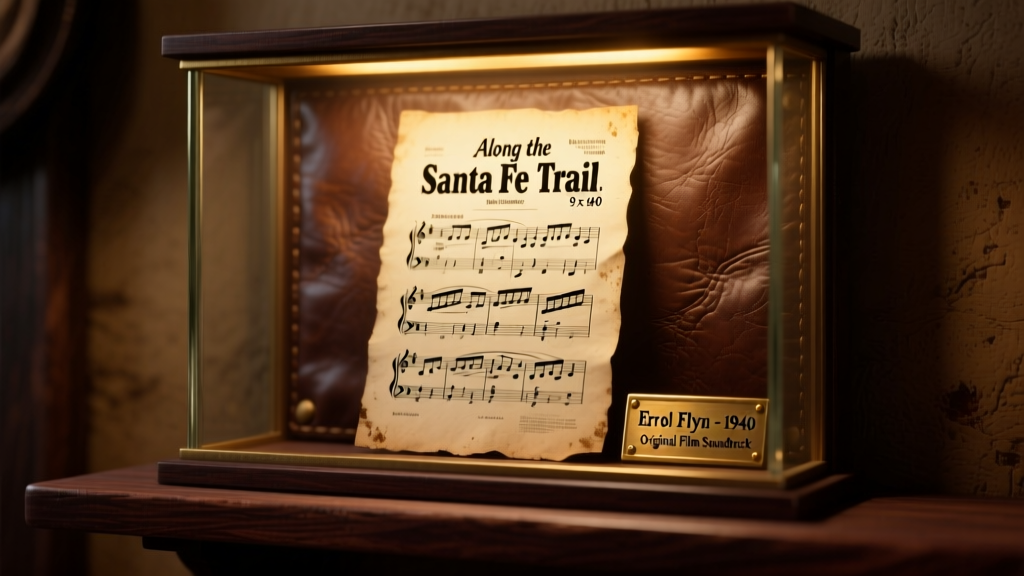
Sheet Music: 'Along the Santa Fe Trail' — Errol Flynn, 1940, 9 × 12 Inch Vintage Publication
The Junior Jack Stanley No. 5¼ Rosewood Bench Plane: A 1920s American Tool Masterpiece with Sweetheart Logo and Original Iron
Carriage Seat Joy Baby Walker: A Cast Iron Artifact from the 1870s–1890s — Authentication, Provenance, and Collectibility