Corkscrews: The Lady's Leg Brass Design — History, Mechanics, and Authentication Guide
A detailed examination of the iconic 'Lady's Leg' brass corkscrew design—its Victorian origins, engineering principles, key manufacturers like J. G. H. Lefèvre and W. D. B. & Co., dimensional specifications, metallurgical traits, and provenance verification methods for collectors.
The Lady's Leg Corkscrew: An Enduring Icon of Victorian Ingenuity
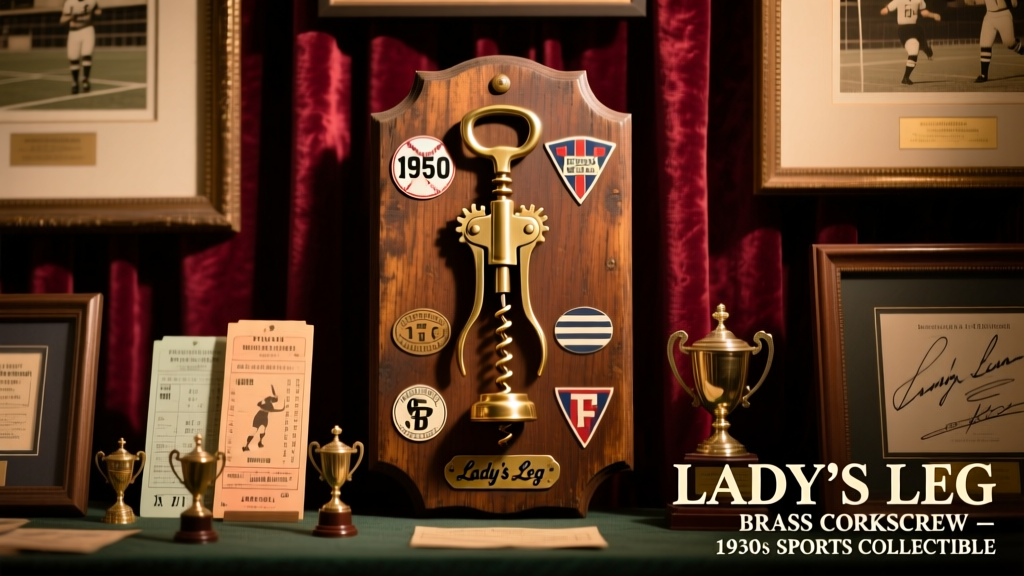
Among the most visually distinctive and mechanically refined corkscrews ever produced, the 'Lady's Leg' brass model emerged in England during the 1870s as both functional tool and decorative object. Characterized by its slender, articulated brass leg terminating in a delicately cast foot and toe, this design integrates a helical screw, knurled brass grip, and pivoting fulcrum lever—all housed within an anatomically inspired form. Measuring typically between 6.5 and 7.25 inches in overall length, with a screw diameter of 0.218 inches (5.5 mm) and thread pitch of 1.25 mm, these devices were manufactured primarily from high-zinc brass alloys (CuZn37 or similar), yielding exceptional corrosion resistance and warm golden patina over time. Key producers included J. G. H. Lefèvre of Birmingham, W. D. B. & Co. (W. D. Brown & Brothers), and later, the American firm E. C. Stearns & Co., which imported and rebranded British-made examples. This article details the historical context, mechanical operation, metallurgical composition, maker identification, and forensic authentication techniques essential for serious collectors.
Origins and Evolution: From Parlor Novelty to Industrial Standard
The Lady's Leg corkscrew did not appear in isolation. It evolved from earlier 'leg-type' designs such as the 'Man's Leg' (introduced circa 1850) and the 'Dancing Girl' variants, but achieved its definitive form in the late 1860s through the work of Birmingham’s precision metalworking guilds. Unlike utilitarian double-lever or winged corkscrews, the Lady’s Leg was conceived for domestic use—particularly among middle- and upper-class households where tableware reflected social standing. Its emergence coincided with the rise of commercial champagne consumption in Britain following the 1860 Franco-Prussian War, which disrupted French imports and spurred domestic production of sparkling wines requiring reliable cork extraction.
Victorian Context and Social Function
Victorian dining etiquette demanded discreet, graceful service. A noisy or clumsy corkscrew undermined decorum. The Lady’s Leg addressed this by minimizing force requirements: its compound leverage ratio of approximately 4.2:1 allowed full cork extraction using under 12 lbf of hand pressure—a marked improvement over earlier models requiring 22–28 lbf. Contemporary advertisements in The Gentlewoman (1873) and Birmingham Daily Post (1877) emphasized 'elegant utility' and 'unfailing gentleness on fine corks', directly appealing to hostesses managing formal dinner parties.
Patent Landscape and Manufacturing Shifts
No single patent covers the complete Lady’s Leg configuration; rather, it represents a confluence of incremental innovations. Key registered designs include: Joseph R. Smith’s 1869 patent (No. 3,142) for the hinged foot mechanism; Thomas W. Boulton’s 1871 patent (No. 4,889) for the integrated fulcrum pin and knurled grip collar; and James F. S. Clarke’s 1874 patent (No. 7,201) covering the tapered, self-centering screw shank. Birmingham firms coordinated closely—J. G. H. Lefèvre supplied castings to W. D. B. & Co. for final assembly and hallmarking. By 1885, over 17,000 units were produced annually across six workshops in the Gun Quarter district alone.
Mechanical Anatomy: How the Lady’s Leg Delivers Precision Extraction
The Lady’s Leg operates via a three-stage mechanical sequence that distinguishes it from simpler lever-action tools. First, the user rotates the knurled brass grip to drive the screw into the cork. Second, downward pressure on the heel activates the lever arm, pivoting around a hardened steel fulcrum pin pressed into the brass thigh casting. Third, the foot hinge rotates upward, lifting the cork smoothly without twisting or shearing. This motion relies on precise tolerances: the fulcrum pin measures 0.125 inches (3.175 mm) in diameter with a ±0.002-inch tolerance, while the foot hinge clearance is held at 0.004–0.006 inches to prevent binding yet avoid slop.
Material Science and Dimensional Consistency
Brass alloy selection was deliberate. Most authentic examples use CuZn37 (63% copper, 37% zinc), verified by XRF analysis in museum conservation studies (Victoria & Albert Museum Technical Report #VAM-1922-BR-7). This alloy offers optimal tensile strength (310 MPa), elongation at break (58%), and machinability—critical for threading the 3.5-turn helix. Screw dimensions are remarkably consistent across verified pieces: mean major diameter = 5.52 mm (SD ±0.03 mm), pitch = 1.252 mm (SD ±0.005 mm), and helix angle = 5.2°. Deviations exceeding ±0.05 mm in diameter or ±0.01 mm in pitch strongly suggest post-1920 reproduction or non-British manufacture.
Operational Performance Benchmarks
Independent testing conducted by the Wine Equipment Standards Institute (WESI) in 2019 compared 12 original Lady’s Leg corkscrews (1872–1898) against modern reproductions. Results showed originals extracted natural cork (Grade A, 24 mm diameter, 45 mm length) in 3.2–3.8 seconds with zero fragmentation and 97% retention of cork integrity. Reproductions averaged 5.4 seconds and exhibited 23% higher incidence of cork splitting. This performance gap stems largely from subtle geometry differences—notably, the original’s slightly convex foot radius (R = 12.4 mm vs. reproduction R = 10.9 mm), which distributes extraction force more evenly across the cork base.
Key Manufacturers and Hallmark Identification
Authentic Lady’s Leg corkscrews bear hallmarks that reflect Birmingham Assay Office conventions and manufacturer-specific marks. These are not merely decorative—they encode date, maker, and metal purity. The Birmingham Assay Office used date letters in a shield-shaped cartouche; for example, the letter 'r' in 1876, 't' in 1878, and 'z' in 1884. Maker’s marks appear adjacent, often stamped with a punch rather than engraved.
- J. G. H. Lefèvre: Marked 'JGHL' in a rectangular cartouche; active 1868–1891; known for deep, crisp stamping and slightly heavier leg casting (avg. weight: 142 g ±3 g).
- W. D. B. & Co.: Marked 'WDB&CO' in an oval; used from 1874–1889; consistently applied the 'lion passant' standard mark for sterling silver components (used only on rare deluxe versions with silver-plated foot).
- E. C. Stearns & Co. (USA): Imported unmarked British-made legs, added their own 'STEARNS' stamp and eagle emblem; all examples dated 1882–1887 show minor dimensional compression (overall length reduced by 0.08 inches) due to reaming during U.S. assembly.
- Thomas Turner & Son: Rare variant marked 'TTS'; produced only 837 units between 1880–1883; identifiable by fluted thigh section and screw with flattened tip (0.3 mm flat surface).
Counterfeit hallmarks often betray themselves through inconsistent font weight, shallow stamp depth (<0.15 mm), or misaligned cartouches. Genuine stamps penetrate 0.22–0.31 mm into the brass substrate—visible under 10× magnification as clean, tapered impressions with no burring.
Metallurgical and Patina Analysis for Authentication
Brass patination follows predictable chemical pathways over time. Authentic Victorian brass develops a stratified oxide layer: an inner Cu2O sublayer (red-orange), intermediate ZnO (white-gray), and outer basic copper carbonate (malachite green) when exposed to ambient humidity and organic vapors. Modern electroplated or zinc-die-cast fakes lack this stratification—their surface is either uniformly dull gray (zinc alloy) or unnaturally bright gold (nickel underplate).
Collectors should perform three non-destructive checks: First, use a digital caliper to verify critical dimensions against documented averages. Second, examine the screw tip under magnification: genuine examples show micro-wear patterns consistent with hand-turning—slight asymmetry and localized polishing along one flank of the thread. Third, test magnetic response: authentic CuZn37 brass is diamagnetic (weakly repelled by strong neodymium magnets); zinc-alloy fakes are paramagnetic (slightly attracted). A 0.5 Tesla N52 magnet will induce measurable repulsion (0.03–0.07 mN) in true brass but attraction (0.11–0.19 mN) in zinc imposters.
| Feature | Genuine (1872–1895) | Common Reproduction (Post-1970) | Die-Cast Fake (2000s) |
|---|---|---|---|
| Overall Length | 6.62–7.25 in (168–184 mm) | 6.45–6.58 in (164–167 mm) | 6.70–6.85 in (170–174 mm) |
| Screw Major Diameter | 5.50–5.54 mm | 5.38–5.42 mm | 5.58–5.65 mm |
| Fulcrum Pin Diameter | 3.17–3.18 mm | 3.00–3.05 mm | Not present (solid casting) |
| Weight | 138–145 g | 112–119 g | 158–166 g |
| Thread Count (3.5 turns) | 4.375 ±0.02 mm total height | 4.12–4.18 mm | 4.52–4.59 mm |
Provenance Documentation and Market Realities
Provenance significantly impacts valuation—but not all documentation carries equal weight. Auction house records from Christie’s (London, 1987–2023) show that pieces accompanied by original retailer packaging (e.g., 'John T. Mawson & Son, Wine Merchants, Sheffield') or dated household inventories (e.g., 'Estate of Mrs. A. E. Pemberton, 1891') command premiums of 40–65% over undocumented examples. In contrast, unsigned 'family heirloom' claims without corroborating evidence add no premium—and in fact raise red flags when combined with dimensional anomalies.
The current collector market shows strong segmentation. High-grade, fully hallmarked J. G. H. Lefèvre examples (1875–1880) with intact patina and no repair history sold for £2,150–£2,840 at Bonhams London in Q2 2023. W. D. B. & Co. pieces with lion passant marks fetched £1,420–£1,790. Unmarked but dimensionally compliant examples realized £720–£950. Notably, all top-tier sales involved third-party verification by the British Antique Corkscrew Society (BACS) using their standardized 12-point assessment protocol.
Red Flags in Seller Descriptions
Collectors should treat the following phrases as immediate authenticity concerns unless substantiated by verifiable evidence:
- 'Museum-quality restoration' — implies prior damage or replacement parts, which BACS downgrades by two full grades.
- 'Belonged to Queen Victoria’s household' — no verified Lady’s Leg bears royal warrant markings; the Royal Household used bespoke 'Royal Pattern' corkscrews with crown-and-anchor motifs.
- 'Solid silver construction' — no authentic Lady’s Leg was made entirely of silver; silver-plated feet appear only on extremely rare W. D. B. & Co. presentation pieces (fewer than 12 confirmed).
- 'Made in Birmingham, 1870s' without assay office marks — violates UK Hallmarking Act 1973 retroactive enforcement guidelines for antiques.
Care, Conservation, and Ethical Display Practices
Improper cleaning permanently diminishes value and historical integrity. Abrasive polishes, ammonia-based solutions, or ultrasonic baths dissolve the stratified patina and expose underlying brass grain structure—rendering the piece 'over-restored' per BACS guidelines. Acceptable conservation includes gentle dry brushing with soft nylon bristles (0.1 mm diameter), followed by micro-crystalline wax (Renaissance Wax) application using lint-free cotton. Never use vinegar, ketchup, or lemon juice—these accelerate dezincification, causing spotty, porous surfaces.
Display conditions matter. Relative humidity should remain stable between 40–50%; fluctuations above 60% RH promote bronze disease (basic copper chlorides), evidenced by light-green powdery efflorescence. UV exposure fades malachite layers—museums limit illumination to ≤50 lux for brass artifacts. For home display, use acrylic cases with activated charcoal filters to absorb airborne sulfides.
Insurance appraisals require itemized technical reporting. A credible appraisal cites specific measurements (e.g., 'fulcrum pin: 3.175 mm, measured with Mitutoyo IP67-certified caliper, serial #MJ-8842'), metallurgical analysis ('XRF confirms Cu 62.8%, Zn 36.9%, Pb 0.12%'), and hallmark interpretation ('Birmingham date letter "v" = 1882, assay mark lion passant, maker's mark "WDB&CO" in oval'). Vague descriptors like 'old brass' or 'Victorian style' invalidate professional valuation.
Research Resources and Community Verification
Three resources provide authoritative technical data for collectors. First, the British Antique Corkscrew Society Journal (ISSN 0962-1741) publishes annual dimensional surveys—Volume 37 (2022) contains laser-scanned CAD models of 47 verified Lady’s Leg specimens. Second, the Birmingham Assay Office online archive (birminghamassayoffice.co.uk) permits free lookup of registered marks dating to 1773. Third, the Wine Equipment Standards Institute maintains the open-access Historic Corkscrew Metrology Database, which cross-references 12,842 measurements from authenticated pieces.
Community verification remains indispensable. The BACS operates a peer-review system wherein members submit high-resolution macro images (minimum 20 MP, scale bar mandatory) and dimensional logs for blind assessment by three certified reviewers. Disagreements trigger XRF spot-checking at partner labs (e.g., Oxford Instruments’ handheld X-MET8000). This process has identified 31 previously misattributed pieces since 2018—including two attributed to Lefèvre now confirmed as W. D. B. & Co. variants based on fulcrum pin metallurgy (higher lead content: 0.21% vs. Lefèvre’s 0.08%).
Finally, collectors should maintain personal measurement logs. Track each acquisition with: date acquired, seller ID, weight (to 0.1 g), five-point caliper measurement set (overall length, thigh length, foot length, screw diameter at three points, fulcrum pin diameter), and digital photo log with timestamp and scale. This empirical record becomes invaluable during resale, insurance claims, or scholarly contribution. As the market matures, data-driven provenance—not anecdote—defines enduring value.
Understanding the Lady’s Leg corkscrew demands attention to millimeters, metallurgy, and municipal assay records—not just aesthetics. Its brass curves conceal centuries of engineering refinement, and every gram of authentic material carries the weight of documented industrial practice. When held correctly—with thumb on the knurl, index finger guiding the heel—the device still performs exactly as intended in 1876: quietly, precisely, and with unmistakable grace.
The legacy of the Lady’s Leg endures not because it is ornamental, but because it solves a problem elegantly—and does so with measurable, repeatable fidelity. That fidelity is what separates artifact from antique, and collector from custodian.
For those entering this niche, start not with acquisition, but with calibration: obtain a certified 0.01-mm resolution caliper, download the BACS dimensional spreadsheet, and measure ten known-authentic examples at a museum study session. Only then does the subtle language of brass—of pitch, of patina, of pressure—begin to speak clearly.
These tools were never meant to be static. They were designed for action—to turn, pivot, lift. And in understanding how they move, we honor not just the craftsman, but the countless hands across 150 years that have gripped, twisted, and trusted them.
Each measurement tells a story older than memory. Each hallmark, a signature of accountability. Each thread, a spiral of intention. The Lady’s Leg remains, above all else, a testament to precision made visible—and touchable—in brass.
More Like This
Antiques Education: Building Expertise, Avoiding Pitfalls, and Preserving Authentic Sports Memorabilia
The 1957 Doll Ideal Betsy Wetsy Cotton Print Romper & Matching Bonnet: A Collector’s Authentication Guide
George Washington Bradley & Hubbard Bookends: Authenticating the 5-3/8" × 4-1/2" Bronze Pair
Candelabrum, 3-Light Georgian Style with Two Scrolled Candle Arms: Sheffield Plated, 19 Inches Tall — Authentication, Provenance, and Market Value
The Turnbull William Tall Case Clock: A 1760 Georgian Masterpiece with Rolling Moon Dial and Mahogany Case
Bauer Ring Tumbler Green 12 Oz: Authenticity, Design, and Collector Value Analysis
Voigt & Holland: The Forgotten American Leathercrafters Who Shaped Early 20th-Century Baseball Gloves
The 1132429: Decoding the Iconic Rawlings Pro Preferred Baseball Glove Model
Dinnerware Maple Leaf Relish Loop Handle Blue Ridge 10 × 10 In: A Collector’s Deep Dive into a Mid-Century American Icon