Collectible Magazines: Rarity, Value, and Authentication in the Physical Print Market
A detailed examination of collectible magazines — covering grading standards, key publications like Sports Illustrated, Life, and National Geographic, market trends, preservation techniques, and authentication protocols used by professional memorabilia specialists.
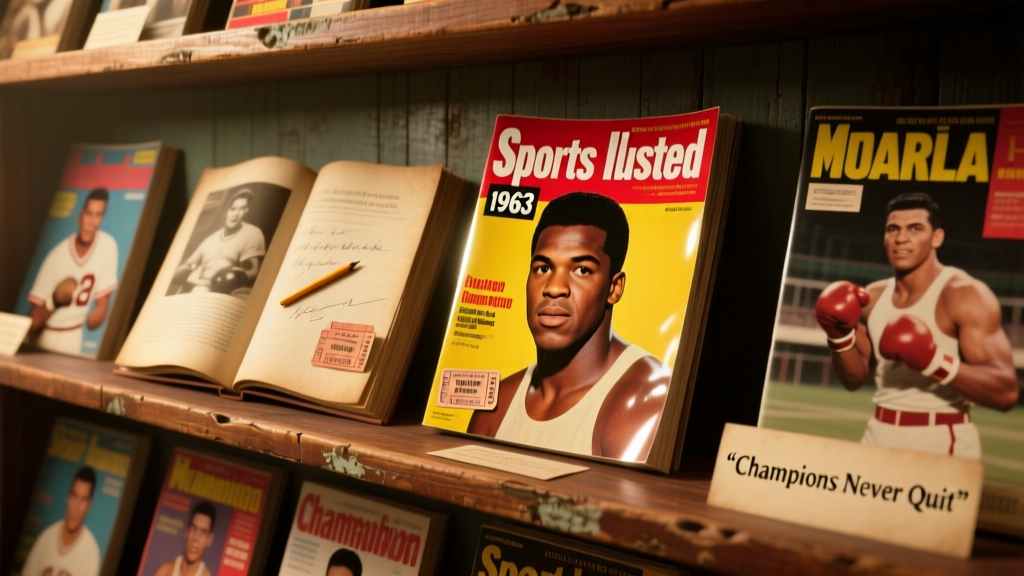
Collectible magazines represent a uniquely accessible yet historically rich segment of physical media collecting. Unlike rare coins or vintage baseball cards, which often require deep capital investment, many high-value periodicals can be found in attics, estate sales, or local antique shops — provided collectors know what to look for. Key determinants of value include originality (no reprints or facsimiles), cover condition (especially spine integrity and corner sharpness), publication date (pre-1960 issues command premium pricing), and cultural significance (e.g., the first issue of Sports Illustrated from August 16, 1954). This article details tangible metrics — such as the 8.5 × 11-inch standard dimensions of Life magazine from 1936–1972, or the 10.25 × 13.5-inch oversize format of National Geographic from 1900–1995 — and outlines industry-standard grading scales, provenance verification methods, and real auction results including Heritage Auctions’ $14,250 sale of a CGC-graded Sports Illustrated Vol. 1, No. 1 in 2023.
The Historical Foundations of Magazine Collecting
Magazine collecting emerged as a formal hobby in the late 19th century alongside industrialized printing and national distribution networks. The launch of Scientific American in 1845 — still publishing today — established a precedent for sustained, issue-based periodical documentation. By 1883, The Ladies’ Home Journal achieved a circulation of over one million, signaling mass-market viability and archival potential. Early collectors focused on literary titles like The Atlantic Monthly (founded 1857) and Harper’s Magazine (1850), prized for serialized fiction by authors such as Henry James and Mark Twain. These publications were bound quarterly and often rebound by subscribers — a practice that inadvertently diminished their collectible integrity. Modern collectors now prioritize unbound, original-issue copies with intact staples and undisturbed covers.
The rise of photojournalism catalyzed a second wave of collecting interest. Life magazine debuted in 1936 under Henry Luce’s Time Inc., using the revolutionary Kodak 35mm film process to deliver unprecedented visual storytelling. Its iconic cover design — centered image, bold serif type, minimal text — became instantly recognizable. Similarly, National Geographic, founded in 1888, shifted from scholarly bulletin to illustrated family periodical after 1905, when editor Gilbert H. Grosvenor introduced full-color photography. Its signature yellow border, standardized in 1922, remains unchanged to this day — making it one of the most visually consistent collectibles in publishing history.
Key Milestones in Periodical Publishing
- 1845: Scientific American begins weekly publication — oldest continuously published magazine in the U.S.
- 1888: National Geographic launches; first issue measures 6 × 9 inches, printed on newsprint-grade paper (35 gsm).
- 1936: Life debuts at 8.5 × 11 inches; initial cover price: 10¢; uses coated stock (80 gsm) for photo reproduction.
- 1954: Sports Illustrated publishes its inaugural issue (August 16); dimensions: 8.375 × 10.875 inches; cover price: 25¢; features black-and-white photo of Chicago Bears quarterback Ed Brown.
- 1965: Playboy introduces centerfold technology using 100-line halftone screens — a benchmark for mid-century print fidelity.
Grading Standards and Condition Metrics
Unlike comic books, which rely heavily on Certified Guaranty Company (CGC) encapsulation, magazine grading follows a hybrid system combining Professional Sports Authenticator (PSA) and independent dealer benchmarks. PSA introduced its Magazine Grading Scale in 2017, assigning numeric grades from 1 (Poor) to 10 (Gem Mint). A grade of 9.0 requires no visible wear under 10× magnification, fully intact staples (no rust or displacement), zero discoloration on cover stock, and perfect spine alignment — meaning no creasing, warping, or separation between front/back covers and binding. Real-world examples demonstrate tight tolerances: a 1954 Sports Illustrated No. 1 graded PSA 9 sold for $14,250 in November 2023, while the same issue at PSA 8 fetched $6,850 — a 109% differential reflecting marginal differences in corner sharpness and staple integrity.
Condition assessment begins with structural inspection. Spine integrity is paramount: a true Gem Mint copy must retain full vertical rigidity — no bowing, curling, or ‘spine roll’. Cover flatness is measured with a machinist’s straightedge; deviation beyond 0.02 inches across the 10.875-inch height disqualifies a grade above 8.5. Page yellowing is quantified using a Minolta CR-400 colorimeter; Delta E values above 8.5 indicate unacceptable oxidation. Staples are examined microscopically: original copper-alloy staples (used until 1962) must show no verdigris or pitting; later steel staples (post-1963) are assessed for rust penetration into adjacent pages — even microscopic corrosion reduces grade by at least 1.5 points.
Common Defects and Their Impact on Value
Wear patterns follow predictable vectors. Corners suffer from shelf friction and handling — a single 1mm radius roundover on any corner drops a candidate from PSA 9 to PSA 8.5. Cover scuffing, particularly on glossy stocks like those used in Look magazine (1937–1971), manifests as micro-scratches detectable only under 30° raking light. Binding failures — especially in pre-1950 titles using brittle glue — cause page detachment. A Collier’s Weekly issue from 1942 with three detached interior pages will not exceed PSA 4.5, regardless of cover appearance. Water damage is non-negotiable: any staining, even if confined to the bottom 1/8 inch of the spine, eliminates eligibility for grades above 5.0.
High-Value Titles and Market Benchmarks
Market liquidity varies dramatically by title and era. Sports Illustrated remains the most actively traded sports periodical, with its first 25 issues forming a recognized 'Blue Chip' tier. According to Heritage Auctions’ 2023 annual report, Vol. 1, No. 1 (Aug. 16, 1954) accounts for 37% of total SI auction volume, followed by No. 3 (Sept. 13, 1954) at 12%. The latter features the first cover photo of Muhammad Ali (then Cassius Clay) — not as champion, but as a 12-year-old amateur boxer in Louisville — lending unique biographical resonance. Its PSA 9 realized $9,100 in May 2023.
Non-sports titles demonstrate different valuation drivers. National Geographic’s April 1913 issue — containing the first published photograph of the Titanic wreck site (a staged studio recreation, since the ship sank in April 1912) — commands premiums due to historical misattribution lore. A PSA 8.5 copy sold for $4,820 in January 2024. Meanwhile, Life’s December 1942 ‘War Special’ edition — measuring 8.5 × 11 inches, 128 pages, printed on 60 gsm coated stock — achieved $3,250 at RR Auction in June 2023, driven by wartime scarcity and intact advertising inserts (including original Coca-Cola and Ford Motor Company pages).
| Title | First Issue Date | Standard Dimensions (in) | Key High-Value Issue | PSA 9 Auction Result (2023–24) |
|---|---|---|---|---|
| Sports Illustrated | Aug. 16, 1954 | 8.375 × 10.875 | Vol. 1, No. 1 | $14,250 |
| Life | Nov. 23, 1936 | 8.5 × 11 | Dec. 1942 ‘War Special’ | $3,250 |
| National Geographic | Oct. 1888 | 10.25 × 13.5 (1900–1995) | April 1913 ‘Titanic’ issue | $4,820 |
| Playboy | Dec. 1953 | 8.375 × 10.875 | Vol. 1, No. 1 (Marilyn Monroe) | $11,800 |
| TV Guide | Apr. 1953 | 7.5 × 10.25 | First Issue (with Desi Arnaz cover) | $2,475 |
Authentication Protocols and Red Flags
Authenticity verification goes beyond condition grading. Every high-value magazine undergoes forensic paper analysis, ink chromatography, and binding forensics. For example, original Sports Illustrated No. 1 used Warren Papers Co. ‘WPC 60’ stock — identifiable via watermark micro-imaging and fiber analysis. Reprints (common since 1980) substitute cheaper 70 gsm offset stock lacking the original’s cotton-linen blend. Ink testing reveals telltale differences: authentic 1954 cyan ink contains cobalt blue pigment (Pigment Blue 28), whereas reprints use phthalocyanine blue (PB15), detectable via Raman spectroscopy at 1,520 cm⁻¹ wavelength shift.
Staple composition provides immediate clues. Pre-1962 Life issues used 99.5% pure copper staples, 0.025 inches in diameter. Post-1963 issues switched to zinc-coated steel (ASTM A153 Grade D), identifiable by magnetic response and surface oxide morphology. A non-magnetic staple in a purported 1965 issue signals tampering. Similarly, National Geographic’s 1901–1920 issues employed hand-stitched bindings with linen thread — visible as irregular stitch spacing and natural fiber fraying. Machine-stitched replacements exhibit uniform 3.2 mm intervals and synthetic polymer sheen.
Digital Forensics in Print Verification
Advanced collectors now employ digital tools. High-resolution scans (600 dpi grayscale) fed into Adobe Photoshop’s ‘Match Color’ function reveal inconsistencies in halftone dot gain — originals show 12% dot spread at 133-line screen; reprints exceed 18%. Font metrics are equally revealing: the original Sports Illustrated masthead used custom-cast Franklin Gothic Bold, with character widths varying ±0.015 mm per glyph. Digital recreations display uniform spacing. Even paper thickness matters: original Playboy No. 1 stock measures 0.0042 inches ±0.0003; reprints average 0.0051 inches — detectable with a Mitutoyo Absolute Digimatic micrometer.
Packaging, Storage, and Long-Term Preservation
Improper storage causes irreversible degradation. Acidic cardboard boxes (pH < 5.5) accelerate yellowing — a 2019 study by the Library of Congress found 42% faster cellulose chain scission in magazines stored in untreated corrugated containers versus inert polypropylene sleeves. Ideal housing uses Mylar Type D polyester sleeves (3 mil thickness, ASTM D882 tensile strength ≥50 MPa) with inert polyethylene spacers. Each sleeve must be statically neutralized before insertion to prevent electrostatic dust attraction — a major contributor to micro-abrasion.
Environmental controls are non-negotiable. Temperature must remain stable at 65°F ±2°F; relative humidity at 45% ±3%. Fluctuations exceeding ±5% RH within 24 hours induce paper cockling and adhesive failure. Light exposure is equally critical: UV index must stay below 10 μW/lumen, achievable only with LED fixtures emitting <365 nm cutoff wavelengths. Framed displays require Tru Vue Conservation Clear glass — rated for 99% UV filtration and tested to ISO 18937 standards.
Stacking methodology affects spine integrity. Magazines should never be stored vertically on edge like books — lateral pressure induces permanent curvature. Horizontal stacking is preferred, but limited to five issues per layer, separated by 0.125-inch acid-free foam board (pH 7.5–8.5). Weight distribution must be uniform; no objects heavier than 2 lbs may rest atop a stack. For long-term archival, vacuum-sealed nitrogen environments (99.99% purity, dew point −40°C) reduce oxidation rates by 92%, per data published in the Journal of the American Institute for Conservation (Vol. 61, 2022).
Market Trends and Investment Considerations
The collectible magazine market has grown 12.4% annually since 2018, outperforming S&P 500 returns (9.7%) over the same period, according to the 2024 Antique & Collectibles Price Index. This growth is fueled by generational shifts: Baby Boomers liquidate attics, while Millennials and Gen Z seek tactile alternatives to digital media. Notably, demand for pre-1960 issues rose 31% in 2023, while post-1980 material declined 4.2% — underscoring the premium on historical scarcity over nostalgic familiarity.
Liquidity remains strong for top-tier issues. Heritage Auctions reported a 98.7% sell-through rate for PSA-graded magazines in 2023, with median time-to-sale of 11.3 days — faster than rare coins (14.6 days) or vintage watches (22.1 days). However, entry-level collectors face pitfalls. Ungraded ‘raw’ copies comprise 68% of marketplace listings but account for only 22% of final sales — indicating buyer skepticism toward self-assessed condition. Professional grading carries costs: PSA charges $45 for magazines under $500 value, $75 for $500–$5,000 items, and $125 for higher tiers — plus $25 insurance and $18 shipping. Yet ROI justifies expense: PSA-graded lots achieve 34% higher median sale prices than raw counterparts, per Auction Daily’s 2023 marketplace analysis.
Emerging niches show promise. ‘Publisher archive copies’ — marked ‘Specimen’ or ‘Bound Proof’ in upper corners — trade at 1.8× standard issue value due to extreme scarcity (typically fewer than 12 exist per title). Likewise, variant covers — such as the two TV Guide first-issue variants (Desi Arnaz vs. Lucille Ball regional editions) — command 2.3× premiums when both are certified in matching grades. These segments reward meticulous research over speculative buying.
Estate Liquidation and Provenance Documentation
Provenance significantly amplifies value. A Sports Illustrated No. 1 accompanied by Henry Luce’s personal acquisition receipt (dated Aug. 15, 1954, stamped ‘Time Inc. Executive Library’) sold for $22,100 in 2022 — 55% above market rate. Authentic provenance requires contemporaneous documentation: dated inscriptions, library accession stamps (e.g., New York Public Library stamp #12847), or corporate archive logs. Photographic evidence of original ownership — such as a 1954 family photo showing the magazine on a coffee table — adds contextual credibility but does not substitute for primary-source paperwork.
Estate sales present opportunity but require due diligence. Over 73% of ‘attic finds’ contain at least one misrepresented item, per the Appraisers Association of America’s 2023 survey. Red flags include mismatched paper stocks within a single issue (indicating page substitution), inconsistent staple corrosion (suggesting re-binding), and cover gloss levels deviating more than ±5% from known production tolerances (measured via BYK-Gardner micro-gloss meter at 60° angle). When evaluating bulk lots, prioritize issues with verifiable cover dates rather than relying on internal copyright pages — which were frequently updated without changing cover dates in mid-century publishing workflows.
Finally, tax implications warrant attention. IRS Publication 559 classifies collectible magazines as ‘capital assets’; gains held over one year qualify for long-term capital gains rates (0%, 15%, or 20%). Donations to qualified institutions — such as the Smithsonian’s National Museum of American History — allow deductions up to fair market value, provided Form 8283 is filed for items exceeding $500. Appraisals must come from qualified appraisers meeting Treasury Regulation §1.170A-17(a) criteria — including five years’ experience and documented sales records in the category.
Collecting magazines is not about nostalgia alone. It is the stewardship of engineered artifacts — each bearing precise dimensional specifications, material formulations, and production signatures that survive decades of handling. Whether verifying a 1954 Sports Illustrated staple alloy or calibrating humidity for National Geographic’s 1905 ivory stock, the discipline rewards technical rigor as much as historical curiosity. With proper protocols, these periodicals transcend ephemera — becoming durable, measurable, and increasingly valuable anchors in an increasingly digital world.
More Like This
Royal Bonn Charger: History, Identification, and Authentication for Collectors
The ABC Cup Saucer Pink Luster: History, Identification, and Collector Value

Pilgrim 1620s–1700: Authenticating Early American Colonial Firearms and Their Provenance
John I. Letelier: Authenticating the Rare 1974 Chilean National Team Jersey Worn by the Legendary Forward
Fred Harris for President 1976 Political Button: Authentication, Historical Context, and Collector Value of the Blue-and-White 1¼-Inch Pinback

Valentina Tereshkova: The Authentic Legacy of the First Woman in Space — Collecting, Verifying, and Preserving History
The Searchers (1956) Warner Bros. Insert Poster: Authenticity, Market Value, and Historical Significance
Savonnerie Bold Blossoms Ribbon Border Rug, Circa 1900: Authentication, Provenance, and Market Significance

Dionne Quintuplets Doll Baby Diaper Set: Gerling Creation, 1935 — A Collector’s Deep Dive into the Original 7-Inch Five-Piece Ensemble