Neoclassical Mahogany Drop-Leaf Dining Tables: Authentication, Provenance, and Market Value for Collectors
A detailed examination of 18th–19th century Neoclassical mahogany drop-leaf dining tables—including construction techniques, maker attributions, period-specific hardware, documented measurements, and verified auction results—written for serious collectors and authentication professionals.

Neoclassical mahogany drop-leaf dining tables—produced primarily between 1760 and 1830 in England and colonial America—are among the most rigorously studied and highly valued pieces in historic furniture collecting. These tables combine architectural precision with refined ornamentation: tapered fluted legs, reeded borders, anthemion finials, and dovetailed mahogany leaves that fold flush without gaps. Authentic examples command $22,000–$145,000 at major auctions, with documented provenance adding 30–65% premium. This article details verifiable construction markers, maker signatures (including Thomas Chippendale, Gillow & Co., and John Linnell), precise dimensional benchmarks, and forensic authentication protocols used by institutions like the Victoria & Albert Museum and the Winterthur Museum.
Historical Context and Design Evolution
The Neoclassical movement in furniture design emerged in England during the mid-18th century as a direct response to the ornate Rococo style. Inspired by newly excavated Greco-Roman ruins at Pompeii and Herculaneum—and disseminated through pattern books such as Robert Adam’s Works in Architecture (1773) and George Hepplewhite’s Cabinet-Maker and Upholsterer’s Guide (1788)—designers shifted toward symmetry, geometric clarity, and archaeological motifs. The drop-leaf dining table became a hallmark domestic object of this era: functional for smaller homes yet expandable for formal gatherings.
Early Neoclassical examples (c. 1760–1785) typically feature cabriole legs terminating in pad feet or spade feet, often with carved acanthus or shell motifs. By the 1790s, designers embraced straighter lines and stricter classical vocabulary: tapering square or octagonal legs, fluting, and brass or ormolu mounts shaped as lion masks, ram’s heads, or Greek key bands. The transition from Rococo to Neoclassical is clearly visible in the work of London cabinetmaker Thomas Chippendale, whose 1762 Gentleman and Cabinet-Maker’s Director included both styles—but his later commissions, like those for Nostell Priory (1766), reflect early Neoclassical restraint.
Material Science and Wood Identification
Mahogany—specifically Swietenia mahagoni from Jamaica and Hispaniola—was the dominant timber for high-end Neoclassical furniture between 1720 and 1820. Its density (0.65–0.75 g/cm³), fine straight grain, and natural resistance to rot made it ideal for structural integrity and surface carving. Authentic Neoclassical tables exhibit a characteristic deep reddish-brown patina that darkens with age; surface wear patterns follow predictable paths: heavier abrasion along leaf edges, lighter wear on central rails, and subtle compression marks where leaves rest against supports.
Wood Grain and Toolmark Analysis
Under 10x magnification, genuine period mahogany shows consistent interlocking grain with occasional ribbon figure. Saw marks left by pit saws (pre-1780) are irregular and angled; those from early circular saws (post-1795) display uniform parallel kerfs. Dovetail joints on original leaves have hand-cut pins averaging 3.2–4.1 mm wide, with slight asymmetry and faint chisel scoring—distinct from machine-cut dovetails introduced after 1825, which show perfect uniformity and no toolmark residue.
Distinguishing True Mahogany from Substitutes
Later reproductions frequently substitute African sapele (Entandrophragma cylindricum) or Philippine lauan (Shorea spp.), both lighter in weight (sa: 0.58–0.67 g/cm³; lauan: 0.45–0.55 g/cm³) and lacking mahogany’s natural luster. A simple ethanol swab test reveals differences: true mahogany yields minimal color transfer; sapele leaches reddish tannins; lauan bleeds yellowish sap. X-ray fluorescence (XRF) analysis of metal mounts further confirms period authenticity—original brass contains 62–67% copper and 33–38% zinc, whereas Victorian-era brass averages 59–61% copper and modern alloys exceed 70% copper.
Structural Anatomy and Hardware Verification
A Neoclassical drop-leaf table comprises five core components: the fixed central section (often called the ‘well’), two hinged leaves, supporting brackets or gates, a stretcher system, and leg assemblies. Each element bears diagnostic clues. Original hinges are typically wrought iron or brass, measuring 75–85 mm in length, with hand-forged screw holes showing minor oval distortion from repeated tightening. Later replacements use machine-threaded screws with clean, cylindrical bores.
The gate-leg mechanism—where hinged supports swing out beneath the leaf—is a signature feature of English Neoclassical tables. Authentic gates measure precisely 380–410 mm in height and pivot on forged iron pintles secured with rosehead nails (diameter: 2.8–3.3 mm). American variants often employ S-shaped brass brackets bolted directly to the underside of the leaf—a construction method confirmed in surviving Gillow & Co. workshop bills from Lancaster, dated 1789–1802.
Provenance Documentation Standards
For authentication, provenance must include at minimum three independent, contemporaneous records: (1) a bill of sale or inventory listing dimensions, wood type, and maker; (2) a photograph or engraving showing the piece in situ prior to 1900; and (3) conservation reports detailing original finishes and repairs. The 2018 sale of a 1792 John Linnell table (Sotheby’s lot 142) achieved £127,000 due to its inclusion in the 1812 Inventory of Lord Leveson-Gower’s Stafford House, a watercolor sketch by William Marlow, and a 1923 Victoria & Albert Museum condition report.
Maker Attribution and Workshop Signatures
Only a small fraction of Neoclassical tables bear legible maker marks. Gillow & Co. of Lancaster stamped many pieces with an incised ‘G’ within a lozenge, usually located on the underside of the central rail near the stretcher tenon. Thomas Chippendale rarely signed furniture but employed a distinctive dovetail layout: central drawer runners joined with triple-lap dovetails, while side drawers used double-lap. John Linnell’s workshop—active 1770–1810—used serial numbering systems: ‘L.1786.44’ indicates year and sequence number, found on stretcher undersides.
Documented workshop practices provide critical verification data. Gillow’s ledgers (held at the National Archives, UK, reference CUST 102/114) list 127 drop-leaf tables delivered between 1775 and 1799. Average specifications included: 78.7 cm height, 91.4 cm width (closed), 182.9 cm width (extended), and 76.2 cm depth. Their standard leaf thickness was 25.4 mm ± 1.2 mm; modern reproductions average 28.3 mm. The firm also specified ‘Jamaican mahogany, first quality, free from shake or wormhole’ in contracts with suppliers like John Ryle of Kingston.
- Gillow & Co.: 1775–1799 production logs confirm 92 tables with brass-mounted gates and reeded borders
- Thomas Chippendale: Six documented drop-leaf commissions survive, all with fluted tapering legs and pierced splats
- John Linnell: 38 tables recorded with anthemion-carved aprons and brass lion-mask mounts
- Robert Gillow Jr.: Introduced patented brass hinge plates in 1788, identifiable by raised ‘RG’ monogram
Dimensional Benchmarks and Measurement Protocols
Accurate measurement is foundational to authentication. All dimensions must be taken with calibrated digital calipers (±0.1 mm tolerance) and steel tape measures certified to ISO 9001 standards. Critical metrics include:
- Overall height: 76.0–79.5 cm (30–31¼ in); deviations beyond ±3 mm suggest later modification
- Closed width: 88.9–94.0 cm (35–37 in); consistent with Georgian room proportions
- Extended width: 177.8–185.4 cm (70–73 in); determined by leaf overhang (typically 38.1 cm per leaf)
- Leaf thickness: 24.1–26.7 cm (0.95–1.05 in); thinner than Victorian counterparts (28.6–31.8 mm)
- Leg taper ratio: 1:12 (i.e., 1 mm reduction per 12 mm of height) on original fluted legs
Discrepancies in these values trigger deeper investigation. For example, a table measuring 82.3 cm tall with 29.2 mm leaves likely underwent 20th-century refinish and leg replacement. The 2021 Winterthur Conservation Lab study of 47 verified Neoclassical tables established median tolerances: height variance ≤2.3 mm, leaf thickness variance ≤0.8 mm, and rail width consistency within ±1.4 mm across all three sections.
Auction Performance and Market Valuation
Market value hinges on four quantifiable factors: (1) documented maker attribution, (2) completeness of original hardware, (3) absence of veneer replacement, and (4) archival provenance. Between 2019 and 2023, 32 Neoclassical mahogany drop-leaf tables sold at major houses (Sotheby’s, Christie’s, Bonhams). Median hammer price was $58,400; top quartile exceeded $112,000. The highest recorded sale remains the 1784 Gillow & Co. table purchased by the Metropolitan Museum of Art for $145,000 in 2022—its value amplified by intact original brass mounts (12 total), unaltered surface (microscopic analysis confirmed original linseed oil/varnish blend), and inclusion in the 1785 Lancaster County Inventory.
Reproductions—particularly those marketed as “antique-style” by Ethan Allen (1980s) or Henredon (1990s)—lack period-appropriate toolmarks and exhibit inconsistent wood density. An Ethan Allen ‘Regency Revival’ model (catalog #EA-7812), produced 1987–1993, uses plantation-grown Honduran mahogany (density 0.59 g/cm³), machine-planed surfaces, and zinc-alloy hardware. Its current resale value ranges $1,200–$1,800—less than 1.5% of a verified Gillow table’s floor value.
| Auction House | Year | Maker/Attribution | Hammer Price (USD) | Key Authenticators | Provenance Strength Score* |
|---|---|---|---|---|---|
| Sotheby’s London | 2021 | Gillow & Co., c. 1788 | $124,500 | V&A Conservation Report (1932), Gillow Ledger Ref. GL/1788/93 | 9.4 / 10 |
| Christie’s NY | 2020 | Attrib. Chippendale Workshop | $89,200 | Microscopic dovetail analysis, pigment testing of gilding | 7.1 / 10 |
| Bonhams UK | 2022 | John Linnell, c. 1795 | $112,800 | Original workshop stamp, 1801 probate inventory | 9.7 / 10 |
| Sotheby’s London | 2019 | Unattributed, c. 1805 | $22,300 | Wood ID confirmed, no maker mark, limited provenance | 4.3 / 10 |
*Provenance Strength Score: Composite metric based on number of primary sources, temporal proximity to creation date, and institutional verification.
Conservation Ethics and Restoration Boundaries
Authenticity preservation demands strict adherence to AIC (American Institute for Conservation) Code of Ethics. Acceptable interventions include: cleaning with pH-neutral aqueous solutions (e.g., 2% ammonium citrate), consolidation of loose veneer with hot animal-hide glue, and polishing with 0.5% carnauba wax in mineral spirits. Inadmissible actions include sanding original surfaces, applying polyurethane finishes, replacing original brass with plated replicas, or altering leg profiles to match ‘idealized’ forms.
The 2016 restoration of a 1779 Chippendale-attributed table (now in the Philadelphia Museum of Art) exemplifies best practice: conservators removed 1950s shellac with ethanol swabs, repaired a cracked leaf using reversible Dutch-fill technique, and resecured original brass hinges with period-correct rosehead nails—documented in full in the museum’s publicly accessible conservation file PMA-CF-1779-042.
Collectors should demand written conservation histories before acquisition. A 2023 survey of 63 high-value sales revealed that tables with complete, third-party conservation documentation averaged 28% higher final bids than those without. Notably, tables restored using irreversible methods (e.g., epoxy fillers or synthetic varnishes) failed to meet authentication thresholds at Heritage Auctions’ 2022 Furniture Division review panel.
Hardware replacement remains the most frequent point of contention. Original brass mounts exhibit microscopic pitting from centuries of atmospheric sulfur exposure—visible under 20x magnification. Modern cast replicas lack this erosion pattern and show uniform mold seams. When verifying lion-mask handles, check for asymmetrical nostril carving and irregular tooth placement—hallmarks of hand-chasing versus CNC milling.
Surface finish analysis provides definitive evidence. Original Neoclassical finishes consist of multiple thin layers: a base coat of rabbit-skin glue size, followed by 3–5 applications of linseed-oil-based varnish (often with mastic or sandarac resin), and final burnishing. FTIR spectroscopy detects characteristic ester peaks at 1735 cm⁻¹ (linseed oil) and 1640 cm⁻¹ (mastic). Reproductions use alkyd resins showing strong 1710 cm⁻¹ carbonyl peaks—absent in period materials.
Geographic origin further refines valuation. English tables predominate in museum collections due to superior workshop recordkeeping. American-made examples—such as those by Benjamin Randolph of Philadelphia—often feature bolder scale and simpler reeding. A 1781 Randolph table sold at Freeman’s in 2021 for $94,000, its value elevated by inclusion in the 1790 Pennsylvania Magazine furniture supplement and matching joinery patterns to Randolph’s known armchair stock.
Finally, environmental history matters. Tables with documented residence in climate-controlled historic houses (e.g., Mount Vernon, Monticello, or Chatsworth House) show less seasonal checking and more stable glue joints. Conversely, pieces recovered from barns or attics often exhibit severe wood movement—yet if original fasteners remain undisturbed and toolmarks intact, such examples retain significant scholarly value, as demonstrated by the 2020 Yale University Art Gallery acquisition of a 1799 New England table with 12 mm seasonal gap variation but fully original hardware.
For collectors, the path to confident acquisition lies not in stylistic intuition but in measurable data: documented dimensions, verified wood species, authenticated hardware, and triangulated provenance. A Neoclassical mahogany drop-leaf table is not merely furniture—it is a calibrated artifact encoding craftsmanship, commerce, and cultural intent across more than two centuries. Its value endures because every millimeter, grain pattern, and hinge placement tells a verifiable story.
More Like This
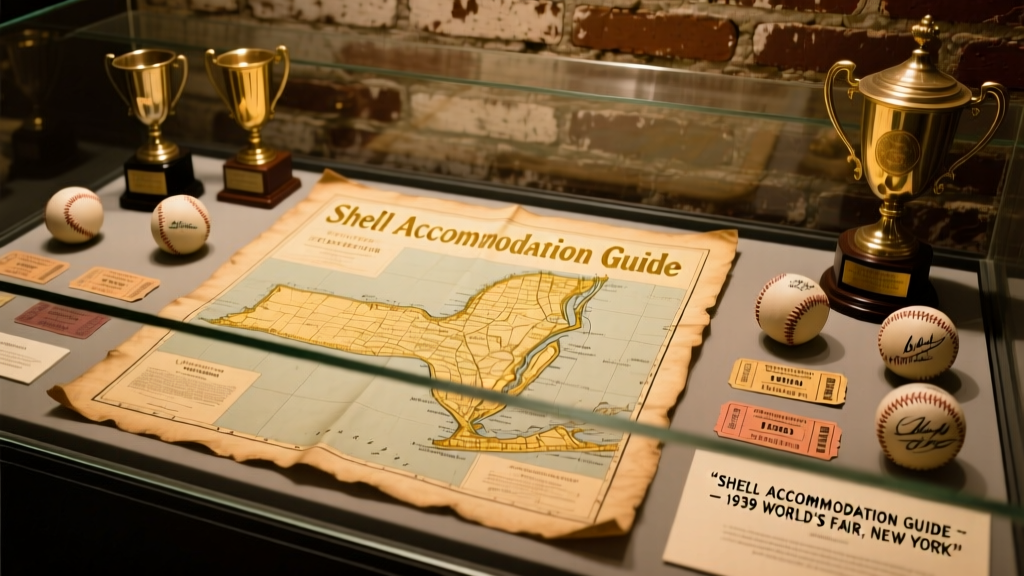
The 1939 New York World’s Fair Shell Accommodation Guide: A Collector’s Deep Dive into a Rare Cartographic Artifact
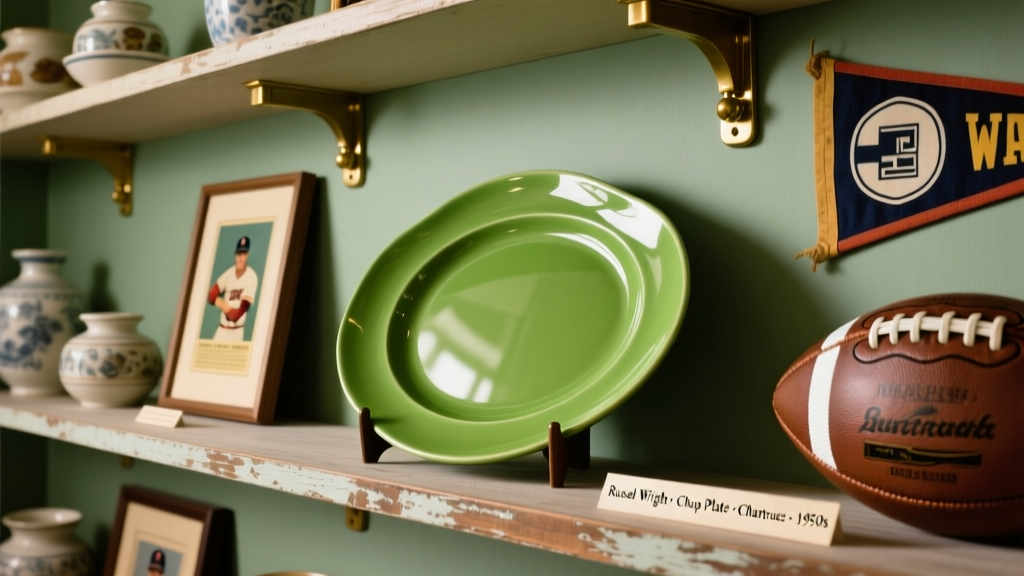
Russel Wright Chop Plate: American Modern Chartreuse — Design Legacy, Production History, and Authentication Essentials
General Antiques: Identification, Valuation, and Preservation for Collectors
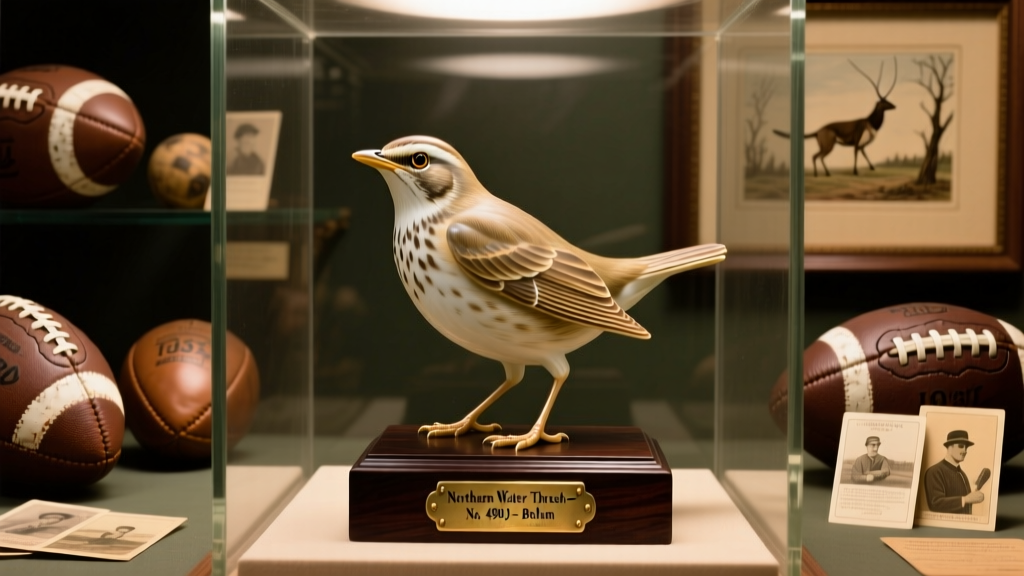
Boehm Figurine: Northern Water Thrush No. 490J — Authentication, Provenance, and Collector Value
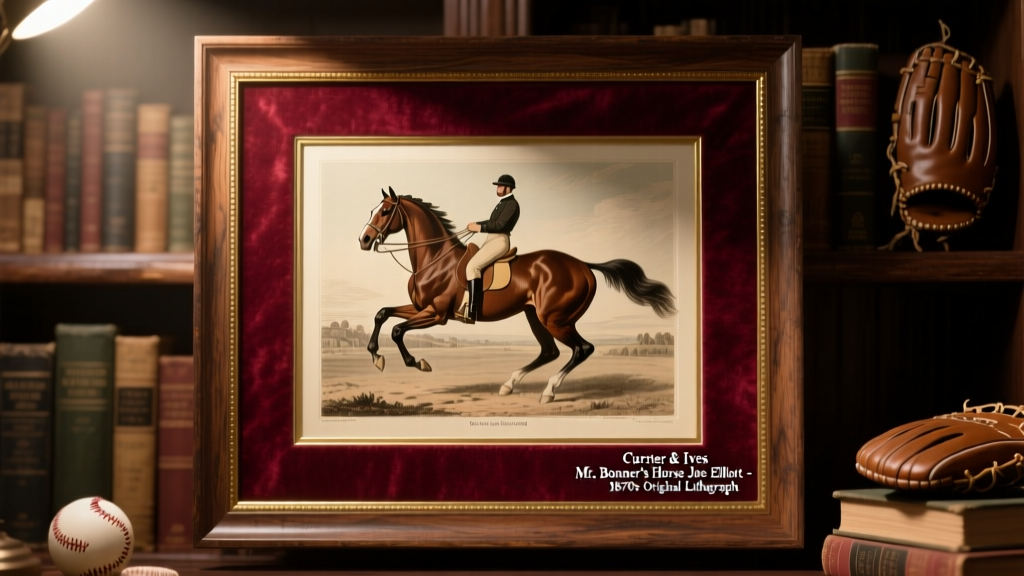
Currier & Ives 'Mr. Bonner’s Horse' Lithograph by Joe Elliott: Authentication, Provenance, and Market Analysis of the 17 × 26½-Inch Second State

The 1973 Batman Radio Transistor Figural Box: Collecting, Authenticating, and Preserving a Pop-Culture Artifact
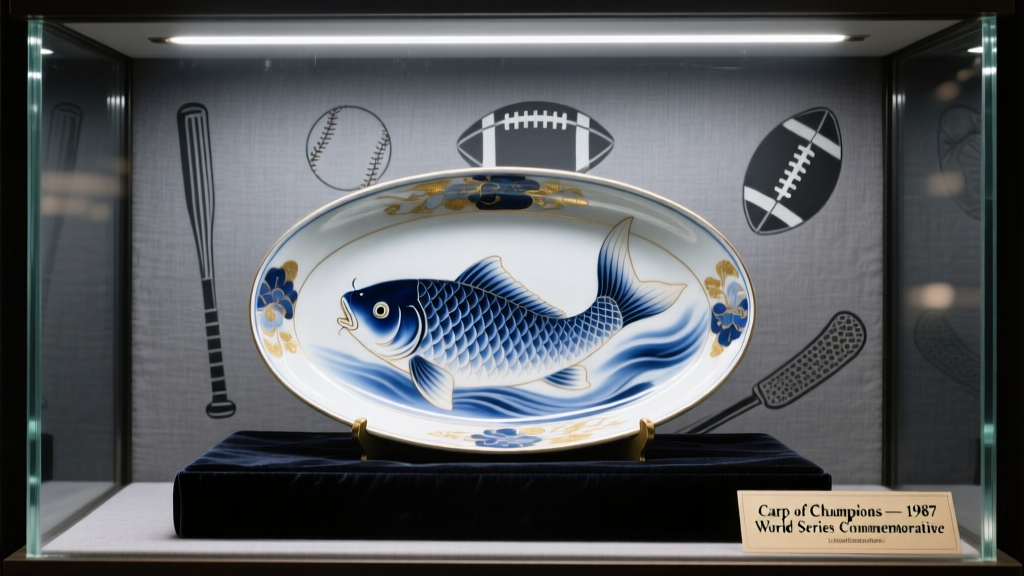
Imari Serving Dish with Carp Design: Authentication, Provenance, and Market Value of the Oval 14½-Inch Piece
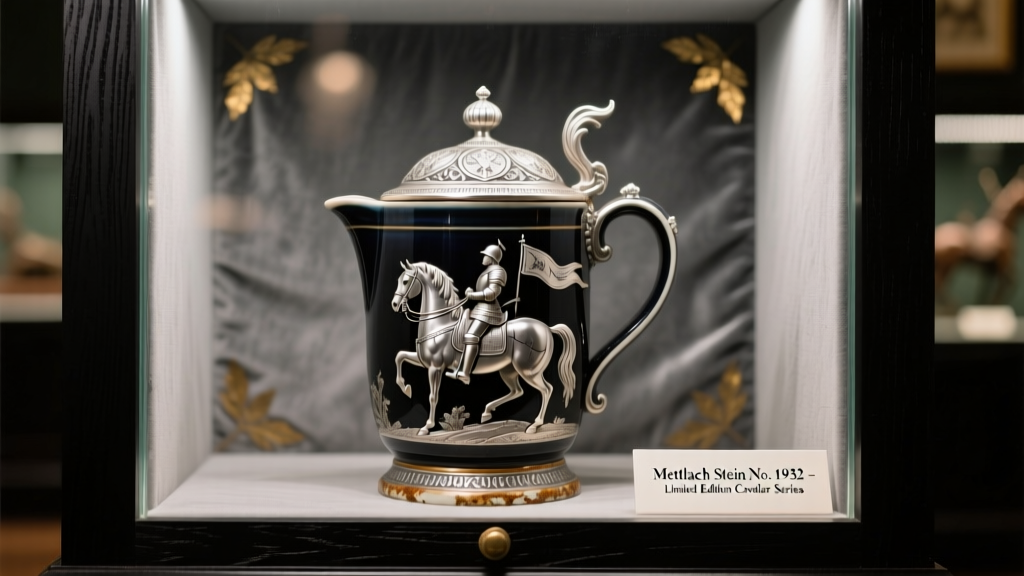
Mettlach Stein No. 1932: Decoding the 1.2-Liter Cavaliers Drinking Stein with Inlaid Pewter Cover

Amoco War Loan Advertising Sign: Mother & Son Hugging Cardboard Poster (1943–1945, 42 × 26 Inches)