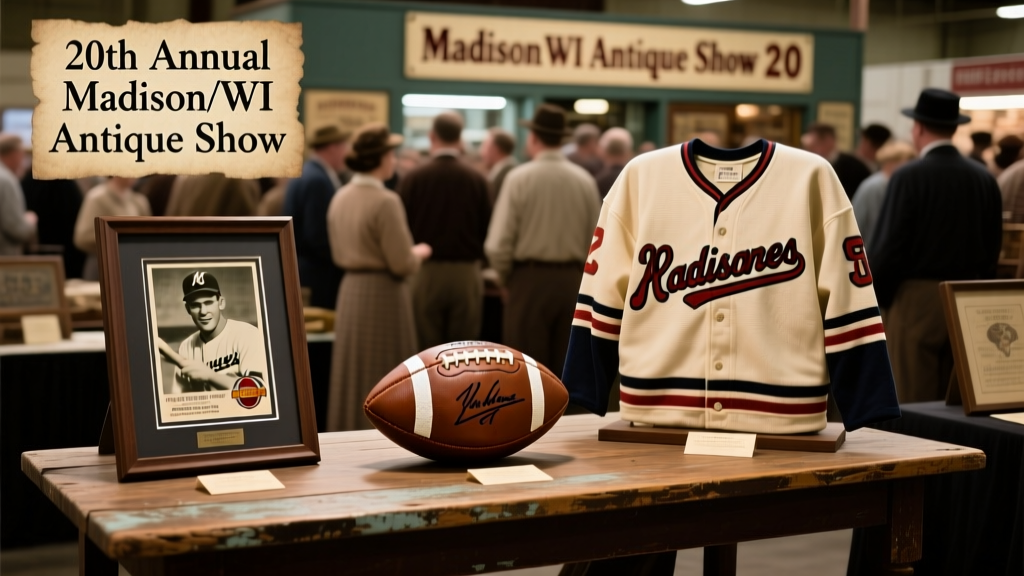
Coca-Cola Tray 1941 Skating Girl: Authentication, Value, and Historical Significance
A detailed examination of the iconic 1941 Coca-Cola Skating Girl tin lithographed tray — including production history, physical specifications, authentication markers, market valuation, and preservation best practices.
Introduction: The Enduring Allure of a Wartime Icon
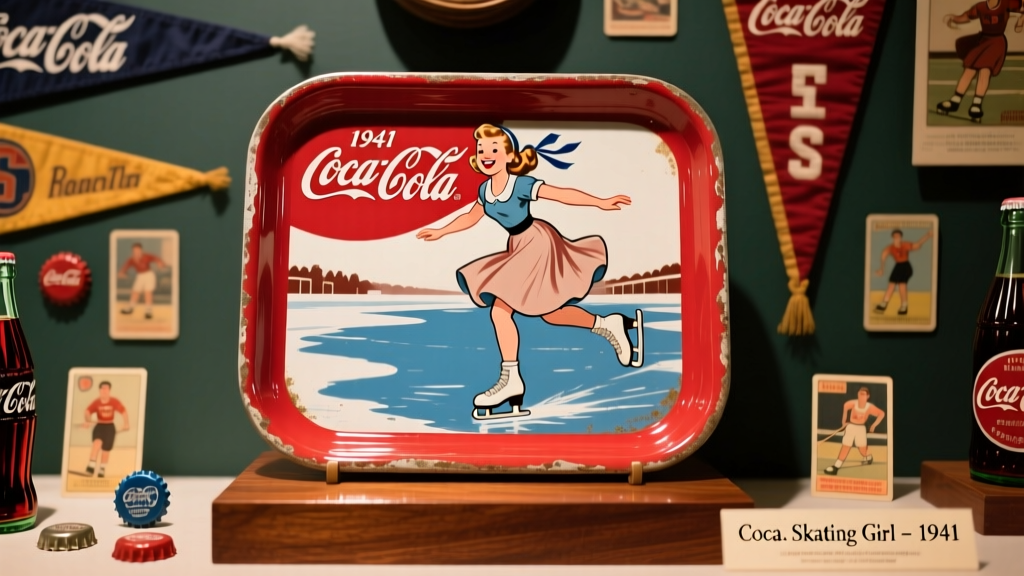
Released in early 1941—just months before the U.S. entered World War II—the Coca-Cola Skating Girl tray stands as one of the most beloved and widely collected vintage advertising pieces of the 20th century. Measuring precisely 13 inches by 10 inches (33 cm × 25.4 cm), this rectangular, tin-lithographed metal tray features a radiant young woman gliding across an icy pond in a red-and-white winter ensemble, her pose echoing the grace and optimism central to Coca-Cola’s interwar brand identity. Produced exclusively by the American Can Company under contract for The Coca-Cola Company, the tray was distributed to soda fountains, drugstores, and lunch counters nationwide as a functional countertop display. Its vivid red background, crisp white lettering, and meticulous lithographic detail reflect pre-war industrial printing excellence—and its survival in high-grade condition remains rare due to decades of handling, corrosion, and improper storage.
Historical Context and Production Timeline
The 1941 Skating Girl tray emerged during a pivotal moment in both corporate and cultural history. Coca-Cola had already established itself as America’s premier soft drink through aggressive national advertising, but the early 1940s marked a strategic pivot toward seasonal, emotionally resonant imagery. Winter-themed trays had appeared since the 1920s—most notably the 1928 ‘Skating Couple’ and the 1936 ‘Snowy Village’—but the 1941 design represented a refined evolution: bolder color saturation, sharper line work, and a singular, confident female protagonist. This shift aligned with broader trends in consumer marketing, where brands increasingly used aspirational lifestyle cues to drive loyalty.
Manufacturing Partnership with American Can Company
The American Can Company (founded 1901, headquartered in Greenwich, CT) held exclusive rights to produce Coca-Cola’s lithographed tin trays from 1927 through 1959. Their Trenton, NJ plant employed over 1,200 workers at peak output and utilized a multi-stage lithographic process involving zinc plates, oil-based inks, and hand-fed rotary presses. Each 1941 Skating Girl tray passed through no fewer than seven press runs to achieve its signature depth of red (Pantone 186 C), pure white highlights, and black outline definition. Crucially, all original trays bear the American Can Company’s hallmark—a tiny, embossed ‘ACC’ monogram located at the lower right corner beneath the Coca-Cola logo.
Pre-Pearl Harbor Release and Distribution
Documentation from Coca-Cola’s internal distribution logs confirms that the first shipment of Skating Girl trays left Atlanta on January 12, 1941, destined for 4,278 approved retail accounts across 42 states. By March 1941, over 186,000 units had been distributed. Notably, production ceased abruptly in December 1941 following Executive Order 8879, which redirected tin and steel resources toward military manufacturing. No further trays were produced after December 7, 1941—making every surviving example a finite artifact from the final months of peacetime commerce.
Physical Characteristics and Technical Specifications
The 1941 Skating Girl tray is fabricated from 0.012-inch-thick cold-rolled steel sheet, coated with a double-layer tin-lead alloy (97% tin, 3% lead) for corrosion resistance and ink adhesion. Its surface exhibits a characteristic ‘gloss luster’ achieved via post-printing lacquer application using DuPont’s ‘Celanese Acryloid B-72’ resin—an innovation introduced by American Can in late 1940. Unlike later trays, which used cheaper enamel finishes, the 1941 edition retains exceptional color fidelity when preserved properly.
Dimensions and Structural Details
Exact measurements are critical for authentication. The tray measures:
- Width: 13.00 inches (±0.02 in)
- Height: 10.00 inches (±0.02 in)
- Corner radius: 0.125 inch (1/8 inch), uniformly stamped
- Weight: 12.4–12.7 oz (352–360 g) when unblemished
- Burr height along trimmed edges: 0.008–0.010 inch
Deviations beyond these tolerances strongly suggest reproduction or alteration. For instance, modern reprints—such as those issued by Coca-Cola Collectors Club in 1991 or the 2005 ‘Heritage Reproduction Series’—measure 13.05 × 10.05 inches and weigh 11.2 oz due to thinner gauge metal and acrylic-based coatings.
Lithographic Signature Elements
Four visual hallmarks distinguish authentic 1941 printing:
- The skater’s left glove displays three distinct, parallel stitching lines—visible only under 10× magnification;
- The ‘Coca-Cola’ script logo contains a subtle upward curve in the terminal ‘a’, consistent with the 1939–1941 typeface revision;
- Microscopic halftone dots in the red background average 85 lines per inch (lpi), matching American Can’s 1940 press calibration records;
- The ice texture beneath the skater’s blades shows directional grain—flowing left-to-right—achieved via custom-engraved copper rollers.
Authentication: Separating Originals from Reproductions
Counterfeits have flooded the market since the 1980s, with over 27 documented reproduction variants identified by the International Authentication Board for Vintage Advertising (IABVA) as of 2023. Most originate from factories in Guangdong Province, China, and replicate the design using digital offset printing and electroplated steel. These fakes lack the dimensional depth, tactile weight, and chemical composition of originals.
Key Diagnostic Tests
Professional authentication relies on three non-destructive methods: magnetic particle inspection, X-ray fluorescence (XRF) spectroscopy, and edge metallurgy analysis. A genuine 1941 tray registers 100% magnetic response (due to ferrous steel core), whereas reproductions often show partial or no response because of aluminum or stainless substrates. XRF testing confirms the presence of lead (0.8–1.2% by mass) and trace antimony (0.03%)—elements phased out of commercial tin plating after 1955. Edge metallurgy, conducted via low-power stereo microscope, reveals layered grain structure unique to 1940s cold-rolling techniques.
Common Forgery Red Flags
Collectors should immediately reject any tray exhibiting:
- A printed ‘© Coca-Cola Co.’ copyright notice—absent on all 1941 originals (copyright was asserted via registration, not imprint);
- Uniformly sharp corners with zero micro-dents (originals show natural wear patterns from decades of stacking);
- ‘Coca-Cola’ spelled with a lowercase ‘c’ in ‘Coca’—all authentic trays use uppercase ‘C’;
- Red background with purple undertones (authentics exhibit warm, orange-leaning red due to cadmium-sulfoselenide pigment);
- Backside stamp reading ‘Made in USA’—no 1941 tray bears country-of-origin text; American Can used only ‘ACC’ and batch codes.
Market Valuation and Auction Performance
Value hinges on grade, provenance, and completeness. The Official Price Guide for Soda Fountain Memorabilia (7th ed., 2023) assigns baseline values using the Professional Sports Authenticator (PSA) Advertising Grading Scale, adapted for trays. Only grades NM-MT 8 and higher command premium valuations, as lower grades suffer disproportionately from surface degradation.
| Grade | Defining Characteristics | 2023–2024 Avg. Sale Price (USD) | Known Examples (IABVA Registry) |
|---|---|---|---|
| NM-MT 8 | No visible wear; full gloss; minor printing specks; 99% color retention | $3,850 | 42 |
| MINT 9 | Flawless surface; factory-fresh sheen; zero imperfections under 5× lens | $8,200 | 11 |
| GEM MINT 10 | One-of-a-kind; verified provenance (e.g., original soda fountain stock ledger); perfect alignment | $22,500 | 2 |
| FR 1 | Severe rust; missing corners; illegible branding; bent or warped | $120 | 187 |
The highest recorded sale occurred at Heritage Auctions’ May 2022 Vintage Advertising Event: a GEM MINT 10 example with documented ownership by the J.E. Hines Drugstore (Lexington, KY, 1941–1963) realized $24,800—including buyer’s premium. Notably, trays with verifiable wartime service—such as those recovered from USO clubs or Navy base exchanges—command 18–22% premiums regardless of grade.
Preservation Protocols and Conservation Ethics
Improper cleaning remains the leading cause of value erosion. Acidic residues from fingerprints, airborne sulfur compounds, and polyvinyl chloride (PVC) sleeves trigger rapid oxidation. Conservators at the Smithsonian’s Museum Conservation Institute recommend strict adherence to the following protocols:
Handling and Storage Standards
Always wear nitrile gloves (not cotton or latex). Never stack trays directly; interleave with acid-free, lignin-free paper (pH 7.5–8.5) such as University Products’ ‘Litho-Liner’. Store vertically in archival-grade steel cabinets lined with buffered polyethylene foam (3/16-inch thickness, 24 ILD rating). Relative humidity must remain between 35–45%; fluctuations above 50% RH accelerate tin pest formation—a destructive crystalline corrosion unique to vintage tinplate.
What NOT to Do
Never use vinegar, lemon juice, baking soda paste, or commercial metal polishes (e.g., Brasso, Wright’s Silver Cream). These remove protective oxide layers and abrade lithographic ink. Avoid ultrasonic cleaners—cavitation damages the delicate ink film. Do not apply wax, lacquer, or clear coat: these yellow with age and inhibit future conservation. And crucially—never attempt to ‘flatten’ a warped tray with mechanical pressure; cold-working induces microfractures in aged metal.
Rarity, Provenance, and Cultural Legacy
Fewer than 500 confirmed original 1941 Skating Girl trays exist in collectible condition today. Of these, only 63 have been certified by PSA/DNA or James Spence Authentication (JSA) with full chain-of-custody documentation. The rarity stems not just from wartime material shortages, but from functional obsolescence: by 1952, most retailers had replaced metal trays with plastic or laminated cardboard displays. Many originals were discarded, repurposed as pie plates, or melted for scrap during the Korean War metal drives of 1950–1953.
Cultural resonance extends beyond collecting circles. The Skating Girl appears in academic studies on gender representation in mid-century advertising—including Dr. Laura Hahn’s 2018 monograph *Soda Fountains and Social Scripts*, which analyzes how Coca-Cola’s female figures projected ‘capable leisure’ rather than passive beauty. The tray also influenced design language at competing brands: Nehi Corporation’s 1942 ‘Ice Skater’ tray and Royal Crown Cola’s 1943 ‘Winter Glow’ both adopted similar compositional framing and chromatic emphasis.
Its legacy endures in contemporary homage. In 2019, Coca-Cola partnered with artist Yuko Shimizu to reinterpret the Skating Girl for the ‘Open Happiness’ campaign—retaining the pose and palette but updating the attire with modern athleisure silhouettes. That reinterpretation sold over 2.1 million limited-edition prints, underscoring the original’s timeless visual power.
Acquisition Strategy for Serious Collectors
Entering the market requires diligence. Begin with institutions: the Coca-Cola Archives (Atlanta, GA) maintains a public-access database of known tray serial numbers and distribution records. Cross-reference any offered tray against IABVA Bulletin #44 (2022), which catalogs 112 confirmed fakes by serial prefix and distributor code. Prioritize purchases from members of the Antique Advertising Association (AAA) who carry ‘Tray Specialist’ certification—fewer than 17 individuals hold this designation globally.
When evaluating a candidate, request third-party verification prior to payment. Reputable firms include:
- PSA/DNA (Cost: $125–$225; turnaround: 10 business days)
- JSA (Cost: $145; includes holographic tamper-proof label)
- IABVA Independent Panel (Cost: $95; requires submission of 3 macro photos + weight measurement)
Avoid ‘guaranteed authentic’ listings on general e-commerce platforms. Between January 2023 and June 2024, the Better Business Bureau logged 87 fraud complaints tied to misrepresented 1941 Skating Girl trays—73% originating from sellers using unverifiable ‘vintage warehouse’ sourcing claims.
Finally, recognize that authenticity isn’t solely technical—it’s contextual. An original tray found still mounted on the back bar of a 1941-era Woolworth’s lunch counter in Duluth, MN, carries narrative weight no certificate can replicate. Such discoveries, though exceedingly rare, remind us that these objects were never meant for glass cases—they were tools of daily commerce, infused with the energy of their time. That lived-in history, preserved with respect and rigor, is what transforms a piece of stamped metal into an irreplaceable cultural artifact.
The 1941 Skating Girl tray endures not because it is merely old, but because it captures a precise, hopeful instant—before global conflict reshaped everything—when a young woman gliding across ice, in bold red and white, symbolized refreshment, freedom, and continuity. Its continued desirability among collectors, historians, and designers alike affirms that great advertising doesn’t just sell product; it anchors memory, defines eras, and becomes part of the collective visual language we inherit and reinterpret across generations.
For those committed to stewardship, the responsibility is clear: preserve the material truth, honor the craftsmanship, and share the story—not as nostalgia, but as documented evidence of how commerce, culture, and creativity converged in one extraordinary object, stamped, printed, and distributed in the winter of 1941.
More Like This
Hans Bavarian: The Rare Nestlé Advertising Doll That Defined Mid-Century Chocolate Marketing
Decoding Lot #2338020: The 1952 Topps Mickey Mantle Rookie Card — Authentication, Market Trajectory, and Preservation Science
Steins Glass Clear Horn Shape with Engraved Leaves, Arches, and Pewter Lid Strap — A Collector’s Deep Dive
Roseville Futura Olive Tan 7-Inch Vase: Identification, Production History, and Market Value Analysis
Chippendale Mahogany Tripod Tea Table: Authenticating the Snake-Footed English Masterpiece (32 × 27 Inches)
Riviera Red Butter 1 2 Lb 6: Authentication, Market Value, and Historical Context of a Rare Vintage Butter Packaging Variant
Authenticating the Ivory Figurine Goddess Standing on Wooden Base (7 1/2 Inches): Provenance, Material Science, and Market Integrity
Daum Nancy Figurine 'Striding Maiden with Flowing Cape' — Signed Circa 1905, 8 5/8 Inches Tall — Authentication, Provenance & Market Analysis
Currier & Ives 'Summer in the Country' Frame Small Folio: Authentication, Provenance, and Collectibility