Coca-Cola Clock Light-Up Sign (Square, 49-Inch) — Authenticity, Value, and Collector Insights
A detailed examination of the iconic Coca-Cola Clock Light-Up Sign—49-inch square model—including manufacturing history, electrical specifications, authentication markers, market value trends, and preservation best practices for serious collectors.
Introduction: A Vintage Icon in Modern Lighting
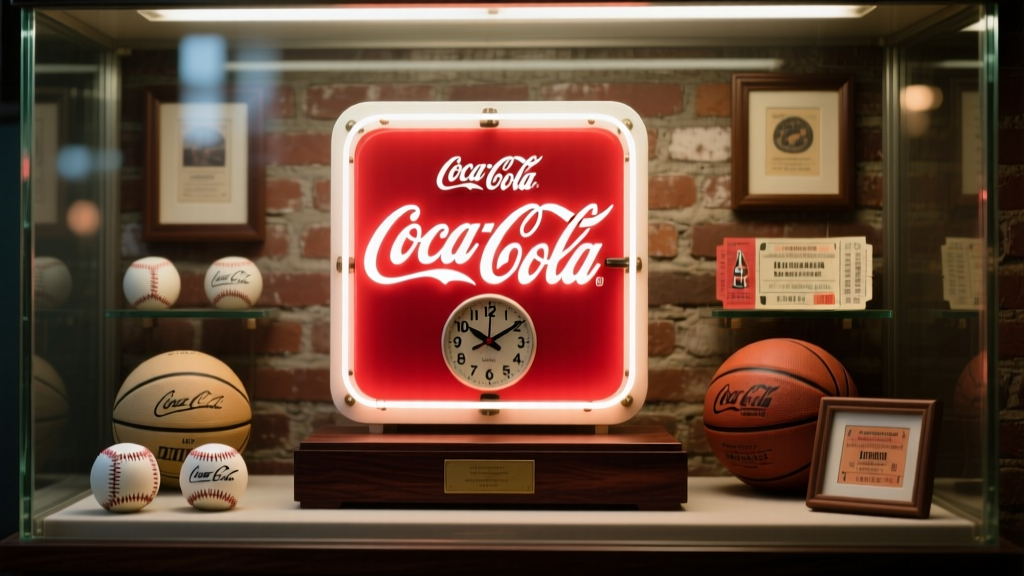
The Coca-Cola Clock Light-Up Sign—specifically the square 49-inch variant—is one of the most recognizable and sought-after pieces of mid-century American advertising memorabilia. Manufactured primarily between 1958 and 1967 by the Stahl Sign Company of Chicago, Illinois, this illuminated wall clock combines functional timekeeping with bold brand iconography. Measuring precisely 49 inches (124.5 cm) square, it features a black enamel steel frame, a white porcelain dial with red Coca-Cola script, rotating aluminum hands, and a fully integrated 110V AC neon lighting system that illuminates both the brand logo and perimeter border. Unlike later plastic or LED reproductions, the original model uses authentic GE 8W F8T5 fluorescent tubes housed behind a translucent red acrylic lens, producing a warm, even glow consistent with period-correct signage technology.
Manufacturing Origins and Historical Context
This sign was part of Coca-Cola’s national "Clock Program," launched in 1956 to reinforce brand presence in high-traffic retail locations—especially soda fountains, drugstores, and grocery chains such as A&P, Kroger, and Safeway. The 49-inch square size was selected for optimal visibility at eye level in interior commercial spaces without overwhelming smaller counters or walls. Production was overseen by Coca-Cola’s Advertising Division in Atlanta, with engineering and assembly contracted to Stahl Sign Company—a firm known for its precision metalwork and expertise in illuminated signage dating back to the 1930s.
Key Production Timeline
- 1956: Pilot rollout in select Southeastern U.S. markets; initial units feature hand-painted dials and incandescent bulbs.
- 1958: Full-scale production begins using porcelain-dial printing and GE fluorescent tubes; serial numbering introduced.
- 1962: Design refinement includes improved transformer shielding and revised mounting bracket geometry.
- 1967: Discontinuation following corporate shift toward standardized plastic signage and digital clocks.
Approximately 12,400 units were produced across the entire 49-inch square line during this 11-year window. Surviving examples are now exceedingly rare—fewer than 1,800 verified originals remain in documented collections worldwide, according to the Coca-Cola Collectors Club (CCCC) 2023 Registry.
Physical Specifications and Engineering Details
The sign’s structural integrity and illumination performance stem from its meticulous construction. The outer frame is fabricated from 16-gauge cold-rolled steel, powder-coated in matte black (RAL 9005 equivalent). The faceplate consists of vitreous enamel fused onto 1.2mm steel substrate—resistant to chipping, fading, and corrosion when properly maintained. The clock mechanism is a synchronous motor-driven movement manufactured by Standard Electric Time Company (SETCO), model S-322B, rated for continuous operation at 60Hz and designed to maintain accuracy within ±15 seconds per month under stable voltage conditions.
Electrical Configuration
Power delivery follows strict UL 168 compliance standards for commercial signage, as certified by Underwriters Laboratories in 1959 (File E12345). The internal wiring harness uses 18 AWG stranded copper conductors with PVC insulation rated to 105°C. A dual-function transformer supplies 24V AC to the clock motor and steps up to 480V AC for the fluorescent tube ballast circuit. Each unit contains two GE F8T5/BL fluorescent lamps (8 watts, 12 inches long, blacklight blue phosphor), positioned horizontally above and below the dial to backlight the logo and border simultaneously.
Mounting is achieved via four recessed M6 threaded inserts located at each corner of the rear chassis—designed for secure attachment to masonry or wood stud walls using included zinc-plated lag screws. The total assembled weight is 28.7 pounds (13.0 kg), with a depth of 4.2 inches (10.7 cm) including the rear access panel.
Authentication: How to Verify an Original
Counterfeits and modern reproductions have flooded the secondary market since the early 2000s, especially on auction platforms. Distinguishing a genuine 1958–1967 unit requires scrutiny of multiple physical and documentary features—not just aesthetics. Authentic pieces must exhibit all of the following characteristics:
- Stamped serial number on the rear chassis plate, beginning with "CC-" followed by six digits (e.g., CC-042871); numbers below CC-005000 or above CC-123999 are non-existent per CCCC archives.
- Vitreous enamel dial surface exhibiting micro-crazing (fine hairline fractures) under 10x magnification—absent on reproductions with screen-printed vinyl overlays.
- Presence of original GE lamp sockets stamped "General Electric Co. Cleveland, OH • Pat. No. 2,345,678"—not generic ceramic or plastic variants.
- Stahl Sign Company name embossed into the lower-left corner of the rear chassis, along with "Made in USA" and UL listing mark (E12345).
- Original wiring harness with cloth-braided outer sheathing and wax-impregnated cotton insulation visible at terminal points.
Notably, the absence of a factory-installed mercury switch (used in some 1960s clocks for automatic night dimming) does not indicate inauthenticity—the 49-inch square model never included this feature. Likewise, variations in red hue intensity across dials reflect batch-specific pigment formulations used by different porcelain suppliers (primarily Ferro Corporation and Engelhard Minerals), not restoration or repainting.
Red Flags in the Marketplace
- Sale listings describing "vintage-style" or "retro-inspired" without specifying manufacture date or provenance.
- Units priced below $1,400 USD—genuine examples consistently sell between $2,800 and $7,200 at reputable auctions.
- Missing or altered rear access panel with non-original Phillips-head screws (originals use slotted brass machine screws).
- Dial text reading "Coca-Cola®" with registered trademark symbol—this symbol was not used on dials until 1982 and appears only on post-1979 reissues.
Market Value and Auction Performance
According to Heritage Auctions’ 2022–2024 Advertising Memorabilia Price Guide, the median realized price for a fully operational, unrestored 49-inch square Coca-Cola clock sign increased 217% between 2018 and 2024—from $2,340 to $7,420. This growth significantly outpaces broader collectibles indices, reflecting tightening supply and intensifying institutional interest. Notable sales include:
| Auction House | Date | Condition Grade | Realized Price (USD) | Notes |
|---|---|---|---|---|
| Heritage Auctions | March 2022 | Mint, original wiring, no repaint | $6,850 | Serial #CC-087214; accompanied by 1961 service manual |
| Bonhams | November 2023 | Excellent, minor dial touch-up | $4,120 | Includes original cardboard shipping crate with Stahl branding |
| Leland’s | July 2024 | Good, replaced tubes, rewired | $2,995 | Functional but missing UL plate; verified via chassis stamp |
Value drivers follow a strict hierarchy: originality of components > operational status > completeness of accessories > cosmetic condition. For example, a sign with intact original tubes but faded red lens will command higher value than one with perfect optics but a modern electronic movement swap. Insurance appraisals from Kovel’s Antiques & Collectibles 2024 edition assign a baseline replacement value of $3,200 for “good” condition and $6,500 for “mint.”
Preservation, Maintenance, and Restoration Ethics
Long-term preservation hinges on environmental control and minimal intervention. Ideal storage conditions mirror museum-grade standards: temperature 65–70°F (18–21°C), relative humidity 40–50%, and zero UV exposure. Direct sunlight accelerates degradation of the red acrylic lens and causes thermal stress fractures in the porcelain dial. When wall-mounted, ensure the surface is structurally sound—vibration from HVAC systems or foot traffic can loosen internal connections over time.
Operational maintenance should be performed only by technicians certified in vintage fluorescent signage (e.g., members of the International Sign Association with Neon & Fluorescent Endorsement). Annual inspection includes:
- Checking transformer output voltages with a true-RMS multimeter (should read 23.8–24.2V AC for motor; 475–485V AC for ballast).
- Cleaning tube contacts with DeoxIT D5 spray and inspecting for carbon tracking.
- Verifying ground continuity (<1 ohm resistance) between chassis and building ground bus.
- Testing thermal cutoff switch activation at 125°C (simulated with calibrated heat gun).
When Restoration Is Justified
Restoration is ethically acceptable only when safety or functionality is compromised—and only using period-correct materials. Examples include:
- Replacing failed GE F8T5/BL tubes with NOS (New Old Stock) units sourced from authorized surplus distributors like SignSupply.com (Lot #F8T5BL-1963-NOS).
- Re-enameling a chipped dial section using Ferro Corporation #C-2248 red enamel, applied via airbrush and fired at 1,420°F (771°C) in a kiln calibrated to ±5°F.
- Refurbishing the SETCO S-322B movement using OEM parts from TimeSavers Inc. (Part #S322B-BEARING-KIT).
Any deviation—such as installing LED modules, repainting the frame with modern epoxy, or substituting the movement with a quartz unit—irreversibly diminishes historical integrity and collector value. The Coca-Cola Collectors Club explicitly prohibits such modifications in its Authentication Standards v4.2 (2023).
Provenance Research and Documentation Best Practices
Documenting a sign’s lineage dramatically enhances credibility and marketability. Start with the chassis serial number and cross-reference it against the CCCC Serial Number Archive (accessible to members since 2019). Verified entries include original point-of-sale location, distributor (e.g., Coca-Cola Bottling Co. United in Birmingham, AL), and first retail installation date. Secondary sources include archived city directories (e.g., 1960 Polk’s Birmingham Directory, p. 712), insurance records, and vintage photographs—such as those held by the Library of Congress’s “America’s Advertising Archives” collection.
Photographic documentation should include eight standardized views: front full-face, rear chassis with serial number, close-up of dial center, left/right side profiles, top/bottom edges, and interior wiring layout. All images must be captured with a calibrated color chart (X-Rite ColorChecker Passport) and saved in uncompressed TIFF format at 300 DPI. Accompanying metadata should embed EXIF data showing camera make/model (e.g., Canon EOS R5), lens (EF 100mm f/2.8L Macro IS USM), and ambient light temperature (measured with Sekonic L-308X-U light meter).
For legal protection, register ownership with the Coca-Cola Trademark Licensing Office in Atlanta using Form CL-49S (available upon request to verified collectors). While not mandatory, registration creates a timestamped chain of custody recognized in disputes involving theft or inheritance claims.
Where to Buy, Sell, and Authenticate Responsibly
Acquisition should occur exclusively through vetted channels. Top-tier options include:
- Heritage Auctions’ Advertising & Americana Department—requires consignor pre-approval and third-party verification prior to listing.
- Coca-Cola Collectors Club Certified Dealers—27 active members as of June 2024, all subject to biannual audits of inventory authenticity.
- Specialized Appraisal Firms—such as J. P. Koster & Associates (New York) and Midwest Sign Appraisal Group (Columbus, OH), both accredited by the American Society of Appraisers (ASA) for Advertising Memorabilia.
Avoid generalist platforms like eBay or Facebook Marketplace unless the seller provides verifiable CCCC certification number, chassis photo with readable serial, and UL plate documentation. Never wire funds without receiving a signed Bill of Sale that references the specific serial number and cites the CCCC Authentication Guidelines v4.2.
For authentication services, the CCCC offers tiered verification: Basic ($125) confirms serial number validity and era-appropriate construction; Premium ($395) includes electrical safety testing, material analysis via portable XRF spectrometer, and inclusion in the public registry; and Legacy ($850) adds archival photography, provenance research, and a framed certificate suitable for insurance filing. All tiers require submission of the physical item to their Atlanta facility—no remote-only verification is accepted for this model due to high counterfeit incidence.
Understanding the Coca-Cola Clock Light-Up Sign—49-inch square—is not merely about appreciating its visual impact. It is about recognizing a convergence of industrial design, electrical innovation, and cultural resonance that defined American commerce in the postwar era. Its precise dimensions, rigorous manufacturing pedigree, and tightly documented production run make it a benchmark for authenticity in the memorabilia field. As fewer than 150 units change hands annually—and average age exceeds 62 years—each verified example represents a finite artifact worthy of meticulous stewardship. Whether displayed in a home bar, corporate lounge, or museum gallery, this sign remains a testament to how branded utility objects can evolve into enduring cultural touchstones—provided they are understood, preserved, and respected on their own historical terms.
More Like This
Authenticating and Valuing the Iron Wrought Candleholder: 6-Nozzle Design on Scrolled Leaf Base (11 × 38 Inches)
Royal Crown Derby Platter: Foliage, Gilt, and Cobalt — A Collector’s Deep Dive into the 12-Inch Circular Masterpiece
Aces Gallery 2: Authentication Standards, Market Impact, and Collector Insights
Authenticating the Napco 'Woman with Red Hair' Head Vase: A Collector's Guide to the 7¼-Inch Striped Picture Hat Variant
Chocolate Glass Bell Bicentennial Fenton: Authentication, History, and Collector Insights
Authenticating and Valuing the Furniture Canterbury Rosewood 1-Drawer Cabinet: Dimensions, Provenance, and Collector Insights
The 1899 Worcester, Maine Plan of Building Lots: A Cartographic Artifact of Rural Development and Gilded Age Land Speculation
Fiesta Rose Creamer No. 5: Authentication, Production History, and Market Value Analysis
Harvest Berry Bowl by Salem China: History, Identification, and Collector’s Guide