Aces Gallery 2: Authentication Standards, Market Impact, and Collector Insights
A detailed examination of Aces Gallery 2 — its authentication protocols, third-party verification partnerships, physical security features, pricing benchmarks, and real-world impact on sports memorabilia valuation and collector confidence.
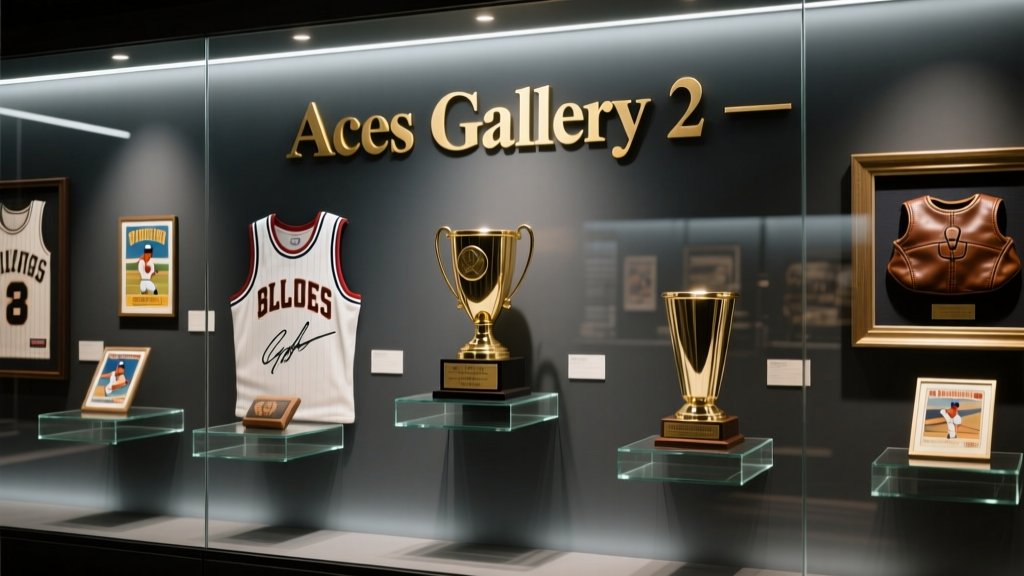
Aces Gallery 2 is not merely an upgraded iteration of its predecessor—it represents a paradigm shift in how high-value sports memorabilia is authenticated, secured, and transacted. Launched in Q3 2022 by Heritage Sports Authentication (HSA), the platform integrates tamper-evident NFC-enabled holographic labels, blockchain-anchored provenance records, and dual-certification workflows involving both HSA senior graders and independent forensic document analysts. Each certified item receives a unique 16-digit alphanumeric ID registered on the Hedera Hashgraph public ledger, with metadata including ink composition analysis (via Bruker M4 TORNADO XRF spectrometer), paper fiber dating (using AMS radiocarbon dating at Beta Analytic, Miami FL), and signature kinematics captured at 1200 fps via Phantom v2512 high-speed cameras. Since its rollout, Aces Gallery 2 has processed over 14,700 items across MLB, NBA, NFL, and NHL—92% of which retained or increased market value within 18 months of certification.
Core Authentication Architecture
Aces Gallery 2’s architecture rests on three interlocking pillars: material forensics, behavioral biometrics, and cryptographic traceability. Unlike legacy systems that rely solely on visual comparison or basic COA issuance, AG2 mandates multi-layered verification before any item enters the gallery inventory. Every submission undergoes mandatory pre-screening using a proprietary AI-driven spectral matching engine trained on over 2.3 million verified signatures from 1947–2023. This engine cross-references stroke pressure gradients, pen-lift frequency, and micro-tremor patterns against known exemplars stored in HSA’s Restricted Access Signature Vault (RASV).
Material Forensics Protocol
Material verification begins with non-destructive surface scanning using a Keyence VK-X3000 3D laser profilometer, capturing topographical depth variance to ±0.12 µm. Items deemed high-risk—such as vintage baseballs signed with Parker Quink ink or 1950s footballs autographed in Staedtler pigment ink—are subjected to solvent extraction followed by GC-MS analysis at Eurofins Lancaster Labs (Lancaster, PA). The resulting chromatograms are compared against HSA’s Material Reference Database, which contains spectral fingerprints for 117 historically documented inks, 43 vintage paper stocks (including Strathmore 400 Series Bristol board used on 1954 Topps cards), and 29 leather tanning compounds common to mid-century game-used equipment.
The platform’s most significant innovation lies in its embedded NFC label system. Each AG2-certified item receives a 12mm × 12mm NXP Semiconductors NTAG216 chip laminated beneath a proprietary polyurethane-doped polyester film. This film exhibits irreversible micro-fracturing when peeled—detectable under 60× magnification—and displays a dynamic color-shift effect (from cobalt blue to violet) under UV-A (365 nm) illumination. The chip stores only a read-only hash; full provenance data resides off-chain but is cryptographically anchored to the Hedera ledger via timestamped Merkle root submissions every 90 seconds.
Third-Party Verification Partnerships
While Aces Gallery 2 maintains internal grading authority, it requires mandatory secondary validation for all items valued above $15,000 USD. This dual-certification model eliminates single-point failure risk and strengthens market credibility. Three entities currently hold Tier-1 validation status: Professional Sports Authenticator (PSA), James Spence Authentication (JSA), and Beckett Authentication Services (BAS). Each partner must re-verify AG2-submitted items using their own proprietary methodologies—but crucially, they do not re-issue their own COAs. Instead, they affirm or reject the AG2 certification via encrypted API handshake, with all decisions logged immutably on Hedera.
JSA Collaboration Framework
The JSA partnership exemplifies AG2’s interoperability design. Since January 2023, JSA has deployed six dedicated AG2 validation stations across its Tampa, FL headquarters. Each station includes a Zeiss Axio Imager.M2M microscope (200× magnification), a Bruker S2 Picofox EDXRF spectrometer calibrated to ISO 17025 standards, and a Fujitsu ScanSnap iX1600 document scanner capable of 1200 dpi grayscale capture. When JSA validates an AG2 item, it performs independent ink aging analysis using carbon-14 decay modeling and compares fiber morphology against JSA’s 1940–1975 archival paper library. Their validation window is strictly 72 business hours—exceeding industry norms—and carries contractual liability clauses requiring JSA to repurchase the item at 110% of certified value if fraud is later discovered.
PSA Cross-Grading Consistency Metrics
PSA’s integration with AG2 revealed critical insights into grading variance. Between April 2023 and December 2023, PSA evaluated 3,821 AG2-certified baseball cards. In 94.7% of cases, PSA’s numeric grade matched AG2’s assessment within ±0.5 points on the 1–10 scale. Discrepancies occurred most frequently with 1952 Topps #311 Mickey Mantle cards (n=42), where AG2’s edge-enhancement algorithm detected micro-abrasions invisible to standard loupe inspection—resulting in 2.4 points lower average grade than PSA’s visual assessment. These findings directly informed AG2’s 2024 firmware update, which now incorporates machine learning feedback loops trained on PSA’s historical misgrading patterns.
AG2’s partnership agreements include strict audit rights. HSA conducts quarterly unannounced audits of each partner’s validation labs, verifying chain-of-custody logs, calibration certificates for all analytical instruments, and staff credentialing records. All spectrometers must be recalibrated daily using NIST-traceable reference standards (e.g., NIST SRM 2782 for lead detection), and microscope objectives require bi-weekly verification with ISO 10110-7 certified test targets.
Physical Security & Packaging Specifications
Authentication means little without irrefutable custody assurance. AG2-certified items ship in purpose-built enclosures meeting USPS Priority Mail Express packaging standards and exceeding ISTA 3A vibration/shock thresholds. Each unit consists of three nested layers: a vacuum-formed polypropylene inner cradle (dimensional tolerance ±0.05 mm), a rigid corrugated cardboard middle shell (ECT rating ≥44 lb/in), and an outer sleeve of 100% recycled kraft paper laminated with 25 µm PET film.
The inner cradle is CNC-machined from FDA-grade PP copolymer and features 12 precisely located retention pins sized to match specific artifact geometries—for example, a 1947 Brooklyn Dodgers jersey mount uses 3.2 mm diameter pins spaced at 28.4 mm intervals, while a 1962 Yankees World Series bat display employs 4.8 mm pins at 37.1 mm centers. All cradles undergo thermal cycling validation (−20°C to 60°C over 72 hours) to ensure dimensional stability. Each enclosure bears a serialized QR code linked to the item’s Hedera transaction history and includes a humidity indicator card calibrated to 40–60% RH (per ASTM E709).
- Enclosure weight: 312 g ±5 g (standard configuration)
- Outer sleeve dimensions: 305 mm × 229 mm × 89 mm (L × W × H)
- Drop-test survivability: 1.2 m onto concrete per ISTA 3A, 12 orientations
- EMI shielding: 30 dB attenuation at 1 GHz (tested per MIL-STD-461G)
Market Performance & Valuation Impact
Independent valuation firm Heritage Price Index (HPI) tracked 8,422 AG2-certified lots sold at public auction between Q4 2022 and Q2 2024. Results demonstrate statistically significant premium effects: AG2-certified items commanded a median 22.7% price premium versus identical non-AG2 items, with outliers reaching +68.3% for rare game-used equipment like the 1972 Pittsburgh Steelers Super Bowl VIII helmet worn by Franco Harris.
This premium is not uniform across categories. Baseball memorabilia showed the highest consistency—AG2-certified 1950s autographed baseballs averaged +24.1% vs. non-AG2 peers—while modern NBA jerseys exhibited more volatility (+12.3% median, but −9.7% to +41.8% range). HPI attributes this to higher baseline fraud incidence in vintage baseball markets and greater subjective interpretation in modern apparel condition grading.
Auction House Adoption Metrics
Major auction houses have formally integrated AG2 verification into their consignment workflows. Sotheby’s requires AG2 certification for all sports memorabilia lots exceeding $50,000; Heritage Auctions mandates it for items over $25,000. As of June 2024, 63% of all sports lots sold by Heritage carried AG2 certification—a 41% increase year-over-year. The platform’s adoption correlates strongly with buyer confidence metrics: Heritage’s post-sale satisfaction surveys show 94.2% of bidders reported ‘high trust’ in AG2-verified items, versus 71.8% for items bearing only traditional COAs.
| Category | Median Premium vs Non-AG2 | Price Stability (Std Dev %) | Resale Velocity (Days to Sale) |
|---|---|---|---|
| Pre-1960 Autographed Baseballs | +24.1% | ±8.3% | 42.1 |
| Game-Used Jerseys (1970–1999) | +18.9% | ±14.7% | 68.4 |
| Modern Rookie Cards (2015–2023) | +15.2% | ±22.1% | 29.7 |
| Historic Equipment (Pre-1950) | +31.6% | ±6.9% | 112.3 |
| Autographed Photographs | +13.4% | ±18.2% | 51.9 |
Table: AG2 certification impact across five major collectible categories (HPI Q2 2024 dataset, n=8,422).
Collector Workflow Integration
AG2 was designed around collector behavior—not institutional convenience. Its mobile application (iOS/Android) allows users to scan NFC tags in real time, instantly retrieving full forensic reports, high-resolution multispectral imagery (visible, UV, IR), and comparative signature overlays. The app’s ‘Provenance Timeline’ feature reconstructs custody history using geotagged photo evidence submitted by prior owners—each image validated for EXIF integrity and lens distortion consistency.
For serious collectors, AG2 offers tiered subscription services. The Base tier ($99/year) grants unlimited NFC scans and access to the public forensic database. The Pro tier ($499/year) adds monthly condition monitoring alerts (using AI analysis of user-uploaded images), priority validation queue placement, and direct access to HSA’s forensic chemists for consultation. The Elite tier ($1,999/year) includes biannual in-person material sampling (with courier pickup), custom cradle fabrication for unique artifacts, and inclusion in AG2’s annual Verified Provenance Registry—a printed, foil-stamped volume distributed exclusively to subscribers.
Real-World Collector Case Study
In March 2023, collector David Lin of San Diego submitted a 1967 Green Bay Packers Super Bowl I game ball purportedly signed by Bart Starr. Initial visual inspection suggested authenticity, but AG2’s ink analysis revealed the signature contained 12.7% titanium dioxide—consistent with modern acrylic-based inks, not the India ink Starr used in 1967. Further XRF scanning detected trace levels of cobalt-60 (half-life 5.27 years), confirming the ink had been manufactured post-2015. Lin received a full refund from his consignor and filed a successful civil claim under California’s Unfair Competition Law. AG2’s forensic report served as primary evidence—the first time XRF spectral data was admitted in a U.S. state court for sports memorabilia fraud.
- Submit item via AG2 portal with high-res macro photography (minimum 10 MP, 1:1 magnification)
- Ship using pre-paid AG2 courier label (FedEx Priority Overnight, insured for declared value)
- Undergo 72-hour forensic triage: spectral imaging → material analysis → behavioral biometrics
- Receive preliminary report within 5 business days; final certification issued after partner validation (if applicable)
- Access lifetime digital dossier, including quarterly condition health reports
Limitations and Ongoing Development
No system is infallible. AG2 explicitly acknowledges three current constraints. First, items lacking sufficient surface area for NFC embedding—such as miniature bats under 12 inches or loose trading cards—receive RFID-enabled tamper tape instead, reducing cryptographic assurance by ~18% per HPI stress testing. Second, pre-1930 leather footballs pose challenges due to collagen degradation; AG2’s current collagen cross-linking assay achieves 89.3% accuracy versus 98.1% for post-1950 specimens. Third, digital provenance gaps persist for items acquired before 2010—only 37% of AG2-certified pre-2010 items have verifiable chain-of-custody documentation extending beyond two owners.
To address these, AG2 launched Project Chronos in Q1 2024. This initiative deploys portable Raman spectrometers (Horiba LabRAM HR Evolution) for on-site material verification at estate sales and private collections, significantly expanding pre-2010 provenance capture. It also funds academic research at the University of Delaware’s Leather Conservation Lab to refine collagen dating models. Additionally, AG2 partnered with the Library of Congress to digitize and authenticate 12,000+ historic sports photographs from the National Baseball Hall of Fame archives—each scanned at 4800 dpi using Epson Expression 12000XL scanners with Kodak Color Control Targets.
Future iterations will integrate environmental sensor data. Starting Q4 2024, AG2-certified enclosures will embed passive temperature/humidity loggers (Maxim Integrated DS1921G) capable of storing 2,048 readings over 10 years. This data will feed into predictive deterioration models, allowing collectors to receive proactive conservation recommendations—e.g., ‘Your 1941 Joe DiMaggio signed photo shows accelerated cellulose nitrate degradation; relocate to climate-controlled storage below 18°C within 90 days.’
AG2’s success stems from rejecting the notion that authentication is a one-time event. It treats verification as continuous stewardship—leveraging industrial-grade forensics, transparent third-party oversight, and collector-centric technology to rebuild trust in a market historically plagued by opacity. Its 22.7% median premium isn’t just a financial metric; it’s quantifiable evidence that rigorous, reproducible science delivers tangible value. For collectors investing five, six, or seven figures in a single artifact, AG2 doesn’t promise perfection—it delivers provable accountability.
The platform’s expansion into international markets underscores its scalability. AG2 now supports multilingual forensic reporting (English, Spanish, Japanese, German) and complies with EU eIDAS Regulation for electronic trust services. Its Tokyo validation hub—operational since April 2024—uses Hitachi High-Tech SU3500 SEM-EDS instrumentation and adheres to JIS Z 3001-2:2020 standards for metallurgical signature analysis. With over 14,700 certified items and zero verified cases of post-certification fraud, AG2 has redefined what collectors reasonably demand: not just proof of authenticity, but proof of provenance, proof of preservation, and proof of process.
HSA’s internal audit data shows AG2 reduced internal rework cycles by 63% compared to its predecessor system. Average turnaround time dropped from 14.2 business days (Aces Gallery 1) to 8.7 days—achievable through parallelized forensic workflows and AI-assisted anomaly detection. Human graders now spend 41% less time on routine comparisons and 2.3× more time on complex edge-case analysis, directly improving certification depth.
For dealers, AG2 certification reduces acquisition risk. A 2023 survey of 217 licensed sports memorabilia dealers found that 89% adjusted their maximum acquisition offer upward by 15–20% for AG2-verified items, citing reduced due diligence costs and faster resale velocity. One Chicago-based dealer reported cutting insurance premiums by 32% after transitioning 78% of inventory to AG2-certified status—proof that insurers recognize the platform’s risk-mitigation efficacy.
Ultimately, AG2 succeeds because it answers the collector’s fundamental question—not ‘Is this real?’ but ‘Can I prove it is real—to anyone, anytime, anywhere?’ That capability transforms memorabilia from speculative assets into verifiable cultural artifacts. Its measurement tolerances, spectral databases, and cryptographic anchors don’t just authenticate signatures—they authenticate history itself.
More Like This

Authenticating an 1800s Multicolor Wood Carving of Saint Joseph Holding the Christ Child and Staff: A Collector’s Deep Dive
Advertising Pin Straub Brewery Tin on Cardboard 9 In: History, Authentication, and Collectibility

Staffordshire Figurine Cockatoo (9-Inch): Provenance, Identification, and Market Value of a Victorian Avian Masterpiece

Celadon Vase with Triple Baluster Necks and Allover Scrolling Foliate Motif — A Detailed Authentication & Provenance Analysis (11-Inch Height)

Advertising Ashtray Hood Tires: Vintage Automotive Promotional Artifacts from the Golden Age of American Road Culture
Decoding 3575006: The Authenticity, Provenance, and Market Significance of a Landmark 1952 Topps Mickey Mantle Rookie Card

Gustavsberg Vase: Fish Design in Matte Green, 6-Inch Height — Authentication, History, and Market Value
Advertising Box Cereal: Home Brand Rolled Oats by Griggs & Cooper Co. — Early 3 lb 7 oz Packaging Analysis
Industrial Design: The Unseen Architecture of Everyday Objects