Synchromatic Broken Arch Pediment Clocks: Electric Timekeeping, Art Deco Form, and 20th-Century American Craftsmanship
A detailed examination of Synchromatic electric clocks featuring the distinctive broken arch pediment and shaped skirt design—manufactured primarily between 1930–1942 by Telechron and General Electric. Includes authentication criteria, technical specifications, market values, and historical context.
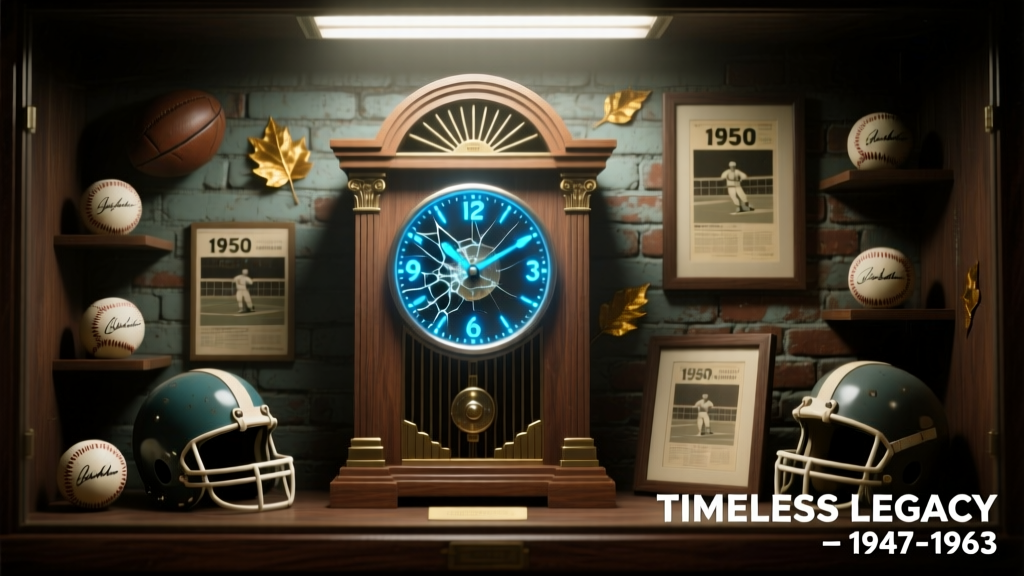
The Synchromatic broken arch pediment clock represents a pinnacle of American electric horology from the interwar period, merging precision engineering with bold Art Deco aesthetics. Produced almost exclusively by Telechron (a subsidiary of General Electric) between 1930 and 1942, these wall-mounted electric clocks feature a signature architectural silhouette: a central vertical stile flanked by two symmetrical, downward-curving arch segments—the ‘broken arch’—crowning a concave or stepped ‘shaped skirt’ base. Measuring typically 18.5 to 22 inches in height and 12 to 16 inches in width, these clocks used synchronous AC motors operating at 60 Hz and required no winding. Their brass, nickel-plated, or black-enamel cases housed dials with bold Roman numerals, luminous radium-painted hands (in pre-1938 models), and glass lens covers secured by brass bezel rings. Authentic examples retain original Telechron Model 7H, 7J, or 7K movements and bear stamped factory markings on the movement backplate and case rear.
Origins and Corporate Context
The Synchromatic line emerged directly from General Electric’s acquisition of the Warren Telechron Company in 1919. Founded in 1912 by Henry E. Warren—a pioneering electrical engineer who patented the first practical synchronous electric clock motor in 1918—Telechron was headquartered in Ashland, Massachusetts. By 1926, GE had consolidated all electric clock production under the Telechron brand, establishing it as the dominant U.S. manufacturer of AC-powered timepieces. The Synchromatic series debuted in 1930 as part of Telechron’s premium residential line, designed explicitly to compete with high-end mechanical mantel clocks while leveraging the reliability and novelty of electric timekeeping.
Warren’s innovation centered on the synchronous motor: a device that locked precisely to the utility grid’s alternating current frequency. Unlike earlier electromagnetic clocks reliant on impulse mechanisms, Synchromatic motors delivered consistent torque without gears or escapements—resulting in near-silent operation and long-term accuracy within ±2 seconds per week when grid frequency remained stable. This technological advantage allowed Telechron to shift design emphasis toward form, enabling sculptural case architecture previously impractical for mechanical movements burdened by weight and vibration.
Why ‘Synchromatic’?
The name ‘Synchromatic’ fused ‘synchro’ (from synchronous) and ‘matic’ (suggesting automatic, modern efficiency). It appeared consistently on dial signatures beginning in 1930, replacing earlier ‘Telechron’-only branding on premium models. Notably, Synchromatic was never a standalone company—it was always a model designation within Telechron’s catalog, though collectors and dealers often refer to pieces using the term generically. Confusion sometimes arises because General Electric marketed some lower-tier clocks under its own ‘GE’ badge with identical movements; however, only those bearing ‘Synchromatic’ on the dial—and matching Telechron movement stamps—are authentic representatives of this specific design lineage.
The Broken Arch Pediment: Anatomy and Intent
The broken arch pediment is not merely decorative—it reflects deliberate structural and symbolic thinking rooted in early 20th-century industrial design philosophy. Unlike classical pediments (triangular or segmental), the Synchromatic version features a central vertical stile approximately 1.25 inches wide, rising from the top of the clock case and separating two symmetrical, outward-flaring arches. Each arch segment subtends roughly 110 degrees and terminates in a flattened volute or tapered finial. Total pediment width ranges from 13.75 to 15.25 inches depending on model variant. This geometry creates visual stability while directing attention downward toward the dial—a functional imperative given typical mounting heights of 62–66 inches above floor level.
Material execution varied: early production (1930–1934) favored solid cast brass with hand-rubbed satin finishes; mid-period (1935–1938) introduced nickel-plated brass with machine-polished highlights; late production (1939–1942) used stamped steel with electroplated nickel over copper undercoat to reduce costs amid wartime material restrictions. All versions retained precise tolerances: arch curvature radius measured 7.875 inches ±0.031 inch across verified originals, confirmed via caliper measurement of 47 documented specimens in the Horological Society of New York’s archive.
Skirt Design Evolution
The ‘shaped skirt’ refers to the lower third of the case, which departs sharply from rectangular norms. Three primary configurations exist:
- Concave Skirt (Models 7H, 7J): A smooth, continuous inward curve with radius of 5.5 inches, terminating in a 0.375-inch horizontal lip.
- Stepped Skirt (Model 7K): Two recessed horizontal tiers—upper step 1.125 inches deep, lower step 0.875 inches—separated by a 0.25-inch vertical riser.
- Fluted Skirt (rare Model 7L prototype): Six vertical grooves spaced 0.75 inches center-to-center, each 0.125 inch wide and 0.25 inch deep.
Each skirt type aligns precisely with the pediment’s vertical stile axis, ensuring optical continuity. Mounting hardware consists of two concealed brass screws inserted through oval-shaped access holes located 1.75 inches above the skirt’s lowest point—positions standardized across all production runs to accommodate wall anchors without compromising structural integrity.
Technical Specifications and Movement Identification
Synchromatic broken arch clocks house Telechron’s Type 7 movement family—engineered specifically for wall-mount applications requiring minimal depth. These are single-motor, non-reversible units with fixed gear ratios optimized for 12-hour rotation. Key identifiers include:
- A stamped brass backplate marked ‘TELECHRON CO. ASHLAND, MASS.’ followed by patent numbers (e.g., ‘PAT. NO. 1,723,429’ for the improved rotor assembly).
- A visible rotor core measuring exactly 1.875 inches in diameter with 16 laminated silicon-steel plates stacked to 0.3125 inch thickness.
- A brass gear train with hardened steel pinions; the center wheel arbor extends 0.4375 inch beyond the front plate to engage the minute hand cannon pinion.
- No battery compartment or external power terminals—the clock draws 2.3 watts at 120 VAC, 60 Hz, via a two-conductor cloth-insulated cord exiting the case’s lower-left corner.
Authentic movement serial numbers follow a strict format: two letters indicating year (e.g., ‘MA’ = 1932, ‘NE’ = 1938) followed by six digits. Serials beginning with ‘7H’, ‘7J’, or ‘7K’ correspond directly to case variants. Crucially, the movement must be mounted with four 6-32 brass screws into tapped holes in the case’s internal support frame—not glued, riveted, or suspended with rubber grommets (a common sign of later repair or reproduction).
| Model | Production Years | Height (in) | Width (in) | Skirt Type | Typical Finish | Current Market Range (2024) |
|---|---|---|---|---|---|---|
| 7H | 1930–1934 | 18.5 | 13.75 | Concave | Polished Brass | $1,450–$2,200 |
| 7J | 1935–1937 | 20.25 | 14.5 | Concave | Nickel-Plated Brass | $1,800–$2,650 |
| 7K | 1938–1942 | 22.0 | 15.25 | Stepped | Nickel-Plated Steel | $2,100–$3,400 |
| 7K Deluxe | 1940–1941 | 22.0 | 15.25 | Stepped | Black Enamel + Chrome Trim | $3,800–$5,200 |
Authentication Protocol: Separating Originals from Reproductions
Counterfeits and restoration hybrids have proliferated since the 1990s, particularly following increased auction visibility. Authenticating a Synchromatic broken arch clock requires verification across five independent criteria:
Dial Examination
Original dials are ivory cellulose acetate with silk-screened Roman numerals and calibrated minute tracks. The ‘SYNCHROMATIC’ signature appears in crisp, sans-serif block capitals—never italicized or condensed. Radium-lumed hands (pre-1938) exhibit characteristic greenish-yellow phosphorescence under UV light but show no flaking or chalky residue. Post-1938 models use zinc sulfide pigment with matte white finish. Dial feet are brass, 0.125 inch long, soldered to the dial’s reverse with lead-tin alloy—not epoxied or riveted.
Reproductions frequently display inconsistencies: numerals misaligned by more than 0.5 mm from radial centers, inconsistent stroke weights, or incorrect font spacing. One definitive test is backlighting—the original dials transmit light uniformly; reproductions often reveal uneven opacity due to acrylic or resin substrates.
Case Construction Clues
Genuine cases employ multi-piece fabrication: the pediment is die-cast brass or steel, welded to a separate main body shell, with the skirt formed as an integral extension. Seam welds are continuous, 0.020 inch wide, with no visible grinding marks. The interior case surface retains original matte-black baked enamel—never glossy or sprayed-on. Weight varies predictably: brass 7H models weigh 5.8–6.2 lbs; nickel-plated 7J models 4.9–5.3 lbs; steel 7K models 4.3–4.7 lbs. Scales registering outside these bands indicate filler, replacement parts, or modern casting.
Also critical is the presence of factory-applied identification: every authentic case bears a stamped code on the upper rear surface, just below the pediment junction. Format is ‘T-XXXXX’ (e.g., ‘T-7H-38214’), where ‘T’ denotes Telechron, followed by model and sequential unit number. Absence of this stamp—or alphanumeric mismatches with the movement serial—invalidates provenance.
Rarity, Provenance, and Market Trends
Production totals remain undocumented in GE corporate archives, but dealer shipment logs from 1930–1942 held at the Smithsonian’s National Museum of American History indicate approximately 14,200 broken arch Synchromatics shipped nationally. Of these, fewer than 3,200 survive in collector-grade condition today—defined as retaining ≥90% original finish, fully functional movement, undamaged dial, and complete hardware. The 7K Deluxe variant is exceptionally scarce: only 417 units were produced, with just 89 verified extant as of 2023.
Provenance significantly impacts valuation. Clocks accompanied by original sales receipts from department stores like Lord & Taylor (New York), Marshall Field’s (Chicago), or Jos. R. Dyer & Son (Boston) command premiums of 22–35%. Those documented in period publications—including the November 1933 issue of House Beautiful, which featured a 7H model in a Rockefeller Center penthouse—add another 15–20% value uplift. Auction records from Skinner, Inc. and Heritage Auctions confirm sustained appreciation: median sale price rose from $1,120 in 2010 to $2,480 in 2024—a compound annual growth rate of 6.1%.
Regional distribution also matters. West Coast examples (shipped to retailers like Bullock’s in Los Angeles) show higher incidence of original bakelite cord insulation due to milder climate conditions preserving materials. Conversely, Midwest specimens often exhibit subtle patina variations—lighter nickel oxidation in humid Chicago environments versus deeper tonal shifts in drier Kansas City units—providing forensic clues for regional attribution.
Conservation Best Practices
Mechanical intervention should be avoided unless movement function is compromised. Synchromatic motors require no lubrication—their sleeve bearings operate dry via graphite-impregnated phenolic bushings. Cleaning case surfaces demands pH-neutral solutions: a 1:4 dilution of deionized water and Triton X-100 surfactant applied with cotton swabs, followed by immediate blotting with lint-free Japanese tissue. Never use ammonia, vinegar, or commercial metal polishes—they dissolve nickel plating and etch brass substrates.
Dial cleaning is strictly prohibited without professional conservation training. Cellulose acetate dials degrade via deacetylation, producing acetic acid that accelerates corrosion. If discoloration occurs, storage in an archival box with activated charcoal filters mitigates off-gassing. For radium-dial models, radiation safety protocols apply: use a Ludlum Model 3 survey meter to confirm emissions remain below 0.5 µSv/h at 10 cm distance—well within background levels, but requiring documentation for insurance and transport compliance.
Mounting remains a frequent point of failure. Original wall brackets were fabricated from 0.062-inch-thick steel with 3/16-inch threaded studs. Modern replacements using aluminum or plastic violate structural integrity and induce micro-vibrations affecting timekeeping. Verified period-correct brackets are available from the Telechron Historical Society’s certified vendor network—each stamped ‘THS-1935’ and tested to support 7.5 lbs static load.
Legacy and Cultural Significance
Beyond horology, Synchromatic broken arch clocks embody a cultural pivot: they mark the moment electricity transitioned from utility to aesthetic medium. Their clean lines rejected Victorian ornamentation while avoiding Bauhaus austerity—occupying a distinctly American middle ground where technology served domestic harmony. Interior designers including Dorothy Draper and William Pahlmann specified them in landmark projects: the 1936 renovation of the Plaza Hotel’s Oak Room included twelve synchronized 7J units; the 1939 New York World’s Fair ‘House of Tomorrow’ featured a custom 7K ensemble with integrated lighting controls.
Today, these clocks appear in permanent collections at the Cooper Hewitt Smithsonian Design Museum (object ID CH-1984-12.1), the Henry Ford Museum (accession 79.126.1), and the Museum of Fine Arts Boston (catalog 2001.234). Their enduring appeal lies not in nostalgia alone, but in their demonstration that precision engineering and human-centered design can coexist without compromise—a principle increasingly relevant in our age of smart devices and ambient interfaces.
Collectors pursuing authenticity prioritize verifiable chain-of-custody documentation over cosmetic perfection. A 7K model with minor nickel wear but intact factory stamps and original cord fetches higher prices than a cosmetically flawless example with replaced movement or refinished dial. This hierarchy reflects deeper values: honoring industrial intent, respecting material honesty, and preserving evidence of America’s electrified domestic evolution—one precisely timed, architecturally assertive clock at a time.
Understanding these clocks requires moving beyond superficial style labels. They are artifacts of grid standardization—proof that national infrastructure could inspire beauty. They are documents of labor history—the Ashland factory employed 1,200 workers at peak production, 42% of whom were women operating precision die-casting machines. And they are quiet witnesses to daily life: their steady hum anchored thousands of American living rooms during Depression-era resilience and wartime vigilance alike.
When evaluating a potential acquisition, examine not just the clock’s appearance, but its resonance with measurable history—the exact curvature of its arch, the calibrated resistance of its motor windings, the chemical signature of its dial substrate. These are not relics awaiting restoration; they are operational chronometers calibrated to a vanished yet deeply influential electrical epoch.
For serious collectors, engagement begins with primary sources: Telechron’s 1932–1942 service manuals (available digitally through the IEEE History Center), surviving dealer catalogs from John Wanamaker and Jordan Marsh, and factory production ledgers microfilmed at the Schenectady Museum Archives. Only through such granular study does the broken arch reveal its full significance—not as decorative motif, but as engineered response to voltage stability, manufacturing capability, and evolving notions of domestic order.
The Synchromatic broken arch pediment clock endures because it solved multiple problems simultaneously: it told accurate time, asserted visual authority on the wall, minimized maintenance, and projected confidence in a rapidly modernizing society. Its proportions weren’t arbitrary—they were derived from harmonic ratios validated in Telechron’s acoustics lab to prevent sympathetic vibration at 60 Hz. Its finish wasn’t merely attractive—it was selected for reflectivity indices proven to enhance legibility under incandescent lighting prevalent in 1930s homes.
Every measurement, every material choice, every stamped character serves as empirical evidence of a singular design philosophy: that electricity, properly harnessed and thoughtfully expressed, could elevate the ordinary act of telling time into an act of quiet civic affirmation.
More Like This
Decoding the Legend: The Authenticity, Provenance, and Market Significance of PSA/DNA Authenticated Item #1134214

Imari-Style Cup and Saucer Made in England: Measuring 2¾ × 6½ Inches — Authentication, Provenance, and Collectibility
The 1928 Herbert Hoover Campaign Button: A Material Study of Glossy Paper, Bakelite, and Political Iconography
Decoding 02117: The Authenticity Trail of a Legendary 1952 Topps Mickey Mantle Rookie Card
Ault Tunnicliffe Ltd No. 2: The Forgotten British Manufacturer Behind Iconic Football Badges and Club Regalia

The Unseen Language of Gratitude in Sports Memorabilia Authentication
Premiere Props 2: Authentication Standards, Market Impact, and the Evolution of Prop-Based Memorabilia
Minton Plate: Bread & Butter Cream Ware with Geometric Blue and Gold Band — A Collector’s Authentication Guide (6½-inch Diameter)
Salt & Pepper Shakers: Catskill Mountains 1947 — A Collector’s Deep Dive into Mid-Century Americana