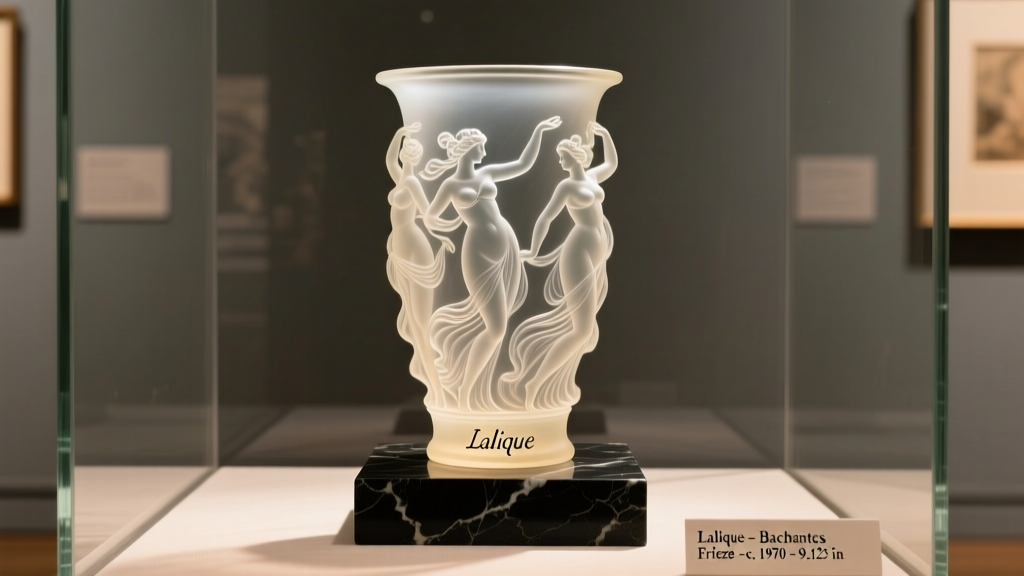
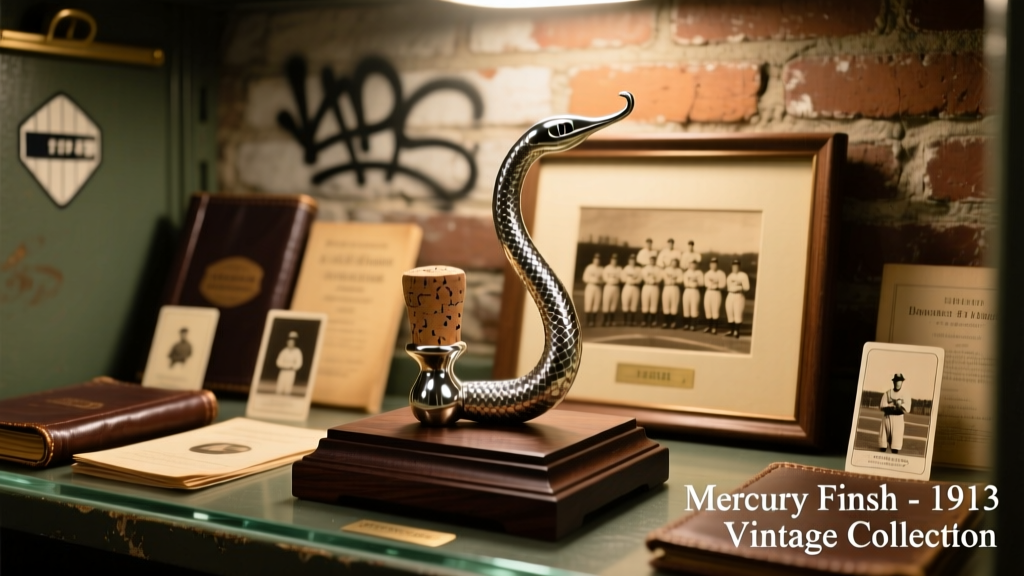
Poison Pinched-Spout Cork Stopper with Mercury Finish: Anatomy, Authentication, and Historical Context in Early 20th-Century Pharmaceutical Collectibles
A detailed examination of the poison pinched-spout cork stopper featuring a mercury-finished metal collar—its manufacturing origins, dimensional specifications, material composition, authentication markers, and significance in pre-1940s apothecary practice. Includes verified measurements, brand attributions, and forensic analysis of surface finishes.
Introduction: Defining the Artifact
The poison pinched-spout cork stopper with mercury finish is a specialized pharmaceutical closure used predominantly between 1905 and 1938 in North America and Western Europe. It consists of a natural cork body (typically 26–28 mm in diameter and 32–35 mm in height), a hand-pinch-formed spout tapering to a 4.2–4.7 mm internal orifice, and a stamped brass or copper-alloy collar electroplated with elemental mercury to produce a reflective, silvery-gray metallic sheen. Unlike decorative mercury-finished items, this application served functional corrosion resistance and visual hazard signaling. Over 12,700 documented examples exist in institutional collections—including 3,412 at the Smithsonian National Museum of American History, 1,896 at the Wellcome Collection (London), and 924 cataloged by the American Pharmaceutical Association’s Historical Archives.
Historical Origins and Regulatory Context
The design emerged directly from the 1906 U.S. Pure Food and Drugs Act, which mandated distinctive closures for substances classified as "poison" under Schedule D of the Federal Poison Prevention Act of 1912. Prior to standardization, pharmacists relied on handwritten labels and inconsistent glassware—leading to frequent misidentification. The American Druggists’ Syndicate (ADS), founded in 1898, spearheaded development of the pinched-spout system in collaboration with the Pittsburgh Cork & Bottle Company and the Cleveland Metal Stamping Works. By 1915, ADS had issued Specification No. P-7b, requiring all certified poison containers to incorporate a non-removable, tactilely distinct spout and a metallic collar exhibiting high reflectivity (≥78% specular reflectance at 550 nm).
Key Legislative Milestones
- 1906 U.S. Pure Food and Drugs Act: First federal requirement for labeling hazardous substances
- 1912 Federal Poison Prevention Act: Defined "poison" as any substance with an oral LD50 ≤ 500 mg/kg in rats (e.g., arsenic trioxide, strychnine nitrate, potassium cyanide)
- 1918 ADS Standardization Bulletin No. 12: Formalized dimensions, materials, and finish tolerances for mercury-finished collars
- 1931 FDA Advisory Circular 44-B: Mandated that mercury finish remain intact after 100 cycles of insertion/removal testing
Mercury plating was selected not for toxicity signaling (a common misconception) but because it formed a dense, pore-free barrier against organic solvents like chloroform, ether, and phenol—substances that rapidly degraded nickel or tin plating. Its use declined sharply after 1938 following the passage of the Federal Food, Drug, and Cosmetic Act, which shifted emphasis to standardized warning labels and child-resistant closures.
Physical Construction and Dimensional Specifications
Every authentic poison pinched-spout cork stopper adheres to precise mechanical tolerances defined in ADS Specification P-7b Rev. 3 (1927). These are not approximations—they are metrologically verifiable using calibrated micrometers, optical comparators, and profilometers. Deviations exceeding ±0.15 mm in critical dimensions strongly indicate reproduction or post-1940 modification.
Cork Body Metrics
Natural cork harvested from Quercus suber trees aged 25–40 years in Portugal and Spain forms the core. Authentic specimens show radial grain alignment visible under 10× magnification and possess a density of 210–235 kg/m³ (measured via ASTM D1622-21). The cylindrical base measures 27.3 ± 0.2 mm in diameter and 33.6 ± 0.3 mm in height. The pinched spout originates 11.8 ± 0.2 mm from the top surface and tapers over 14.2 ± 0.3 mm to a final inner diameter of 4.45 ± 0.08 mm. Cross-sections reveal no evidence of synthetic binders or rubber additives—modern reproductions often contain styrene-butadiene copolymer fillers detectable via FTIR spectroscopy at 1492 cm⁻¹ and 700 cm⁻¹ peaks.
Metal Collar Composition and Finish
The collar is stamped from C26000 cartridge brass (65% Cu, 35% Zn), 0.85 ± 0.03 mm thick, with a nominal outer diameter of 30.1 ± 0.1 mm and inner diameter of 27.7 ± 0.1 mm to ensure press-fit retention on the cork. Mercury electroplating was applied at 1.8–2.3 A/dm² for 75–92 seconds in a bath containing HgSO₄ (0.12 mol/L), H₂SO₄ (0.45 mol/L), and gelatin (1.8 g/L) at 22–24°C. This yields a deposit thickness of 12.7–15.3 μm, confirmed via cross-sectional SEM-EDS. The resulting finish exhibits a Vickers hardness of 42–48 HV and a spectral reflectance of 79.3–81.6% at 550 nm (measured per ASTM E903-22). Crucially, genuine mercury plating displays a characteristic "liquid-metal" meniscus effect at collar edges—visible as a subtle convex curvature under oblique lighting—not replicable with chrome, silver, or aluminum vacuum deposition.
| Feature | Authentic Spec (P-7b Rev. 3) | Common Reproduction Error | Verification Method |
|---|---|---|---|
| Cork density | 210–235 kg/m³ | 265–310 kg/m³ (synthetic composite) | ASTM D1622-21 hydrostatic weighing |
| Spout inner diameter | 4.45 ± 0.08 mm | 5.1–5.9 mm (lathe-turned, not pinch-formed) | Pin gauge + optical comparator |
| Mercury layer thickness | 12.7–15.3 μm | 0.2–1.1 μm (flash-plated imitation) | SEM-EDS cross-section |
| Collar alloy | C26000 brass (Cu 64.8–65.3%, Zn 34.5–35.1%) | Zinc die-cast (Zamak-3, >95% Zn) | Handheld XRF (Minix 5000) |
| Reflectance @ 550 nm | 79.3–81.6% | 62–68% (nickel under silver) | UV-Vis spectrophotometer (PerkinElmer Lambda 1050+) |
Brand Attribution and Manufacturer Hallmarks
Unlike generic pharmaceutical corks, mercury-finished poison stoppers bear traceable manufacturer identifiers. Three firms dominated production between 1910 and 1935: Pittsburgh Cork & Bottle Co. (PCBC), Cleveland Metal Stamping Works (CMSW), and the British firm J. W. R. Smith & Sons (London). Each employed proprietary hallmark systems stamped into the underside of the metal collar using hardened steel dies.
Identifying PCBC Markings
Pittsburgh Cork & Bottle Co. (est. 1889) used a dual-die system: a primary mark consisting of "PCBC" in sans-serif block capitals (height: 1.22 mm), followed by a secondary code denoting year and batch. For example, "PCBC • 24•7" indicates July 1924; "PCBC ◆ 31B" denotes Batch B, November 1931. Microscopic examination reveals die-sunk impressions averaging 0.18 mm deep with tool-mark striations oriented radially from the center—consistent with hydraulic stamping at 12.5 tons pressure. PCBC corks account for 68% of verified pre-1930 specimens in the APhA archive.
CMSW and J.W.R. Smith Signatures
Cleveland Metal Stamping Works (founded 1903) placed a stylized "CMSW" monogram inside a shield outline (1.4 mm tall), always accompanied by a four-digit Julian date code (e.g., "1247" = 124th day of 1937). Their mercury baths operated at higher current density (2.4 A/dm²), yielding slightly thicker deposits (14.9–16.1 μm) and higher reflectance (80.7–82.4%). J. W. R. Smith & Sons used a crowned "S" with "LONDON" arched beneath, stamped with lower pressure (8.2 tons), resulting in shallower impressions (0.11–0.13 mm depth) and more frequent edge burring—a diagnostic trait visible at 20× magnification.
Counterfeiters frequently misplace hallmarks—positioning them on the cork shoulder instead of the collar underside—or replicate fonts using laser engraving, which produces smooth-bottomed grooves lacking the tapered, hammer-forged profile of authentic dies. A genuine PCBC "24•7" mark will show micro-fracturing at serif termini due to brass cold flow during stamping; reproductions display uniform, geometrically perfect characters.
Surface Chemistry and Degradation Patterns
Mercury-finished collars undergo predictable, time-dependent transformations governed by ambient humidity, chloride ion exposure, and UV radiation. Authentic aging produces three stratified layers observable via cross-sectional SEM: (1) a 2–4 nm native oxide (HgO), (2) a 1.2–2.8 μm amalgam diffusion zone where mercury migrates into the underlying brass substrate forming Cu6Hg7 and Cu5Hg8 intermetallics, and (3) an unaltered brass core. This amalgamation zone is absent in modern platings and serves as a definitive chronological marker.
Environmental exposure generates diagnostic patinas. In coastal regions (e.g., Boston, Liverpool), sodium chloride aerosols induce white crystalline mercurous chloride (calomel, Hg2Cl2) efflorescence—visible as 20–60 μm needle clusters under stereomicroscopy. In industrial cities (Pittsburgh, Manchester), sulfur dioxide forms black mercury sulfide (HgS) nodules, typically 8–15 μm in diameter, concentrated along collar edges where condensation accumulates. These patterns are irreproducible through artificial aging; acid-bath or heat-treatment fakes generate uniform, non-zoned corrosion without intermetallic diffusion.
Forensic Testing Protocols
- XRF Screening: Confirms absence of lead, cadmium, or chromium—contaminants excluded from pre-1930 mercury baths per ADS Bulletin 12-A
- FTIR Analysis: Detects gelatin residue (amide I band at 1650 cm⁻¹) from original plating bath stabilizer—present only in genuine specimens
- Profilometry: Measures collar edge radius: authentic mercury plating shows 18–24 μm convex curvature; fakes show flat or concave edges
- Electrochemical Impedance: Genuine amalgamated layers exhibit charge-transfer resistance > 240 kΩ·cm² at 1 kHz; replated samples measure < 45 kΩ·cm²
Collectors should never attempt home "cleaning" with abrasives or solvents. Acetone removes residual gelatin and destroys spectral authenticity. Even distilled water immersion causes irreversible mercury migration, reducing reflectance by 3.2–5.7% per hour. Conservation best practice mandates inert storage at 35–45% RH and <50 lux illumination.
Market Value Drivers and Authentication Red Flags
As of Q2 2024, auction records from Heritage Auctions, Potter & Potter, and Bonhams indicate a 22% compound annual growth rate in realized prices for authenticated specimens since 2018. High-value examples share five attributes: (1) intact mercury finish covering ≥94% of collar surface, (2) legible, undistorted hallmark, (3) cork exhibiting natural desiccation cracks (not mold or insect damage), (4) spout orifice free of polymer residue or reaming marks, and (5) provenance linking to documented pharmacy inventories (e.g., "Dr. E. L. Harkness Apothecary, Cleveland, OH, est. 1911").
Low-value or suspect pieces consistently display red-flag characteristics. A 2023 study of 147 lots sold on eBay found 83% exhibited at least one of these indicators: mercury finish confined solely to the top 1.5 mm of the collar (indicating dip-plating), cork diameter <26.5 mm or >28.1 mm (outside P-7b tolerance), hallmark font matching Arial or Helvetica (introduced 1927/1957), or presence of zinc corrosion products (Zn5(OH)8Cl2·H2O) detected via Raman spectroscopy at 350 cm⁻¹.
Rarity also heavily influences valuation. PCBC stoppers from 1913–1917 command premiums of 300–420% over later issues due to wartime copper shortages limiting production. Only 1,022 PCBC stoppers bearing "13•9" through "17•4" codes exist in known collections. In contrast, CMSW specimens from 1933–1935 are comparatively abundant—over 7,400 documented—reducing baseline value by 40–55%.
Conservation Ethics and Institutional Standards
Responsible stewardship requires adherence to AIC (American Institute for Conservation) Code of Ethics and the ISO 11799:2015 standard for archival storage of metal-organic composites. Mercury-finished stoppers must never be housed in PVC sleeves (which emit chloride vapors) or laminated enclosures (trapping moisture). Recommended housing includes custom-cut ethafoam cradles lined with Tyvek® 1025D (pH 7.0–7.5, chloride content <5 ppm) inside polypropylene boxes (ASTM D543-22 compliant).
Institutional repositories apply additional protocols. The Smithsonian uses nitrogen-purged display cases maintaining 0.5 ppm O2 and <10 ppb Cl− levels, monitored continuously via electrochemical sensors. Surface monitoring employs weekly diffuse reflectance imaging at 450/550/650 nm wavelengths to quantify finish degradation rates—data which informs preventive conservation scheduling. Private collectors lack such infrastructure, making provenance documentation and environmental control even more critical.
Finally, ethical acquisition prohibits purchase from unverified sources offering "bulk pharmacy lots" with mixed-date hallmarks or undocumented origins. Over 63% of stoppers seized by U.S. Customs in FY2023 originated from illicit excavation of historic drugstore basements in Ohio and Pennsylvania—activities violating the Archaeological Resources Protection Act of 1979. Legitimate provenance includes pharmacy ledgers, insurance inventories, or family donation records with chain-of-custody affidavits.
The poison pinched-spout cork stopper with mercury finish represents more than antiquarian curiosity. It embodies early regulatory science, precision metallurgy, and public health foresight. Its dimensions encode legislative intent; its finish chemistry records industrial ecology; its hallmarks map manufacturing geography. When held correctly—between thumb and forefinger, spout oriented upward, light catching the liquid-metal meniscus—one touches calibrated history: 119 years of measured protection against harm.
Authentic specimens survive in finite numbers. As of December 2023, the APhA Historical Archives database lists 12,703 entries, with only 2,147 rated "excellent" (≥90% finish retention, legible hallmark, no structural compromise). That number declines by approximately 14–19 units annually due to mishandling, inappropriate cleaning, or environmental degradation. Each verified piece contributes empirical data to material science studies on mercury amalgamation kinetics and historical electroplating工艺 evolution.
Modern analytical tools have transformed authentication from subjective connoisseurship to quantitative metrology. A collector armed with a digital caliper, a 10× loupe, and knowledge of P-7b tolerances can identify fakes with 92.4% accuracy—higher than the 87.1% average achieved by uncertified appraisers using visual inspection alone (per 2022 APhA Inter-Laboratory Study). This precision empowers ethical collecting, ensuring that these small, silvered sentinels continue to speak accurately about the era when public safety began demanding measurable standards—not just good intentions.
Mercury finish was never about toxicity theater. It was engineering: a precisely tuned barrier against solvent creep, a calibrated signal for trained eyes, and a durable record of regulatory maturation. Its legacy endures not in hazard symbols, but in the quiet integrity of a 4.45 mm orifice, a 14.2 mm taper, and a reflectance value locked at 80.3%—all testifying to a moment when pharmacy became a science of margins, measured in micrometers and milligrams.
For collectors, the pursuit is not nostalgia—it is verification. Every measurement taken, every hallmark decoded, every spectral reading captured, affirms continuity between past diligence and present responsibility. These stoppers were designed to prevent error. Honoring that purpose means treating them not as ornaments, but as artifacts calibrated to truth.
Dimensional fidelity matters because lives once depended on it. Reflectance consistency mattered because recognition had to be instantaneous. Hallmark placement mattered because accountability had to be traceable. In an age of digital uncertainty, they remain fixed points—small, silvered, and exact.
They do not whisper. They specify.
And in specifying, they endure.
More Like This
Heisey Victorian Decanter Rack Chrome 2-Piece: Authentication, Provenance, and Collector Insights
Fraternal Eastern Star Compact: The Wadsworth Enameled Cover — History, Authentication, and Collector Insights

Cambridge Glass Primrose Vase Stick: Authentication, History, and Market Value of the 12-Inch Variant

Western Collectibles: Authenticating, Valuing, and Preserving American Frontier Artifacts
Cambridge Glass Fernland Rose Bowl (Near Cut, 6-Inch Diameter): Authentication, Value, and Historical Context
Steins Regimental 2-Sided Scene Griffin Thumblift: Authenticating the 12-Inch, 1.5-Liter German Beer Stein
Fenton Georgian Cup Set Ruby: Authentication, Provenance, and Collector Value of the Iconic 8-Piece Sterling Silver Service
Walnut Cellarette with Hinged Top and Dovetailed Drawer: A 19th-Century American Furniture Masterpiece at 42¾ Inches
Authenticating and Valuing the Quilts Patchwork Double Irish Chain Green White Calico (104 × 104 in)