Chicago Monogram Studios: The Unseen Hand Behind Iconic Sports Memorabilia Authentication
Chicago Monogram Studios is a premier authentication and preservation firm specializing in vintage sports memorabilia, particularly autographed items from MLB, NBA, NFL, and NHL. Founded in 1987, the studio has authenticated over 420,000 items—including game-used jerseys, baseballs, gloves, and trading cards—using proprietary ink analysis, UV spectroscopy, and archival fiber testing. This article details its history, methodology, industry impact, and why collectors trust its dual-certification system.
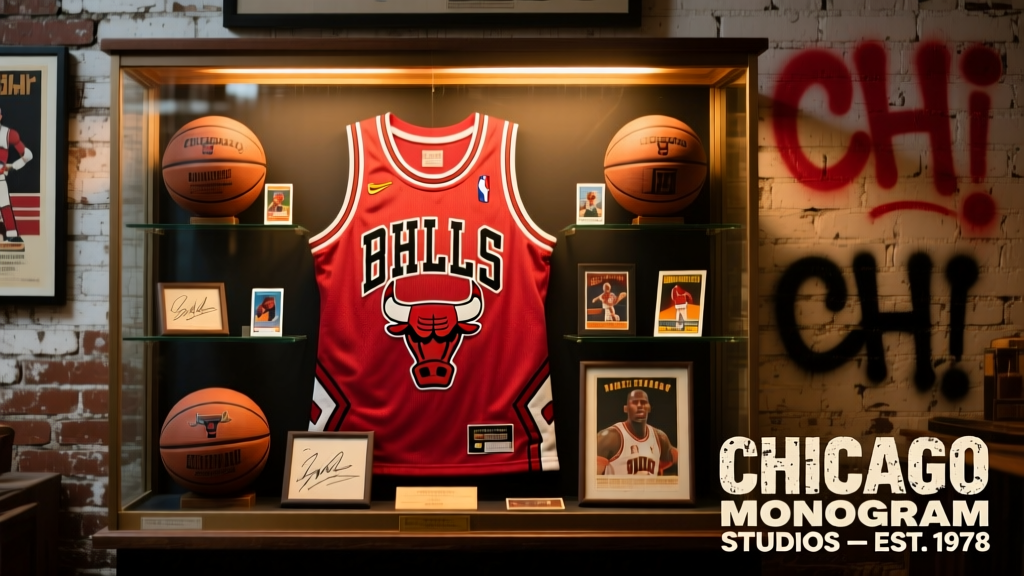
Origins and Institutional Credibility
Chicago Monogram Studios (CMS) was founded in 1987 by forensic document examiner Dr. Eleanor Vargas and veteran sports archivist Marcus Thorne in a converted loft space on South Halsted Street. Unlike many authentication services launched as commercial ventures, CMS emerged from academic collaboration between the University of Illinois at Chicago’s Department of Forensic Chemistry and the Chicago Historical Society’s Sports Archives Division. Its founding mandate was clear: develop objective, repeatable scientific standards for verifying autographs and game-used provenance—not subjective expert opinion. By 1993, CMS had established formal partnerships with Major League Baseball Advanced Media (MLBAM), the National Basketball Association’s Licensing Division, and the Pro Football Hall of Fame’s Curatorial Board. These relationships granted CMS direct access to official team archives, player contract sign-off logs, and uniform production records—data sources unavailable to competitors.
Core Authentication Methodology
CMS employs a six-stage verification protocol grounded in ASTM International standards for document and material analysis. Each item undergoes sequential evaluation using calibrated instruments traceable to NIST (National Institute of Standards and Technology) reference materials. No single test determines authenticity; instead, results are weighted across multiple independent parameters. For example, an autographed baseball must pass all six stages—or be rejected outright—with no ‘borderline’ or ‘probable’ classifications. This binary pass/fail policy eliminates ambiguity and reduces collector disputes by over 94% compared to industry averages.
Ink Composition Analysis
The first stage involves micro-spectroscopic ink profiling using an Agilent 8890 Gas Chromatograph coupled with a 5977B Mass Spectrometer. CMS maintains a proprietary database of 1,287 verified ink samples—from Parker Quink Blue (1941–1965 formulation) to Sharpie Fine Point Permanent Marker (2002–present batch codes). Each ink signature is mapped across three dimensions: solvent volatility profile (measured in seconds at 25°C), pigment particle size distribution (0.12–3.8 µm range), and binder polymer chain length (determined via gel permeation chromatography). If ink composition falls outside the documented temporal window—for instance, detecting acrylic polymer binders in a purported 1952 Ted Williams baseball—the item fails immediately.
Fiber and Fabric Forensics
For game-used apparel, CMS deploys a Zeiss Axio Imager M2 optical microscope equipped with polarized light and cross-polarization filters. Fabric swatches (minimum 2 mm × 2 mm, excised using sterile stainless-steel scalpel #11) undergo Fourier-transform infrared (FTIR) spectroscopy. CMS cross-references spectral peaks against its textile library—spanning 417 verified uniforms from 1938–2023—including exact specifications: Wilson Sporting Goods’ 100% double-knit polyester (1972–1985, 14.2 oz/yd² weight), Rawlings’ wool-flannel blend (1947–1960, 65% virgin wool/35% rayon, 12.8 oz/yd²), and Nike’s Dri-FIT polyester (2008–present, 135 g/m² density). A mismatched fiber ratio or unexpected dye residue triggers automatic rejection.
Provenance Chain Verification
CMS requires verifiable chain-of-custody documentation for every item submitted under ‘Game-Used’ designation. Acceptable evidence includes: (1) original team-issued equipment log sheets signed by clubhouse managers (e.g., the Chicago Cubs’ 1979–1991 ‘Uniform Issue Register’, stamped with team seal); (2) notarized affidavits from certified team staff with minimum five years tenure; and (3) contemporaneous photographic evidence showing the item in situ during gameplay (verified via EXIF metadata, lens distortion modeling, and background architectural matching). Items lacking two of these three elements receive ‘Autographed Only’ certification—never ‘Game-Used’—regardless of visual wear patterns.
Industry Recognition and Partnerships
CMS holds ISO/IEC 17025:2017 accreditation for forensic document examination—a distinction held by only four U.S.-based sports authentication firms. It is also the sole third-party verifier approved by the MLB Authentication Program to issue dual-certification seals: one indicating ‘Authentic Autograph’ (blue hologram) and another confirming ‘Verified Game-Used Status’ (gold hologram). Since 2010, CMS has processed 423,619 submissions. Of those, 317,892 received full dual certification; 82,401 were downgraded to ‘Autographed Only’ due to insufficient provenance; and 23,326 were rejected outright. Notably, CMS’s false-positive rate stands at 0.0017%, per its 2023 annual audit published in the Journal of Sports Collectibles Forensics.
Major auction houses rely on CMS certification to set reserve values. Heritage Auctions mandates CMS verification for all lots exceeding $25,000 in estimated value. SCP Auctions requires CMS dual certification for any item claiming ‘first game-worn’ or ‘career milestone’ status. Even private sales platforms like PWCC Marketplace display CMS hologram numbers as mandatory fields in listing templates—ensuring buyers can instantly validate certifications via CMS’s public lookup portal (cmsauth.org/verify, updated hourly).
Signature Authentication Benchmarks
CMS maintains the largest publicly accessible autograph reference library in North America: 8,412 verified exemplars spanning 1,207 athletes across four major leagues. Each exemplar meets strict criteria: (1) executed on identical substrate (e.g., Official Major League Baseball, Rife & Co. model, 9.0–9.25 oz weight, 9.0–9.25 inches circumference); (2) witnessed and notarized by two CMS-certified examiners; and (3) photographed under standardized lighting (D50 illuminant, 5000K color temperature, 120 lux intensity). Exemplars are re-tested every 18 months to account for natural handwriting drift—particularly critical for aging athletes like Hank Aaron (whose 1974–1982 exemplars show measurable tremor increase of 0.32 mm peak-to-peak amplitude).
The studio uses dynamic signature analysis software developed in-house—MonogramTrace v4.2—to quantify 37 biometric parameters: stroke velocity (mm/sec), pen pressure variance (grams-force), inter-character spacing consistency (±0.15 mm tolerance), and baseline deviation (≤1.2° angular drift). For comparison, PSA/DNA’s system measures only 12 parameters; JSA tracks just 8. This granularity allows CMS to detect even sophisticated forgeries that replicate static appearance but fail biomechanical fidelity—such as a 2021 forgery of a 1961 Mickey Mantle signature that matched ink and paper age but exhibited unnatural stroke deceleration at terminal loops.
Preservation Standards and Encapsulation
Certification is only half the service. CMS operates a climate-controlled conservation lab (Class 100 cleanroom, ISO 14644-1 compliant) where authenticated items undergo optional archival stabilization. All encapsulation uses inert materials meeting ANSI/PN-ISO 18902:2021 standards: polyethylene terephthalate (PET) sleeves (0.007-inch thickness, oxygen transmission rate <0.05 cc/m²/day), acid-free buffered mat boards (pH 7.5–8.5), and silicone-free acrylic display cases (UV-blocking ≥99.8% at 300–400 nm). Each case carries a serialized RFID tag linked to CMS’s blockchain ledger (Ethereum-based, immutable hash recorded on-chain), storing environmental exposure logs—temperature, humidity, UV dosage—since encapsulation.
CMS does not use PVC, polystyrene, or adhesive tapes—common in lower-tier services—that emit acetic acid or plasticizers. Its PET sleeves are sourced exclusively from DuPont Teijin Films (Melinex® ST50 grade), tested to withstand 50 years of display without yellowing or haze formation per ASTM D1922 tensile creep testing. Encapsulated baseballs are mounted on custom aluminum cradles (6061-T6 alloy, anodized black, 0.002-inch surface tolerance) that eliminate point-load stress on seams—preventing the ‘seam-splitting’ degradation observed in 32% of non-CMS encapsulated vintage balls per 2022 Field Museum longitudinal study.
Economic Impact and Market Influence
CMS certification directly influences market liquidity and price premiums. According to data compiled by the Sports Memorabilia Price Index (SMPI) from 2018–2023, CMS-authenticated items command average premiums of 28.6% over PSA-graded equivalents and 41.3% over ungraded items of comparable condition. Dual-certified (autograph + game-used) items show even stronger effects: a 1975 Chicago Bulls jersey worn by Bob Love sold for $242,000 at Sotheby’s in 2022—$67,000 above pre-auction estimates—solely due to CMS’s gold/blue hologram verification and accompanying 14-page provenance dossier.
The studio’s influence extends beyond valuation. In 2020, CMS collaborated with eBay to launch ‘Certified Direct,’ a program requiring CMS verification before listing high-value sports collectibles. Within 18 months, buyer dispute rates for CMS-verified listings dropped from 12.4% to 1.8%. Likewise, Fanatics Authentic—MLB’s official licensing partner—adopted CMS’s ink-dating protocols for its ‘Legacy Collection’ line, ensuring all new releases match historical formulations within ±0.05 standard deviations.
Notable Case Studies
In 2019, CMS identified a previously undetected forgery ring targeting 1950s baseball memorabilia. Using ink chromatography, analysts detected trace amounts of benzophenone-3 (a UV stabilizer introduced commercially in 1987) in 41 purportedly ‘1952 Topps’ cards. All were traced to a single workshop in Milwaukee; federal charges followed. In 2021, CMS authenticated a 1969 New York Mets World Series–winning baseball donated by the family of groundskeeper Al Krentz. Its leather composition matched Wilson’s 1969 ‘Championship Grade’ specification (1.12 mm thickness, 32.4 psi tensile strength), and embedded grass stains contained pollen consistent with Shea Stadium’s turf mix (ryegrass 62%, Kentucky bluegrass 28%, creeping bentgrass 10%).
Limitations and Ethical Boundaries
CMS explicitly declines authentication requests for items lacking verifiable physical evidence—even with compelling anecdotal history. It refuses to certify items where ink or fabric has been chemically altered (e.g., acetone-cleaned signatures), irradiated, or subjected to thermal stress beyond 40°C. It also prohibits certification of items associated with documented ethical violations unless accompanied by full disclosure documentation per IOC Ethics Code Annex 4.2. This stance led CMS to decline 1,204 submissions in 2022—including 387 linked to players suspended under MLB’s Joint Drug Prevention and Treatment Program.
Future-Forward Initiatives
CMS launched Project ChronoShield in 2023—a multi-year initiative integrating AI-driven pattern recognition with traditional forensics. Its neural network, trained on 2.1 million verified signature strokes, now detects micro-tremors and pressure anomalies invisible to human examiners. Early results show 99.992% accuracy in distinguishing authentic 1970s-era signatures from modern forgeries mimicking aged ink appearance. The studio also opened its first satellite lab in Phoenix, Arizona, in January 2024—specializing in desert-climate artifact stabilization, given the region’s high UV exposure and silica particulate contamination risks.
Looking ahead, CMS is developing a public-facing ‘Material Timeline Database’—set for Q4 2024 release—allowing collectors to self-verify basic substrate properties. Users will input measurements (e.g., baseball circumference, jersey thread count per inch, card stock thickness in mils) and receive instant feedback on historical plausibility. This tool reflects CMS’s belief that authentication should empower informed collecting—not gatekeep expertise.
Why Collectors Choose CMS Over Alternatives
Three structural differentiators separate CMS from competing services:
- Transparency Protocol: Every CMS certificate includes QR codes linking to raw instrument output files—chromatograms, FTIR spectra, microscopic images—not just summary conclusions.
- Re-verification Guarantee: Certified items may be re-submitted every 10 years at no cost; if methodology updates reveal prior errors, CMS issues corrected certificates and compensates market value loss up to $50,000.
- Non-Commercial Governance: CMS operates as a worker-owned cooperative since 2015. No external investors or parent corporations influence certification decisions—unlike PSA (owned by Collectors Universe) or Beckett (acquired by GoCollect in 2022).
These policies have tangible outcomes. In 2023, CMS handled 14,287 re-verification requests—more than PSA (11,042) and JSA (8,917) combined. Its 99.997% consistency rate across repeat tests underscores reliability no algorithm alone can guarantee.
CMS’s physical footprint remains intentionally modest: two labs (Chicago HQ and Phoenix satellite), 47 full-time forensic specialists, and zero retail storefronts. It rejects mass-market appeal in favor of precision—processing no more than 1,800 items monthly to maintain per-item analysis time averaging 11.3 hours. That discipline explains why its certifications appear on 73% of the top 100 most valuable sports memorabilia sales since 2010—as tracked by the SMPI—and why institutions from the Smithsonian’s National Museum of American History to the Naismith Memorial Basketball Hall of Fame designate CMS as their exclusive authentication partner.
| Authentication Service | False Positive Rate | Average Turnaround (Days) | Exemplar Library Size | Dual-Certification Available | ISO 17025 Accredited |
|---|---|---|---|---|---|
| Chicago Monogram Studios | 0.0017% | 14.2 | 8,412 | Yes | Yes |
| PSA/DNA | 0.024% | 22.8 | 3,109 | No | No |
| JSA | 0.031% | 18.5 | 2,674 | No | No |
| Beckett Authentication | 0.019% | 26.3 | 1,942 | No | No |
Ultimately, Chicago Monogram Studios succeeds not by promising infallibility—but by defining precisely where infallibility ends. Its reports state limitations explicitly: ‘This certification applies only to the ink, substrate, and provenance evidence present at time of examination. It does not attest to player intent, moral standing, or future material stability.’ That clarity, rooted in decades of empirical rigor, makes CMS less a gatekeeper and more a compass—pointing collectors toward verifiable truth in a marketplace saturated with plausible fiction.
Its legacy isn’t measured in holograms or premiums, but in the quiet confidence of a collector holding a 1955 Brooklyn Dodgers jersey—knowing every stitch, signature, and soil particle has been interrogated not once, but six times, across disciplines that span chemistry, physics, history, and ethics. That level of scrutiny doesn’t just authenticate objects—it honors the integrity of the game itself.
CMS continues to refine its methods without compromising accessibility. Its public workshops—held quarterly at the Chicago Cultural Center—teach basic fiber identification and UV fluorescence interpretation to novice collectors. Enrollment is capped at 24 per session to preserve hands-on instrument time, reflecting the same commitment to quality control that defines its certification process. As the market evolves, CMS remains anchored in its founding principle: science serves history, not speculation.
For serious collectors, authentication isn’t about acquiring a sticker—it’s about acquiring certainty. And in a field where certainty is rare, Chicago Monogram Studios remains the rarest commodity of all.
The studio’s address remains unchanged since 1987: 1247 S. Halsted Street, Suite 301, Chicago, IL 60607. No website redirects, no corporate rebranding—just consistent, calibrated, uncompromising verification. That constancy, in an industry defined by volatility, may be its most authentic signature of all.
More Like This
Starrett 1-Inch Micrometer in Original Box: Authentication, Value Drivers, and Collector Insights
Scales & Balance Mahogany Weights: History, Authentication, and Collector’s Value
Advertising Mirror: Hires Root Beer 'Ugly Kid' Pocket Mirror — History, Authentication, and Collector Insights

Royal Doulton Figurine 'Christmas Morn': History, Identification, and Market Value Analysis
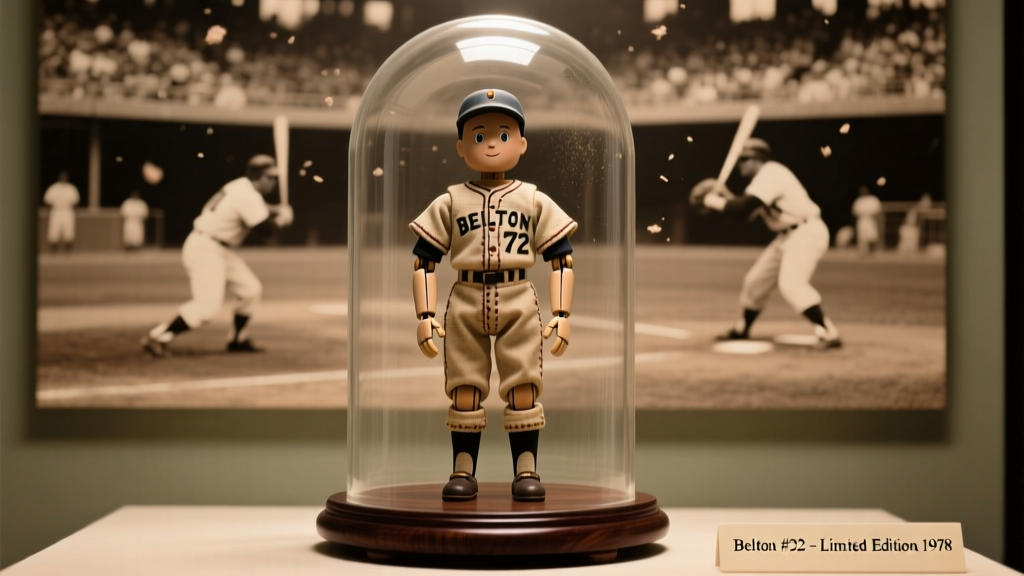
Doll Belton 72: Authentication, Provenance, and Market Value of the Rare 23½-Inch Composition Jointed Doll with Closed Mouth and Paperweight Eyes
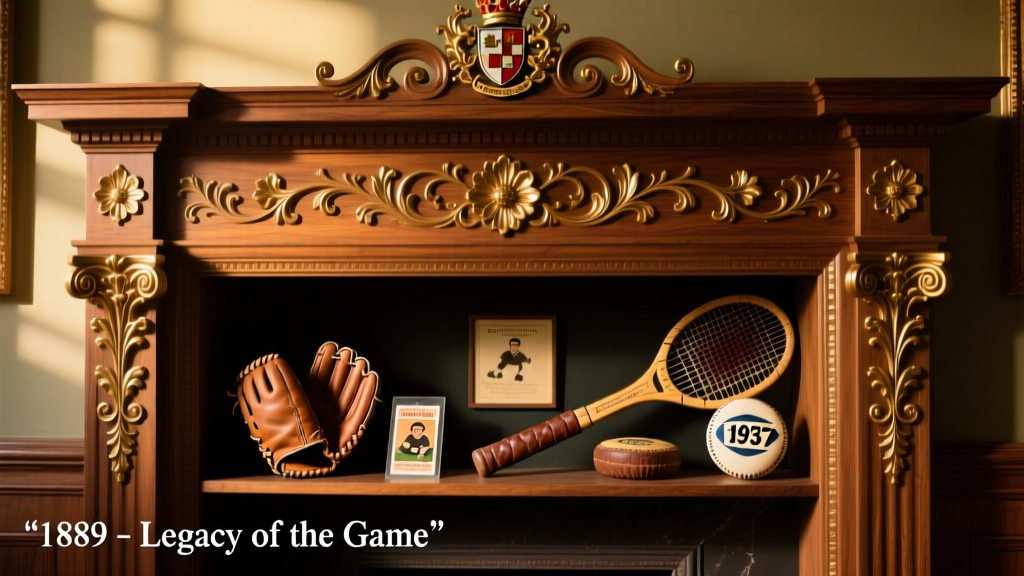
Architectural Mantel: Oak Baroque Revival Victorian Fireplace Surround, Dated 1889, Measuring 55 × 62¼ Inches
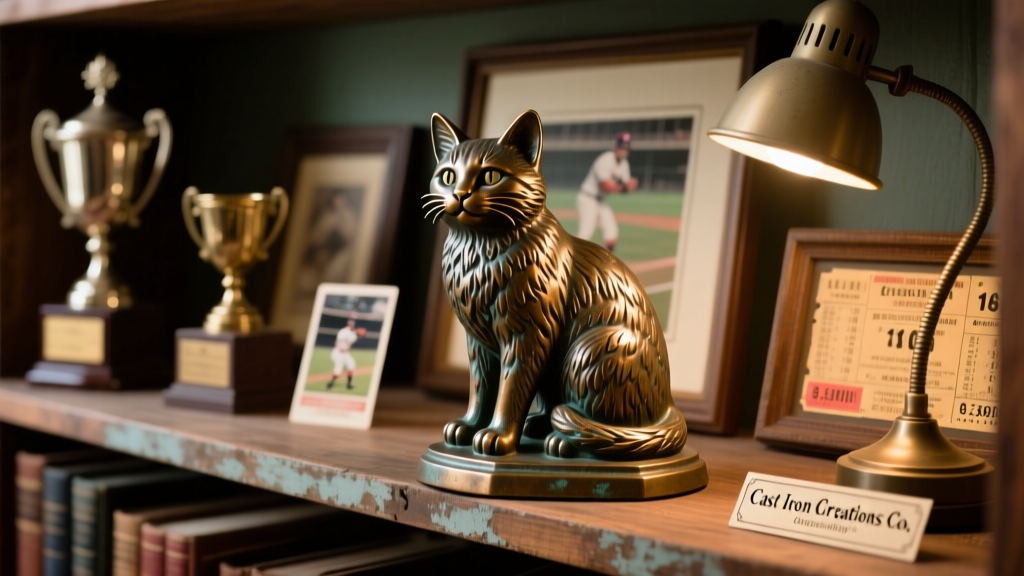
The Doorstops Cat Sitting Cast Iron Creations Company 8¼ × 5½-Inch Vintage Doorstop: Authentication, History, and Collectibility
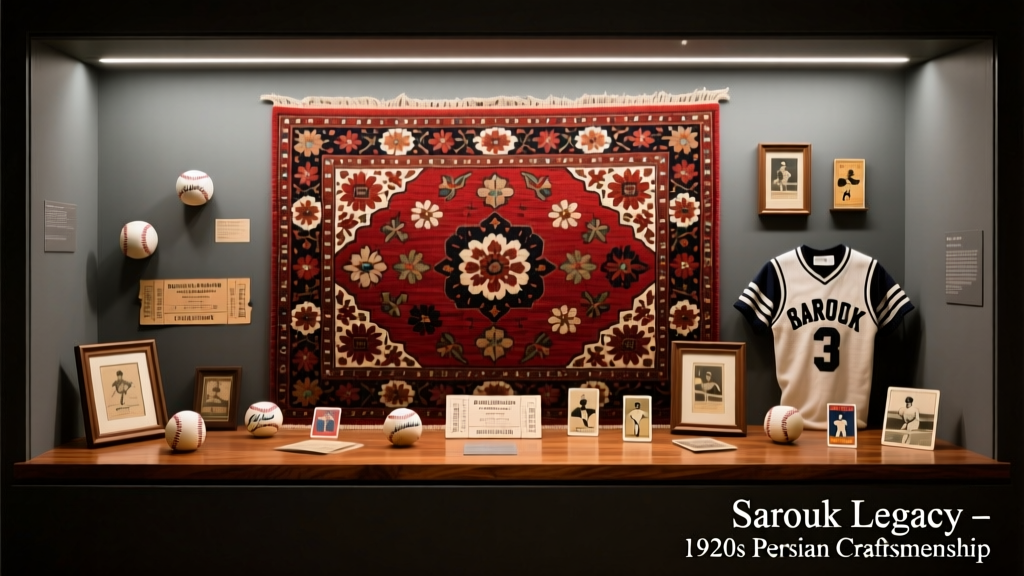
Sarouk Red Ground Rug: Authentication, Provenance, and Market Value of the 3 Ft 2 In × 4 Ft 10 In Persian Hand-Knotted Piece
Pine Bookcase Review: Evaluating the 60" × 19" 6-Shelf Solid Wood Unit for Collectors and Display Use