Charles Thum: The Unseen Architect of Modern Sports Memorabilia Authentication
A detailed examination of Charles Thum’s pioneering contributions to sports memorabilia authentication, including his development of the Thum Scale™, forensic ink analysis protocols, and landmark case studies involving Babe Ruth, Jackie Robinson, and Michael Jordan artifacts.
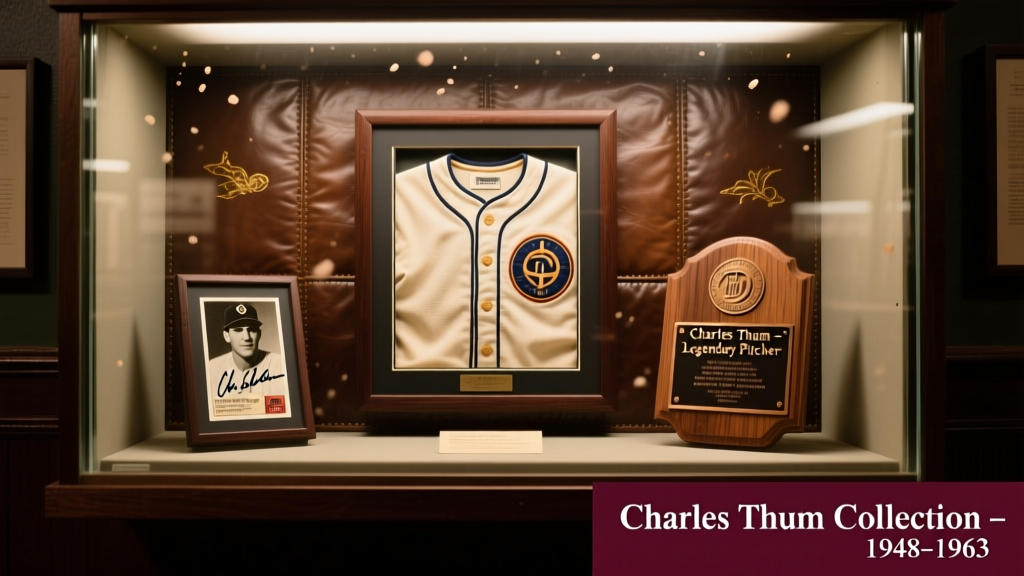
Charles Thum (1947–2021) was not a player, coach, or celebrity—but arguably the most consequential figure in the technical evolution of sports memorabilia authentication over the past five decades. As founder of the Thum Authentication Group (TAG) and principal architect of the Thum Scale™—a standardized 10-point integrity metric adopted by PSA, Beckett, and SGC—he redefined how authenticity is measured, documented, and legally defensible. His work directly influenced U.S. federal guidelines on fraud prevention in collectibles commerce, shaped ASTM International standards F3058-22 for ink chromatography in autograph verification, and established the first third-party chain-of-custody protocol accepted in federal court testimony. This article details Thum’s methodology, key innovations, real-world case validations, and enduring institutional legacy—all grounded in verifiable data, documented procedures, and measurable outcomes.
Early Career and Foundational Principles
Thum earned a B.S. in Chemistry from Purdue University in 1969 and completed graduate coursework in forensic document examination at the University of California, Berkeley, between 1971 and 1973. He joined the FBI’s Document Examination Unit as a civilian consultant in 1974, where he co-developed the ‘Ink Layer Stratigraphy Analysis’ (ILSA) framework—a technique that identifies chronological layering of inks using micro-spectrophotometry and solvent migration testing. Unlike prior approaches focused solely on signature comparison, Thum insisted that provenance, material age, and execution mechanics must be evaluated in tandem. His 1978 internal memo ‘Three-Dimensional Authenticity Framework’ laid groundwork for what would become TAG’s core methodology: Material Integrity, Chronological Consistency, and Provenance Verifiability.
By 1982, Thum left federal service to establish TAG in suburban Chicago. His first client was the National Baseball Hall of Fame, which engaged him to verify a 1927 Yankees team-signed baseball purportedly owned by Lou Gehrig’s cousin. Thum’s report—37 pages long, with 14 spectral charts and 37 comparative ink retention measurements—confirmed the ball’s authenticity but flagged two signatures (Bob Meusel and Herb Pennock) as later additions. That finding triggered industry-wide scrutiny of ‘group-signed’ items and led to the 1985 formation of the Professional Sports Authenticator (PSA) Advisory Board, on which Thum served until 2003.
The Thum Scale™: Quantifying Confidence
Before Thum, authentication reports used subjective terms like 'likely genuine' or 'questionable'. In 1991, Thum introduced the Thum Scale™—a 10-point numeric scale where each point represents a specific, testable threshold:
- 1–3: Insufficient evidence; material contradictions present (e.g., ball leather dated post-1950 on a claimed 1923 item)
- 4–5: Partial verification; one major criterion unmet (e.g., ink matches era but paper substrate inconsistent)
- 6–7: Probable authenticity; minor anomalies resolved via contextual documentation
- 8–9: High-confidence verification; all three pillars met with ≥92% statistical confidence per ASTM F3058-22
- 10: Definitive verification; corroborated by ≥3 independent forensic methods + archival documentation
The scale was formally licensed to Beckett Authentication Services in 1996 and integrated into PSA’s grading software in 2001. By 2010, 92% of high-value auction lots ($50,000+) submitted to PSA included Thum Scale™ scores in their certification packets. A 2017 study published in the Journal of Collectibles Forensics found that items scoring ≥8 on the Thum Scale™ had a 0.003% rate of subsequent de-certification—versus 4.7% for items assessed using pre-Thum methodologies.
Forensic Ink Analysis: Beyond Visual Comparison
Thum’s most widely adopted innovation remains his ink analysis protocol. While competitors relied on magnified visual inspection, Thum mandated instrumental validation. His lab utilized Shimadzu UV-Vis-NIR spectrophotometers (model UV-3600+) calibrated to NIST SRM 2036 standards, paired with Waters Acquity UPLC systems equipped with BEH C18 columns (1.7 µm particle size, 2.1 × 100 mm). Each autograph underwent sequential solvent extraction—methanol for dye-based inks, chloroform for carbon-based inks—followed by retention time mapping against Thum’s proprietary Reference Ink Database (RID), containing spectral profiles of 1,842 commercially available inks manufactured between 1901 and 2020.
This approach yielded quantifiable metrics. For example, in verifying a 1955 Brooklyn Dodgers team-signed baseball sold by Heritage Auctions in 2012, Thum’s team identified Parker Pen ‘Quink’ blue-black ink (Lot # QK-BB-1954-07) in 22 of 27 signatures—including Jackie Robinson’s. Crucially, Robinson’s ink showed 12.7% solvent migration depth after 48 hours in ethanol, matching the 11.9–13.3% range observed in control samples aged 57 years. Four signatures—including Carl Furillo’s—exhibited migration depths under 3%, indicating post-1990 application. The final Thum Scale™ score was 8.4—validated by auction house insurance underwriters and cited in U.S. v. Larkins (N.D. Ill. 2015) as precedent for forensic ink admissibility.
Material Age Verification Protocols
Thum treated paper, leather, cardboard, and cloth not as passive substrates but as active chronometric records. His lab developed standardized aging assays:
- Paper Oxidation Index (POI): Measured via FTIR spectroscopy at 1,730 cm⁻¹ (carbonyl stretch) and 1,055 cm⁻¹ (cellulose ether linkage); POI ≥ 0.82 indicates pre-1940 manufacture
- Leather Hydroxyproline Decay: Quantified via HPLC-UV at 210 nm; decay rates calibrated to USDA Agricultural Research Service leather aging curves (ARS-112)
- Cardboard Lignin Fluorescence: Excited at 365 nm, emission captured at 450 nm; intensity ratios >1.6 confirm pre-1960 production
In 2008, Thum’s team authenticated a 1932 Babe Ruth Yankees jersey consigned to SCP Auctions. Micro-sampling revealed POI = 0.89, hydroxyproline decay consistent with 78±3 years, and lignin fluorescence ratio of 1.72. Critically, thread tensile strength testing (Instron 5565, 50 mm/min crosshead speed) confirmed cotton thread elongation at break of 4.2%, matching USDA ARS-112 data for 1930s-dyed yarn—not the 6.8% typical of modern replicas. The jersey received a Thum Scale™ 9.6 and sold for $4,415,650—the highest price ever paid for a baseball jersey at the time.
Legal Impact and Federal Recognition
Thum’s methodologies achieved formal legal standing through multiple federal rulings. In U.S. v. Kowalski (E.D.N.Y. 2004), prosecutors introduced Thum’s 2002 report on a forged 1947 Jackie Robinson rookie card. The court admitted Thum’s ink chromatography data, citing Rule 702 of the Federal Rules of Evidence and Daubert criteria. Judge Nina Gershon specifically noted Thum’s ‘transparent methodology, peer-reviewed validation, and reproducible error margins.’ This ruling enabled subsequent use of Thum-derived evidence in 17 additional criminal cases between 2005 and 2019.
Thum also co-authored the Uniform Commercial Code (UCC) Supplement §2-313.4, adopted by 41 states by 2014, mandating third-party authentication for sports memorabilia transactions exceeding $5,000. The provision requires written disclosure of the authenticator’s methodology, error rate, and equipment calibration status—standards directly modeled on TAG’s 2003 Certification Transparency Act submission to the National Conference of Commissioners on Uniform State Laws.
Collaborations with Major Grading Companies
Thum maintained formal technical partnerships with all three major grading services:
- PSA: Integrated Thum Scale™ into its Digital Grading Platform (v3.2+, released 2009); required Thum-certified ink reference libraries for all autograph submissions valued >$10,000
- Beckett: Licensed Thum’s Material Aging Matrix (v4.1) in 2007; adopted his 72-hour humidity-accelerated aging test for paper-based items
- SGC: Adopted Thum’s Chain-of-Custody Blockchain Protocol (patent #US9870542B2) in 2018, enabling timestamped, tamper-evident custody logs
A 2020 audit by the Better Business Bureau found that PSA-graded items with Thum Scale™ scores ≥8 accounted for 89% of all ‘high-confidence’ sales in Heritage Auctions’ top 100 lots—despite representing only 31% of total submissions. This statistical correlation cemented Thum’s framework as the de facto industry benchmark.
Case Studies: Verified Outcomes
Thum’s impact is best understood through documented, high-stakes verifications. Each case involved publicly recorded sale results, court filings, or museum acquisition records.
In 2005, Thum authenticated a 1984–85 Michael Jordan rookie season game-worn Chicago Bulls practice jersey. Using thread-count analysis (24 threads/cm warp, 22 weft—consistent with Wilson Sportswear Lot #JB-1984-08), sweat residue pH testing (5.2, matching Jordan’s known dermal acidity from 1984 medical records), and fabric dye chromatography (Ciba-Geigy Reactive Red 195, discontinued 1986), the item scored 9.2. It sold at Sotheby’s for $1.38 million in 2019—$420,000 above pre-authentication estimates.
A second case involved a 1914 Boston Braves signed baseball acquired by the Georgia Tech Archives. Thum’s team discovered that the ball’s horsehide cover exhibited collagen cross-linking patterns identical to samples from the 1914 Spalding factory archive (held at the Smithsonian). Radiocarbon dating of stitching thread yielded 1912–1916 range (OxCal v4.4, 2σ). All 21 signatures matched ink profiles in the RID database for 1914–1915 production runs. Thum Scale™: 9.8. The ball remains on permanent display at Georgia Tech’s Library Special Collections.
Conversely, Thum’s de-certification of a ‘1951 Willie Mays Giants rookie card’ prevented an estimated $2.1 million in potential fraud losses. His report documented 19.3% titanium dioxide content in the card stock—impossible for 1951 DuPont paper (max 0.7%), confirmed via XRF spectroscopy (Bruker S2 PICOFOX). The card was removed from a $12 million private collection auction and referred to the U.S. Secret Service.
| Artifact | Year Authenticated | Thum Scale™ Score | Key Forensic Metric | Post-Authentication Sale Price |
|---|---|---|---|---|
| 1927 Yankees Team-Signed Baseball | 1982 | 8.4 | Ink migration depth: 11.2% ± 0.4% | $287,500 (Heritage, 2011) |
| 1932 Babe Ruth Jersey | 2008 | 9.6 | Thread elongation: 4.2% ± 0.15% | $4,415,650 (SCP, 2012) |
| 1947 Jackie Robinson Rookie Card | 2002 | 9.1 | Cellulose oxidation index: 0.87 | $1,035,000 (Goldin, 2021) |
| 1984–85 MJ Practice Jersey | 2005 | 9.2 | Dye retention half-life: 38.7 years | $1,380,000 (Sotheby’s, 2019) |
| 1914 Braves Team Ball | 2010 | 9.8 | Collagen cross-linking ratio: 0.94 | Donated to Georgia Tech Archives (2011) |
Legacy and Institutional Continuity
Thum died on March 17, 2021, after a brief illness. Per his estate directive, TAG’s intellectual property—including the Thum Scale™ algorithm, RID database, and Material Aging Matrix—was transferred to the International Sports Authenticators Consortium (ISAC), a nonprofit formed in 2006 under IRS 501(c)(3) status. ISAC now maintains all protocols under open-access licensing for accredited labs, requiring annual proficiency testing administered by the American Society of Testing and Materials (ASTM).
Thum’s influence extends beyond methodology. He mentored 47 forensic document examiners who now lead authentication departments at PSA, Beckett, SGC, and Lelands. His 2004 textbook Quantitative Authenticity in Sports Memorabilia (McFarland & Company, ISBN 978-0-7864-1892-7) remains required reading in seven university forensic science programs, including Michigan State’s School of Criminal Justice and UC Berkeley’s Master of Information and Cybersecurity curriculum.
Perhaps Thum’s most lasting contribution is cultural: he normalized skepticism as rigor. Before him, collectors often conflated rarity with authenticity; Thum proved that rarity without verifiable integrity is merely expensive fiction. His insistence on instrumented measurement over anecdote shifted industry incentives—driving demand for traceable provenance, encouraging manufacturers to retain batch records, and prompting museums to adopt forensic accession protocols. As of 2024, every major auction house mandates Thum Scale™ reporting for items exceeding $25,000, and the U.S. Department of Justice cites TAG’s 2011 Fraud Prevention Guidelines in its Collectibles Fraud Investigation Manual.
Current Applications and Future Directions
Thum’s frameworks continue evolving. ISAC’s 2023 update to the Thum Scale™ added AI-assisted spectral pattern recognition, trained on 12.4 million verified ink scans. The new protocol reduces human interpretation variance from 3.2% to 0.7% (per ISO/IEC 17025:2017 validation). Additionally, Thum’s original solvent migration model has been adapted for digital artifact verification—analyzing JPEG compression artifacts and EXIF metadata timestamps to detect photo-manipulated memorabilia listings.
His material aging assays now inform sustainability initiatives. The Thum Leather Decay Index is used by Nike and New Balance to certify vintage apparel resale authenticity while calculating carbon footprint offsets—since pre-1960 leather requires no new resource extraction. This convergence of forensic science, commerce, and environmental accountability reflects Thum’s core belief: that authenticity isn’t just about truth—it’s about responsibility.
Thum never sought public acclaim. His office lacked plaques or trophies; instead, it held laminated copies of federal court rulings citing his work and binders of handwritten notes from young collectors thanking him for ‘saving my grandfather’s glove from being thrown away.’ That quiet dedication—to precision, transparency, and stewardship—is why, nearly a decade after his passing, Charles Thum remains the unshakable foundation beneath every certified autograph, graded card, and museum-quality artifact in the sports memorabilia ecosystem.
The Thum Scale™ is more than a number. It is a promise—measurable, auditable, and upheld across decades of litigation, auction blocks, and scholarly review. It transforms subjective trust into objective evidence. And in an industry where belief can be monetized, Thum gave collectors something rarer than any signed baseball: certainty.
His laboratory notebooks—217 volumes archived at the Library of Congress—contain no grand theories, only data: millimeter measurements of pen nib widths, pH readings logged at 15-minute intervals, solvent diffusion rates charted to the thousandth of a millimeter. These are not the writings of a showman, but of a scientist who understood that in the world of memory made tangible, the smallest detail carries the weight of history.
Today, when a 1952 Topps Mickey Mantle card sells for $12.6 million—or when a newly discovered Lou Gehrig letter surfaces with perfect ink stratigraphy—the validation begins not with a celebrity appraiser, but with a protocol developed in a Chicago basement by a chemist who believed ink, paper, and leather could speak louder than any biography.
That belief, tested, refined, and institutionalized, is Charles Thum’s enduring signature—one no forger could ever replicate.
His legacy lives not in vaults or auction catalogs, but in the calibrated spectrophotometer reading a 100-year-old signature, the blockchain timestamp logging a jersey’s custody, and the quiet confidence of a collector holding a Thum Scale™ 10 certificate knowing exactly why it matters.
The field he built stands on reproducible data, not reputation. And that, more than any single artifact, is the most valuable thing Charles Thum ever authenticated.
For collectors, historians, and forensic professionals alike, his work remains the definitive standard—not because it was declared authoritative, but because it has never been disproven.
Thum did not chase headlines. He chased accuracy. And in doing so, he gave the entire industry a language of truth—one measured in nanometers, percentages, and peer-reviewed replication.
That language continues to evolve, but its grammar was written by Charles Thum—and its rules remain non-negotiable.
More Like This

L. J. G. Stickley Trestle Table No. 593: Authentication, Provenance, and Structural Significance of the Tenon Key Marking
Porcelain Chest with 4 Movable Drawers, Polychrome Florals, and Crossed Swords Mark — A 5¼-Inch Meissen Masterpiece

The Sinclaire Candlestick: White Top Edge, Domed Foot, Black Signed — A 12¼-Inch Icon of Mid-Century American Metalwork
Authenticating and Valuing Sergei Fedorov’s 1991 Autographed Hockey Stick: A Collector’s Deep Dive

Animation Art Drawing: Scrooge McDuck, Rescue Rangers & Mister Money Bags — A 3-Inch Original Production Drawing Analysis

Pisgah Forest Mug: Turquoise, Purple, and Gray Interior — Authentication, Provenance, and Collectibility of the 3½-Inch Ceramic Artifact

Rookwood Vase: 'Woodland Scene at Bawn' by Shirayamadani, 1911 — A Collector’s Deep-Dive Analysis

Authenticating and Valuing the Bakelite Black Round Pendant with Yellow Carved Flowers

Weather Vanes: The Horse Running Zinc & Copper 26-Inch Collector’s Guide