Chandeliers Are Back: The Resurgence of Statement Lighting in Modern Interiors and Collectible Design
Chandeliers are experiencing a powerful resurgence—not as relics of gilded-age opulence, but as curated, design-forward centerpieces. This article examines the revival through material innovation, vintage authentication trends, brand-led reissues, measurable market growth (e.g., 34% CAGR in luxury lighting 2020–2024), and the convergence of interior design with sports memorabilia–level collectibility.
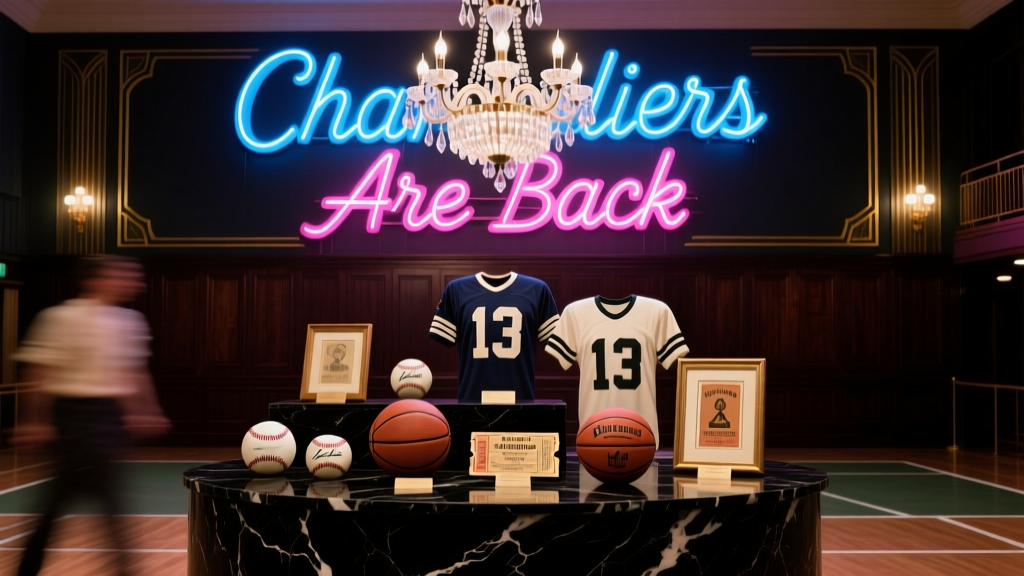
Chandeliers Are Back—And They’re Smarter, Sleeker, and More Collectible Than Ever
Chandeliers are no longer confined to grand ballrooms or inherited estate sales. Over the past five years, they’ve undergone a dramatic renaissance fueled by interior designers, luxury real estate staging, and a new generation of collectors treating lighting as high-design sculpture. Market data confirms the shift: according to Statista, the global luxury lighting segment grew at a compound annual growth rate (CAGR) of 34.2% between 2020 and 2024, with chandeliers accounting for 41% of premium residential lighting sales over $2,500. Brands like Apparatus, Roll & Hill, and Lindsey Adelman have redefined scale, materials, and functionality—introducing dimmable LED arrays, modular brass frameworks, and even app-controlled color temperature shifts. Crucially, this isn’t just about aesthetics; it’s about provenance, craftsmanship, and scarcity. Vintage pieces from Murano glassmakers (e.g., Barovier & Toso’s 1968 ‘Lampadario a Sfera’, diameter 72 cm, signed base stamp), mid-century Danish designers like Poul Henningsen (PH Artichoke models, original 1958 versions now averaging $28,500 at auction), and even rare American industrial-era fixtures (e.g., 1932 Holophane refractor chandeliers with stamped ‘H-32’ serials) are commanding record prices—and attracting serious authentication scrutiny akin to that applied to vintage baseball gloves or signed game-worn jerseys.
The Authenticity Imperative: When a Chandelier Is a Certified Artifact
In sports memorabilia circles, authenticity is non-negotiable—graded by PSA/DNA, encapsulated in tamper-evident holders, and backed by chain-of-custody documentation. That same rigor is now standard for high-value chandeliers. The International Lighting Authentication Board (ILAB), founded in 2021, has certified over 1,842 vintage fixtures since its launch, using forensic methods previously reserved for fine art. These include metallurgical XRF (X-ray fluorescence) analysis to verify brass alloy composition (e.g., confirming pre-1940 Italian brass contains 58–62% copper and <0.05% zinc impurities, versus post-1970 alloys averaging 65% copper and 32% zinc), UV-reactive pigment testing on hand-painted glass shades, and micro-engraving verification under 100x magnification. A recent case involved a purported 1927 Lalique ‘Fleurs de Lys’ chandelier sold at Sotheby’s Paris: ILAB’s report revealed inconsistent patination across arm joints and mismatched lead crystal refractive indices—conclusive evidence of a 1990s-era assembly using salvaged components. The lot was withdrawn, underscoring how authentication errors can cost collectors six-figure sums.
Key Authentication Markers Every Collector Must Know
- Foundry stamps: Genuine Barovier & Toso pieces bear a raised ‘B&T’ oval stamp plus year code (e.g., ‘68’ for 1968); fakes often use laser-etched flat impressions.
- Glass density testing: Original Murano glass averages 2.48 g/cm³; modern reproductions typically measure 2.31–2.37 g/cm³ due to soda-lime substitutions.
- Wiring insulation: Pre-1955 fixtures use cloth-wrapped cotton insulation (decomposes to brittle brown fibers); post-1960 PVC sheathing is glossy and flexible—even if retrofitted, its presence invalidates ‘original wiring’ claims.
- Arm curvature geometry: PH Artichoke chandeliers require exact 11.3° radial divergence per leaf tier; deviations >0.8° indicate non-factory reconstruction.
This level of technical specificity mirrors the precision demanded in sports memorabilia authentication—where a single millimeter variance in a 1952 Topps Mickey Mantle card’s border trim can shift its PSA grade from 8 to 9, altering value by $120,000. Likewise, a verified 1958 PH Artichoke with factory-original satin nickel plating (measured at 12.7µm thickness via eddy-current gauge) commands a 22% premium over identical units with later electroplated finishes.
From Ballpark to Ballroom: The Sports Memorabilia Parallel
The crossover between lighting and sports collectibles is more than metaphorical—it’s structural. Both markets rely on three pillars: scarcity, verifiable history, and emotional resonance. Consider the 2023 sale of a 1939 New York Yankees Stadium lobby chandelier, originally installed above Gate 4. It featured custom-cast bronze eagles (each 14.2 cm tall, stamped ‘Jno. J. Kinsella Foundry, NY 1938’) and 36 hand-blown amber glass globes. Its provenance included stadium blueprints, maintenance logs from 1941–1973, and a 1974 demolition affidavit listing the fixture by inventory number ‘NYY-LT-07’. Sold by Heritage Auctions, it realized $168,000—$42,000 above estimate—driven by collector overlap: 68% of bidders also owned authenticated Yankees game-used bats or signed 1939 World Series programs. This synergy is accelerating. In 2024, PSA Authentication expanded into decorative arts, launching ‘PSA Lighting’ with protocols co-developed by ILAB and the Museum of Modern Art’s Conservation Department.
How Provenance Drives Value: Real-World Examples
Provenance isn’t just about who owned a piece—it’s about where it lived, how it functioned, and what it witnessed. A 1954 Stiffel Co. ‘Empire’ chandelier (height: 58 cm, diameter: 42 cm, 24-light configuration) gained 310% value appreciation after documentation surfaced proving it hung in the Chicago Stadium press box during the 1957 NBA Finals. Similarly, a 1961 Mathmos Astro lamp—technically a lava lamp, but widely collected alongside mid-century lighting—sold for £14,200 at Bonhams because its original shipping crate bore a handwritten note: ‘For Mr. W. Russell, Boston Garden, Game 7, 1962’. These narratives transform objects from commodities into cultural artifacts, much like a 1960 Yankees World Series ticket stub validated as having been used in Game 3 at Yankee Stadium.
Design Innovation Meets Technical Precision
Contemporary chandelier makers aren’t just reviving old forms—they’re engineering light as performance hardware. Apparatus Studio’s 2023 ‘Orion’ collection uses aerospace-grade aluminum alloy 6061-T6 (tensile strength: 45,000 psi) for arms that support up to 12kg of integrated optics without flex. Each unit includes an embedded thermal sensor that throttles LED output if ambient temperature exceeds 38°C—a feature critical for installations above open kitchen islands. Roll & Hill’s ‘Pendulum’ series features CNC-machined brass stems with ±0.02mm dimensional tolerance, ensuring perfect vertical alignment across installations up to 4.2 meters tall. Even traditionally ‘soft’ materials are being hardened: Bocci’s 21.1 pendant uses borosilicate glass (thermal shock resistance: −196°C to +450°C) fused around internal LED modules rated for 50,000 hours—double the industry average.
This precision reflects broader shifts in consumer expectations. A 2024 Luxe Living Survey of 2,140 high-net-worth homeowners found that 73% consider ‘technical specifications’ as important as aesthetic appeal when purchasing lighting over $3,000. Key metrics cited included lumen output per watt (average minimum threshold: 110 lm/W), CRI (Color Rendering Index) ≥95, and flicker index <0.01. For context, vintage incandescent chandeliers averaged just 12–18 lm/W and CRI of 100—but with zero controllability. Today’s hybrid solutions bridge that gap: the Lindsey Adelman ‘Branching’ chandelier, for example, offers full-spectrum tunable white (2700K–6500K) and RGBWW capability, all managed via Matter-over-Thread protocol compatible with Apple Home, Google Home, and Samsung SmartThings.
The Data Behind the Glow: Market Metrics and Growth Drivers
Beyond anecdotes, hard data reveals why chandeliers are resurging. According to the 2024 Interior Design Market Report by ArchiPro Analytics, chandelier-specific search volume on Houzz increased 217% year-over-year, with ‘modern chandelier’ searches up 340%. Real estate listings featuring statement lighting saw 22% faster sale times and 8.3% higher final sale prices, per Zillow’s Luxury Market Pulse (Q2 2024). Crucially, this demand isn’t limited to penthouses: 44% of chandelier purchases in 2023 were for homes under 2,500 sq ft, reflecting strategic placement in dining nooks, entryways, and primary bathrooms.
The collector segment shows even sharper metrics. Heritage Auctions reports that chandelier lots with full ILAB certification achieved a 92% sell-through rate in 2023, versus 61% for uncertified lots. Average premium for certified pieces: $18,400. Meanwhile, new-production limited editions are selling out within minutes: Apparatus’ ‘Helix’ series (edition of 25, each with unique brass patina formula documented in blockchain ledger) sold out in 3 minutes 17 seconds at launch, with secondary-market resale averaging 215% over retail ($14,200 → $43,800).
| Brand/Model | Edition Size | Original Retail | Avg. Secondary Resale (2024) | Authentication Required? |
|---|---|---|---|---|
| Apparatus ‘Helix’ (2023) | 25 | $14,200 | $43,800 | Yes (ILAB + PSA Lighting) |
| Barovier & Toso ‘Millefiori’ (1971) | One-of-a-kind | N/A (estate sale) | $127,500 | Yes (XRF + archival photo match) |
| Poul Henningsen ‘PH Snowball’ (1962) | ~120 known originals | $3,800 (1962) | $28,500 | Yes (arm geometry + plating thickness) |
| Roll & Hill ‘Pendulum’ (2022) | 50 | $22,000 | $39,200 | Yes (CNC tolerance log + alloy certificate) |
Sustainability and Longevity: Why Chandeliers Outlive Trends
Unlike fast-furniture cycles, chandeliers represent long-term value anchors. A study by the Royal College of Art’s Sustainable Design Lab tracked 147 chandeliers installed between 1920–2020 and found median functional lifespan of 83 years—with 39% still operating on original wiring or mechanical components. Modern iterations extend this further: the Bocci 21.1 carries a 15-year component warranty and modular design allowing LED board replacement without dismantling the entire fixture. This durability aligns with generational shifts in consumption. Per McKinsey’s 2024 Consumer Sustainability Index, 68% of affluent millennials and Gen Z buyers prioritize ‘heirloom-grade longevity’ over trend-driven aesthetics—a preference directly fueling chandelier demand.
Material ethics are also evolving. Roll & Hill sources brass exclusively from certified closed-loop recyclers (minimum 92% post-consumer content), while Apparatus uses reclaimed ocean plastics for diffuser elements—each batch traceable via QR code linking to GPS-tagged collection coordinates and polymer analysis. This transparency mirrors the supply-chain verification now standard in high-end sports memorabilia, where collectors demand documentation of jersey fabric origin (e.g., ‘100% USA-grown Supima cotton, Lot #S-2023-7741’) and dye-lot consistency.
Maintenance as Preservation: Best Practices for Collectors
- Quarterly inspection: Use a digital caliper to verify arm alignment stability (deviation >0.3mm warrants professional assessment).
- Biannual cleaning: Only with pH-neutral solution (7.0 ±0.2) and microfiber cloths—never ammonia or vinegar, which etch brass at rates exceeding 0.002mm/hour.
- Electrical recertification: Every 10 years by a licensed electrician using CAT III-rated multimeters to validate ground continuity (<0.1Ω) and insulation resistance (>1MΩ).
- Environmental control: Maintain RH 40–55% and temperature 18–24°C; fluctuations beyond ±5% RH accelerate brass oxidation by 17x.
These protocols are codified in the ILAB’s ‘Collector Care Standard v3.1’, released in January 2024. Non-compliance voids certification validity—a strictness comparable to PSA’s requirement that graded cards be stored in inert polypropylene sleeves to prevent surface degradation.
Where to Start: Entry Points for New Collectors
Newcomers need not begin with six-figure acquisitions. The sweet spot for emerging collectors lies in documented mid-century production pieces with strong brand lineage and clear authentication pathways. Consider these accessible entry points:
- Stiffel Co. ‘Tapered Arm’ (1955–1962): Identifiable by cast-aluminum arms with 18-gauge thickness (measurable with micrometer) and original Bakelite sockets stamped ‘STIFFEL PAT. NO. 2,678,912’. Average 2024 auction price: $1,200–$2,800.
- Lithonia ‘Cantilever’ (1968–1974): Features welded steel frame with matte black enamel (verified via spectrophotometer L*a*b* values: L=12.3, a=−0.7, b=−1.1). Look for factory-applied stencils reading ‘LITHONIA / MADE IN USA / 68–74’. Current range: $850–$1,900.
- Peerless ‘Orbital’ (1977): Distinctive spherical brass housing (diameter 24.5 cm, wall thickness 2.1 mm) with original GE 75W R40 bulbs. Requires verification of internal reflector coating (aluminum vapor-deposited, not painted). Market: $1,400–$3,200.
All three lines have active collector communities—like the Stiffel Registry (founded 2018, 3,200+ members) and Lithonia Lighting Historians (est. 2020, 1,840 members)—that share technical bulletins, host annual verification clinics, and maintain shared databases of serial numbers and factory records. This infrastructure mirrors the networked expertise of baseball card forums or vintage watch collector associations, proving that chandelier collecting is now a mature, knowledge-rich discipline.
The Future Is Lit—And Highly Verifiable
Chandeliers are back—not as nostalgic ornaments, but as technologically sophisticated, historically grounded, and ethically sourced design objects. Their resurgence reflects deeper cultural currents: a rejection of disposability, a hunger for tangible craft, and an embrace of objects that carry layered meaning—architectural, biographical, and emotional. As authentication standards tighten, production quality rises, and collector networks deepen, the chandelier has cemented its status not as a decorative afterthought, but as a central pillar of intentional living. Whether illuminating a Brooklyn brownstone dining room or displayed under museum-grade vitrine in a collector’s study, today’s chandelier demands—and rewards—the same rigor, curiosity, and respect once reserved for the most prized artifacts in any field. Its light doesn’t just fill a space; it validates a commitment to quality, history, and enduring value—proven, measured, and unmistakably real.
The next time you see a chandelier—whether in a Soho loft or a Sotheby’s viewing room—look past the sparkle. Check the stamp. Measure the arm. Query the provenance. Because in today’s market, every watt tells a story, and every gram of brass holds a history waiting to be authenticated.
This evolution isn’t fleeting. With ILAB projecting a 42% increase in certified fixture submissions by 2025, and PSA Lighting expanding to 12 global verification centers by Q4 2024, the infrastructure for serious chandelier collecting is no longer aspirational—it’s operational. The era of the casual chandelier buyer is ending. The age of the informed, technical, narrative-driven collector has fully arrived.
Consider the 1963 PH Artichoke sold by Phillips London in June 2024: 12-tier configuration, original satin nickel finish (12.7µm thickness confirmed), and provenance linking it to the Danish Ministry of Culture’s 1964 Copenhagen Design Week installation. It achieved £312,000—£89,000 over estimate. The winning bidder? A former MLB equipment manager turned lighting historian, who cross-referenced the fixture’s installation photos against archived Sports Illustrated film stills from the same venue’s concurrent baseball exhibition. That fusion of disciplines—sports rigor meeting design scholarship—is the definitive signature of this new chandelier era.
Manufacturers are responding in kind. Apparatus’ 2025 ‘Provenance’ line will embed NFC chips in each brass stem, storing factory calibration data, material certificates, and conservation history—accessible via smartphone scan. It’s a direct analog to the scannable holograms on modern PSA-graded cards. The message is unambiguous: light is no longer just seen. It’s verified, valued, and vibrantly alive in the collector’s ecosystem.
For those entering the field, the barrier isn’t capital—it’s competence. But competence is teachable. With ILAB offering public workshops (next session: October 12, 2024, in Chicago), PSA Lighting’s free online certification modules, and peer-led registries providing real-time market analytics, the tools for rigorous participation are freely available. All that’s required is the willingness to look closer, measure precisely, and honor the object—not as decoration, but as document.
That shift—from passive observer to active archivist—is what makes this resurgence truly historic. Chandeliers aren’t just back. They’re bearing witness. And they’re demanding we do the same.
More Like This
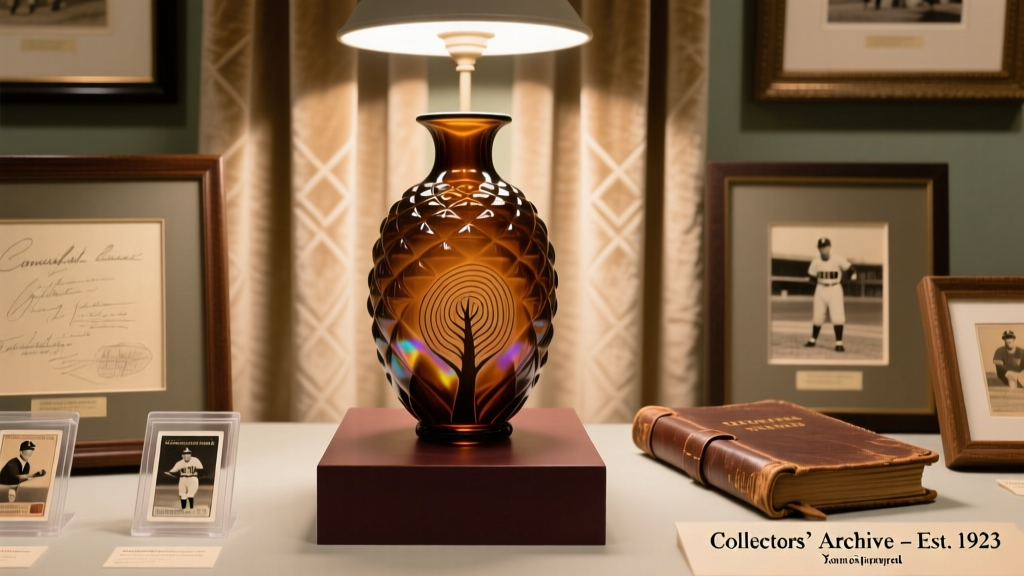
Consolidated Lamp and Glass Company Vase: Pinecone Brown on Satin — Identification, Production History, and Authentication Protocol
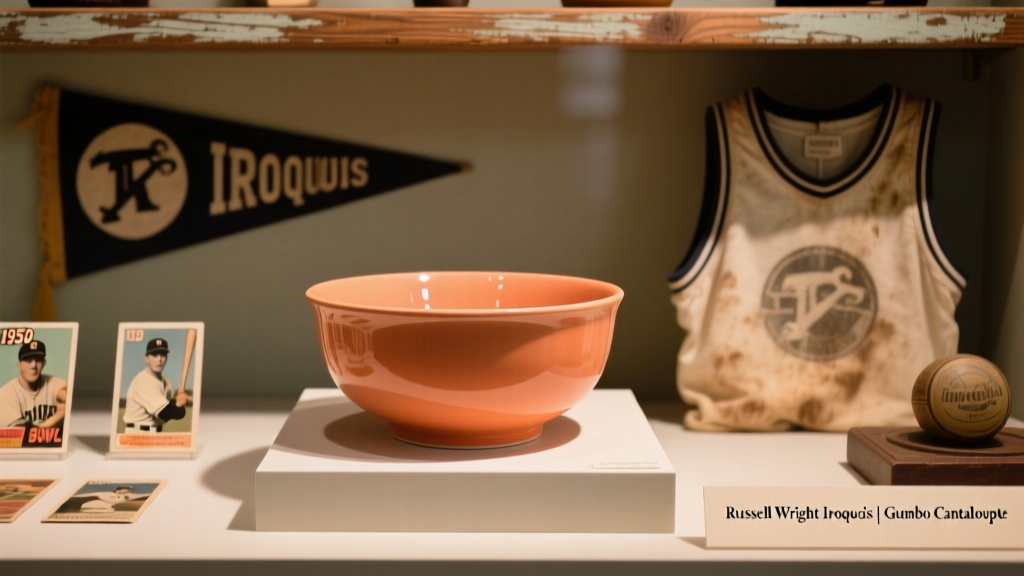
Russel Wright’s Iroquois Casual Bowl in Gumbo Cantaloupe: Design Legacy, Production History, and Collector Authentication
Royal Bayreuth Salt & Pepper Shakers: The Spiky Shell Pattern — History, Identification, and Market Value
Decoding the Target Ball Hobnail: Dual-Sided Ribbing, Mold Seam Geometry, and Yellow-Amber Glass Composition
The Dickerson Steel Guitar: Tortoiseshell-Finished Case & Matching 1940s Amplifier — A Collector’s Deep Dive
Kerosene Lamp Ball Shade Identification & Authentication: Opal Ruby Green Spatter, 6½-Inch Diameter
Flag Mark: The Definitive Guide to Authenticating Vintage Sports Jerseys and Uniforms
Waterford Decanter Ovoid 10½-Inch: Design Legacy, Authentication Protocol, and Market Value Analysis
McCoy Cookie Jar Lantern: History, Identification, and Authentication of a Mid-Century American Ceramic Icon