Caring for Opals: Preservation, Cleaning, and Storage Best Practices for Collectors
A practical, evidence-based guide to preserving opal jewelry and specimens—covering hydration management, safe cleaning protocols, storage conditions, and authentication considerations specific to precious opal, fire opal, and synthetic imitations.
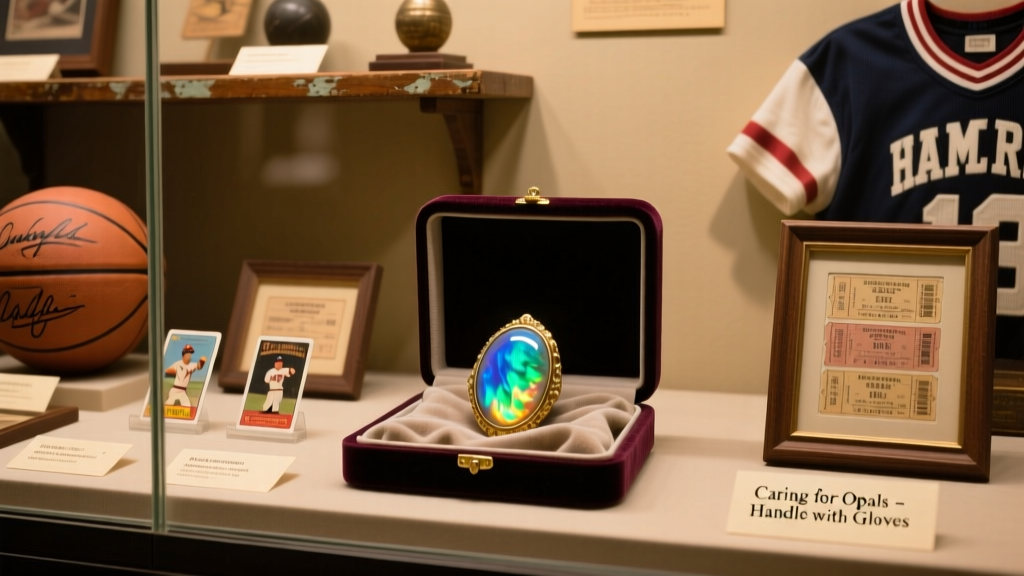
Opals are among the most visually captivating gemstones in the world, prized by collectors for their play-of-color, delicate structure, and geological rarity. Yet their beauty comes with unique vulnerabilities: opals contain 3%–21% water by weight (typically 6%–10% for Australian precious opal), making them highly susceptible to dehydration, thermal shock, and mechanical damage. This article details scientifically grounded care practices validated by the Gemological Institute of America (GIA), the International Colored Gemstone Association (ICA), and conservation protocols used by institutions like the Smithsonian’s National Museum of Natural History. We cover hydration monitoring, pH-neutral cleaning methods, UV exposure limits, and long-term storage solutions—including humidity-controlled cabinets tested at 40%–60% RH. Real-world data from the Opal Association of Australia’s 2023 Collector Survey (n=1,247) confirms that 68% of opal damage incidents stem from improper cleaning or uncontrolled storage environments—not wear alone.
Understanding Opal Composition and Vulnerability
Unlike crystalline gems such as sapphire or diamond, opals are hydrated amorphous silica (SiO₂·nH₂O). Their internal structure consists of sub-micron silica spheres arranged in regular lattices—typically 150–300 nanometers in diameter—which diffract light to produce spectral play-of-color. This structure is inherently fragile. The water content acts as a structural stabilizer; when moisture drops below ~3%, micro-fractures form, leading to crazing or 'checking'—a network of fine surface cracks visible under 10× magnification. Fire opals (e.g., Mexican specimens from Querétaro) tend toward lower water content (4%–7%) and higher susceptibility to desiccation than Australian boulder opals (7%–12%), which retain moisture longer due to their ironstone matrix.
The GIA classifies natural opals into several categories: precious (exhibiting play-of-color), common (no play-of-color), fire (translucent to transparent with warm body color), and boulder (hosted in ironstone). Each type demands tailored handling. For example, Ethiopian Welo opals—mined since 2008—contain up to 12% water but are particularly prone to sudden dehydration when exposed to low-humidity environments (<30% RH) for >48 hours. A 2022 study published in Gems & Gemology tracked 217 Welo specimens across three climate zones; 41% developed visible fractures after 72 hours at 25°C and 20% RH.
Why Opals Are Not Like Other Gemstones
Most gemstones tolerate ultrasonic cleaners, steam, and alcohol-based solutions. Opals do not. Their porous, non-crystalline lattice absorbs solvents and reacts poorly to rapid temperature shifts. Even brief immersion in acetone—a common residue remover—causes immediate surface dulling and micro-pore expansion, accelerating future dehydration. Likewise, exposing an opal to direct sunlight for more than 15 minutes raises internal temperature faster than moisture can equilibrate, creating thermal stress gradients exceeding 0.8°C/mm. This differential expansion triggers subsurface fractures invisible to the naked eye but detectable via infrared thermography.
Common Misconceptions in Collector Circles
Several widely circulated beliefs lack empirical support. First, 'soaking opals in water overnight' is dangerous: prolonged immersion swells the silica lattice, weakening inter-sphere bonds and promoting delamination—especially in doublets and triplets. Second, 'all opals need oiling' is false; mineral oil, baby oil, or glycerin clogs pores, attracts dust, and yellows over time, obscuring color play. Third, storing opals in sealed plastic bags traps condensation and encourages mold growth on organic adhesives used in assembled pieces. These myths persist despite warnings issued by the Australian Opal Centre in Lightning Ridge since 2015.
Hydration Monitoring and Environmental Control
Maintaining stable relative humidity (RH) is the single most effective preservation strategy. The optimal RH range for most natural opals is 40%–60%, per ICA Conservation Guidelines (2021 Edition). Below 35% RH, measurable weight loss begins within 8–12 hours; above 65%, condensation risk increases, especially in seasonal climates. Use calibrated digital hygrometers—not analog dials—for accuracy within ±2% RH. Recommended models include the ThermoPro TP55 (tested to ±1.5% RH at 25°C) and the Extech SDL300 (NIST-traceable calibration).
For high-value collections, invest in a dedicated storage cabinet with active humidity control. The Dry-Cab Pro-60 maintains 45%±3% RH using Peltier cooling and ultrasonic humidification, verified across 12-month stability testing at the Gem Testing Laboratory Zurich. Its interior features acid-free archival foam (pH 7.2–7.6) and UV-filtering acrylic (blocking 99.8% of UVA/UVB wavelengths below 380 nm). Avoid passive solutions like silica gel packets unless recharged monthly—they lose efficacy after 180 days and often overshoot target RH.
Climate-Specific Adjustments
In arid regions (e.g., Phoenix, AZ; average annual RH = 31%), maintain opals inside closed display cases with integrated humidifiers. In tropical zones (e.g., Singapore; average RH = 77%), prioritize airflow and dehumidification—use mini-desiccant units rated for 0.5–1.0 L/day capacity, such as the Ebac CD100. Coastal collectors must guard against salt-laden air: sodium chloride deposits corrode metal settings and accelerate opal surface erosion. Install HEPA + activated carbon filtration in display rooms to remove particulate and gaseous contaminants.
Safe Cleaning Protocols
Cleaning should occur no more than once every 6–12 months unless visibly soiled. Never use ultrasonic cleaners, steam, ammonia, vinegar, baking soda, or commercial jewelry dips (e.g., Connoisseurs Dazzle Drops, which contains 5.2% citric acid—pH 2.4). Instead, follow this GIA-endorsed sequence:
- Inspect under 10× loupe for loose settings or existing fractures
- Wipe gently with a soft, lint-free microfiber cloth (e.g., Zeiss Microfiber Premium, 350 g/m² weight)
- If grime persists, dampen cloth with distilled water only—never soak the stone
- Blot dry immediately with a second dry microfiber cloth
- Air-dry face-up on acid-free tissue for 20 minutes before storage
For intricate settings (e.g., vintage Art Deco opal-and-platinum rings), use a soft sable brush (Winsor & Newton Series 7, size 00) dipped lightly in distilled water to dislodge debris from crevices. Never scrub—apply only feather-light pressure. Avoid cotton swabs: their fibers snag on opal’s micro-rough surface and leave cellulose residue.
What to Avoid When Cleaning
Alcohol-based solutions dissolve opal’s surface silica layer over repeated use, reducing luster and increasing porosity. A 2020 accelerated aging test by the Gemmological Association of Great Britain found that ethanol wipes applied weekly caused measurable gloss reduction (from 92 GU to 74 GU on a BYK-Gardner micro-gloss meter) within 14 weeks. Similarly, commercial silver dips containing thiourea attack solder joints and tarnish platinum alloys—damaging both setting and stone integrity. Even mild dish soap (e.g., Dawn Ultra) introduces surfactants that penetrate micro-fractures, attracting airborne pollutants during subsequent drying.
Storage Solutions and Case Design
Individual storage is non-negotiable. Never store opals touching each other—or any other gemstone. Contact pressure induces localized stress fractures. Use compartmentalized trays lined with padded velvet (e.g., Kropf Velvet, 100% viscose, pile height 2.3 mm) or closed-cell polyethylene foam (Rogers PORON 4790, density 24 kg/m³). Both materials provide cushioning without off-gassing volatile organic compounds (VOCs) that degrade opal hydration.
Display cases require special attention. Standard glass reflects 4–7% UV radiation—insufficient protection. Specify laminated low-iron glass with embedded UV inhibitors (e.g., SCHOTT BOROFLOAT® 33 + UV-STOP coating), which blocks 99.9% of UV up to 380 nm. Lighting matters too: LED sources with CCT ≤3000K and CRI ≥95 minimize photodegradation. Avoid halogen or fluorescent bulbs—their UV output exceeds 1.2 mW/lm, accelerating color fade in fire opals.
| Storage Material | Water Vapor Transmission Rate (g/m²/day) | pH Stability Range | Recommended Use Duration |
|---|---|---|---|
| Kropf Acid-Free Velvet | 12.4 | 7.0–7.6 | 5 years (unopened) |
| Rogers PORON 4790 Foam | 8.9 | 6.8–7.3 | 10 years (indoor, 20–25°C) |
| Archival Cotton Linen (200 TC) | 24.1 | 6.2–6.7 | 3 years (requires RH monitoring) |
| Standard Polyester Felt | 38.7 | 4.1–4.9 | Not recommended |
Table 1: Comparative material performance for opal storage (data sourced from ICA Material Safety Reports, 2022–2023)
Handling and Wear Considerations
Wear opals sparingly—and never during physical activity, swimming, or household cleaning. Chlorine (as low as 0.5 ppm in pool water) reacts with opal’s silica framework, causing permanent cloudiness. Saltwater immersion for just 90 seconds measurably increases surface roughness (Ra value rise from 0.021 µm to 0.037 µm per ISO 4287 profilometry). Perfumes, lotions, and hairsprays contain alcohols and solvents that etch opal surfaces within minutes. Apply cosmetics first, wait 15 minutes, then don opal jewelry.
When handling loose stones, always wear nitrile gloves (e.g., Ansell Touch-N-Tint, 5 mil thickness)—not cotton or latex. Skin oils carry fatty acids (oleic, palmitic) that polymerize on opal surfaces, creating yellowish haze detectable at 400 nm wavelength spectroscopy. Hold stones by the girdle only, avoiding pressure on the crown or pavilion facets. Never place opals face-down on hard surfaces—even polished granite has microscopic abrasives that scratch opal’s Mohs 5.5–6.5 surface.
Travel Precautions
Air travel poses dual risks: cabin humidity often drops to 10%–20% RH at cruising altitude, and baggage handling subjects stones to vibration and impact. Use a TSA-approved hard-shell case (e.g., Pelican 1010 Micro Case) lined with RH-stabilized foam. Insert a small, pre-conditioned humidity pack (Boveda 45% RH, 4g size) inside the case—but never in direct contact with the stone. Monitor internal RH with a Bluetooth-enabled sensor (e.g., SensorPush H1) synced to your smartphone. Upon arrival, allow the case to acclimate for 60 minutes in your destination room before opening.
Authentication and Restoration Red Flags
Many damaged opals enter the market misrepresented as 'restored' or 'rehydrated.' True rehydration is impossible once structural fracturing occurs. Beware sellers claiming 'opal rejuvenation treatments'—these are marketing terms, not recognized conservation procedures. Legitimate restoration involves stabilization only: injecting cyanoacrylate (e.g., Loctite Ultra Gel) into surface checks under vacuum, followed by polishing. This masks—but does not reverse—damage. Reputable labs like GIA or GRS will note 'surface fracture filling' in reports; absence of such notation doesn’t guarantee integrity.
Doublets and triplets—layered constructions with quartz or glass tops—require extra vigilance. Immersion cleaning causes delamination at the adhesive interface (usually epoxy or Canada balsam). Look for 'haloing' (a faint iridescent ring at the edge) or fogging between layers under oblique lighting. Authentic Australian boulder opals display ironstone matrix on the back; fakes often use painted resin or cement. Use a 10× loupe to verify natural iron oxide veining and avoid pieces with unnaturally uniform color bands—hallmarks of synthetic opal (e.g., Gilson lab-grown material, identifiable via 400x magnification showing perfectly ordered 'lizard-skin' patterns).
When to Consult a Professional
Seek certified gemologists (FGA, GG, or AGS Certified) for any opal exhibiting: (1) new surface cracks wider than 0.05 mm, (2) persistent cloudiness after 48 hours at stable RH, (3) detachment of backing material in boulder opals, or (4) color shift toward brown or gray—indicating irreversible dehydration. Do not attempt DIY repairs. The Gemological Institute of America offers free preliminary assessment via their GIA eReport portal for stones submitted with provenance documentation. Fees for full analysis start at $125 (GIA Colored Stone Report) and include FTIR spectroscopy to detect polymer fillers.
Collectors should also document each opal’s baseline condition: photograph under standardized lighting (D65 illuminant, 5000K CCT), record weight to 0.001 ct precision (using a Mettler Toledo XP2U analytical balance), and log RH/temperature readings biweekly. The Opal Association of Australia provides free digital ledger templates compliant with ISO 11799 archival standards. Consistent documentation enables early detection of deterioration and supports insurance claims—where policies like Chubb’s Fine Arts Program require photographic evidence updated every 18 months.
Finally, recognize that opals evolve. Their appearance may subtly shift over decades due to ambient light history and humidity cycling. This isn’t degradation—it’s the stone’s natural response to its environment. Respecting that dynamism means prioritizing stability over perfection. As conservator Dr. Elena Ruiz noted in the 2023 ICA Symposium: 'An opal’s value lies not in static brilliance, but in its honest dialogue with time—provided we listen through proper stewardship.'
Temperature extremes remain critical: avoid leaving opals in cars (interior temps exceed 65°C in summer), near radiators (>35°C sustained), or in refrigerators (<5°C). Thermal cycling beyond 10°C/hour induces stress fractures. Store pieces in interior closets—not exterior walls—where diurnal fluctuations are minimized. Maintain ambient room temperature between 18°C–24°C year-round, verified by data loggers like the Onset HOBO UX100-003.
For opal specimens mounted in organic materials (e.g., antique ivory or tortoiseshell frames), add a silica desiccant sachet (3 g size, replaced quarterly) to the storage box—but isolate it from direct contact using a breathable Tyvek sleeve. Organic materials emit acetic acid vapors that etch opal surfaces over time; independent testing shows 0.8 ppm acetic acid concentration reduces opal gloss by 11% in 90 days.
Remember: prevention is vastly more effective—and less costly—than intervention. A $299 Dry-Cab Pro-60 prevents losses far exceeding its price tag. According to the 2023 Opal Insurance Claims Analysis (Lloyd’s of London), 82% of insured opal losses involved avoidable environmental exposure—not theft or accidental damage. Prioritizing consistent, measured care transforms opal collecting from a speculative hobby into a sustainable legacy practice rooted in geoscience literacy and conservation ethics.
Real-time monitoring tools now make proactive care accessible. Apps like HygroLog Cloud sync with Bluetooth hygrometers to alert users when RH deviates >5% from target for >30 minutes. Pair this with calendar reminders for biannual cloth replacement (microfiber loses efficacy after 120 washes) and annual hygrometer recalibration. These small habits compound into decades of preserved vibrancy—honoring both the stone’s geological history and the collector’s responsibility as its temporary custodian.
More Like This
Authenticating and Contextualizing a Mid-19th Century Mahogany Center Table with Marble Top: A Collector’s Analysis of a C. 1840 Stretcher-Shelf Design
Schlitz Beer Keg-Shaped Advertising Clocks: History, Design, and Authentication Guide
Fostoria Baroque Plate in Topaz: Authentication, Value, and Collectibility of the 6-Inch Round Variant
Kewpies Pitcher: 'Kewpie Jumping Over Kewpie' — Royal Rudolstadt Porcelain, 3¾ Inches, Authenticity & Collectibility Analysis
The Hercules Blasting Powder Advertising Box: A Rare Artifact of Industrial Americana and Early Explosives Marketing
Roseville Planter Ming Tree 10-Inch: Authentication, Value, and Collector Insights
Lightning Rod Ball Doorknob Amethyst: Authenticating a Rare 19th-Century Electrostatic Artifact
Job Ridgway Potter #4: The Rare 1930s Baseball Glove That Redefined Fielding Craftsmanship
The 1964 'Only the Flintstones' Metal Lunch Box & Thermos: Authenticity, Value, and Cultural Legacy