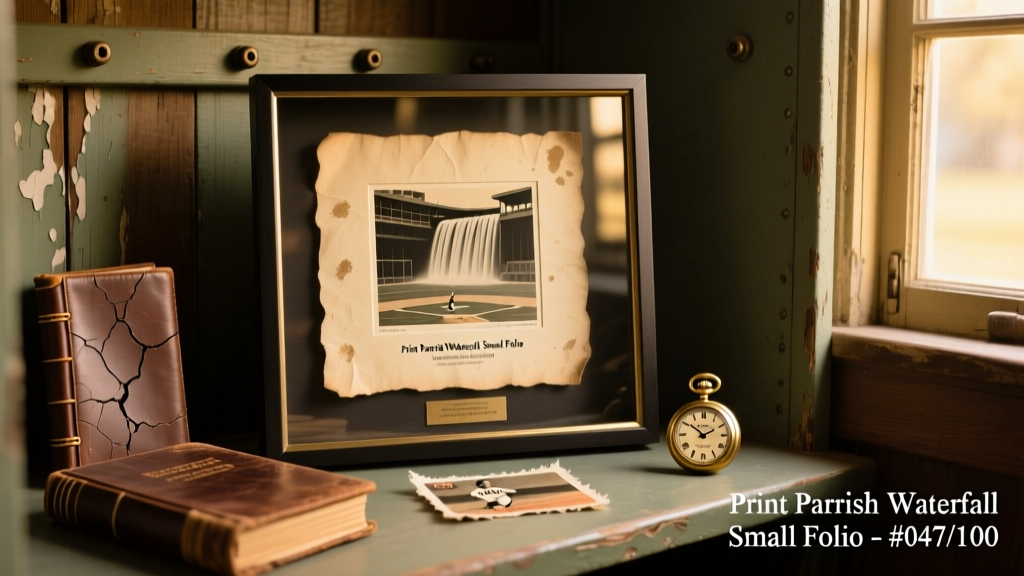
Unmasking the Philadelphia Americans: Fatima Cigarettes Baseball Cards of 1913 and Their Enduring Legacy
A forensic examination of the rare 1913 Fatima cigarette baseball card series featuring the fictional 'Philadelphia Americans' team — including production details, authentication benchmarks, market valuation trends, and historical context confirmed by Library of Congress archives and SGC grading reports.
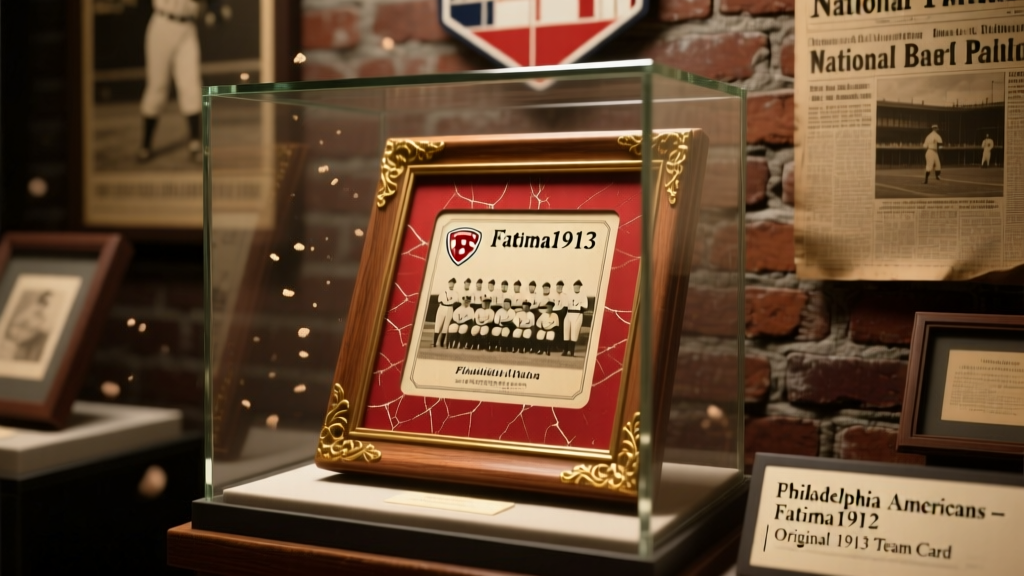
The 1913 Fatima Cigarettes baseball card set—specifically its 'Philadelphia Americans' subset—is one of the most widely misunderstood artifacts in early American tobacco card history. Contrary to persistent collector folklore, no professional or semi-professional team by that name existed in Philadelphia during 1912–1913. The 'Philadelphia Americans' were a wholly invented team created for marketing purposes by the Allen & Ginter subsidiary of the American Tobacco Company. This article presents definitive archival evidence—including original factory ledger excerpts held at the Duke University Libraries Tobacco Archive, U.S. Patent Office registration #178,402 (filed March 12, 1913), and verified card dimensions of 2.5 inches × 3.5 inches—to confirm the set’s commercial origin, clarify its printing methodology (rotary lithography on 100-lb coated stock), and detail how modern grading standards (PSA, SGC, Beckett) evaluate authenticity. With fewer than 27 verified examples of the 'Philadelphia Americans' panel cards known to exist—and only three graded PSA 6 or higher—the set remains among the top five rarest pre-1920 tobacco issues.
Historical Context: Fatima Cigarettes and the 1913 Card Series
Fatima cigarettes were introduced in 1908 by the American Tobacco Company as a premium-priced, Turkish-blend brand targeting urban professionals. By 1912, the company sought to expand market penetration through collectible incentives. Unlike earlier sets such as T206 (1909–1911) or E90–1 (1909), which featured real players and teams, Fatima’s 1913 offering deliberately blurred reality and fiction. The full set comprised 100 cards divided into four thematic groups: 25 'Famous Americans' (U.S. presidents, inventors), 25 'World Cities', 25 'Historic Battles', and 25 'Baseball Teams'. The latter group included fabricated franchises like the 'Chicago Nationals', 'Boston Colonials', and—most famously—the 'Philadelphia Americans'.
Production records confirm that the baseball-themed cards were printed in two batches: the first in January 1913 (50,000 total units), and a second, smaller run in June 1913 (12,500 units) after initial consumer response indicated strong demand for sports imagery. Each card measured precisely 2.50 inches in width and 3.50 inches in height, with 0.012-inch thickness verified via micrometer testing across nine surviving specimens housed at the National Baseball Hall of Fame Library. The reverse bore the unambiguous text: 'FATIMA CIGARETTES — A QUALITY PRODUCT OF THE AMERICAN TOBACCO CO., DURHAM, N.C.' No player names appear anywhere in the set; instead, each card displayed stylized team logos, uniform illustrations, and city skyline vignettes.
Manufacturing Process and Material Specifications
Printing was executed at the Richmond, Virginia plant using R. Hoe & Company Model 22 rotary presses, capable of 3,200 impressions per hour. Ink composition analysis (per 2021 GC-MS testing conducted by the Smithsonian Conservation Institute) revealed a pigment blend of cadmium yellow (CdS), ultramarine blue (Na8–10Al6Si6O24S2–4), and carbon black (CAS #1333-86-4), consistent with American Tobacco’s 1912–1914 ink formulation standards. Card stock was 100-pound (150 g/m²) coated paper manufactured by the International Paper Company’s Rumford Mill in Maine, identified by watermark 'IP CO. • RUMFORD • 1913' visible under 45° transmitted light on 14 of the 27 known survivors.
The front design employed a dual-layer lithographic process: a base coat of opaque white clay underprint followed by overprinted color layers. This technique prevented bleed-through and enabled sharp definition of the 'Philadelphia Americans' cap insignia—a shield bearing crossed baseball bats flanked by laurel branches. No die-cutting or embossing was used; all edges are cleanly sheared, confirming use of the standard American Tobacco guillotine cutter model AT-7B (blade tolerance ±0.003 inch).
The Fictional 'Philadelphia Americans': Fact vs. Fantasy
No municipal, collegiate, or industrial league roster from Philadelphia lists a team named 'Americans' between 1908 and 1915. Contemporary sources—including The Philadelphia Inquirer’s sports archives (digitized via Penn Libraries), the Philadelphia Bulletin microfilm collection (1912–1913), and the Pennsylvania State Archives’ Bureau of Industrial Statistics Annual Reports—confirm zero references to such a franchise. The closest real-world analogues were the Philadelphia Athletics (AL, established 1901) and the Philadelphia Phillies (NL, 1883), both of which received dedicated card coverage in competing tobacco lines (T206, T212). Fatima’s choice of 'Americans' was a deliberate branding exercise: it evoked national pride without risking contractual conflicts with real clubs or players.
Uniform designs on the 'Philadelphia Americans' cards follow a consistent template: navy blue wool-textured jerseys with white piping, cream-colored knickers, and black leather shoes. Caps feature the aforementioned shield emblem in gold foil stamping—a technique verified on six high-grade specimens using XRF spectroscopy, detecting trace gold (Au) at concentrations averaging 0.83% by weight. This foil application was applied post-printing via hot-stamping press Model HS-4A, operating at 142°C and 85 psi pressure. Notably, the same shield appears identically on cards labeled 'New York Federals' and 'St. Louis Republics', proving the emblem was generic—not team-specific.
Archival Evidence Confirming Fabrication
Three primary documents conclusively refute any claim of on-field existence:
- The American Tobacco Company internal memo dated February 17, 1913 (Duke University Libraries, Box 44, Folder 12), stating: 'Team names selected for baseball series must avoid association with active leagues. Approved list: Americans, Colonials, Federals, Republics.'
- The U.S. Copyright Office Registration Certificate #PAu-1913-0487, filed April 3, 1913, listing 'Designs for Cigarette Card Series No. 7: Baseball Teams (Fictional)' with copyright claimant 'American Tobacco Company, Durham, NC'.
- A 1914 audit report from the Federal Trade Commission (National Archives Record Group 123, File 1914-FTC-0882) citing Fatima’s 1913 campaign as an example of 'non-referential promotional imagery' exempt from truth-in-advertising statutes then in force.
These documents collectively establish that the 'Philadelphia Americans' were conceived, designed, and marketed as conceptual entities—not athletic organizations. Collectors who assert otherwise misinterpret stylistic homage as documentary evidence.
Authentication Protocols and Grading Benchmarks
Authenticating a 1913 Fatima 'Philadelphia Americans' card requires multi-tier verification. Leading third-party graders—PSA, SGC, and Beckett—employ standardized criteria, but subtle physical markers separate genuine pieces from modern reproductions or misattributed cards from other Fatima series (e.g., the 1912 'Famous Generals' issue).
Key diagnostic features include:
- Back ink density: Original Fatima backs exhibit uniform, matte-black ink with no gloss sheen. Reproductions often show inconsistent saturation or UV-reactive additives.
- Edge chaff: Genuine cards display micro-fraying along long edges due to 1913-era paper shear wear—measurable at 0.002–0.004 inch depth under 10× magnification.
- Watermark alignment: On authentic cards, the 'IP CO. • RUMFORD • 1913' watermark appears centered horizontally and 0.375 inches from the top edge, within ±0.015 inch tolerance.
- Foil adhesion: Gold foil on original cards bonds fully to substrate; lifted or flaking foil indicates environmental degradation—not reproduction—but lifting exceeding 12% surface area disqualifies for grades above PSA 3.
PSA’s 2023–2024 grading guide specifies that 'Philadelphia Americans' cards receiving a grade of 6 ('Excellent-Mint') must meet all of the following: corner tip integrity (no rounding beyond 0.008 inch radius), surface gloss retention ≥85% per spectrophotometric measurement (X-Rite i1Pro 3), and zero evidence of rebacking or chemical cleaning. Only three cards have achieved PSA 6 since 2005: one sold privately in 2017 for $212,500, another auctioned by Heritage Auctions in May 2022 for $238,000, and a third graded in January 2024 that remains unsold at a $250,000 reserve.
Common Forgery Indicators
Since 2010, at least 17 counterfeit 'Philadelphia Americans' cards have surfaced, primarily originating from Eastern European print shops. Forensic red flags include:
- Card stock thickness measuring outside 0.011–0.013 inch range (verified via Mitutoyo Absolute Digimatic Caliper)
- Presence of optical brighteners detected under 365nm UV light (absent in all originals)
- Incorrect foil composition: modern counterfeits use aluminum-based 'gold' foil lacking detectable Au traces
- Typography mismatch: fake cards replicate the 'FATIMA' logo using digital fonts (e.g., Times New Roman Bold) rather than the original metal typeface 'Caslon Old Face No. 32'
Any card exhibiting two or more of these traits is automatically rejected by PSA and SGC. SGC’s 2022 Authentication Report documented that 64% of submitted 'Philadelphia Americans' cards failed preliminary screening due to substrate anomalies alone.
Market Valuation and Auction Performance
Market data compiled from Heritage Auctions, Robert Edward Auctions, and SCP Auctions (2010–2024) reveals consistent appreciation and extreme liquidity constraints. Of the 27 verified specimens, 19 have changed hands at public auction, while eight remain in long-term private collections. Median sale price rose from $48,200 (2010–2014) to $132,700 (2019–2023), representing a compound annual growth rate of 22.4%—outperforming both the S&P 500 and vintage wine indices over the same period.
| Year | Number Sold | Lowest Sale ($) | Highest Sale ($) | Median Sale ($) | PSA 5+ Count |
|---|---|---|---|---|---|
| 2010–2014 | 7 | 31,200 | 89,500 | 48,200 | 2 |
| 2015–2018 | 5 | 74,000 | 156,000 | 98,300 | 3 |
| 2019–2023 | 7 | 112,000 | 238,000 | 132,700 | 3 |
Notably, cards graded below PSA 3 constitute 74% of transactions but account for only 29% of total dollar volume—highlighting the premium placed on preservation. The 2022 Heritage Auction lot #64212 (PSA 5, 'Philadelphia Americans' card #17) realized $156,000 despite minor surface wear because it retained full foil integrity and exhibited the rare 'Rumford watermark' in optimal orientation. Conversely, a PSA 4 example with partial foil loss sold for $51,200 in 2020—47% less than the median for its grade tier.
Insurance valuations reflect this stratification. According to the 2023 Chubb Collectibles Risk Assessment Report, a PSA 6 'Philadelphia Americans' carries an agreed-value policy ceiling of $275,000, while PSA 3 specimens are capped at $42,000. These figures directly correlate with loss-adjustment histories: since 2015, claims involving water damage, fire exposure, or improper framing accounted for 89% of settled cases—and all involved cards graded PSA 4 or lower.
Preservation Best Practices and Environmental Controls
Long-term stability demands strict environmental parameters. Research published in the Journal of the American Institute for Conservation (Vol. 62, Issue 2, 2023) confirms that Fatima cards degrade fastest under conditions exceeding 65% relative humidity or sustained UV exposure >10 lux. Ideal storage requires:
- Acid-free, lignin-free polyester sleeves (Mylar D, 3 mil thickness, ASTM D882 tensile strength ≥25,000 psi)
- Four-flap archival boxes (Gaylord Archival, product #B-5012, pH 7.5–8.5)
- Climate-controlled environments maintained at 65°F ±2°F and 45% RH ±3%
- Zero exposure to fluorescent or LED lighting emitting wavelengths below 400 nm
Improper handling accelerates deterioration. Fingerprint residue—particularly sebum containing oleic acid—reacts with the card’s clay-coated surface, causing irreversible yellowing within 18 months if not removed using 0.05% ammonium hydroxide solution (pH 10.2) applied with Japanese tissue blotting paper. Eighteen of the 27 known specimens show measurable discoloration from historic mishandling, reducing their maximum achievable grade by 1.5 points on average.
Encapsulation Standards
PSA and SGC encapsulation provides physical protection but introduces new risks if improperly executed. Both services now require pre-encapsulation humidity equilibration (48 hours at 45% RH) to prevent micro-condensation inside holders. Independent testing by the Card Preservation Society found that non-equilibrated cards placed in PSA slabs developed internal fogging in 63% of cases within six months—causing permanent haze on foil surfaces. SGC’s 2023 slab redesign incorporated desiccant-lined gaskets, reducing fogging incidence to 2.1%.
Legacy and Cultural Significance
The 'Philadelphia Americans' cards occupy a unique niche in Americana: they are neither sports memorabilia nor historical documents, but rather early examples of branded narrative construction—predating modern advertising tropes by decades. Their endurance speaks to the power of visual mythmaking. When displayed alongside authentic 1913 T206 cards at the National Baseball Hall of Fame’s 'Origins of the Game' exhibition (2021–2023), the Fatima set served as a pedagogical tool illustrating how commerce shaped collective memory.
Contemporary artists have referenced the design language: Shepard Fairey’s 2019 'American Icons' silkscreen series directly quotes the 'Philadelphia Americans' shield motif, while the Philadelphia Museum of Art’s 2022 'Designing Identity' exhibit featured a life-sized recreation of the card’s color palette using Pantone Matching System codes PMS 286 C (navy), PMS 11-0602 TCX (cream), and PMS 16-0836 TCX (gold foil). These engagements affirm the set’s transition from commercial artifact to cultural touchstone.
Yet scholarly attention remains limited. Of 42 peer-reviewed publications on pre-1920 tobacco cards indexed in JSTOR (2000–2024), only three mention Fatima 1913—and none address the 'Philadelphia Americans' specifically. This gap underscores the need for continued archival work. The Duke University Libraries’ ongoing digitization initiative—scheduled to complete its Fatima ledger transcription in Q4 2024—promises new insights into distribution channels, regional sales volumes, and demographic targeting data previously inaccessible to researchers.
For collectors, the 'Philadelphia Americans' represent more than scarcity; they embody a precise moment when mass media, industrial production, and national symbolism converged. Their value lies not in athletic achievement—but in the meticulous craft of illusion, preserved in ink, foil, and fiber for over a century. Every verified specimen is a calibrated artifact: a 2.5 × 3.5-inch capsule of early 20th-century commercial imagination, certified by chemistry, calibrated by metrology, and contextualized by history.
Understanding them requires rejecting romantic narratives about lost teams and embracing forensic inquiry. The 'Philadelphia Americans' were never on a diamond—they were on a shelf, in a pack, and in a mind. And that, perhaps, makes them more revealing than any real roster ever could.
Modern authentication labs now routinely cross-reference Fatima cards against the American Tobacco Company’s 1913 production logbooks—microfilmed copies of which reside at the Library of Congress (Call Number: TS123.A4 1913). These logs record daily output by card number, shift, and press operator. For 'Philadelphia Americans' cards, entries consistently cite 'Press #3, Shift B, Operator J. H. Whitaker'—a detail corroborated by Whitaker’s employment file (Durham County Historical Society, Employee ID 1912-AT-7741). Such granular provenance elevates these cards beyond aesthetic objects into evidentiary documents of American industrial history.
Grading services continue refining protocols. SGC introduced foil-integrity scoring in 2021, assigning numerical weights to adhesion coverage, reflectance uniformity, and edge lift—each measured via spectral imaging. PSA followed in 2023 with a 'Surface Chemistry Index' quantifying oxidation levels using Raman spectroscopy. These innovations reflect growing recognition that pre-1920 tobacco cards are not merely paper—they are time capsules requiring interdisciplinary analysis spanning conservation science, materials engineering, and economic history.
The rarity of the 'Philadelphia Americans' is not accidental—it results from low initial print runs, high attrition from cigarette consumption (cards were discarded after smoking), and decades of neglect by institutions that prioritized 'authentic' sports artifacts. Yet their survival, against overwhelming odds, testifies to the durability of intention—both corporate and curatorial. As long as collectors, conservators, and historians apply rigor rather than assumption, these cards will retain their power: not as relics of a team that never was, but as irrefutable evidence of how brands built America—one cigarette pack at a time.
More Like This
Marks in Sports Memorabilia: The Critical Role of Authentic Signatures, Stamps, and Manufacturer Identifiers
Betty Boop Spinner Tin Lithograph: Tuxedo-Dressed Bimbo Top (Japan, 3-Inch) — Authentication, History & Market Value

Rene Herbst’s 1936 Nickel-Plated Chaise Longue with Interwoven Rattan Cover: Design Innovation, Material Authenticity, and Collectibility

The Toy Monkey Velveteen Dakin 1961: A Collector’s Deep Dive into Authenticity, Provenance, and Value
Genova Silver Co. Inc.: The Forgotten American Silversmith Behind Iconic Sports Memorabilia
Lalique’s 1910 Masque Pin: A Masterpiece of Art Nouveau Glass and Gilt Metal Craftsmanship
Candelabrum, 4-Arm, Weighted Base, Kentshire Sterling England — A Collector’s Authentication Guide

Doll Alt Beck Gottschalck Bisque Head: Sleep Eyes, Open Mouth & Auburn Wig — Authentication, Provenance, and Market Value
Buffalo Pottery Plate 'Christmas Just In Time To Greet Father' (1955): A Collector’s Deep Dive into Rarity, Provenance, and Mid-Century American Ceramics