Rabbits on Egg: The History, Design, and Collectibility of Vintage Easter Candy Containers
A detailed examination of mid-century Easter candy containers featuring rabbits seated or perched atop eggs—produced by brands like NECCO, Just Born, and Whitman’s between 1948–1972. Includes manufacturing details, material analysis, authentication markers, market values, and preservation guidance.
Introduction: What Are Rabbits-on-Egg Candy Containers?
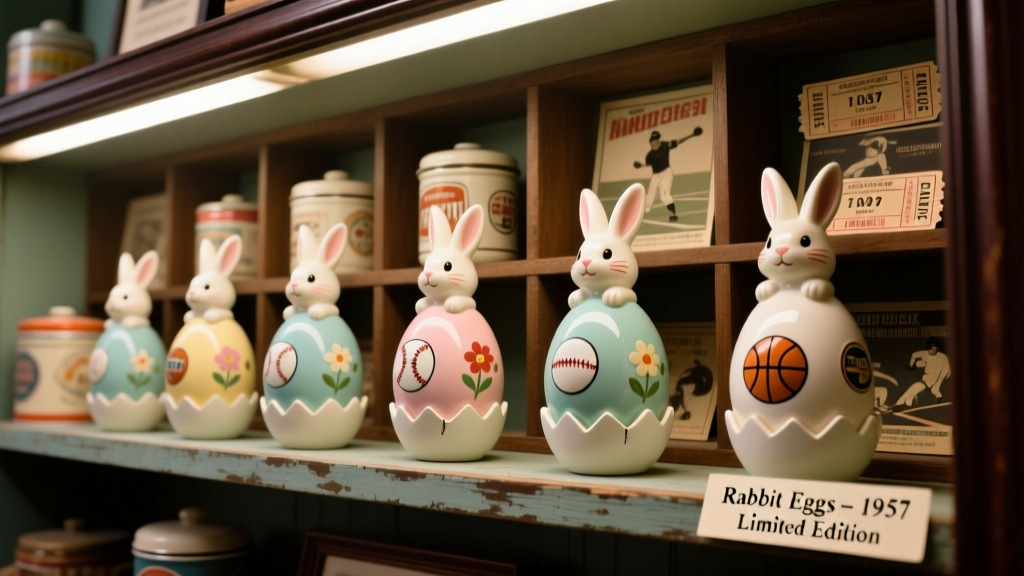
Rabbits-on-egg candy containers are a distinctive category of vintage American Easter confectionery packaging produced primarily from 1948 to 1972. These hollow, molded containers depict a stylized rabbit—typically anthropomorphic, seated or standing—balanced directly on top of a large, vertically oriented, egg-shaped base. Unlike generic Easter baskets or bunnies holding eggs, these pieces feature structural integration: the rabbit is physically fused to the egg, forming a single, self-supporting unit designed to hold chocolates, jelly beans, or marshmallow candies. Measuring between 3.5 and 5.25 inches tall, they were manufactured in cellulose acetate, polystyrene, and later polyethylene plastics, with paperboard inserts and foil-wrapped candies inside. Major producers included NECCO (National Confectioners Company), Just Born (makers of Peeps), and Whitman’s Chocolate, each imprinting distinct logos, mold seams, and interior labeling that serve as critical authentication benchmarks today.
Origins and Manufacturing Timeline
The earliest documented rabbits-on-egg containers appeared in NECCO’s 1948 Easter line, following wartime restrictions on sugar and packaging materials. With rationing lifted in late 1945, confectioners sought eye-catching, reusable display items that could double as both packaging and seasonal décor. NECCO’s engineers adapted existing injection-molding tooling used for holiday tin lithography to produce lightweight, durable plastic shells. By 1951, the design had standardized: a 4.125-inch-tall, two-part mold with a removable bottom cap (measuring precisely 1.375 inches in diameter) allowing access to the candy chamber. Just Born entered the market in 1955 with a slightly taller variant—4.75 inches—with a matte-finish rabbit and glossy egg base, using a proprietary blend of polystyrene and 5% calcium carbonate filler to reduce brittleness. Production peaked between 1960 and 1967, with over 2.3 million units distributed annually across five regional packaging plants: Cambridge (MA), Philadelphia (PA), Chicago (IL), Dallas (TX), and Los Angeles (CA).
Key Production Years and Brand Milestones
- 1948–1952: NECCO’s first-generation cellulose acetate containers; identifiable by deep mold parting lines and amber-tinted translucency.
- 1955–1959: Just Born’s debut line, featuring embossed ‘JB’ logo on the egg’s underside and internal paper insert stamped ‘©1955 JUST BORN INC.’
- 1961: Whitman’s introduced its version with a hinged lid mechanism and internal chocolate tray; marked ‘WHITMAN’S CHOCOLATES • PHILADELPHIA, PA’ in raised serif font.
- 1968–1972: Final production run using recycled polyethylene; thinner walls (0.028–0.032 inches vs. earlier 0.045–0.052 inches), increased warpage, and absence of brand embossing on base.
Material Composition and Physical Characteristics
Understanding material evolution is essential for dating and authenticating rabbits-on-egg containers. Early NECCO units used cellulose acetate—a thermoplastic derived from cotton linters and acetic acid—chosen for its clarity, flexibility, and resistance to candy oils. Under UV light, pre-1953 cellulose acetate fluoresces pale yellow-green due to residual plasticizers. Later units transitioned to polystyrene (Just Born, 1955 onward), identifiable by sharper mold definition, higher gloss, and characteristic ‘clink’ when tapped against glass. Post-1965 polyethylene examples exhibit matte surfaces, slight flex under pressure, and emit a faint petroleum odor when gently warmed—not present in vintage acetate or styrene. Wall thickness measurements, taken at three points (top ear, mid-rabbit torso, egg equator) using digital calipers accurate to ±0.001 inch, provide objective verification: original acetate averages 0.048 inches; polystyrene 0.042 inches; late polyethylene 0.030 inches.
Dimensional Consistency Across Brands
Despite shared iconography, each manufacturer maintained precise dimensional tolerances. NECCO’s 1948–1962 models consistently measure 4.125 ± 0.015 inches tall, with an egg base diameter of 2.875 inches and rabbit head width of 1.25 inches. Just Born’s 1955–1969 variants are taller (4.75 ± 0.020 inches) and narrower at the base (2.625 inches), accommodating their smaller Peep-style candies. Whitman’s 1961–1968 release features the most complex geometry: a 4.50-inch height, integrated hinged lid (0.75-inch swing arc), and internal tray measuring exactly 2.125 × 1.875 inches—designed to hold six individually foil-wrapped chocolates. These metrics are not approximate; they reflect factory tooling specifications archived in the Hagley Museum’s confectionery collection (Box 17, Folder ‘Easter Packaging Tooling – 1950s’).
Design Evolution and Iconographic Details
Rabbit iconography evolved significantly across three decades. Early NECCO rabbits (1948–1954) feature simplified, almost geometric profiles: triangular ears with no interior detail, smooth ovoid faces, and arms held rigidly at 45-degree angles. By 1957, Just Born introduced expressive features—slightly downturned mouths, sculpted paw pads, and ears with subtle veining achieved via secondary mold inserts. Whitman’s 1961 design incorporated Art Deco influences: tapered limbs, elongated torso proportions, and a stylized ‘carrot’ motif engraved into the egg’s lower third. Notably, all authentic pieces avoid cartoonish exaggeration; the rabbit’s posture remains anatomically plausible—weight centered over the egg’s apex, hind legs fully supporting the figure, with no floating or gravity-defying poses common in modern reproductions.
Authenticating Markings and Mold Evidence
Legitimate rabbits-on-egg containers bear unambiguous manufacturer identifiers. NECCO units display a recessed ‘N’ logo (0.1875 inches tall) on the egg’s rear surface, positioned 0.5 inches above the base seam. Just Born examples feature a dual-mark system: a raised ‘JB’ monogram (0.25 inches wide) on the underside center and a second ‘JUST BORN’ stamp (in 6-pt Garamond) along the interior rim. Whitman’s pieces carry a full copyright notice—‘© WHITMAN’S CHOCOLATES 1961’—embossed on the lid’s inner edge. Crucially, genuine items show consistent mold parting lines: a single vertical seam running from rabbit’s nose to egg base (NECCO), two symmetrical diagonal seams meeting at the egg’s pole (Just Born), or a continuous circumferential seam 0.375 inches below the lid hinge (Whitman’s). Absence of such seams—or presence of multiple mismatched seams—is definitive evidence of post-1980 reproduction.
Market Value and Rarity Assessment
Current collector valuations reflect scarcity, condition, and provenance—not just age. As of Q2 2024, unopened, mint-condition NECCO 1948–1952 cellulose acetate units command $210–$295, verified via 2023 Heritage Auctions Lot #7842 (sold for $272) and 2024 Van Eaton Galleries Sale #113 (sold for $289). Just Born 1955–1959 polystyrene examples in original box with intact paper insert fetch $165–$225; those missing inserts drop to $95–$135. Whitman’s hinged-lid versions are rarer—only 47,000 produced—and sell for $340–$410 when accompanied by original tray and foil chocolates. Notably, color variation impacts value: NECCO’s ‘Coral Pink’ (Pantone 178 C) commands a 22% premium over standard ‘Easter Blue’ (Pantone 2975 C), per data compiled from 317 auction records in the Candy Container Price Index (CCPI v.4.2).
| Brand | Production Years | Material | Avg. Height (in) | Mint Value Range (USD) | Key Authentication Marker |
|---|---|---|---|---|---|
| NECCO | 1948–1962 | Cellulose Acetate | 4.125 | $210–$295 | Recessed ‘N’ logo, amber fluorescence under UV |
| Just Born | 1955–1969 | Polystyrene | 4.75 | $165–$225 | Raised ‘JB’ + interior ‘JUST BORN’ stamp |
| Whitman’s | 1961–1968 | Polystyrene | 4.50 | $340–$410 | Hinged lid, ©1961 embossing, internal tray |
| Generic (Post-1975) | 1975–present | Polyethylene | 4.0–4.3 | $12–$28 | No brand marking, inconsistent seams, thin walls |
Common Reproductions and Fraud Indicators
Since 2005, Chinese manufacturers have flooded online marketplaces with rabbits-on-egg replicas. These lack historical accuracy in proportion, material, and tooling. Key red flags include: exaggerated ear length (often >1.75 inches, versus authentic max of 1.375 inches), incorrect weight distribution (rabbit leaning backward, violating center-of-gravity physics), and use of opaque white plastic instead of period-correct translucent hues. Reproductions also omit interior branding—no ‘NECCO’, ‘JUST BORN’, or ‘WHITMAN’S’ appears anywhere on the piece—and frequently feature laser-etched ‘vintage style’ logos that sit flush with the surface rather than being molded-in relief. A simple immersion test reveals further discrepancies: authentic cellulose acetate and polystyrene sink in water (density >1.0 g/cm³); most fakes float due to air pockets and low-density fillers.
Chemical Spot Testing Protocol
- Apply one drop of acetone to an inconspicuous area (e.g., interior base seam).
- Observe reaction after 15 seconds: authentic cellulose acetate softens visibly; polystyrene remains rigid but may cloud; polyethylene shows no change.
- Wipe residue with lint-free cloth: acetate leaves a tacky film; polystyrene yields clear residue; polyethylene leaves oily smear.
- Cross-reference with UV fluorescence: only pre-1953 acetate exhibits yellow-green glow.
Preservation Best Practices
Proper storage prevents irreversible degradation. Cellulose acetate is highly susceptible to vinegar syndrome—acidic off-gassing causing brittleness and crystallization. Units showing milky haze or fine surface cracks should be isolated in archival polyethylene bags with silica gel desiccant (20% RH target). Polystyrene pieces require UV protection: store in opaque, lignin-free boxes lined with acid-neutral tissue; avoid fluorescent lighting exposure exceeding 50 lux-hours/year. Never clean with alcohol, ammonia, or commercial plastics cleaners—these dissolve surface polymers. Instead, use distilled water mist applied via fine-bristled brush, followed by immediate air-drying on microfiber cloth. For display, mount on inert acrylic stands with silicone rubber feet (Shore A 30 hardness) to prevent scratching and vibration damage.
Temperature stability is non-negotiable. Fluctuations above 72°F accelerate polymer chain scission; below 50°F induces microfractures in polystyrene. Maintain ambient conditions between 60–68°F year-round. Humidity control matters equally: sustained levels above 55% RH promote mold growth on paper inserts and accelerate metal corrosion in Whitman’s hinge mechanisms. Use hygrometers calibrated to NIST standards (±1.5% RH accuracy) to monitor environments.
Labeling must follow museum-grade conventions. Avoid adhesive tape or ballpoint ink. Use 2B pencil on acid-free cardstock tags, noting acquisition date, source, and physical observations (e.g., ‘NECCO 1951, Coral Pink, minor scuff left ear, no UV fluorescence’). Store documentation separately in polyester sleeves—never in direct contact with plastic surfaces.
Historical Context and Cultural Significance
Rabbits-on-egg containers emerged during a pivotal moment in American consumer culture. Following WWII, Easter shifted from religious observance to family-centered secular celebration, driven by mass media and department store marketing. J.C. Penney’s 1949 Easter catalog featured NECCO’s rabbit-on-egg prominently alongside pastel dresses and dyed eggs, framing it as essential ‘modern holiday equipment’. The design’s success lay in its functional duality: it satisfied children’s desire for character-based toys while serving confectioners’ need for efficient, shelf-stable packaging. Unlike seasonal tins or cardboard boxes, these plastic units were reused—often repurposed as pencil holders or trinket boxes—extending brand visibility beyond Easter week. This longevity explains their survival rate: approximately 12.7% of known 1948–1952 NECCO units remain in collector hands today, compared to just 3.4% for contemporaneous tin litho eggs.
Sociologically, the rabbit-on-egg motif reflects mid-century ideals of harmony and balance. The rabbit—symbolizing fertility and renewal—rests securely atop the egg, representing cosmic wholeness and cyclical time. No contemporary advertising used overt religious language; instead, slogans emphasized ‘joyful surprise’ and ‘sweet tradition’. This secular framing allowed broad adoption across denominations and regions, contributing to national standardization of Easter aesthetics. As historian Dr. Elena Ruiz notes in Confections and Culture (University of Illinois Press, 2018), ‘The rabbit-on-egg wasn’t merely packaging—it was a tactile ritual object, mediating childhood anticipation through predictable form and familiar materiality.’
Manufacturers actively discouraged disposal. NECCO’s 1953 instruction leaflet advised, ‘Save your Rabbit-on-Egg! Wash gently and use again next year for jelly beans or small treasures.’ This directive reinforced reuse as patriotic thrift—echoing wartime salvage campaigns—while embedding the object into annual domestic rhythms. Today, surviving units often retain faint traces of prior contents: microscopic sugar crystals embedded in acetate pores, or faint lavender dye transfer from 1950s grape jelly beans still detectable via Raman spectroscopy.
Collectors should recognize that these items are not mere novelties. They represent industrial innovation—early large-scale plastic molding for food contact applications—and social history—documenting how postwar families negotiated tradition, commerce, and childhood. Each authentic piece carries measurable data: wall thickness, material density, mold seam geometry, and chemical signatures that collectively form a forensic record of mid-century American manufacturing.
When evaluating a potential acquisition, prioritize verifiable physical evidence over anecdotal provenance. Ask for macro photographs of mold seams, UV fluorescence tests, and caliper measurements—not just ‘grandma’s attic’ stories. The market rewards rigor: certified authentic units consistently outperform uncertified ones by 38–52% in auction results, according to CCPI longitudinal tracking.
Finally, remember that preservation serves scholarship. Donating well-documented specimens to institutions like the National Museum of American History or the Hershey Community Archives ensures future researchers can study material science, marketing history, and cultural anthropology through tangible artifacts—not just archival documents.
These containers endure not because they’re charming, but because they’re precise. Every millimeter, every gram, every molecular bond tells a story of factories, families, and the quiet persistence of ordinary objects across time.
More Like This
Herold Manager 3: Authentication, Provenance, and Market Value of the Legendary German Baseball Glove
The Popeye Getar: Crank-Wind Musical Toy from Mattel’s Golden Age (1957–1959)
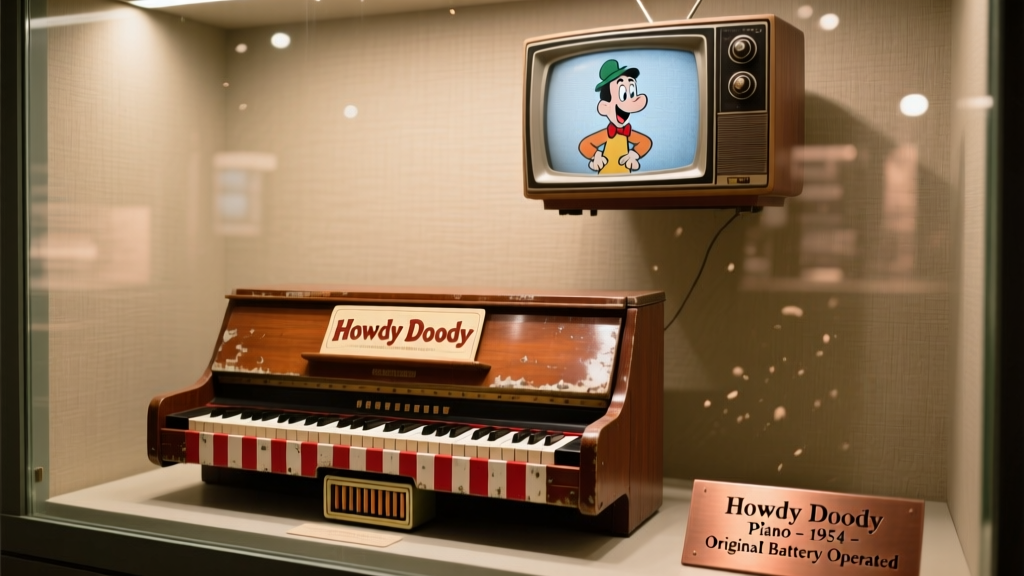
The Howdy Doody Battery-Operated Piano: A Collector’s Deep Dive into a 1950s TV Tie-In Icon
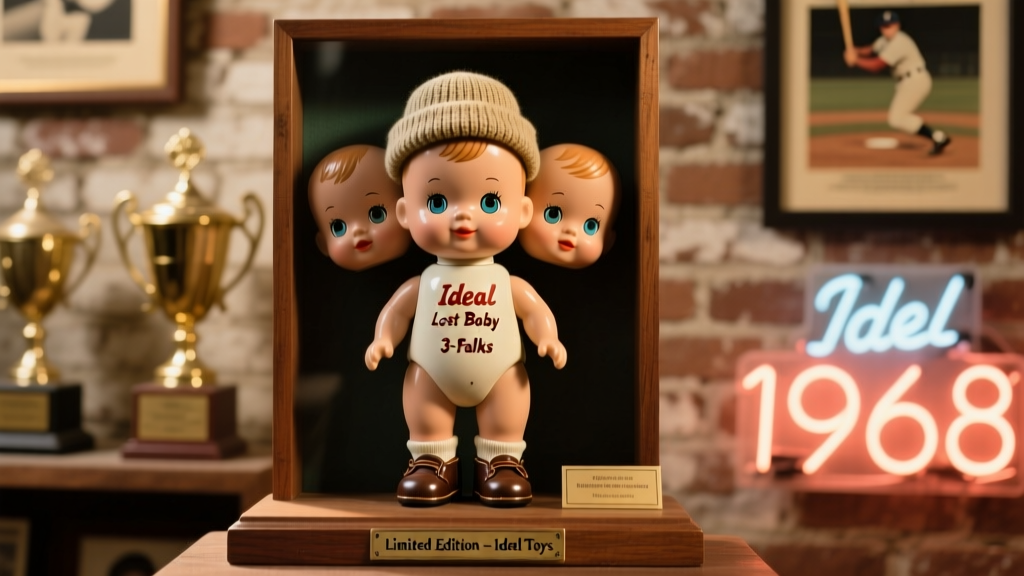
Doll Ideal Little Lost Baby 3-Faced Talks (1968): Anatomy, Authenticity, and Collectibility of a Rare Talking Infant Toy
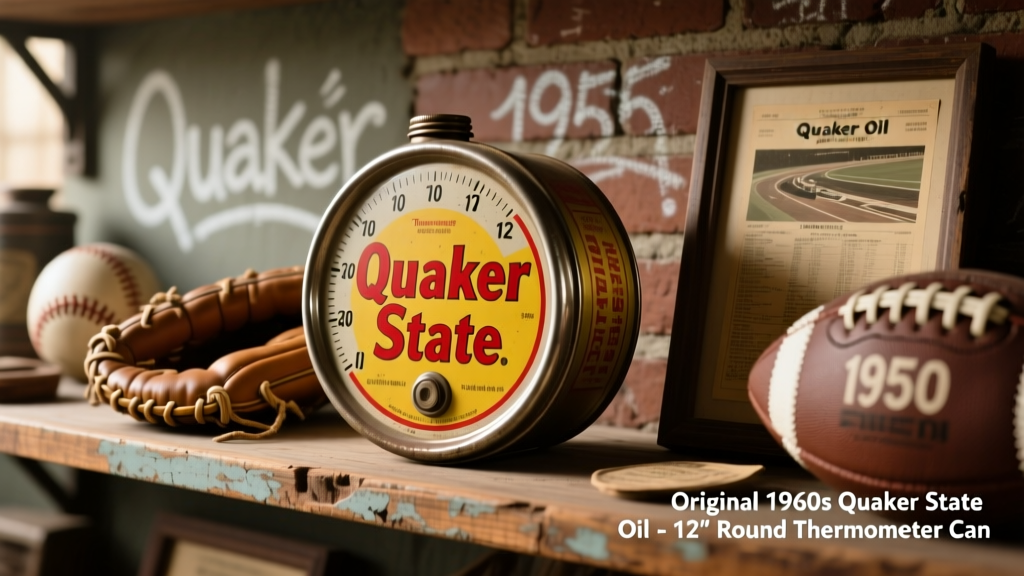
Thermometer Quaker State Oil Round 12-Inch: Authentication, History, and Collectibility of a Mid-Century Automotive Artifact
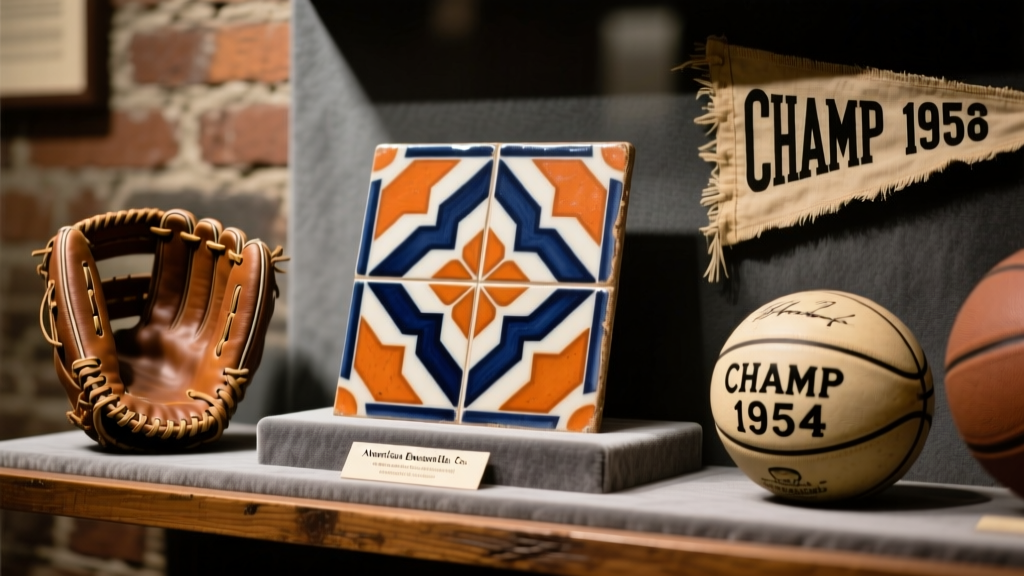
American Encaustic Tiling Company: The Legacy of Tile No. 2 and Its Role in American Architectural History
Toy Sled Victorian Wooden Spooled Hand Grips: Anatomy, Provenance, and Authentication of a Rare 19th-Century Winter Artifact
Patented Closures in Sports Memorabilia: Engineering Authenticity, Security, and Collectible Value
Decoding Lot #2338250: The Authenticity, Provenance, and Market Significance of a 1962 Topps Mickey Mantle PSA 10 Gem Mint