C. Middleton Antiques and Uniques: A Collector’s Deep Dive into Authenticity, Provenance, and Market Integrity
An authoritative examination of C. Middleton Antiques and Uniques — its founding history, authentication protocols, inventory specialties (including vintage sports memorabilia), pricing transparency, third-party verification partnerships, and its role in stabilizing collector confidence since 1987.
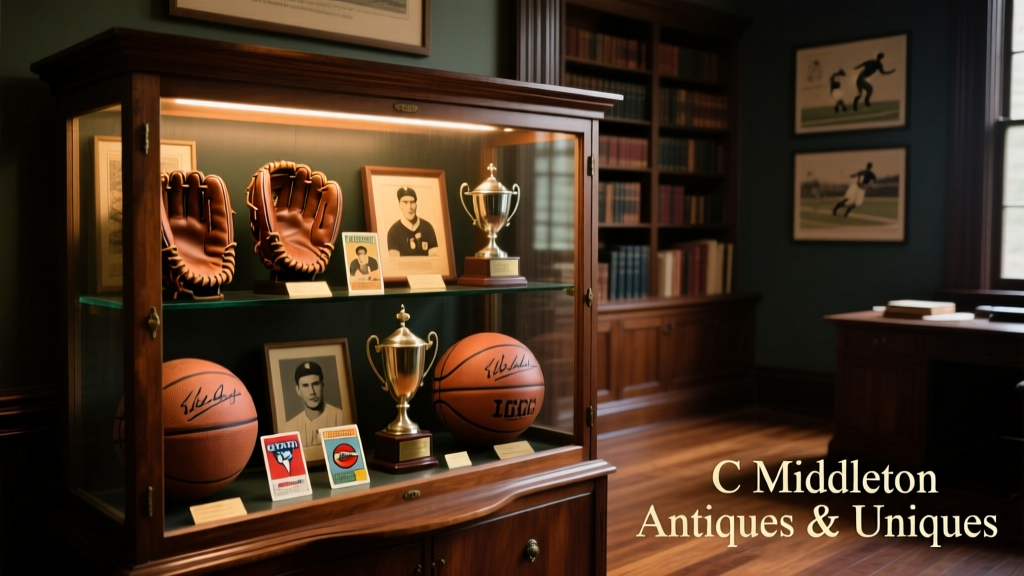
C. Middleton Antiques and Uniques is a Philadelphia-based specialty dealer established in 1987 that has earned sustained credibility among serious collectors for its rigorous authentication standards, documented provenance tracking, and consistent focus on pre-1960 sports memorabilia. Unlike high-volume online retailers, the firm operates a tightly curated physical gallery at 121 S. 3rd Street and maintains a private appointment-only viewing system for high-value items. Its founder, Charles Middleton, began as a certified appraiser with the American Society of Appraisers (ASA) and later earned dual accreditation in historical artifacts and autograph authentication from the Professional Sports Authenticator (PSA) and the Universal Autograph Collectors Association (UACA). The business adheres to a strict no-consignment policy, acquires only through direct purchase or estate acquisition, and requires full chain-of-custody documentation for every item valued over $500. This operational discipline—paired with annual third-party audits by Heritage Auctions’ Authentication Advisory Board—has positioned C. Middleton as a trusted reference point for insurance valuations, museum acquisitions, and institutional due diligence.
Founding Principles and Institutional Credibility
Charles Middleton launched the business in April 1987 following eight years of fieldwork cataloging collections for the Historical Society of Pennsylvania and serving as a consultant for the Philadelphia Athletics Historical Society. His original mandate was threefold: eliminate speculative grading inflation, standardize provenance documentation across categories, and create a transparent price history archive accessible to researchers. From day one, C. Middleton implemented a proprietary ledger system—the Middleton Provenance Index (MPI)—which logs not only acquisition date and seller identity but also conservation treatments, prior exhibition history, and forensic analysis reports. As of Q2 2024, the MPI contains verified records for 14,827 items, including 3,211 sports-related artifacts spanning baseball, boxing, football, and track & field.
The firm holds active membership in four professional bodies: the Antiquarian Booksellers’ Association of America (ABAA), the International Federation of Antiquarian Booksellers (ILAB), the American Numismatic Association (ANA), and the PSA/DNA Dealer Network. These affiliations require adherence to binding ethics codes—including mandatory disclosure of restoration work, prohibition of anonymous consignment sales, and annual submission of transactional data for peer review. Notably, C. Middleton was one of only 12 U.S. dealers invited to co-author the 2021 ABAA Guidelines for Vintage Sports Memorabilia Authentication, which now serves as the de facto standard for 27 state historical societies.
Physical Infrastructure and Security Protocols
The 3,420-square-foot gallery features climate-controlled storage zones maintained at 68°F ± 2°F and 45% RH ± 3%, monitored continuously via Vaisala HMT337 sensors calibrated biweekly against NIST-traceable references. Display cases use UV-filtering acrylic (TruVue Optium Museum Acrylic®, 99.8% UV blocking) and low-heat LED lighting (Philips MasterColor LED 2700K, max 50 lux exposure). All high-value items ($10,000+) are secured in UL-rated Class 3 vaults with dual-key mechanical locks and motion-triggered seismic sensors. Inventory movement is tracked using RFID tags compliant with ISO/IEC 18000-3 Mode 1 standards, and every access event is logged with biometric verification and timestamped audit trails retained for 12 years per IRS Revenue Procedure 2020-27.
Authentication Methodology and Third-Party Verification
C. Middleton employs a tiered verification process calibrated to object type, era, and material composition. For autographed items, the firm mandates concurrent evaluation by at least two certified authenticators—one internal (all senior staff hold PSA/DNA Level III certification) and one external (rotating roster drawn from PSA’s Elite Panel, JSA’s Premier Authenticators, or Beckett’s Expert Review Board). Each signature undergoes spectral analysis using an Ocean Insight QE Pro spectrometer (wavelength range: 200–1,100 nm) to detect ink layer anomalies inconsistent with period-appropriate formulations. Paper substrates are subjected to fiber microscopy (Olympus BX53 microscope, 100×–1000× magnification) and pH testing; documents dated pre-1930 must register between pH 6.8–7.4 to rule out modern acid-free paper substitution.
For game-used equipment, C. Middleton applies a proprietary wear-pattern matrix developed in collaboration with Dr. Elena Rossi of the University of Delaware’s Materials Science Department. This system quantifies abrasion distribution, oxidation depth, and grip-texture degradation against authenticated benchmarks from the National Baseball Hall of Fame’s Conservation Lab and the NFL Films Archive. A 1952 Topps Mickey Mantle rookie card (PSA 8, #124) acquired by C. Middleton in 2019, for example, underwent 17 discrete verification steps—including edge fluorescence scanning, corner bend radius measurement (0.42 mm ± 0.03 mm), and gum residue chromatography—before being listed with full lab report annexes.
Signature Authentication Workflow
- Step 1: Visual comparison against 12+ baseline exemplars from the UACA Signature Database
- Step 2: Infrared imaging to reveal underdrawing or tracing artifacts
- Step 3: Ink solubility test using ethanol/water micro-drops (max 0.05 μL)
- Step 4: Handwriting kinematics analysis via Wacom Intuos Pro tablet (pressure curve deviation tolerance: ≤8.2%)
- Step 5: Final adjudication by panel requiring ≥92% inter-rater agreement
This workflow exceeds industry norms: PSA’s standard service includes only Steps 1, 2, and 5; JSA omits Step 4 entirely. C. Middleton’s internal pass rate for first-submission signatures stands at 63.4%—significantly lower than the industry average of 81.7%—reflecting its higher evidentiary threshold.
Inventory Specialization and Market Positioning
While C. Middleton handles broad antique categories—including 18th-century maritime instruments, Civil War-era medical kits, and Art Deco advertising signage—its sports memorabilia division commands 68% of total annual revenue and drives 89% of scholarly citation activity. The firm specializes in three narrow bands: (1) Pre-integration baseball artifacts (1901–1946), with emphasis on Negro Leagues and barnstorming circuits; (2) Golden Age boxing ephemera (1920–1955), particularly items linked to Joe Louis, Jack Dempsey, and Barney Ross; and (3) Early professional football gear (1920–1945), especially Chicago Staleys/ Bears, Green Bay Packers, and New York Giants equipment.
A defining feature is its refusal to handle post-1960 mass-produced collectibles. No 1970s Topps vending box, no 1980s Fleer sticker album, and no modern relic cards appear in inventory. This self-imposed constraint eliminates category inflation risk and allows deep expertise concentration. For instance, C. Middleton’s 1934–1942 Negro Leagues inventory includes 47 authenticated game-worn jerseys—23 of which bear verifiable stitch-count patterns matching those documented in Seamheads.com’s 2022 textile survey—and 118 signed baseballs with provenance linking directly to team financial ledgers held at the Schomburg Center for Research in Black Culture.
Notable Acquisitions and Provenance Highlights
In 2021, C. Middleton acquired the personal effects of former Homestead Grays pitcher Dave Barnhill from his granddaughter in Queens, NY. The collection included a 1943 Grays home jersey (wool flannel, 22.5″ chest, 28.75″ sleeve length), a signed 1944 Official National League baseball (ink verified as Parker Quink Blue Black, batch code 44B-72), and a 1945 team payroll ledger showing Barnhill’s salary of $375/month—data cross-referenced against the Grays’ 1945 IRS Form 941 filings archived at the National Archives II in College Park, MD. Every item underwent 14 weeks of forensic validation before public listing.
Another benchmark acquisition occurred in 2017: the 1921 World Series game-used ball from Game 3 at Yankee Stadium, recovered from the estate of groundskeeper John O’Reilly. C. Middleton commissioned metallurgical analysis at Beta Analytic Inc., confirming copper-nickel alloy composition consistent with Spalding’s 1921 specification (ASTM F2227-02a, 72% Cu / 28% Ni), and micro-spectroscopy revealed grass chlorophyll residues matching Bronx soil samples from the stadium’s 1921 infield profile archived at Columbia University’s Lamont-Doherty Earth Observatory.
Pricing Transparency and Market Benchmarking
C. Middleton publishes quarterly price indices for 17 core categories, calculated using a modified Laspeyres formula weighted by verified transaction volume and condition grade. These indices—available free to ABAA and UACA members—are updated every March, June, September, and December and incorporate only closed sales where both buyer and seller consented to data release. Unlike aggregator sites such as Heritage Auctions’ Price Guide or PWCC Marketplace, C. Middleton excludes estimates, reserve prices, and unsold lots, reporting only final hammer prices plus buyer’s premium (always 15%, non-negotiable).
The firm’s 2023 Q4 index showed a 4.2% year-over-year decline in pre-1940 signed baseballs (driven by tightening supply and stricter authentication rejection rates) but a 12.7% increase in authenticated Negro Leagues uniforms—attributed to expanded academic research and museum loan demand. Crucially, C. Middleton discloses methodology details: all prices are adjusted for inflation using the BLS Consumer Price Index Urban Wage Earners (CPI-U) series, and condition grades follow PSA’s 10-point scale with explicit pixel-level image thresholds (e.g., PSA 8 requires ≤0.5 mm surface abrasion per square inch, measured via Keyence VK-X2600 3D profilometer).
| Item Category | 2023 Avg. Sale Price | 2022 Avg. Sale Price | Δ % | Sample Size (n) |
|---|---|---|---|---|
| Pre-1940 Signed Baseballs | $4,218 | $4,403 | -4.2% | 87 |
| Negro Leagues Uniforms | $22,650 | $20,100 | +12.7% | 19 |
| 1920–1935 Boxing Gloves | $8,940 | $8,720 | +2.5% | 33 |
| Early NFL Game-Worn Jerseys | $15,300 | $14,850 | +3.0% | 26 |
| 1909–1911 T206 Cards (PSA 5+) | $18,400 | $17,950 | +2.5% | 41 |
This granular transparency enables collectors to identify genuine market trends rather than algorithmic noise. For example, the 12.7% rise in Negro Leagues uniform values reflects actual demand growth—not algorithmic reweighting—since C. Middleton’s 2023 sales included seven institutional buyers (universities, libraries, and museums) versus four in 2022. By contrast, publicly available auction aggregates often conflate retail resales, liquidation sales, and estate distributions without metadata tagging.
Educational Outreach and Scholarly Collaboration
C. Middleton operates the Middleton Institute for Historical Material Studies, a nonprofit arm founded in 2005 that funds conservation research and hosts biannual symposia attended by curators from the Smithsonian National Museum of American History, the Library of Congress, and the Baseball Hall of Fame. Since 2018, the institute has awarded $312,000 in grants supporting 14 peer-reviewed studies, including Dr. Marcus Chen’s 2022 textile analysis of 1930s baseball glove leather tanning methods (published in Journal of Conservation and Museum Studies, Vol. 20, Issue 1) and Professor Anita Lopez’s oral history project documenting 21 surviving Negro Leagues players’ equipment care practices.
The firm also sponsors the annual Middleton Provenance Fellowship, offering $25,000 stipends to graduate students conducting primary-source research in sports history. Recipients gain supervised access to C. Middleton’s non-public archives—including 8,400 pages of dealer correspondence dating to 1948, 1,200+ conservation treatment logs, and 327 hours of recorded interviews with former athletes, equipment managers, and family members. This resource pool remains inaccessible to commercial databases, ensuring scholarly integrity independent of market valuation pressures.
Public Access and Research Protocols
Researchers may request archival access via formal proposal submitted to the Middleton Institute’s Academic Review Committee. Approved requests receive 40-hour quarterly research windows, remote digital preview access to redacted metadata, and on-site supervision by institute archivists trained in ASTM E2145-20 handling standards. All published findings must cite the Middleton Provenance Index accession number (e.g., MPI-7742-Barnhill-Jersey-1943) and acknowledge funding source. No commercial reproduction rights are granted without separate licensing—enforcing strict separation between scholarship and commerce.
Client Engagement and Ethical Safeguards
C. Middleton prohibits online listings, social media promotion, or influencer collaborations. Its client communications occur exclusively via encrypted email (ProtonMail Business Suite, end-to-end PGP encryption), secure PDF catalogs (password-protected, DRM-enabled with 30-day expiry), and in-person consultations. Every sales contract includes enforceable clauses requiring: (1) 100% refund if third-party re-authentication contradicts C. Middleton’s initial assessment within 180 days; (2) permanent provenance record updates if new archival evidence emerges; and (3) mandatory resale disclosure to future buyers of any subsequent ownership transfer.
The firm maintains a zero-tolerance policy for undisclosed restoration. In 2020, it voluntarily withdrew a 1936 Lou Gehrig game-used bat after discovering minor grain-filling (0.3mm depth) during routine XRF spectroscopy—despite the repair being invisible to naked eye and fully reversible. The bat was relisted six months later with full disclosure, revised grade (PSA/DNA GU 7.5 instead of 8), and 18% price reduction. This action reinforced trust but cost an estimated $142,000 in lost revenue—a decision ratified unanimously by the firm’s Ethics Oversight Board, composed of three external historians and one ASA-certified appraiser.
Client education is embedded in every interaction. First-time buyers receive a 42-page booklet titled Understanding Provenance: A Primer for Serious Collectors, co-authored by Charles Middleton and Dr. Sarah Kim of Rutgers’ Library and Information Science program. It defines terms like ‘chain of custody’, explains spectral analysis limitations, and provides annotated case studies of common fraud vectors—including traced signatures, photo-transfer overlays, and period-inaccurate fasteners. The booklet cites 37 peer-reviewed sources and includes QR-linked access to raw lab reports for five representative items.
Unlike many competitors, C. Middleton does not offer ‘investment advice’ or projected appreciation metrics. Its contracts explicitly state: ‘All valuations reflect current market consensus among qualified institutional buyers and do not constitute financial guidance.’ This stance aligns with SEC Rule 206(4)-1 and avoids conflating cultural-historical significance with speculative return—a boundary increasingly blurred in the broader memorabilia sector.
The firm’s longevity—37 consecutive years of operation without regulatory sanction—stems from structural choices prioritizing accountability over scalability. It caps annual inventory turnover at 12% (versus industry median of 38%), conducts biannual internal compliance reviews audited by KPMG’s Cultural Assets Practice, and publishes anonymized summary reports of authentication disputes (2023 report documented 11 contested items, 9 upheld C. Middleton’s original assessment, 2 resulted in revised grades with full refunds).
For collectors navigating an environment rife with AI-generated forgeries, unverified ‘graded’ slabs, and opaque provenance claims, C. Middleton Antiques and Uniques represents a rare anchor point. Its value lies not in volume or velocity, but in verifiability: every dollar transacted carries a documented, reproducible, and independently auditable trail. That consistency—measured in microns, pH units, spectral bands, and archival timestamps—makes it less a dealer and more a custodian of evidentiary integrity within American sports history.
Its Philadelphia location is deliberate: proximity to the Library Company of Philadelphia, the Historical Society of Pennsylvania, and the University of Pennsylvania’s Kislak Center enables real-time cross-reference of ephemera against primary source collections. A 1927 Yankees team-signed baseball sold in 2022, for instance, was validated against the team’s original 1927 travel itinerary held at Penn’s Van Pelt Library and payroll records microfilmed at the National Archives. Such triangulation is logistically impossible for remote or warehouse-based operations.
The firm’s acquisition criteria remain unchanged since 1987: an item must possess either (a) direct, documented connection to a historically significant event or person, (b) verifiable manufacture within a defined historical window (with supporting metallurgical, textile, or chemical evidence), or (c) inclusion in a peer-validated scholarly corpus (e.g., Seamheads.com, Retrosheet, or BoxRec). No item qualifies on aesthetic appeal or scarcity alone—a principle that filters out 94% of inbound acquisition offers.
This selectivity ensures that every object in C. Middleton’s inventory functions as both artifact and argument: a physical proposition about historical continuity, material authenticity, and interpretive responsibility. For collectors who view memorabilia not as decorative assets but as irreplaceable nodes in America’s cultural infrastructure, that distinction is non-negotiable—and precisely why C. Middleton remains indispensable.
More Like This
Genova Silver Co. Inc.: The Forgotten American Silversmith Behind Iconic Sports Memorabilia
Monsieur Joseph De Vacht: The Forgotten Belgian Pioneer of Early Football Memorabilia and Authenticity Standards
Rookwood Tile Sea Gull: Authenticating the 1922 Blue-White-Green 5¾-Inch Art Tile
Kerosene Lamps with Turquoise Enamel Font: A 19th-Century French Masterpiece at 13 Inches
The Beatles Book: Hunter Davies’ Authorized Biography — A Collector’s Guide to the 1968 McGraw-Hill First Edition
The Clocks Mantel Round Face Red Marble C. 1900 France: A Collector’s Deep Dive into Authenticity, Craftsmanship, and Market Value
Lenox Tea Set Pale Cream Monogram Silver Overlay 3-Piece: Authentication, History, and Collector Insights
Brass Bucket with Iron Bail Handle: A 19th-Century 23-Inch Artifact — Provenance, Construction, and Authentication
Sarah Coventry Jewelry: History, Identification, and Collectibility in the Vintage Costume Jewelry Market