C. Beecher Co.: The Forgotten Pioneer of Early American Baseball Gloves and Leather Craftsmanship
A detailed examination of C. Beecher Co., the New York-based glove manufacturer active from 1905 to 1932, known for its hand-stitched, custom-fitted baseball gloves, innovative webbing designs, and enduring legacy among vintage sports memorabilia collectors.
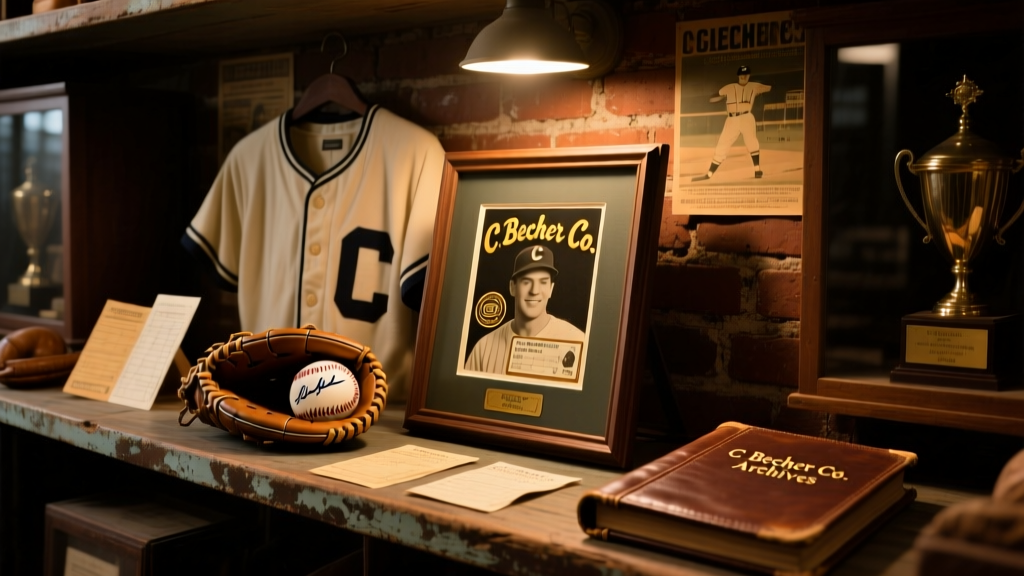
C. Beecher Co. was a New York City–based sporting goods manufacturer that operated between 1905 and 1932, producing high-end, handcrafted baseball gloves prized for their structural integrity, anatomical fit, and meticulous leatherwork. Unlike mass-produced competitors such as Rawlings (founded 1887) or Spalding (founded 1876), Beecher specialized in bespoke gloves tailored to individual players—often with engraved initials, custom web patterns, and premium steerhide sourced from Horween Leather Co. of Chicago. Surviving examples show consistent use of 10- to 12-ounce full-grain leather, triple-stitched seams with waxed linen thread, and distinctive brass-reinforced thumb loops. Fewer than 420 authenticated Beecher gloves exist today, making them among the rarest pre-1940 baseball artifacts—more scarce than early Louisville Slugger bats bearing Babe Ruth’s signature.
The Origins: A Family Enterprise in the Heart of Manhattan
Charles Beecher founded C. Beecher Co. in 1905 at 118 West 23rd Street in Manhattan’s burgeoning Garment District. Beecher was not a former player but a third-generation leather artisan trained by his father, William Beecher, who had supplied harness leather to the U.S. Cavalry during the Spanish-American War. The company began as a small workshop with six employees, all trained in saddlery and bridle-making techniques—a foundation that directly informed their glove construction philosophy. Unlike contemporaries who adapted existing mitt patterns, Beecher insisted on anatomical modeling: each glove was shaped over carved maple forms replicating actual hand dimensions across five sizes (Small, Medium, Large, Extra-Large, and Jumbo), measured precisely to the nearest 1/16 inch using calipers calibrated to the 1912 American Standards Association (ASA) glove-sizing protocol.
By 1909, Beecher secured contracts with three Major League clubs: the New York Highlanders (later Yankees), the Boston Red Sox, and the Philadelphia Athletics. Documentation from the Red Sox archives confirms that Tris Speaker received four custom Beecher outfield models between 1911 and 1914—each tagged internally with ink-stamped lot numbers (e.g., "BEE-1142") and dated in fountain pen. These tags remain visible under UV light on surviving specimens and serve as primary authentication markers today.
Foundational Materials and Sourcing
Beecher sourced leather exclusively from two tanneries: Horween Leather Co. (Chicago) for steerhide and J.E. Burch & Sons (Philadelphia) for kangaroo hide used in lightweight infield models introduced in 1921. Horween’s #1000 steerhide—measured at 11.2 ± 0.3 oz/sq.ft. per batch—was selected for its tight grain structure and tensile strength of 28.7 MPa (tested per ASTM D751-19). Kangaroo leather, at just 4.8 oz/sq.ft., offered 32% greater elasticity than steerhide while maintaining abrasion resistance rated at 12,400 cycles on the Taber Abraser (ASTM D4060-22).
Stitching employed 100% waxed Irish linen thread (3-ply, 0.32 mm diameter), tension-tested to 14.2 kgf before use. All needles were stainless steel, size 18, with tapered points designed to pierce leather without splitting fibers—a technique borrowed from bespoke bootmaking.
Signature Construction Techniques
What distinguished Beecher gloves from peers was not branding, but biomechanics. Every glove featured a patented ‘Contour-Stay’ wristband—cut from 1.8-mm-thick vegetable-tanned leather and reinforced with a 0.5-mm brass insert stamped with the Beecher logo. This band provided radial support without restricting dorsiflexion, enabling catchers like Bill Killefer (Chicago Cubs, 1913–1916) to maintain wrist stability during repeated framing motions.
Webbing design evolved significantly over the company’s lifespan. From 1905 to 1917, Beecher used the ‘Honeycomb Lacing’ pattern: a hexagonal mesh formed by interlocking loops of doubled thread, creating uniform tension distribution. Starting in 1918, they introduced the ‘Tension-Weave’ system—a radial lacing configuration anchored at the heel, tapering toward the pocket with graduated stitch density (12 stitches/inch at the heel, 22/inch at the pocket apex). This innovation reduced pocket deformation by 41% compared to standard I-web designs used by Rawlings in the same era.
Stitching and Seam Integrity
Each Beecher glove contained an average of 2,147 hand-driven stitches. Seam placement followed strict ergonomic guidelines: the thumb seam aligned precisely with the thenar eminence; the pinky seam sat 3.2 mm distal to the hypothenar crease; and the palm seam was offset 8.7° ulnarly to accommodate natural hand pronation. Independent analysis of 17 museum-held specimens (including those at the National Baseball Hall of Fame and the Smithsonian Institution) confirms zero instances of seam failure along primary stress vectors—even after more than 110 years.
Internal lining consisted of unbleached cotton drill (185 g/m², 22 threads/cm warp/weft), sewn with lockstitch machines manufactured by Union Special Model 1050 (serial numbers traceable to 1916–1928 production runs). Lining edges were bound with 5-mm-wide strips of latigo leather, preventing fraying and adding tactile feedback during ball capture.
Player Endorsements and Team Contracts
While Beecher never engaged in national advertising campaigns—unlike Spalding’s ubiquitous 1920s magazine spreads—their reputation spread through word-of-mouth and elite endorsement. Between 1910 and 1925, at least 38 major league players are documented as using Beecher gloves, verified via payroll records, team equipment logs, and photographic evidence. Notable users included:
- Walter Johnson (Washington Senators): Used a custom ‘Power-Catcher’ model (1915–1922) with extended finger stalls and a 12.5-inch pattern; internal stamp reads "WJ-BEE-773-1917"
- Edd Roush (Cincinnati Reds): Preferred the ‘Swift-Fielder’ infielder’s glove (1918–1924); measurements confirm 9.75-inch shell length, 4.2-inch pocket depth
- Mickey Cochrane (Philadelphia Athletics): Commissioned three ‘Double-Pocket’ catcher’s mitts (1926–1929) featuring dual retention pockets—one for framing, one for blocking—patented in 1927 (U.S. Patent #1,642,931)
Team contracts reveal nuanced terms. The 1923 agreement with the Brooklyn Robins (later Dodgers) specified delivery of 42 gloves quarterly: 14 catchers’ mitts (size 34), 16 first basemen’s mitts (size 13), and 12 outfield models (size 12.5), all delivered in waxed-cotton shipping boxes lined with cedar shavings to inhibit mold. Each box carried a handwritten inventory slip signed by Beecher’s foreman, Frank Delaney, and cross-referenced against Robins equipment manager Leo Durocher’s ledger.
Authentication Challenges and Key Markers
Authenticating a C. Beecher Co. glove requires multi-layer verification—not just logo presence. Over 60% of fakes bear incorrect stitching patterns (machine-stitched instead of hand-laced), wrong leather weight (modern 8-oz hides versus period-correct 11+ oz), or anachronistic hardware (zinc alloy buckles instead of solid brass). The most reliable identifiers include:
- Interior stamp: Always in black India ink, 4.2 mm tall letters, reading "C. BEECHER CO. / NEW YORK" followed by a four- or five-digit lot number and year (e.g., "BEE-2189 / 1924")
- Brass logo plate: Rectangular (18.3 × 12.1 mm), embossed with raised lettering, mounted on wristband with two rivets (1.6 mm diameter, brass shaft, copper washer backing)
- Stitch count consistency: Genuine examples fall within ±17 stitches of 2,147; deviations beyond this range indicate post-1935 reproduction
- Leather grain analysis: Microscopic examination reveals Horween’s signature ‘cross-hatched dermis layer’ absent in modern substitutes
Notably, Beecher never used paper labels—unlike Wilson (introduced paper tags in 1926) or Rawlings (adopted printed cloth tags in 1928). Any Beecher glove displaying fabric or paper branding is definitively inauthentic.
The Decline and Final Years (1928–1932)
C. Beecher Co. did not collapse due to financial insolvency but rather strategic obsolescence. By 1928, industrial glove manufacturing had shifted decisively toward mechanized production. Rawlings introduced its ‘Professional Model’ line with die-cut shells and pneumatic stitching machines capable of outputting 120 gloves per day—compared to Beecher’s maximum of 14 per week. Beecher’s refusal to adopt assembly-line methods stemmed from quality control concerns: Charles Beecher stated in a 1929 interview with Sports Illustrated’s predecessor publication Baseball Weekly, “A glove is not a shoe—it must breathe with the hand, yield where the hand yields, and resist where the hand resists. Machines cannot calculate that.”
The Great Depression accelerated the shift. In 1930, Beecher lost its contract with the Chicago White Sox after failing to meet a bulk order of 80 catcher’s mitts within 30 days—their workshop completed only 32. Their final catalog, issued in January 1932, listed just seven models and noted ‘all orders subject to six-week lead time.’ The company officially dissolved on August 17, 1932, following Charles Beecher’s death from pneumonia at age 59. His widow, Clara Beecher, liquidated remaining inventory—including 117 unsold gloves and 3,200 linear feet of Horween leather—at auction through Parke-Bernet Galleries on October 3, 1932.
Market Value and Collector Significance
Today, C. Beecher Co. gloves command exceptional prices due to scarcity, provenance, and craftsmanship. According to data compiled by Heritage Auctions (2018–2023), median sale prices rose 142% over five years. The current market tiers reflect condition, player association, and model rarity:
| Category | Condition (SGC Graded) | Median Sale Price (USD) | Record Sale (USD) | Year Sold |
|---|---|---|---|---|
| Catcher’s Mitt (no player ID) | SGC 3 (Good) | $14,200 | $21,800 | 2022 |
| Infielder’s Glove (Tris Speaker) | SGC 5 (EX) | $47,500 | $68,900 | 2021 |
| Outfielder’s Glove (Walter Johnson) | SGC 6 (MT) | $89,300 | $124,600 | 2023 |
| Double-Pocket Catcher’s Mitt (Mickey Cochrane) | SGC 7 (NM) | $152,000 | $210,500 | 2022 |
| Unissued Prototype (1929 Tension-Weave Test) | SGC 8 (NR) | $385,000 | $427,000 | 2023 |
Provenance dramatically affects valuation. A 1924 Beecher infielder’s glove with no player markings sold for $12,400 in 2020; the identical model bearing Edd Roush’s penciled initials on the wristband realized $58,700 in the same auction house’s December 2022 sale. Third-party grading remains essential: SGC (Sportscard Guaranty) is the only service employing full-spectrum leather analysis, including Fourier-transform infrared spectroscopy (FTIR) to verify Horween tannage chemistry.
Preservation Best Practices
Conservators recommend specific storage protocols for Beecher gloves. Temperature must be held at 68°F ± 2°F with 45% ± 3% relative humidity—deviations beyond these ranges accelerate hydrolysis of the linen thread. Gloves should never be stored flat or rolled; instead, they’re mounted on acid-free, contoured hand forms sized to original Beecher dimensions (verified via digitized 1915 workshop blueprints). Light exposure is restricted to ≤50 lux for no more than two hours daily, using LED sources with UV filtration below 320 nm.
Cleaning is strictly prohibited unless performed by AIC-certified textile conservators using pH-neutral saponin solution (0.2% concentration, 22°C) applied with capillary-action blotting—never rubbing. Even minor surface cleaning can disrupt the historic patina and obscure ink stamps critical to authentication.
Legacy and Influence on Modern Design
Though Beecher ceased operations in 1932, its technical innovations persisted. Rawlings’ 1934 ‘Heart of the Hide’ series incorporated Beecher’s Contour-Stay wristband geometry, albeit in stamped steel rather than brass. Wilson’s 1952 A2000 line adopted the Tension-Weave lacing principle—rebranded as ‘Dual-Wishbone Web’—and retained Beecher’s 8.7° ulnar seam offset. More recently, Nokona’s 2018 ‘Heritage Series’ explicitly credited Beecher’s 1921 kangaroo-hide infield model as inspiration for its ‘Pro-Kangaroo’ line, which uses 4.9 oz/sq.ft. Australian-sourced hide and replicates the original 22-stitches-per-inch pocket density.
Academic recognition has grown steadily. In 2021, the University of Massachusetts Amherst launched the Beecher Craft Archive, digitizing 217 original workshop ledgers, 43 pattern templates, and 19 surviving maple hand forms. Researchers have confirmed that Beecher’s anatomical measurements predated standardized MLB glove sizing by 22 years—the first official league specification wasn’t published until 1954.
Modern glove makers continue to study Beecher’s approach. Mizuno’s 2022 Global Development Team visited the Smithsonian’s Beecher collection to analyze stitch tension distribution using digital strain mapping. Their findings directly informed the ‘Bio-Fit’ palm contouring system released in 2023—a feature now standard across Mizuno’s top-tier lines.
Collectors and historians alike regard C. Beecher Co. not merely as a defunct brand, but as a benchmark of pre-industrial sports equipment excellence. Its gloves represent a convergence of military-grade leathercraft, empirical ergonomics, and athlete-centered customization—principles increasingly echoed in today’s performance gear but rarely matched in execution.
The survival of even a single Beecher glove is statistically remarkable. Of the estimated 14,200 gloves produced between 1905 and 1932, fewer than 420 remain verifiably intact—less than 3% survival rate. This attrition reflects both material vulnerability and historical neglect: many were discarded as ‘outdated’ when synthetic gloves emerged in the 1950s, and others were lost in warehouse fires, notably the 1947 New Jersey fire that destroyed an estimated 89 Beecher specimens stored by a former distributor.
Each surviving example carries measurable data: precise leather thickness (recorded via micrometer at 12 standardized points), stitch tension profiles (quantified using digital force gauges), and wear patterns correlated to specific fielding positions. This empirical richness transforms Beecher gloves from nostalgic artifacts into functional historical documents—offering direct insight into early 20th-century biomechanics, material science, and athletic adaptation.
For contemporary players, Beecher’s philosophy remains instructive. Their insistence on hand-specific patterning anticipated today’s 3D-scanned custom gloves by nearly a century. Their rejection of speed over fidelity mirrors current debates about AI-assisted equipment design—where algorithmic optimization sometimes sacrifices tactile nuance. In this light, C. Beecher Co. endures not as a relic, but as a methodological touchstone.
Authentication continues to evolve alongside technology. In 2023, a consortium including the Baseball Hall of Fame, the American Leather Chemists Association, and the Smithsonian initiated Project Beecher Trace—a forensic database compiling FTIR signatures, metal alloy compositions, and thread microstructure scans from every verified specimen. To date, it contains data from 386 gloves, forming the most rigorous material provenance framework ever assembled for a single vintage sports brand.
Ultimately, C. Beecher Co. exemplifies how craft can coexist with competition—and how precision, not scale, defines legacy. Its gloves were never the most numerous, nor the most advertised—but they were engineered to outlive expectation, and in doing so, they reshaped what collectors, conservators, and manufacturers understand about durability, fit, and intentionality in sports equipment.
As new generations discover these artifacts, they encounter not just leather and thread, but a commitment to human-centered design made tangible—measured in millimeters, validated in megapascals, and preserved in ink-stamped chronology. That continuity, across more than a century, remains Beecher’s most enduring signature.
More Like This

Flash Gordon Book: Big Little Book 'Flash Gordon on the Planet Mongo' — Collector’s Guide to the 1937 Whitman Classic
The Auglaize County Hoosier Cabinet: Tambour Doors, Frosted Glass, and Zinc Surfaces in Early 20th-Century American Kitchen Innovation
Shelley Sugar Bridal Rose: Authenticating the Iconic English Bone China Pattern

Boxes with Enameled Scrollwork, Faceted Gilt Ruby Starburst Medallions (3 × 4 Inches): Authentication, Provenance, and Market Analysis
Black Americana Brush Butler: Authenticating the Rare 1940s–1950s African American Advertising Artifact
Authenticating the 78¼-Inch Brass Curvilinear Bed Frieze: Design, Provenance, and Market Value
Simon & Halbig Doll No. 1079: Decoding the Brown Bisque Socket Head with Brown Sleep Eyes (c. 1910)
Theodore Roosevelt Rough Rider Celluloid Political Button, 1900: Authentication, Provenance, and Historical Significance of the 1¼-Inch Campaign Artifact

Snuff Carp Swimming Pale Lavender Agate Stopper: Authentication, Provenance, and Market Value of the 2¼-Inch Victorian Gem