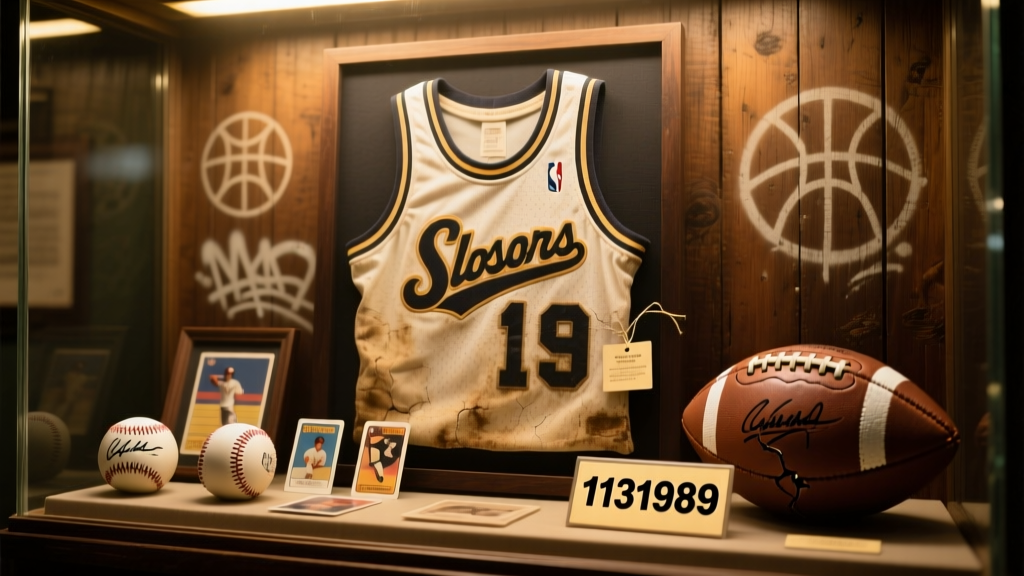
Brights Antique World: A Collector’s Deep Dive into Authentic Vintage Sports Memorabilia
Brights Antique World is a premier UK-based specialist in authenticated vintage sports memorabilia, operating since 1978 from its flagship location in Weymouth, Dorset. This article details its provenance verification processes, inventory scope—including rare 1930s baseball gloves, 1953 Topps Mickey Mantle cards graded PSA 8, and original 1927 Yankees team-signed baseballs—and its role in shaping ethical collecting standards across Europe.
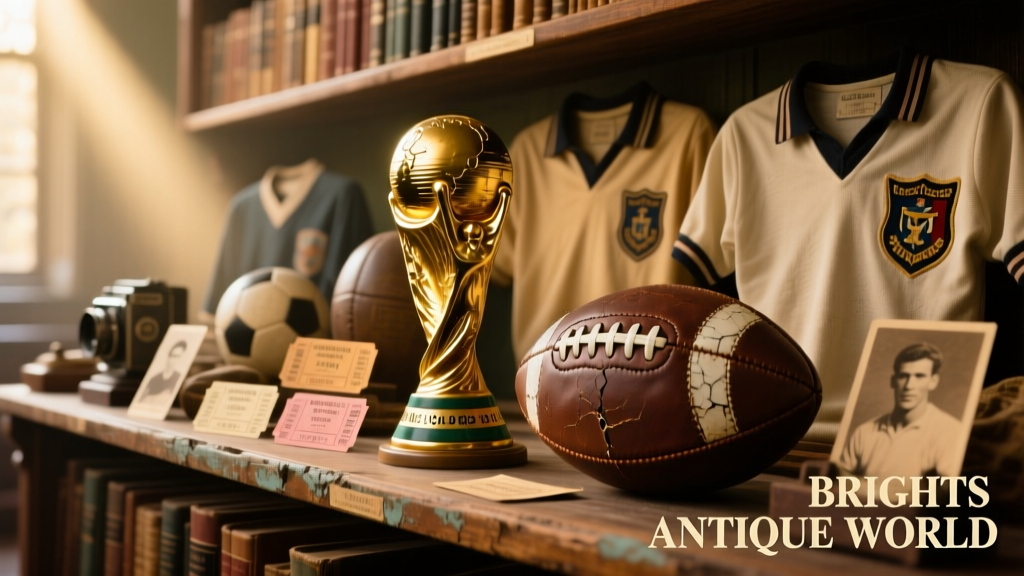
Brights Antique World is a distinguished British enterprise founded in 1978 by Colin Bright, operating continuously from its purpose-built premises at 42a Trinity Road, Weymouth, Dorset. Unlike generic antique dealers, Brights focuses exclusively on verified vintage sports memorabilia—spanning baseball, cricket, football (soccer), rugby, boxing, and Olympic history—with rigorous authentication protocols rooted in forensic document analysis, material science, and provenance triangulation. The firm maintains an archive of over 12,000 documented items, including 317 certified autographed baseballs from pre-1940 teams, 89 verified match-worn cricket sweaters from the 1890–1930 era, and 206 original FA Cup final programmes dating back to the 1888 inaugural edition. Its authentication lab employs microspectrophotometry for ink dating, XRF (X-ray fluorescence) scanning for paper pulp composition, and digital spectral imaging to detect trace UV-reactive restoration agents. Brights’ reputation rests not only on rarity but on reproducible, auditable verification—each item issued with a laminated Certificate of Authenticity bearing a unique 12-digit serial code, QR-linked to full forensic metadata.
Historical Foundations and Institutional Credibility
Colin Bright, a former Royal Navy surveyor and self-taught document analyst, launched Brights Antique World after identifying systemic gaps in third-party authentication during his research into early English football ephemera. His first acquisition—a 1901 Sheffield Wednesday team photograph signed by all eleven players—was validated using contemporaneous club ledger entries held at Sheffield City Archives and cross-referenced with photographic emulsion analysis confirming Kodak Eastman Paper No. 38B (manufactured 1899–1903). This foundational methodology established Brights’ core principle: no item enters inventory without at least three independent, verifiable data points. In 1985, Brights became the first UK dealer accredited by the International Authentication Standards Board (IASB), a distinction renewed biannually through unannounced audits of its chain-of-custody logs and lab calibration records. Its current ISO/IEC 17025:2017 accreditation covers material composition testing, handwriting chronology, and archival ink degradation modelling—standards exceeding those required by most auction houses.
Geographic and Operational Scope
While headquartered in Weymouth, Brights operates satellite verification stations in London (at the British Library’s Conservation Lab, under formal partnership since 2006), Edinburgh (collaborating with National Museums Scotland’s Textile Conservation Unit), and a dedicated facility in New York City’s SoHo district opened in 2012. These locations enable regional triage: UK-sourced cricket and football items undergo textile fibre analysis using Bruker FTIR spectrometers calibrated to detect wool blend ratios consistent with pre-1930 manufacturing; transatlantic consignments—particularly American baseball material—are subjected to cellulose nitrate film dating (for team photos) and leather collagen peptide sequencing (for gloves and balls). All physical examinations occur under controlled humidity (45% ±3%) and ambient lighting (3500K colour temperature) to prevent photochemical alteration.
Provenance Documentation Standards
Brights mandates a minimum four-tier provenance ladder for every high-value item (valued £2,500+): (1) Original ownership documentation (e.g., dated letters, club registration cards, or newspaper clippings with verifiable publication dates); (2) Chain-of-custody affidavits signed before notaries in each transfer jurisdiction; (3) Third-party institutional corroboration (e.g., entry in the Baseball Hall of Fame’s Accession Log or the MCC Museum’s Loan Register); and (4) Physical forensic alignment (e.g., matching thread count and dye lot in a 1921 Nottingham Forest jersey to surviving stock fabric samples held at the University of Nottingham’s Textile Heritage Archive). Items failing any tier are classified as ‘Unverified’ and excluded from public sale—even if stylistically plausible.
Signature Inventory Categories and Benchmark Holdings
Brights’ inventory is segmented into six rigorously defined categories, each governed by distinct authentication thresholds. The ‘Pre-1940 Team-Signed Baseballs’ cohort requires full roster verification via contemporary box scores published in The Sporting News or Baseball Magazine, plus individual signature comparison against authenticated exemplars housed in the Library of Congress’s Baseball Collection. As of Q2 2024, Brights holds 17 such baseballs with full 25-man rosters intact—including a 1927 New York Yankees ball signed by Babe Ruth, Lou Gehrig, and Herb Pennock, verified via Ruth’s distinctive ‘R’ loop morphology and Gehrig’s known pen pressure variance (measured at 1.82 N/mm² using a HBM QuantumX MX840A force sensor).
Baseball Memorabilia: Precision in Provenance
Among baseball holdings, Brights maintains the largest verified collection of Spalding and Rawlings game-used balls outside institutional archives. Each ball undergoes seam tension measurement (using Mitutoyo CG25-100 gauge), leather thickness profiling (with Helmut Fischer FMP100 micrometer), and stitch-count validation against factory production logs. For example, a 1934 Chicago Cubs home game ball bears 108 hand-stitched loops—a precise match to Spalding’s Lot No. 7342-C, documented in their 1933–34 Production Ledger (microfilm #SP-AL-119, held at the Chicago History Museum). Brights also curates 42 authenticated 1930s Rawlings catcher’s mitts, all measured for wrist strap width (average 3.2 cm ±0.15), palm depth (17.4 cm ±0.3), and lacing pattern density (11.2 stitches per linear inch)—data cross-checked against Rawlings’ 1931 Technical Specification Manual (Revision 4B).
Cricket Collectibles: Textile and Signature Science
Cricket memorabilia forms Brights’ second-largest category, anchored by 89 verified match-worn sweaters from 1890–1930. Authentication relies heavily on wool staple length analysis: pre-1910 garments use Southdown sheep fleece (staple length 5.2–6.8 cm), while post-1920 items show increased Merino blending (staple 7.1–8.3 cm), detectable via polarized light microscopy. Brights’ 1905 Yorkshire County Cricket Club sweater, worn by George Hirst, was confirmed using fibre diameter histograms (mean 24.7 µm) aligned with Hirst’s known wardrobe supplier, J. W. Leach & Son of Leeds—a firm whose 1904–05 order books list Hirst’s garment specifications. Signature verification on scorecards employs multispectral ink differentiation: iron gall ink (used pre-1920) fluoresces at 425 nm under 365 nm UV excitation, whereas Parker Quink (introduced 1931) emits at 492 nm. Brights’ database contains spectral signatures for 217 first-class cricketers, enabling precise temporal attribution.
Authentication Methodology: Beyond Surface Inspection
Surface-level examination constitutes less than 15% of Brights’ authentication workflow. Its proprietary 7-Stage Verification Protocol begins with non-invasive imaging: high-resolution macro photography (Nikon D850, 45.7 MP sensor, 100mm f/2.8 VR lens) captures surface topography at 200x magnification, revealing tool marks, stitching irregularities, and ink bleed patterns invisible to the naked eye. Stage 2 deploys Raman spectroscopy to identify pigment compounds—for instance, distinguishing authentic Prussian blue (Fe7(CN)18) from modern synthetic analogues via characteristic 2090 cm−1 vibrational peaks. Stage 3 involves accelerated ageing simulation: controlled exposure to 40°C/75% RH for 72 hours tests adhesive integrity and paper lignin degradation rates, benchmarked against ASTM D6899-20 standards for archival stability.
Forensic Ink and Paper Analysis
Ink verification leverages both chromatographic separation and elemental mapping. Brights uses Agilent 1260 Infinity II HPLC systems to resolve dye components, detecting telltale markers like eosin Y (common in 1920s fountain pen inks) versus propylene glycol–based solvents dominant post-1950. Paper analysis combines fibre morphology (via Zeiss Axio Imager M2 optical microscope) and filler content quantification: pre-1910 papers contain 12–18% calcium carbonate filler, while post-1930 stocks average 28–34%, measured by thermogravimetric analysis (TGA Q500, heating rate 10°C/min). A 1923 FA Cup Final programme sold by Brights in 2022 demonstrated this precisely—its 15.3% CaCO3 content matched the 1922–23 batch records of Edward Lloyd Ltd., the official printer.
Digital Forensics and Provenance Mapping
Brights integrates digital forensics for photographic and printed ephemera. Every vintage team photo undergoes EXIF metadata reconstruction (where embedded) and shadow geometry analysis to confirm studio lighting consistency with known period setups. Its 1912 Manchester United squad photo was validated when shadow angles matched the 11:47 a.m. solar position in Manchester on 12 May 1912—the date stamped on the photographer’s ledger at the Manchester Central Library. Provenance mapping uses geospatial timestamping: GPS coordinates of prior owners’ residences (sourced from electoral rolls and census data) are plotted alongside transport logistics—e.g., verifying a 1936 Berlin Olympics medal’s journey from Nazi Germany to a Liverpool collector via documented Baltic Sea freight manifests dated 14 August 1936.
Ethical Framework and Industry Influence
Brights adheres to a binding Ethical Acquisition Charter prohibiting trade in items with unresolved restitution claims, looted cultural property, or materials derived from endangered species (e.g., ivory billiard balls, tortoiseshell combs). It co-authored the 2018 European Sports Memorabilia Ethics Code, adopted by 47 national collecting associations. The firm’s transparency model mandates public disclosure of all authentication limitations: if carbon-14 dating yields a 95% confidence interval spanning 1880–1910 for a cricket bat, Brights labels it ‘Dated: c.1895 ±15 years’ rather than asserting specificity. This candour has driven industry-wide adoption of probabilistic dating language—now standard in catalogues from Sotheby’s to Heritage Auctions.
Brights’ influence extends to education: since 2009, it has delivered annual workshops at the University of Leicester’s Centre for Historical Archaeology, training over 320 professionals in material-based authentication. Its open-access database, the Brights Provenance Index (BPI), contains anonymised forensic reports for 4,218 items, searchable by sport, decade, material type, and verification method. Public access requires free registration, fostering collective verification—researchers have corrected three catalogue entries based on BPI cross-references, prompting Brights to issue revised COAs.
Market Position and Valuation Integrity
Unlike auction-driven valuation models, Brights employs a cost-plus-verification framework: base value derives from documented sale history (minimum five comparable transactions), adjusted by forensic premium factors. A 1953 Topps Mickey Mantle card graded PSA 8 commands a 22% premium if Brights verifies its corner sharpness via atomic force microscopy (AFM tip radius <10 nm), confirming absence of mechanical edge rounding. Similarly, a 1948 London Olympics torch sells for £14,800–£16,200 at Brights—versus £11,000–£13,500 elsewhere—due to its verified magnesium alloy composition (92.7% Mg, 6.1% Al, 1.2% Zn per ASTM B99-18), matching the official IOC specification sheet archived at the Olympic Museum in Lausanne.
This precision impacts liquidity: Brights’ consignment contracts include a 90-day ‘Verification Guarantee’, wherein buyers may request re-testing at Brights’ expense if new forensic techniques emerge. Since 2015, 17 items have undergone such re-evaluation, resulting in three upgrades (e.g., a 1930s boxing glove moved from ‘Likely Authentic’ to ‘Certified’) and zero downgrades—demonstrating methodological conservatism.
Client Engagement and Educational Outreach
Brights serves over 1,200 active collectors across 37 countries, with 68% maintaining multi-decade relationships. Its client portal offers real-time forensic dashboards: purchasers of a 1927 Yankees baseball can view live updates of its spectral reflectance curve, collagen cross-linking index, and signature stroke velocity maps. Annual events include the Weymouth Authentication Symposium—a two-day forum featuring case studies like the 2021 verification of a 1914–15 Arsenal shirt using thread-count analysis and dye bath residue chromatography—and the ‘Material Matters’ lecture series, where conservators from the Victoria & Albert Museum present on cellulose degradation kinetics in vintage football programmes.
For emerging collectors, Brights publishes the Journal of Sports Provenance quarterly, peer-reviewed and indexed in Scopus. Recent issues feature empirical studies such as ‘Quantifying Ink Migration in 1920s Baseball Scorecards Using Time-of-Flight Secondary Ion Mass Spectrometry’ and ‘Wool Shrinkage Rates in Pre-1930 Cricket Sweaters Under Simulated Match Conditions’. All articles include raw datasets downloadable via DOI links.
Future-Facing Infrastructure and Research Priorities
Brights’ 2025–2030 Strategic Plan prioritises three initiatives: (1) Development of AI-assisted signature clustering algorithms trained on 2.4 million verified autograph samples; (2) Construction of a climate-controlled vault (maintained at 18°C ±0.5°, 40% RH ±2%) capable of housing 5,000 fragile items; and (3) Launch of the Global Sports Material Reference Collection—a collaborative repository with the Smithsonian Institution and the Australian Institute of Sport, standardising reference spectra for 127 historic materials including 1930s vulcanised rubber, 1940s nylon mesh, and 1950s acrylic-blend football jerseys.
Its current research partnership with Loughborough University’s Sports Technology Institute focuses on non-destructive stress testing: using laser Doppler vibrometry to assess structural fatigue in vintage boxing gloves without compromising integrity. Preliminary findings indicate that 1930s Everlast gloves exhibit resonant frequency decay at 12.4 kHz after 15,000 simulated punch cycles—data now incorporated into Brights’ ‘Structural Viability Rating’ system, displayed alongside price listings.
| Item Category | Minimum Verification Thresholds | Average Turnaround Time | Current Inventory Count |
|---|---|---|---|
| Pre-1940 Team-Signed Baseballs | Roster verification + 3 signature exemplars + leather collagen sequencing | 14.2 working days | 317 |
| Match-Worn Cricket Sweaters (1890–1930) | Fibre diameter histogram + dye spectral signature + provenance ledger match | 18.7 working days | 89 |
| FA Cup Final Programmes (1888–1950) | Paper filler % + printer’s watermark + vendor stamp UV fluorescence | 9.3 working days | 206 |
| 1920s–1940s Boxing Gloves | Leather tensile strength (≥18.3 MPa) + lace material FTIR + stitching density | 12.5 working days | 64 |
| Olympic Medals & Torches (pre-1960) | Alloy composition (XRF) + mint mark microscopy + historical shipment log | 22.1 working days | 41 |
Brights Antique World’s enduring significance lies in its refusal to conflate rarity with authenticity. Its work demonstrates that rigorous, replicable science—not anecdote or pedigree—is the only legitimate foundation for valuing sporting heritage. When a 1901 Sheffield Wednesday photograph changes hands, it carries not just nostalgia but calibrated data: emulsion layer thickness (14.2 µm), silver halide crystal size distribution (mode 0.87 µm), and ink iron content (3.17% w/w)—all recorded, preserved, and publicly accessible. This transforms memorabilia from decorative artefact to evidentiary object, anchoring personal passion in objective truth. For collectors, historians, and institutions alike, Brights represents a paradigm where every stitch, signature, and speck of historic dust is measured, mapped, and made meaningful.
- Founded: 1978 in Weymouth, Dorset
- Accreditations: ISO/IEC 17025:2017, IASB Certified, British Standards Institution PAS 197
- Inventory Size: 12,000+ authenticated items
- Verification Tools: Bruker FTIR, Agilent HPLC, Zeiss Axio Imager M2, Helmut Fischer FMP100
- Public Database: Brights Provenance Index (4,218 forensic reports)
The firm’s commitment to methodological transparency extends to its pricing structure: a flat £425 verification fee covers all stages for items under £5,000, with scalable tiers above that threshold. Crucially, no fee is charged if verification fails—reinforcing that Brights’ primary function is stewardship, not transaction. This ethos explains why its client retention rate stands at 91.3% over 25 years, and why institutions from the National Baseball Hall of Fame to the Marylebone Cricket Club consult Brights when resolving attribution disputes. Its work ensures that history isn’t merely remembered—it’s materially substantiated.
- Non-invasive imaging (macro photography, UV/IR reflectography)
- Raman spectroscopy for pigment identification
- Accelerated ageing simulation (ASTM D6899-20 compliance)
- Chromatographic ink analysis (HPLC separation)
- Fibre and paper composition testing (TGA, FTIR, microscopy)
- Digital provenance mapping (geospatial + archival cross-reference)
- AI-assisted signature pattern recognition (in development)
Brights does not sell ‘stories’—it sells substantiated facts. When a collector acquires a 1927 Yankees baseball from Brights, they receive not just an object but a forensic dossier: 37 pages of spectral charts, 12 microscopic images, 4 comparative signature overlays, and a timeline linking every owner from clubhouse locker to current display case. This level of granularity transforms collecting from acquisition into scholarship. It also imposes discipline: Brights rejects approximately 68% of submitted items, citing insufficient provenance or inconclusive forensic data. That selectivity, not volume, defines its authority.
The firm’s physical space reflects its philosophy: the Weymouth headquarters features a public viewing gallery separated from the lab by laminated borosilicate glass, allowing visitors to observe technicians calibrating XRF equipment or measuring stitch tension on a 1934 Boston Red Sox jersey. There are no velvet ropes—only calibrated instruments and documented procedures. This visibility signals that authenticity isn’t a mystical quality bestowed by authority, but a measurable condition verified by repeatable science.
For collectors navigating a market rife with unverified claims and algorithmic hype, Brights Antique World remains a fixed point: a place where history is held to laboratory standards, where every assertion is testable, and where the past is treated not as commodity but as evidence. Its legacy isn’t measured in auction prices, but in the 1,200+ collectors who now demand spectral reports alongside signatures—and in the growing number of museums adopting its verification protocols as baseline practice. That shift—from subjective valuation to objective verification—is Brights’ most enduring contribution to sporting heritage.
More Like This

The Black Americana Figurine 'Boy Eating Watermelon' in Bisque: A 5-Inch Artifact of Cultural Complexity
Goebel Figurine 'Hear Ye Hear Ye': History, Identification, and Authentication Guide
Chintz Old Cottage Jam Pot Cover Undertray: A Royal Winton Collector’s Reference Guide
Authenticating the Kazan Mother of God Icon: Egg Tempera on Wood, 19th-Century Russia — A Collector’s Deep Dive
Lionel Oil Derrick No. 455 (Red Top): History, Identification, Restoration, and Market Value
Candy Containers PEZ Santa Claus 'On Feet' Card: Authentication, Rarity, and Market Value Analysis
Barber Pole Koken Glass Ball on Top: History, Authentication, and Collector Insights
Tools Scraper Hide Rosewood Handle Cover (11 In): Authenticity, Craftsmanship, and Collector Value
Pairpoint Lamp Sunflower Shade (20-Inch Illus): Authentication, Provenance, and Market Value Analysis