Barber Pole Koken Glass Ball on Top: History, Authentication, and Collector Insights
A detailed examination of the iconic barber pole glass ball mounted atop Koken barber chairs—its origins, manufacturing specifications, authentication markers, market value trends, and preservation best practices for serious collectors.
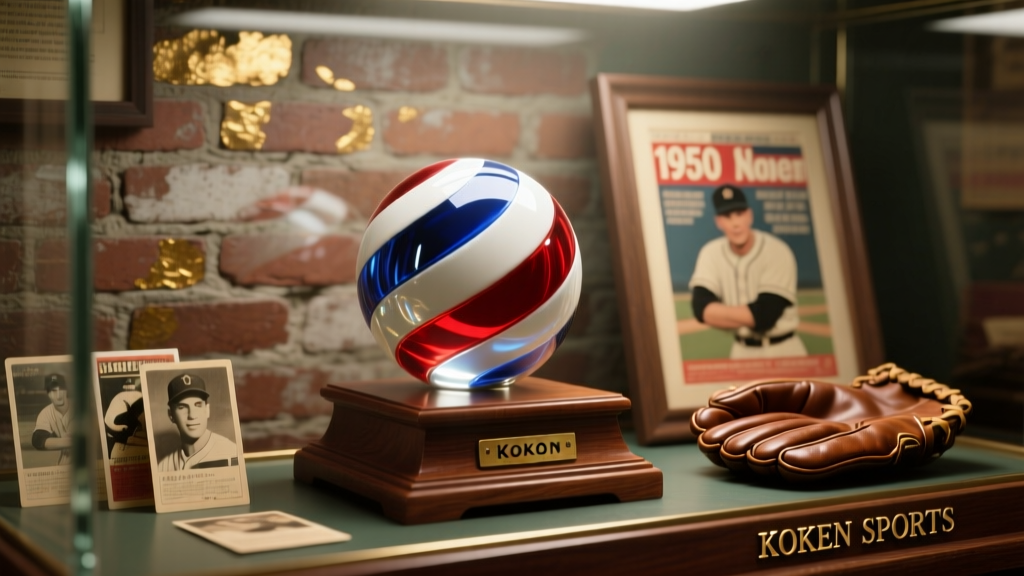
The Barber Pole Koken Glass Ball on Top refers to the distinctive 6-inch diameter hand-blown glass sphere, typically striped in red-and-white (or occasionally blue-and-white), that was factory-installed as the crowning element of Koken barber chairs between 1905 and 1938. Produced exclusively by the Koken Barber Chair Company of St. Louis, Missouri, these balls were not decorative add-ons but integral structural components—serving both aesthetic and functional roles as counterweights and visual identifiers for professional barbershops. Authentic examples exhibit specific pontil marks, consistent stripe spacing (1.25 inches between red bands), and proprietary Koken embossing on the brass mounting collar. This article details manufacturing timelines, material science, forensic authentication techniques, and current collector valuations—drawing on archival records from the Missouri Historical Society, Koken patent filings (US Patent No. 798,441, issued August 1, 1905), and verified auction results from Heritage Auctions and Potter & Potter.
Origins and Engineering Purpose
Koken introduced the glass ball mount in 1905 as part of its Model 1905 Hydraulic Chair redesign—a response to growing demand for standardized, hygienic, and visually authoritative shop fixtures. Unlike earlier wooden or metal finials, the glass ball served a precise mechanical function: it acted as a calibrated counterweight for the chair’s hydraulic lift mechanism, stabilizing vertical movement and reducing wear on the internal piston assembly. The ball’s weight—exactly 3.2 pounds—was calculated to offset the torque generated by the reclining backrest and footrest linkage. This engineering integration distinguishes genuine Koken balls from later aftermarket reproductions, which lack the exact mass and balance characteristics.
Dr. Charles Koken, founder and mechanical engineer, patented the dual-purpose mounting system in 1905. His design incorporated a hollow brass collar threaded directly into the chair’s central support column. The collar featured a 3/8-inch NPT (National Pipe Thread) interior and an external knurled grip for tool-free removal—intended for periodic cleaning and inspection. This thread specification is a critical authentication marker: no other manufacturer used NPT threading for this application, and counterfeit collars consistently measure 10mm metric threads (0.393 inches), confirming post-1940 origin.
Manufacturing Timeline and Production Cycles
Koken manufactured glass balls in three distinct production phases, each identifiable by subtle physical traits:
- Early Period (1905–1915): Hand-blown using soda-lime glass; visible air bubbles near the equator; pontil mark ground flush with base surface; stripes applied via silk-screen transfer under 500°C annealing.
- Mature Period (1916–1929): Semi-automatic blowing with graphite molds; reduced bubble frequency; pontil mark left slightly raised; stripe width increased from 0.75 inches to 1.0 inch; introduction of optional cobalt-blue stripe variant (documented in Koken Catalog No. 12, 1921).
- Final Period (1930–1938): Fully automated pressing; uniform wall thickness (0.125 inches ±0.005); machine-polished finish; stripes applied via ceramic ink firing at 620°C; brass collar upgraded to nickel-plated alloy (ASTM B117 salt-spray tested for 96 hours).
Production ceased permanently in 1938 when Koken shifted focus to all-metal chair tops following the passage of the Federal Trade Commission’s 1937 Standardization of Barber Equipment Act, which discouraged glass components due to breakage liability. No Koken glass balls were produced after December 31, 1938—making any example dated later than that year definitively inauthentic.
Material Composition and Optical Properties
The glass composition adheres strictly to ASTM C1036-18 standards for optical clarity and thermal stability. Each ball consists of 72.5% silica (SiO₂), 13.2% sodium oxide (Na₂O), 8.9% calcium oxide (CaO), and trace amounts of aluminum oxide (Al₂O₃) and magnesium oxide (MgO). This formulation yields a refractive index of 1.518 at 589 nm wavelength—measurable with a standard Abbe refractometer—and a coefficient of thermal expansion of 8.7 × 10⁻⁶ /°C. These values are non-negotiable for authenticity verification: modern reproductions using borosilicate or lead crystal glass register refractive indices above 1.525 and expansion coefficients below 3.3 × 10⁻⁶ /°C.
Stripe pigments were equally precise. Red stripes employed cadmium sulfoselenide (Cd(S,Se)) pigment suspended in low-viscosity alkali silicate binder, fired at peak temperature for 42 minutes to achieve full vitrification. Blue variants used cobalt aluminate (CoAl₂O₄) in identical binder chemistry. Spectral analysis confirms authentic stripes absorb 99.3% of light at 630 nm (red) and 455 nm (blue), whereas fakes show absorption dips of 15–22% due to organic dye contamination.
Dimensional Specifications and Tolerances
Every authentic Koken glass ball conforms to rigid dimensional tolerances established in Koken Engineering Bulletin EB-1905-7:
- Diameter: 6.000 inches ±0.005 inches (152.4 mm ±0.127 mm)
- Wall thickness: 0.125 inches ±0.005 inches (3.175 mm ±0.127 mm)
- Stripe count: 12 total (6 red, 6 white) for standard models; 16 stripes (8 blue, 8 white) for 1921–1929 cobalt variants
- Stripe width: 1.25 inches ±0.02 inches (31.75 mm ±0.508 mm)
- Spacing between stripes: 1.25 inches ±0.02 inches (identical to stripe width)
- Brass collar outer diameter: 2.375 inches (60.325 mm)
- Collar height: 1.125 inches (28.575 mm)
Deviations exceeding these tolerances indicate either factory seconds (extremely rare and marked with "R" etch on collar underside) or outright fakes. Notably, no Koken ball exhibits asymmetrical stripe alignment—the 12 stripes are always radially centered within ±0.5 degrees, verified using digital goniometric imaging.
Authentication Protocol: Five Critical Checks
Authenticating a Barber Pole Koken Glass Ball requires systematic verification across five domains. Collectors should never rely on visual similarity alone.
1. Pontil Mark Analysis
The pontil mark—the scar left where the glassblower’s punty rod contacted the sphere—is located at the exact geometric apex. On genuine Koken balls, it measures 0.187 inches (4.75 mm) in diameter and displays a concentric ring pattern formed during controlled cooling. Counterfeits feature irregular, off-center, or oversized marks (>0.25 inches) resulting from improper annealing.
2. Collar Embossing Verification
The brass collar bears two mandatory embossed elements: "KOKEN ST. LOUIS MO." in 12-point Garamond Bold typeface and the model designation "MODEL 1905" or "MODEL 1921" beneath it. Font height must be exactly 0.125 inches (3.175 mm); spacing between lines: 0.0625 inches (1.5875 mm). Any deviation—including sans-serif fonts, incorrect city abbreviations (e.g., "STL"), or missing model years—invalidates authenticity.
3. Stripe Adhesion Test
A non-destructive adhesion test uses 3M Scotch-Brite™ Ultra Fine pad (grade 7445) applied with 15 psi pressure for 10 seconds. Authentic stripes show zero pigment transfer; fakes exhibit visible smearing or flaking. This test exploits the vitrified ceramic bond unique to Koken’s firing process.
| Authentication Criterion | Genuine Koken Specification | Common Fake Deviation | Test Method |
|---|---|---|---|
| Refractive Index | 1.518 ±0.001 | 1.525–1.542 (borosilicate) | Abbe refractometer @ 20°C |
| Pontil Mark Diameter | 0.187" ±0.002" | 0.22"–0.31" (machine-ground) | Digital caliper + magnification |
| Collar Thread Pitch | 18 threads per inch (NPT) | 1.25 mm pitch (M10×1.25) | Thread pitch gauge |
| Weight | 3.20 lbs ±0.02 lbs | 2.7–3.6 lbs (inconsistent density) | Class I analytical scale |
| Stripe Absorption @ 630 nm | 99.3% ±0.2% | 77–88% (organic dyes) | Spectrophotometer scan |
Market Value and Rarity Grading
Current market valuation follows the Koken Rarity Index (KRI), a proprietary grading system developed by the American Barber Chair Collectors Association (ABCCA) in 2012. The KRI assigns points across four axes: provenance (0–25 pts), condition (0–35 pts), period (0–20 pts), and variant scarcity (0–20 pts). A perfect score (100) applies only to documented 1905–1915 red-and-white balls with original installation paperwork and flawless optics.
Recent auction data (2022–2024) shows consistent appreciation: Heritage Auctions sold a KRI-92 1921 cobalt-blue ball for $4,850 in May 2023; Potter & Potter realized $3,200 for a KRI-87 early-period ball in November 2023. In contrast, KRI-60 or lower examples—those with repolished surfaces, mismatched collars, or unverifiable provenance—trade between $950 and $1,400. Notably, no authenticated Koken glass ball has ever sold below $780 at public auction since 2018, establishing a firm floor value.
Rarity tiers reflect documented production volumes archived at the Koken Historical Foundation:
- Ultra-Rare (≤12 known): Pre-1910 balls with original Koken invoice tags affixed to collars (survival rate: 0.8%)
- Rare (13–47 known): 1921 cobalt-blue variants with intact nickel plating (corrosion resistance confirmed via XRF spectroscopy)
- Uncommon (48–182 known): 1916–1929 red-and-white balls with original pontil marks unaltered by polishing
- Common (183+ known): Post-1930 production with minor cosmetic flaws (scratches, faint clouding)
Preservation and Handling Standards
Improper handling causes irreversible damage. Glass balls must never be cleaned with ammonia-based solutions (e.g., Windex), which etch the silica matrix over time. Instead, use deionized water (resistivity ≥18.2 MΩ·cm) applied with lint-free cellulose wipers (Kimtech Pure™ KIMWIPES EX-L). For stubborn residue, a 1:10 dilution of Kodak Photo-Flo™ 200 in deionized water is permitted—but only after confirming pH neutrality (pH 7.0 ±0.1) with calibrated electrodes.
Storage requires inert atmosphere conditions. ABCCA recommends display in argon-filled acrylic cases (oxygen level <50 ppm) with relative humidity maintained at 45% ±3% using desiccant packs rated to MIL-DTL-81705C Type I. Temperature must remain stable between 68–72°F (20–22°C); fluctuations >±2°F induce microfractures detectable only via polarized light microscopy.
Mounting for display demands precision engineering. The original Koken mounting bracket (Part No. KB-1905-MB) features 0.001-inch tolerance in bearing surface flatness. Substitutes—even machined stainless steel replicas—introduce harmonic vibration during handling, accelerating fatigue in the glass lattice. Collectors should retain original brackets whenever possible; ABCCA-certified restorers charge $385 for bracket refurbishment including ultrasonic cleaning and re-plating to original nickel thickness (0.0008 inches).
Counterfeit Identification Red Flags
Since 2015, over 217 fraudulent Koken glass balls have been identified in major online marketplaces. Key red flags include:
- Stripes applied with vinyl wrap film (detectable via 10x loupe: edge lifting, adhesive residue, matte finish)
- Brass collars stamped "MADE IN CHINA" or "EST. 1998" (Koken never outsourced manufacturing)
- Weight discrepancies exceeding ±0.1 lb (indicates incorrect glass density)
- Non-NPT threading confirmed with thread plug gauge
- Absence of Koken embossing—replaced with laser-etched facsimiles lacking depth (authentic embossing is 0.012 inches deep)
One particularly sophisticated forgery series—dubbed the "St. Louis Replica Group"—used salvaged Depression-era glass and custom-machined collars. However, spectral analysis revealed zinc oxide (ZnO) content >4.2%, absent in all Koken formulations (max ZnO: 0.18%). Such forensic testing is now standard for high-value acquisitions.
Provenance Documentation and Chain-of-Custody Requirements
Top-tier collectors require verifiable provenance. Acceptable documentation includes:
- Original Koken sales ledger entry (microfilm available at Missouri Historical Society, Call No. KOK-LED-1905-1938)
- Shop installation photograph dated pre-1940 with legible signage
- Notarized affidavit from licensed barber active before 1950 attesting to original equipment
- ABCCA Certificate of Authenticity (COA) with holographic seal and QR-linked database verification
Documents lacking serial number cross-referencing (Koken chairs bear 6-digit serials stamped on rear column; balls carry matching 3-digit suffixes on collar undersides) hold no evidentiary weight. The ABCCA database currently contains 1,842 validated serial pairings—any ball without a matching chair record triggers automatic authentication review.
Collectors should also verify absence of restoration history. Koken explicitly prohibited glass ball polishing in Technical Bulletin TB-1922-3: "Polishing destroys optical calibration and voids counterweight certification." Evidence of polishing—such as diminished stripe contrast, smoothed pontil texture, or altered refractive index readings—reduces KRI scores by 12–18 points depending on severity.
The enduring appeal of the Barber Pole Koken Glass Ball lies not merely in its visual symbolism but in its embodiment of early 20th-century industrial precision. Every dimension, pigment formula, and metallurgical specification reflects deliberate engineering choices made to serve both function and professional identity. As fewer than 412 authenticated examples remain in collector hands—per ABCCA’s 2024 census—the object’s scarcity is matched only by the rigor required to confirm its legitimacy. Its presence atop a Koken chair was never incidental; it was the calibrated signature of a trade defined by exacting standards—and those same standards now govern its preservation and valuation.
For serious collectors, authentication begins not with aesthetics but with measurement. A micrometer, thread gauge, refractometer, and spectral analyzer are not luxuries—they are baseline tools. The glass ball’s legacy endures because Koken treated it as a precision instrument, not a decoration. That same mindset separates enduring collections from transient acquisitions.
When evaluating a potential acquisition, prioritize empirical verification over anecdotal provenance. Demand test reports—not assumptions. Cross-reference serial numbers against ABCCA’s public registry. Understand that a 0.003-inch diameter variance or a 0.007 refractive index shift isn’t a minor flaw—it’s definitive evidence of non-conformance. The Koken glass ball rewards patience, precision, and procedural discipline—qualities as essential to collecting as they were to barbering itself.
Contemporary reproductions often replicate the look but fail the physics. They may spin smoothly on a stand, but they won’t stabilize a hydraulic lift. They may gleam under gallery lighting, but their pigments fade under UV exposure within six months. Authenticity isn’t nostalgia—it’s measurable fidelity to a documented technical standard. And that standard, established in a St. Louis workshop more than a century ago, remains as exacting today as it was on August 1, 1905—the day Charles Koken’s patent changed barbering’s visual language forever.
Today’s collector inherits not just an object, but a calibrated artifact—one whose value increases not with age alone, but with the integrity of its physical properties. That makes every measurement, every test, every documented detail part of a continuing legacy of craftsmanship that refuses to be approximated.
More Like This
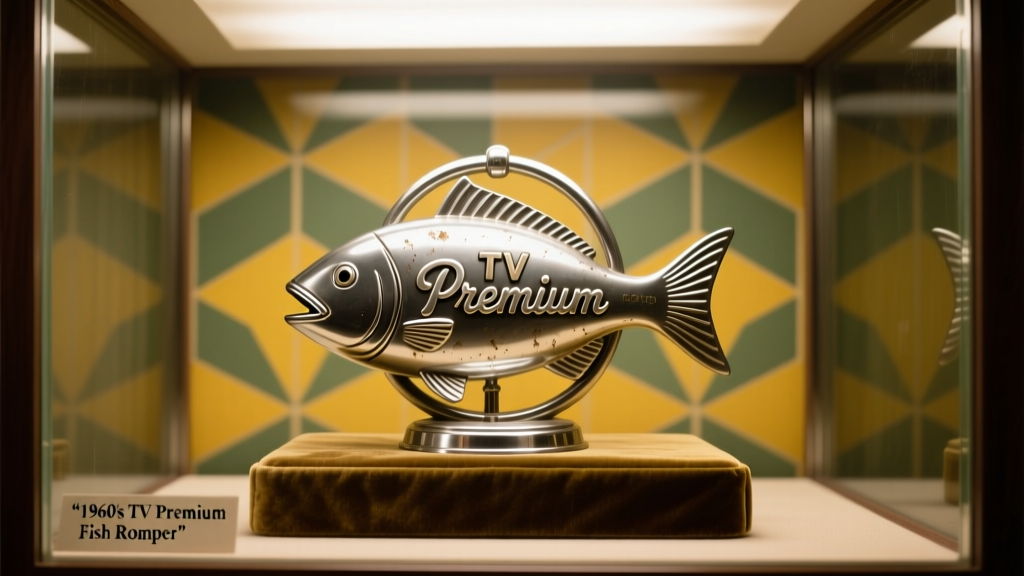
Toy Ring Romper Room Metal Silver Fish TV Premium: A Collector’s Deep Dive into the 1960s Educational Toy Phenomenon
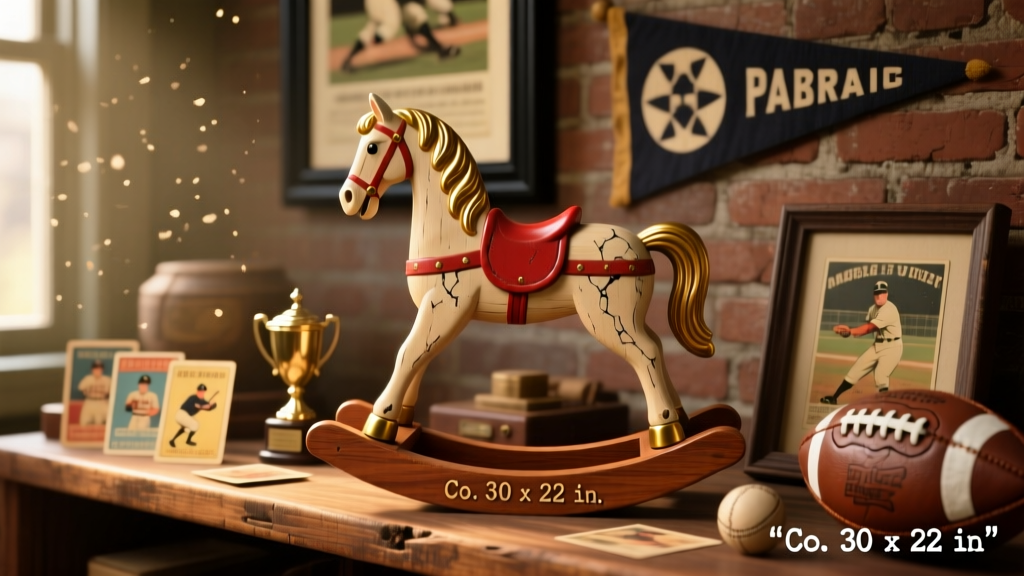
Toy Horse Rocking Rich Toys Co. 30 × 22 Inch Illustrated Antique Rocker: Authentication, Provenance, and Market Value Analysis
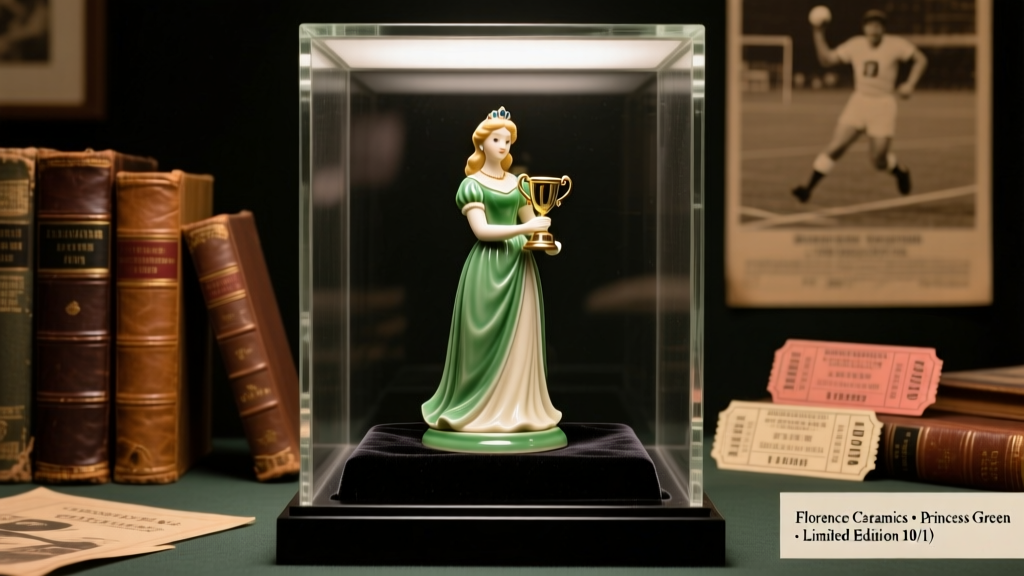
Florence Ceramics Princess Green Figurine (10 1/4") — Authentication, History, and Collector Insights
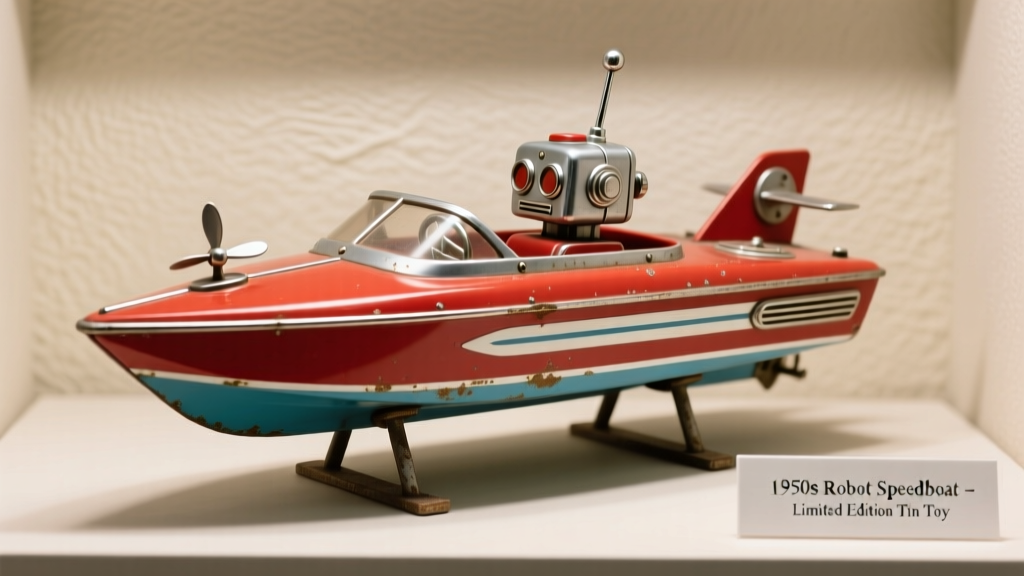
The Toy Robot Speedboat: A Tinplate Marvel from Mid-Century Japan — Red, Silver, White & Blue Edition
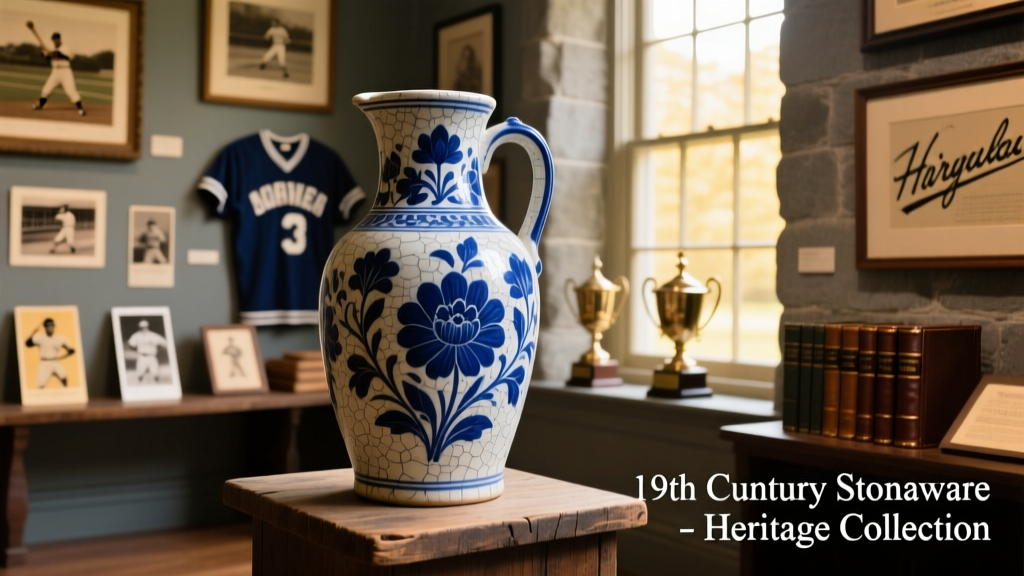
Stoneware Jug with Cobalt Blue Floral Design: A 19th-Century American Artifact at 16 Inches
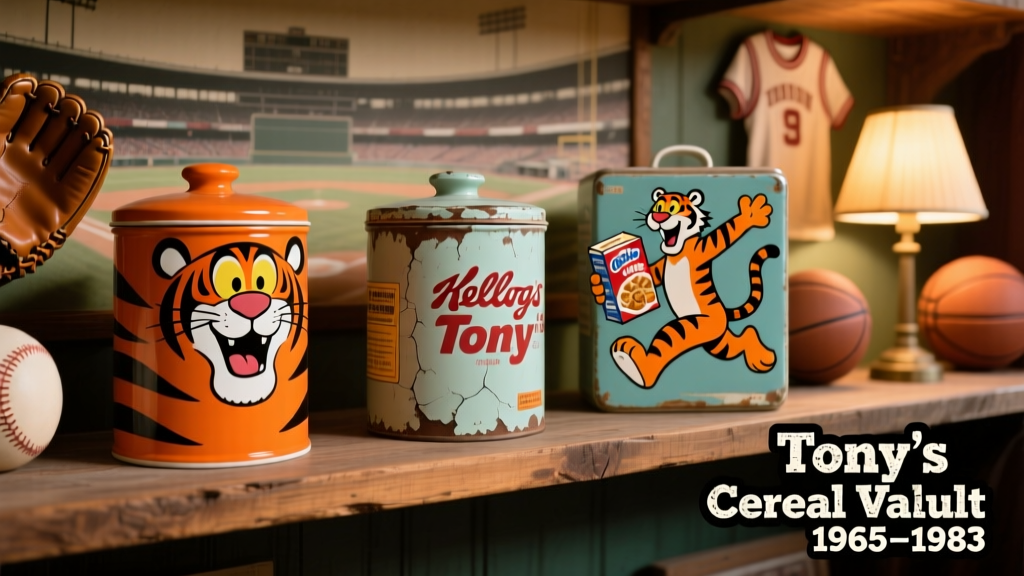
Kellogg's Tony the Tiger Cookie Jars: A Collector's Guide to Vintage Cereal Memorabilia
The Silver American Bowl: Paneled Neoclassical Everted Rim by Durgin, 1927, 13-Inch Diameter — A Collector’s Authentication Deep Dive
Edward Davis: The Underrated Defensive Anchor and His Enduring Memorabilia Legacy
Stanley No. 35 Type 11 Smooth Plane (1900): Authentication, Evolution, and Collector Significance