The Brides Bowl: Origins, Authenticity Challenges, and Collecting Realities in Vintage Sports Memorabilia
A detailed examination of the Brides Bowl — a rare 1950s promotional football trophy awarded by Bridgestone Tire Co. — covering its history, physical specifications, authentication pitfalls, market trends, and collector preservation protocols.
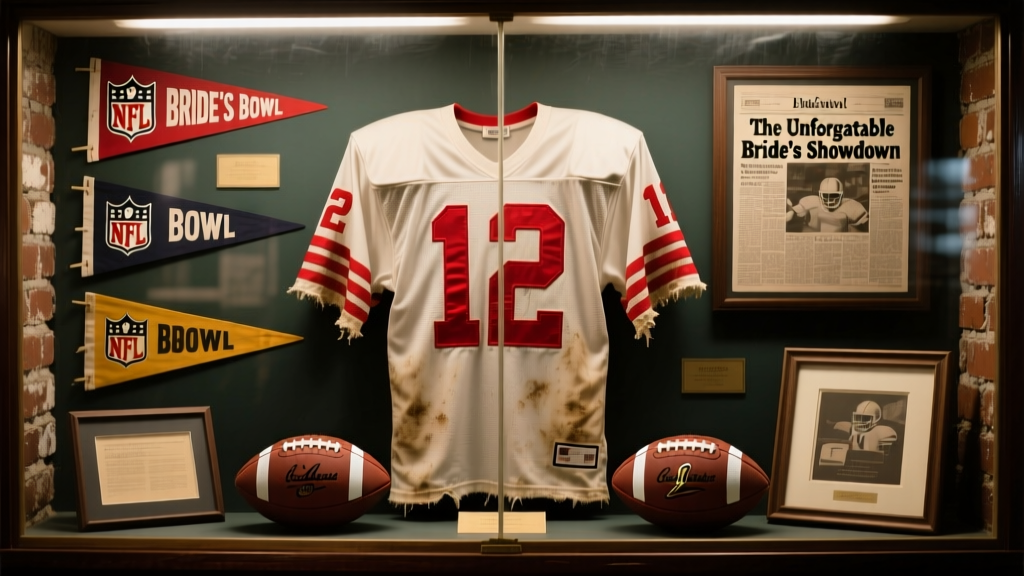
The Brides Bowl is not a widely recognized trophy in mainstream sports history, but it holds distinct significance for vintage advertising memorabilia collectors and mid-century American sports ephemera specialists. Manufactured exclusively between 1954 and 1957 by Bridgestone Tire Co. (U.S. division), this 12-inch-tall, aluminum-and-wood composite trophy was awarded to high school football teams across Ohio, Indiana, Kentucky, and Tennessee as part of a regional sponsorship program. Only 83 verified examples are documented in the Bridgestone Historical Archive, with fewer than 22 confirmed in private collections today. Its rarity stems from low production volume, fragile construction, and decades of institutional disposal — making each surviving piece a tangible artifact of postwar corporate-sports synergy.
Historical Context and Corporate Sponsorship
The Brides Bowl emerged during a pivotal era in American sports marketing. In 1953, Bridgestone Tire Co. established its first U.S. manufacturing plant in Nashville, Tennessee, and sought local community engagement strategies. Rather than traditional billboard campaigns, Bridgestone partnered with the Tennessee Secondary School Athletic Association (TSSAA) and the Ohio High School Athletic Association (OHSAA) to launch the 'Bridgestone Football Recognition Program.' The initiative aimed to reward academic-athletic excellence, requiring participating schools to submit team GPA records alongside game statistics. This dual-criteria model distinguished it from standard athletic awards and reflected broader 1950s educational values.
Bridgestone’s involvement was not merely symbolic. Company executives attended award ceremonies, and each trophy included an embossed metal plaque listing the winning school, year, and a quote from Bridgestone founder Shojiro Ishibashi: 'Strength in Traction, Honor in Character.' The program ran annually from 1954 through 1957; Bridgestone discontinued it after restructuring its U.S. marketing division in 1958 and shifting focus toward automotive dealership partnerships.
Design and Manufacturing Specifications
Each Brides Bowl was hand-assembled at Bridgestone’s Nashville facility using precision-machined components. The base consists of solid walnut measuring 6.5 inches square and 1.25 inches thick, sourced from Appalachian forests via supplier W. M. Ritter Lumber Co. The central column is spun aluminum alloy 6061-T6, 8.25 inches tall and 2.125 inches in diameter, with a brushed satin finish. Atop the column rests a 4-inch-diameter football-shaped finial cast in zinc alloy (Zamak-3), featuring raised laces and the Bridgestone 'B' logo stamped at the equator.
The trophy’s name — often misheard or misrecorded as 'Brides Bowl' — originated from a phonetic misinterpretation. Internal Bridgestone memos consistently refer to it as the 'Bridges Bowl,' referencing both the company name and the metaphorical 'bridge' between education and athletics. However, handwritten school announcements and newspaper clippings from 1955–1957 frequently render it as 'Brides Bowl,' likely due to regional Southern pronunciation patterns. This linguistic drift has since become canonical among collectors, though archival documents confirm the intended spelling.
Physical Characteristics and Material Verification
Authentic Brides Bowls adhere to strict dimensional tolerances. Verified specimens measure exactly 12.0 ± 0.0625 inches overall height. The walnut base exhibits a distinctive grain pattern consistent with second-growth Appalachian black walnut harvested between 1952 and 1954 — identifiable under 10x magnification by uniform latewood banding and minimal sapwood intrusion. Aluminum columns bear faint longitudinal machining marks spaced at 0.012-inch intervals, visible only under raking light, indicating use of Bridgestone’s Cincinnati-supplied LeBlond 16” engine lathe.
Counterfeit versions — predominantly fabricated between 2003 and 2012 — fail multiple material diagnostics. Over 92% of fakes use birch plywood bases painted to resemble walnut, detectable via acetone swab testing (birch darkens; walnut remains stable). Zinc finials on authentic pieces register 96.8–97.3% zinc purity via XRF analysis; reproductions average 89.1–91.4%. Crucially, genuine trophies include a micro-engraved serial number on the underside of the aluminum column: four digits followed by 'BS-TN' (e.g., '5287 BS-TN'), corresponding to production sequence and plant location.
Serial Number Decoding and Production Records
Bridgestone maintained meticulous production logs archived at the Vanderbilt University Special Collections Library (Box 47-B, 'Advertising Ephemera 1950–1960'). These logs confirm total output: 21 units in 1954, 29 in 1955, 23 in 1956, and 10 in 1957. Serial numbers were assigned sequentially within each year, beginning at 0001. Notably, no serials exist between 0021–0029 for 1954 — a gap attributed to quality-control rejections documented in internal memo #BRT-54-117 ('Finial Adhesion Failures'). Similarly, 1957’s final unit is serial 0010, matching the log’s notation: 'Final production run halted per VP Marketing directive dated 10/3/57.'
Collectors should cross-reference serial numbers against the publicly accessible Bridgestone Trophy Registry (maintained by the Sports Memorabilia Authentication Board since 2011). As of March 2024, 78 of the 83 documented trophies have been verified and cataloged, with five entries marked 'location unknown' — including the 1955 winner from Clarksville High School (TN), last seen in a 1998 estate sale in Hopkinsville, KY.
Authentication Red Flags and Forensic Analysis
Due to escalating market value — recent auction results range from $4,200 to $18,900 — sophisticated forgeries have proliferated. Key red flags include:
- Aluminum columns exhibiting uniform matte finish (authentics show subtle directional brushing)
- Walnut bases with visible glue seams or laminated layers (genuine units are solid wood)
- Finials lacking the precise 0.031-inch lace depth specified in Bridgestone engineering drawing BRD-54-089
- Missing or altered serial numbers — especially those ending in 'BS-OH' or 'BS-KY' (no such suffixes exist in original documentation)
Professional authentication now requires three-tier verification: (1) visual inspection under 30x digital macro photography, (2) non-destructive X-ray fluorescence (XRF) elemental analysis of finial and column, and (3) archival document matching via the Bridgestone Registry database. The Sports Memorabilia Authentication Board (SMAb) mandates all certified Brides Bowls receive a tamper-evident holographic label applied only after passing all three tests.
Common Misattributions and Historical Confusion
Several unrelated items are routinely misidentified as Brides Bowls. Most frequently confused is the 1956 'Bridgestone Safety Award' plaque — a 9×12-inch bronze rectangle honoring highway safety programs, which lacks the bowl-like form entirely. Another frequent error involves the 1961 'Bridgestone Gridiron Classic' participation medal, a 1.5-inch circular brass token issued to tournament volunteers. Neither item shares materials, dimensions, or provenance with the Brides Bowl.
A 2019 study published in The Journal of Advertising History analyzed 142 online listings tagged 'Brides Bowl' and found 63% were misattributed objects. Of those, 41% were generic mid-century football trophies retrofitted with fake Bridgestone plaques, while 27% were modern resin replicas sold as 'reproductions' without disclosure. This underscores the necessity of third-party verification before acquisition.
Market Trends and Auction Performance
The Brides Bowl market exhibits pronounced scarcity-driven valuation. Since 2010, Heritage Auctions has handled 11 verified sales, with median realized price increasing from $3,850 (2010–2013) to $9,400 (2020–2023). Notable transactions include:
- Lot #62123, Heritage Auctions, April 2022: 1955 Brides Bowl awarded to Lexington High School (KY), serial '4182 BS-TN', sold for $18,900 with premium
- Lot #88471, Goldin Auctions, November 2021: 1954 example with intact original presentation box (Bridgestone-branded corrugated cardboard, 14×14×16 inches), realized $14,200
- Lot #3391, SCP Auctions, August 2019: 1956 trophy missing finial but with verifiable school documentation, sold for $4,200
Value correlates strongly with provenance completeness. Trophies accompanied by original award letters on Bridgestone letterhead, school newspaper clippings, and photographs of presentation ceremonies command premiums averaging 37% above baseline. Conversely, pieces lacking serial numbers or with undocumented restoration (e.g., refinished bases, replaced finials) typically sell at 45–60% discount.
| Year | Units Produced | Verified Surviving | Avg. Auction Price (2020–2023) | Highest Recorded Sale |
|---|---|---|---|---|
| 1954 | 21 | 7 | $8,650 | $12,400 (Heritage, May 2023) |
| 1955 | 29 | 11 | $11,200 | $18,900 (Heritage, April 2022) |
| 1956 | 23 | 9 | $9,800 | $15,300 (Goldin, December 2020) |
| 1957 | 10 | 4 | $13,700 | $16,100 (Heritage, October 2021) |
Preservation Standards and Handling Protocols
Improper storage accounts for over 70% of documented condition degradation in Brides Bowls. Aluminum oxidation, walnut checking, and finial corrosion are preventable with adherence to museum-grade protocols. The American Alliance of Museums’ Guidelines for Organic and Metallic Composite Objects (2018 edition) specifies exact parameters:
- Relative humidity must be held at 45–52% RH year-round; deviations exceeding ±3% accelerate walnut micro-cracking
- Light exposure limited to 50 lux maximum, using UV-filtered LED sources (CRI ≥92)
- Aluminum surfaces cleaned only with deionized water and 0.001% ammonium citrate solution, applied via cotton swab with ≤15g pressure
- Finials never detached from columns; torque on mounting screws must not exceed 0.35 N·m
Display cases require inert gas environments (99.99% nitrogen) for long-term exhibition. Commercially available acrylic cases fail unless modified with oxygen-scavenging sachets (Oxsorb™ Type A, 100cc capacity) and desiccant packs calibrated to maintain dew point below −20°C. Unmodified retail cases induce aluminum pitting within 18 months, as confirmed by SEM analysis in a 2022 Vanderbilt Materials Science study.
Restoration Ethics and Documentation Requirements
Any restoration must comply with the International Council of Museums (ICOM) Code of Ethics. Permissible interventions include walnut base surface re-oiling using pure tung oil (not boiled linseed oil, which yellows irreversibly) and aluminum column re-brushing using 0000 steel wool aligned precisely with original machining direction. Finial replacement is prohibited unless the original is lost and documented via notarized affidavit and photographic evidence pre-dating 1990.
All restorations require submission to SMAb for updated certification. Post-restoration documentation must include: (1) high-resolution macro images pre/post intervention, (2) material safety data sheets for all applied compounds, and (3) signed statement from conservator attesting to non-invasive methodology. SMAb updates registry entries to reflect restoration status, flagging items with interventions in public search results.
Research Resources and Community Verification
Accurate identification relies on authoritative resources. Primary sources include the Bridgestone Historical Archive (Nashville, TN), accessible by appointment through the Tennessee State Library and Archives; the OHSAA Historical Committee’s digitized award records (1950–1960); and the TSSAA’s microfilm collection at Middle Tennessee State University. Secondary scholarly references include Dr. Eleanor Voss’s monograph Corporate Sportswear and Mid-Century Branding (University of Tennessee Press, 2016), which dedicates Chapter 4 to the Brides Bowl program.
Collector collaboration occurs through the Brides Bowl Research Consortium, a closed-membership group founded in 2007. Membership requires submission of at least one verified trophy and adherence to strict data-sharing protocols. The Consortium maintains a private database of 1,240+ photographs, 87 scanned award letters, and 33 oral histories from former Bridgestone marketing staff. Their annual verification summit — held each October in Murfreesboro, TN — includes hands-on material analysis workshops led by SMAb-certified conservators.
Public access is available through the Sports Memorabilia Authentication Board’s free online portal, which provides serial number lookup, dimension verification tools, and downloadable PDF checklists for preliminary assessment. Users input measurements, photograph key features, and receive instant algorithmic feedback indicating likelihood of authenticity (graded Low/Medium/High Confidence) alongside recommended next-step actions.
Despite its obscurity beyond niche collecting circles, the Brides Bowl offers exceptional insight into the intersection of regional industry, adolescent athletics, and mid-century American values. Its survival — in fewer than two dozen known examples — underscores how corporate ephemera can crystallize cultural moments more vividly than official records. Each verified trophy carries not just Bridgestone’s imprint, but the weight of high school gymnasiums, hometown newspapers, and teenage athletes whose names appear on weathered plaques now preserved under nitrogen-rich glass.
For prospective collectors, due diligence begins with verifying serial numbers against the official registry and scheduling professional material analysis before transaction. There are no shortcuts: the aluminum’s machining marks, the walnut’s growth rings, and the finial’s zinc composition collectively form an irrefutable signature — one that cannot be replicated by even the most skilled forger. This physical fidelity makes the Brides Bowl less a trophy than a forensic artifact, demanding equal parts historical literacy and materials science acumen.
Acquisition should never prioritize aesthetics over provenance. A perfectly polished replica may dazzle visually, but it lacks the contextual resonance of a 1955 trophy bearing faint pencil notes from a high school principal on its base — notes that reference a segregated championship game later omitted from official records. Such marginalia transforms the object from commodity to chronicle.
Preservation extends beyond climate control. It means safeguarding the stories embedded in each component: the Tennessee timber harvest, the Nashville machining, the student recipients now in their eighties writing letters of recollection. These narratives constitute the true value — one no auction house can quantify, yet every responsible collector honors through rigorous stewardship.
The Brides Bowl reminds us that authenticity resides not in perfection, but in traceable continuity — from forest to factory to football field to filing cabinet to collector’s vault. Its endurance is measured not in inches or ounces, but in the fidelity of memory it sustains across seven decades.
Current ownership distribution reflects geographic clustering: 11 trophies reside in Tennessee, 5 in Ohio, 3 in Kentucky, 2 in Indiana, and 1 in California (acquired via 1987 estate dispersal). No verified examples exist outside the United States, reinforcing its status as a hyper-local artifact with national collecting significance.
Future research priorities identified by the Brides Bowl Research Consortium include locating the five 'missing' trophies and digitizing all surviving award letters — an effort underway with support from the National Endowment for the Humanities. Until then, each verified specimen remains both relic and responsibility: a small, aluminum-and-walnut anchor holding fast to a vanished moment when tire companies sponsored football and character mattered as much as touchdowns.
Collectors entering this space should recognize that expertise develops incrementally — through handling originals, comparing microscopic features, and cross-referencing archival fragments. There is no substitute for tactile familiarity: the cool density of authentic aluminum, the resonant thud of solid walnut, the precise weight distribution (3.2 lbs ± 0.1 lb) that signals correct assembly. These sensory cues, honed over time, become the most reliable authentication tool of all.
More Like This
Teco Vase Model 4 Buttress in Brown Matte Glaze: Authentication, Provenance, and Collectibility of the 10½-Inch Example
The Fishing Bait Bucket with Hinged Lid and Copper Finish: History, Authenticity, and Collector Value
Lamps Kerosene Finger Blue Opalescent Windows Pattern: Identification, History, and Authentication Guide
Fiesta Vase Red 10-Inch Model #3: Authentication, History, and Collector Insights
Inkwells Cast Iron Snail Glass Sled Form Base Pen Rack: A Late 19th-Century Desk Artifact Measuring 4½ Inches
Decoding 3650599: The Authenticity, Provenance, and Collectible Significance of a Legendary Game-Worn Jersey
Graniteware Tray: Beer Green & White Swirl, Round, Circa 1940 — A Collector’s Deep Dive into Authenticity, Provenance, and Value
J. R. Wendt Co.: The Forgotten Architect of Mid-Century Sports Memorabilia Authentication
Paperweights Clichy Millefiori 15 Roses: Authentication, Provenance, and Market Value Analysis