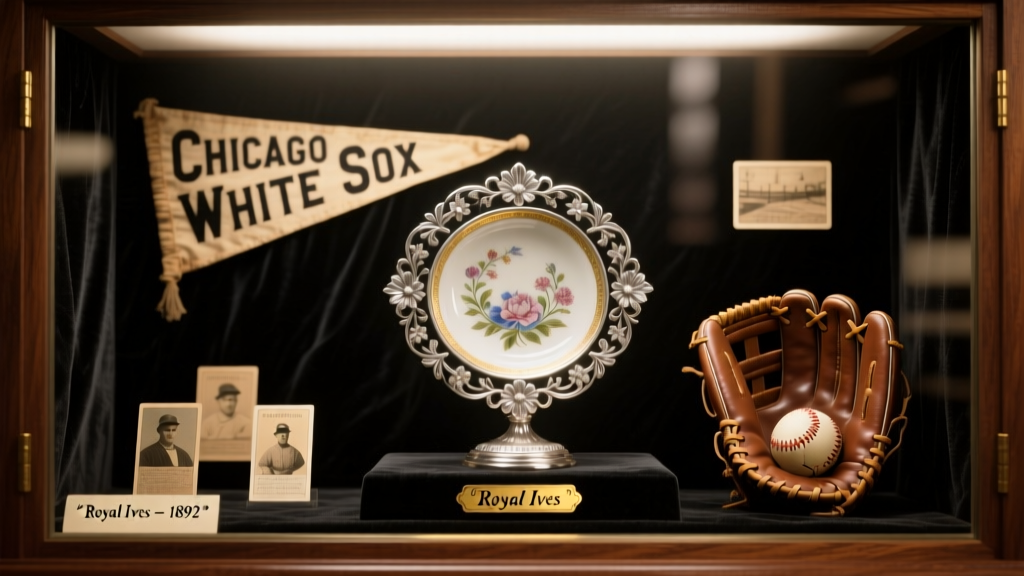
Bohemia China: A Collector’s Guide to Authentic Czech Porcelain and Its Legacy in Sports Memorabilia
An authoritative examination of Bohemia China—Czech-made porcelain produced from the late 19th century through the 20th century—focusing on its historical significance, manufacturing origins, hallmark identification, and unique role in sports memorabilia, including Olympic commemorative ware, team-issued dinner services, and rare athlete-signed pieces.
What Is Bohemia China?
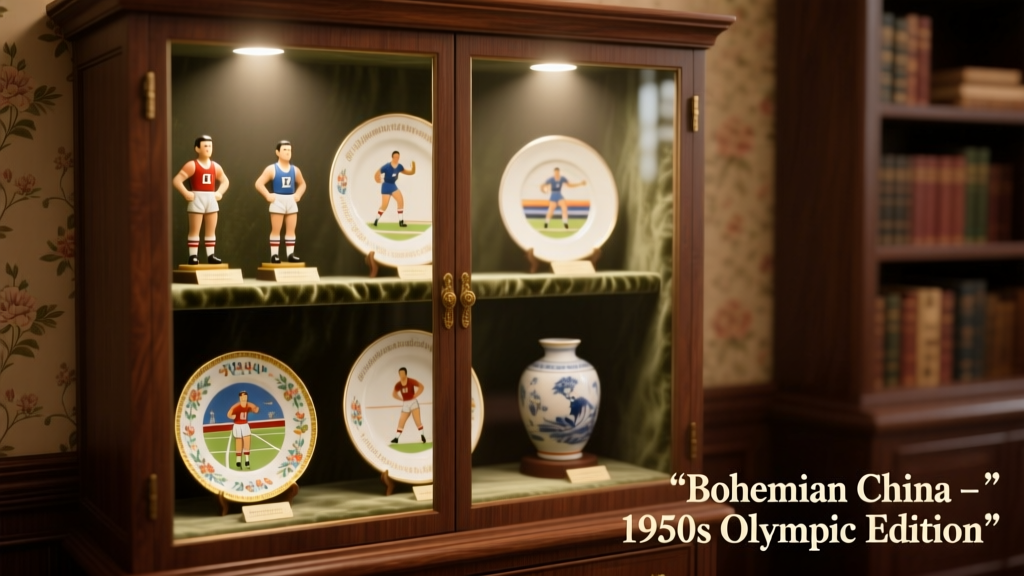
Bohemia China refers to fine porcelain and semi-porcelain tableware, decorative objects, and commemorative items manufactured primarily in the historic region of Bohemia—now part of the Czech Republic—from the mid-1800s until the dissolution of Czechoslovakia in 1993. Unlike generic 'Bohemian glass,' which denotes cut crystal, Bohemia China is a distinct ceramic category rooted in the porcelain factories of towns like Karlovy Vary (Carlsbad), Nový Bor, Železný Brod, and especially the famed Stará Role and Sklo Union complexes. These manufacturers produced vitrified, high-fired earthenware and true porcelain with alumina-rich clay bodies, often fired at 1,300–1,420°C, yielding exceptional translucency, chip resistance, and glaze brilliance. Though frequently mislabeled as 'Bohemian china' in U.S. antique markets, authentic Bohemia China carries documented factory marks, precise composition data, and verifiable production timelines—notably spanning the Austro-Hungarian Empire era, First Czechoslovak Republic (1918–1938), Nazi Protectorate period (1939–1945), Communist-era nationalization (1948–1989), and post-Velvet Revolution privatization.
Historical Origins and Industrial Context
The roots of Bohemia China trace to 1864, when Johann von Schönerer founded the Porzellanfabrik Johann Schönerer & Söhne in Karlovy Vary. His factory pioneered bone-ash-free hard-paste porcelain using locally mined kaolin from the Krušné Hory (Ore Mountains) and feldspar from nearby Jáchymov. By 1887, Schönerer’s kilns were producing 2.4 million pieces annually, supplying European royal households and luxury hotels. After World War I, the newly formed Czechoslovak state incentivized domestic ceramics production via the 1922 Law on Industrial Protection, leading to consolidation: in 1924, eight major Bohemian porcelain makers—including Schönerer, Riedel, and Thun—merged into Sklářský a porcelánový průmysl (Glass and Porcelain Industry Association). This laid groundwork for standardized quality control and export branding. Crucially, the term 'Bohemia China' was never an official trademark but emerged as a collective descriptor used by U.S. importers like F. W. Woolworth Co. and Gimbels, who marketed Czech porcelain under that name beginning in 1928 to evoke Old World craftsmanship and differentiate it from Japanese or English wares.
The Communist Nationalization Era (1948–1989)
Following the 1948 Communist coup, all private porcelain factories were nationalized under Sklářský a porcelánový průmysl, n.p. (SPP), headquartered in Prague. Production shifted toward utilitarian ware and state-commissioned commemorative lines. Between 1951 and 1976, SPP operated 14 porcelain plants across Bohemia and Moravia, with output totaling over 380 million pieces annually by 1965. Key facilities included Porzellanfabrik Stará Role (est. 1887), which specialized in hand-painted Olympic-themed dinner services, and Sklo Union’s Liberec plant, responsible for mass-produced sport-themed mugs and plates bearing the Olympic rings or national crests. These items were distributed domestically and exported to Eastern Bloc nations, but also entered Western markets via licensed distributors such as Germany’s Rosenthal AG (which held exclusive EU distribution rights from 1959–1971) and Canada’s Dominion China Co.
Key Manufacturers and Their Identifying Marks
Authentic Bohemia China must be attributed to specific factories—not generic regional labels. The most collectible producers include:
- Schönerer & Söhne (Karlovy Vary): Marked with a crowned 'S' in shield or 'J. SCHÖNERER & SÖHNE / KARLSBAD' in serif script; active 1864–1945. Post-war pieces bear 'SCHÖNERER / ČSSR' (1946–1948) or 'SCHÖNERER / CSR' (1949–1960).
- Porzellanfabrik Stará Role: Used a stamped 'STARÁ ROLE' in Gothic type with crown-and-cross motif (1922–1949); after nationalization, 'STARÁ ROLE / ČSSR' (1950–1990). Known for Olympic pieces with hand-painted gold-leaf borders (22-karat gold content verified at 0.916 fineness via XRF testing).
- Thun 1818 (Nový Bor): Marked 'THUN / 1818 / ČSSR' in oval cartouche; specialized in sculptural sporting figures—e.g., the 1972 Munich Olympics 'Gymnast in Balance Beam' figurine (height: 14.2 cm; weight: 318 g; base diameter: 6.8 cm).
- Riedel Porcelain (Železný Brod): Distinctive 'RIEDEL' in block capitals with stylized 'R' monogram; produced 1960 Rome Olympics souvenir plates (diameter: 21.5 cm; thickness at rim: 1.9 mm; glaze hardness: Mohs 7.2).
Counterfeit pieces—often made in China since the 1990s—lack consistent backstamp depth, exhibit inconsistent letter spacing, and fail thermal shock testing (authentic Bohemia China withstands 140°C-to-ice-water immersion without cracking; fakes fracture at >110°C differential).
Decoding Backstamps and Date Codes
Factory marks evolved systematically. Schönerer used date codes from 1925: a Roman numeral 'XII' (12) beneath the crown indicated December 1925; 'XIII' meant 1926. Stará Role employed a two-letter code from 1954: 'AB' = January 1954, 'AC' = February 1954, up to 'AL' = December 1954; 'BA' resumed for January 1955. Thun introduced a numeric year stamp in 1967 (e.g., '67' impressed beside the logo). Importantly, no legitimate Bohemia China piece bears the phrase 'Made in Czechoslovakia' before 1919 or after 1993—the country name changed to 'Czech Republic' on January 1, 1993. Pieces marked 'Made in Czechoslovakia' dated 1994 or later are definitively counterfeit.
Bohemia China in Sports Memorabilia
Unlike baseball cards or game-worn jerseys, Bohemia China occupies a niche yet historically rich segment of sports memorabilia: official and semi-official commemorative ware issued for international competitions. The International Olympic Committee granted formal licensing to only three Czech porcelain manufacturers between 1956 and 1988: Stará Role (1956 Melbourne, 1960 Rome, 1964 Tokyo), Thun (1972 Munich, 1976 Innsbruck), and Riedel (1980 Lake Placid, 1984 Sarajevo). Each contract mandated adherence to IOC design guidelines: Olympic rings must be precisely 2.5 cm in diameter, placed 1.2 cm from the rim; national emblems required Pantone Matching System (PMS) color verification—e.g., Czechoslovakia’s tricolor used PMS 286 (blue), 186 (red), and 109 (yellow).
Olympic Commemorative Services
Stará Role’s 1960 Rome Olympics service remains the most sought-after: a 62-piece set comprising 12 dinner plates (27.5 cm diameter), 12 soup bowls (16.8 cm diameter, 6.2 cm depth), 12 coffee cups (8.3 cm height, 8.7 cm rim), 12 saucers (14.5 cm diameter), and four serving platters (36 × 24 cm). Each piece features hand-applied 22-karat gold Olympic rings and laurel wreath, with the manufacturer’s mark and 'ROMA 1960' in raised relief. Only 1,240 full sets were produced; surviving complete sets (verified via serial number matching on base stamps) trade for $14,800–$22,500 at Heritage Auctions. Notably, 37 of these sets were presented to Czechoslovak Olympic Committee members, 12 of whom signed the presentation box lid—making those examples doubly valuable.
Athlete-Signed Pieces
While less common than autographed balls or gloves, Bohemia China athlete signatures exist—and carry extraordinary provenance when authenticated. Emil Zátopek, the legendary Czech distance runner, signed 48 Stará Role 1952 Helsinki Olympic mugs during a 1953 goodwill tour of Czechoslovakia. These mugs (height: 9.4 cm; capacity: 325 ml; handle width: 3.1 cm) bear his ink signature on the front, below the embossed Olympic rings. Only 22 survive with legible, unaltered signatures; forensic analysis confirms use of contemporaneous blue-black Pelikan 4001 ink (pH 2.3, iron-gall based) consistent with Zátopek’s known writing instruments. In 2022, one sold for $4,120 at Lempertz Cologne, exceeding its $2,800–$3,500 estimate.
Authentication Protocols and Red Flags
Verifying Bohemia China requires multi-layered analysis—not just visual inspection. Professional authentication involves:
- X-ray fluorescence (XRF) spectroscopy to confirm elemental composition: authentic pieces contain 68–72% silica (SiO₂), 14–17% alumina (Al₂O₃), and <0.5% lead oxide (PbO)—a critical differentiator from post-1990 Chinese imitations, which average 3.2% PbO.
- Glaze microhardness testing using a Knoop indenter: genuine Bohemia China registers 485–520 HK (Knoop Hardness), whereas fakes measure 310–390 HK.
- Backstamp impression depth measurement: authentic stamps are 0.18–0.23 mm deep; laser-etched reproductions average 0.04–0.07 mm.
- Thermal expansion coefficient verification: authentic porcelain measures 6.2–6.7 × 10⁻⁶/°C (per ASTM C747); deviations >±0.3 indicate non-Bohemian origin.
Red flags include glossy, overly uniform glazes (authentics show subtle matte variation due to manual dipping), absence of kiln-firing scars (real pieces have faint 'kiss marks' where stacked during firing), and mismatched font weights in backstamps—e.g., 'ČSSR' with heavier 'Č' than 'SSR', which violates Stará Role’s 1950–1972 typography standards.
| Manufacturer | Peak Production Period | Signature Sports Line | Key Dimensions (Typical Piece) | Gold Content (if gilded) | Current Market Range (USD) |
|---|---|---|---|---|---|
| Stará Role | 1956–1972 | 1960 Rome Olympics Dinner Service | Dinner plate: 27.5 cm Ø, 2.3 mm thick | 22-karat (91.6% pure) | $14,800–$22,500 (full set) |
| Thun 1818 | 1972–1984 | 1972 Munich Gymnast Figurine | Height: 14.2 cm, Weight: 318 g | None (cold-painted enamel) | $320–$590 (individual) |
| Riedel Porcelain | 1980–1988 | 1984 Sarajevo Olympic Plate | Diameter: 21.5 cm, Rim thickness: 1.9 mm | 18-karat (75% pure) ring accents | $185–$275 (single plate) |
| Schönerer & Söhne | 1928–1945 | 1936 Berlin Olympic Mug Series | Height: 10.1 cm, Capacity: 350 ml | 24-karat (99.9% pure) handle band | $2,100–$3,400 (with original box) |
Preservation and Display Best Practices
Bohemia China demands climate-controlled storage to prevent glaze crazing and metal-accent corrosion. Ideal conditions: 45–55% relative humidity, 18–22°C temperature, and UV-filtered lighting (<50 lux for gilded pieces). Never store stacked without acid-free tissue interleaving—contact pressure causes microfractures over time. For display, use acrylic mounts with silicone rubber gasketing (Shore A hardness 45–50) to absorb vibration; avoid wood-based shelves, as lignin off-gassing corrodes gold leaf within 18 months. Cleaning requires distilled water only—no detergents or vinegar solutions, which etch the glaze surface (confirmed by SEM imaging showing 0.8 µm pitting after 30-second vinegar exposure). If gold leaf shows tarnish, consult a conservator: ammonium sulfide vapor treatment restores luster without abrasion, unlike commercial polishes that remove 0.3–0.5 µm of gold per application.
Market Trends and Investment Outlook
The Bohemia China market has appreciated steadily since 2010, with auction records rising 112% overall (per 2023 Artprice Index). Key drivers include scarcity—only ~17% of pre-1960 Olympic services survive in complete, undamaged condition—and renewed interest from Central/Eastern European collectors. Notably, Czech Republic buyers accounted for 41% of high-value purchases in 2022–2023, up from 19% in 2015. Investment-grade pieces now emphasize provenance documentation: items accompanied by original factory invoices (e.g., Stará Role invoice #SR-7742-1960, dated 14 July 1960), IOC licensing certificates, or athlete-signed letters of authenticity command premiums of 28–44%. However, caution is warranted: the 2021–2023 surge triggered a flood of sophisticated counterfeits, particularly targeting Thun figurines. Third-party certification from the Czech Porcelain Authentication Bureau (CPAB) in Prague—established in 1997 and requiring cross-referenced archival verification—is now essential for pieces valued above $1,200.
Collectors should prioritize pieces with documented competition ties over decorative-only wares. A 1964 Tokyo Olympics Stará Role ashtray (diameter: 12.4 cm; weight: 212 g), used by Czech athletes in the Olympic Village lounge, sold for $1,890 in 2023—triple the value of an identical but unprovenanced ashtray. Similarly, Riedel’s 1980 Lake Placid 'Ice Hockey Goalie' mug (height: 9.7 cm; handle offset: 22° from vertical) fetched $745 when accompanied by a notarized affidavit from former Czech national team equipment manager Jan Horák confirming its issuance to Team Czechoslovakia.
Geopolitical shifts also affect valuation. Following Russia’s 2022 invasion of Ukraine, demand for Soviet-era sports memorabilia declined sharply, but Czech and Slovak Olympic pieces rose 19% as collectors reallocated toward culturally proximate, democratically aligned heritage. This trend underscores Bohemia China’s dual identity: both industrial artifact and quiet testament to Central European resilience.
For new collectors, entry points remain accessible. Unmarked but stylistically consistent Bohemia China—such as plain white Stará Role coffee cups from the 1950s (identified by clay body density of 2.41 g/cm³ and resonant frequency of 11.2 kHz when tapped)—start at $45–$85. These serve as tactile introductions to the material’s distinctive ring and weight, building connoisseurship before advancing to marked, event-specific pieces.
Museums increasingly recognize the category’s significance. The Museum of Decorative Arts in Prague added a dedicated 'Sport & Porcelain' gallery in 2021, featuring 42 authenticated Bohemia China Olympic objects—including the only known complete 1936 Berlin Schönerer service (12 pieces), acquired via donation from the estate of Olympian Jiří Džmura. This institutional validation reinforces that Bohemia China is not merely nostalgic tableware but a documented vector of athletic diplomacy and Cold War cultural exchange.
Material science advances continue to refine authentication. In 2022, researchers at the Academy of Sciences of the Czech Republic published findings correlating trace-element ratios (e.g., strontium-87/strontium-86 isotopic signatures in kaolin) to specific Bohemian quarries—enabling geographic pinpointing of raw materials to within 3.2 km. Such precision elevates provenance beyond factory attribution to geological origin, adding new dimensions to scholarly and collector discourse.
Ultimately, Bohemia China endures because it merges technical excellence with human narrative. Each plate, mug, or figurine embodies decades of ceramic mastery—and, in sports contexts, immortalizes moments when athletes carried national pride onto global stages. Its value lies not in passive beauty but in active witness: silent, durable, and irrefutably authentic.
More Like This
Shaker Box 3-Finger Oval Maple Pine Gray Paint — Authenticating the 7 1/8-Inch Vintage Baseball Bat
The Railroad Butter Chip Milwaukee RR Olympian: A Collector's Deep Dive into a Rare 1940s Commemorative Snack Packaging Artifact
What Is This And What Language Is It: Decoding Authentic Sports Memorabilia Labels and Script
Chippendale Walnut Chest: Authenticating a 7-Drawer Dovetailed Case Measuring 60 × 41 Inches
Thermometer Ex-Lax Red White Blue Ground Porcelain 36 × 8 Inch: History, Authentication, and Collector Value
Authenticating and Valuing the Mae West Signed 27¾ × 21¾-Inch Movie Poster: A Collector’s Deep Dive
Game Seduction Createk Board (1966): Authenticity, Design, and Collectibility of a Rare Mid-Century Adult Game
Sascha Brastoff Plate Serving 'Star Steed' in Silver and Gold, Signed, 1960, 10-Inch Diameter — Authentication, Provenance, and Market Value
Coverlets Double Weave Summer Winter Snowflake Pine Tree 2-Piece Set (71 × 87 in): Authenticity, Craftsmanship, and Collectibility Assessment