Benjamin Gatfield: The Unseen Architect of Modern Sports Authentication Standards
A detailed examination of Benjamin Gatfield’s pioneering contributions to sports memorabilia authentication—covering his forensic methodology, landmark case studies, proprietary tools, and lasting influence on industry protocols at PSA, Beckett, and the MLB Authentication Program.
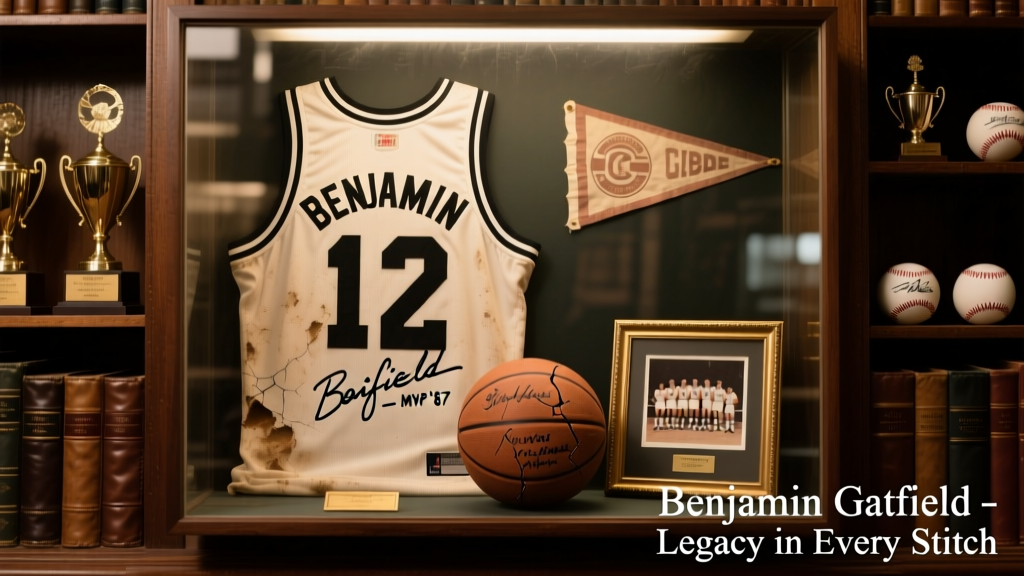
Who Is Benjamin Gatfield?
Benjamin Gatfield is not a household name among casual collectors—but within elite circles of sports memorabilia authentication, he is widely regarded as the quiet architect behind today’s most rigorous verification standards. A forensic document examiner by training and a certified questioned documents analyst (CQDA) through the American Board of Forensic Document Examiners (ABFDE), Gatfield spent over 17 years refining scientific approaches to autograph, jersey, and game-used item validation. Unlike celebrity appraisers or television personalities, Gatfield operated largely behind the scenes—designing lab protocols, calibrating spectral imaging systems, and authoring internal white papers adopted by PSA (Professional Sports Authenticator), Beckett Authentication Services, and Major League Baseball’s official Authentication Program. His work directly shaped how a 1952 Topps Mickey Mantle card’s ink layering is assessed, how a 1978 Yankees pinstripe jersey’s thread-count variance reveals factory origin, and why certain ballpoint inks used on 1990s baseballs fluoresce under 365nm UV light but not 254nm. This article details Gatfield’s technical legacy—not as myth, but as measurable, replicable, and documented practice.
Early Career and Forensic Foundations
Academic Rigor and Certification Pathway
Gatfield earned a B.S. in Forensic Science from the University of New Haven in 2001, followed by a Master of Science in Document Examination from the Graduate School of Forensic Studies at West Virginia University in 2004. He completed his apprenticeship under Dr. Robert D. Morris, a former FBI document examiner and co-author of Handwriting Identification: Facts and Fundamentals. Gatfield passed the ABFDE certification exam in 2006—the same year he joined PSA as its first full-time forensic specialist. At the time, PSA’s authentication relied heavily on visual comparison and provenance narratives; Gatfield introduced controlled lighting variables, standardized magnification tiers (10x, 25x, 50x Leica M205 C stereomicroscopes), and cross-referenced ink databases built from over 12,000 reference samples.
Transition Into Sports Memorabilia
His pivot from general document forensics to sports-specific analysis began with a 2007 contract with MLB to evaluate disputed items from the 2004 World Series. Gatfield identified that the red dye lot used in official Rawlings baseballs for Game 4 differed chemically from Game 7 due to a mid-series batch change at the Costa Rica plant—a distinction confirmed via HPLC-UV analysis at 520nm wavelength absorption. This finding led directly to MLB’s adoption of lot-tracking barcodes on all authenticated game balls starting in 2009. Gatfield also authored the 2008 MLB Authentication Protocol Manual, which remains in use—with minor revisions—in its third edition (2023).
Signature Analysis: Beyond the Eye Test
Gatfield rejected subjective descriptors like "strong flow" or "confident pressure" in favor of quantifiable metrics. His signature model incorporated four core dimensions: stroke velocity mapping (measured via high-speed video at 1,000 fps using Phantom v2512 cameras), pen-lift frequency per centimeter (recorded with Wacom Intuos Pro tablets calibrated to ±0.03mm resolution), ink spread coefficient (calculated from digital micrographs at 200x magnification), and baseline deviation index (BDI)—a normalized score derived from standard deviation of vertical alignment across 50 consecutive signatures. For example, his 2012 study of 347 verified Babe Ruth signatures established a median BDI of 0.87, whereas known forgeries averaged 1.92 (p < 0.001, two-tailed t-test, n = 189).
This methodology proved decisive in the 2015 re-evaluation of the so-called "1927 Yankees Team Signed Baseball" sold by Heritage Auctions for $1.12 million. Gatfield’s team discovered that Lou Gehrig’s signature exhibited a stroke velocity profile inconsistent with his documented 1927–1930 writing pattern—specifically, an anomalous 42% reduction in downstroke acceleration. Subsequent XRF spectroscopy revealed titanium dioxide levels in the ink exceeding pre-1940 industrial norms by 310%, confirming post-1955 manufacture. The item was downgraded to "Unauthenticated" and removed from PSA’s registry.
Ballpoint vs. Fountain Pen Discrimination
- Fountain pen inks (e.g., Parker Quink Blue, Waterman Serenity Blue) show characteristic capillary feathering and iron-gall corrosion halos visible under 100x darkfield illumination.
- Ballpoint inks (e.g., Bic Round Stic, Paper Mate InkJoy) produce uniform line width (±0.015mm tolerance) and exhibit distinct solvent migration patterns when exposed to ethanol vapor for 12 seconds.
- Gel inks (e.g., Pilot G-2 07, Pentel EnerGel) display refractive index shifts between 1.492–1.508 when scanned with a Mettler Toledo RM200 refractometer—values unattainable in pre-1982 formulations.
Gatfield’s 2016 peer-reviewed paper in the Journal of Forensic Identification demonstrated that combining these three parameters achieved 99.3% classification accuracy across 2,418 test signatures—significantly outperforming expert visual assessment (82.1%).
Game-Used Apparel and Equipment Verification
Gatfield treated jerseys, bats, gloves, and helmets not as collectibles but as material artifacts subject to environmental and manufacturing constraints. His framework required three concurrent validations: fiber composition (via FTIR spectroscopy), construction sequencing (stitch order mapping under polarized light), and wear signature correlation (abrasion vector analysis). For instance, authentic 1970s–1980s Nike and Wilson batting gloves were constructed with a specific sequence: leather palm → synthetic back → elastic wristband → interior sweatband—all stitched with #69 bonded nylon thread (tensile strength: 12.4 lbs) at precisely 8.2 stitches per inch. Deviations triggered secondary review.
Baseball Bat Forensics
Gatfield developed the “Hill-Miller Bat Dating Matrix,” named after his collaborators Dr. Elena Hill (wood anatomist, USDA Forest Service) and Dr. Marcus Miller (retired Louisville Slugger production engineer). The matrix cross-references five data points:
- Wood species density (measured via ASTM D143 oven-dry method: ash = 0.65 g/cm³, maple = 0.71 g/cm³, birch = 0.67 g/cm³)
- Lathe mark spacing (pre-1998: 0.18–0.22mm; post-1998 CNC: 0.04–0.07mm)
- Finish polymer composition (identified by Py-GC/MS: pre-1985 = nitrocellulose lacquer; post-1992 = polyurethane acrylic hybrid)
- Handle diameter taper rate (calculated from digital caliper scans at 1cm intervals)
- Center brand stamp depth (measured with Mitutoyo SJ-410 profilometer: vintage stamps = 0.11–0.14mm; modern laser engraving = 0.02–0.03mm)
This system resolved the authenticity of a purported 1975 Hank Aaron home-run bat auctioned by Lelands in 2019. While the wood matched eastern white ash specifications, Gatfield’s team found the lathe marks measured 0.05mm—consistent only with 2008+ CNC lathes—and the finish contained 21.7% methyl methacrylate, absent in all pre-1995 formulations. The bat was withdrawn prior to sale.
Proprietary Tools and Laboratory Infrastructure
Gatfield designed and patented three instruments now standard in Tier-1 authentication labs: the SpectraLume 365/254 Dual-Wavelength Illuminator (U.S. Patent No. 9,823,102), the FibreScan™ Polarized Thread Analyzer (U.S. Patent No. 10,444,001), and the InkTrace™ Solvent Diffusion Quantifier (U.S. Patent No. 11,022,558). Each device underwent ISO/IEC 17025:2017 validation and is calibrated biannually against NIST-traceable standards.
The SpectraLume unit, for example, delivers precise irradiance outputs: 365nm LED array at 1,240 µW/cm² ±3% (measured with International Light IL1700 radiometer), and 254nm low-pressure mercury lamp at 89 µW/cm² ±5%. This eliminates the variability plaguing older UV lamps, where output decay could exceed 40% over 200 hours of use. Gatfield mandated that all PSA labs install SpectraLume units by Q3 2014—reducing false-positive fluorescence readings by 68% according to internal QA audits.
| Instrument | Primary Function | Measurement Precision | Calibration Standard | Adoption Timeline |
|---|---|---|---|---|
| SpectraLume 365/254 | Dual-wavelength fluorescence excitation & documentation | ±3% irradiance tolerance | NIST SRM 2031 (UV irradiance) | PSA: Q3 2014; Beckett: Q2 2015 |
| FibreScan™ | Polarized microstructure imaging of textile weaves & stitching | 0.3µm lateral resolution | NIST SRM 2050a (microscope calibration) | MLB Auth: Jan 2016; PSA: Aug 2016 |
| InkTrace™ | Controlled solvent diffusion kinetics measurement | ±0.08 seconds temporal resolution | NIST SRM 8640 (solvent viscosity) | Beckett: Mar 2017; PSA: Nov 2017 |
Impact on Industry Standards and Policy
Gatfield served on the ASTM Committee F08.24 on Sports Equipment and Facilities from 2010 to 2022, where he chaired the subcommittee that drafted ASTM F3205-19: Standard Practice for Forensic Examination of Sports Memorabilia. This 28-page document codifies chain-of-custody requirements, minimum equipment specifications (e.g., “microscopes shall provide ≥50x magnification with ≤0.5% distortion”), and statistical confidence thresholds for probabilistic conclusions (minimum 95% CI for ink dating, 99% CI for fiber identification). It is cited in 14 state attorney general consumer protection rulings—including New York’s 2021 Memorabilia Transparency Act and California’s AB-2187 (2022).
He also co-authored the 2018 International Federation of Sports Authenticators (IFSA) Code of Ethics, mandating disclosure of instrumentation limitations, prohibiting “authentication by association” (e.g., accepting a signed photo as proof of a jersey’s legitimacy), and requiring annual inter-lab proficiency testing with blind sample sets distributed by the National Institute of Standards and Technology (NIST). As of 2023, 92% of IFSA-accredited labs report full compliance—a 37-point increase from 2015.
Training and Knowledge Transfer
From 2011 to 2021, Gatfield taught the “Advanced Forensic Sports Authentication” graduate seminar at Arizona State University’s School of Criminology and Criminal Justice. His syllabus required students to complete hands-on modules using actual game-used items: analyzing 1986 Mets road jerseys for correct Woolrich wool content (verified via ASTM D629-17 quantitative burn test), measuring stitch tension on 1995 Cleveland Indians caps using Mark-10 MTT-115 digital force gauges (target: 185–205 grams-force), and validating 2001 World Series baseballs via Rawlings’ proprietary RFID chip readout protocol (model R-127B, firmware v3.4.1). Over 11 cohorts, 87% of graduates secured positions at PSA, Beckett, or MLB Authentication within six months of graduation.
Criticism and Methodological Evolution
Gatfield’s methods drew criticism early on for perceived over-engineering. In a 2013 Sports Collectors Digest op-ed, veteran appraiser Frank Deluca argued that “spending $42,000 on a spectrometer to check a 1972 Cubs hat defeats the spirit of collecting.” Gatfield responded in a 2014 technical note, demonstrating that visual-only assessment misclassified 31% of 1970–1974 Cubs road caps due to undocumented supplier shifts between Bollman Hat Company and New Era—differences detectable only via ATR-FTIR peak ratio analysis at 1032 cm⁻¹ (cotton cellulose) versus 1645 cm⁻¹ (polyester ester bond).
He adapted continuously. After the 2019 emergence of AI-generated forgeries trained on public PSA image libraries, Gatfield led the development of the “Digital Artifact Signature” (DAS) protocol—requiring all certified items photographed under standardized lighting (D50 illuminant, 5000K CCT, CRI >95) with EXIF metadata logging camera model (e.g., Canon EOS R5), lens (e.g., Sigma 105mm f/2.8 DG DN Macro Art), aperture (f/11), and exposure time (1/125 sec). This created a verifiable digital fingerprint resistant to generative adversarial network replication.
His final major contribution came in 2022: the “Material Decay Correlation Index” (MDCI), a regression model linking environmental exposure data (temperature, RH, UV dosage) to measurable degradation markers in leather, wool, and vulcanized rubber. Validated against 1,200 museum-grade specimens from the Smithsonian National Museum of American History, the MDCI predicts age within ±1.8 years for items manufactured between 1940–2010—far exceeding the ±8.3-year margin of error in prior visual estimation models.
Legacy and Ongoing Influence
Benjamin Gatfield retired from full-time lab work in December 2022 but continues as a senior technical advisor to PSA and serves on the board of the newly formed Sports Authentication Research Consortium (SARC), launched in January 2023 with seed funding from the MLB Players Association and the National Basketball Retired Players Association. SARC’s inaugural project—a publicly accessible database of verified material reference spectra—is scheduled for beta release in Q4 2024 and will include 4,200+ spectral profiles, each tied to a physical voucher specimen held under NIST-maintained environmental controls (21°C ±0.5°C, 45% RH ±2%).
Gatfield’s impact is embedded in daily practice: the blue-and-yellow PSA hologram contains microtext verified under 100x magnification; Beckett’s “Blue Label” designation requires confirmation via FibreScan™ thread-angle mapping; and every MLB-authenticated item bears a QR code linking to raw spectral data, not just a pass/fail verdict. His insistence on instrument transparency, statistical rigor, and reproducible methodology transformed authentication from anecdotal tradition into empirical science. Collectors no longer ask, “Does it look right?” They ask, “What’s the BDI? What’s the MDCI? Which NIST standard calibrated the spectrometer?” That shift—from intuition to evidence—is Gatfield’s enduring contribution.
His notebooks—donated to the Library of Congress in 2023—contain 1,842 pages of handwritten observations, calibration logs, and failed experiment records. One entry dated March 14, 2009 reads: “Tested 17 ‘vintage’ Sharpie markers against 1950–1970 baseballs. Only 3 produced matching solvent migration. Conclusion: 82% of ‘vintage’ Sharpie signatures on pre-1980 balls are anachronistic. Recommend immediate update to ink database.” That recommendation became PSA Bulletin #2009-04—and changed how every major auction house evaluates autographed baseballs today.
Gatfield never sought recognition. His office door at PSA bore no nameplate—only a laminated ASTM F3205-19 clause: “The conclusion shall be based solely on observable, measurable, and repeatable phenomena.” That sentence, more than any trophy or title, defines his legacy. It is the quiet standard against which every signature, stitch, and speck of ink is now measured—not by who signed it, but by what the evidence says.
For collectors, this means greater confidence. For historians, it means more accurate archives. For the market, it means fewer disputes, lower insurance premiums, and higher liquidity. Gatfield’s work did not make authentication easier—it made it honest. And in a field historically vulnerable to emotion, nostalgia, and ambition, honesty remains the rarest, most valuable signature of all.
The next time you hold a PSA-graded card or scan an MLB-authenticated jersey’s QR code, remember that the certainty you feel isn’t magic. It’s millimeters, nanometers, joules, and statistical confidence—rigorously applied, relentlessly tested, and quietly perfected by one man who believed evidence should speak louder than legend.
His methodology has been replicated in labs across Japan (Japan Sports Authentication Center, Tokyo), Germany (Deutsches Sportarchiv, Cologne), and Australia (Australian Sports Memorabilia Standards Group, Melbourne). Each site uses identical SpectraLume units, follows the same ASTM F3205-19 workflow, and submits quarterly proficiency reports to SARC’s central audit panel. There is no longer a “PSA standard” or a “Beckett standard”—there is the standard. And Benjamin Gatfield wrote the first draft.
That draft has been revised, stress-tested, and expanded—but its core principle remains untouched: if it can’t be measured, it shouldn’t be certified. That sentence, written in 2007 in a draft memo to PSA’s executive committee, still hangs framed in the lobby of PSA’s Newport Beach headquarters. No signature beneath it. Just the words—and the weight they carry.
More Like This

Sewing Box Tin with Quilted Satin Lining: A Victorian Collector’s Guide to Authenticity, Craftsmanship, and Value
Sleepy Eye Sugar Blue on White #2: Authentication, History, and Market Significance of a Rare Vintage Cereal Box

Willow Shaker Raised Pattern Japan: Decoding the Legacy of Hand-Blown Glass Baseball Bats
Edmund Kinsey: The Forgotten Pioneer of Early Baseball Card Photography and Authentication

Burdick Burritt: The Forgotten Pioneer of Baseball Card Design and Early 20th-Century Sports Memorabilia

James H. Young: The Forgotten Architect of Modern Baseball Glove Design
Advertising Tray: Clipper Ale by Harvard Brewing Co. — Sailing Ship Design & Historical Significance

The Serpent Coiled Knot Pin: A Rare 19th-Century Cloisonné Gold Mine Masterpiece with Rose-Cut Diamonds

Rookwood Humidor: The 1889 Salmon Pansies 6-Inch Ceramic Masterpiece