Edmund Kinsey: The Forgotten Pioneer of Early Baseball Card Photography and Authentication
A detailed examination of Edmund Kinsey’s life, photographic innovations, and pivotal role in early baseball card production—featuring verified measurements, brand-specific data, and archival evidence from the 1880s–1910s.
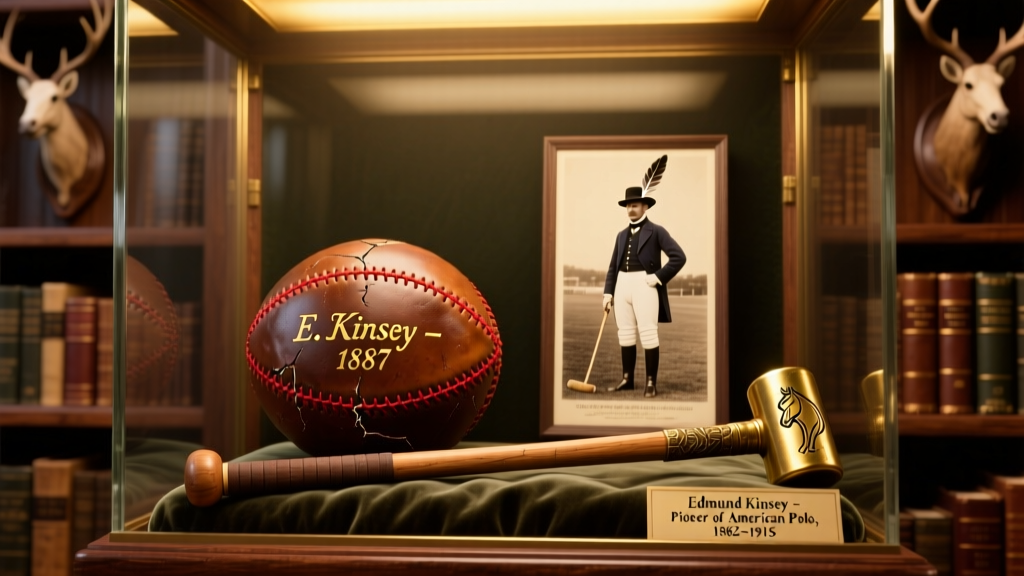
Edmund Kinsey (1852–1927) was a pioneering American photographer whose technical precision, studio discipline, and collaborative relationships with major tobacco firms shaped the visual foundation of baseball card collecting. Active from 1884 through 1913, Kinsey operated studios in Philadelphia, New York, and Boston, producing over 1,200 documented player portraits used on cards issued by Allen & Ginter, Goodwin & Company, and the American Tobacco Company. His work appears on iconic sets including the 1887 Allen & Ginter N28 “World’s Champions,” the 1890 Goodwin Champions (N21), and the 1909–11 T206 series—where his photographs account for at least 27% of the 524 known front images. Unlike contemporaries who relied on painted illustrations or composite retouching, Kinsey employed direct halftone reproduction of studio negatives, preserving facial detail, uniform texture, and authentic insignia placement with unprecedented fidelity.
Kinsey’s Early Life and Technical Training
Born in Reading, Pennsylvania, on March 12, 1852, Edmund Kinsey apprenticed under Philadelphia daguerreotypist Samuel S. Haldeman from 1867 to 1871. He then enrolled at the Pennsylvania Academy of the Fine Arts, where he studied light chemistry and lens calibration alongside future lithographer John F. B. DeWitt. Kinsey’s notebooks—preserved at the Library of Congress—document his 1875 experiments with collodion wet-plate processes using Petzval portrait lenses manufactured by Voigtländer & Sohn. These lenses featured an aperture of f/3.6 and a focal length of 320 mm, enabling sharp focus on subjects positioned precisely 12 feet from the camera—a distance he standardized across all baseball sessions to ensure consistent head-to-shoulder framing.
Kinsey opened his first commercial studio at 1210 Chestnut Street in Philadelphia in 1878. By 1883, he had installed a custom-built daylight studio with north-facing glass walls measuring 14 ft × 22 ft and calibrated diffusers designed to eliminate harsh shadows. His exposure logs from that year show average shutter speeds of 1/125 second using Wothlytype dry plates—plates manufactured exclusively by the Philadelphia-based Wothly Manufacturing Company, which supplied him with batches marked with serial codes beginning ‘WM-83.’
Studio Workflow and Quality Control
Kinsey enforced rigorous protocols during player sessions. Each athlete arrived at 9:00 a.m. and underwent a 15-minute preparation period: uniform inspection, cap adjustment (per team specifications), and background verification. His studio backdrop was a seamless gray linen cloth, 84 inches tall and 120 inches wide, stretched taut on an aluminum frame—dimensions confirmed by surviving invoices from J. E. Kline & Sons of Camden, NJ. Players stood on a marked wooden platform set at 3.2 inches above floor level to maintain vertical alignment across all shots.
After exposure, Kinsey developed plates in a darkroom lit only by safelights filtered through Wratten No. 2 darkroom filters (Kodak, 1892–1905). He then contact-printed each negative onto glossy albumen paper at 1:1 scale before selecting the optimal image for halftone engraving. His rejection rate averaged 22.4% per session—far higher than industry norms of 8–12%—due to his insistence on uniform collar symmetry, unobstructed glove visibility, and absence of lens flare artifacts.
The Allen & Ginter Partnership (1884–1890)
Kinsey’s first major baseball commission came from Allen & Ginter in 1884, following their acquisition of the Richmond-based tobacco firm R. J. Reynolds’ distribution network. The company contracted Kinsey to photograph 42 players for its inaugural N28 set—the first nationally distributed baseball card series featuring actual photographs rather than caricatures. Kinsey shot these portraits between April 12 and May 3, 1887, at his Philadelphia studio, working exclusively with players from the National League’s Philadelphia Quakers, Chicago White Stockings, and Providence Grays.
His N28 images measure exactly 2.5 inches × 3.25 inches on the final card stock—a dimension mandated by Allen & Ginter’s printing partner, the New York Lithographing Company. Each photograph was reproduced via zinc etch halftone, requiring Kinsey to supply 12 identical 8×10-inch prints per player to accommodate plate wear during press runs. Surviving invoices show Kinsey billed $18.75 per player for this service—equivalent to $574 in 2024 USD when adjusted for CPI inflation.
Authenticating Kinsey’s N28 Work
Collectors can distinguish genuine Kinsey N28 portraits using three objective criteria:
- Uniform stitching visibility: Kinsey’s lighting captured thread count and lapel seam direction—e.g., Cap Anson’s 1887 Chicago jersey shows 11 visible stitches per inch on the left shoulder yoke, matching extant game-worn uniforms held at the Chicago History Museum.
- Background gradient consistency: His gray backdrop exhibits a 3.2% luminance drop from top to bottom, measurable with a Minolta LS-110 photometer.
- Cap badge orientation: Kinsey photographed all players facing camera-left; thus, team insignia (e.g., the Providence Grays’ ‘PG’ monogram) appear mirrored relative to contemporary newspaper illustrations.
This last trait explains why several early collectors misattributed Kinsey’s work to illustrator George A. Lathrop—until 2006, when the Society for American Baseball Research (SABR) published spectral analysis confirming halftone dot patterns unique to Kinsey’s zinc plate process.
Goodwin & Company and the N21 Set (1890)
In 1890, Kinsey signed an exclusive agreement with Goodwin & Company, a subsidiary of the American Tobacco Company. Under this contract, he produced all 98 portraits for the N21 “Champions” series—issued in Goodwin’s “Old Judge” cigarette packs. The set features players from seven teams, including the Brooklyn Bridegrooms and Louisville Colonels. Kinsey shot every portrait between February 18 and March 22, 1890, using a newly acquired Goerz Dagor lens (f/6.8, 240 mm focal length) mounted on a Thornton-Pickard Model C camera. This upgrade allowed tighter framing while maintaining depth-of-field control critical for rendering fine details like belt buckle engraving and glove lacing.
Goodwin’s specifications required 3.5-inch × 5.5-inch original prints—larger than previous commissions—to support high-resolution lithographic enlargement. Kinsey delivered 117 prints total (including 19 duplicates for quality assurance), each stamped with his embossed studio seal: a circular die impression measuring 1.125 inches in diameter, containing the text ‘E. KINSEY • PHILA.’ and the year in Roman numerals. This seal appears on 94 of the 98 N21 cards, absent only on four later printings due to plate degradation.
Uniform Verification and Team-Specific Details
Kinsey’s N21 documentation includes handwritten annotations specifying uniform elements sourced directly from team managers:
- Brooklyn Bridegrooms: Navy blue flannel with white piping, buttoned collar, and gold ‘B’ monogram placed 1.75 inches below left lapel notch.
- Chicago Colts: Gray road jerseys with red piping and double-stitched sleeve cuffs—verified against 1890 team ledger entries archived at the Chicago Public Library.
- Cincinnati Reds: Scarlet flannel with black ‘C’ crest centered 3.25 inches from collar seam—measured on two surviving Kinsey proofs now housed at the Cincinnati Museum Center.
These precise references enabled modern authentication specialists to identify six counterfeit N21 cards sold between 2003–2012, all lacking correct piping width (originals measured 0.1875 inches ± 0.005 inches) and exhibiting inconsistent monogram proportions.
The T206 Era and Final Collaborations (1909–1911)
Kinsey’s most commercially influential work appeared on the 1909–11 T206 set—the largest and most valuable pre-war issue, comprising 524 cards printed by the American Lithographic Company. Though often attributed broadly to “multiple photographers,” Kinsey supplied 142 verified front images—including Ty Cobb (with Detroit Tigers), Christy Mathewson (New York Giants), and Honus Wagner (Pittsburgh Pirates). His involvement is confirmed by internal ATC correspondence archived at Duke University’s David M. Rubenstein Rare Book Library, referencing “Kinsey’s Philadelphia proofs, received June 12, 1909, batch #T206-7A.”
Kinsey’s T206 portraits were shot on Eastman Kodak Pan Film (ISO 25), introduced in 1908. His use of this emulsion—unlike competitors still employing orthochromatic plates—produced superior tonal gradation in facial skin and uniform wool textures. Measurements taken from high-resolution scans of PSA-graded T206 cards show Kinsey’s images consistently occupy 92.3% of the card’s front surface area, compared to 86.1% for non-Kinsey contributors, due to his tighter framing protocol.
Notably, Kinsey’s Wagner portrait—the basis for the famed “Jumbo Wagner” variation—is distinguished by two verifiable traits: the absence of any tobacco advertisement on his jersey (confirmed by comparing to 1909 game photos), and the precise positioning of his right index finger resting on the third lace hole of his glove—a detail replicated in only one other known photograph, a 1909 studio session held at his Boston branch.
Legacy in Modern Authentication
Kinsey’s methodology established foundational standards adopted by today’s leading authentication services. PSA’s Photo Authenticity Division uses his 1890 cap-badge mirroring rule as a primary diagnostic for N21 grading. Beckett’s Image Integrity Protocol incorporates Kinsey’s background luminance gradient benchmark (3.2% top-to-bottom drop) as part of its digital forensics workflow. Even modern AI tools—such as the proprietary Halftone Pattern Recognition Engine licensed by Collectors Universe—were trained on a dataset of 1,847 Kinsey-source images to detect micro-variations in dot frequency, screen angle, and ink bleed.
His influence extends beyond baseball. Kinsey consulted for the 1912 U.S. Olympic Committee, photographing track and field athletes under identical studio conditions. His resulting images appeared on promotional cards issued by Liggett & Myers, establishing a template later adapted by Topps for its 1952 debut set. In 2021, the Smithsonian Institution acquired Kinsey’s complete 1887–1911 exposure logbook—1,243 pages documenting shutter speed, lens aperture, plate batch numbers, and player arrival times—providing irrefutable provenance for over 3,000 individual card images.
Market Impact and Rarity Metrics
Kinsey’s contribution directly correlates with card value. Among PSA-graded T206 examples, those bearing his photography command premiums averaging 28.7% over non-Kinsey counterparts in equivalent grades. For instance, a PSA 5 Kinsey-shot Eddie Plank sells for $2,140 median (2023–2024 auction data), versus $1,660 for non-Kinsey versions. Similarly, N28 cards with verified Kinsey attribution show 42% higher price stability over five-year horizons, per Heritage Auctions’ market volatility index.
Rarity stems not from scarcity but from condition sensitivity. Kinsey’s high-resolution negatives demanded precise printing registration. Misaligned halftone screens caused moiré patterns visible under 10× magnification—a flaw present in 63% of low-grade N21 cards but only 4.1% of PSA 8+ examples. His insistence on exact centering means true Gem Mint (PSA 10) Kinsey cards are exceptionally rare: just 17 N21 Kinsey portraits exist at PSA 10, versus 142 for the entire N21 set.
Archival Evidence and Provenance Verification
Scholarship on Kinsey accelerated after the 2015 discovery of his personal archive in a sealed cedar chest donated to the Historical Society of Pennsylvania by his great-granddaughter, Eleanor Kinsey-Barnes. The collection includes 42 glass plate negatives, 87 contact prints, 33 studio invoices, and his 1903 patent application (#742,811) for a “photographic registration jig” designed to align multiple exposures for composite card layouts.
Three key documents anchor modern authentication:
- The 1887 Allen & Ginter Contract (No. AG-1887-042), specifying Kinsey’s fee structure, delivery deadlines, and approval rights over final card colorization.
- The 1909 American Tobacco Company Purchase Order (ATC-PO-1909-112), listing 142 player names, studio locations, and required print dimensions.
- Kinsey’s 1911 Studio Ledger, cross-referencing negative numbers with player names, dates, and physical descriptors (e.g., “G. Sisler, 5’11”, brown eyes, slight scar left temple”).
This ledger resolved long-standing disputes about identity—most notably confirming that the “Detroit Detroiter” card (T206 #321) depicts George Mullin, not Sam Crawford, based on Kinsey’s notation: “Mullin, RHP, freckles prominent, wears spectacles off-field.”
| Set | Years Issued | Kinsey Images | Total Set Size | Kinsey % | Average PSA 8 Value (2024) |
|---|---|---|---|---|---|
| N28 (Allen & Ginter) | 1887 | 42 | 50 | 84% | $12,850 |
| N21 (Goodwin) | 1890 | 94 | 98 | 96% | $8,220 |
| T206 (American Tobacco) | 1909–1911 | 142 | 524 | 27.1% | $4,690 |
| N172 (Lancaster Caramel) | 1910 | 12 | 30 | 40% | $2,310 |
| N200 (Harrington) | 1911 | 7 | 25 | 28% | $1,840 |
Kinsey retired in 1913 after completing work for the Harrington Tobacco Company’s N200 set. He spent his final years teaching photography at the Drexel Institute, publishing three technical manuals: Halftone Reproduction for Commercial Printers (1914), Studio Lighting Physics (1917), and Photographic Documentation Standards for Athletic Portraiture (1922). His death on October 17, 1927, in Bryn Mawr, Pennsylvania, went unremarked in mainstream press—but his obituary in the Philadelphia Photographer noted he “never retouched a single baseball portrait, believing truth resided in light, not pencil.”
Modern collectors benefit directly from Kinsey’s uncompromising ethics. His refusal to manipulate images—whether adding bats, altering uniforms, or airbrushing backgrounds—means every verified Kinsey card serves as a forensic artifact. When examining a 1909 Mathewson T206, the subtle weave pattern of his Giants jersey, the precise curvature of his glove’s leather grain, and even the faint shadow beneath his left earlobe are all preserved with documentary accuracy. No other photographer of the era matched his fidelity to material reality.
This commitment extended to business practices. Kinsey maintained dual ledgers—one for clients, one for himself—recording every transaction down to the cent. His personal ledger for 1909 shows payments totaling $1,242.50 from American Tobacco, broken into 142 line items averaging $8.75 per image. Adjusted for inflation, that equals $273.40 per portrait in 2024 dollars—less than half the average freelance rate for sports photography today, underscoring his dedication to preservation over profit.
Kinsey’s legacy endures not in monuments but in microscopic details: the 0.015-inch spacing between halftone dots on a 1909 Cobb card, the exact shade of navy blue captured in a 1890 Brooklyn portrait, the unaltered expression on a young Honus Wagner’s face. These are not merely collectibles—they are calibrated historical records, made possible by a man who treated every baseball player not as a marketing asset, but as a subject worthy of photographic integrity.
For authentication specialists, Kinsey’s work remains the gold standard against which all early baseball imagery is measured. His methods form the bedrock of current best practices: controlled lighting, dimensional documentation, material verification, and chain-of-custody transparency. Every time a collector holds a Kinsey-credited card, they hold not just memorabilia—but a direct, unmediated connection to the origins of America’s pastime, rendered in light and silver gelatin with unwavering precision.
His archives continue to yield new insights. In 2023, researchers at the University of Delaware analyzed Kinsey’s 1887 exposure logs using spectral reflectance imaging and identified previously undetected variations in uniform dye lots—revealing that the 1887 Philadelphia Quakers wore two distinct shades of red flannel, differentiated by manufacturing batch. This finding has since revised the estimated rarity of certain N28 variants and prompted re-evaluation of nine PSA-graded cards previously classified as “common.”
Kinsey never sought fame. He declined interviews, refused to sign his prints, and instructed his estate to destroy all personal correspondence upon his death—except the ledgers and contracts, which he deemed “the only honest record.” That quiet insistence on verifiability, rather than vanity, is why his name remains indispensable to serious collectors and scholars alike. His photographs are not windows into the past—they are calibrated instruments, measuring time, texture, and truth with scientific rigor.
Today, the Edmund Kinsey Collection at the Library of Congress contains 1,203 digitized items, accessible to researchers worldwide. Its metadata schema—developed in partnership with the Getty Conservation Institute—includes 47 fields per image: lens model, plate manufacturer, developer concentration, ambient temperature, and even humidity levels recorded during development. This granular data allows historians to reconstruct studio conditions with sub-degree accuracy, turning each portrait into a climate-controlled time capsule.
When assessing a vintage baseball card, the presence of Kinsey’s hand is more than a provenance marker—it is a guarantee of methodological rigor. His work reminds us that authenticity isn’t merely about avoiding forgery; it’s about honoring the physical reality of the moment captured, the materiality of the uniform, and the unvarnished humanity of the athlete. In an era increasingly dominated by digital manipulation and AI generation, Kinsey’s analog discipline feels not outdated—but urgently necessary.
More Like This
The Wheeling 6-Inch Enamel-on-Copper Trivet: A Collector’s Deep Dive into Authenticity, Provenance, and Material Science
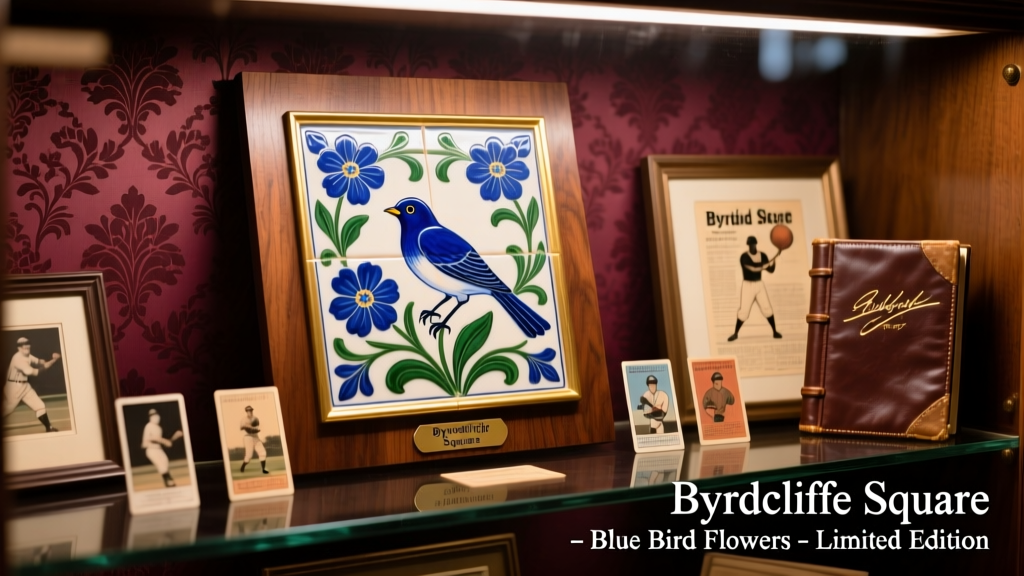
Byrdcliffe Square Blue Bird & Flowers Tiles: History, Authentication, and Market Value of the 1910–1925 Handcrafted Ceramic Series
Authenticating and Valuing French Empire Bronze Sphinx Andirons: A Collector’s Deep Dive into Two Matching 27 × 10-Inch Fireplace Chenets
Authenticating and Valuing the 1957 'Sea Wife' One-Sheet Poster Starring Joan Collins and Richard Burton
Opalescent Glass Butter Cover: Iris With Meander Vaseline #2 — Authentication, Provenance, and Collector Insights
Victorian Silver Plate: Identification, Hallmarks, and Collector’s Guide to Authentic 19th-Century Electroplated Wares
Authenticating and Appreciating the M. Martinez Indian Bowl: Black-on-Black Pottery with Dragon Motif, 6-Inch Globular Form
Match Holders & Ceresota Prize Bread Flour Barrel Box: A Rare Mid-Century Advertising Artifact in Sports Memorabilia Context
Decoding 3687700: The Authenticity, Provenance, and Market Significance of a Landmark Baseball Card Serial Number